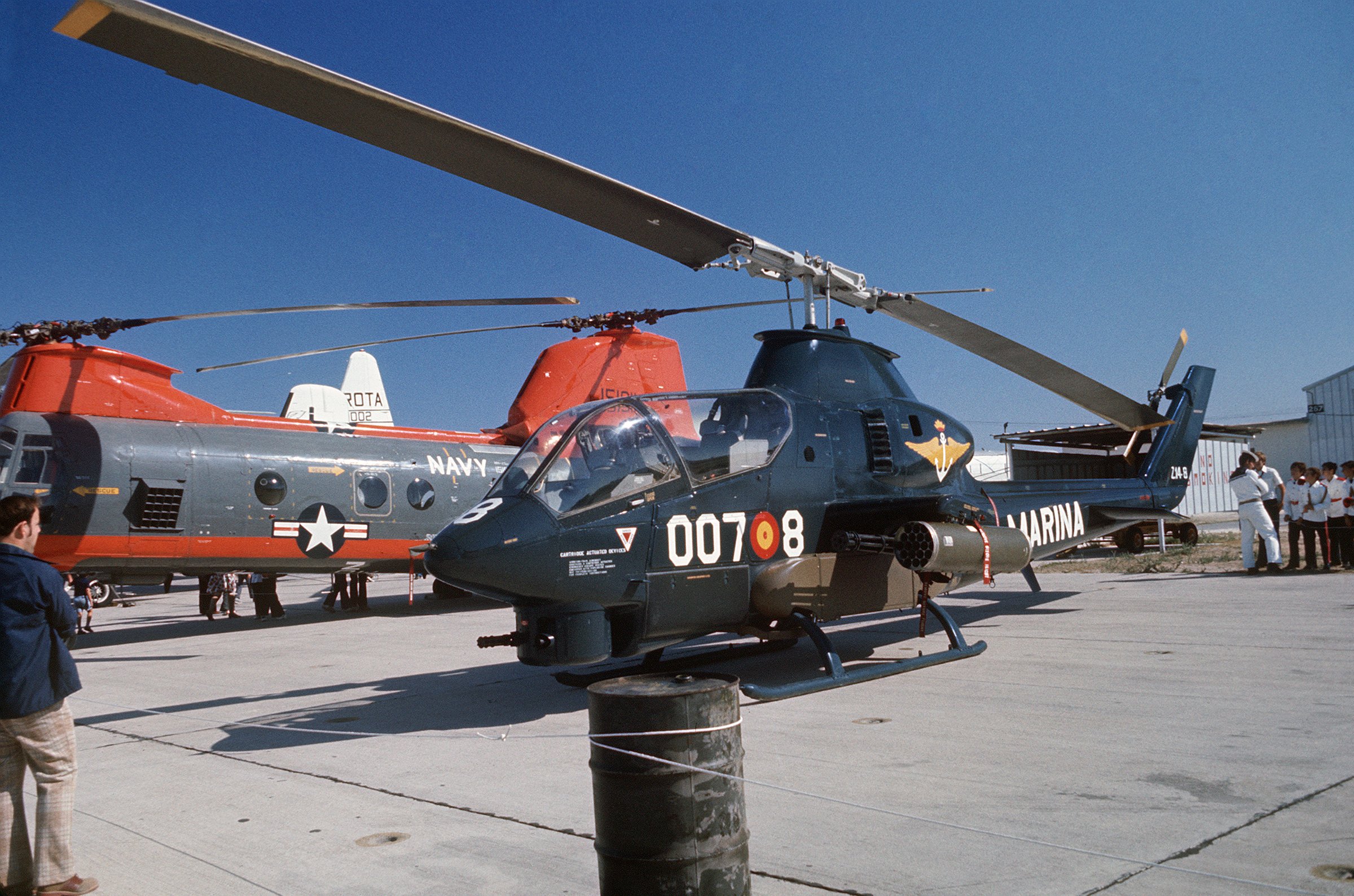
Bell AH-1G HueyCobra
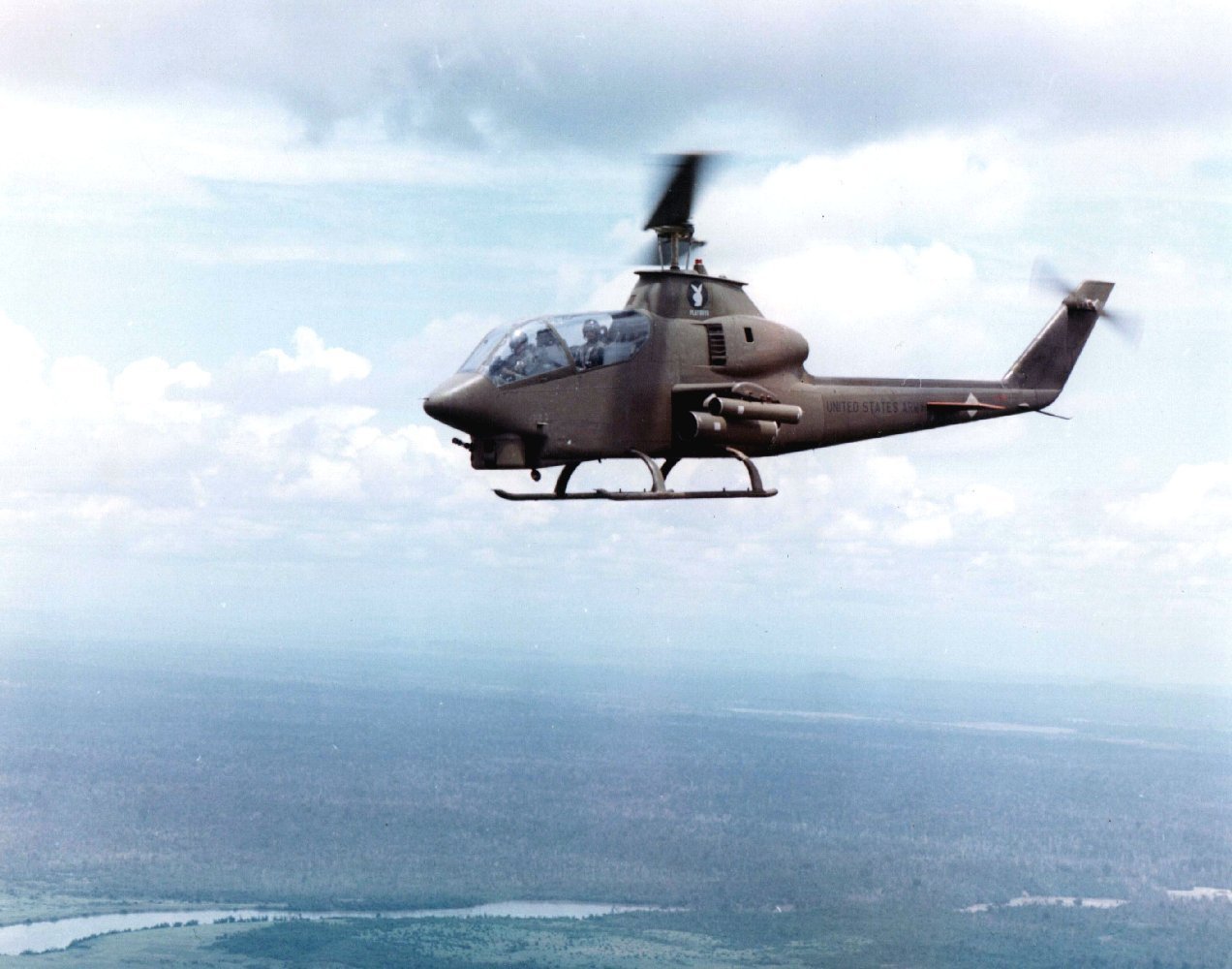
The original Cobra — Huey engine, rotor and transmission wrapped in a slim, tandem-seat gunship fuselage · First flight 1965 · In service 1967
Bell paid for the Model 209 itself, combining the rotor, transmission and T53 engine of the UH-1C Huey with a new, narrow fuselage, a tandem cockpit and stub wings for weapons. The prototype was rolled out on 3 September 1965 and flew four days later, just eight months after the project began. In April 1966 the US Army ordered an initial 110, and follow-on orders took the total to 500 by the end of the year. For production the retractable skids gave way to fixed ones and the armoured-glass canopy to a lighter Plexiglas one.
The first AH-1Gs were delivered in June 1967, the first six reached Bien Hoa in South Vietnam on 30 August 1967, and the 334th Assault Helicopter Company became the first operational Cobra unit on 6 October. Bell built 1,116 AH-1Gs for the Army between 1967 and 1973, and the fleet logged more than a million operational hours in Vietnam. In 1968 an F-100 pilot, Capt. Ronald Fogleman, was carried to safety clinging to the open gun-panel door of an AH-1G.
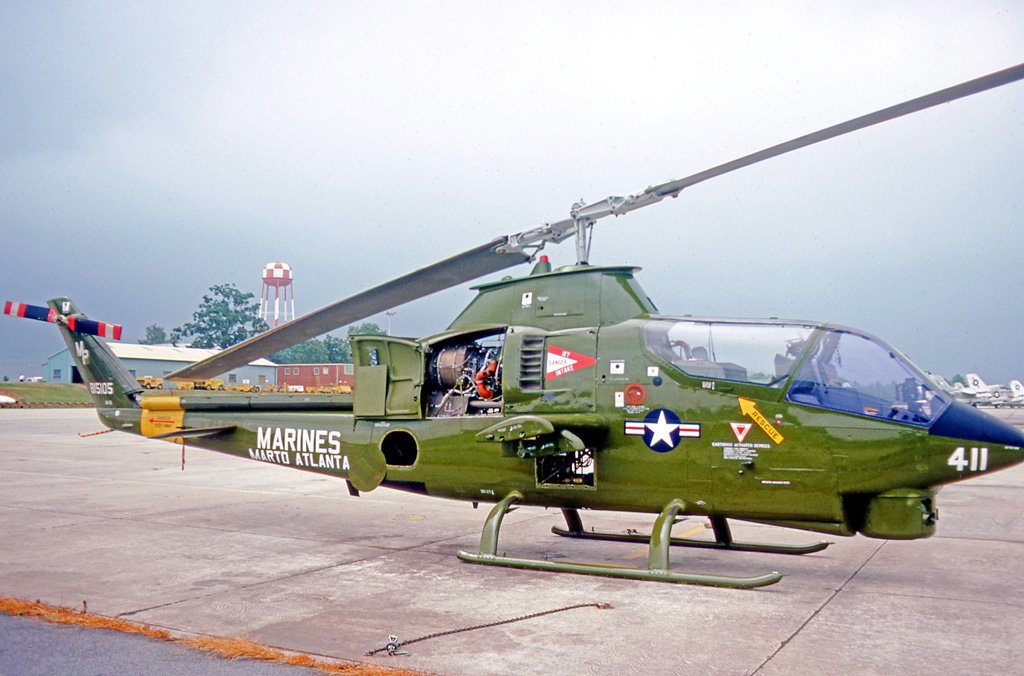
The US Marine Corps borrowed 38 AH-1Gs from the Army in 1969 as a stopgap before its twin-engine AH-1J, Israel bought six, and the Spanish Navy took eight new-build machines with 20 mm cannon, known locally as the Z.14, retiring the last in 1985. Hundreds of US Army AH-1Gs were later rebuilt to TOW-armed AH-1Q, AH-1S and AH-1F standard.