Boeing B-29 Superfortress
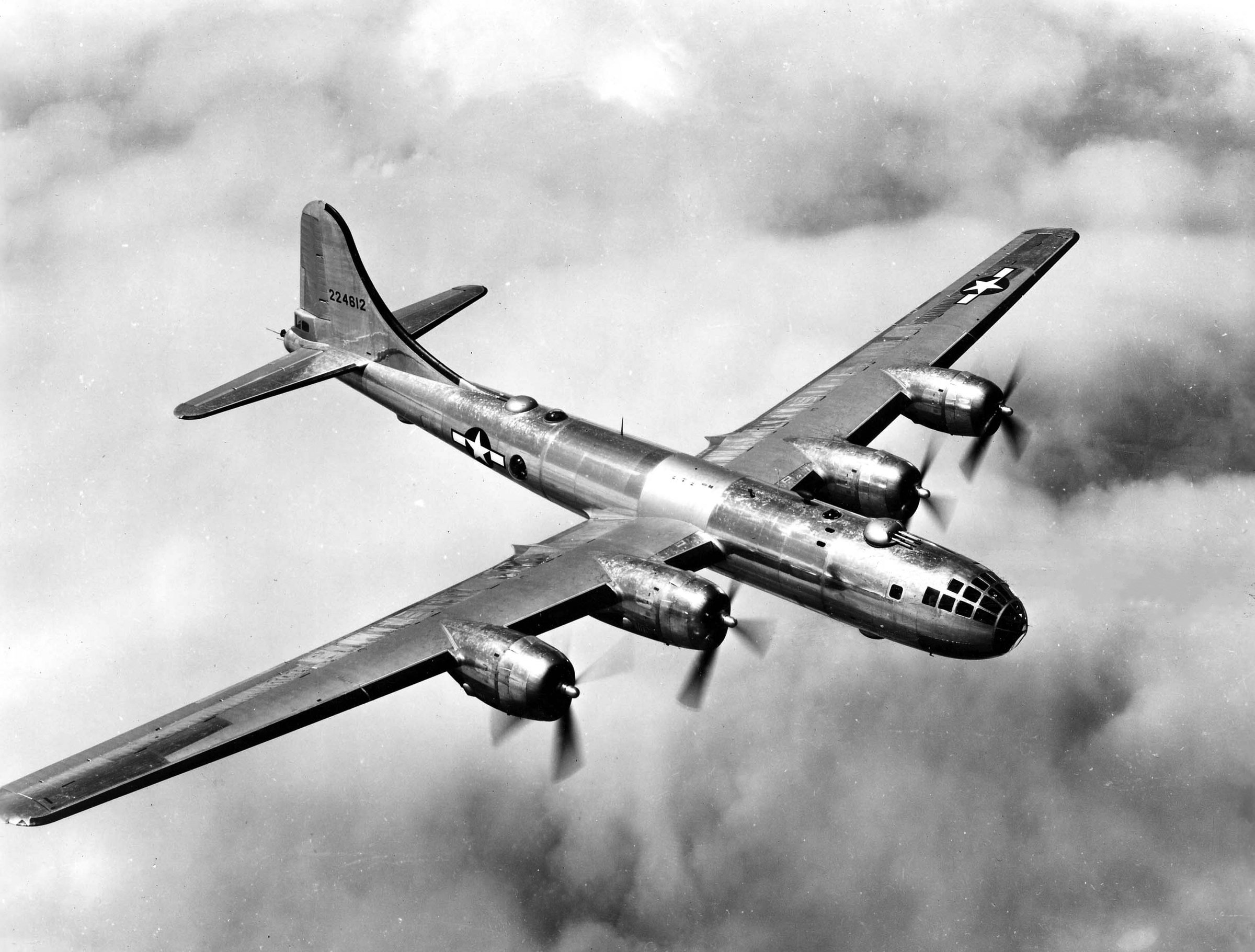
The first production Superfortress — pressurised cabins and remote-controlled gun turrets in a bomber · First flight 1942 · In service 1944
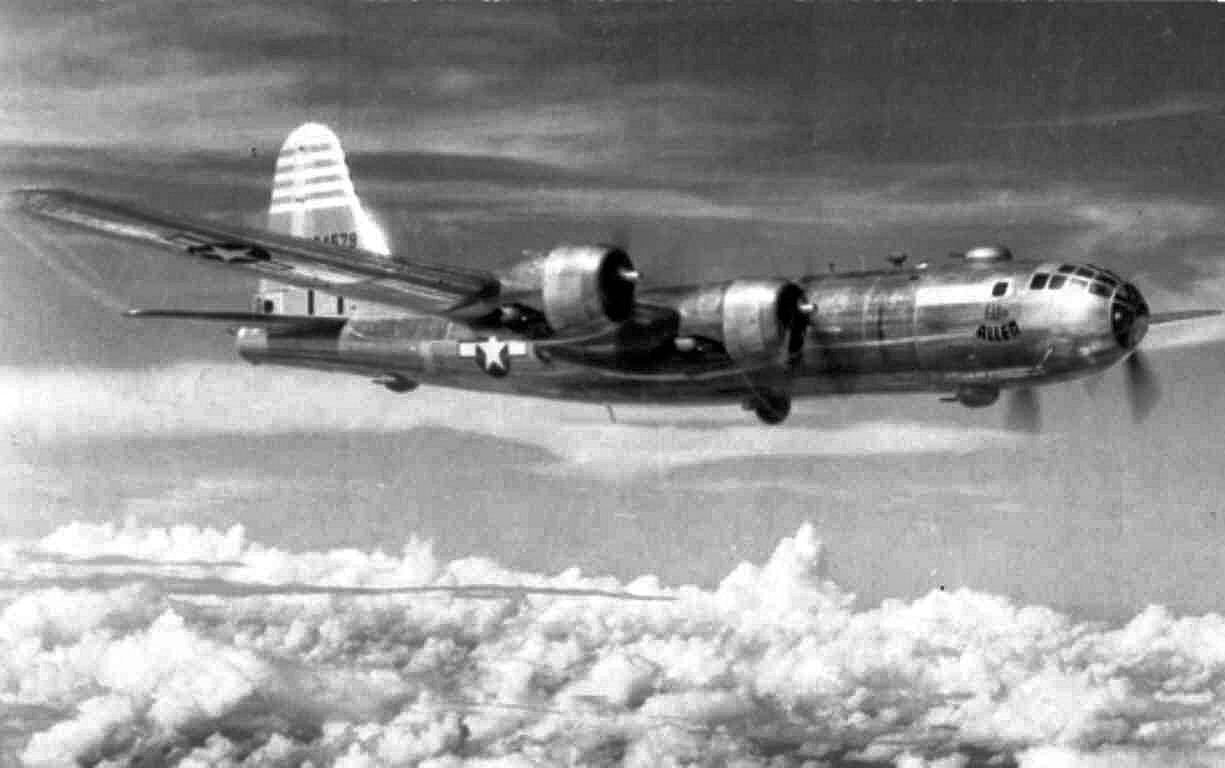
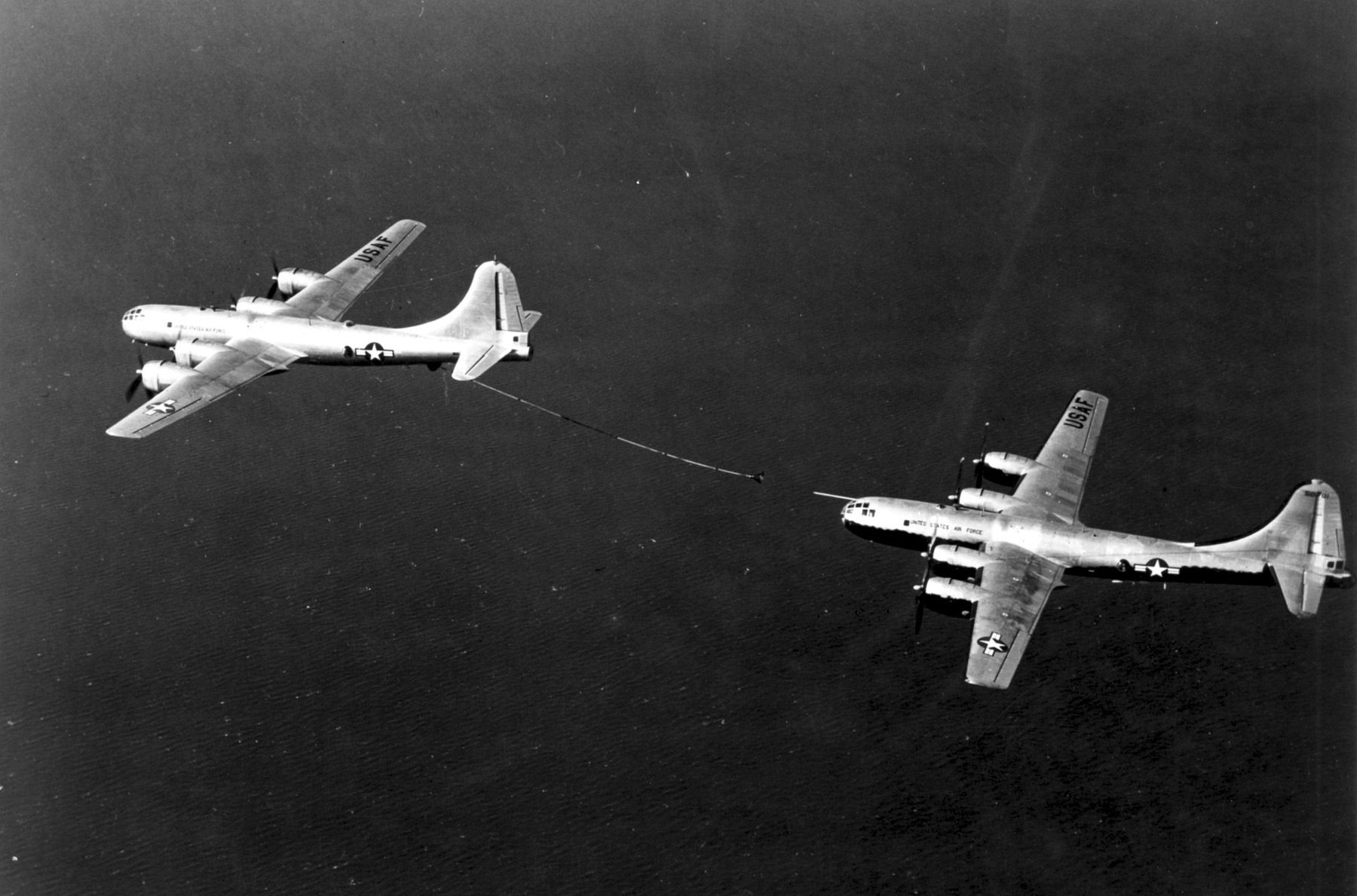
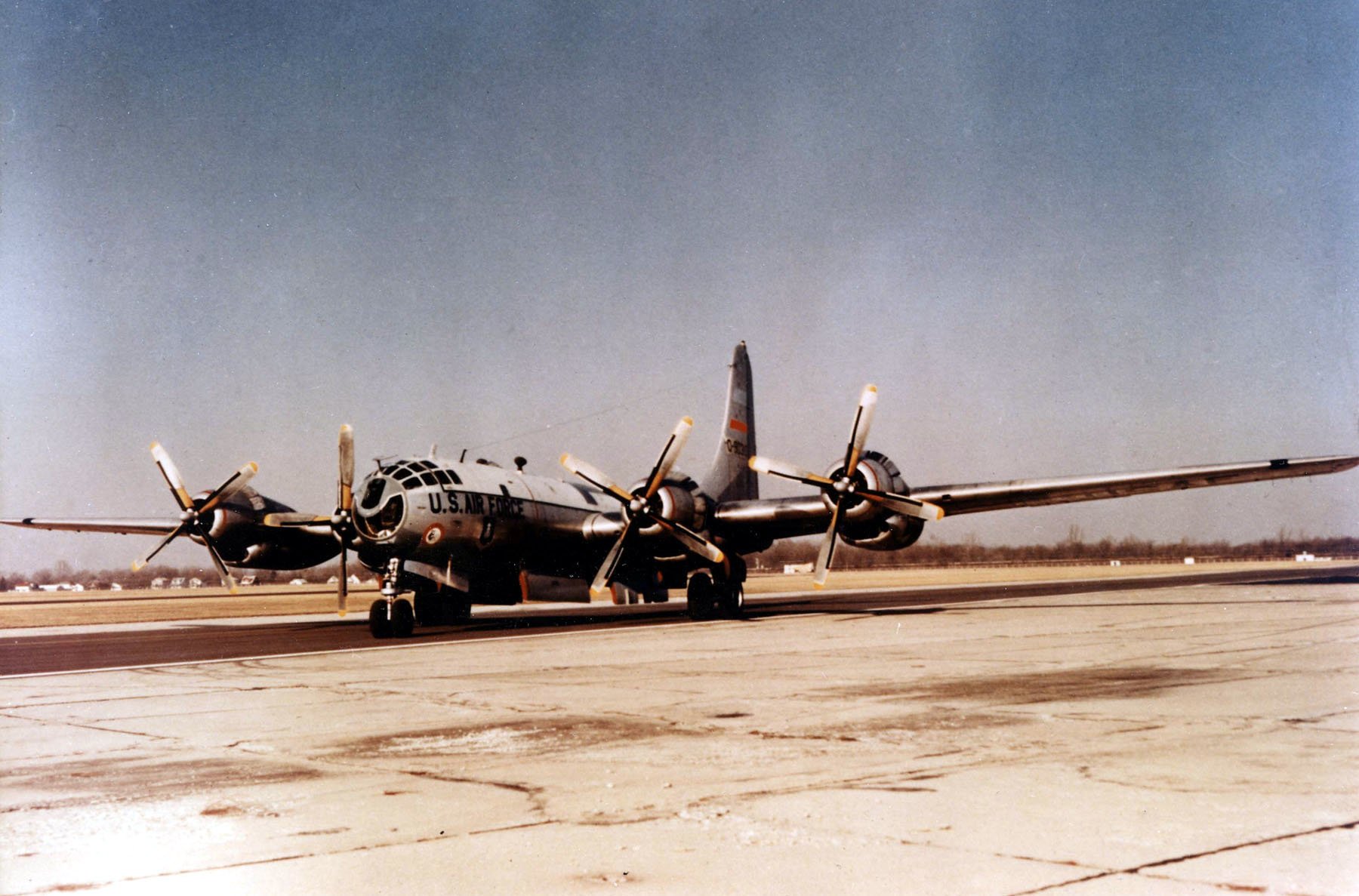
The B-29 was the most advanced bomber of the Second World War: crew compartments pressurised from the start and joined by a crawl tunnel over the unpressurised bomb bays, tricycle landing gear, and a General Electric central fire-control system in which gunners at sighting stations aimed four remote turrets. The XB-29 first flew on 21 September 1942. On 18 February 1943 the second prototype crashed after an engine fire, killing Boeing's chief test pilot Eddie Allen, ten crew and people on the ground; the Wright R-3350 engines remained the type's chief maintenance problem.
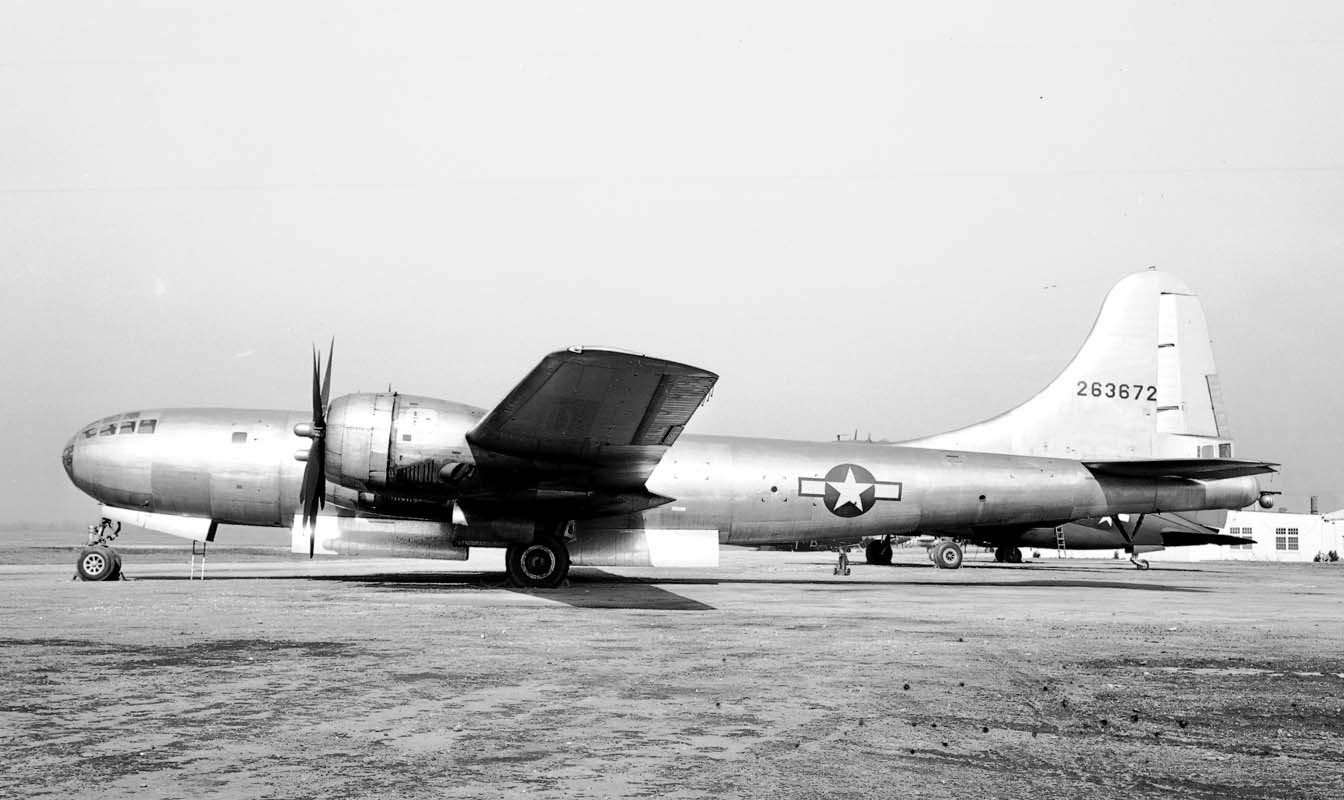
Production started before service testing was complete, spread over several plants. The original B-29 model was built by Boeing at Wichita (1,620), Martin at Omaha (536) and Bell at Marietta, Georgia (357). The type entered service on 8 May 1944, flew its first combat mission against railway workshops in Bangkok on 5 June 1944 from bases in India, and its first raid on Japan, against the Yawata steelworks, on 15 June 1944 from China.
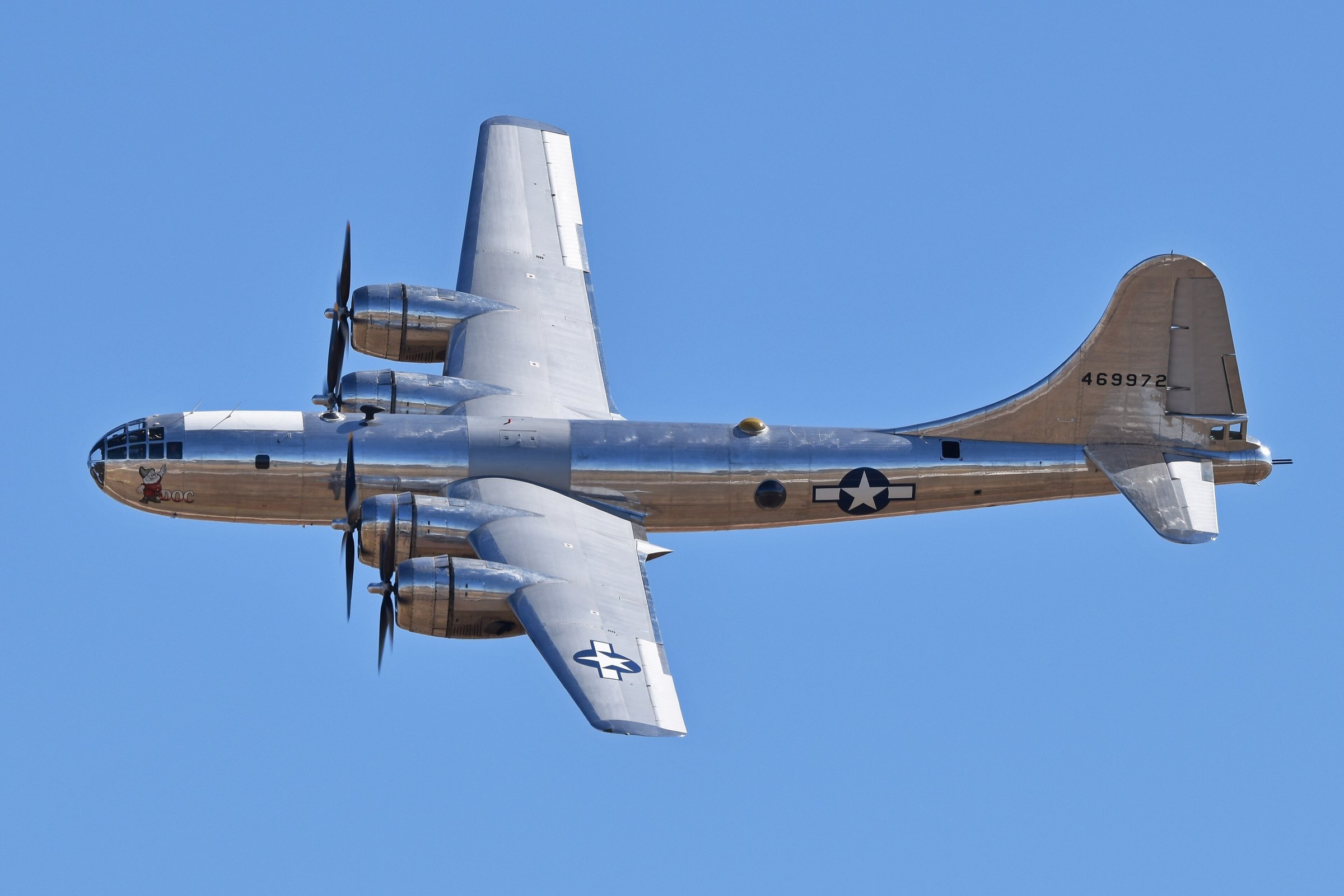
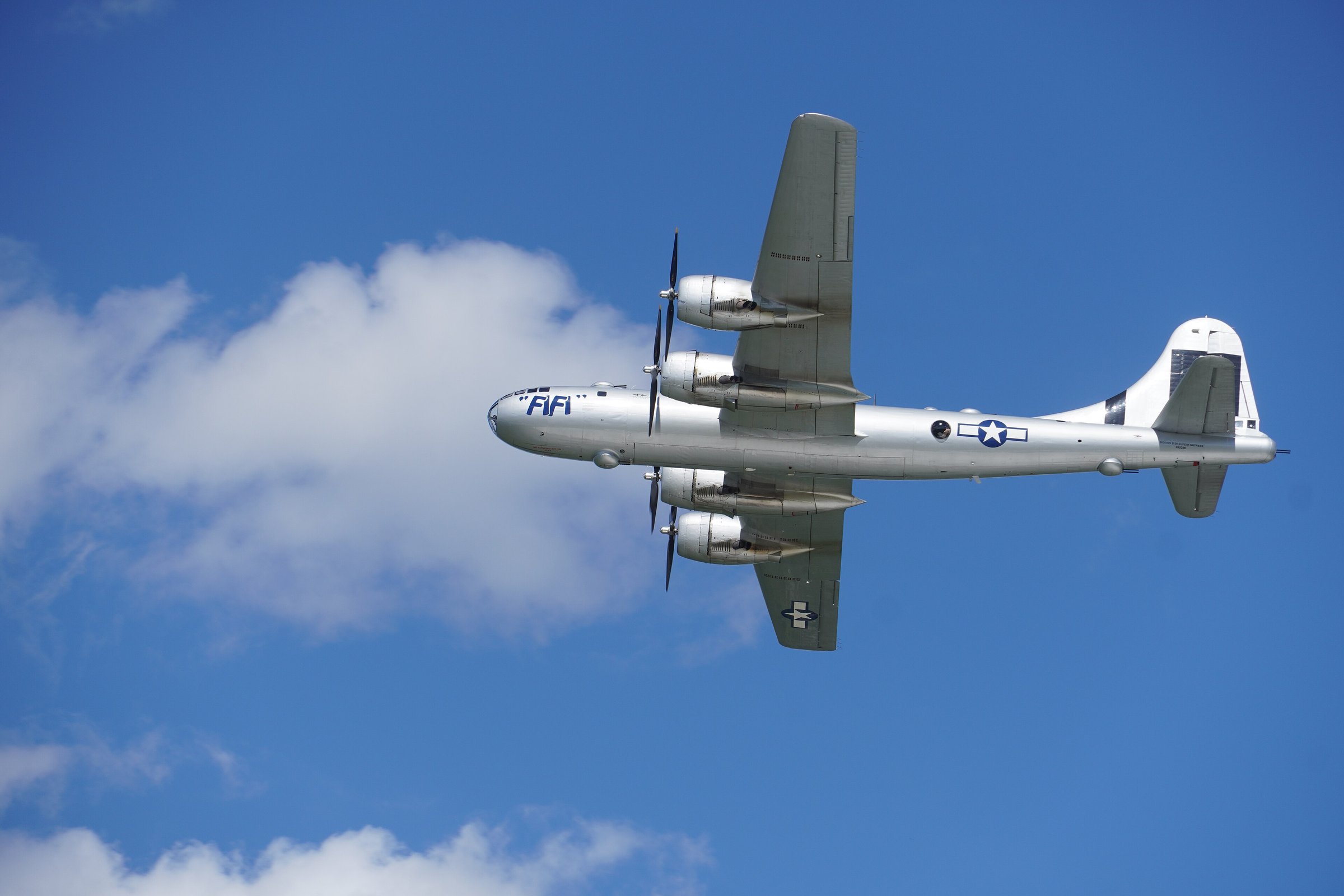
The Martin-Omaha plant also built the specially modified "Silverplate" B-29s, including Enola Gay and Bockscar, which dropped the atomic bombs on Hiroshima and Nagasaki in August 1945. One of the two B-29s flying today, "Doc" (44-69972), is a Wichita-built B-29-70-BW: named after one of Snow White's dwarfs by a radar-calibration squadron in 1951, rescued from the China Lake range and restored in Wichita, it flew again on 17 July 2016.