Boeing B-50 Superfortress
Wasp Major power, a taller folding fin and the first non-stop flight around the world · First flight 1947 · In service 1948
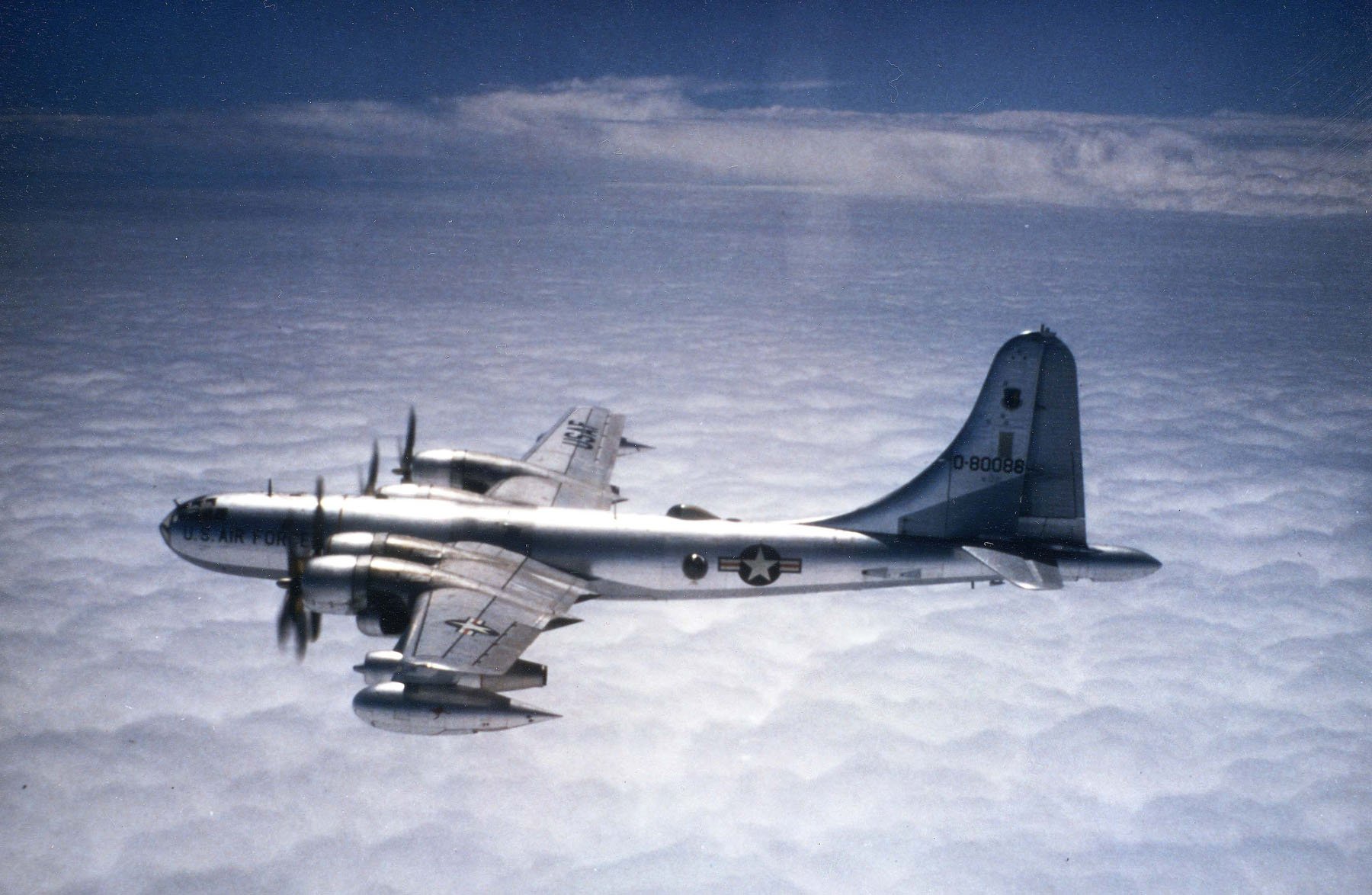
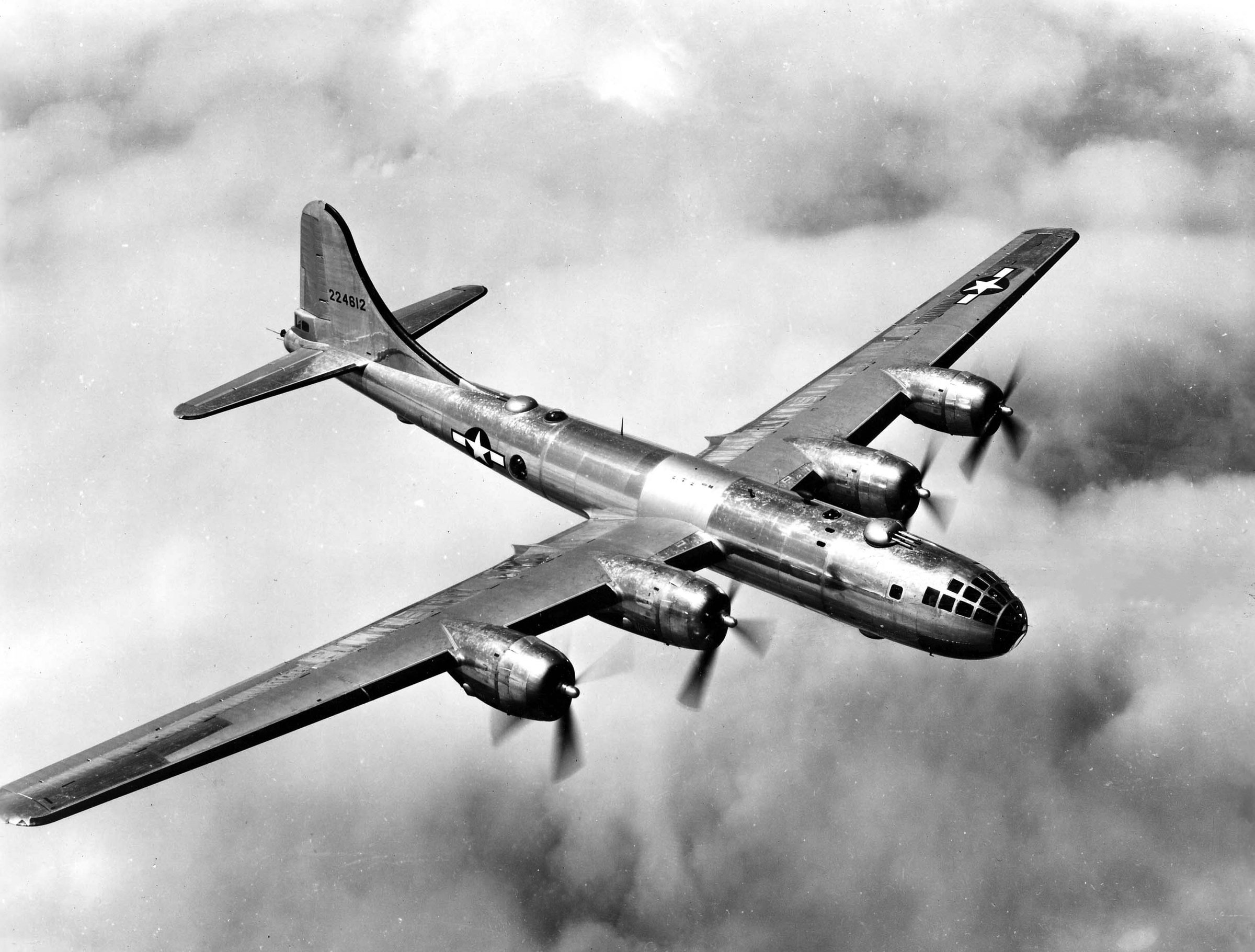
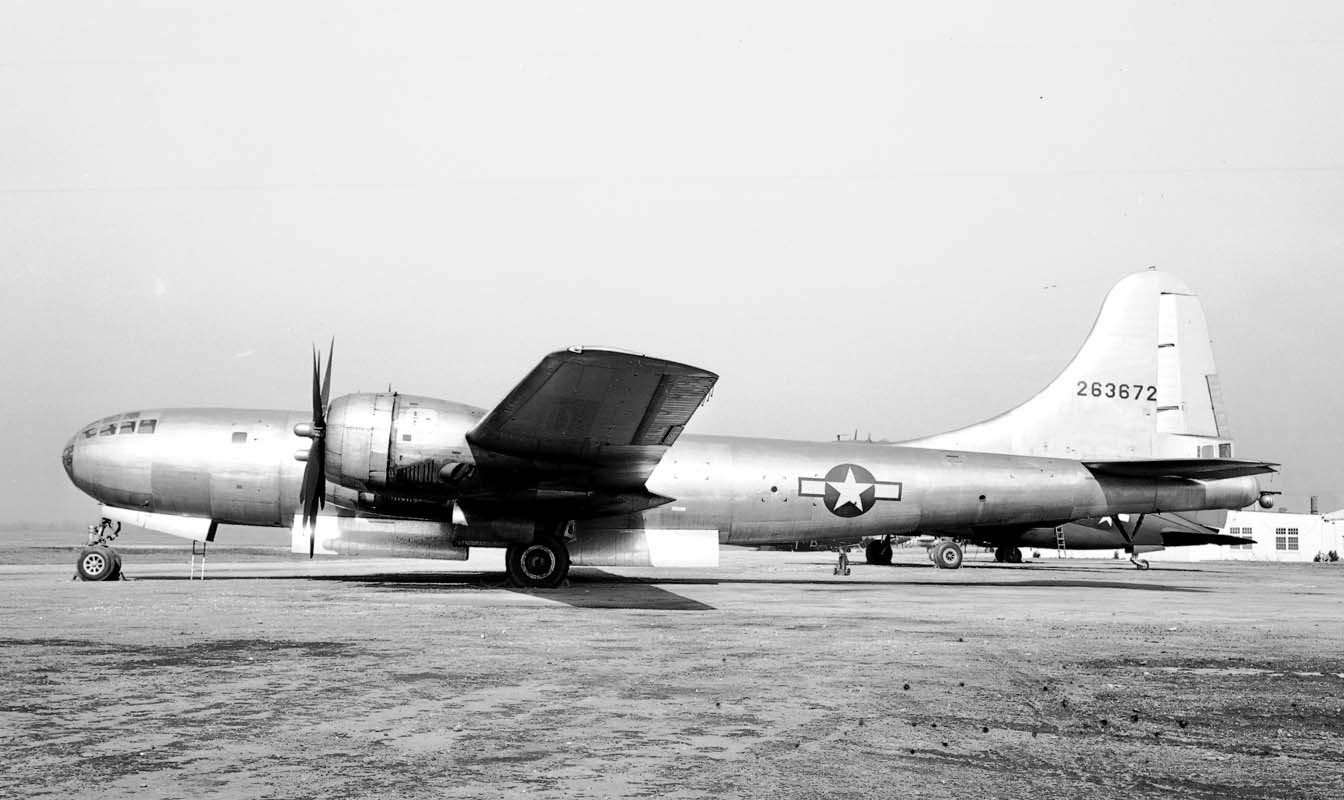
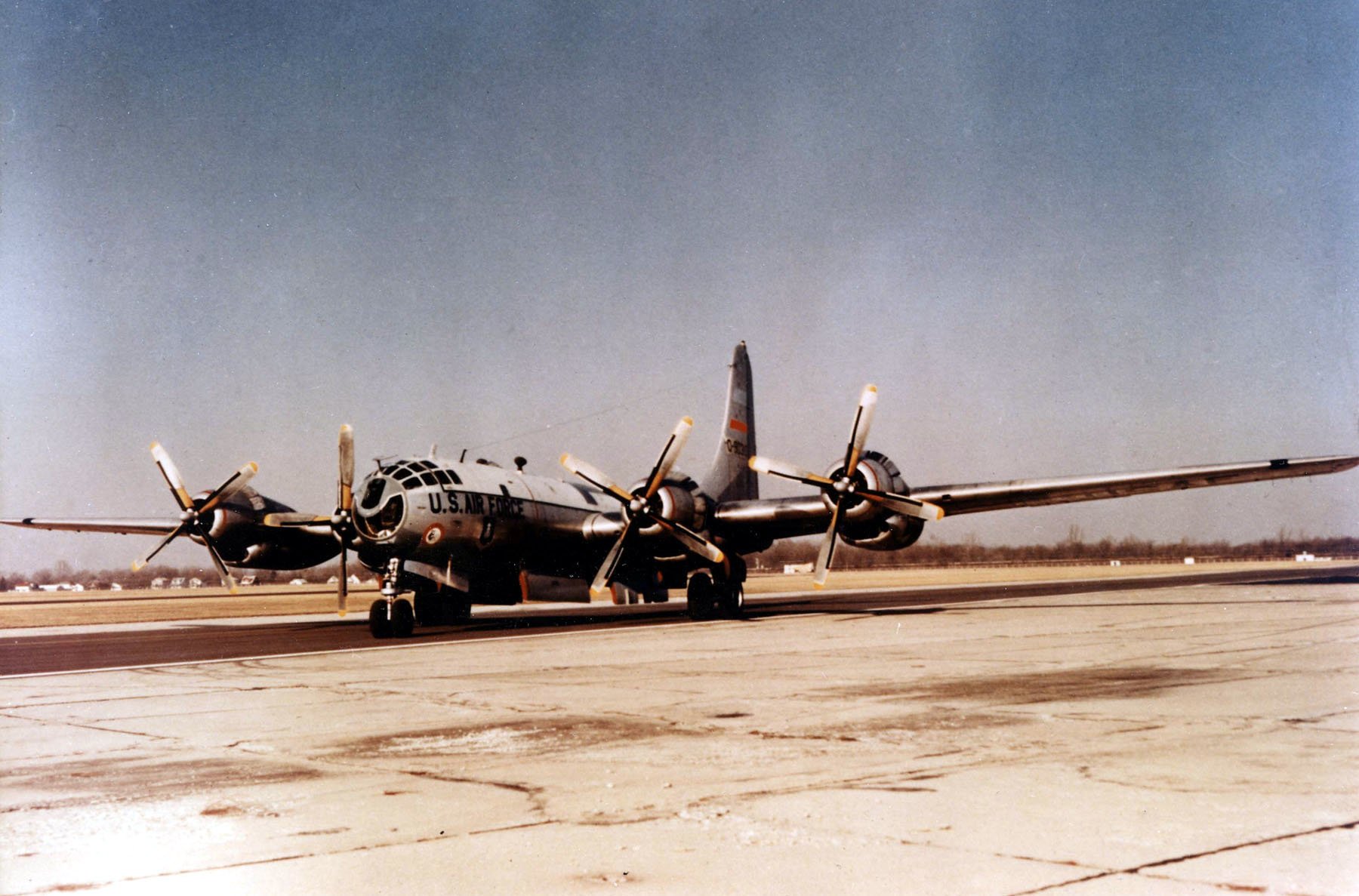
The B-50 began as the B-29D: a Superfortress with four 28-cylinder Pratt & Whitney R-4360 Wasp Majors in place of the troublesome Wright R-3350s, a stronger and lighter wing of 75-S aluminium alloy, a taller fin and rudder that could fold for existing hangars, reinforced landing gear and nose-wheel steering. In December 1945 the order was cut to 60 and the designation changed to B-50 — according to Boeing historian Peter M. Bowers, a ruse so that it would not look like one more version of a bomber being cancelled wholesale.
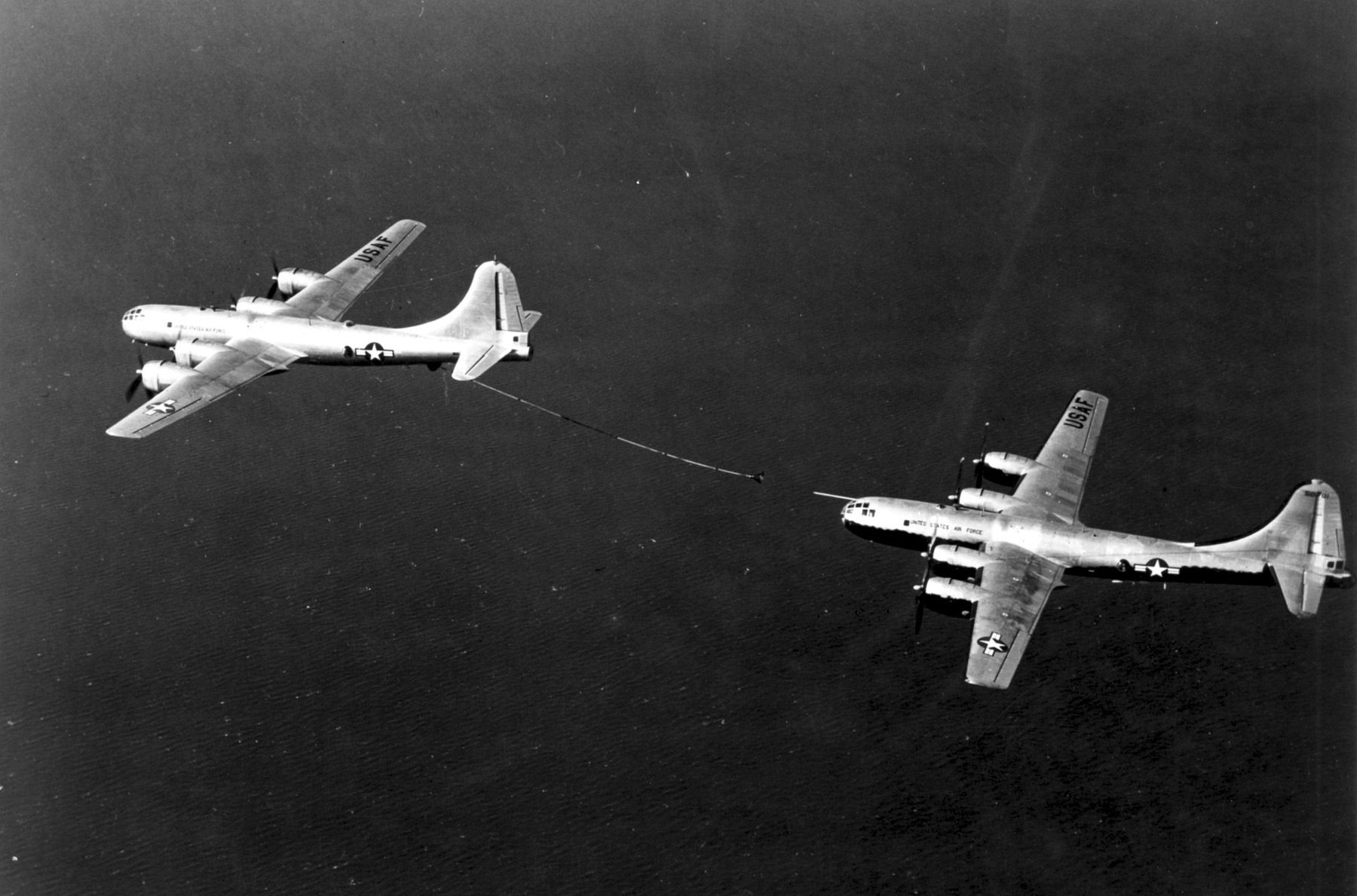
The first production B-50A flew on 25 June 1947 and the 43d Bombardment Wing at Davis-Monthan received the first aircraft in June 1948. Between 26 February and 2 March 1949 the 43d's B-50A "Lucky Lady II" (46-010) flew the first non-stop flight around the world — 37,743 km in 94 hours and 1 minute, refuelled four times by KB-29 tankers. B-50s served with Strategic Air Command as nuclear-capable bombers until replaced by the B-47 Stratojet in 1955, and RB-50s flew reconnaissance along the Soviet periphery.
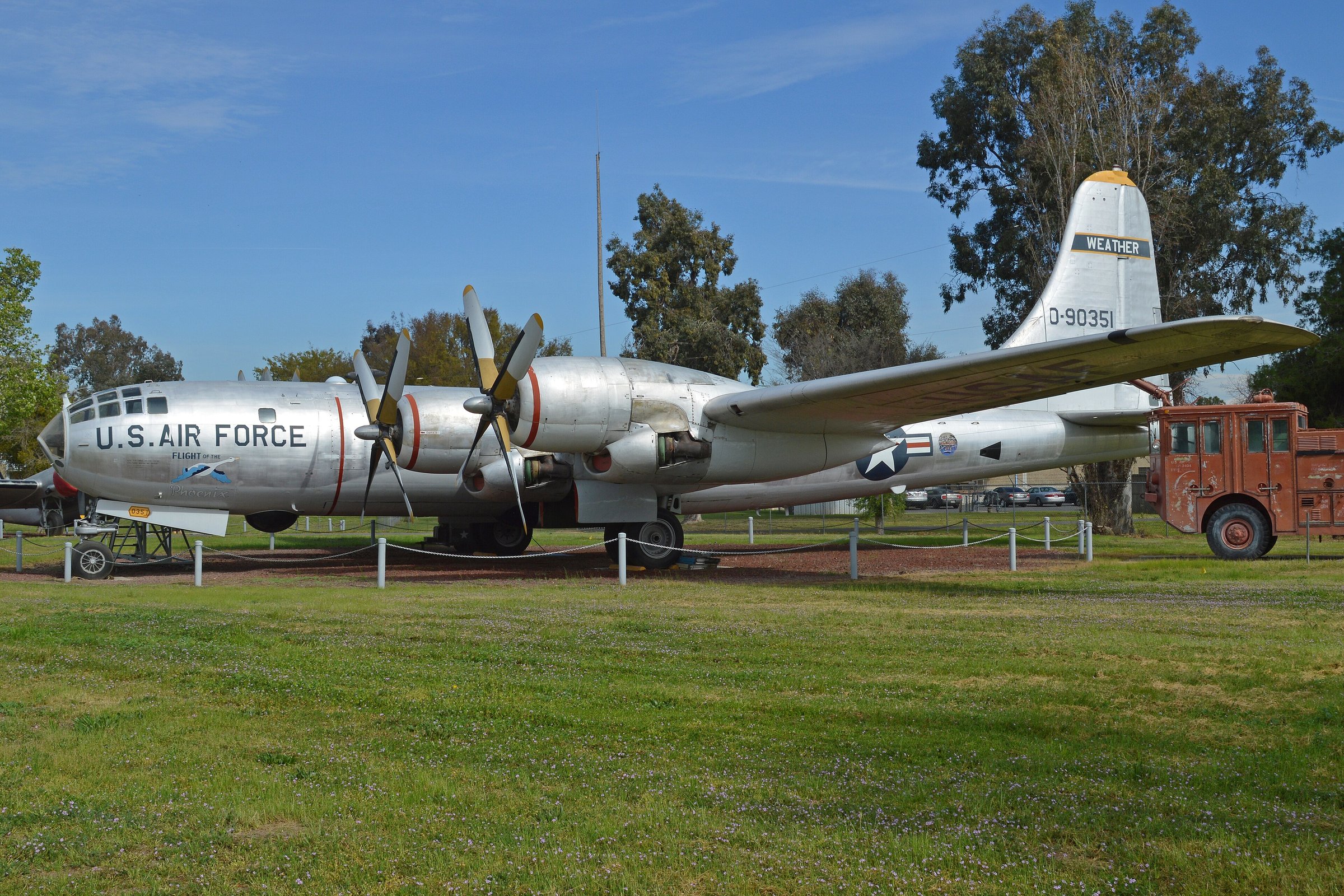
Many airframes were then converted: KB-50 and KB-50J tankers, the latter with two General Electric J47 jet pods to keep up with fighters, refuelled Tactical Air Command jets, and 36 B-50Ds became WB-50 hurricane-hunter and weather aircraft. The tanker and weather versions were retired in March 1965 after metal fatigue and corrosion were found in a crashed KB-50J.