Boeing KB-29 and other post-war B-29 conversions
From bomber to tanker, rescue plane, weather scout and rocket-plane mothership · Converted 1944–1950s · Tankers in service 1948
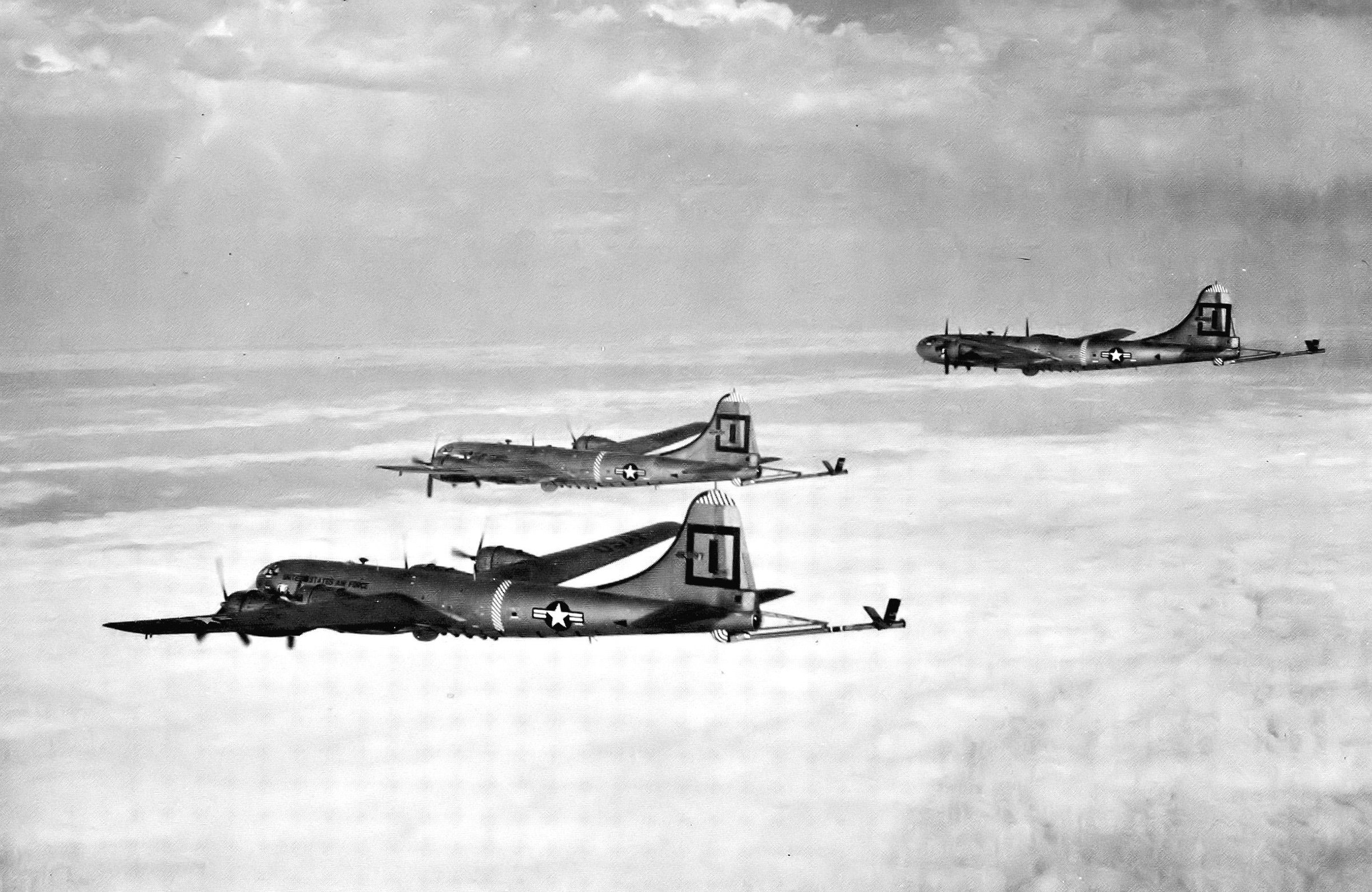
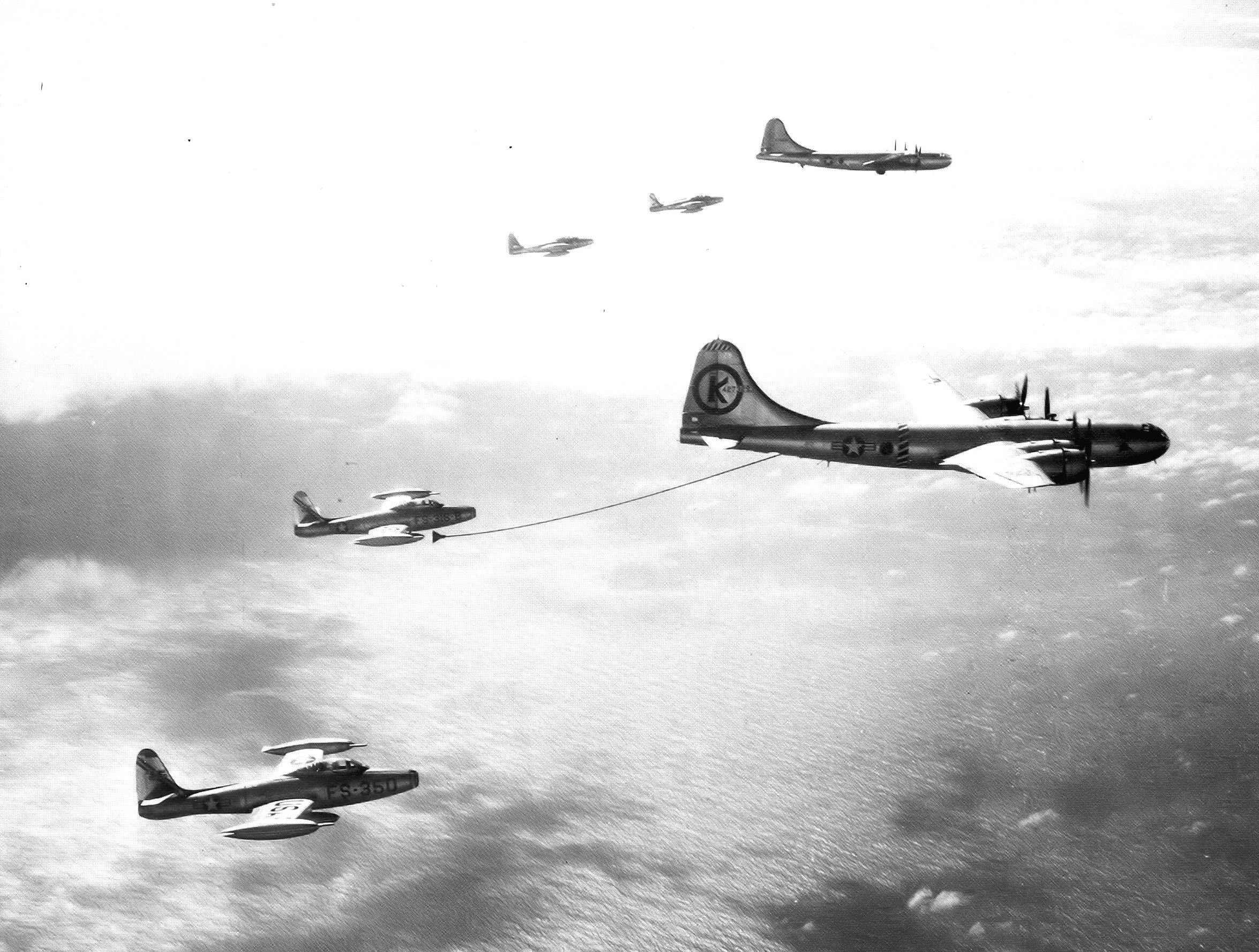
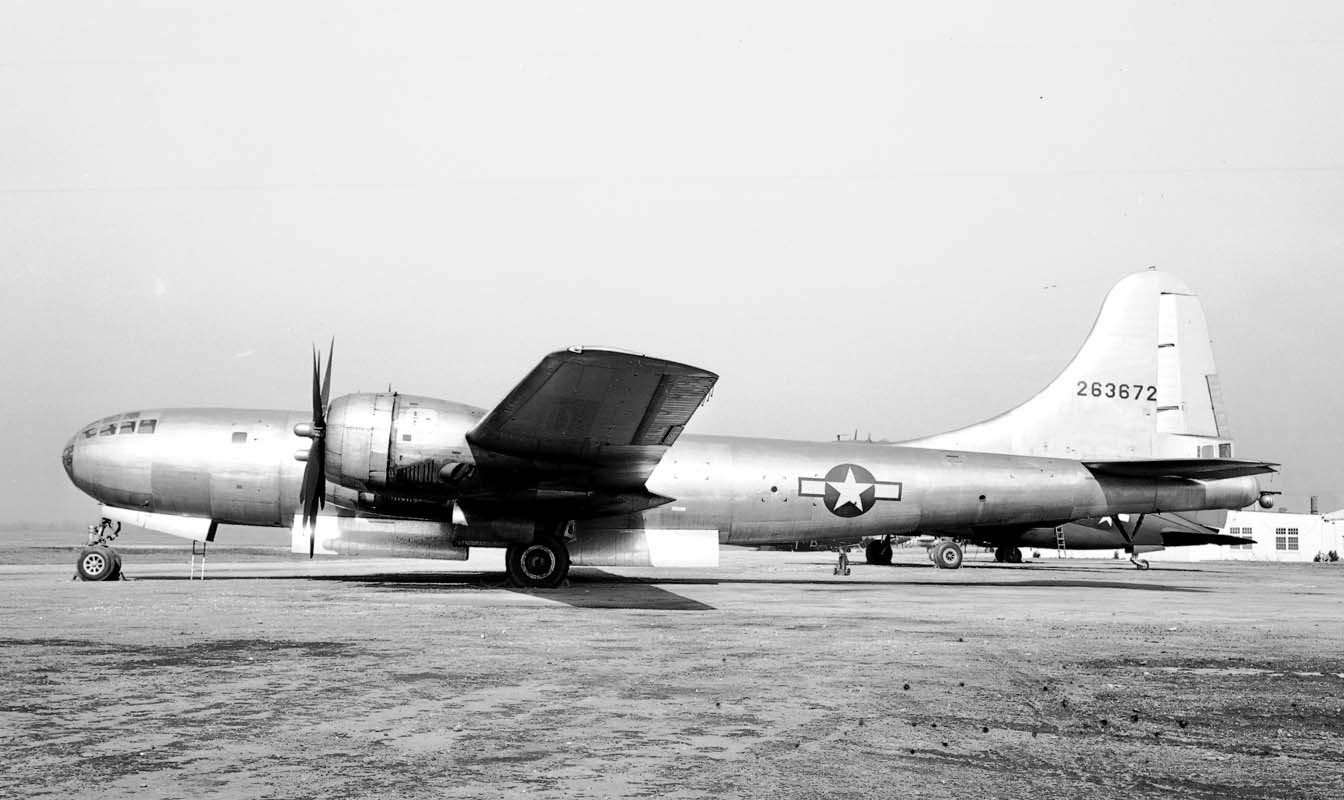
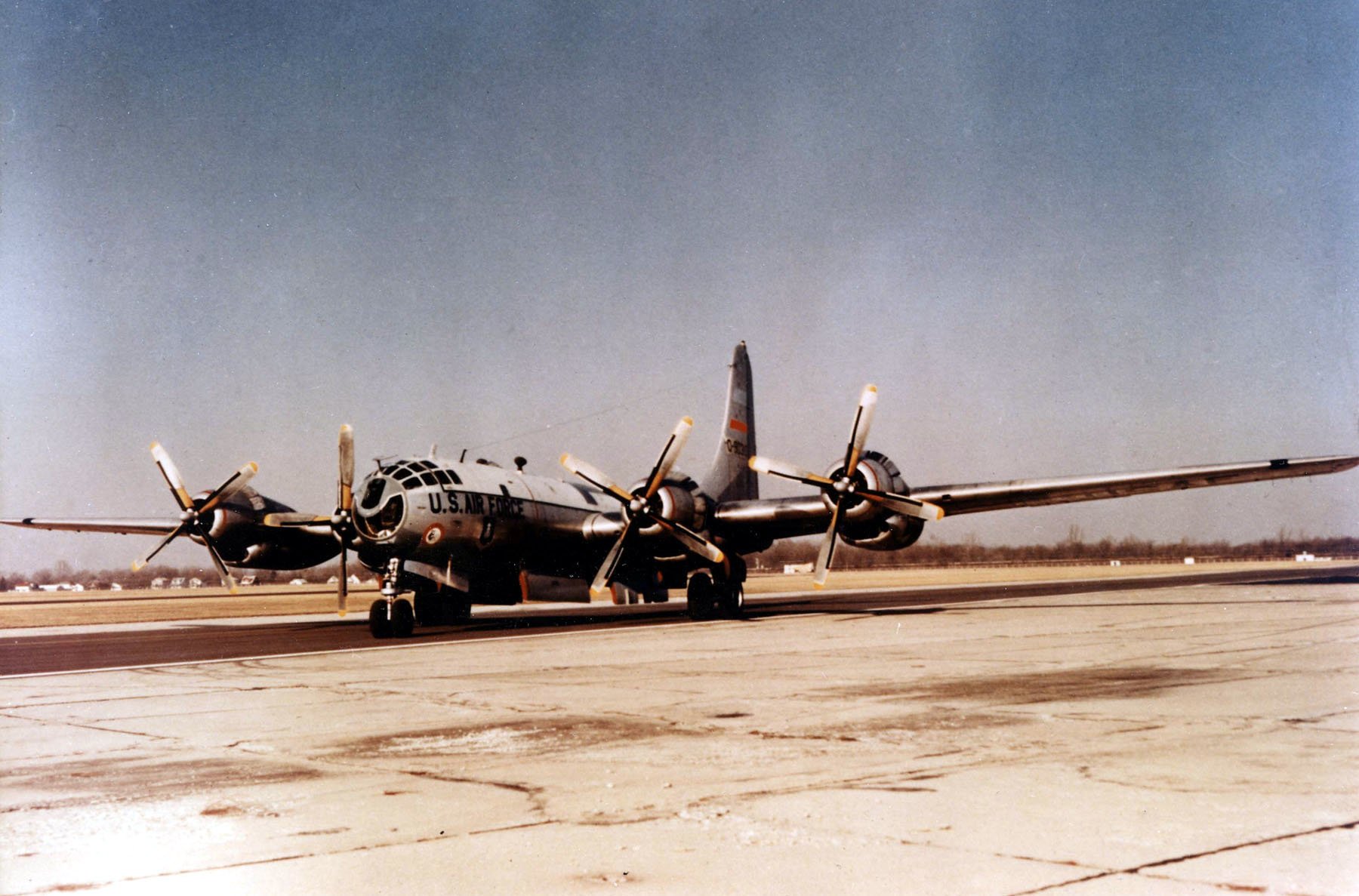
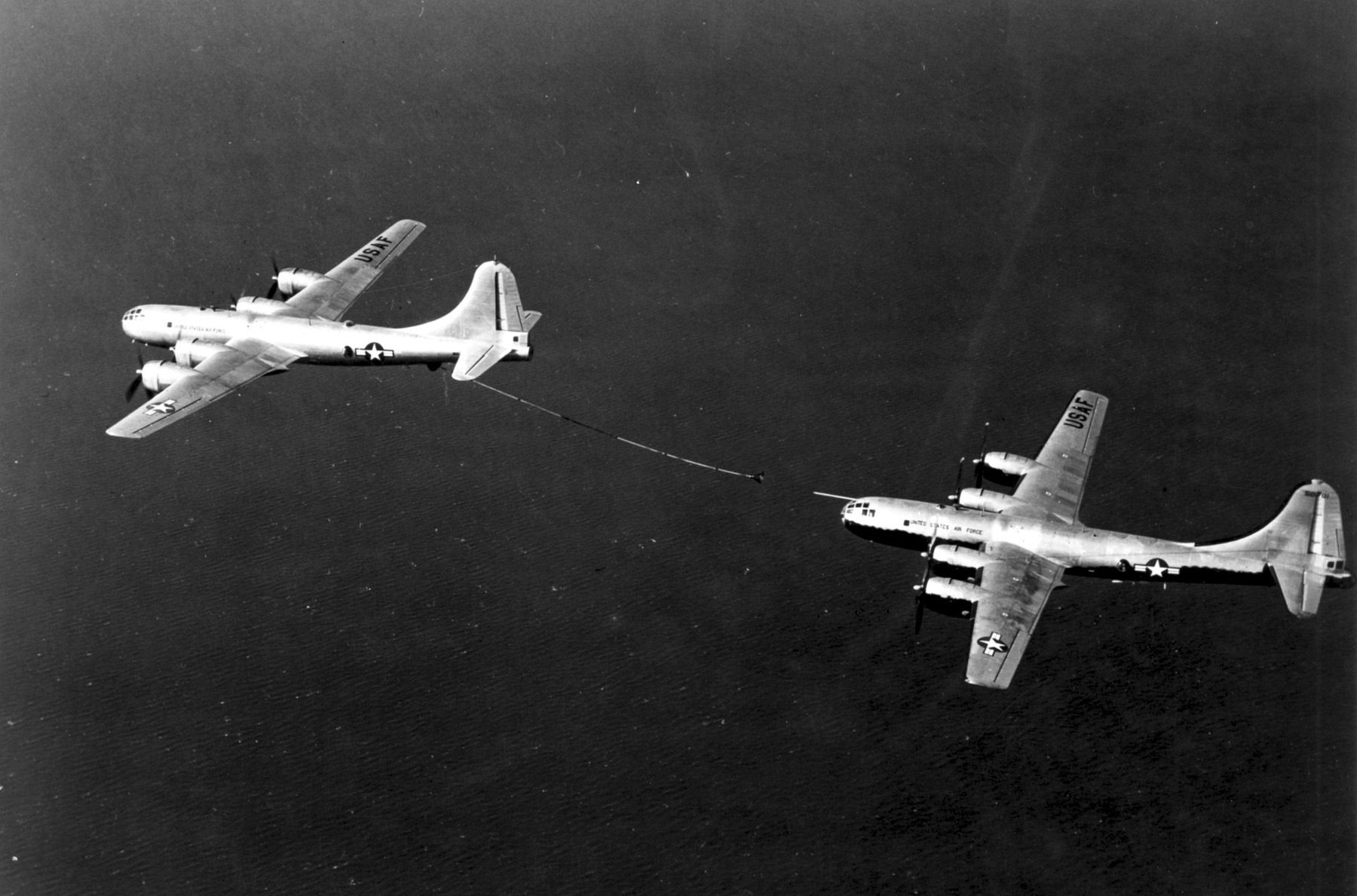
With thousands of B-29s left over after 1945, the Air Force turned many of them into specialists. The most important were the tankers: the KB-29M, first equipped by Flight Refuelling Ltd. in Britain with the looped-hose system, and the B-29MR receivers. In 1948 the 43d and 509th Air Refueling Squadrons formed with KB-29Ms, and in 1949 their tankers refuelled the B-50A "Lucky Lady II" four times during its first non-stop flight around the world. Several KB-29Ms were later converted to the probe-and-drogue system so that single-seat jet fighters could refuel.
Boeing's answer to the clumsy hose methods was the rigid "flying boom", steered by the operator with small V-shaped control surfaces at its tip. It first appeared on the KB-29P, of which 116 were converted, and became the standard US Air Force refuelling method. During the Korean War KB-29s refuelled F-84 Thunderjets on long-range missions.
Other conversions included the F-13/RB-29 photo-reconnaissance aircraft, the SB-29 "Super Dumbo" carrying a droppable lifeboat, WB-29 weather aircraft — one of which collected the first evidence of the Soviet atomic test in September 1949 — TB-29 trainers and radar targets, and motherships such as the EB-29 that carried the Bell X-1 and the Navy's P2B-1S "Fertile Myrtle" that launched the D-558-2 Skyrocket.