RAF Chinook HC1–HC6
Britain's heavy-lift fleet — CH-47C, D and F derivatives upgraded mark by mark since 1980 · First flight 1980 · In service 1980
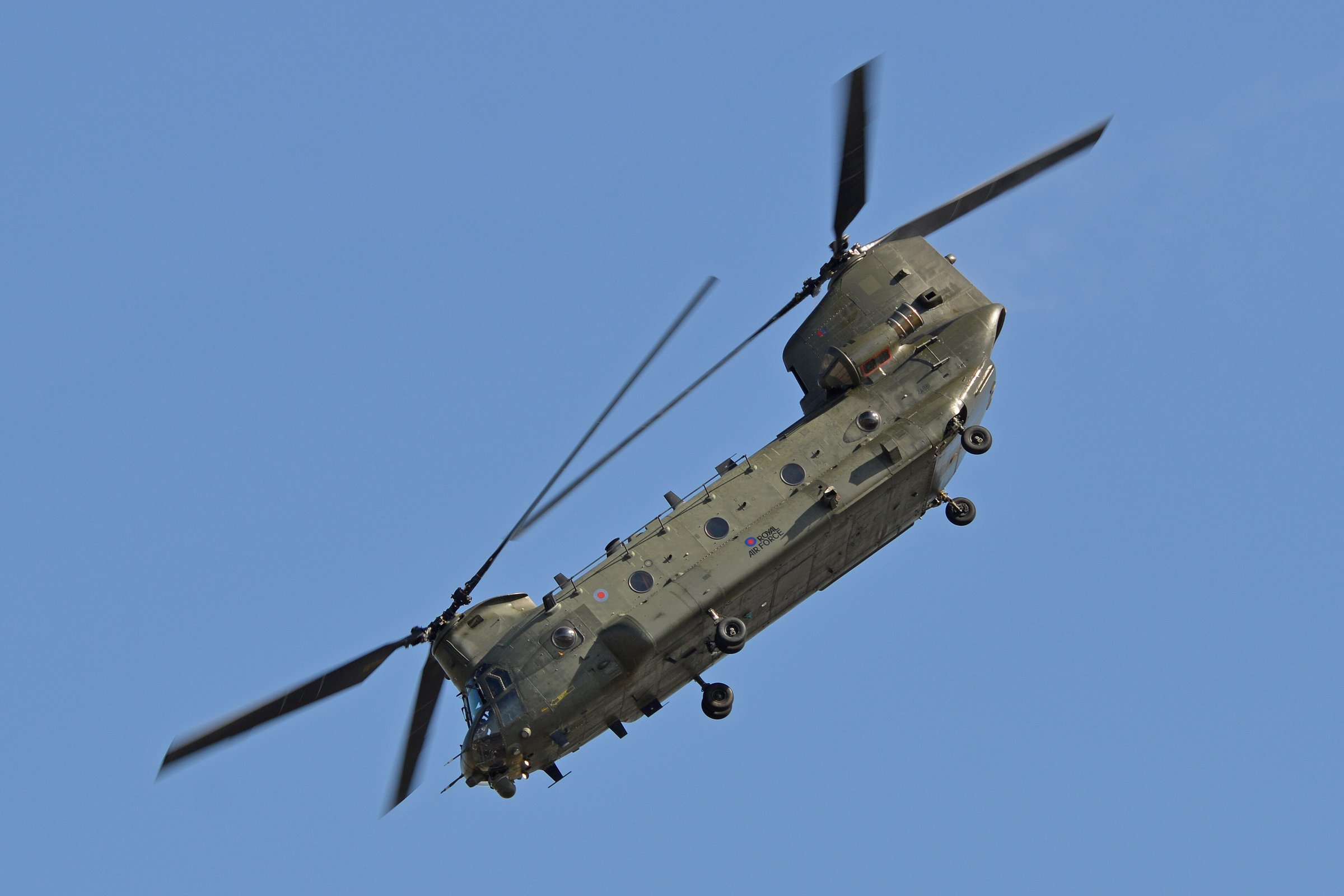
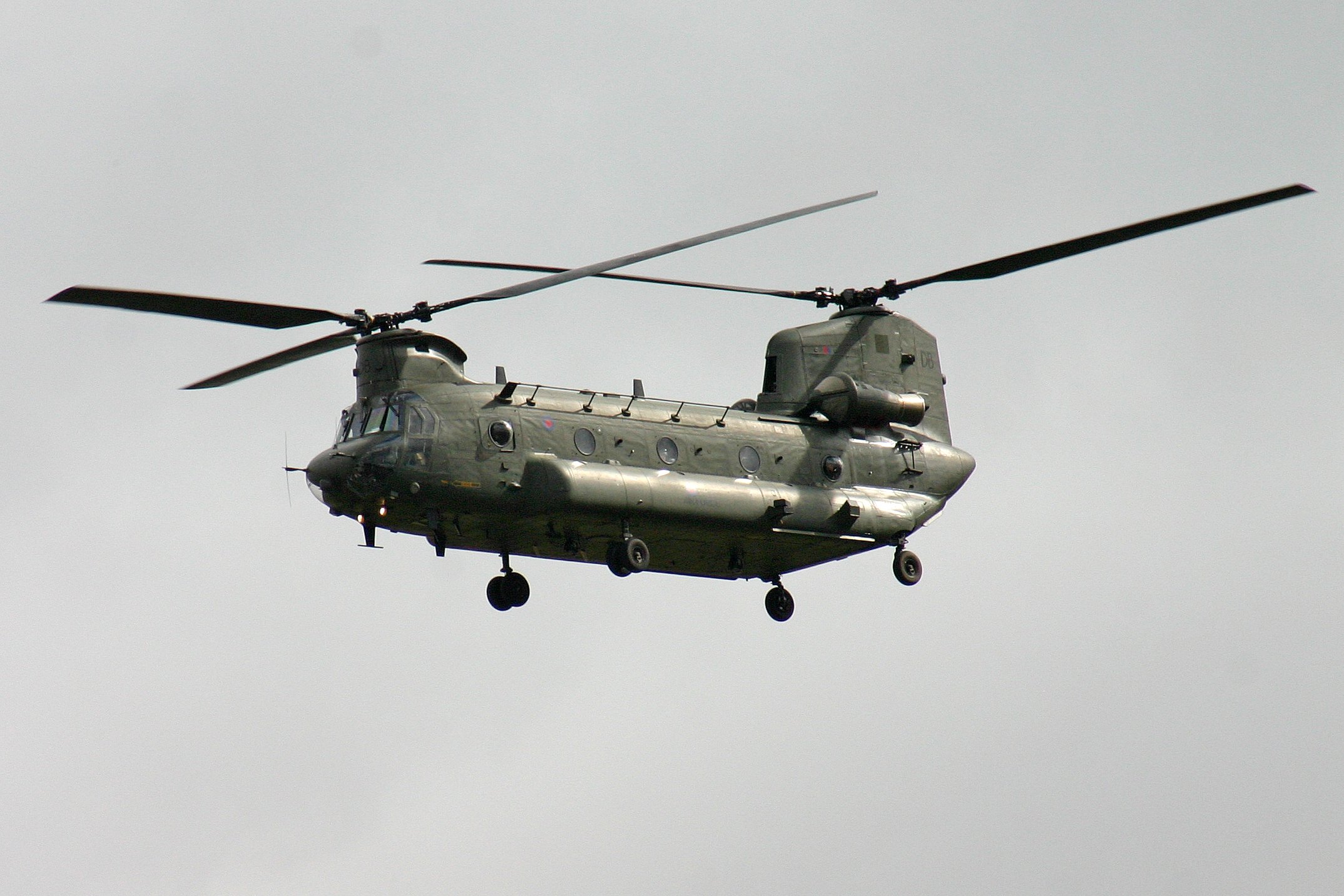
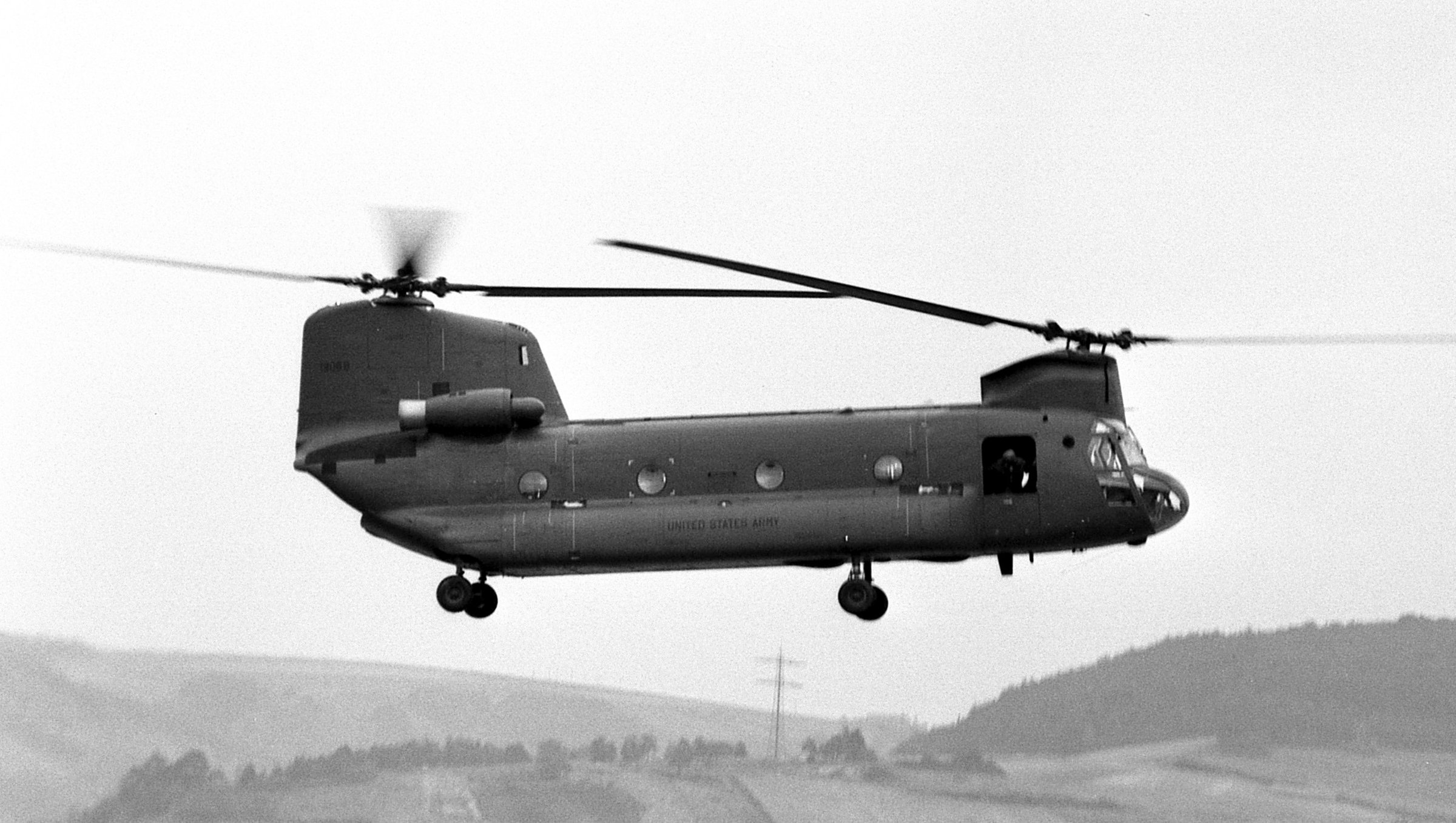
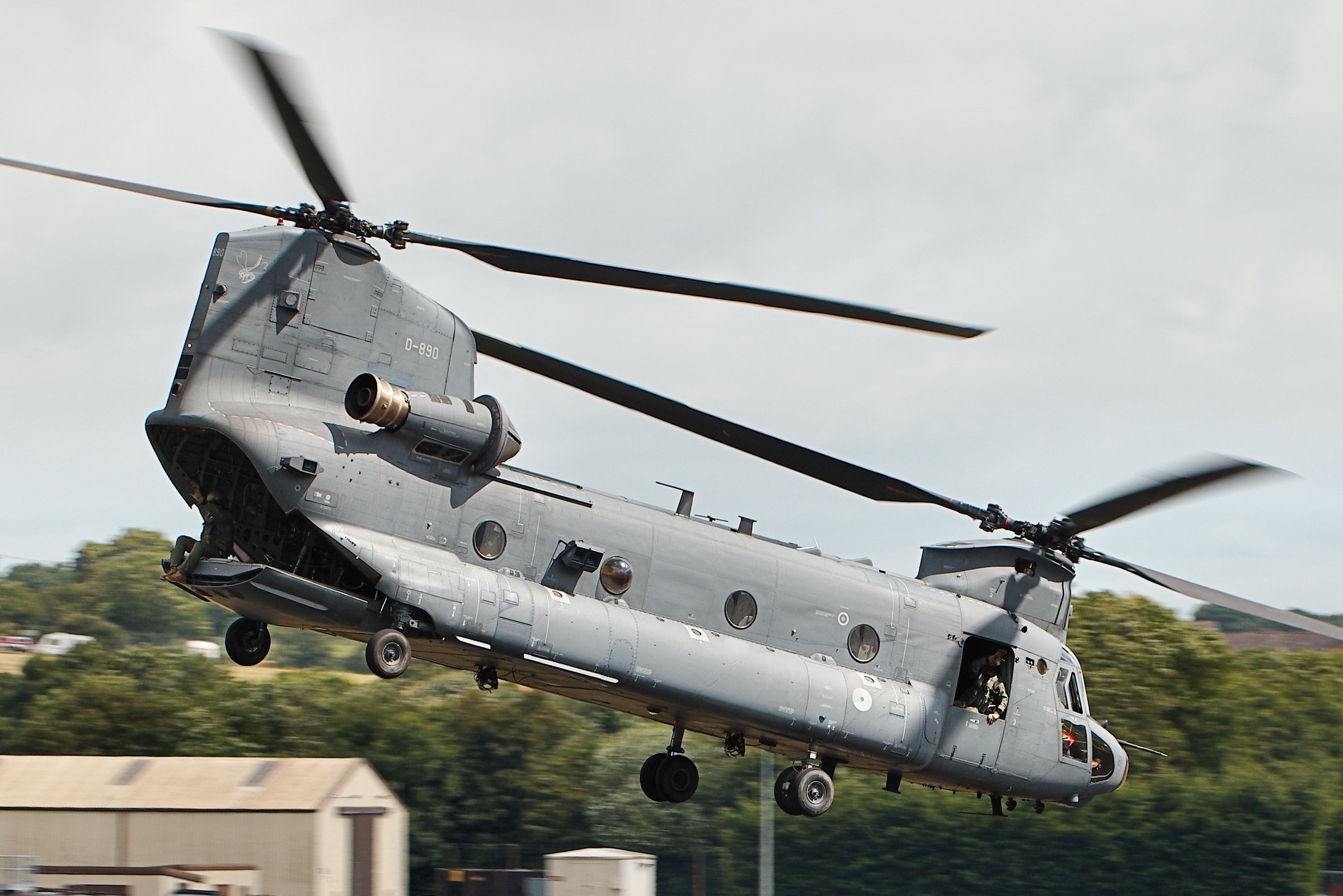
The Royal Air Force ordered 33 Chinooks in 1978. Designated HC1, they were based on the CH-47C with Lycoming T55-L-11E engines and entered service in December 1980; eight more followed in 1984–1986. In the 1982 Falklands conflict, 'Bravo November' was the only Chinook to survive the Exocet strike on the container ship Atlantic Conveyor and flew on from HMS Hermes, earning the nickname 'The Survivor'.
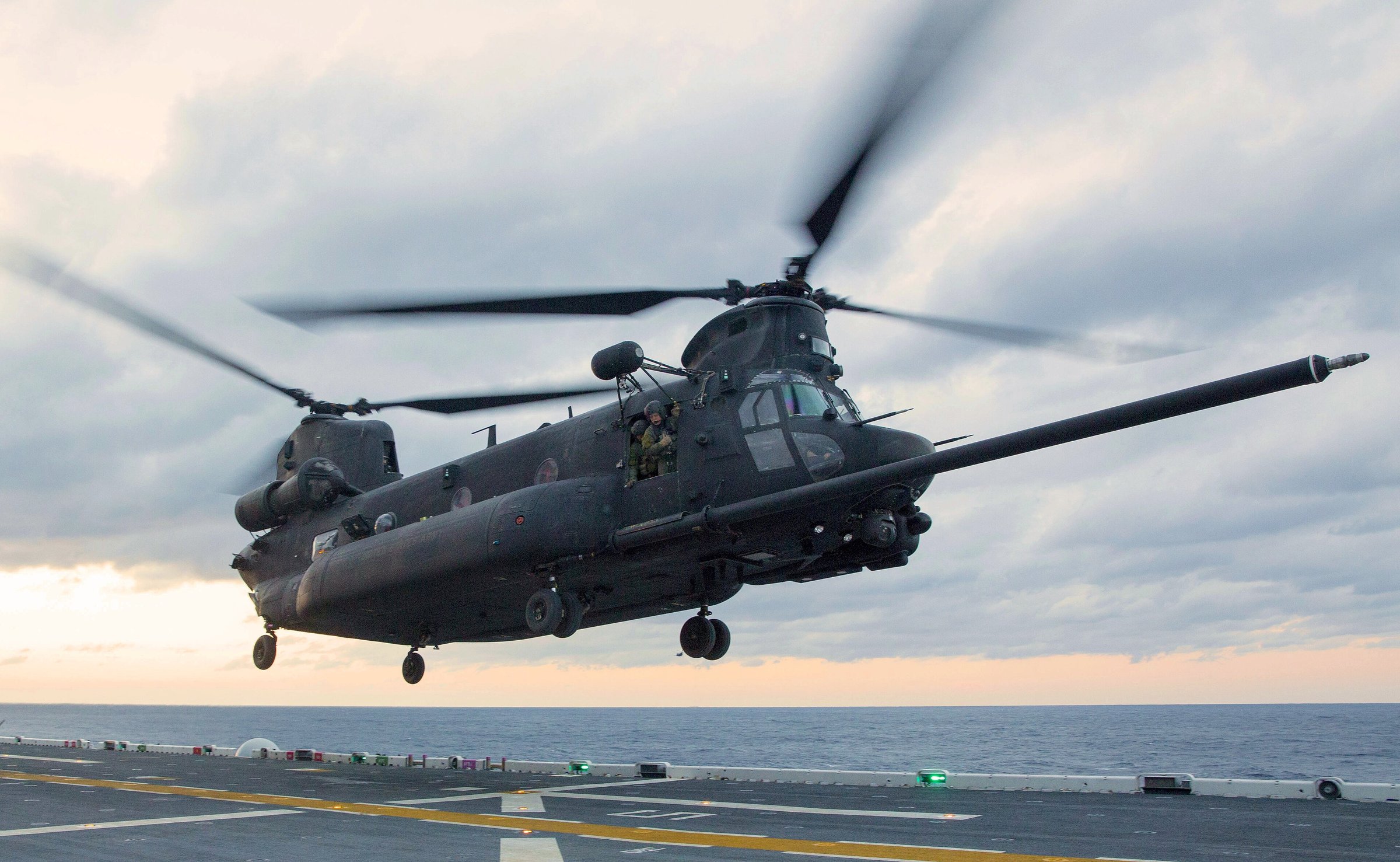
From 1993 the surviving HC1s were rebuilt to CH-47D standard as the HC2, joined by new-build HC2s and six strengthened HC2As. Eight special-forces HC3s delivered in 2001 could not be certified because of avionics software problems and had to be reworked. Under Project Julius, launched in 2008, HC2/2As became HC4s with a Thales glass cockpit — the first flew on 9 December 2010 — and the HC3s became HC5s.
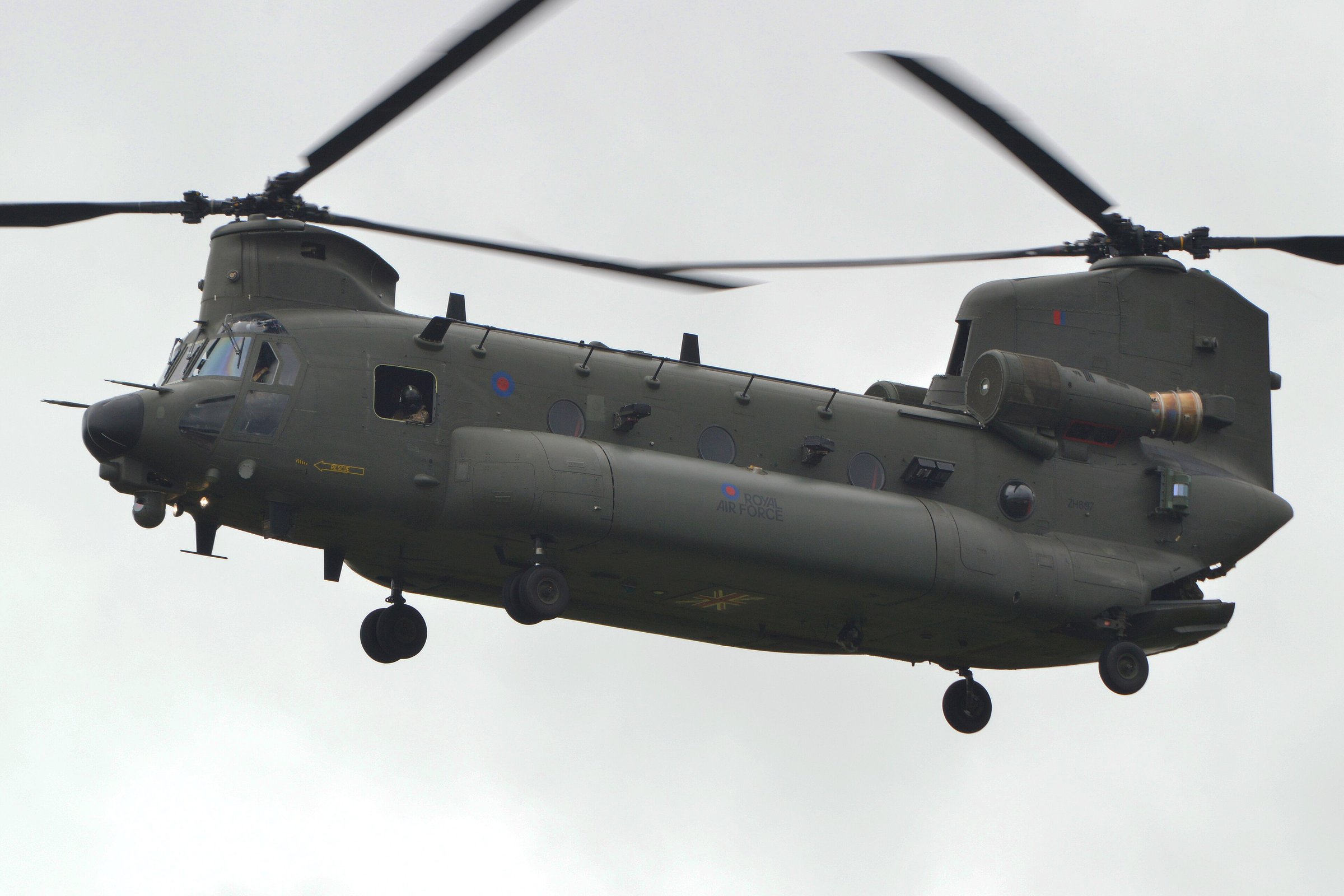
The HC6 is a new-build aircraft derived from the CH-47F; 14 were delivered, the last in December 2015. From 2017 the HC4s were upgraded to HC6A with a digital automatic flight control system, and by February 2022 the fleet stood at 60 aircraft. The Chinook Force is based at RAF Odiham, with the joint Chinook/Puma training unit at RAF Benson.