Boeing E-3A Sentry
The original AWACS — a Boeing 707 airframe carrying a 9 m rotating radar dome, flown by the USAF, NATO and Saudi Arabia · First flight 1972 (EC-137D) · In service 1977
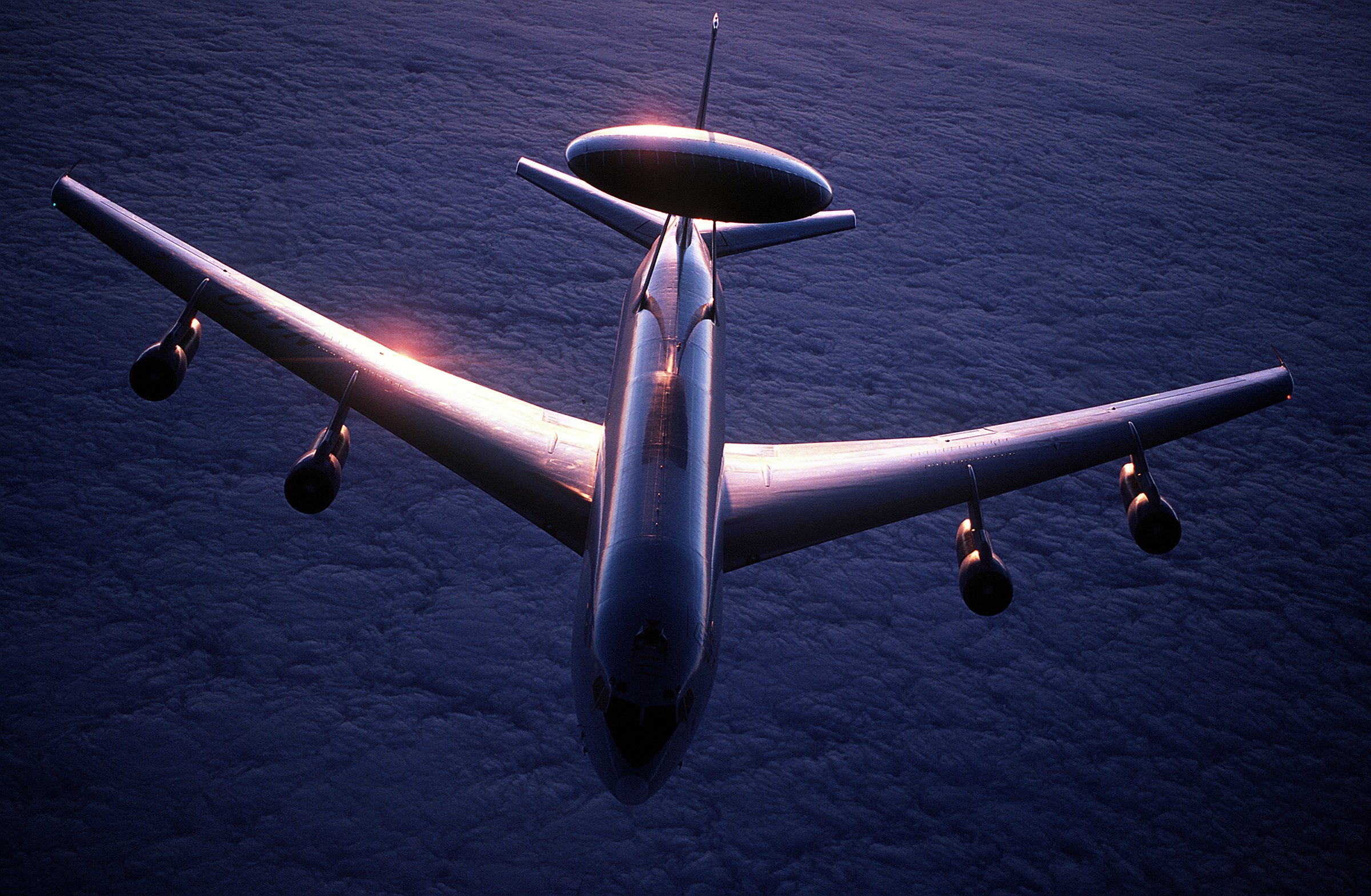
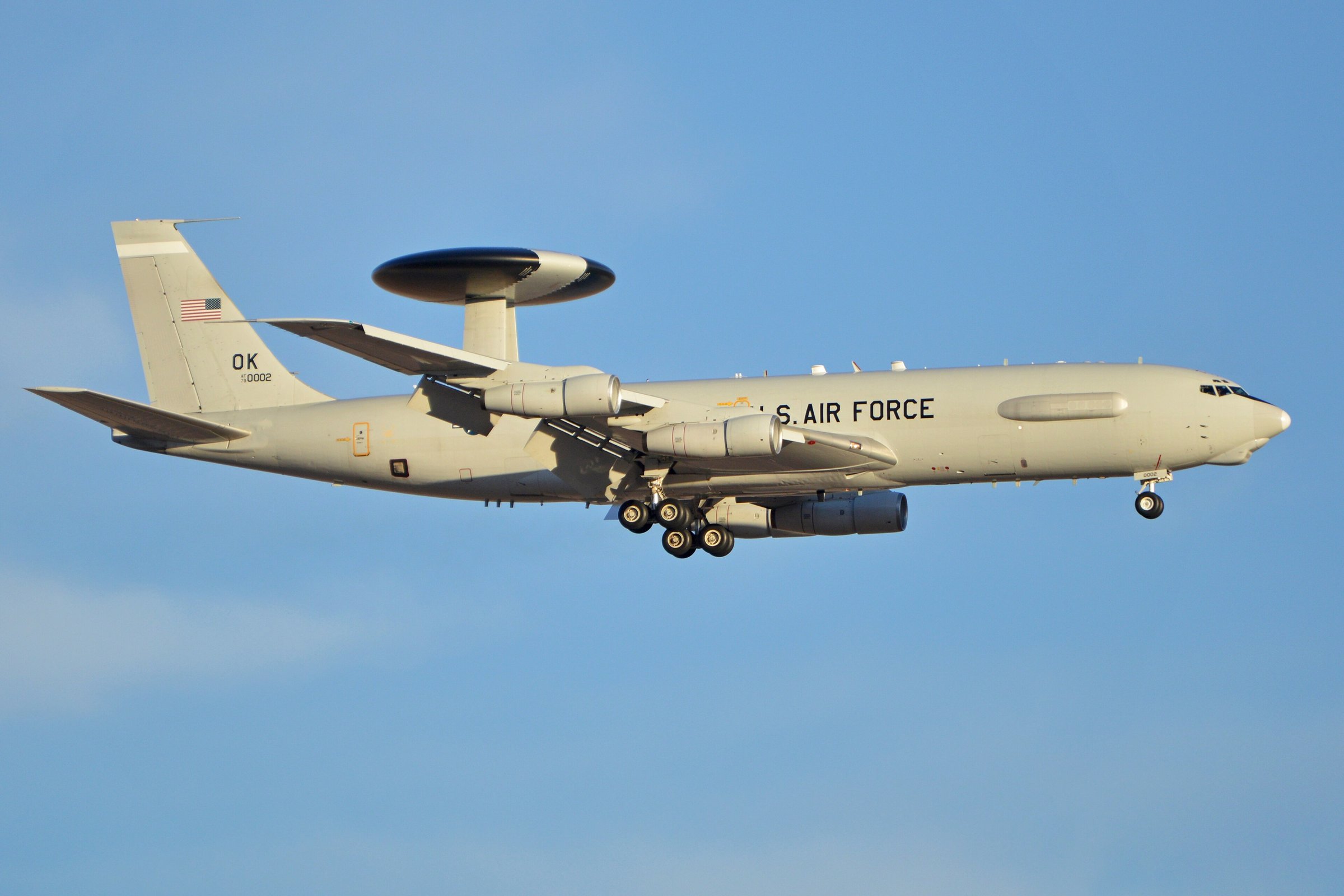
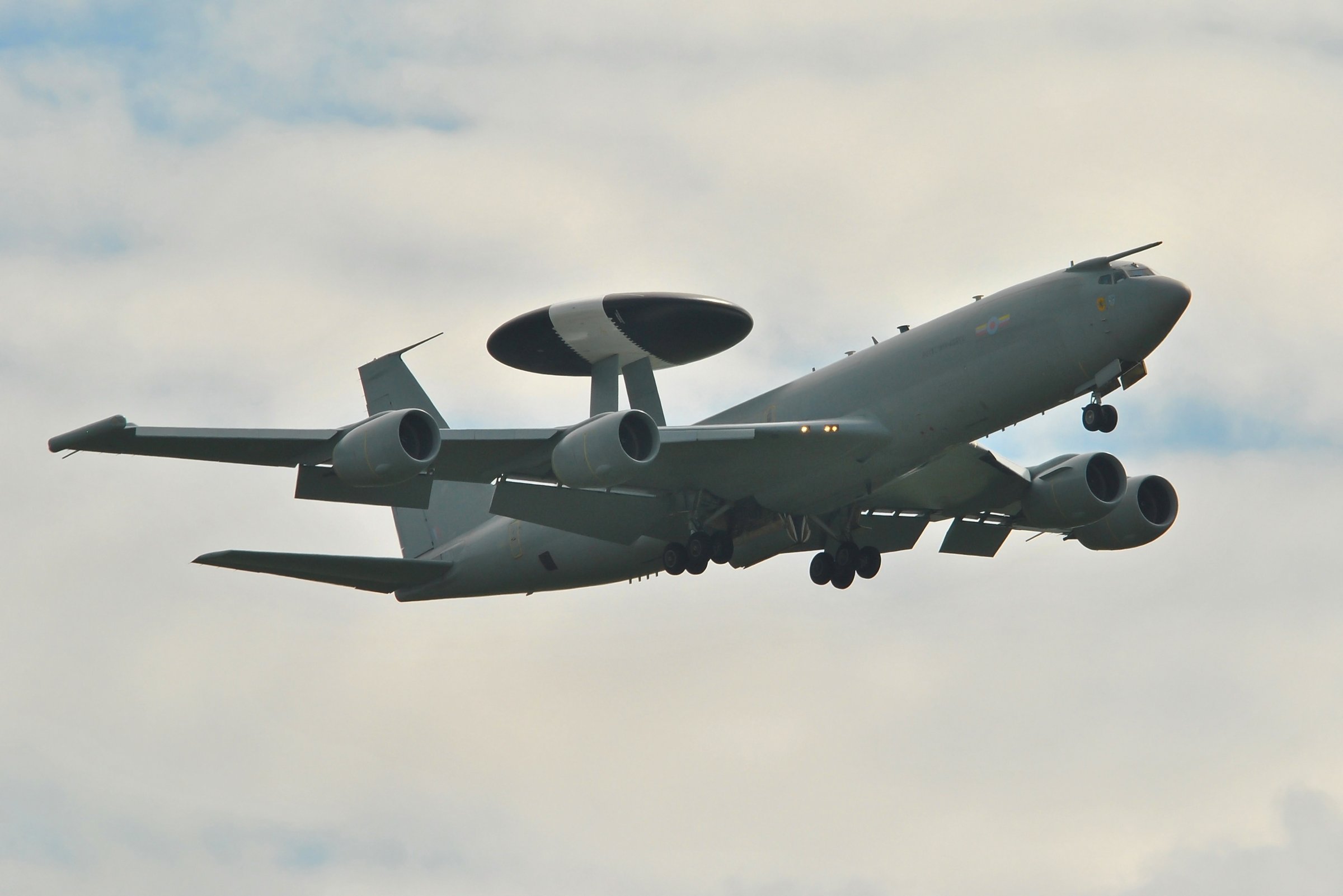
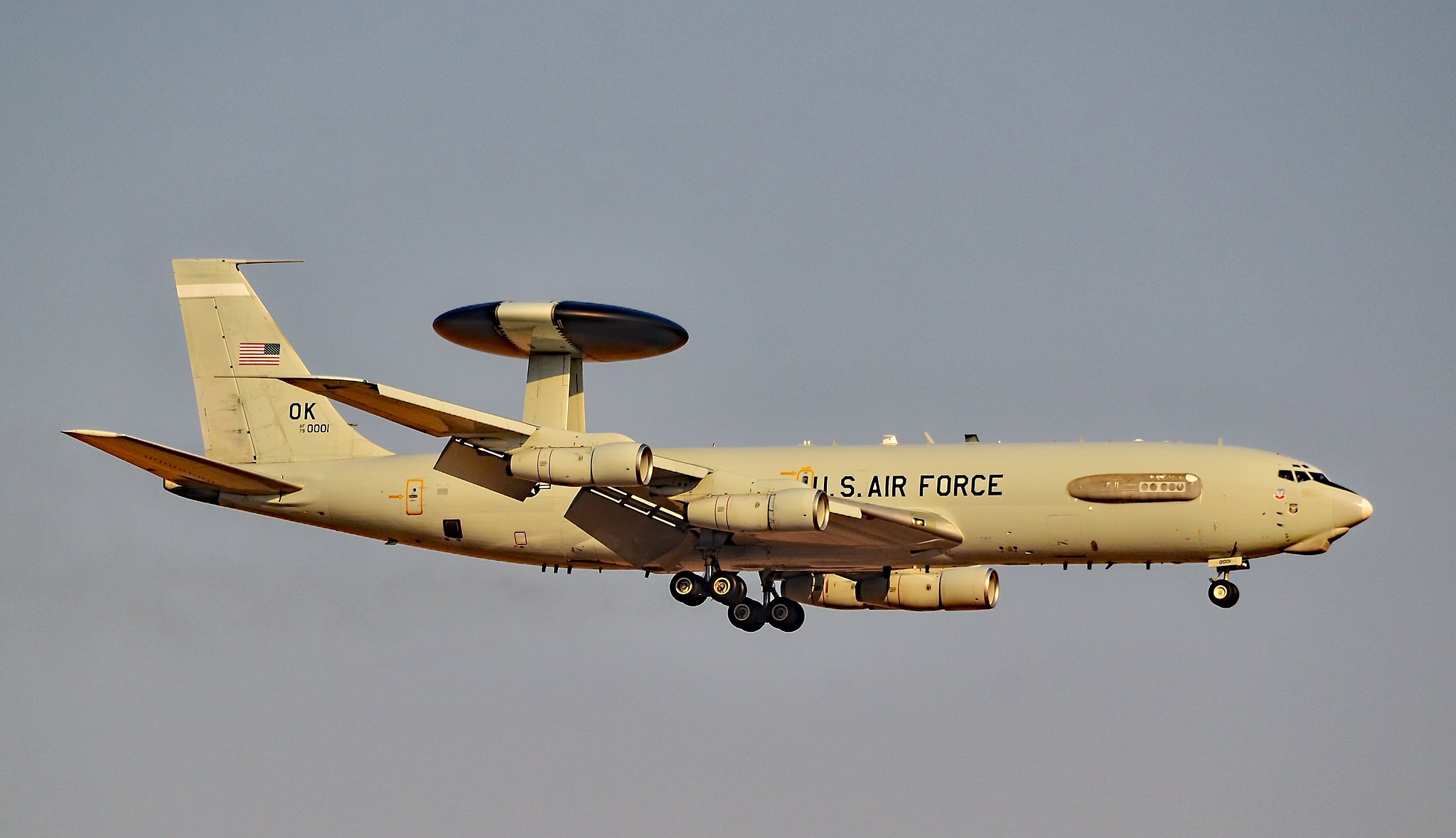
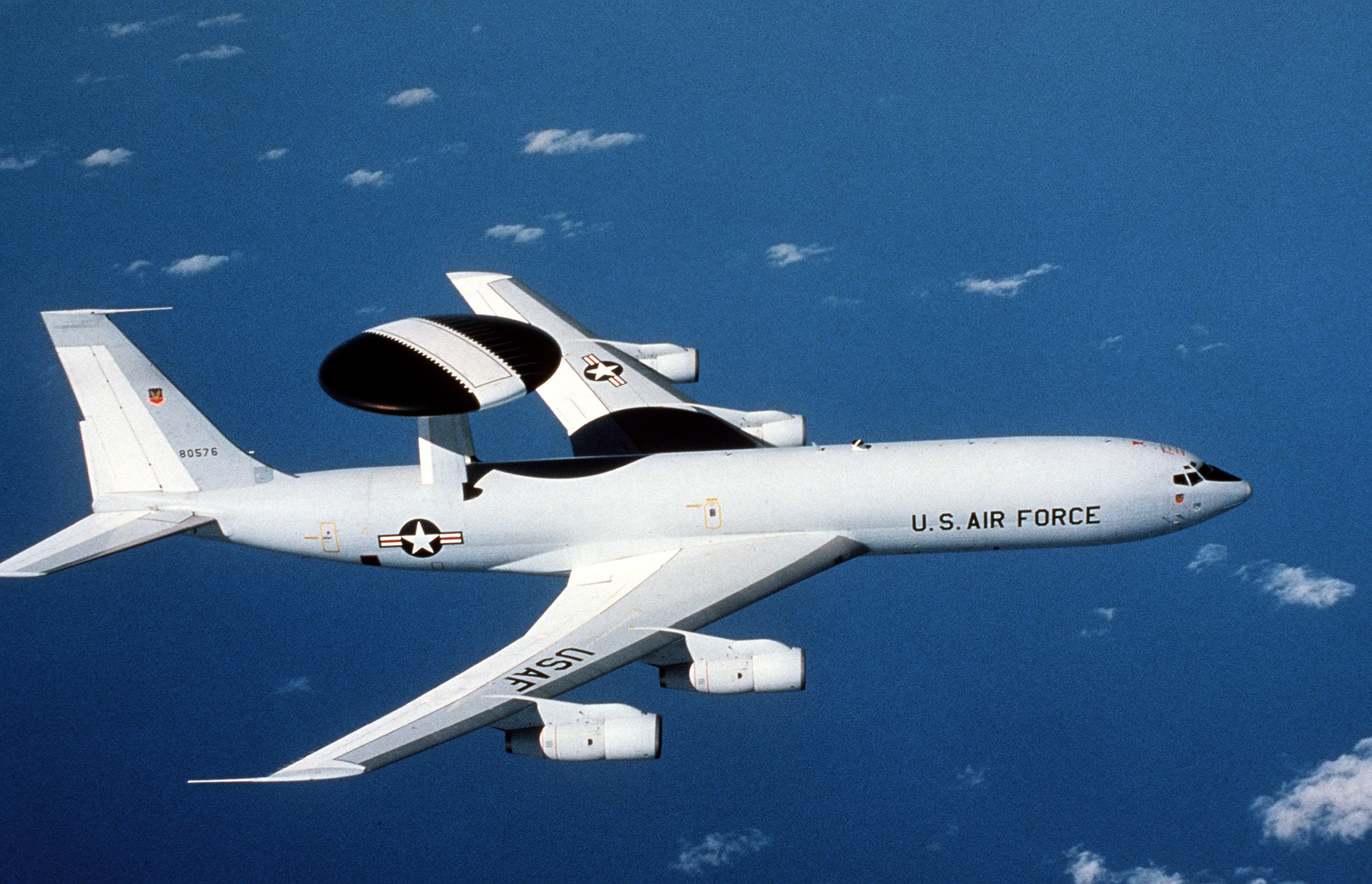
The E-3 grew out of the USAF's search for a flying radar that could see low-level aircraft over land, where ground clutter blinded earlier systems. Two EC-137D prototypes based on the Boeing 707-320 first flew on 9 February 1972 to compare competing Westinghouse and Hughes radars; Westinghouse won, and the production E-3A combined the AN/APY-1 pulse-Doppler radar with a rotodome 9.1 m across and 1.8 m thick, mounted above the rear fuselage. The first E-3A was delivered to Tinker AFB, Oklahoma, in March 1977, and the prototypes were later brought up to the same standard. One early airframe, kept by Boeing for trials, became the JE-3C test aircraft.
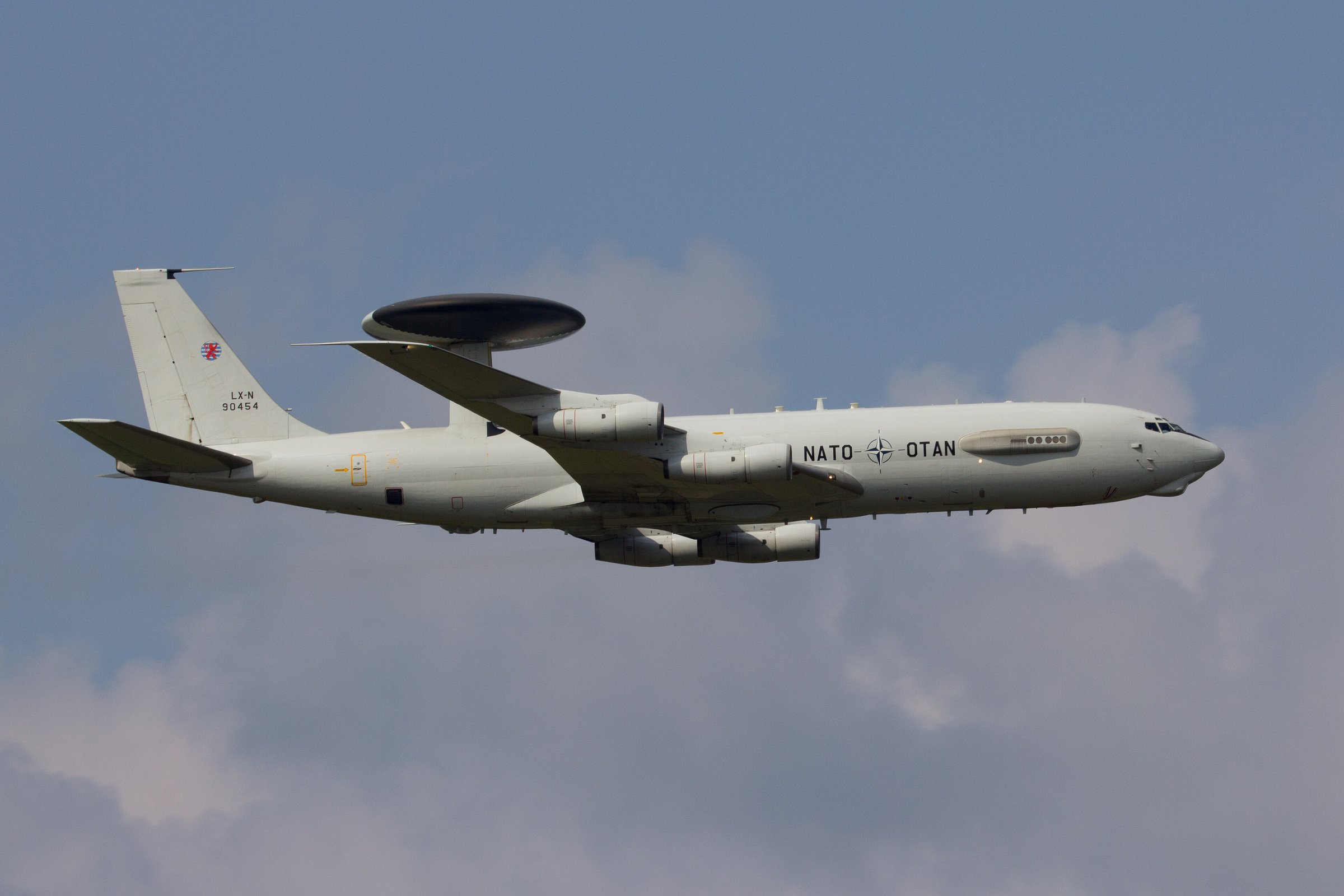
NATO bought 18 E-3As as a jointly funded fleet — the alliance's first commonly owned major weapon system. The aircraft carry Luxembourg LX-N registrations, as Luxembourg is their country of registry, and are operated by the multinational NATO E-3A Component from NATO Air Base Geilenkirchen in Germany, with the first delivered in January 1982. One was lost when it overran the runway at Preveza-Aktion, Greece, on 14 July 1996 without injuries, and three more were retired between 2015 and 2018; NATO has announced plans to replace the type with a new AEW&C aircraft.
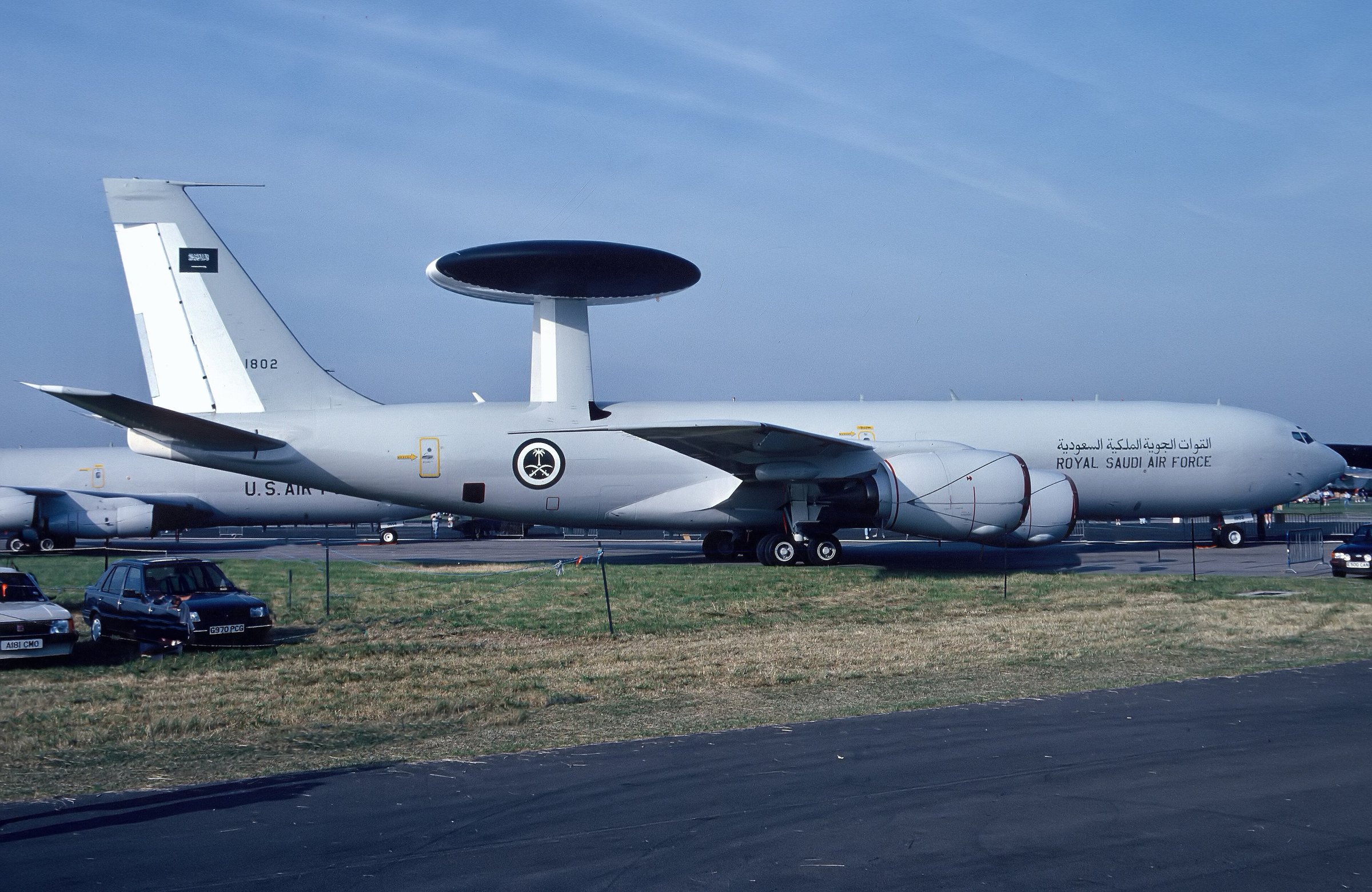
Saudi Arabia ordered five E-3As in the early 1980s, delivered in 1986–1987. Unlike the US and NATO aircraft they were powered by CFM International CFM56 turbofans, which later became the standard for the British and French Sentries. Across all customers, 68 E-3s were built between 1977 and 1992.