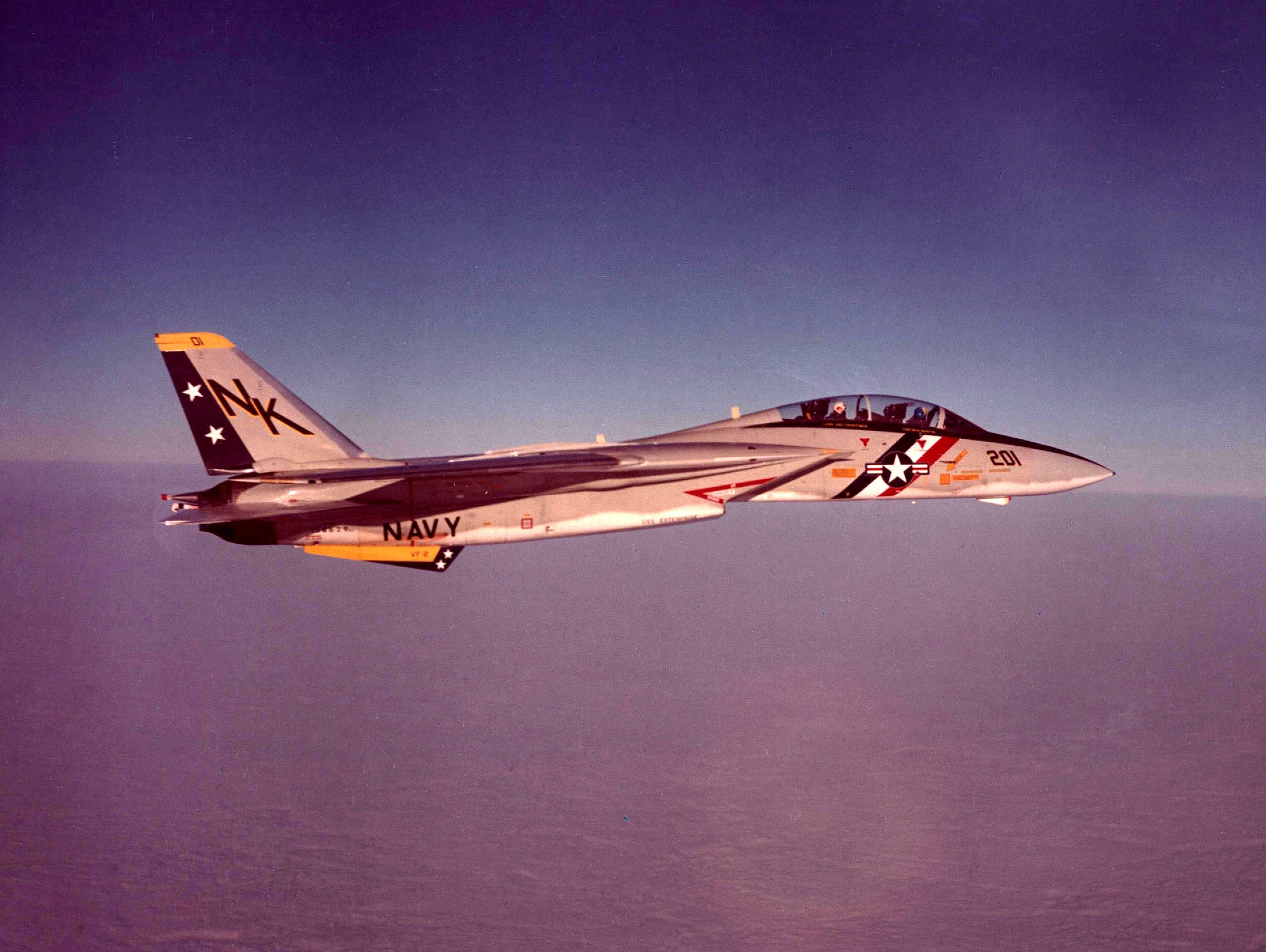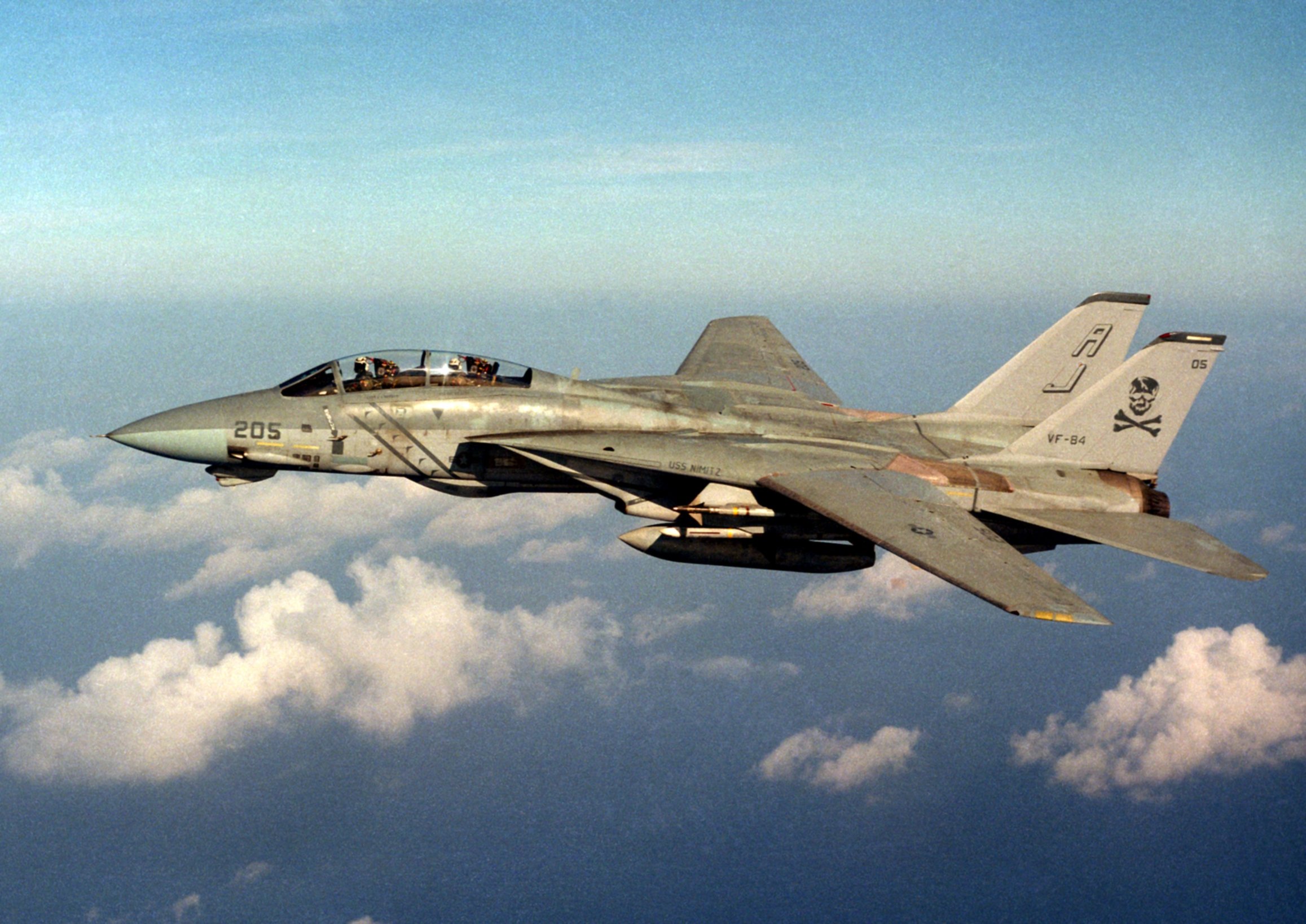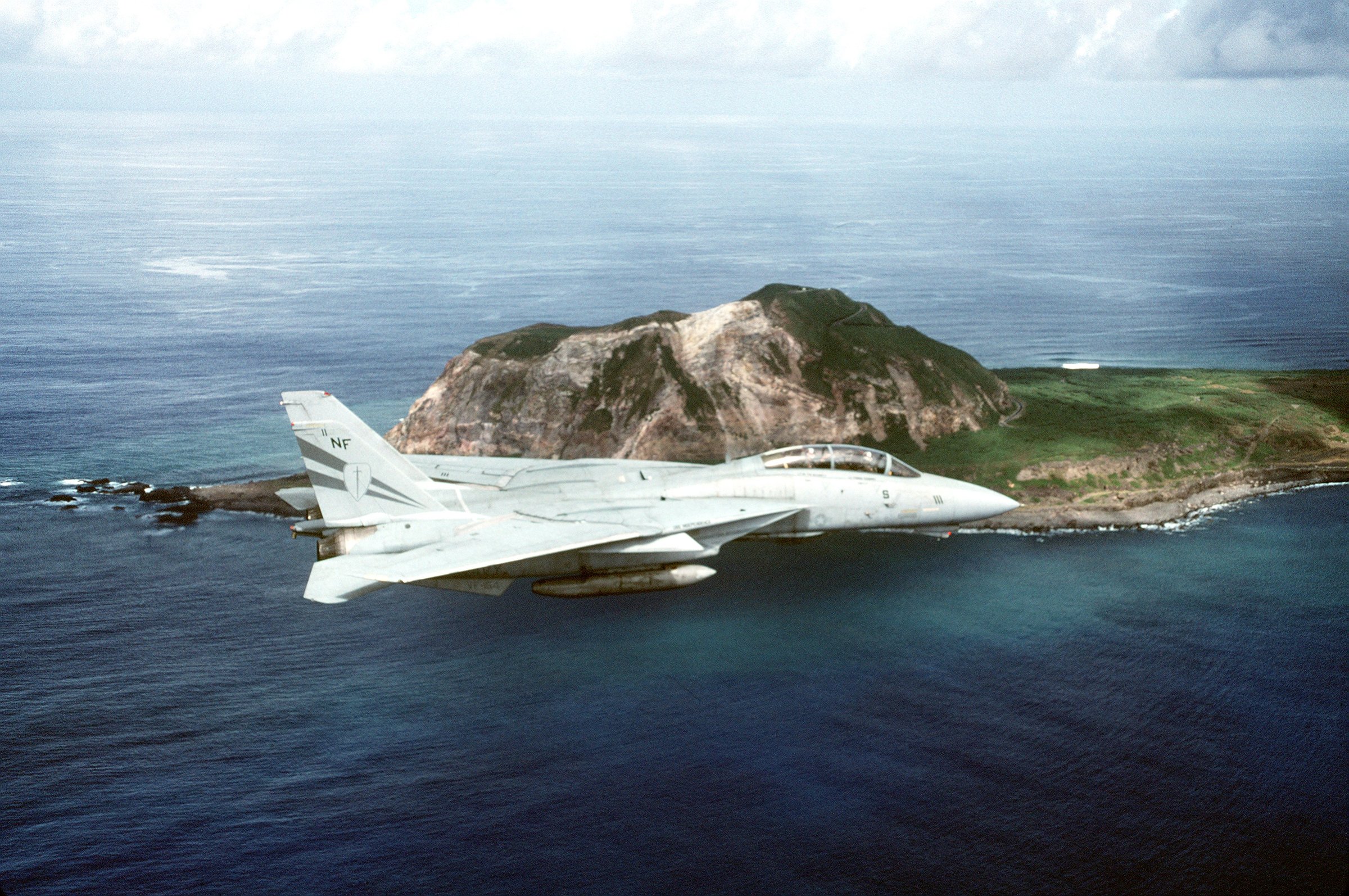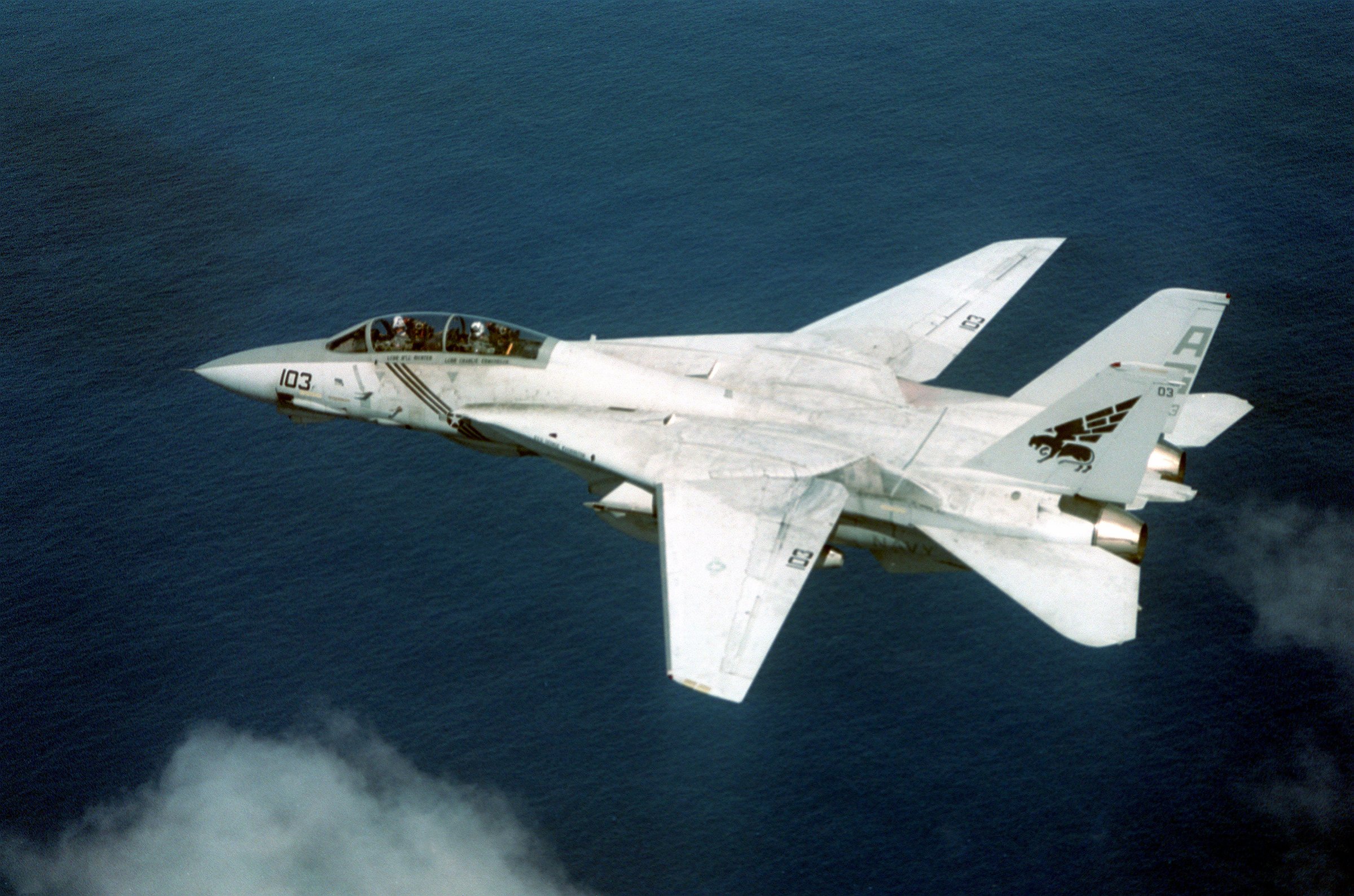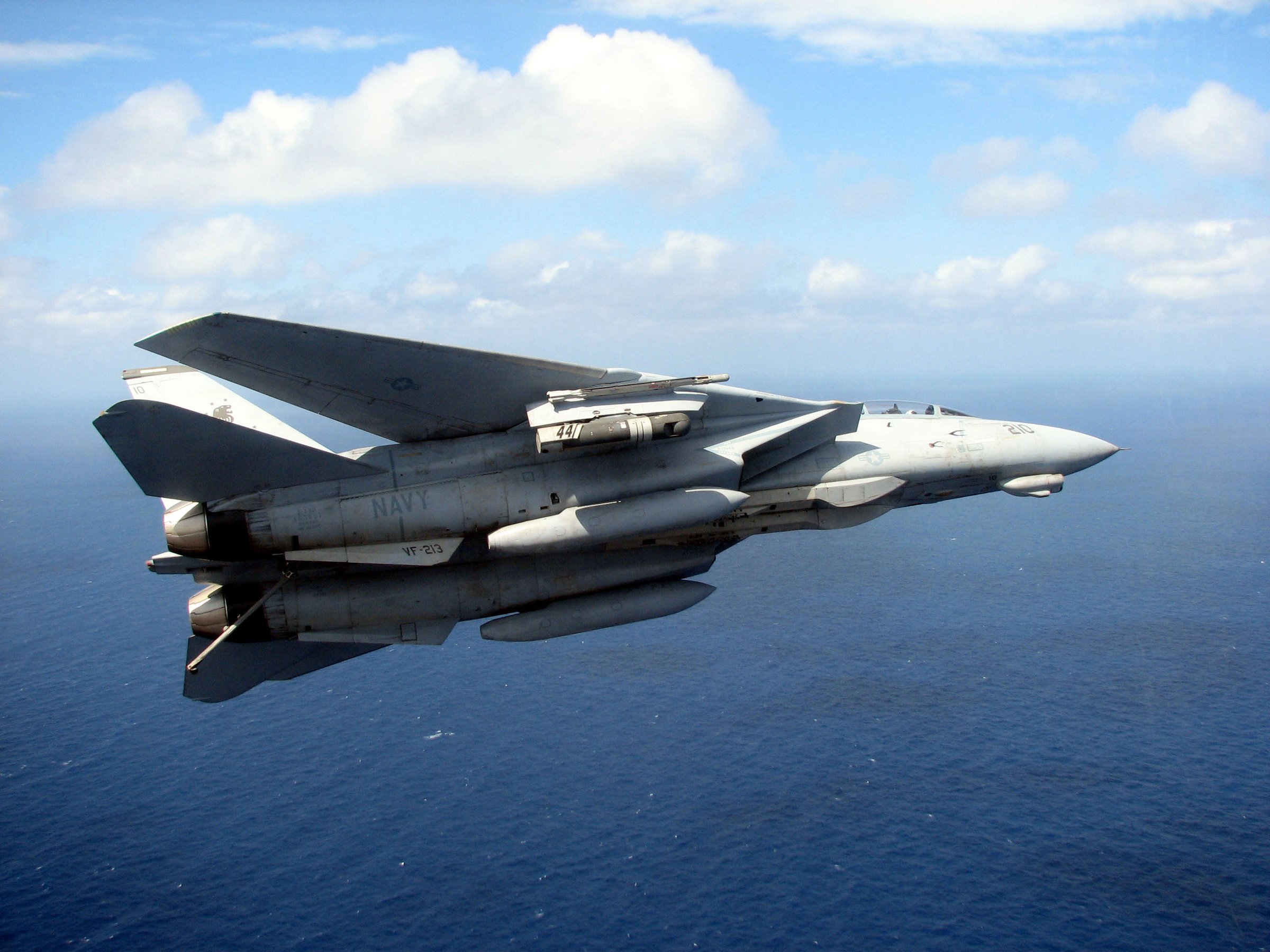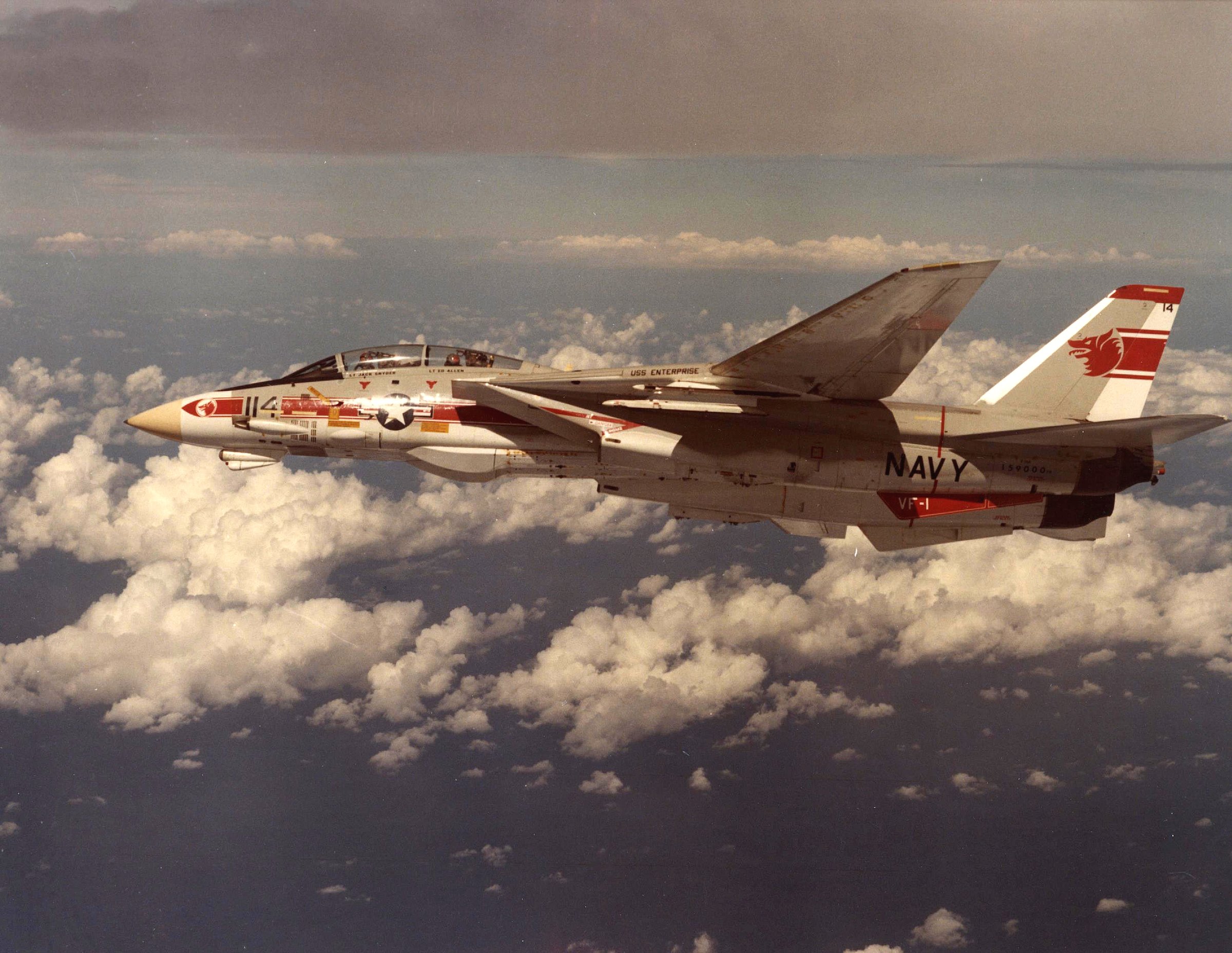
Grumman F-14A Tomcat
The original swing-wing fleet defender — AWG-9 radar, Phoenix missiles and TF30 engines · First flight 1970 · In service 1974
The F-14A was the initial two-seat, twin-engine, all-weather interceptor built by Grumman for the US Navy. It first flew on 21 December 1970, and the first 12 aircraft were pre-production prototypes. Its variable-sweep wing moved automatically between take-off and supersonic dash positions, while the Hughes AN/AWG-9 radar and the AIM-54 Phoenix missile gave it a fleet-defence reach no other fighter of its time could match. The Pratt & Whitney TF30 engines, however, were a weak point: with them the thrust-to-weight ratio at maximum take-off weight was only about 0.56.
Navy service began in September 1974 with squadrons VF-1 "Wolfpack" and VF-2 "Bounty Hunters" aboard USS Enterprise, which covered the American withdrawal from Saigon in April 1975. The Navy received 558 F-14As; from 1981 they also carried the TARPS reconnaissance pod, and in the 1990s the LANTIRN targeting pod turned the fighter into a precision bomber nicknamed "Bombcat". On 19 August 1981, two VF-41 F-14As shot down two Libyan Su-22s over the Gulf of Sidra, and on 4 January 1989 two VF-32 Tomcats downed two Libyan MiG-23s in the same area.
Iran was the only export customer. An order placed in January 1974 grew to 80 aircraft, of which 79 were delivered from January 1976 before the 1979 revolution stopped the programme. Iranian F-14As saw heavy use in the 1980–1988 Iran–Iraq War, and Iran kept a small number flying long after the US Navy retired its last Tomcats in 2006.