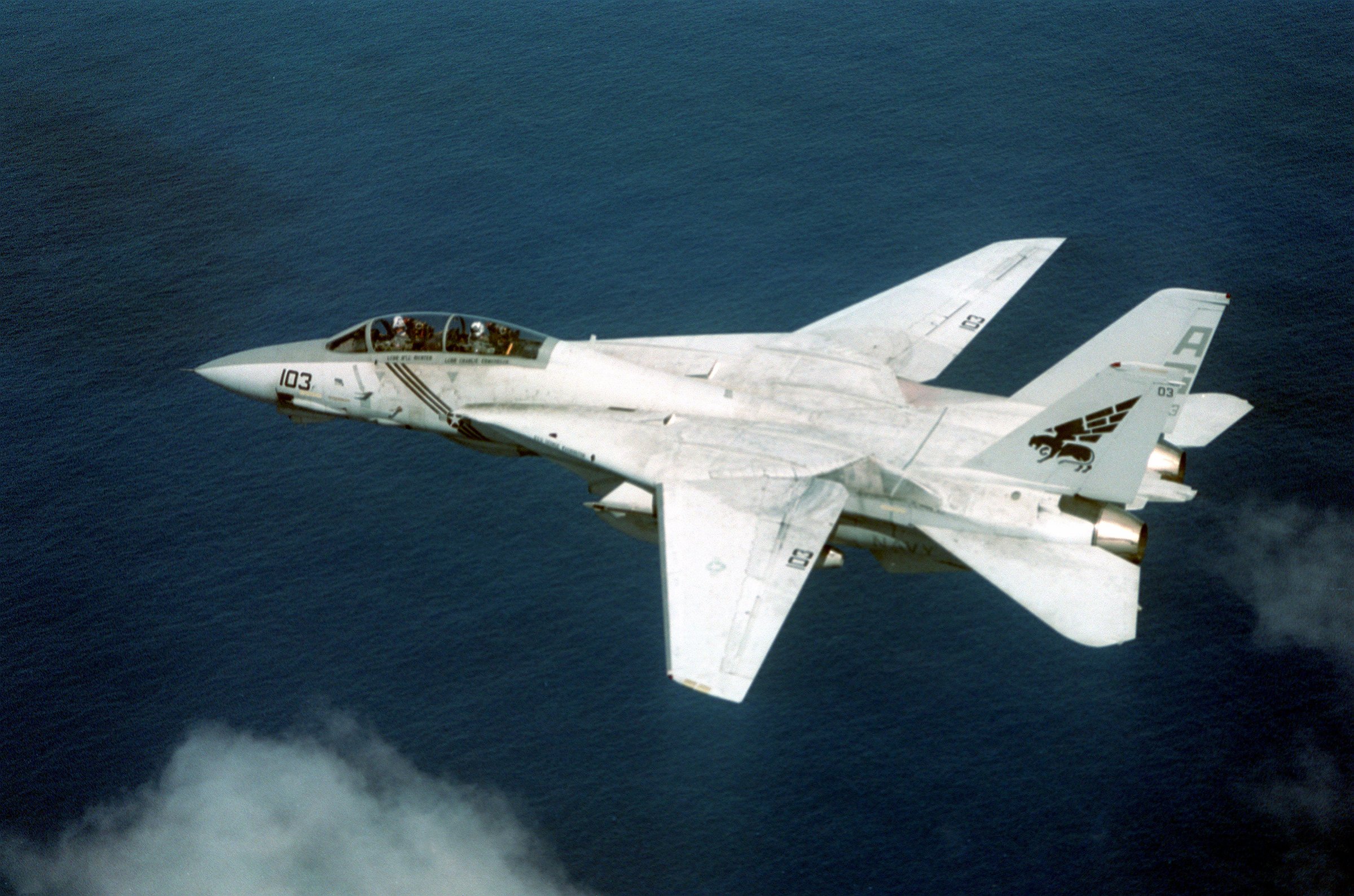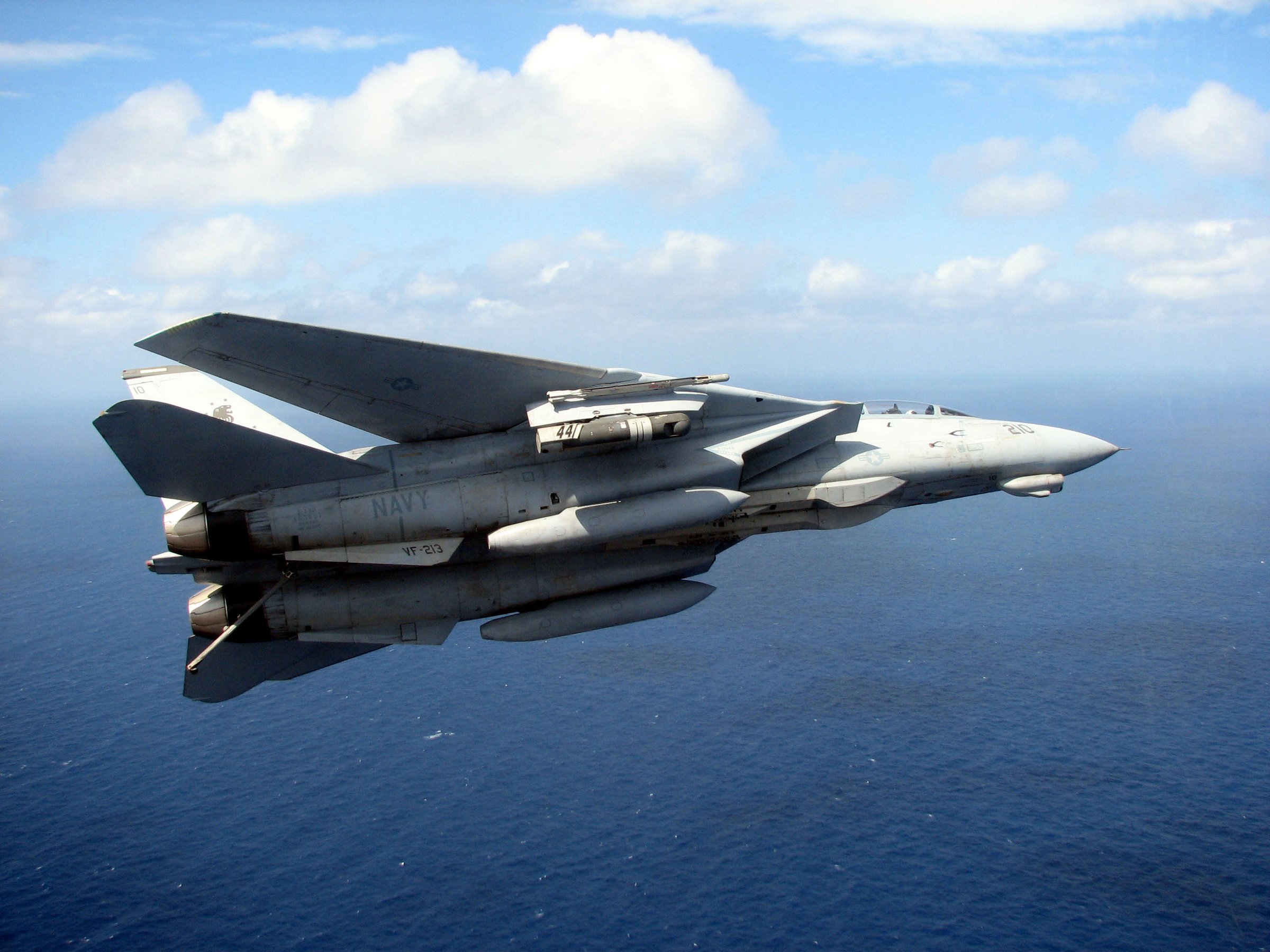
Grumman F-14D Super Tomcat
The final Tomcat — F110 power plus a digital cockpit and the APG-71 radar · First flight 1987 · In service 1991
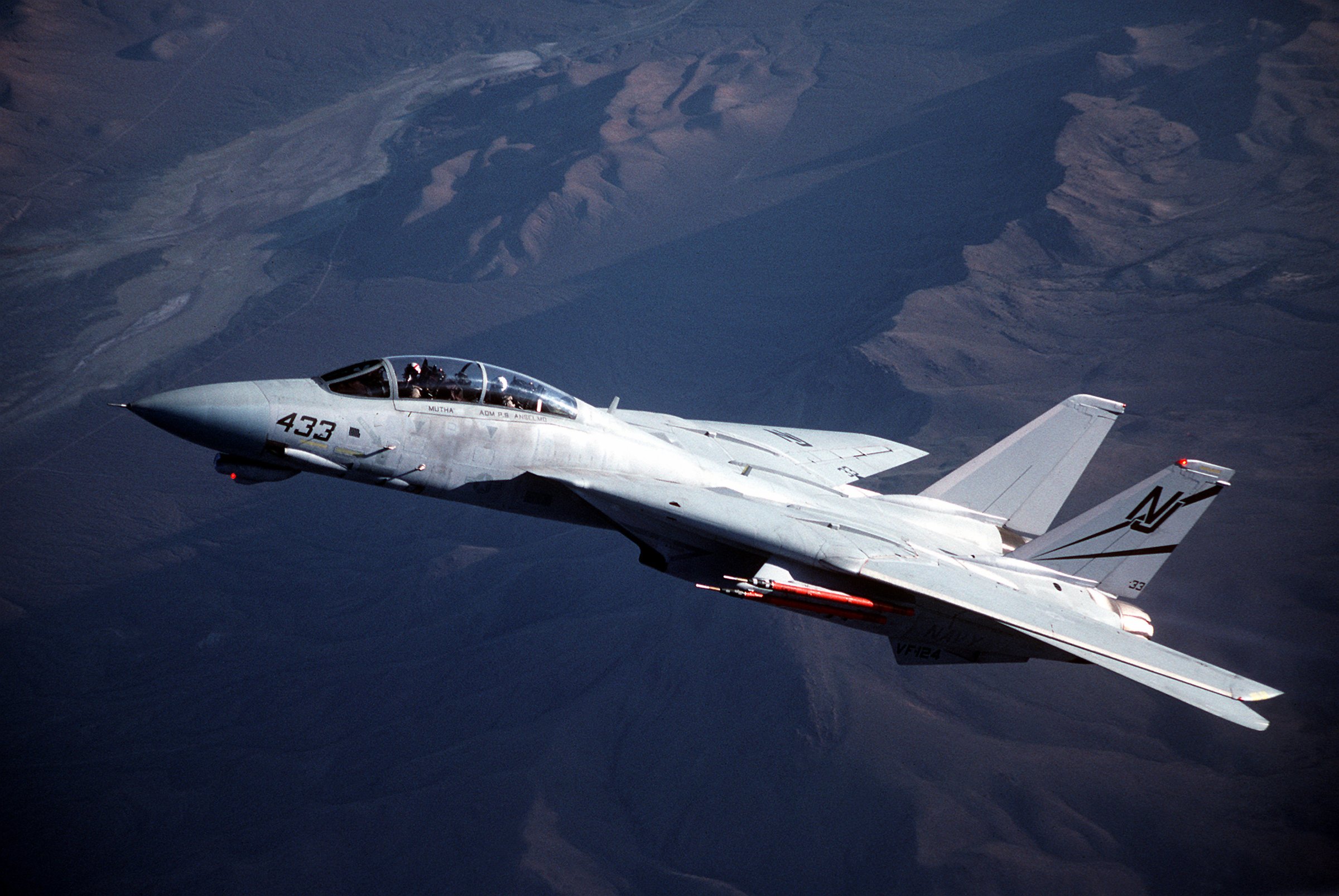
The F-14D combined the F110-GE-400 engines of the F-14B with an entirely new avionics suite: digital systems with a glass cockpit, the Hughes AN/APG-71 radar in place of the AWG-9, the Airborne Self-Protection Jammer, the JTIDS data link, an infrared search and track sensor and NACES ejection seats. A modified F-14A carrying the new electronics began flight testing in November 1987, and the first production F-14D flew on 9 February 1990 at Grumman's Calverton plant; deliveries followed in 1991.
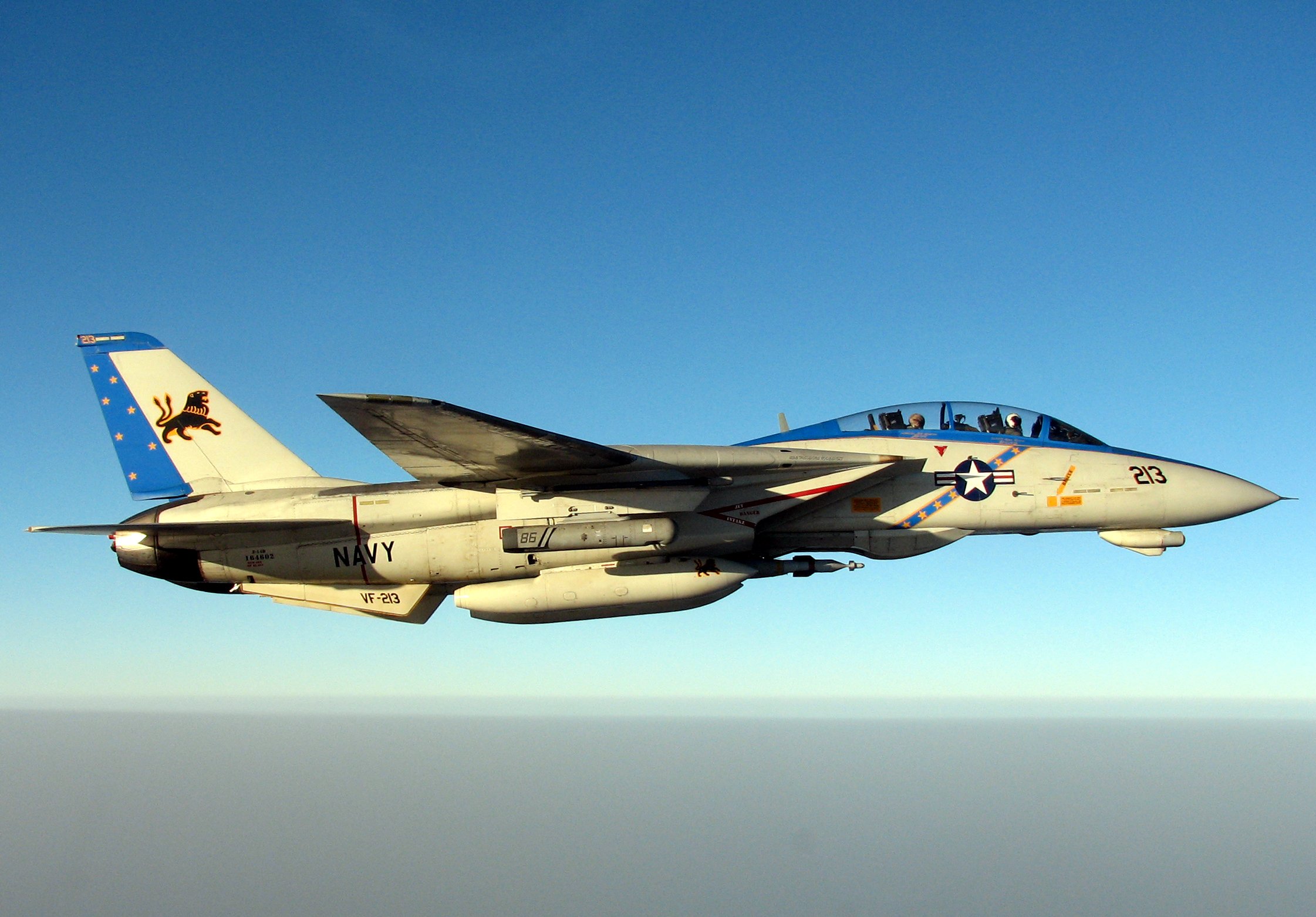
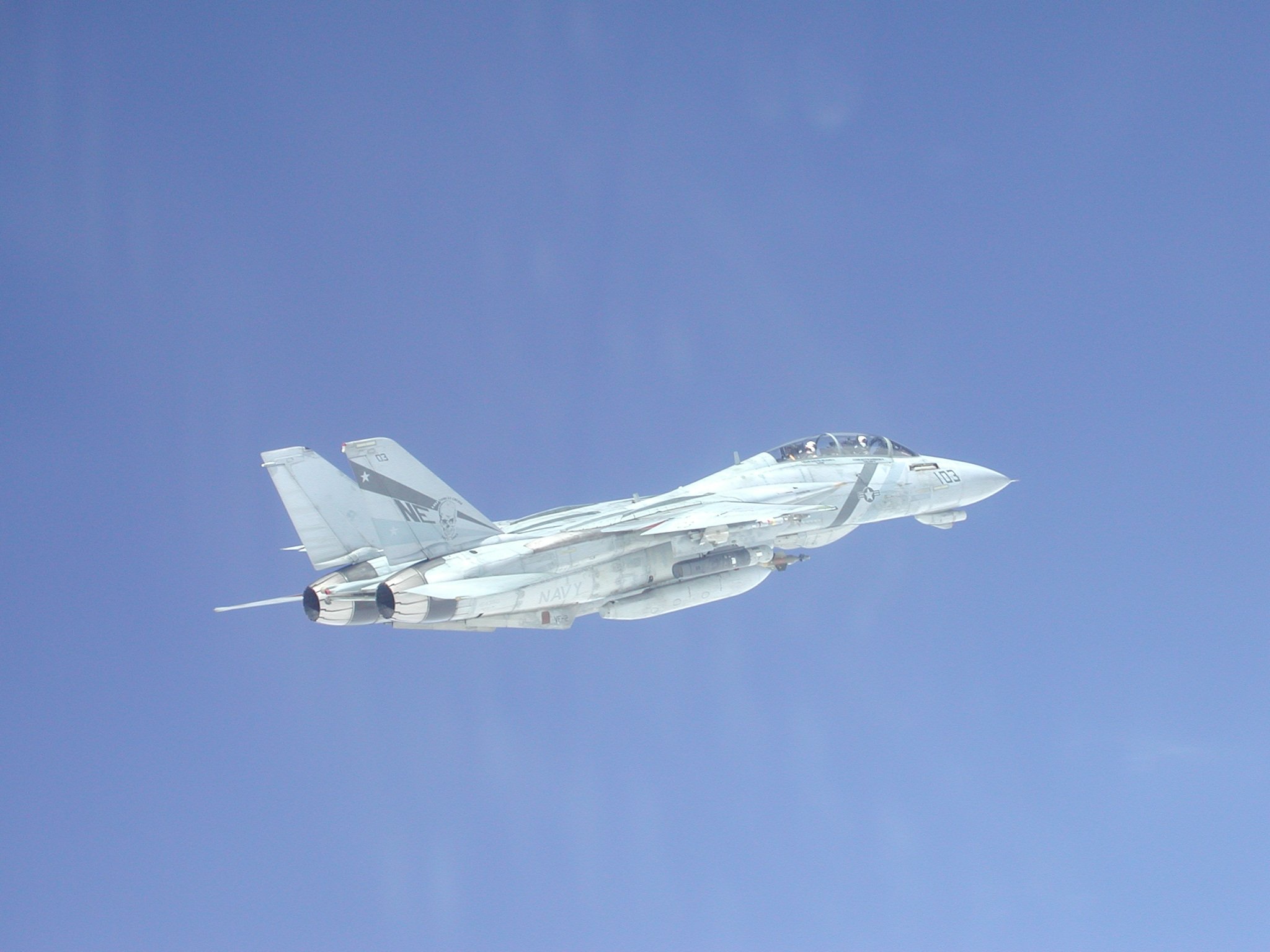
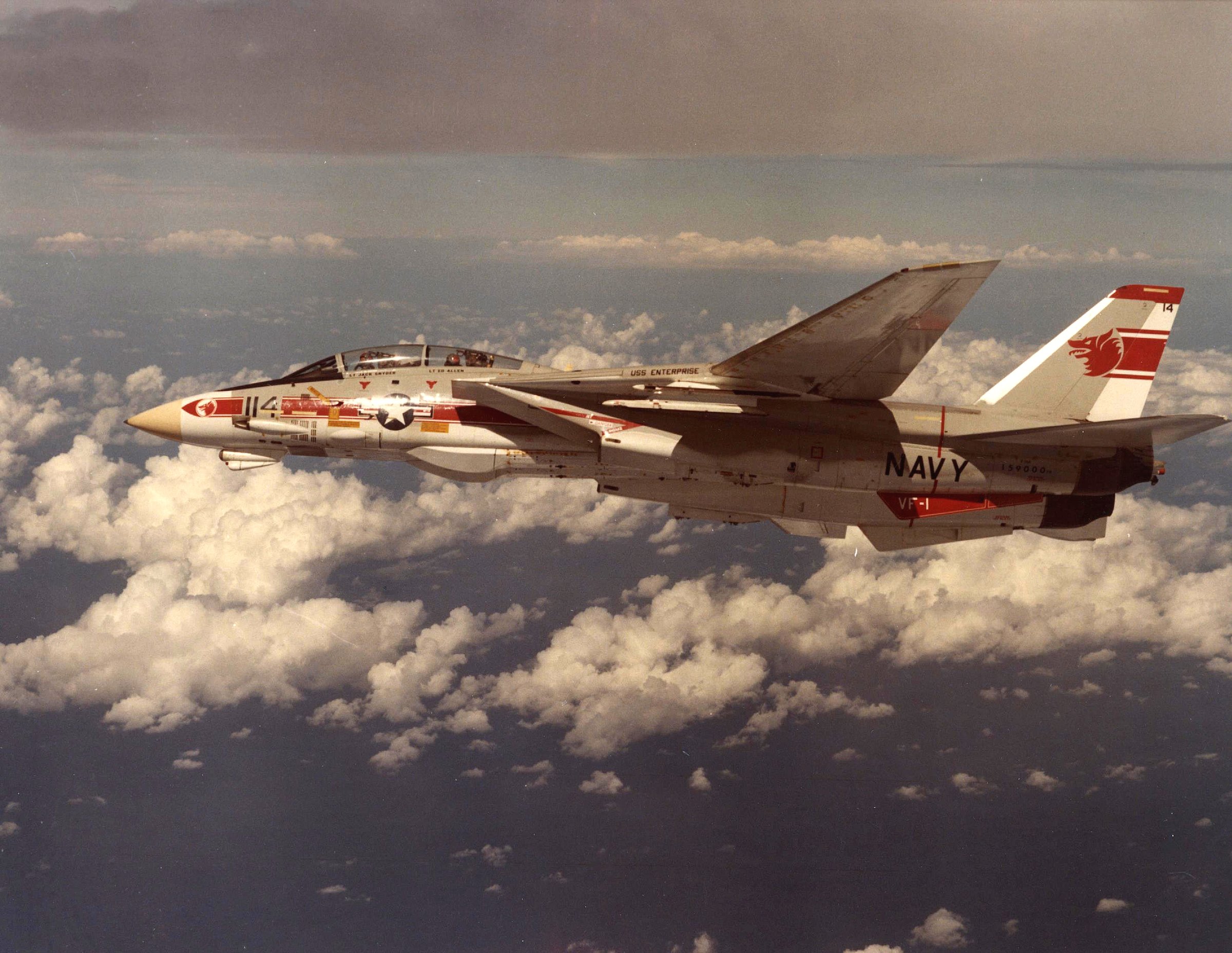
The Navy wanted many more, but in 1989 Secretary of Defense Dick Cheney refused to fund further F-14Ds. Production stopped after 37 new aircraft, and 18 F-14As were rebuilt to the same standard as F-14D(R)s, for a total of 55. Not every fleet unit received the D; it flew with squadrons such as VF-2, VF-11, VF-31 and VF-213, and from 2005 some aircraft received the ROVER III video downlink for close air support.
F-14Ds of VF-31 and VF-213 made the Tomcat's final deployment aboard USS Theodore Roosevelt; the last American F-14 combat mission ended on 8 February 2006. The official retirement ceremony was held at NAS Oceana on 22 September 2006, and on 4 October 2006 a VF-31 F-14D made the type's final US flight, to Republic Airport on Long Island, where Grumman had built the Tomcat.