


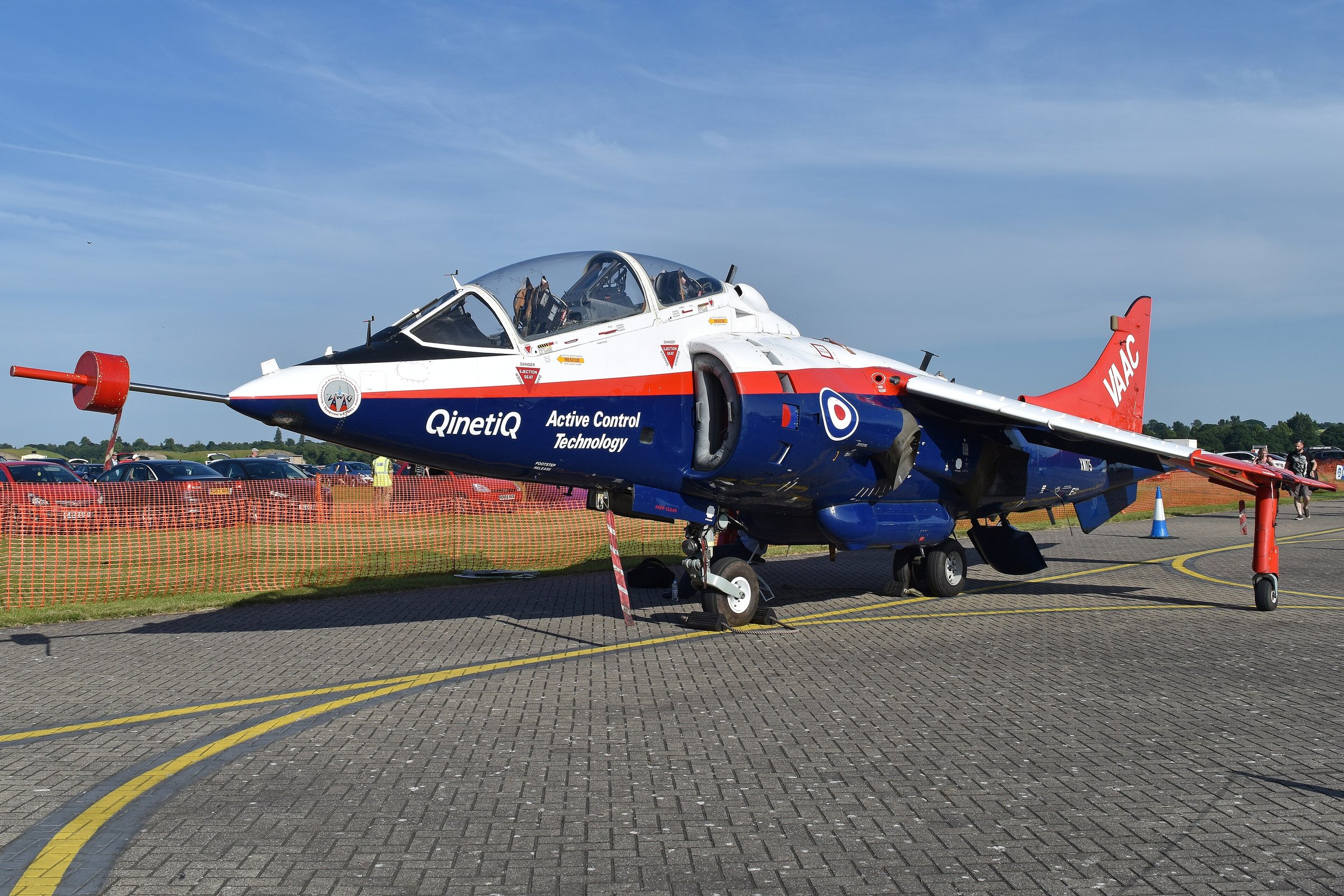
Hawker Siddeley Harrier T.2 / T.4 / TAV-8A
Stretched two-seat trainers — the first operational two-seat V/STOL jets · First flight 1969 · RAF, USMC, Royal Navy, Spain, India
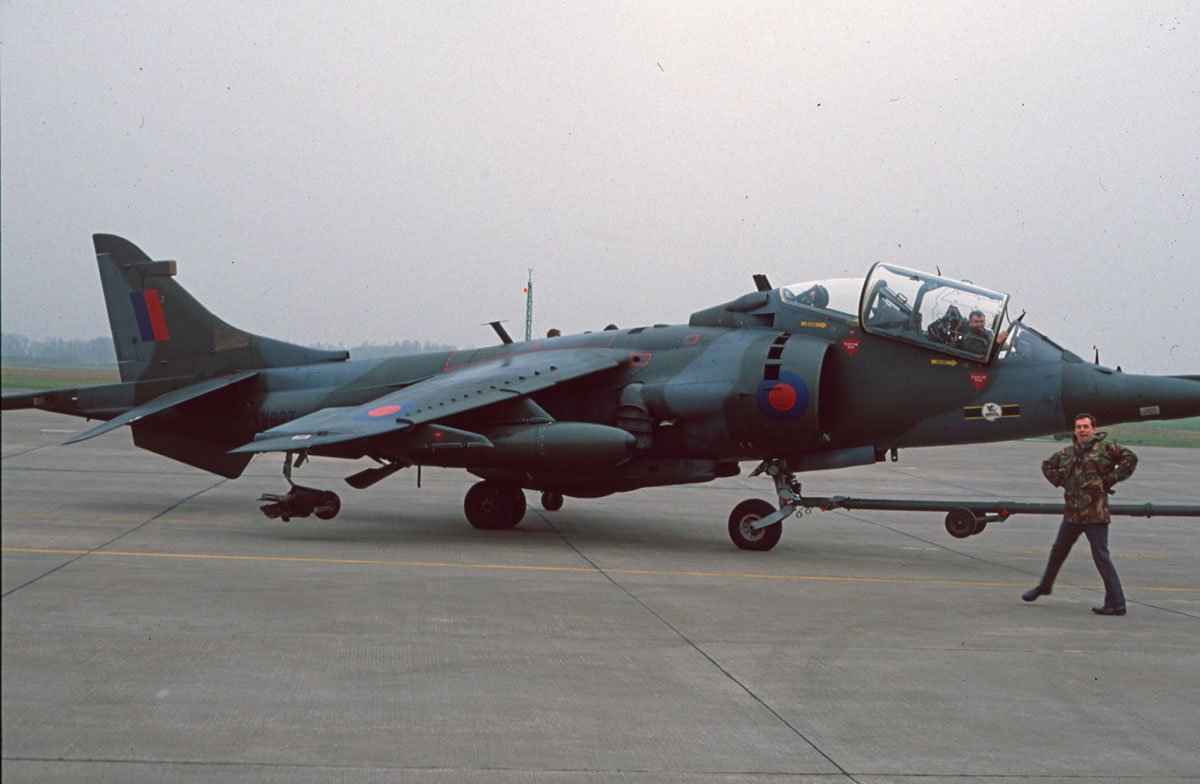
Learning to fly a jet that hovers on vectored thrust called for a dual-control trainer, and the Harrier T.2 first flew from Dunsfold on 24 April 1969. To fit a second cockpit in tandem, the fuselage was lengthened and a taller fin added to keep the aircraft stable.
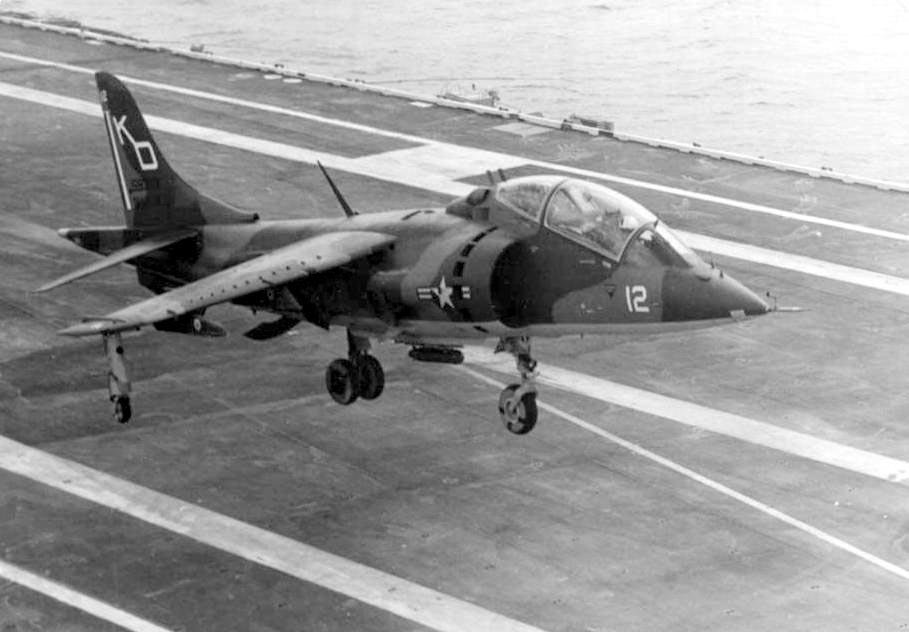
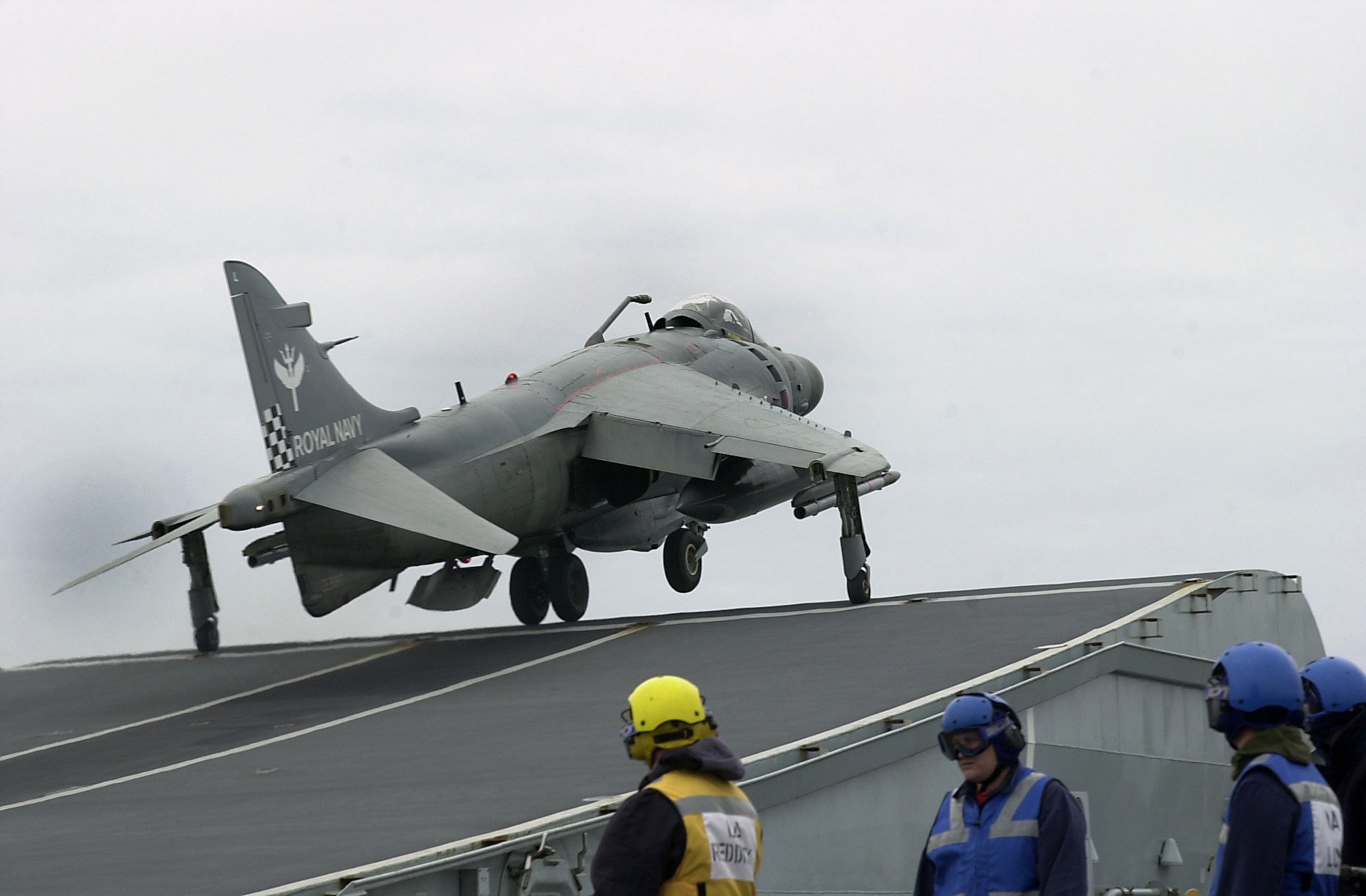
Each trainer tracked the engine standard of the single-seat fleet: the T.2 used the Pegasus Mk 101, the T.2A the Mk 102 and the T.4 the Mk 103 together with the GR.3's laser seeker and radar warning receiver; the T.4A deleted the laser seeker. 25 were built for the RAF. The US Marine Corps received eight TAV-8As, Spain flew TAV-8S Matadors (later sold to Thailand), and the Royal Navy and Indian Navy used T.4N, T.8 and T.60 versions with Sea Harrier avionics.
One of the earliest two-seaters, XW175, spent its entire working life on research at RAE Bedford and Boscombe Down on short take-off and vertical landing research, latterly as the VAAC (Vectored-thrust Aircraft Advanced Control) testbed.
Other Harrier Jump Jet variants
 ◎ HAWKER
Hawker Siddeley Harrier GR.1 / GR.1A
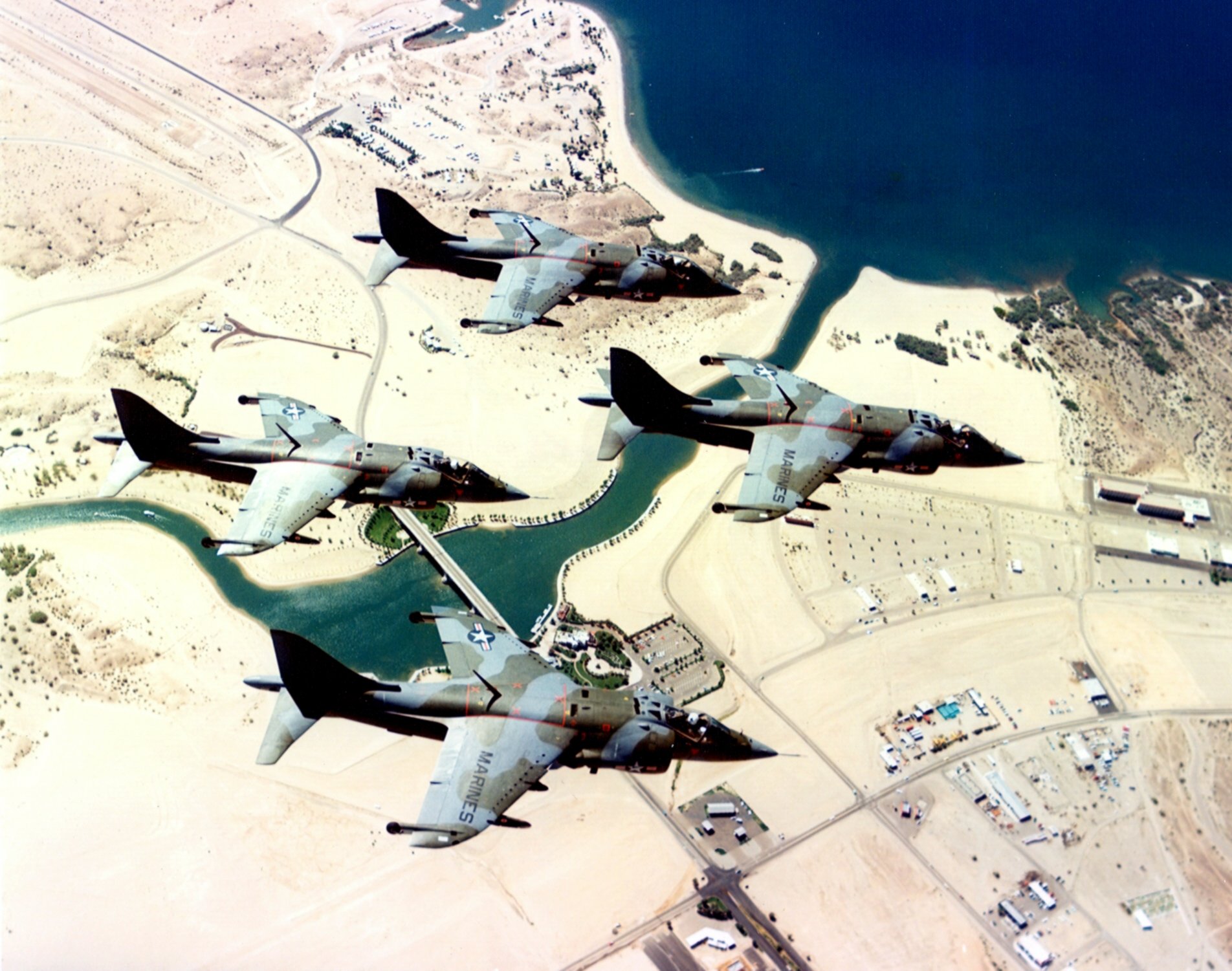 ◎ HAWKER
Hawker Siddeley AV-8A / AV-8C Harrier
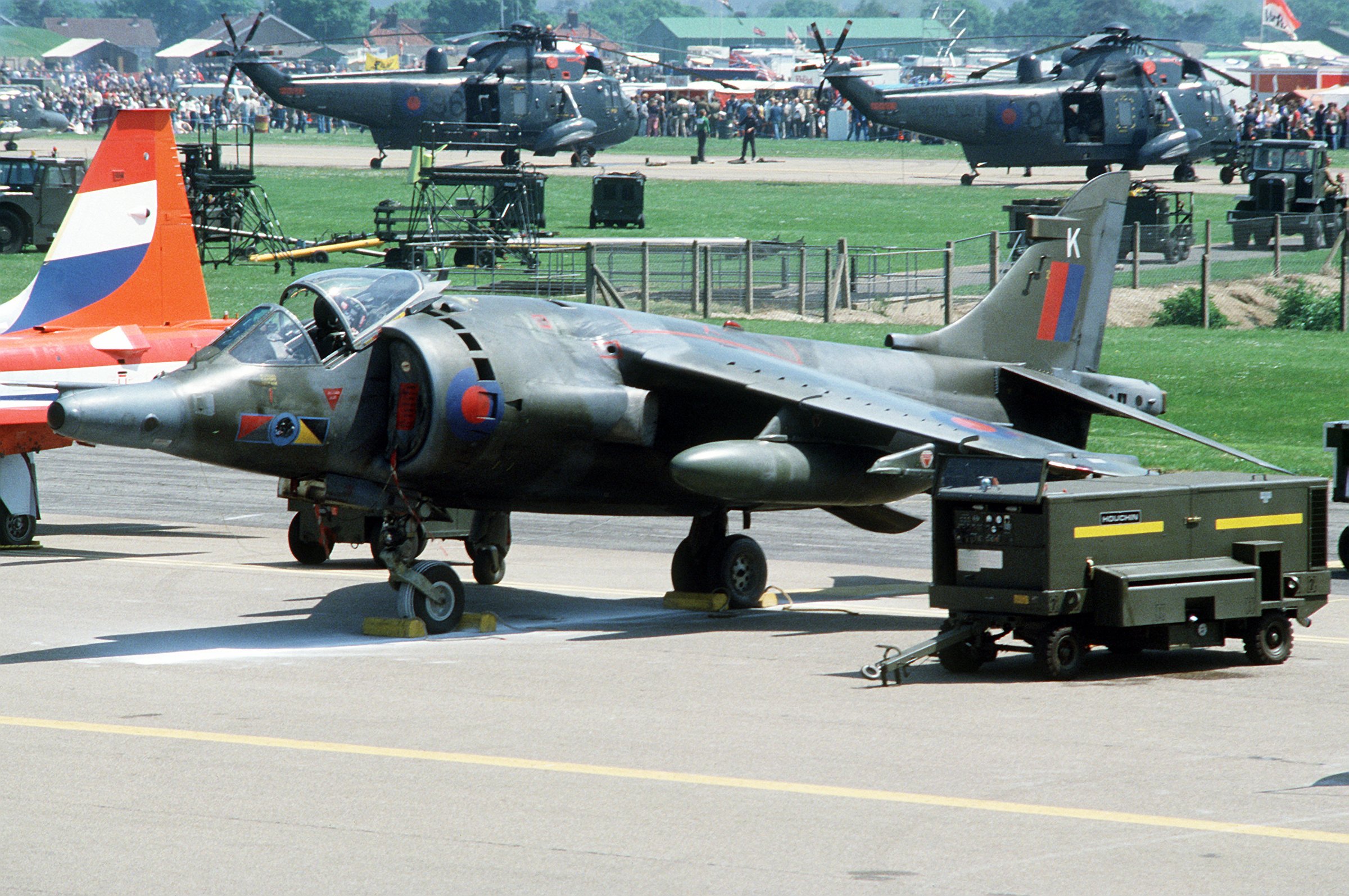 ◎ HAWKER
Hawker Siddeley Harrier GR.3
 ◎ BRITISH
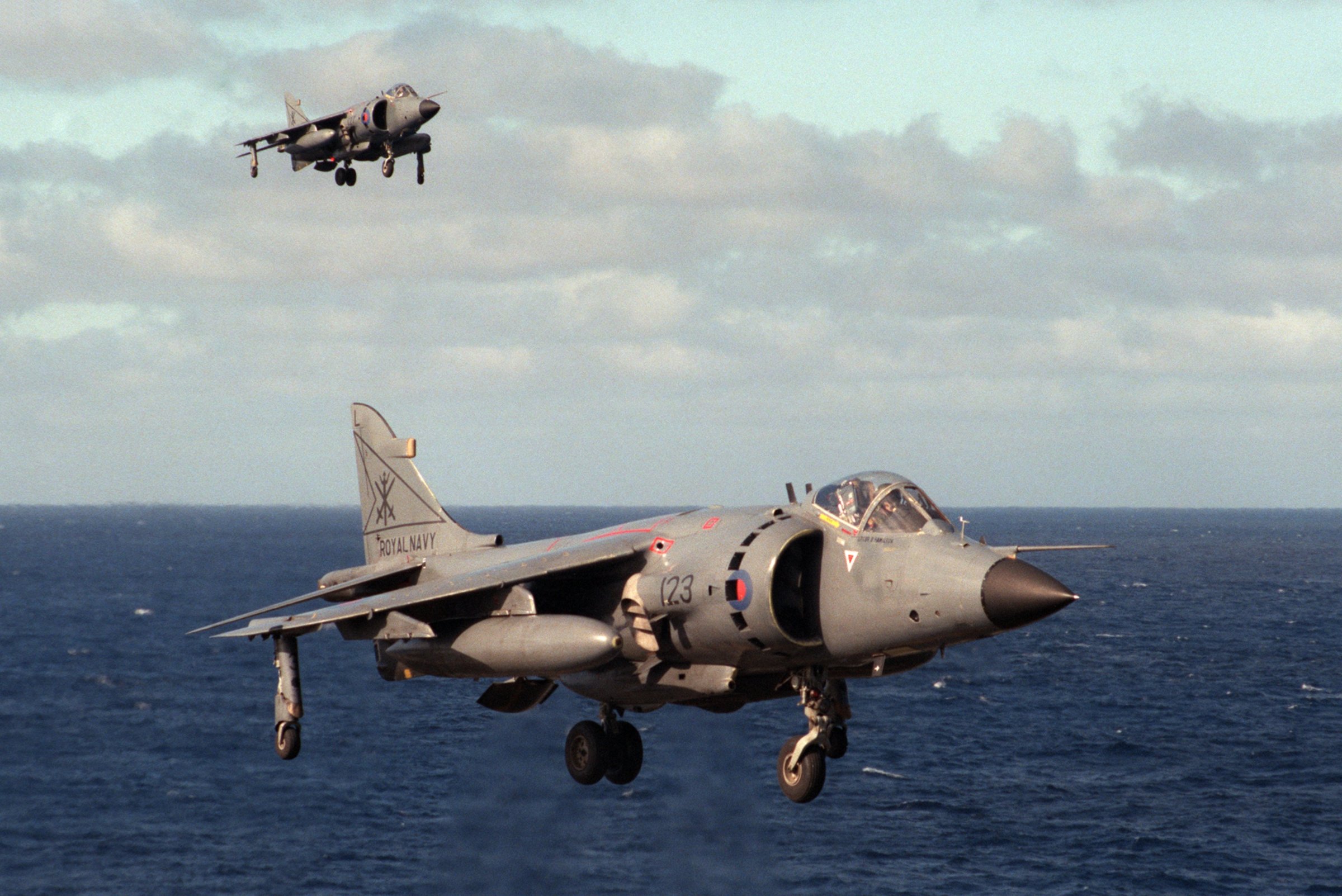
British Aerospace Sea Harrier FRS.1
 ◎ AV-8B
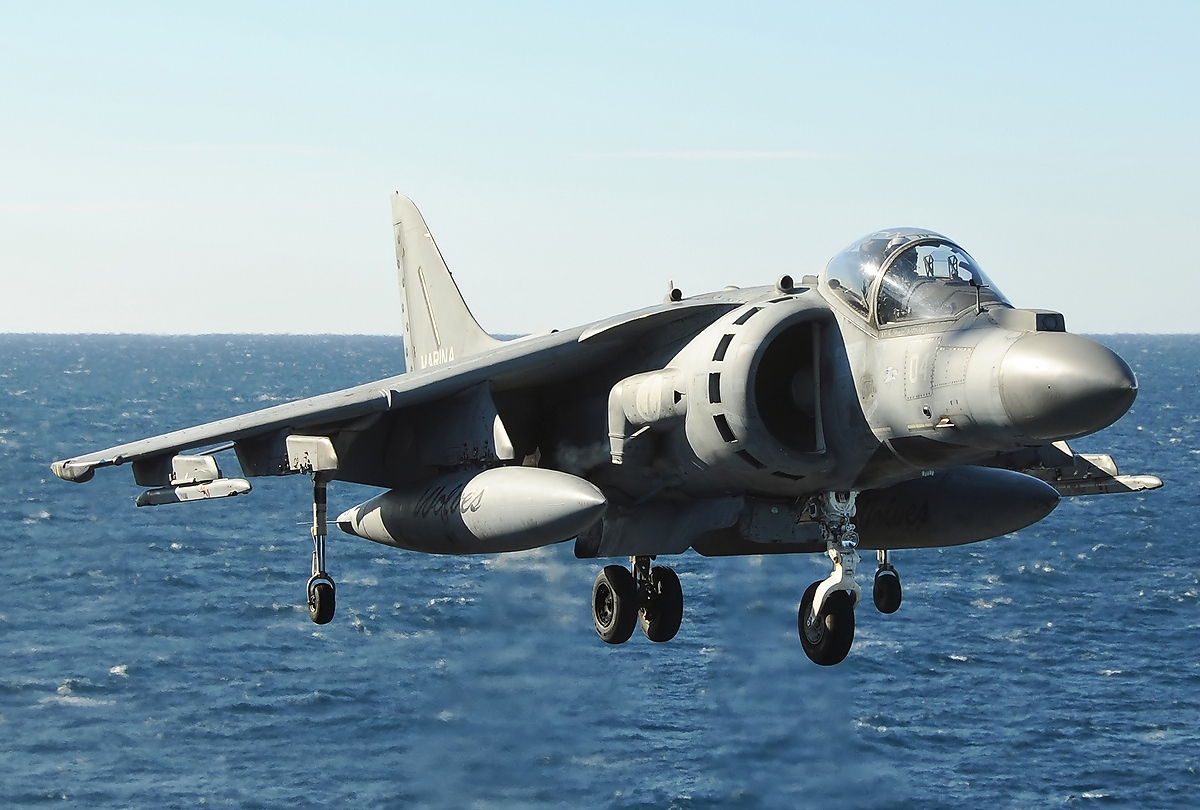
AV-8B Harrier II
 ◎ BRITISH