


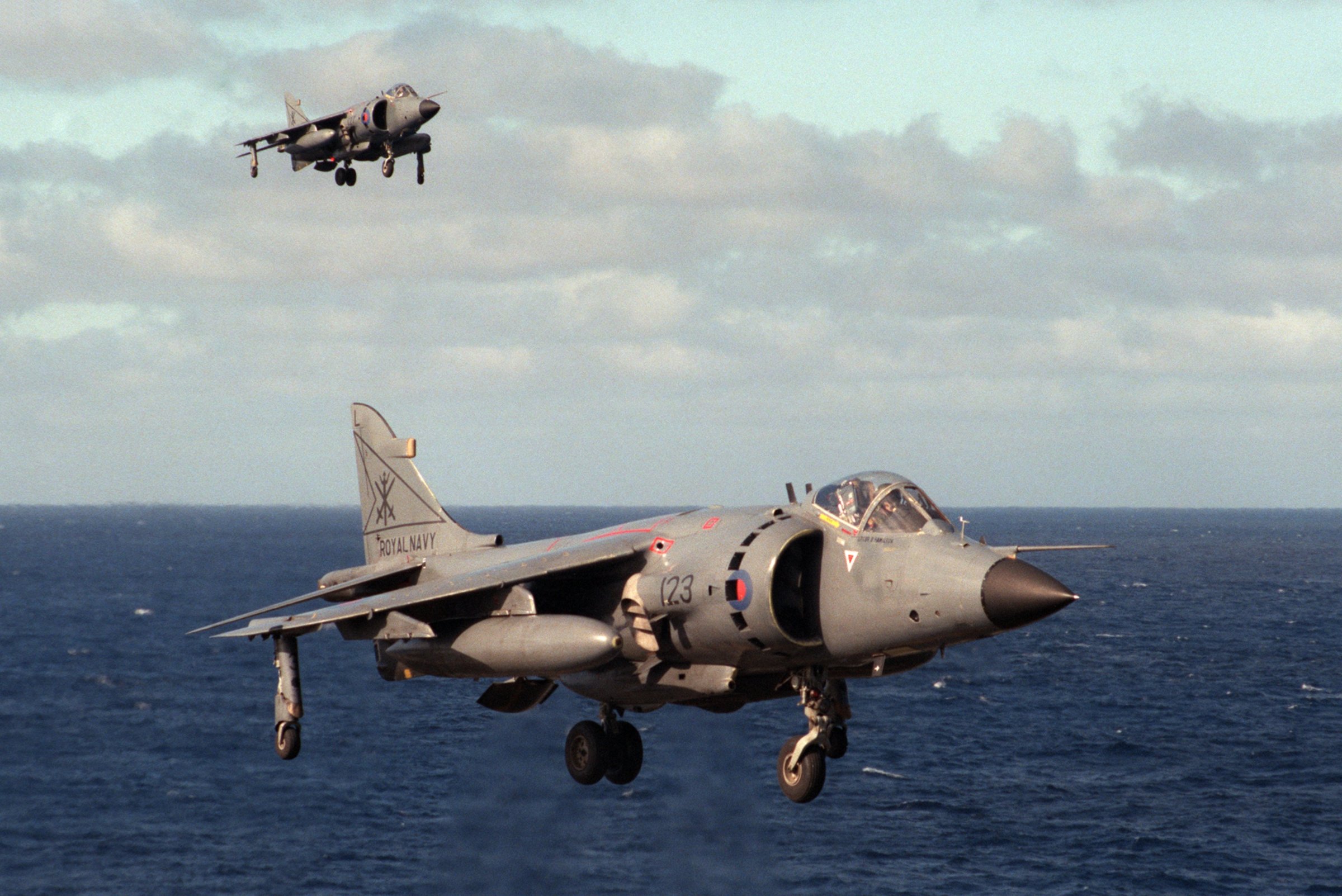
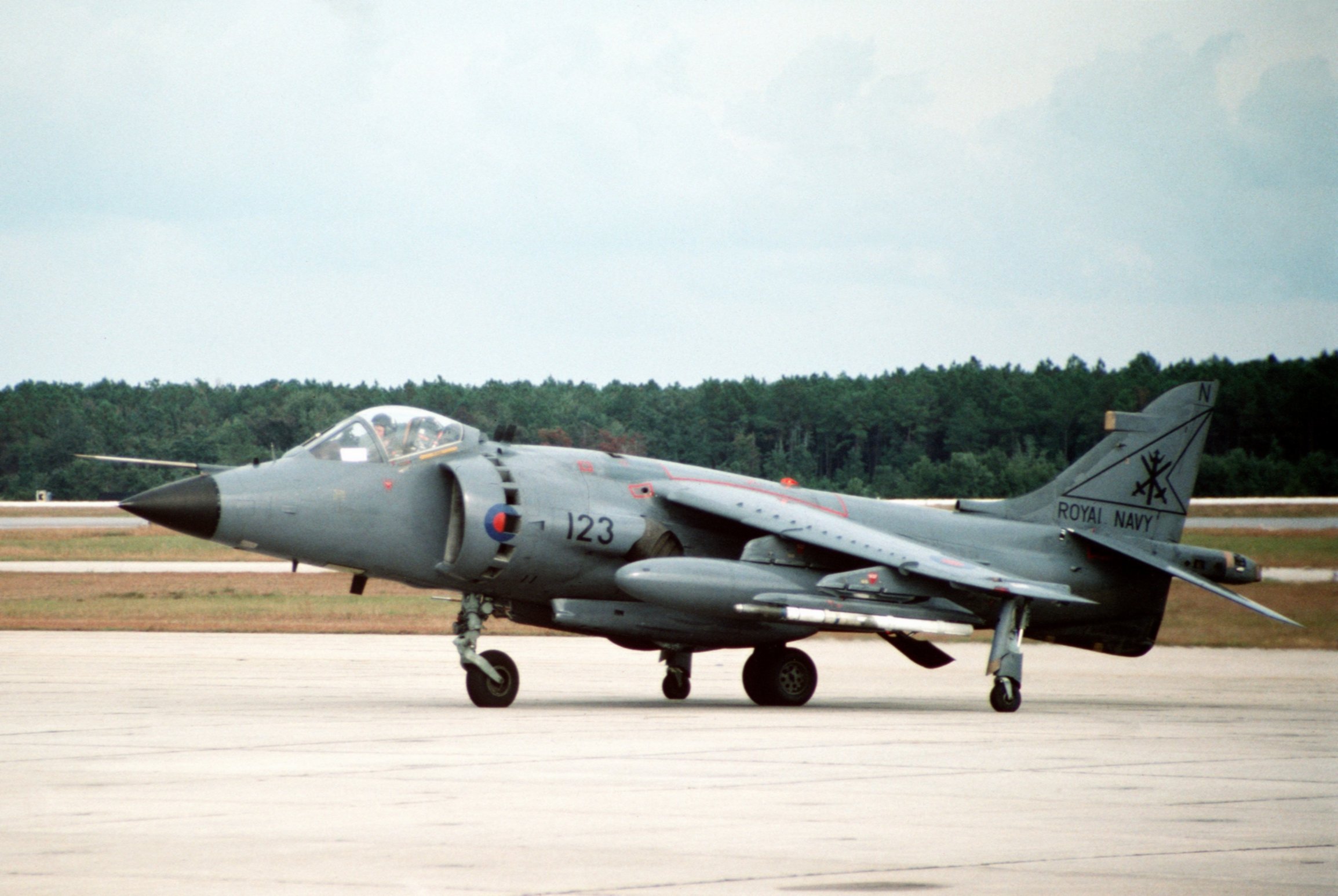
British Aerospace Sea Harrier FRS.1
The navalised Harrier with radar and a bubble canopy — fighter, reconnaissance and strike from a ski-jump · First flight 1978 · In service 1980
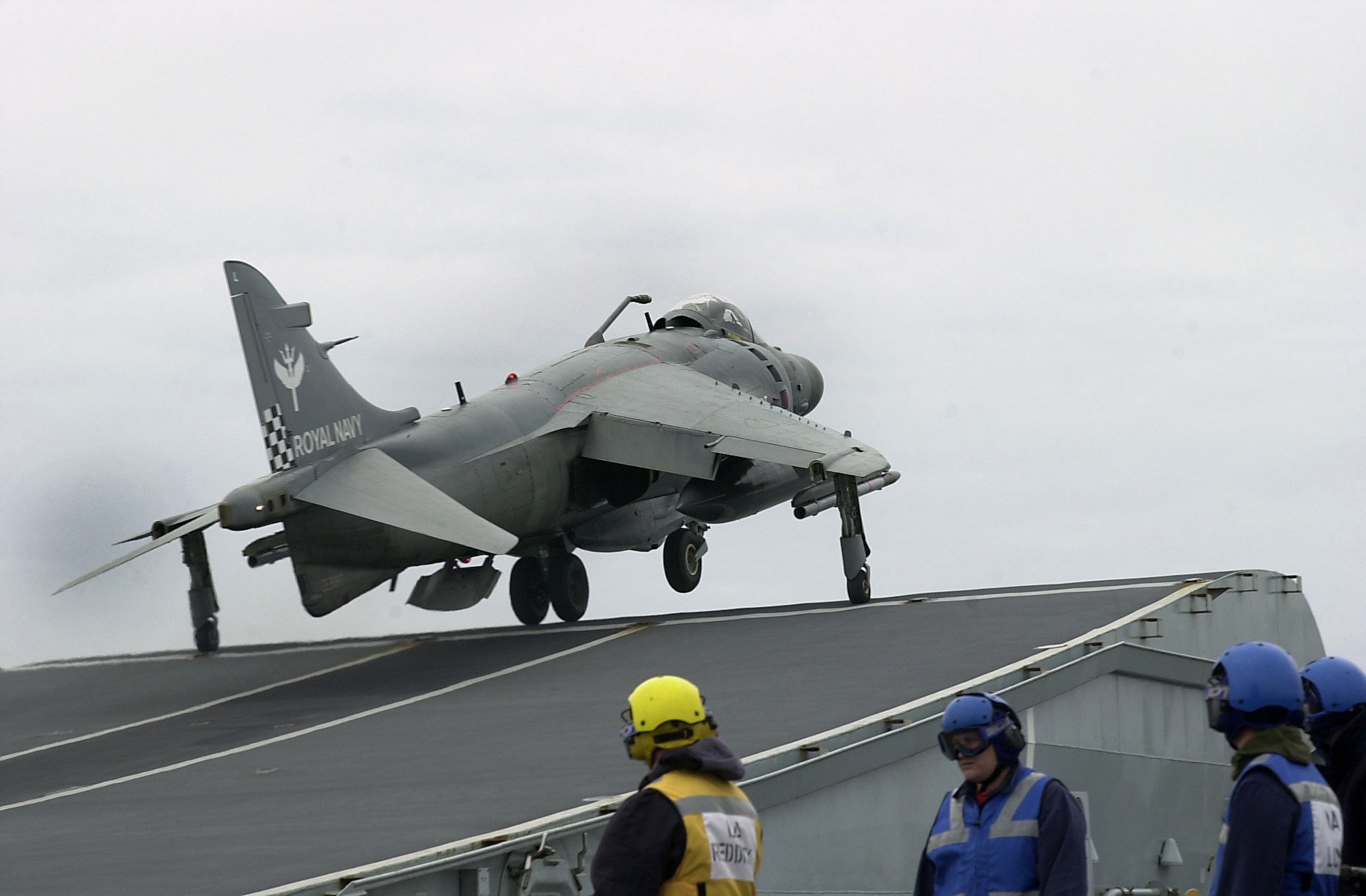
The Sea Harrier was developed for the Royal Navy's new Invincible-class carriers. Based on the GR.3, it gained a raised cockpit with a bubble canopy, an extended nose for the Ferranti Blue Fox radar and corrosion-resistant materials for life at sea. The Navy ordered 24 FRS.1s (Fighter, Reconnaissance, Strike) in 1975, raised to 34 by the time the first aircraft flew at Dunsfold on 20 August 1978; 57 were eventually delivered. Ski-jump ramps, trialled at Yeovilton from 1977, let it take off from short decks with heavier loads.
In the 1982 Falklands War 28 Sea Harriers flew from HMS Invincible and HMS Hermes as the task force's only fixed-wing fighters. They shot down 20 Argentine aircraft in air-to-air combat without an air-to-air loss; two were lost to ground fire and four in accidents. Afterwards the fleet was fitted to carry the Sea Eagle anti-ship missile. In June 1983 Sea Harrier ZA176, short of fuel and unable to find HMS Illustrious, landed safely on the deck of the Spanish container ship Alraigo.
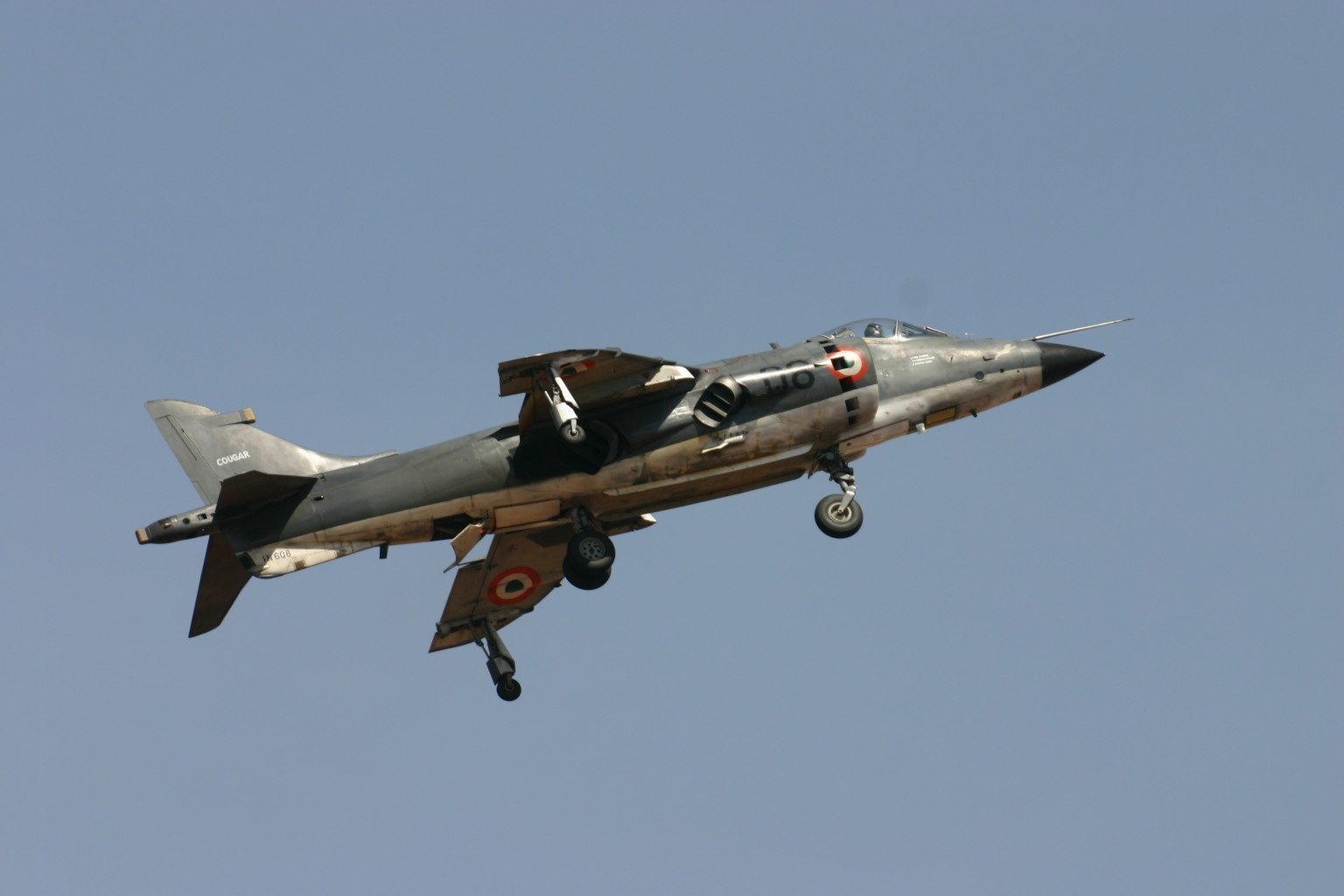
India was the only export customer: the FRS.51, armed with Matra Magic missiles, arrived at Dabolim in December 1983 and flew from INS Vikrant and INS Viraat. Upgraded with the Elta EL/M-2032 radar and Derby missiles, the survivors made their last carrier flights from Viraat on 6 March 2016 and were retired on 11 May 2016, replaced by the MiG-29K.
Other Harrier Jump Jet variants
 ◎ HAWKER
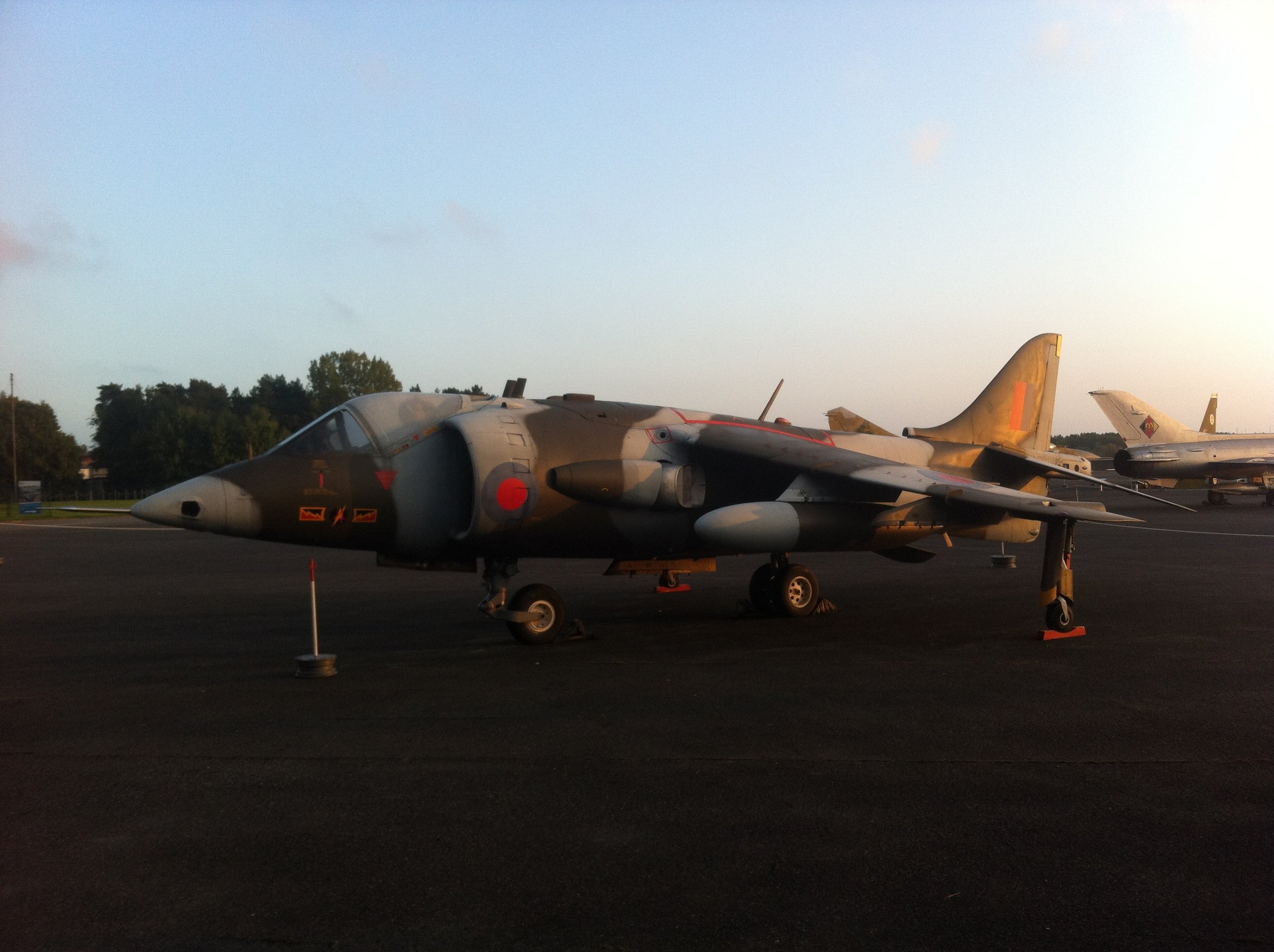
Hawker Siddeley Harrier GR.1 / GR.1A
 ◎ HAWKER
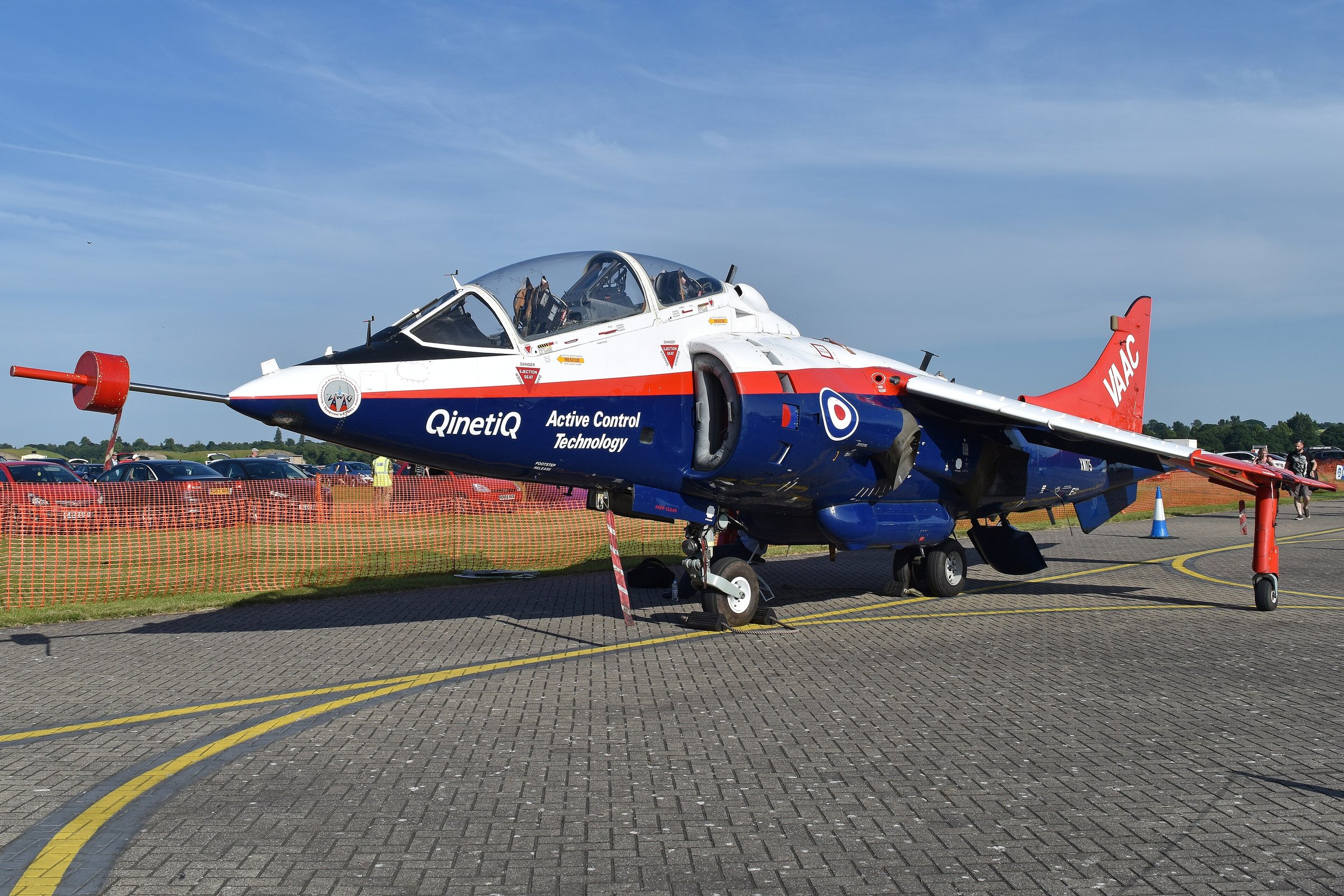
Hawker Siddeley Harrier T.2 / T.4 / TAV-8A
 ◎ HAWKER
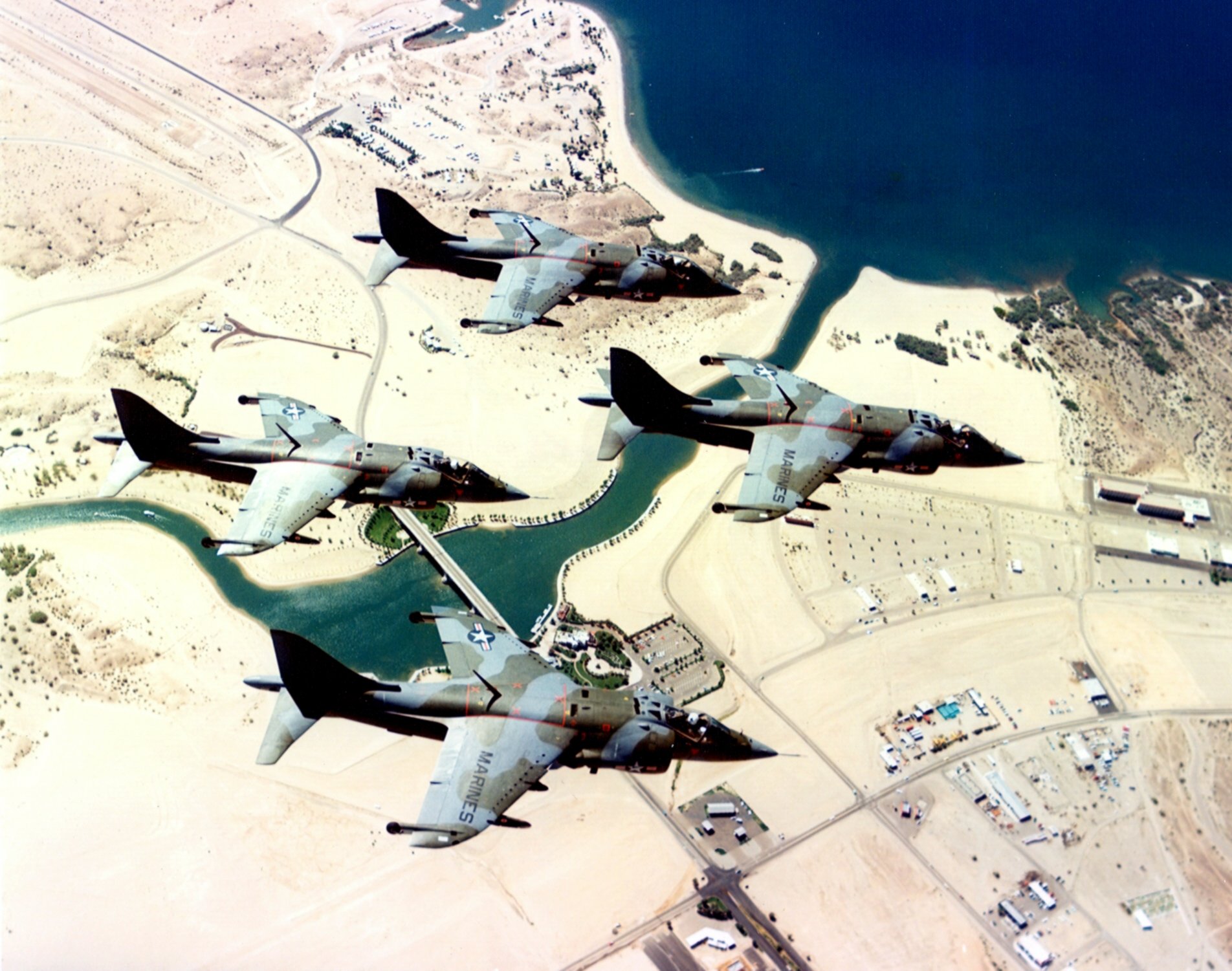
Hawker Siddeley AV-8A / AV-8C Harrier
 ◎ HAWKER
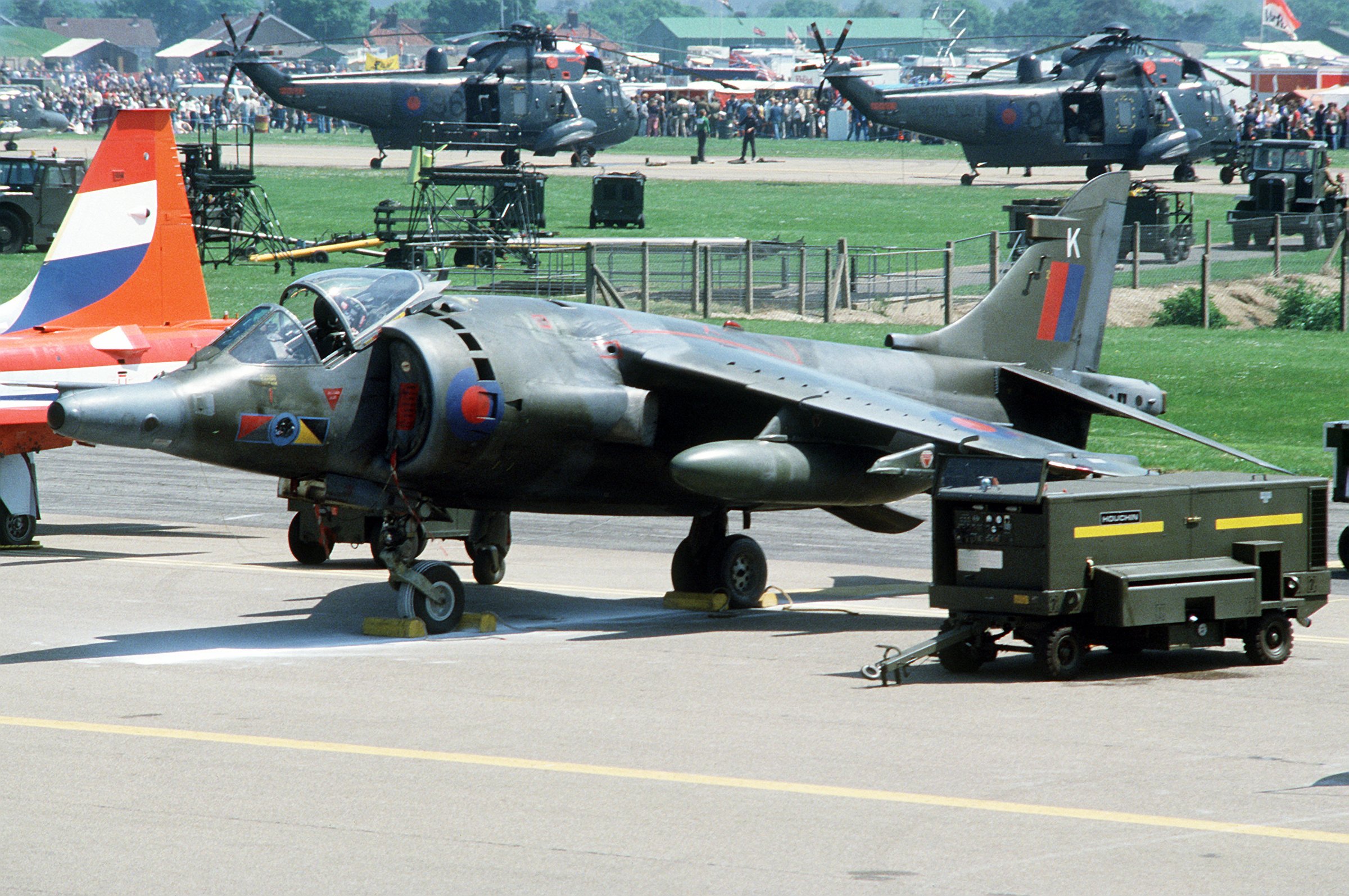
Hawker Siddeley Harrier GR.3
 ◎ AV-8B
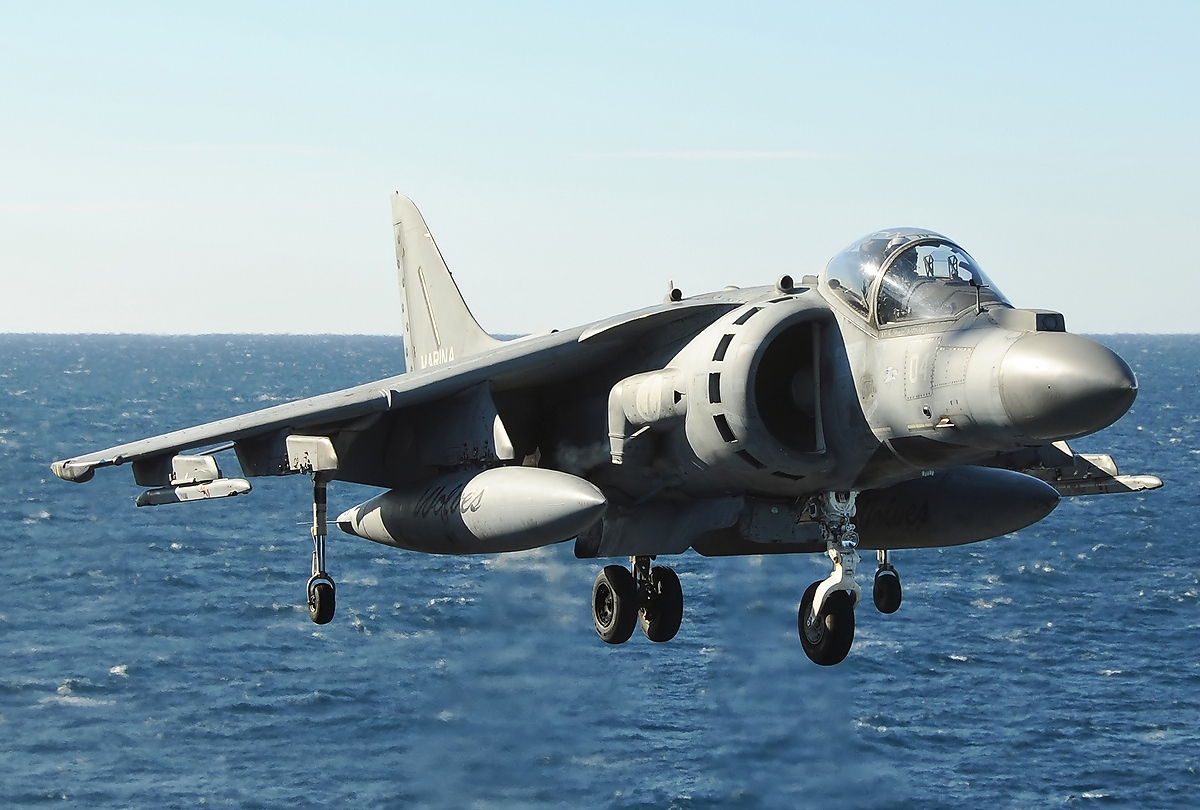
AV-8B Harrier II
 ◎ BRITISH