Mil Mi-24A 'Hind-A'
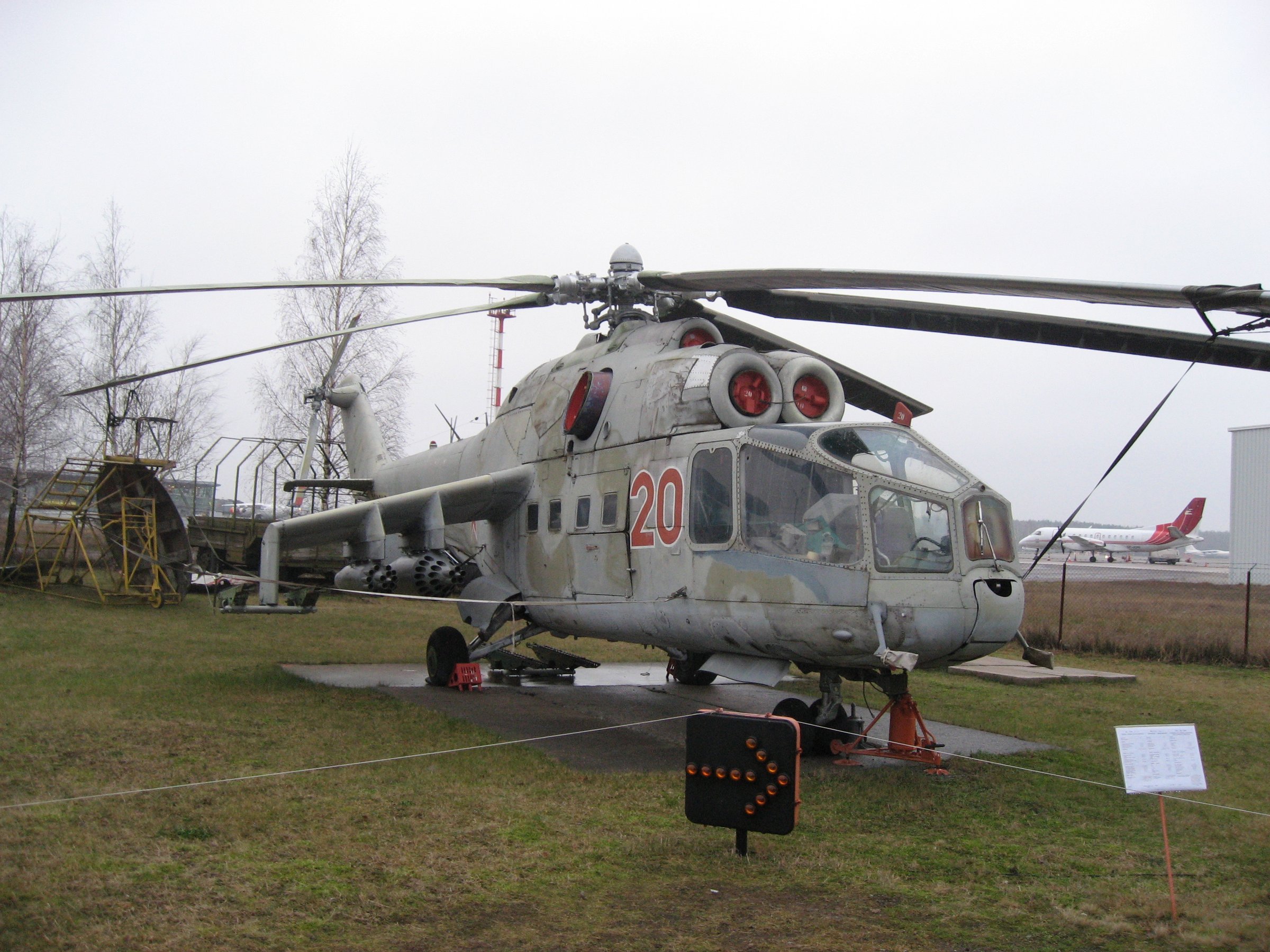
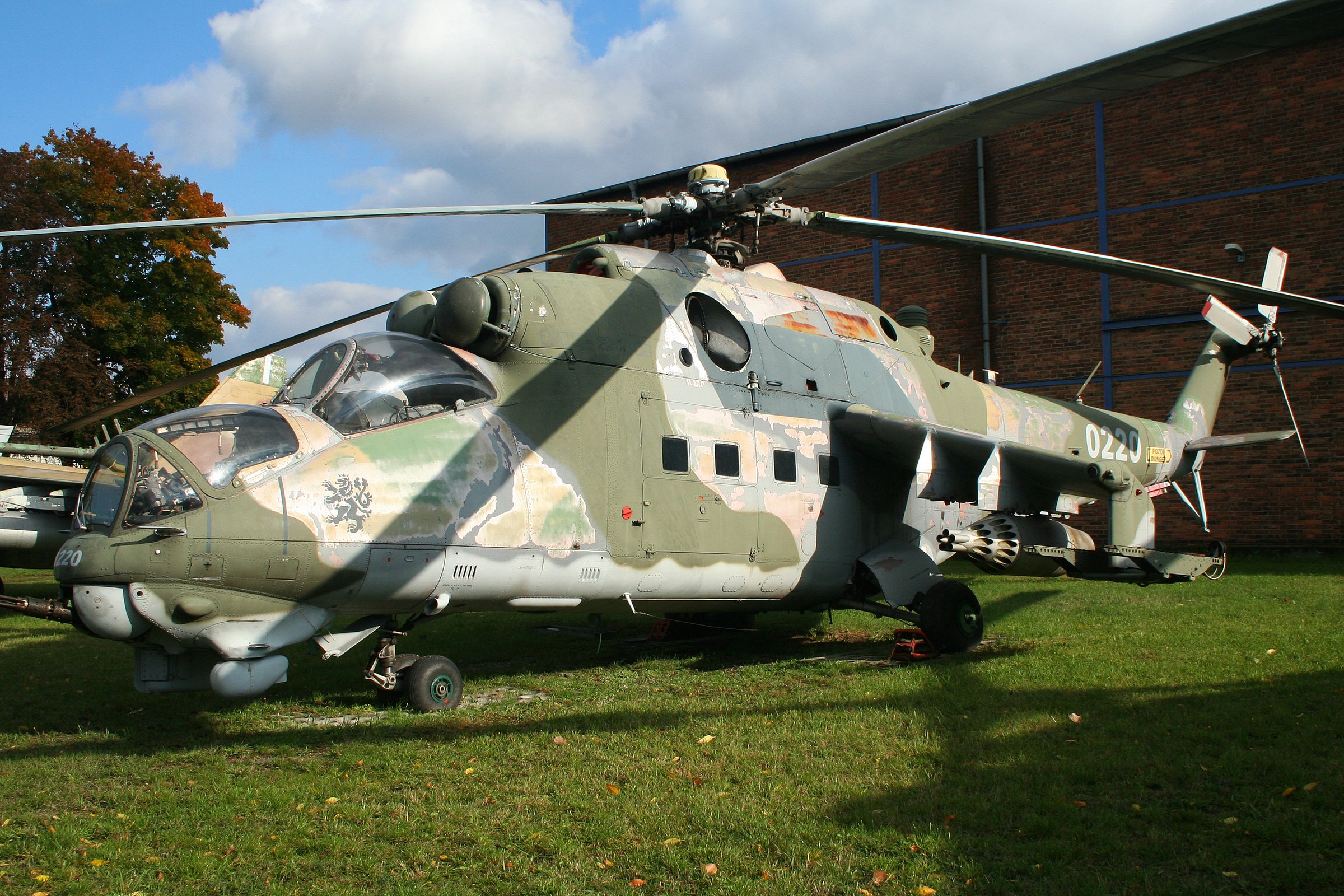
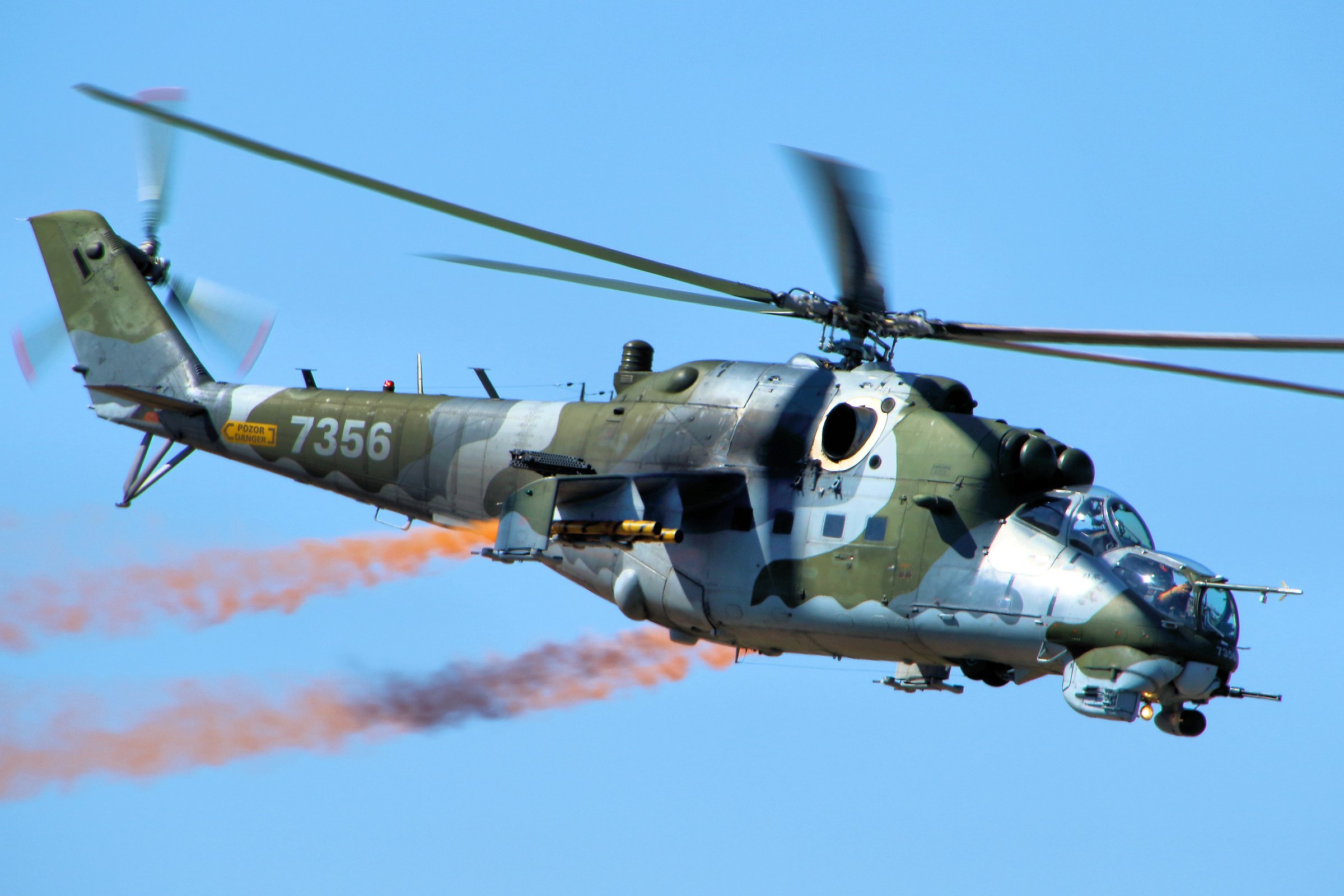
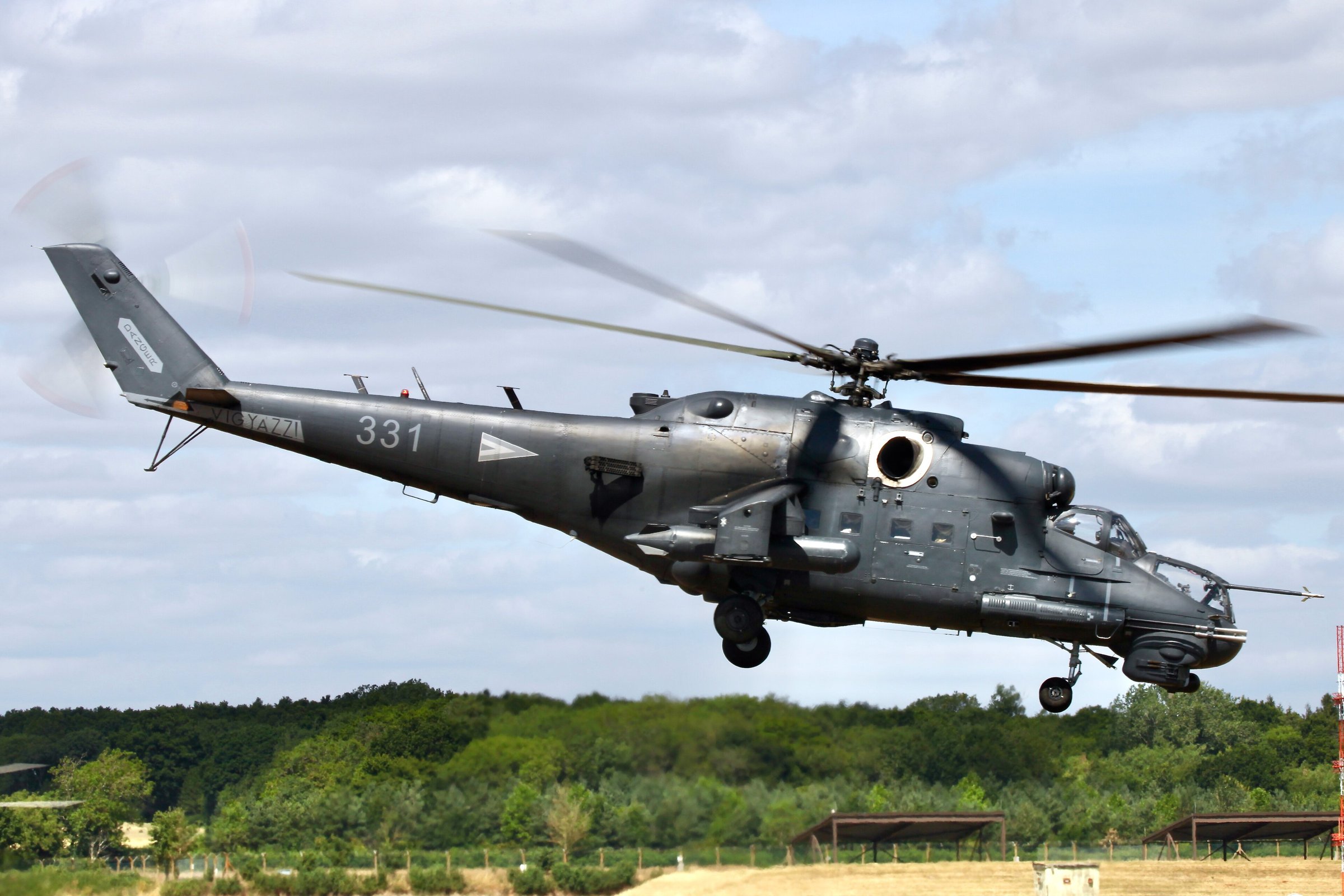
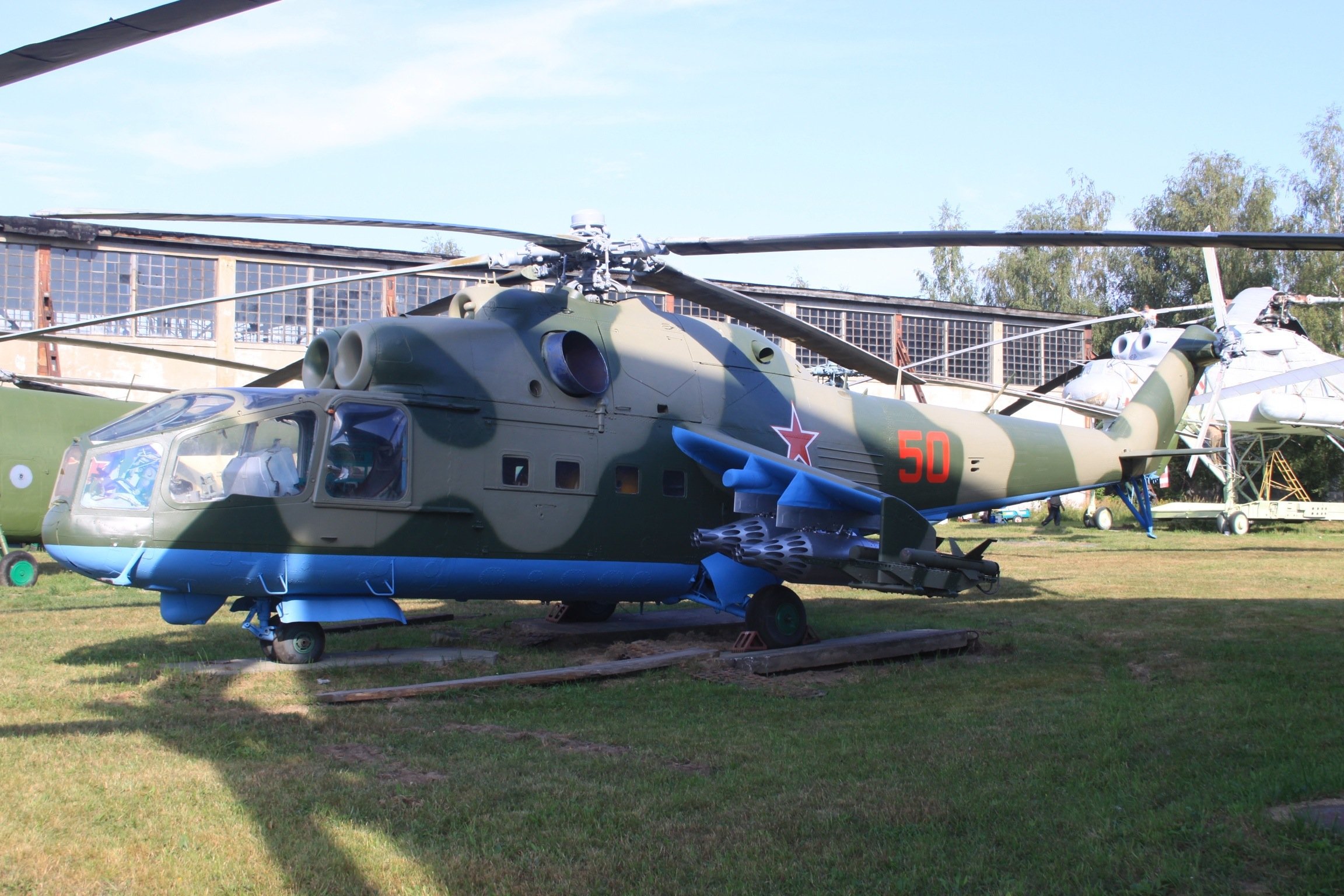
The first production Hind — a flying troop carrier with a glazed 'greenhouse' cockpit and wingtip anti-tank missiles · First flight 1969 · In service 1972
The Mi-24 grew out of Mikhail Mil's idea of a 'flying infantry fighting vehicle' — a gunship that could also carry a squad of troops. The prototype made its first tethered hover on 15 September 1969 and its first free flight four days later. Testing showed a tendency to Dutch roll above 200 km/h, so the wings were given 12 degrees of anhedral, the Falanga missile rails moved to the wingtips, and the tail rotor was eventually shifted from the right side of the fin to the left.
The resulting production model, the Mi-24A (izdeliye 245), kept the prototype's layout: pilot and weapons operator sat in a single, heavily framed 'veranda' cockpit derived from Mil's transport helicopters, with an eight-seat cabin behind them. Weapons were a nose machine gun, unguided rocket pods and four Falanga-M anti-tank missiles that the operator had to steer by hand. The Mi-24A was accepted into Soviet service in 1972.
About 250 were built before the poor forward view and the crude missile guidance led Mil to redesign the whole nose for the Mi-24D. Mi-24As were also exported, Libya and Vietnam among them, and examples survive in museums at Monino, Moscow and Riga. A stripped-down, wingless derivative known as the A-10 set the absolute helicopter speed record of 368.4 km/h on 21 September 1978.