Mil Mi-24D 'Hind-D'
The 'double bubble' redesign — separate armoured cockpits, a four-barrel chin gun and semi-automatic missile guidance · In production 1973–1977
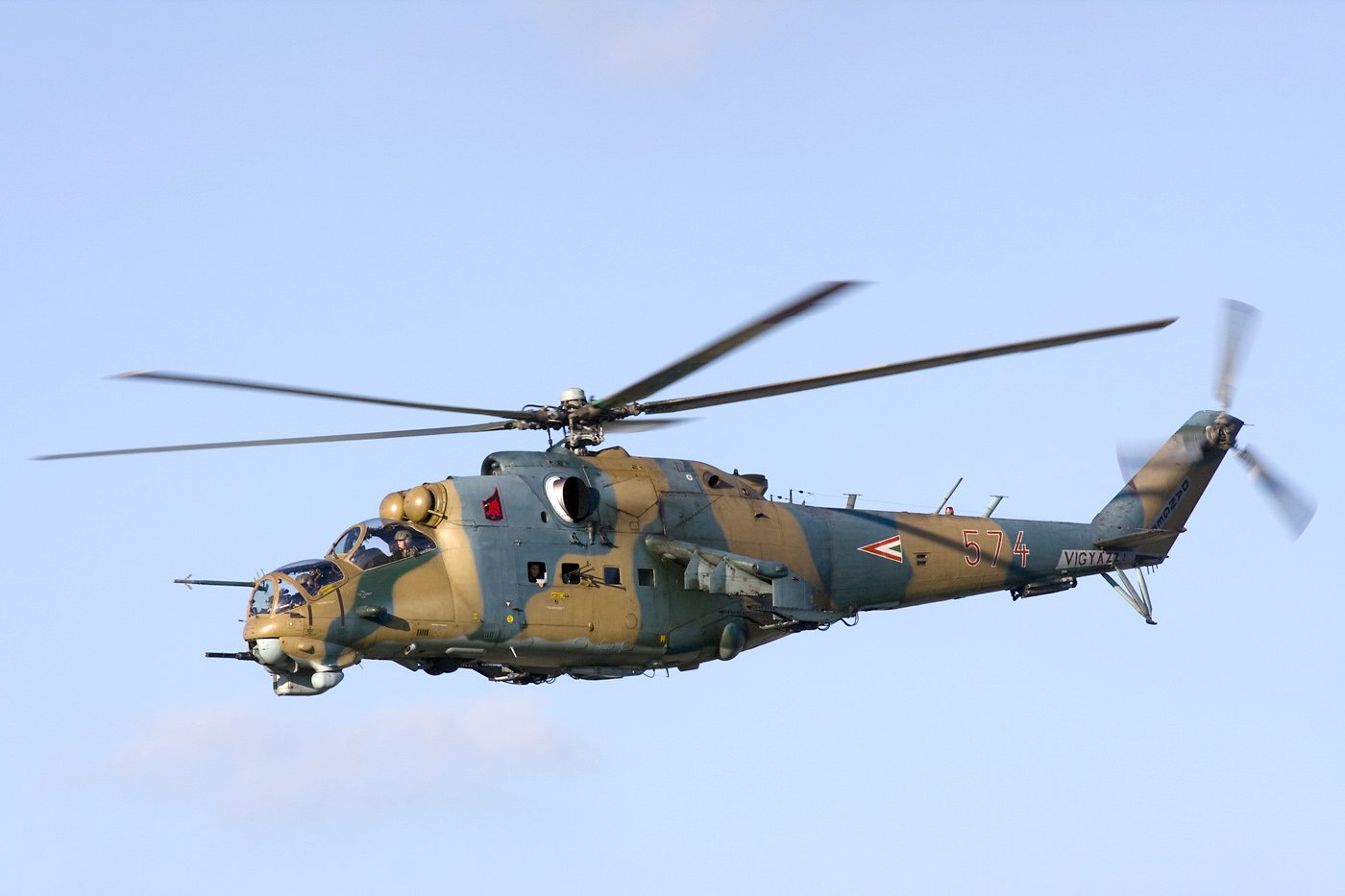
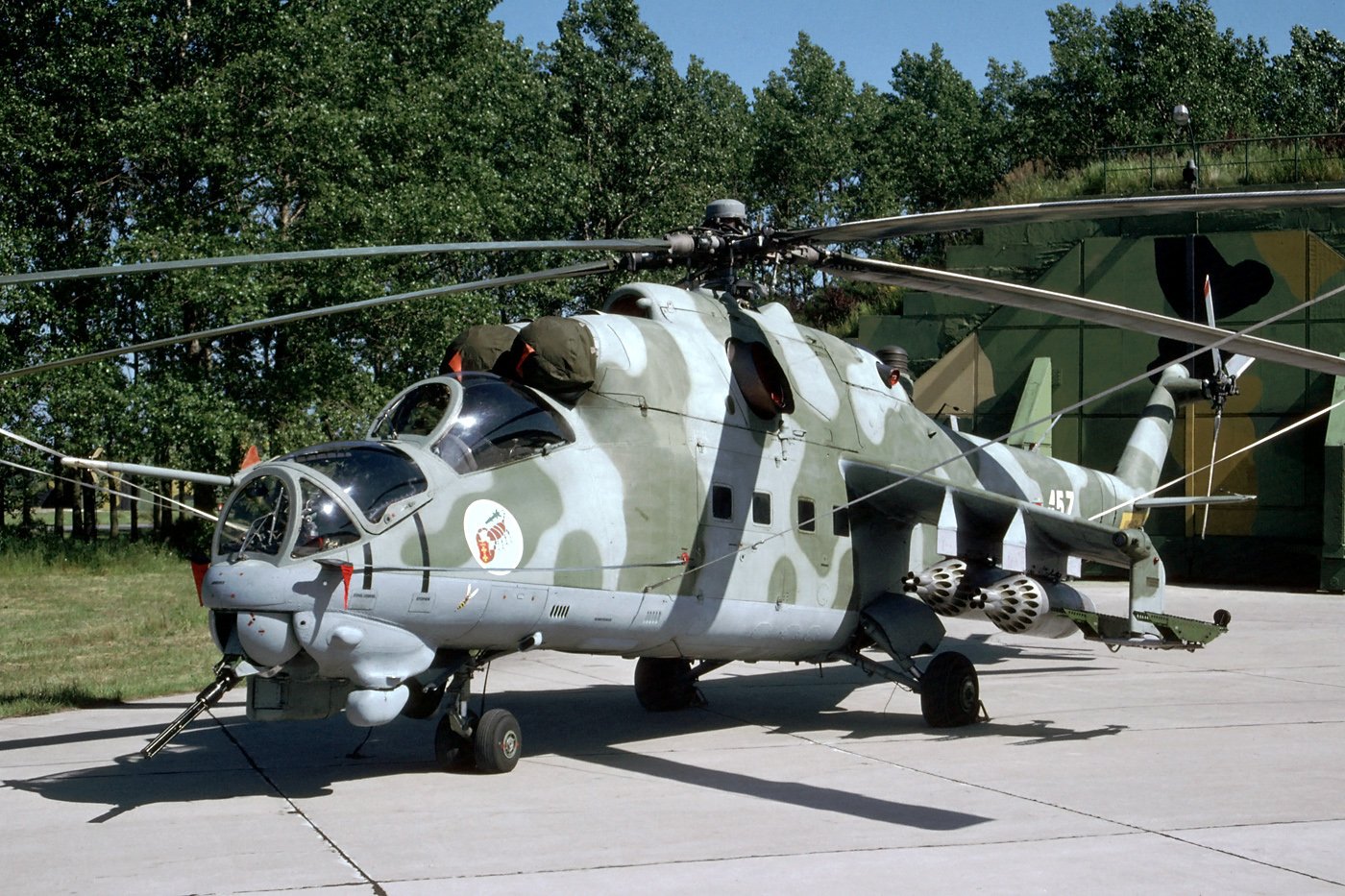
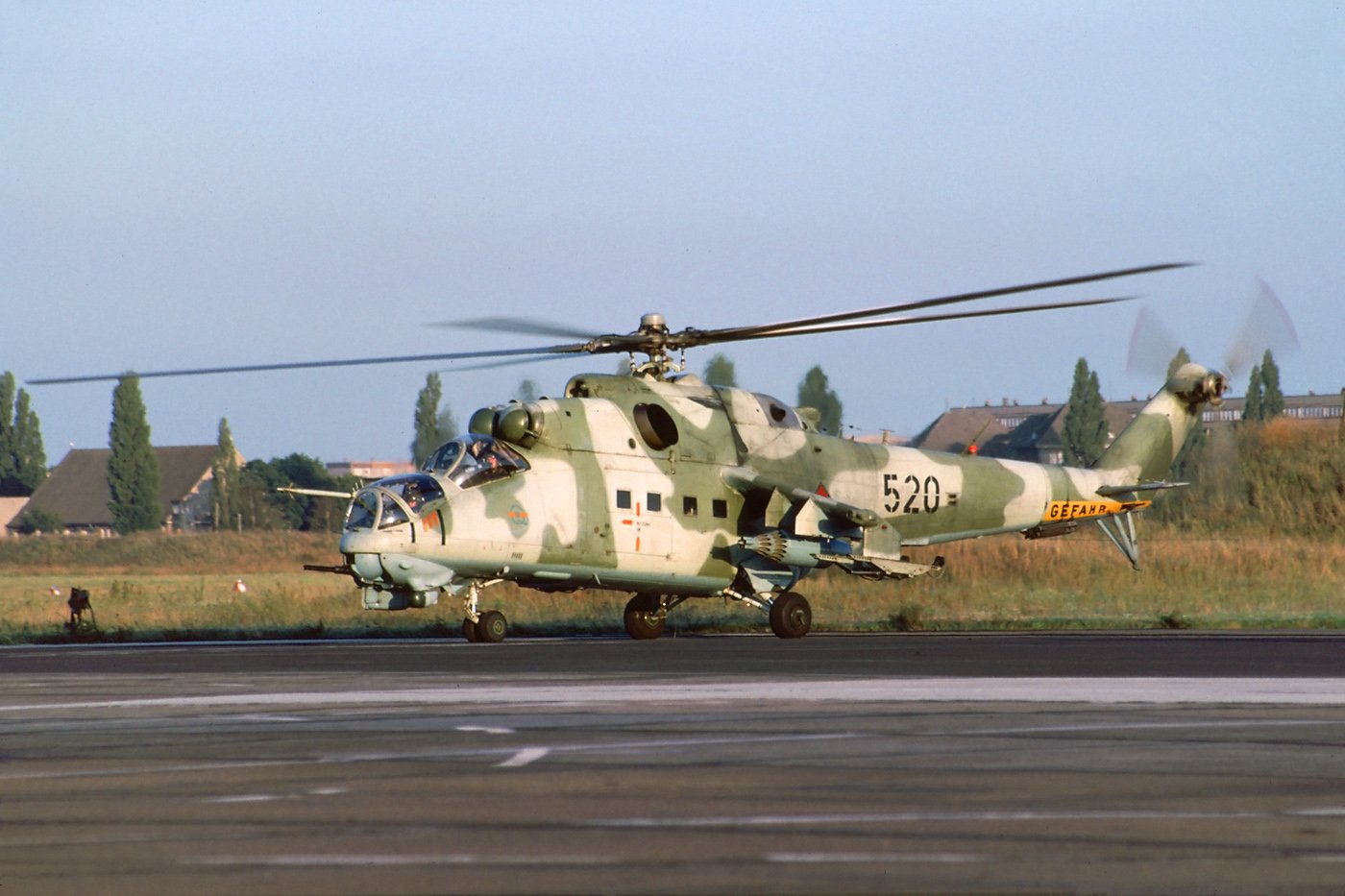
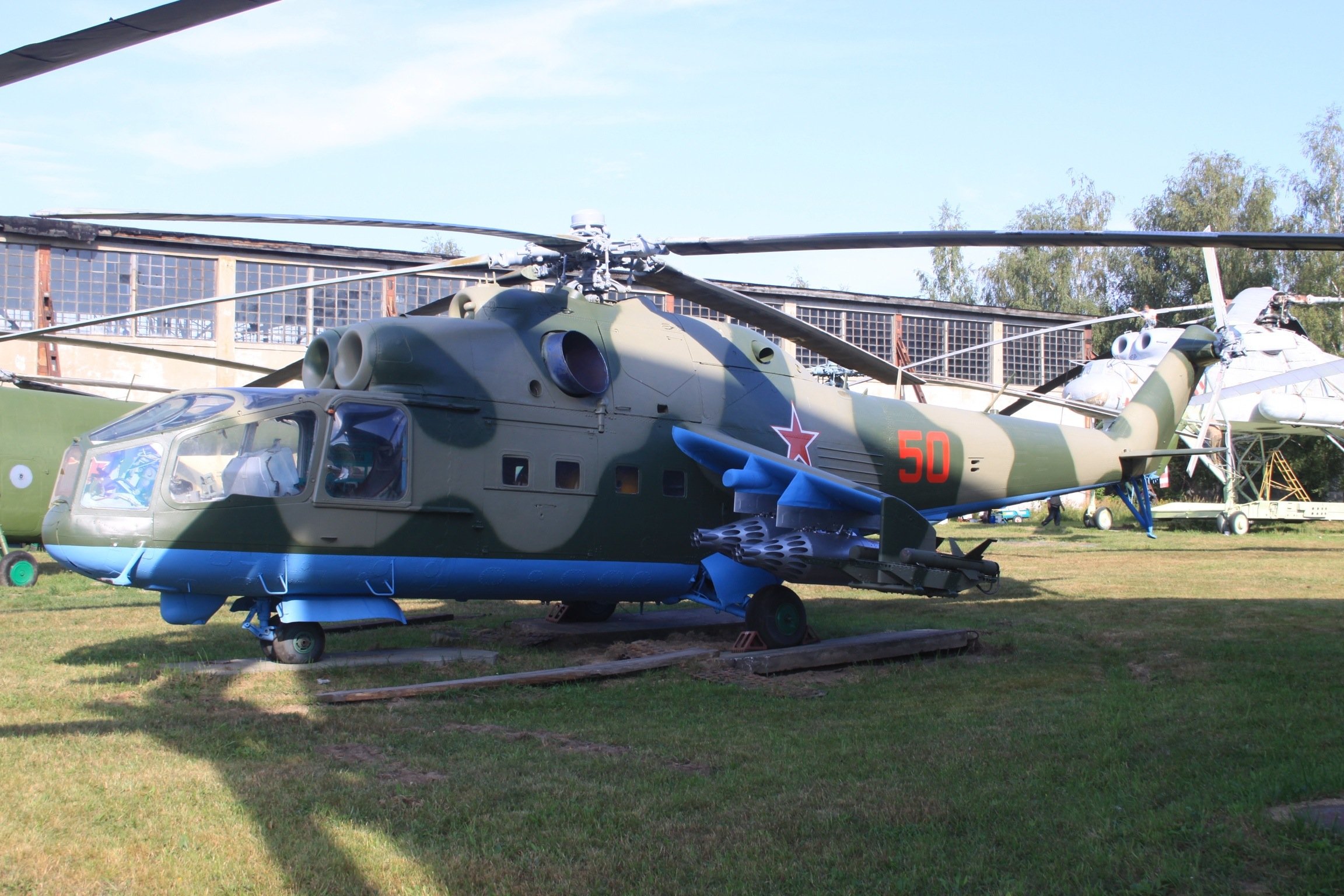
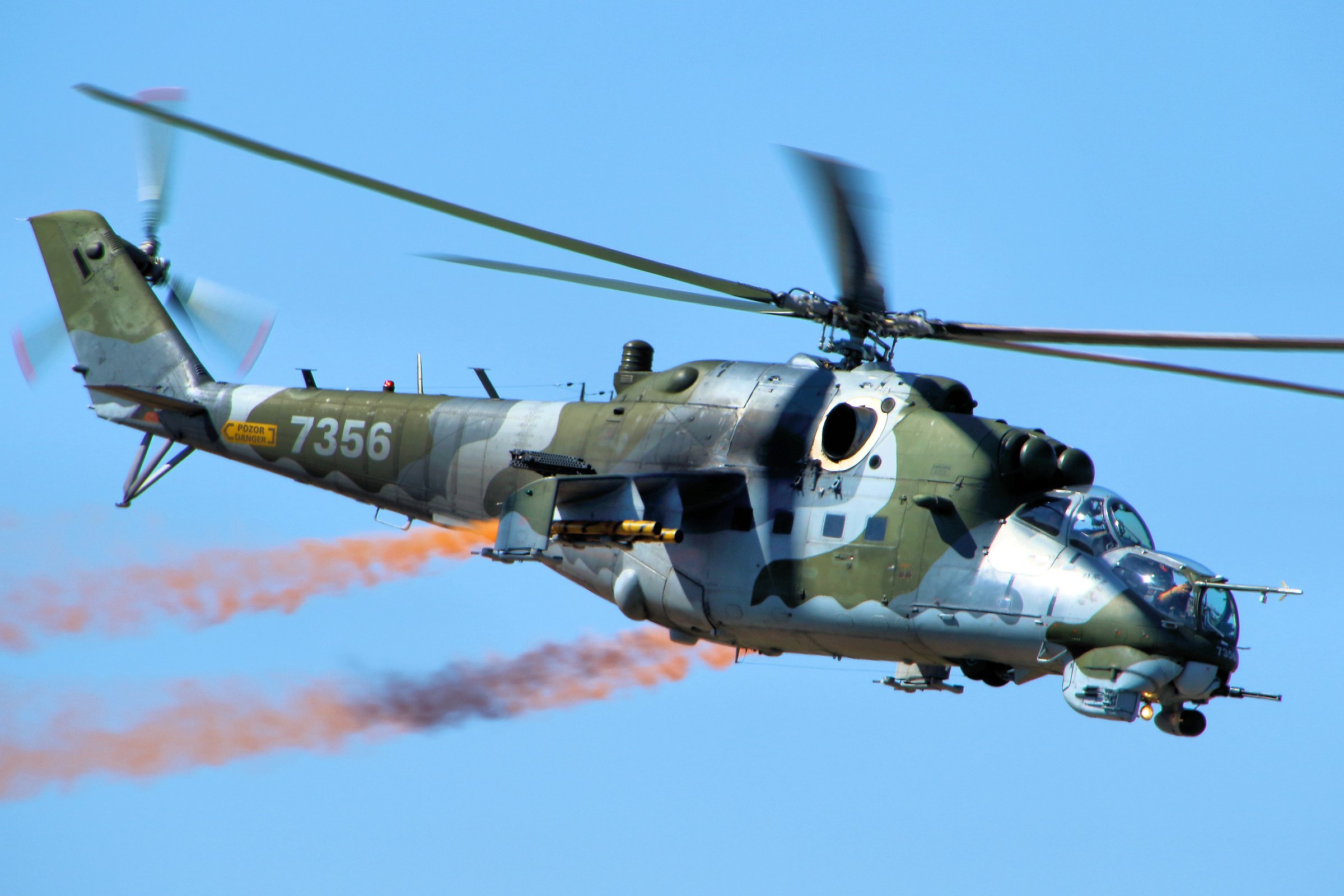
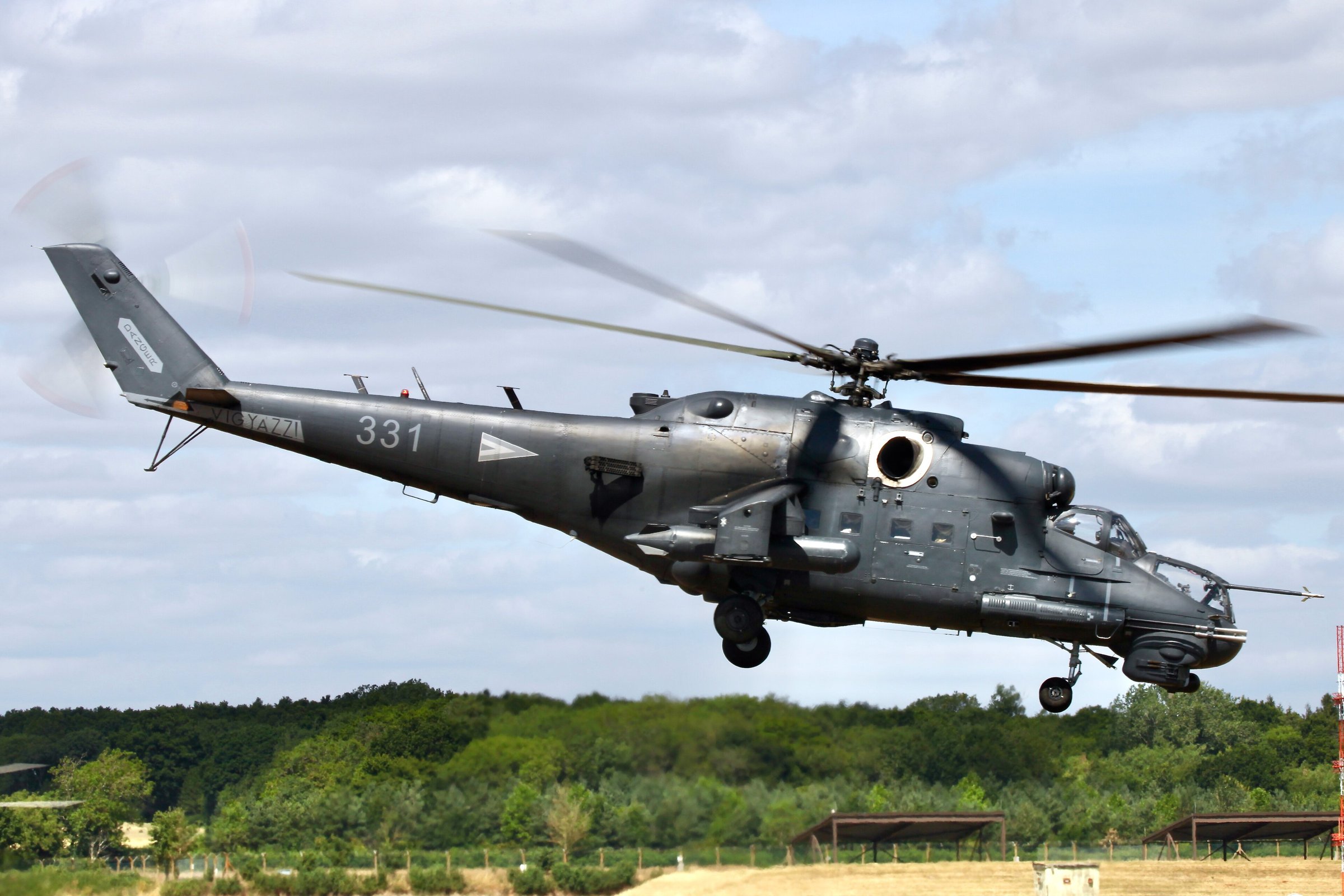
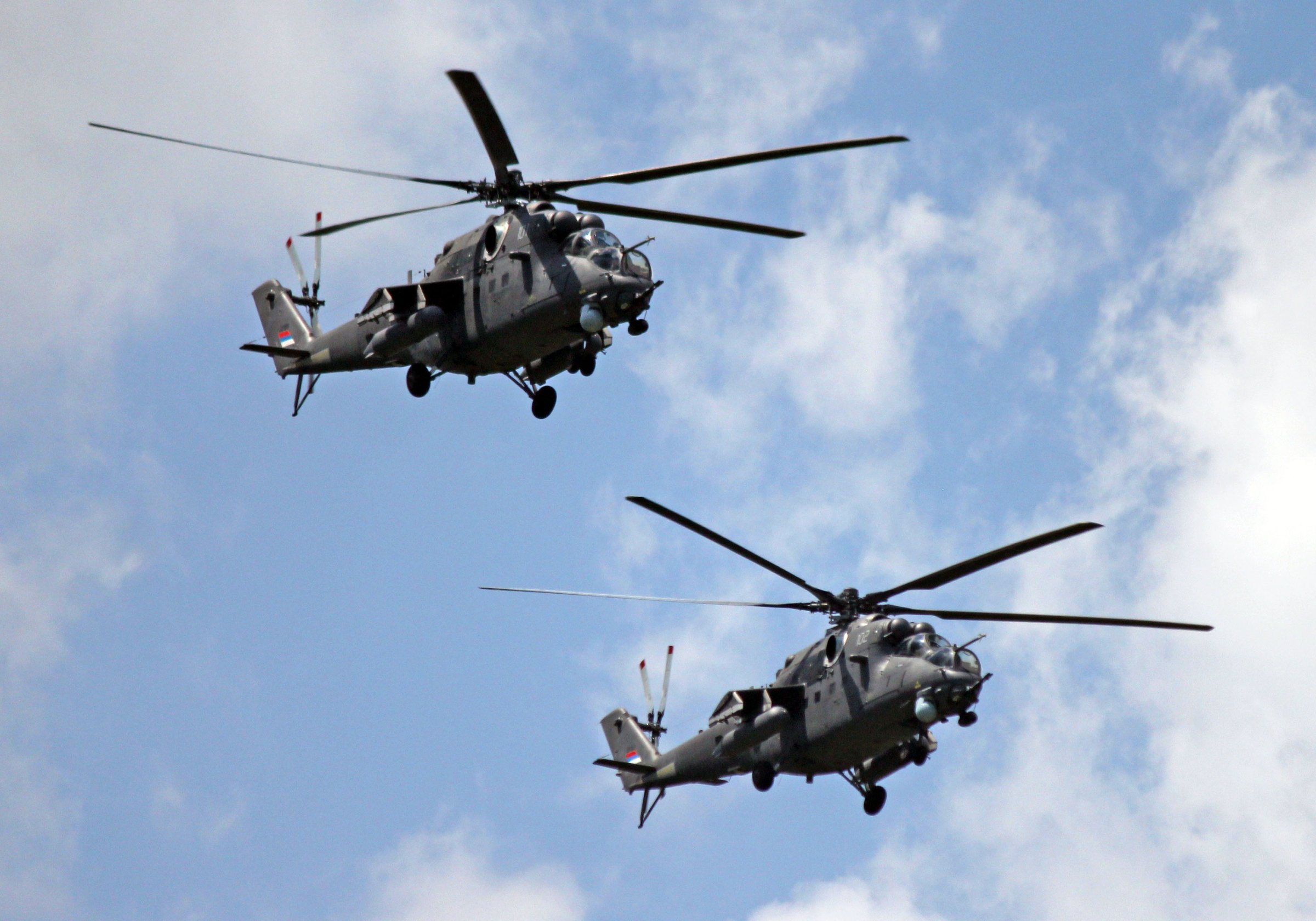
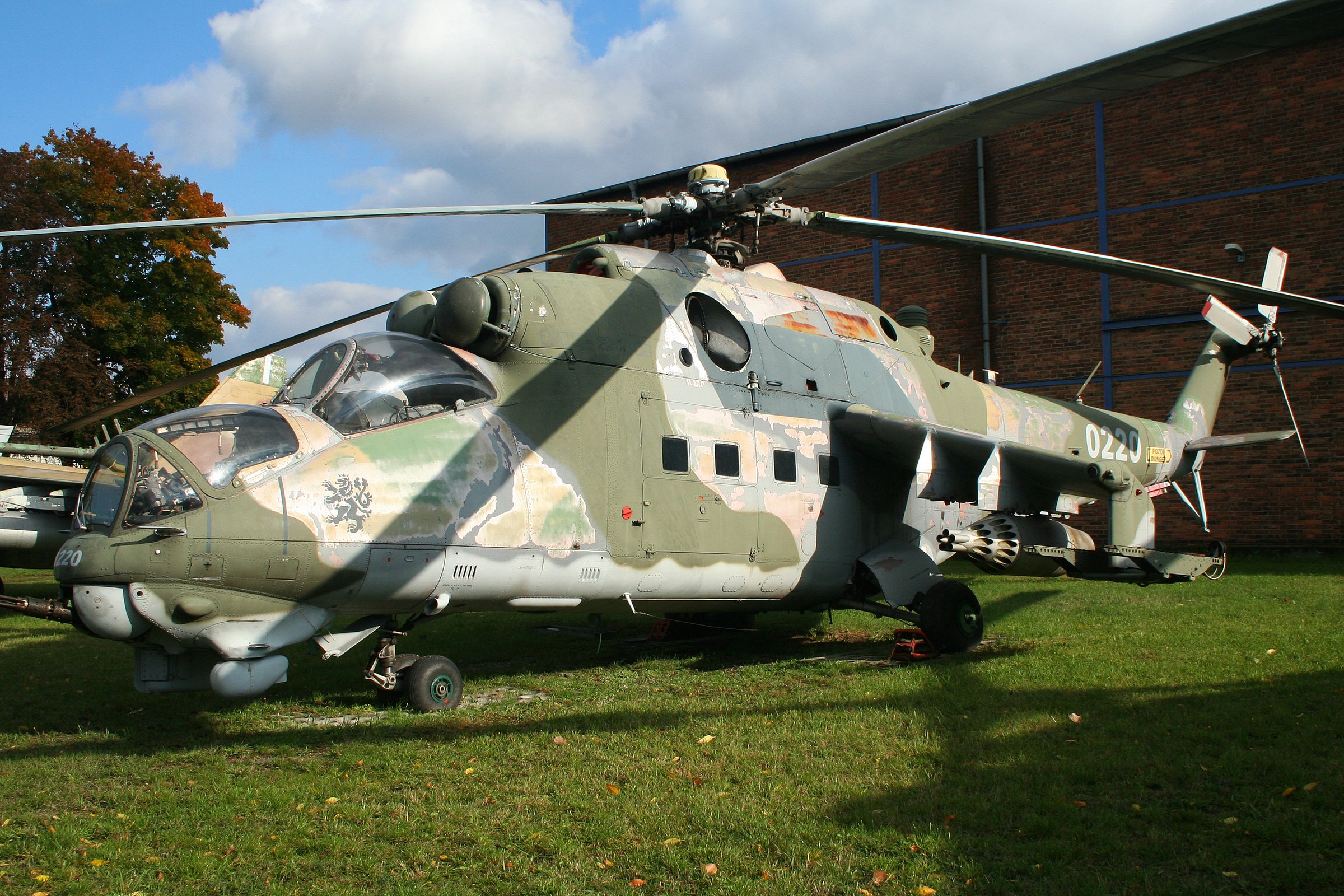
The Mi-24D (izdeliye 246) fixed the Mi-24A's biggest weakness — the view from the cockpit. Mil rebuilt the whole forward fuselage with two separate tandem cockpits under armoured 'bubble' canopies: the weapons operator in front, the pilot behind and higher up. A remotely controlled USPU-24 chin turret with the four-barrel YakB-12.7 machine gun replaced the old hand-aimed nose gun, and the Falanga-P missiles now needed only to be kept on target by the operator's sight rather than flown by hand.
It entered production in 1973 and around 600 were built by 1977. The Mi-24D became the standard Hind of the Warsaw Pact: East Germany, Poland, Czechoslovakia and Hungary all flew it, and the export version, the Mi-25, went to customers such as Peru, which received its first Mi-25Ds in 1983.
After German reunification in October 1990 the East German Hinds passed briefly to the Bundeswehr, and several later moved on to Poland. Hungary demonstrated its Mi-24Ds at airshows until the fleet was stored, while Poland's Army aviation still listed 16 Mi-24D/V gunships in 2025. A Czech Mi-24D, '0220', is preserved at the Kbely aviation museum in Prague.