Mi-8T / Mi-8P Hip
The original twin-turbine Hip — the TV2-powered transport and airliner that founded the world's most-built helicopter family · First flight 1961 · In service 1967
Mil began the V-8 as a turbine replacement for the piston-engined Mi-4. The first prototype flew in 1961 with a single AI-24V turboshaft, but the design switched to two Isotov TV2-117 engines, and the twin-engined V-8A flew in 1962. Series production began at Kazan in 1965, and after military trials the Mi-8T was accepted into Soviet service in the late 1960s.
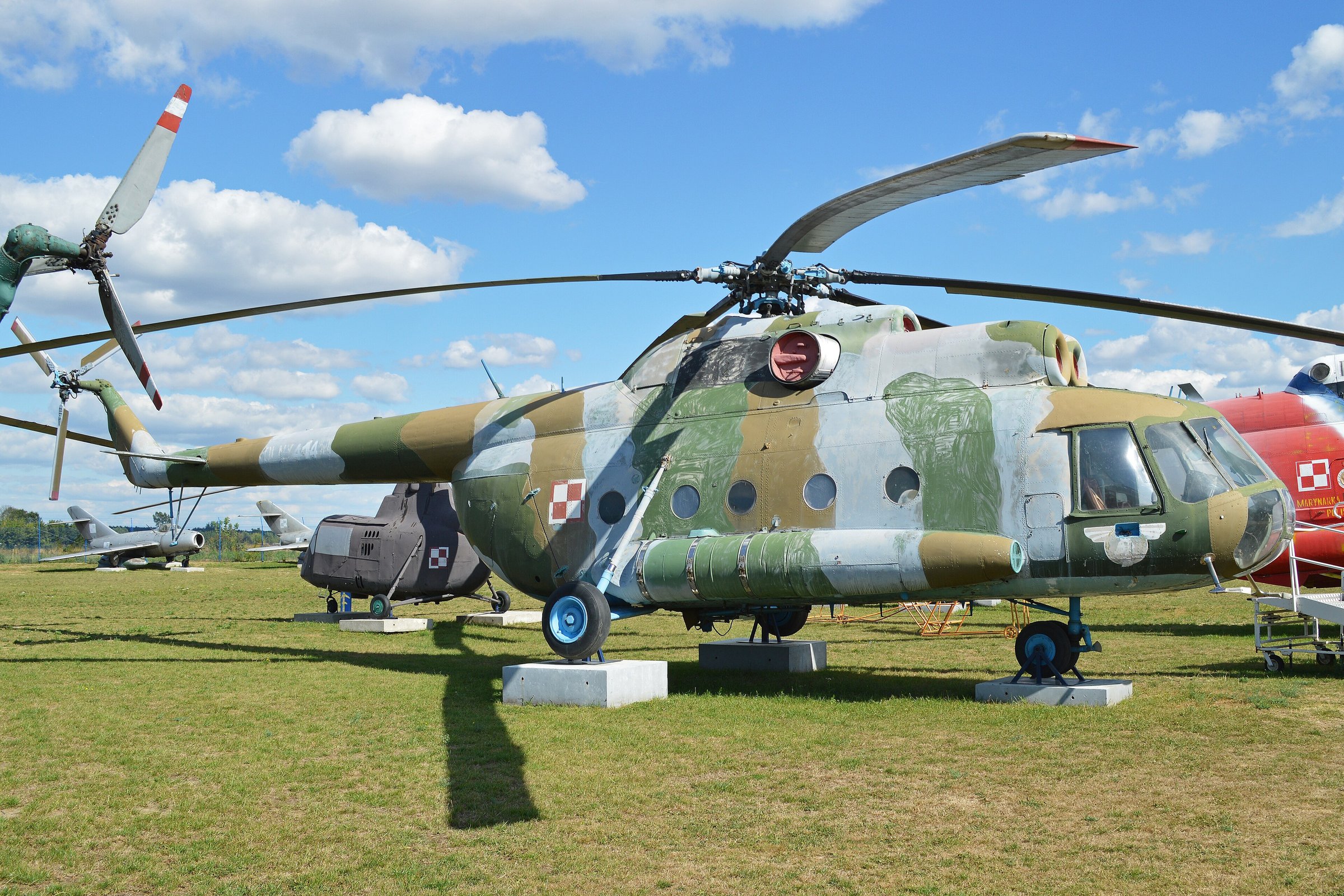
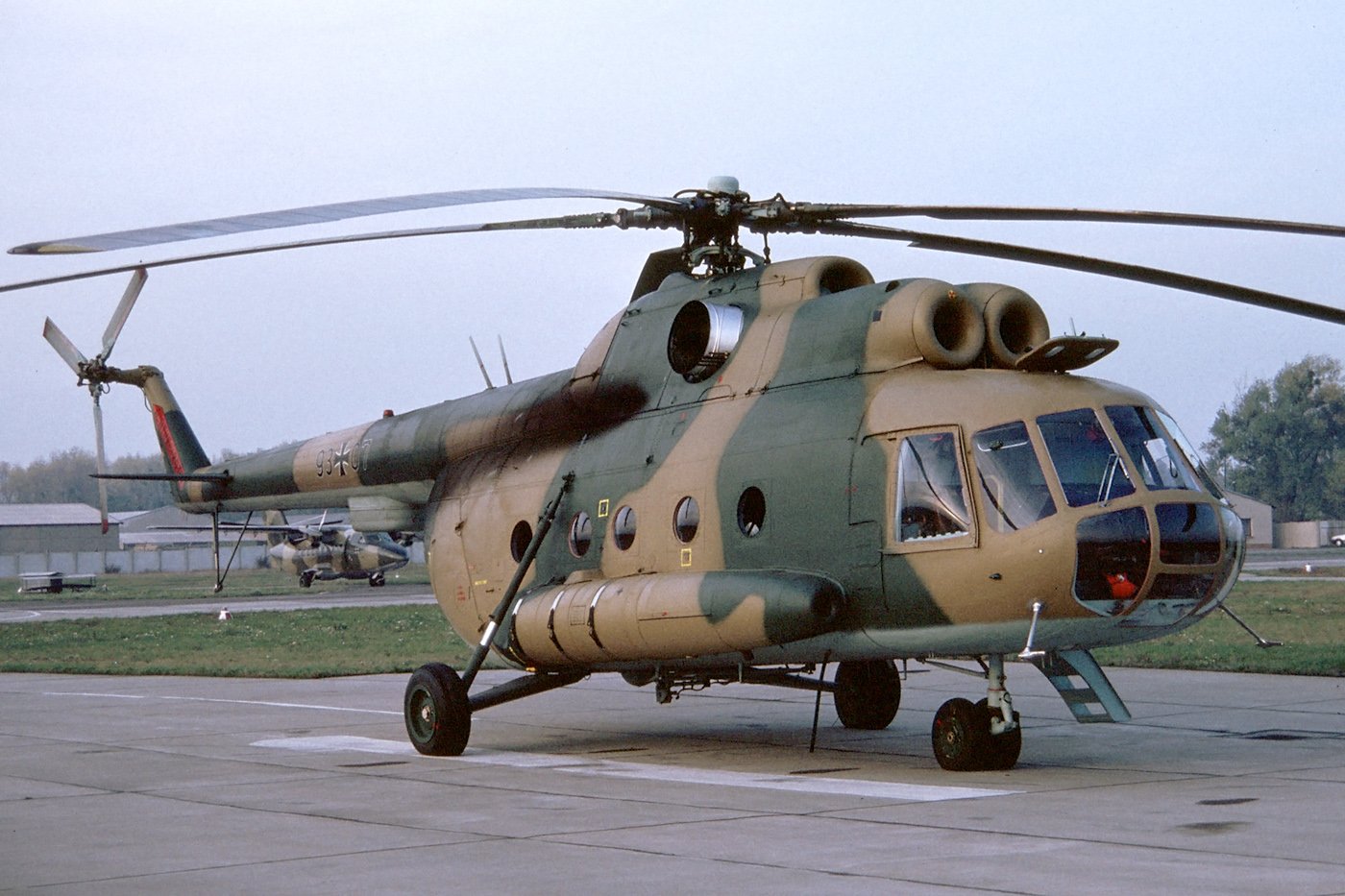
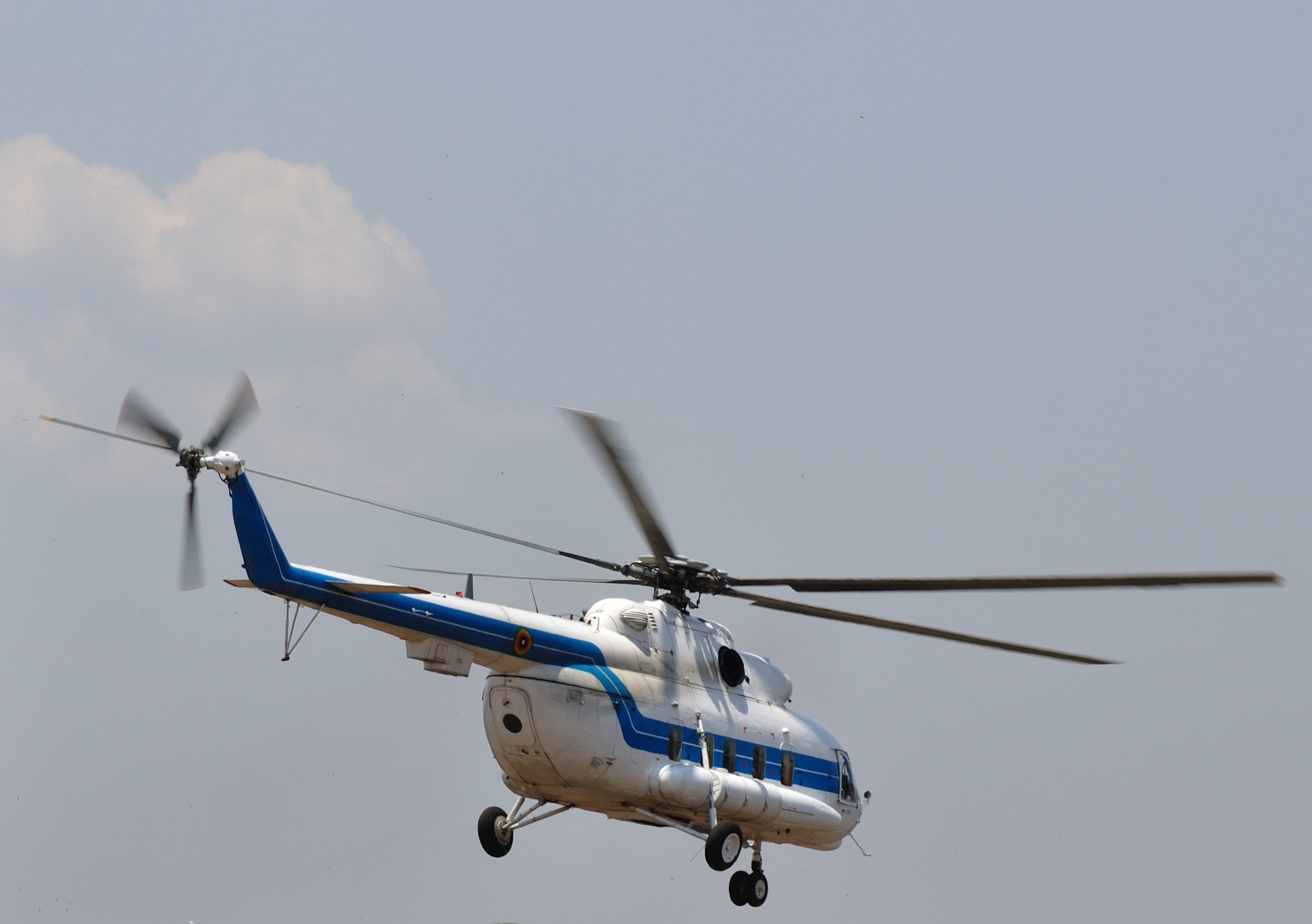
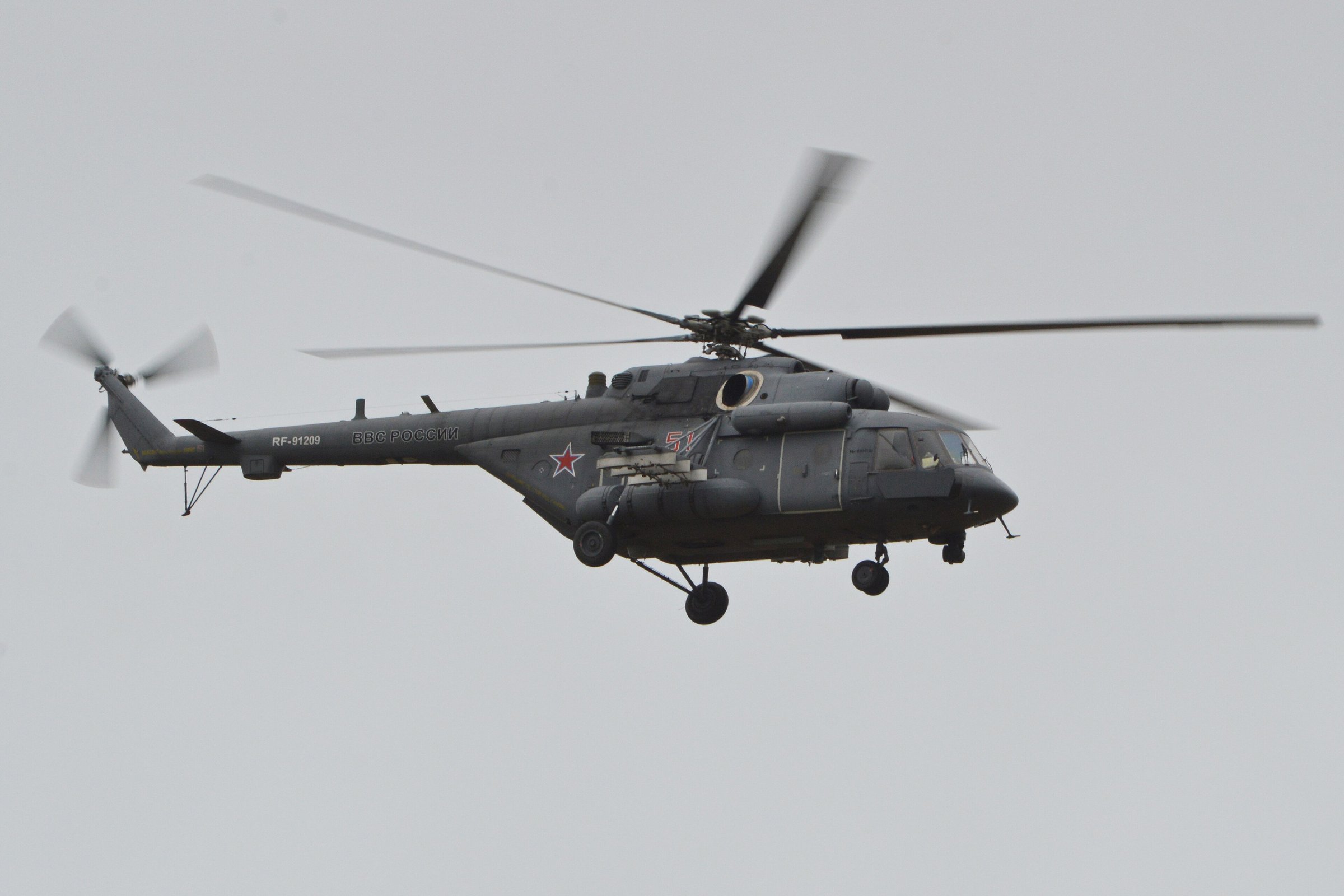
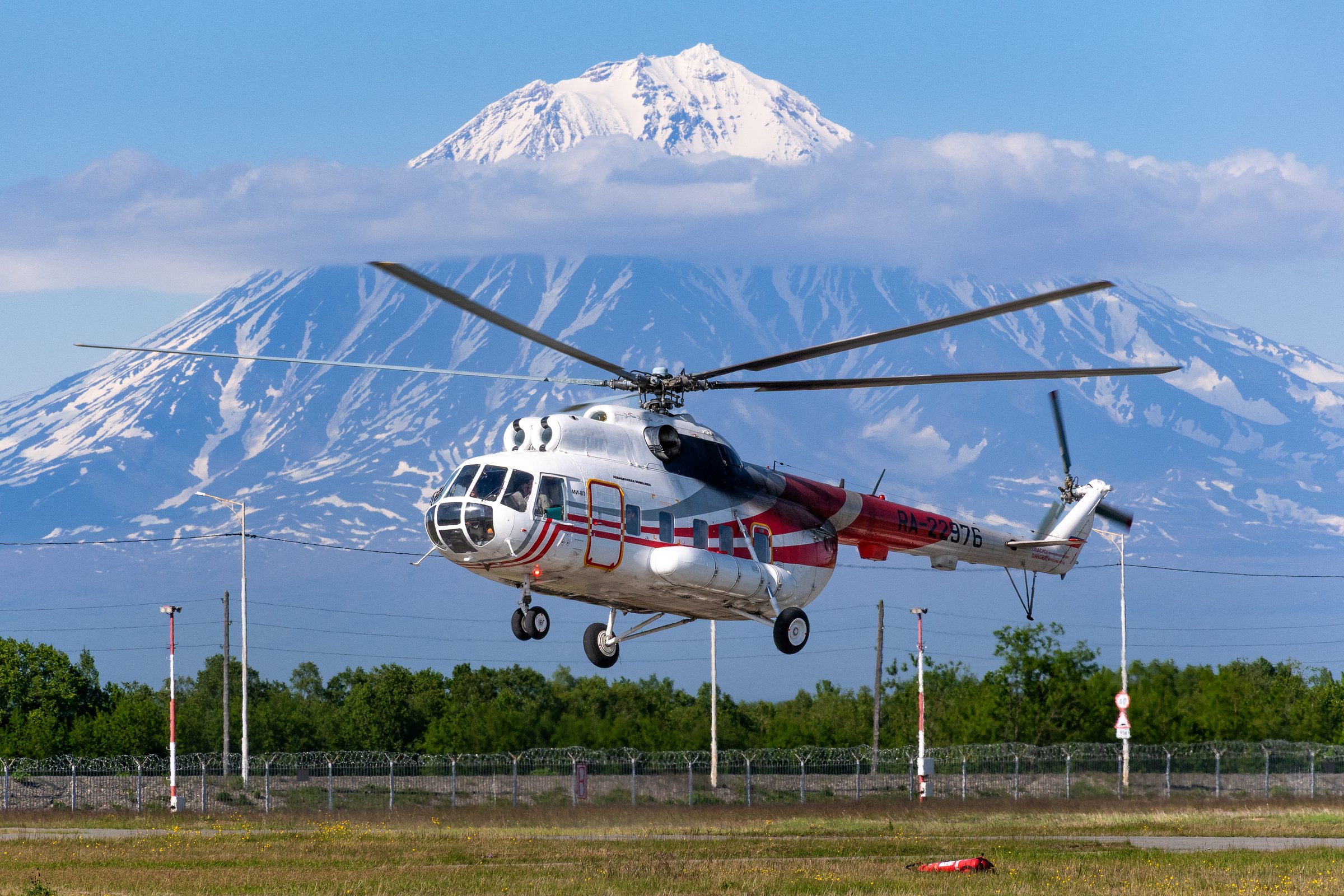
The Mi-8T (NATO 'Hip-C') was the basic transport, with round cabin windows, fold-down seats for 24 troops, room for 12 stretchers and outriggers that could carry rocket pods and anti-tank missiles. The civil Mi-8P had larger square windows and seats for up to 28 passengers, and VIP 'Salon' versions followed.
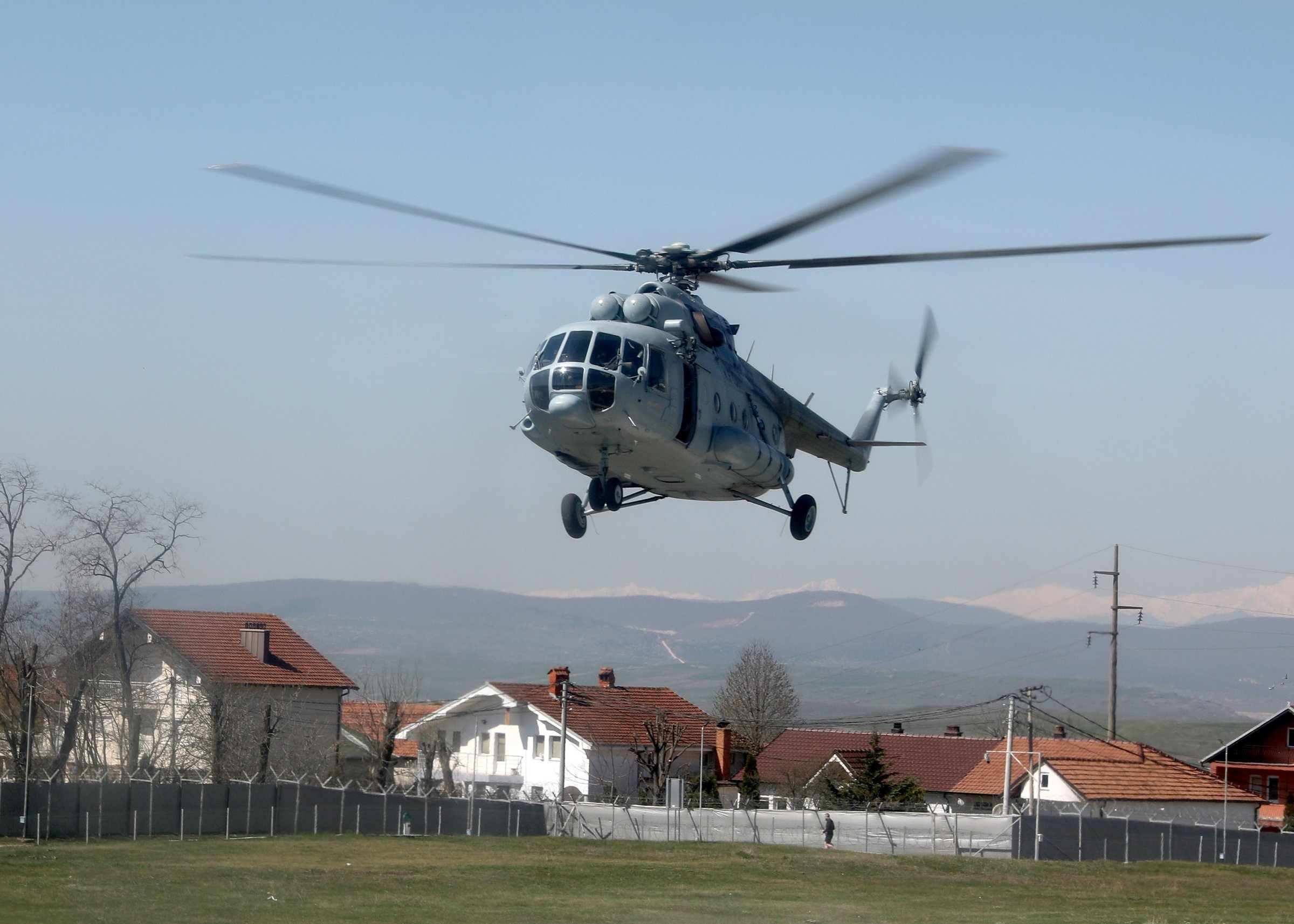
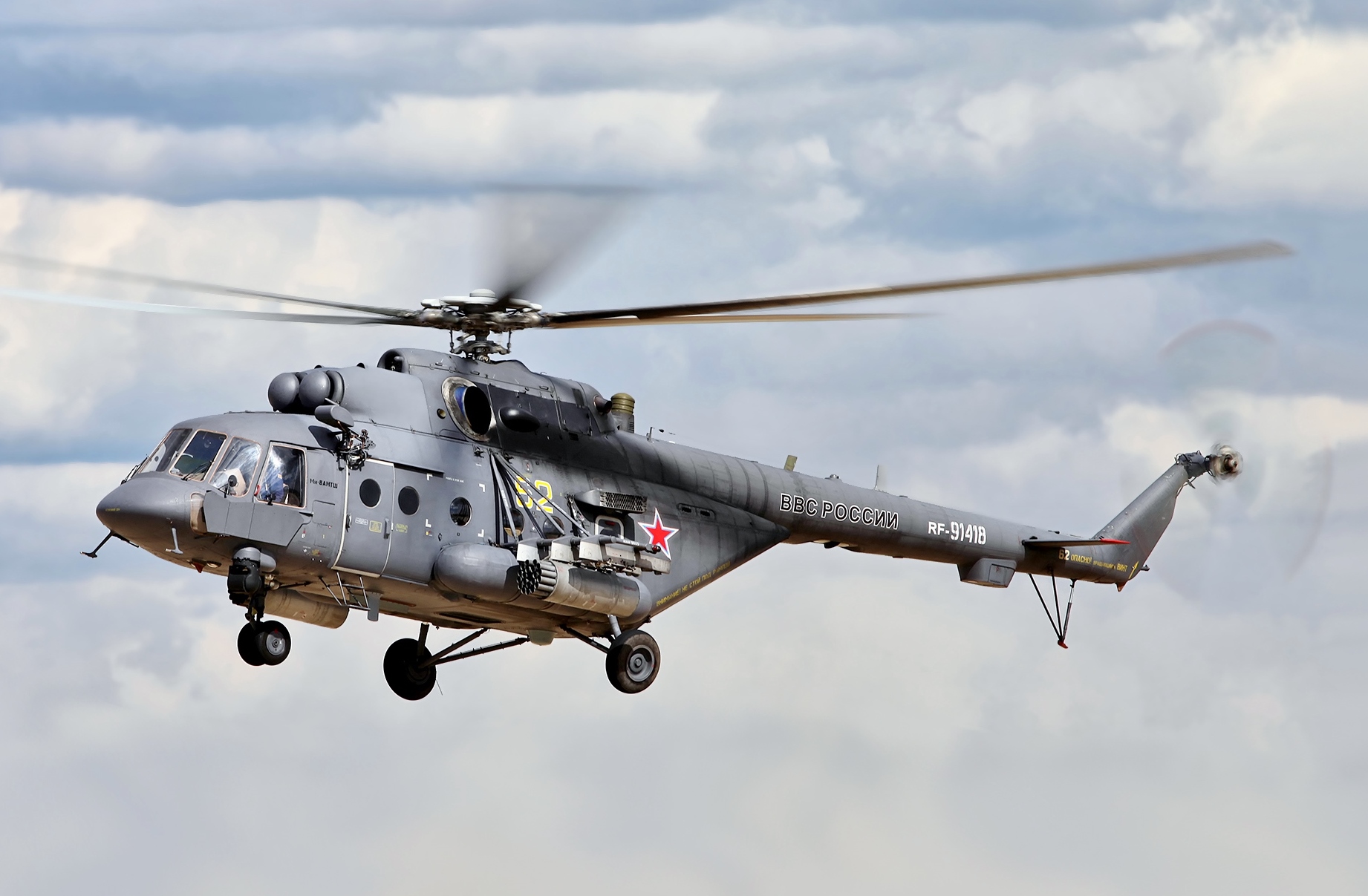
These TV2-engined Hips, recognisable by their long engine cowlings and tail rotor on the right-hand side, were exported across the Warsaw Pact and far beyond. Together with later versions the family has passed 12,000 built, making it the most-produced helicopter in history.