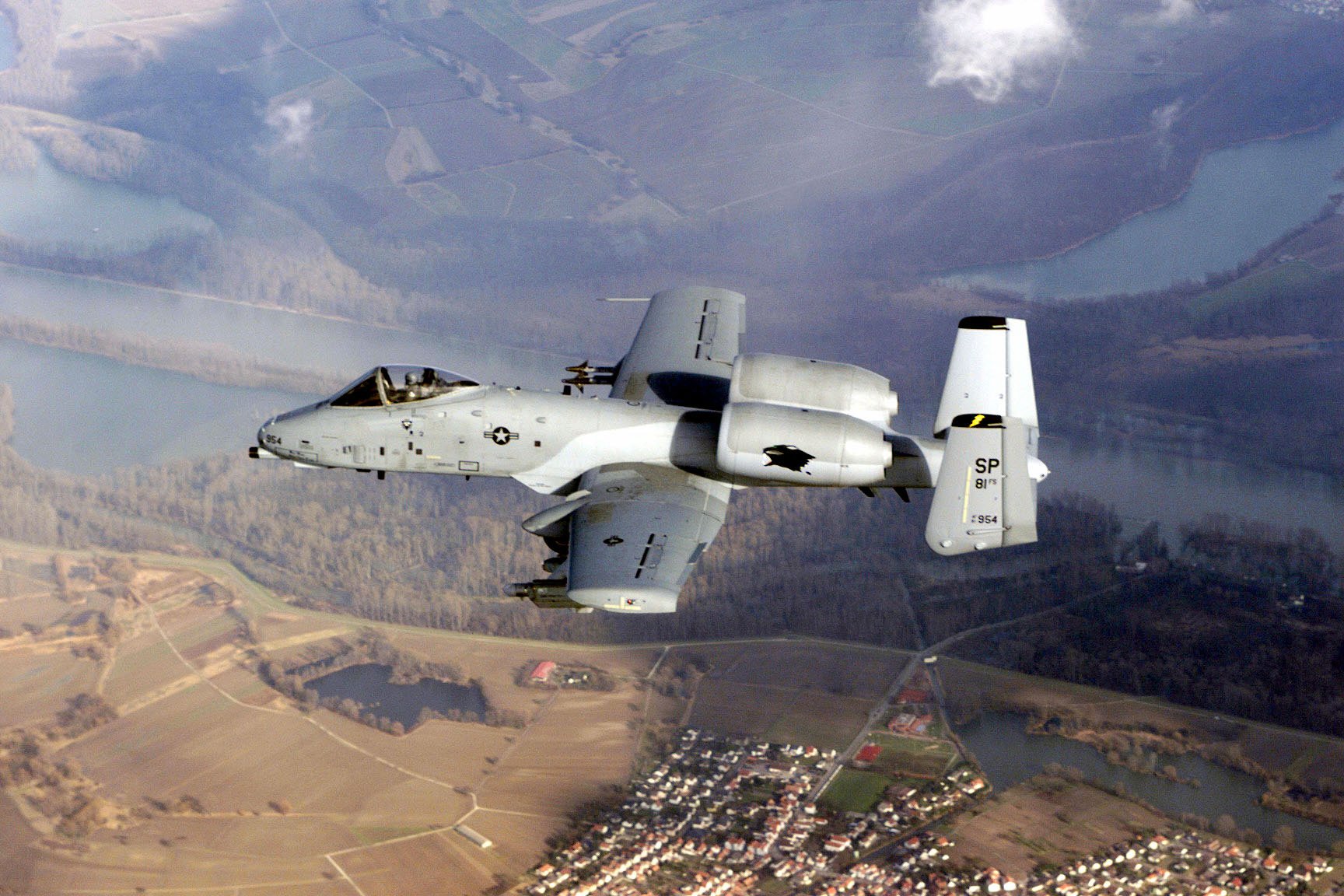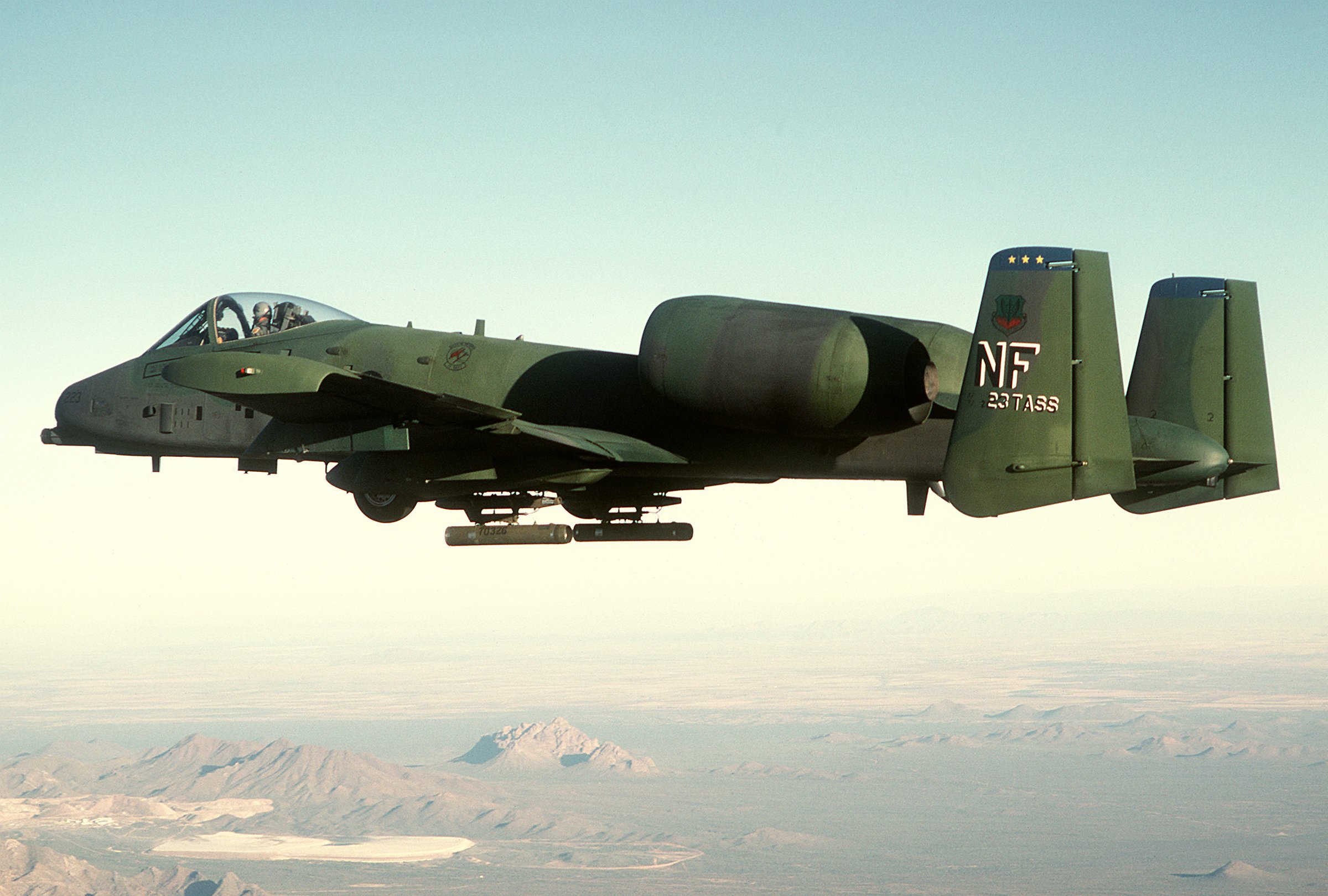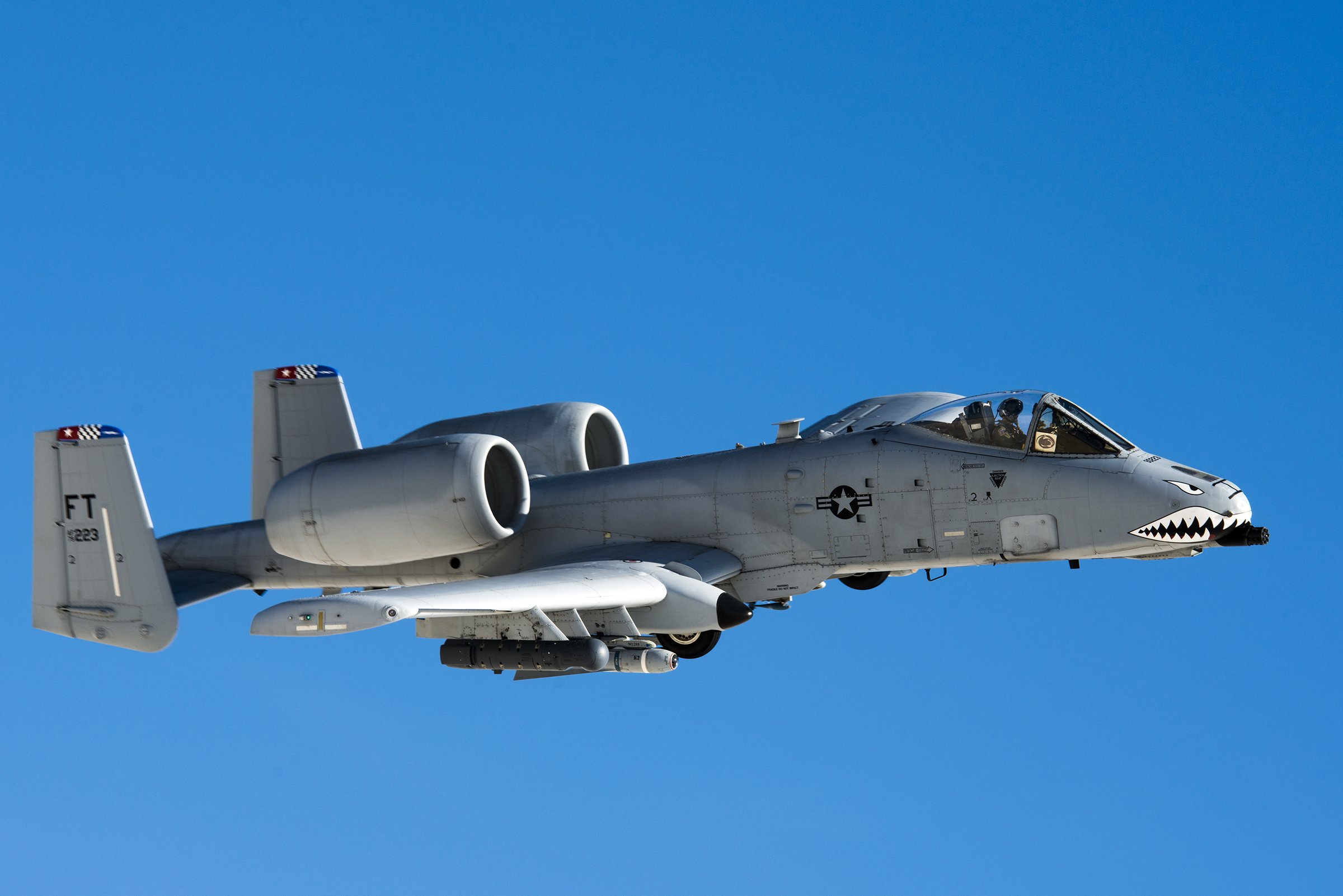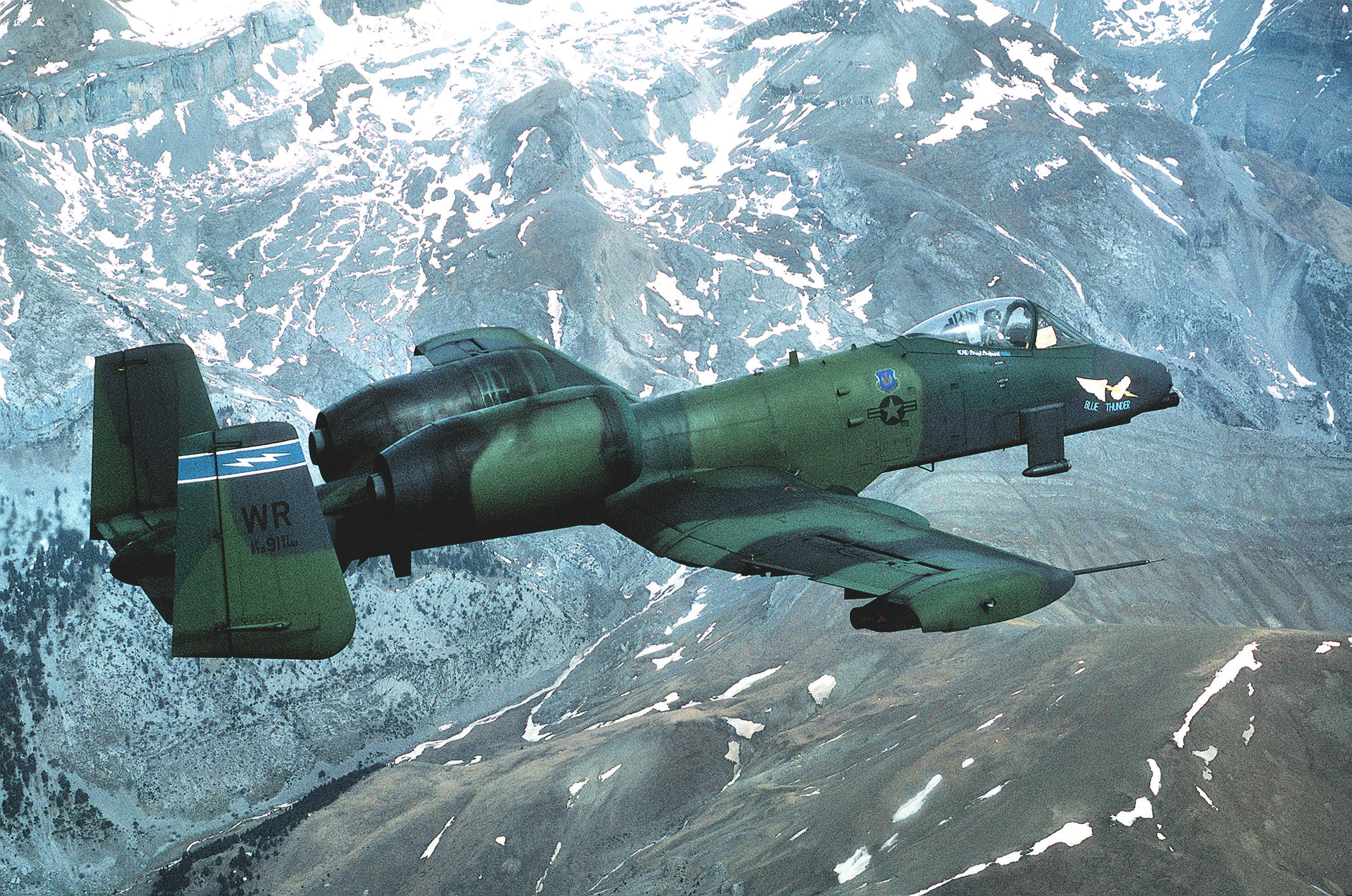
Fairchild Republic A-10A Thunderbolt II
The original Warthog — a straight-winged flying gun built to stop tank columns · First flight 1972 · In service 1977
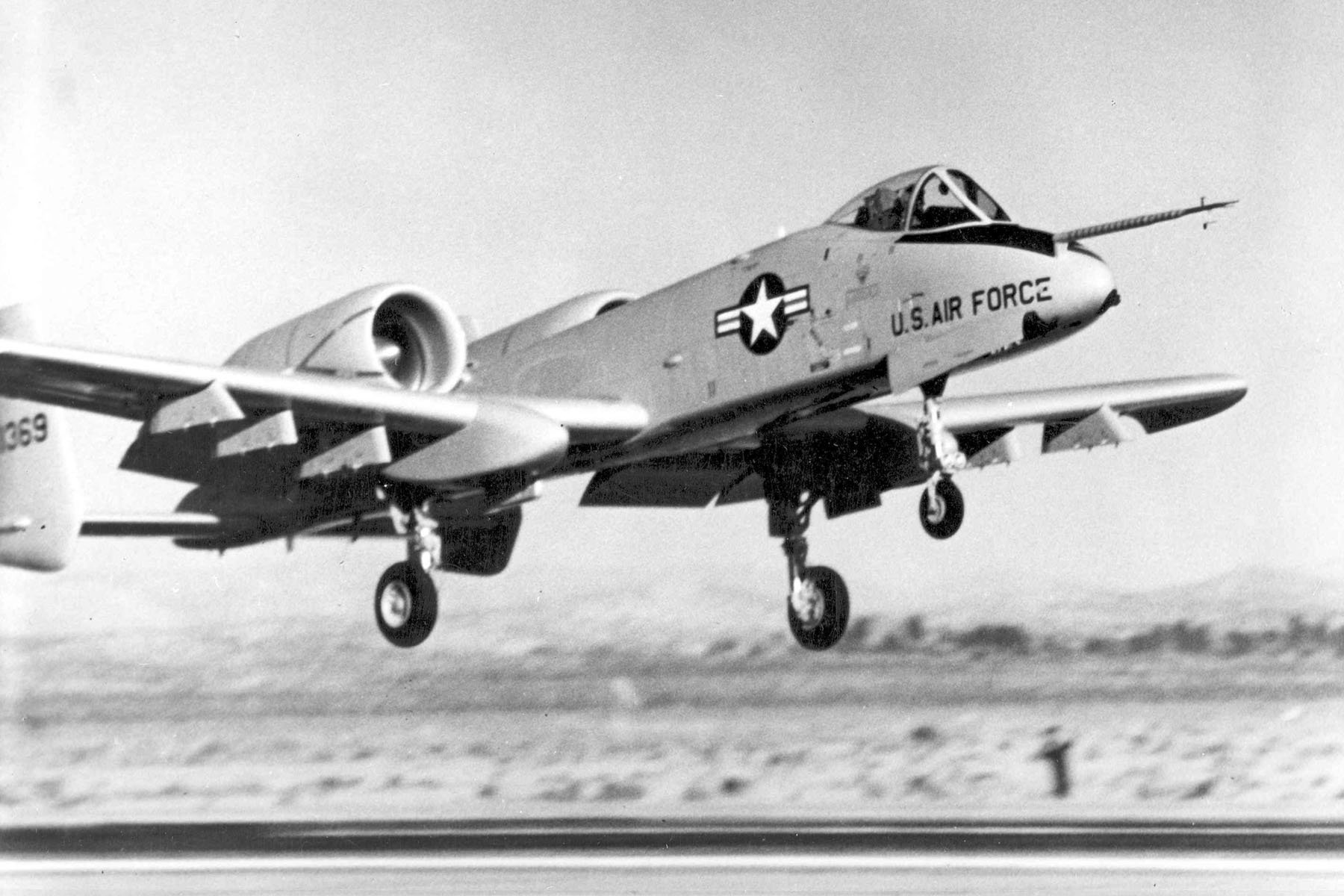
The A-10A came out of the USAF's A-X programme, the first American requirement for an aircraft dedicated purely to close air support. Fairchild Republic built two YA-10A prototypes at Farmingdale, New York; the first flew on 10 May 1972, and after a fly-off against the Northrop YA-9 the type was selected for production on 18 January 1973. A second fly-off in 1974 against the A-7D Corsair II was held to prove the need for a new attack aircraft at all.
Production aircraft were built at Hagerstown, Maryland. The first production A-10A flew in October 1975, the 355th Tactical Training Wing at Davis-Monthan received the first aircraft in March 1976, and the 354th Tactical Fighter Wing reached initial operating capability in October 1977. By 1984, 715 airframes, including the prototypes and development aircraft, had been delivered. A large part of the fleet was based in England at RAF Bentwaters and Woodbridge, rotating detachments to forward bases in West Germany.
The A-10A gained the Pave Penny laser-spot tracker in 1978, inertial navigation in 1980 and the LASTE weapon-aiming, autopilot and ground-collision-warning upgrade in the early 1990s. In the 1991 Gulf War 132 A-10s flew about 8,100 sorties and fired 90 percent of the AGM-65 Mavericks used in the conflict. A single two-seat night/adverse-weather prototype, the YA-10B, was converted from an early aircraft but never ordered.