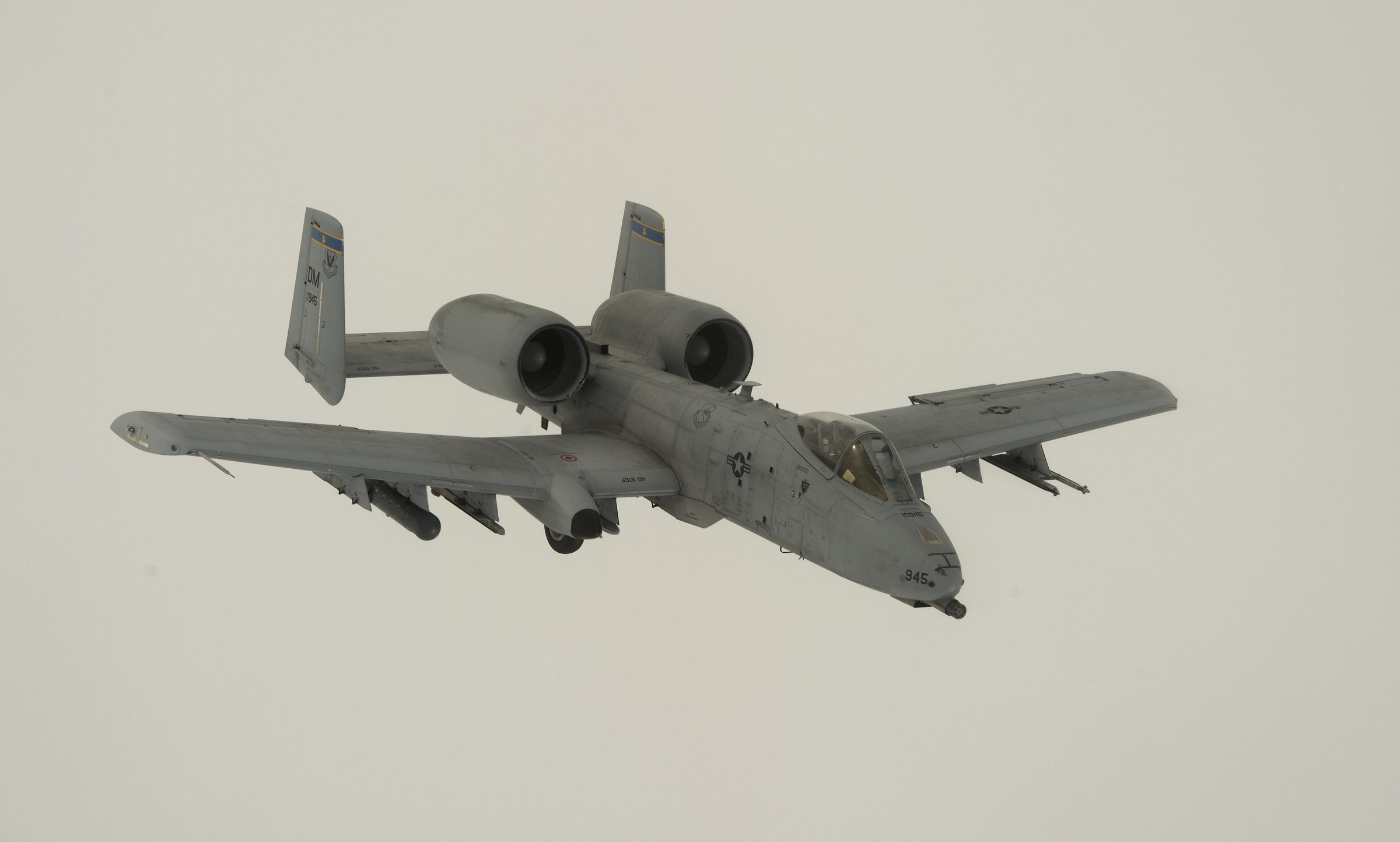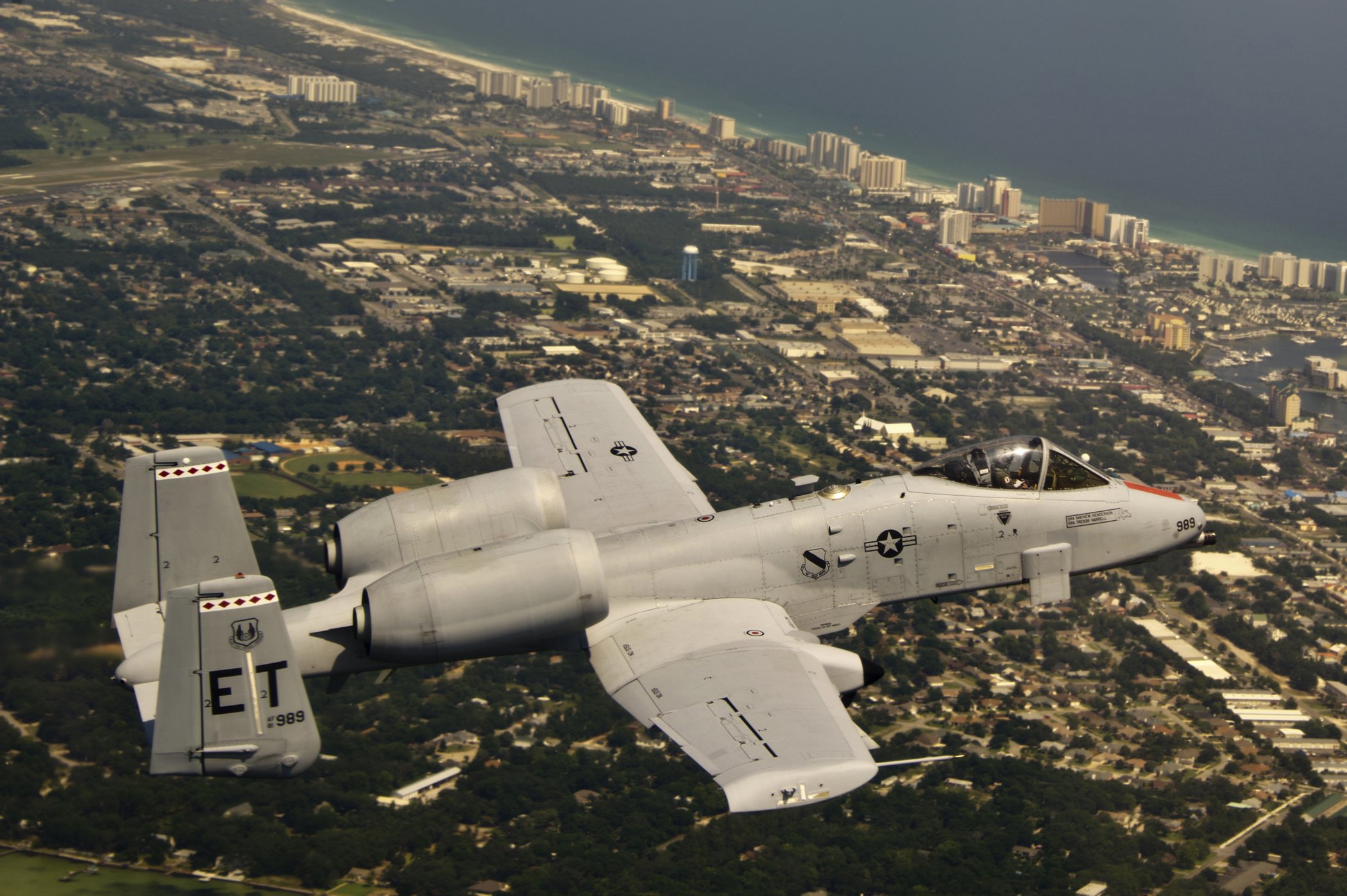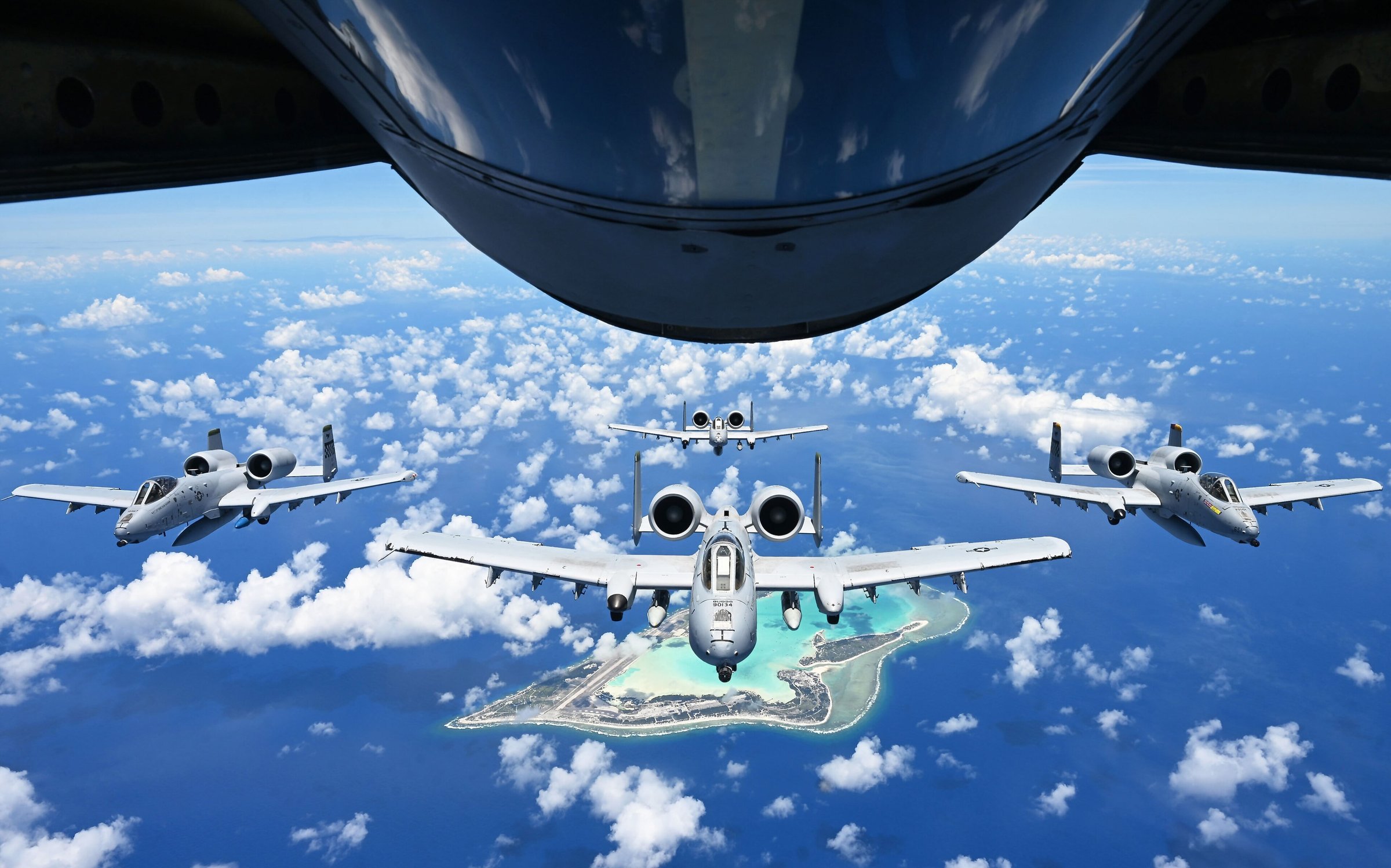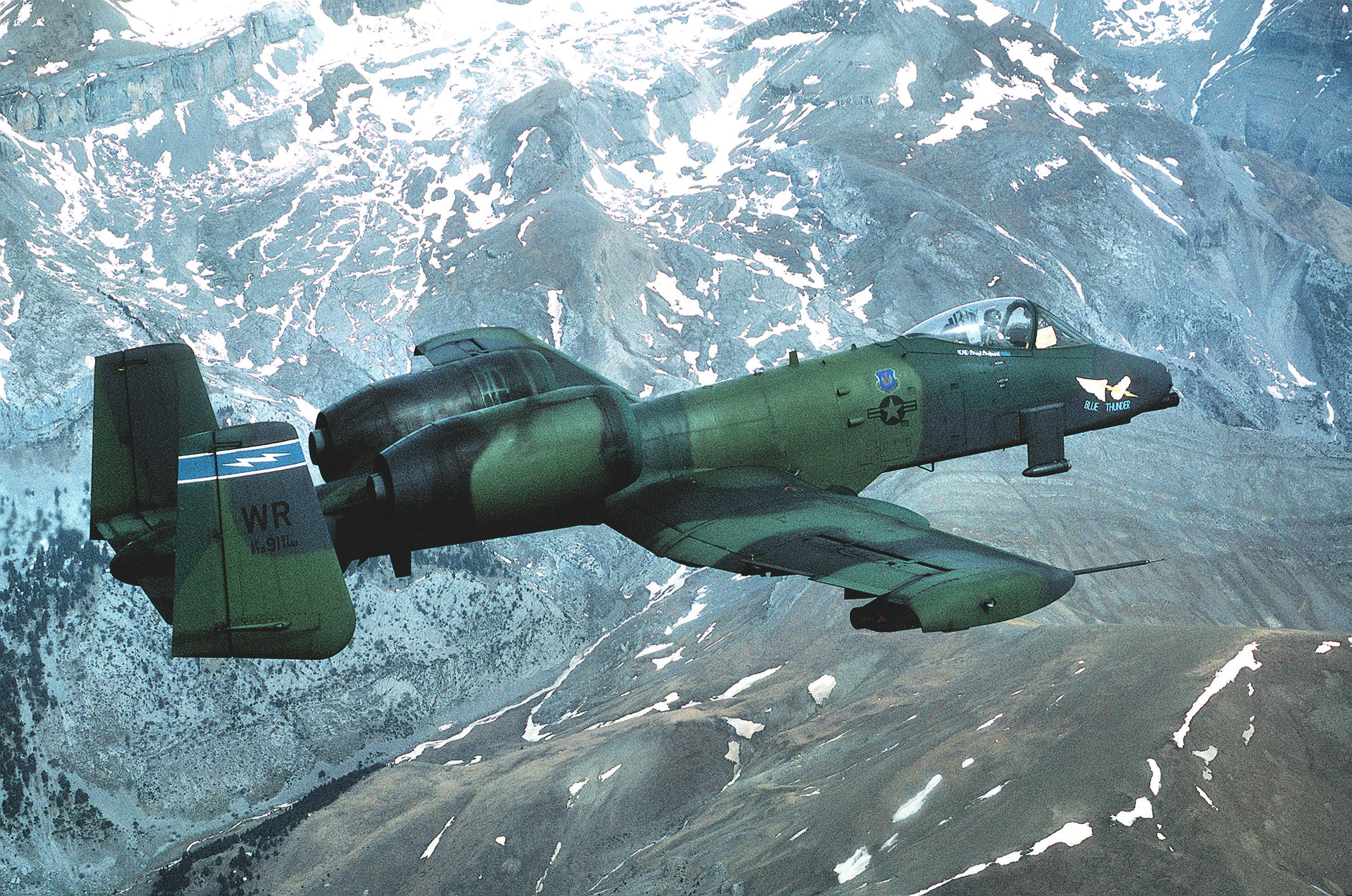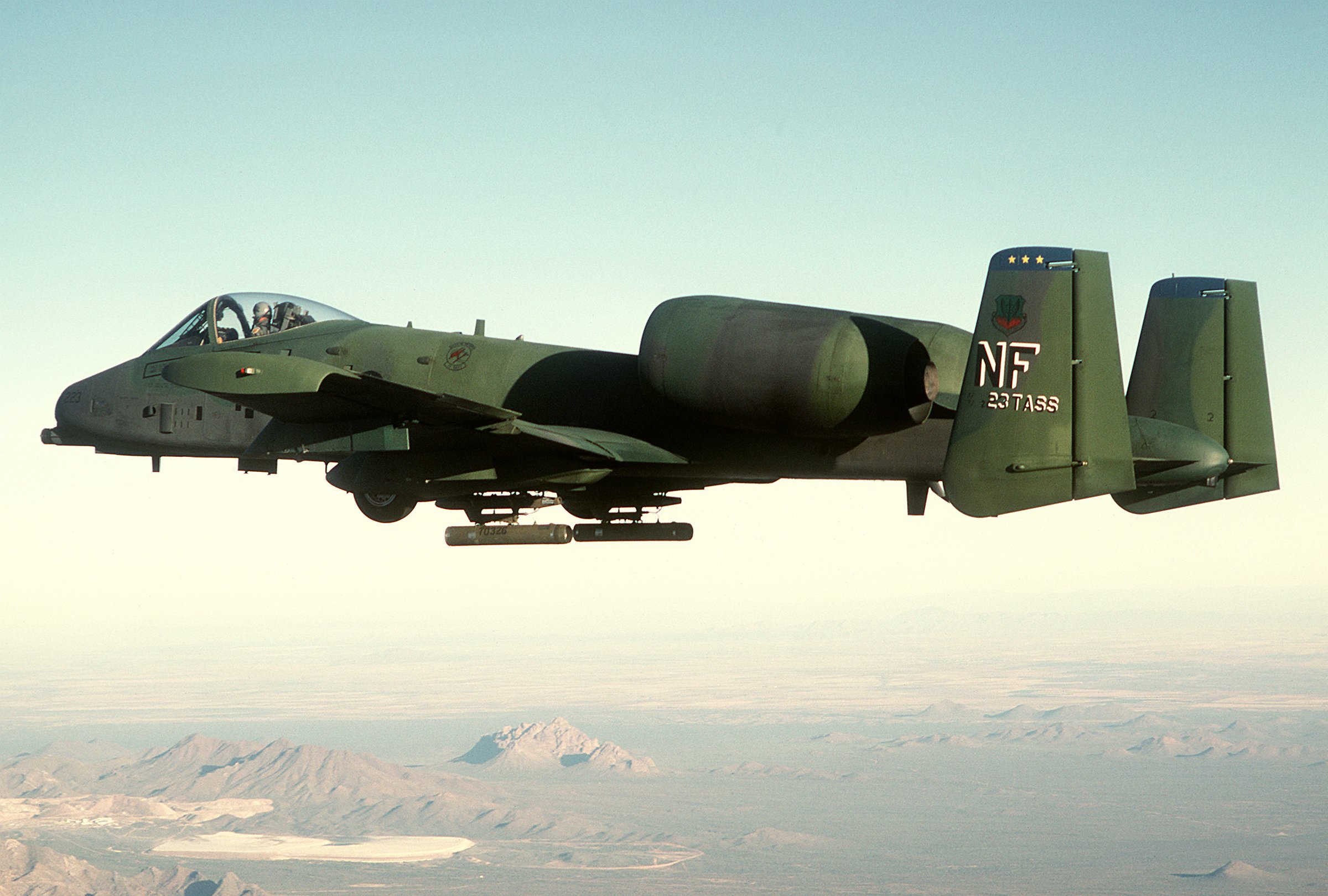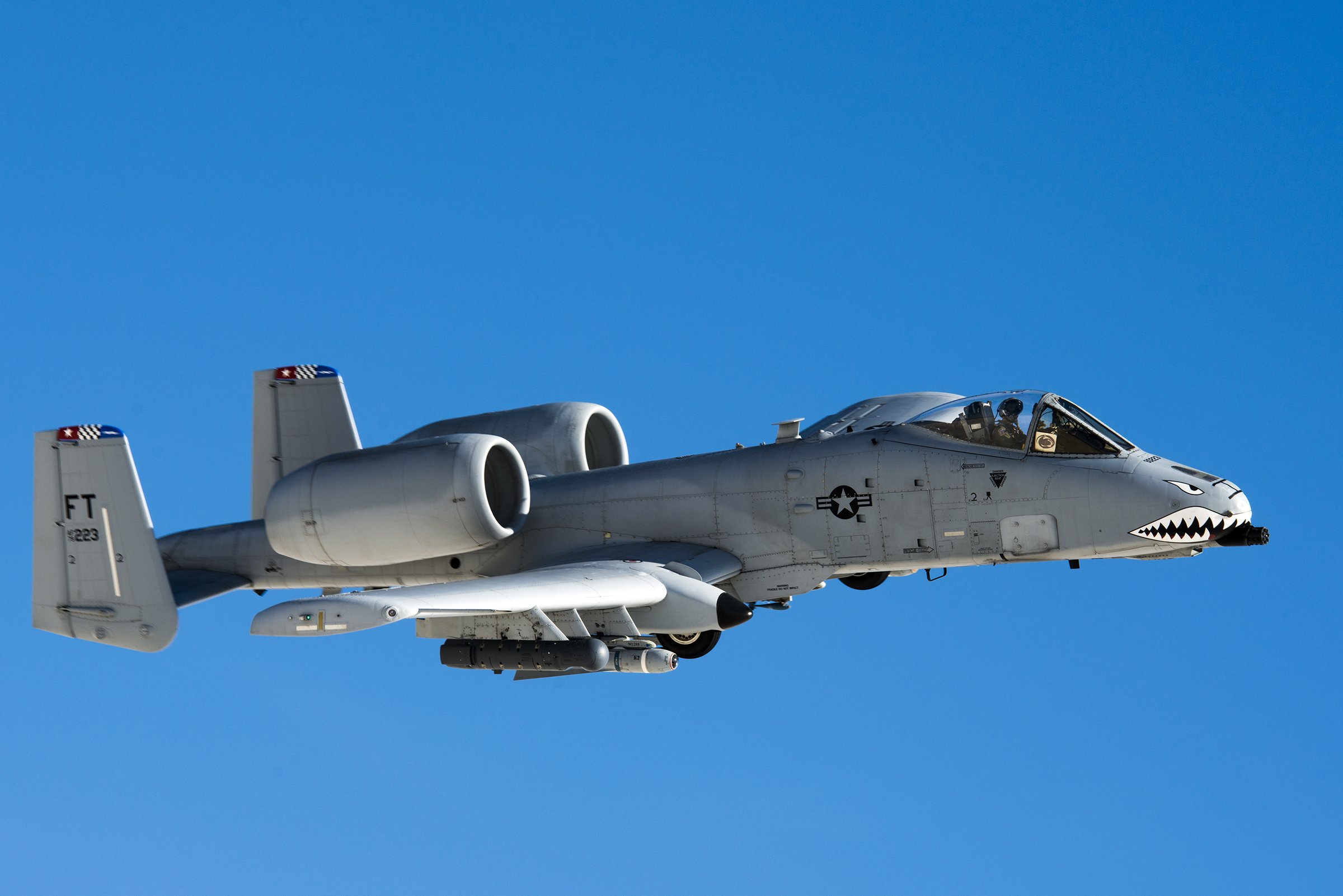
Fairchild Republic A-10C Thunderbolt II
The digital Warthog — glass cockpit, datalink and smart bombs on the same old cannon · First flight 2005 · In service 2007
Under the Precision Engagement programme the entire fleet of 356 A-10s and OA-10s was rebuilt between 2005 and June 2011 and redesignated A-10C. The first modified aircraft flew at Eglin Air Force Base, Florida, on 20 January 2005, flown by a 40th Flight Test Squadron pilot. The upgrade added two multifunction cockpit displays, a HOTAS layout combining an F-16 stick with an F-15 throttle, a Link 16 datalink and satellite radio, an integrated flight and fire-control computer, and the ability to drop GPS-guided JDAMs and Wind Corrected Munitions Dispensers.
The A-10C reached initial operating capability in September 2007 and first deployed to Iraq that year with the Maryland Air National Guard's 104th Fighter Squadron. Later software suites added IFF Mode 5, and the old Pave Penny pods were removed because the LITENING and Sniper targeting pods could designate targets themselves. In November 2011 the first A-10s flew with new Boeing-built wings, ordered to cure long-running fatigue cracking.
The A-10C's future has been argued over for more than a decade. Congress blocked several retirement plans before approving the divestment of the first 21 aircraft in the 2023 defence budget, and in April 2026 the Air Force announced that final retirement would be pushed back to 2030. On 25 March 2010 an A-10 became the first aircraft to fly with all engines running on a 50/50 biofuel blend.