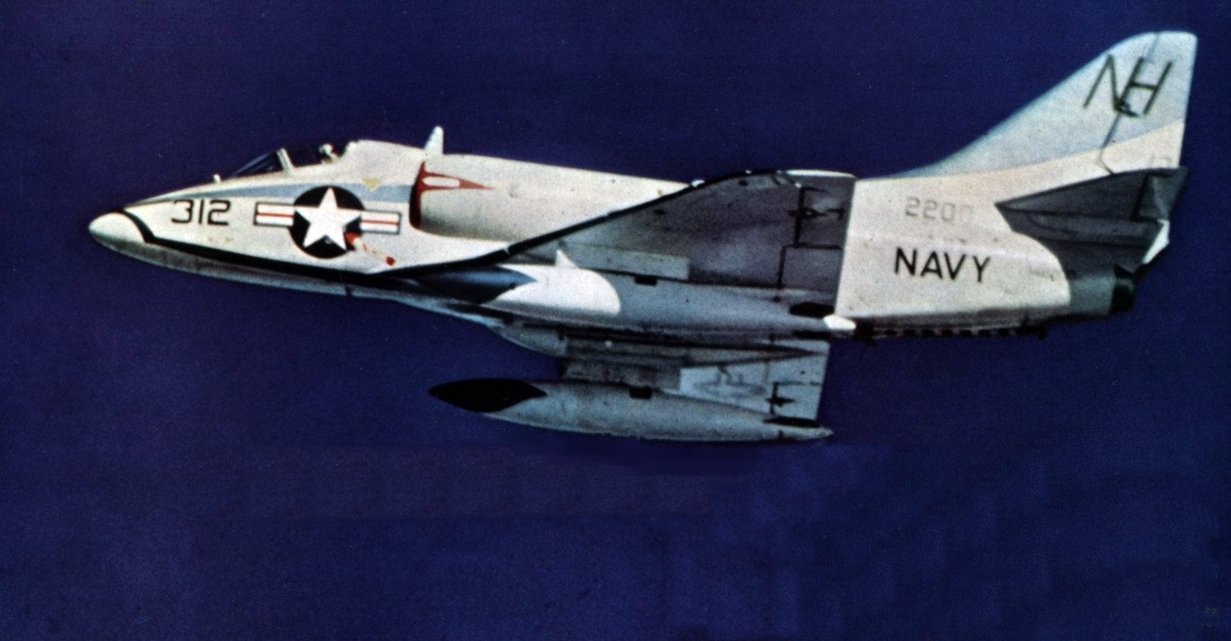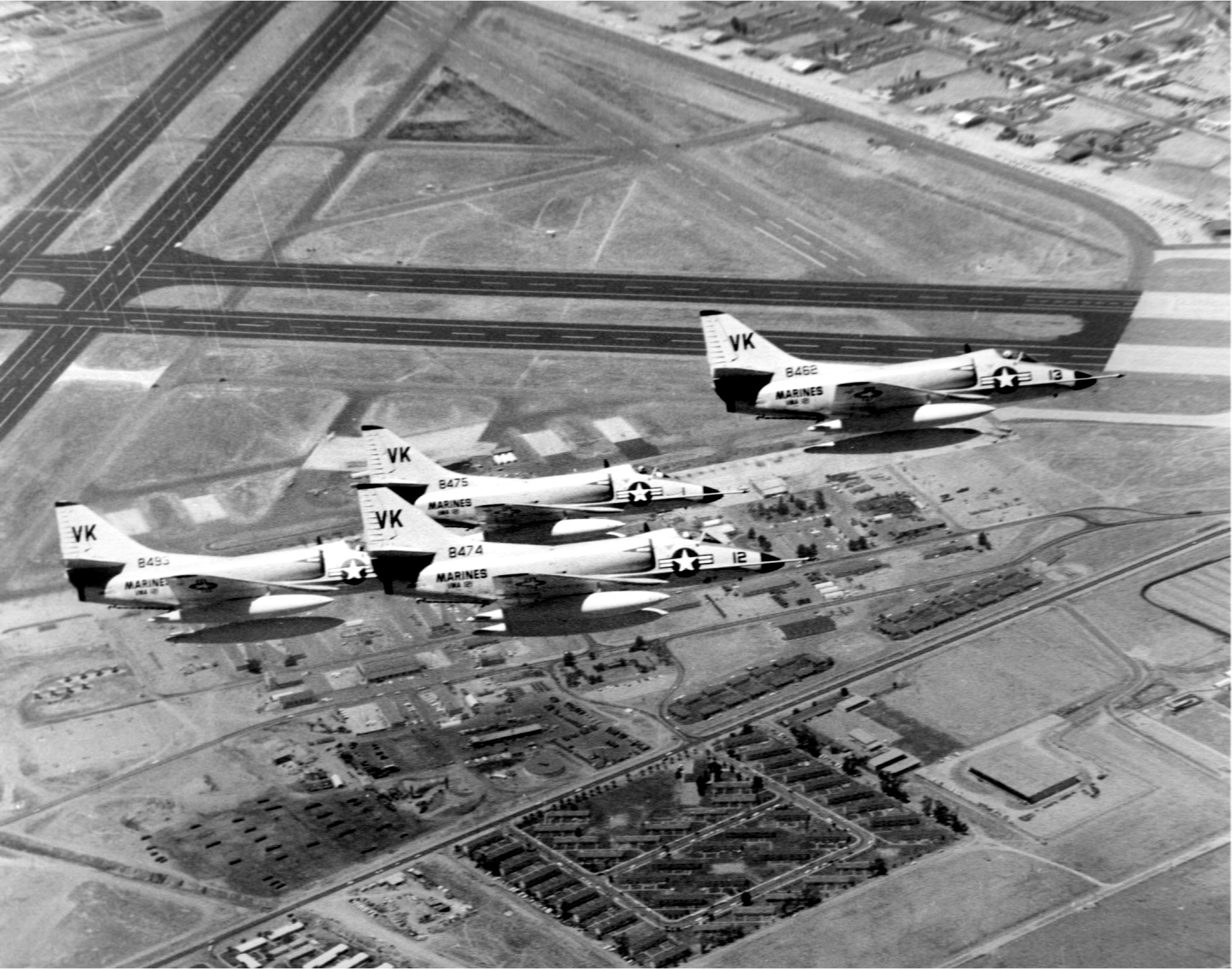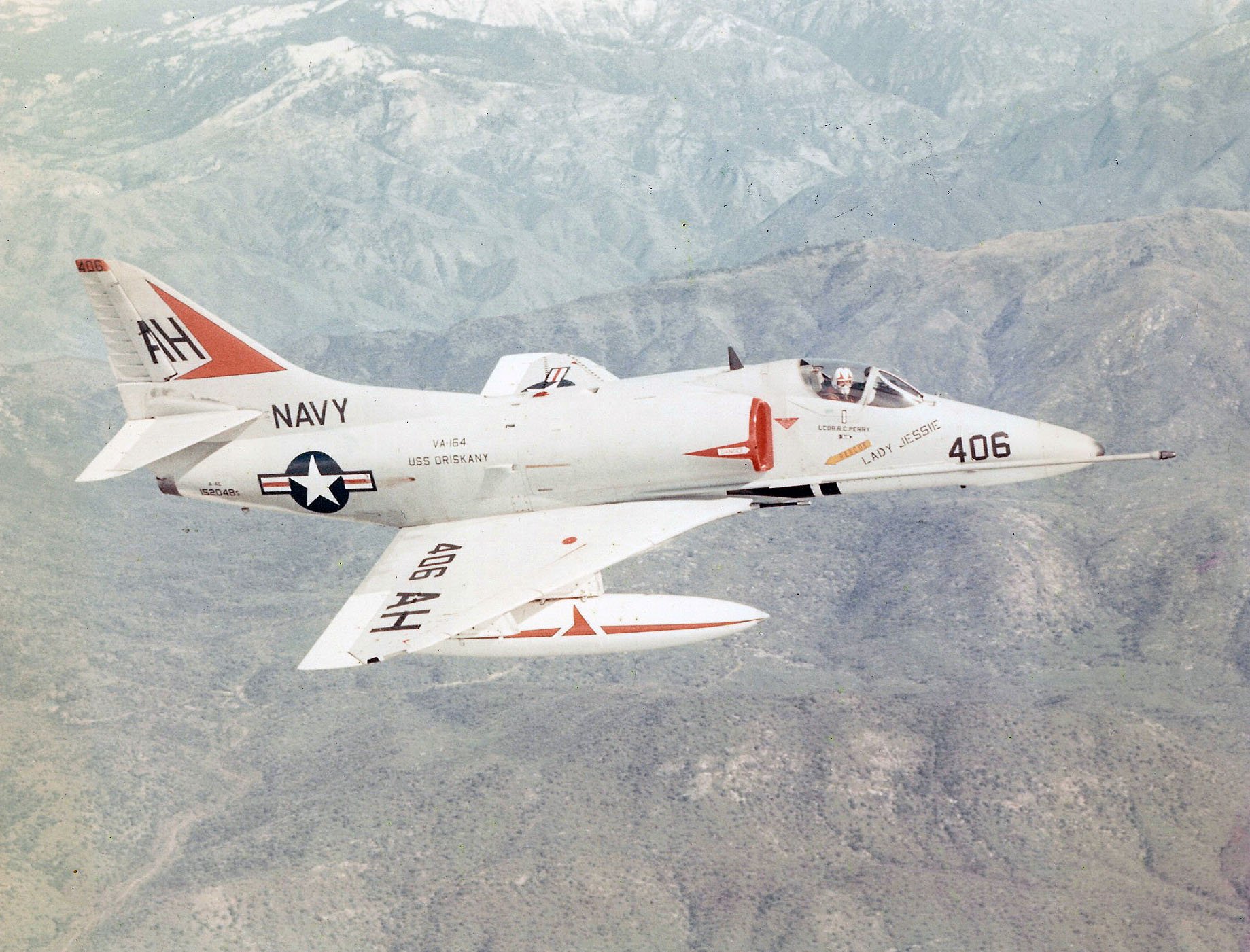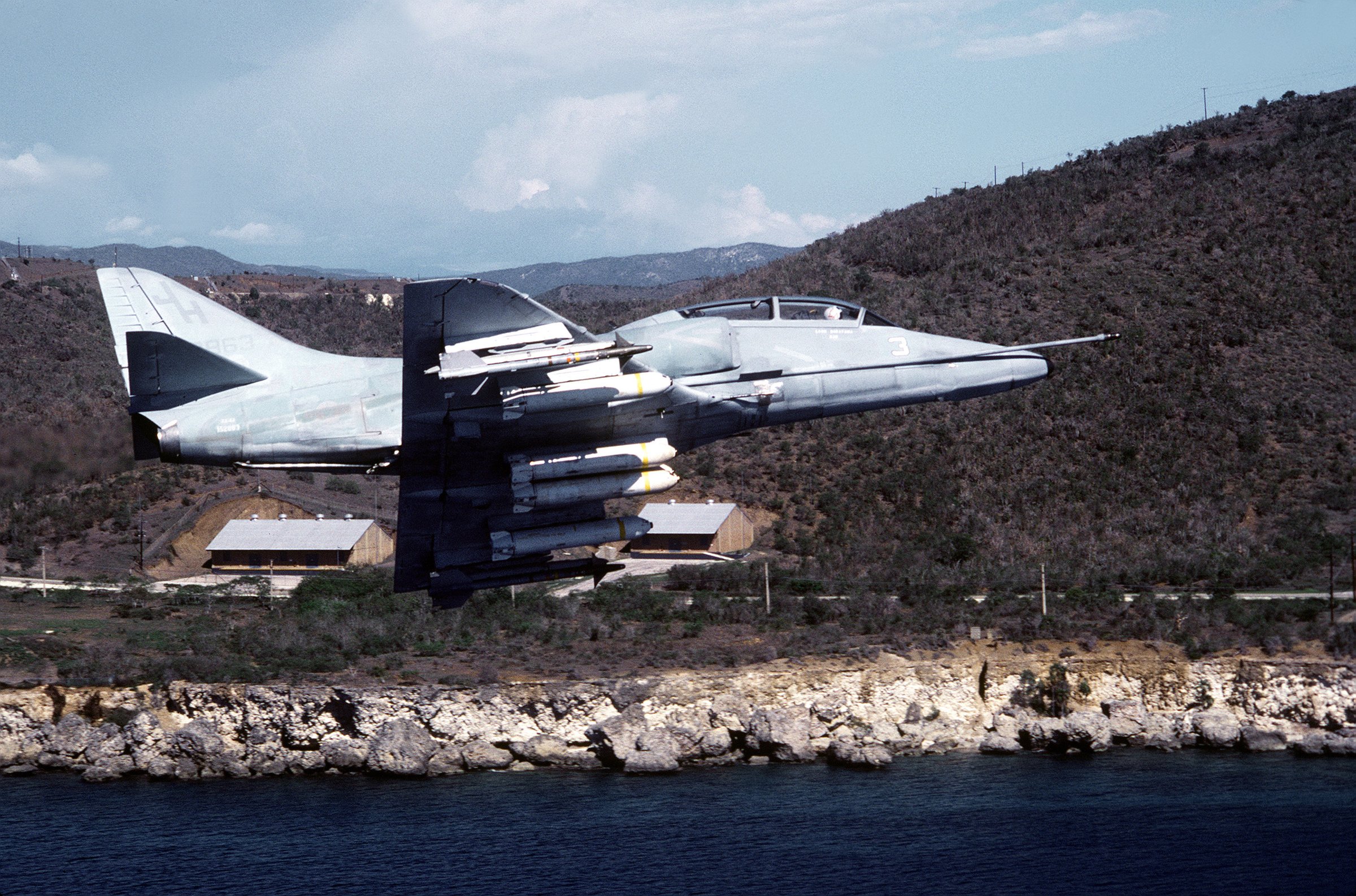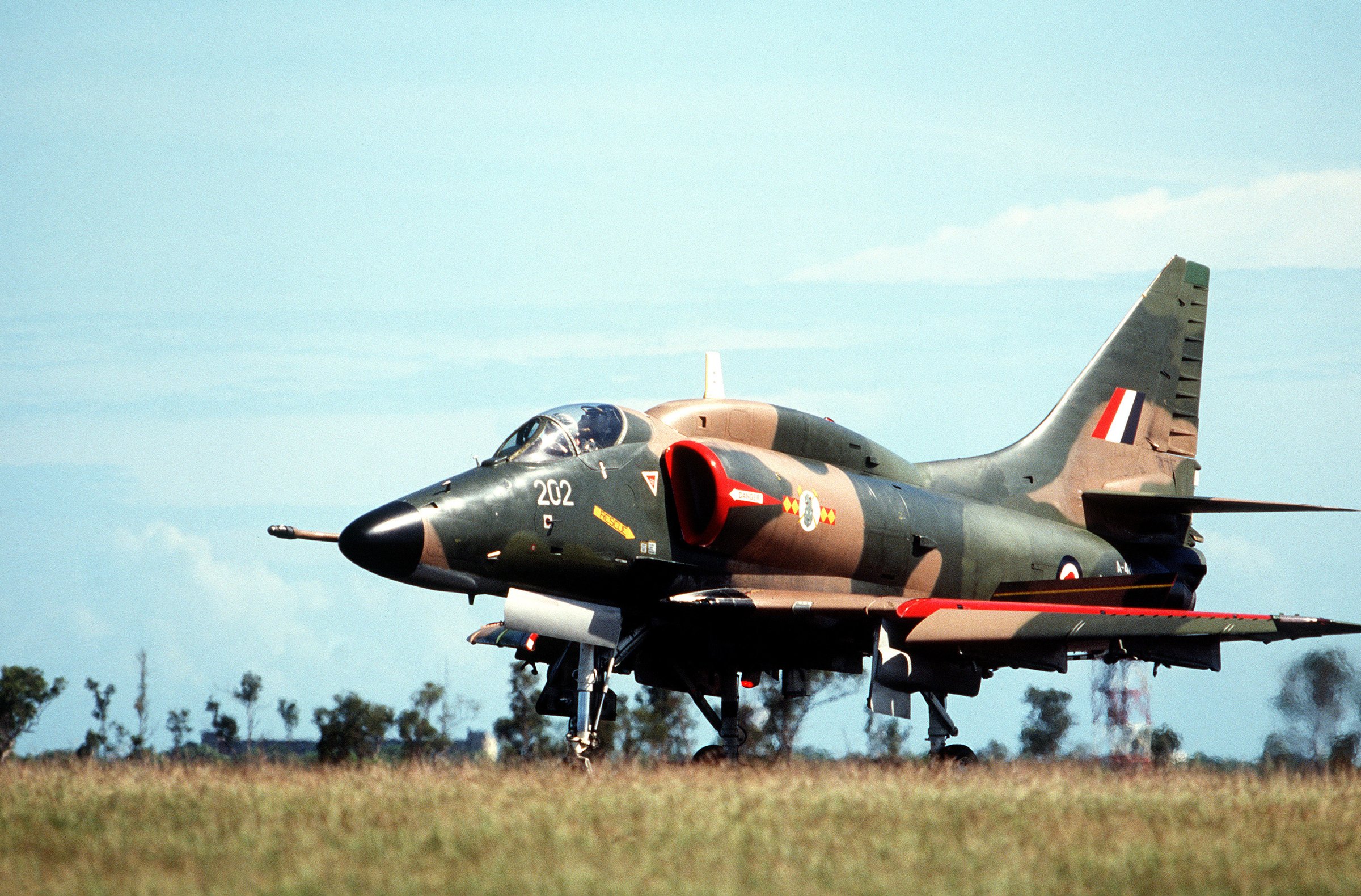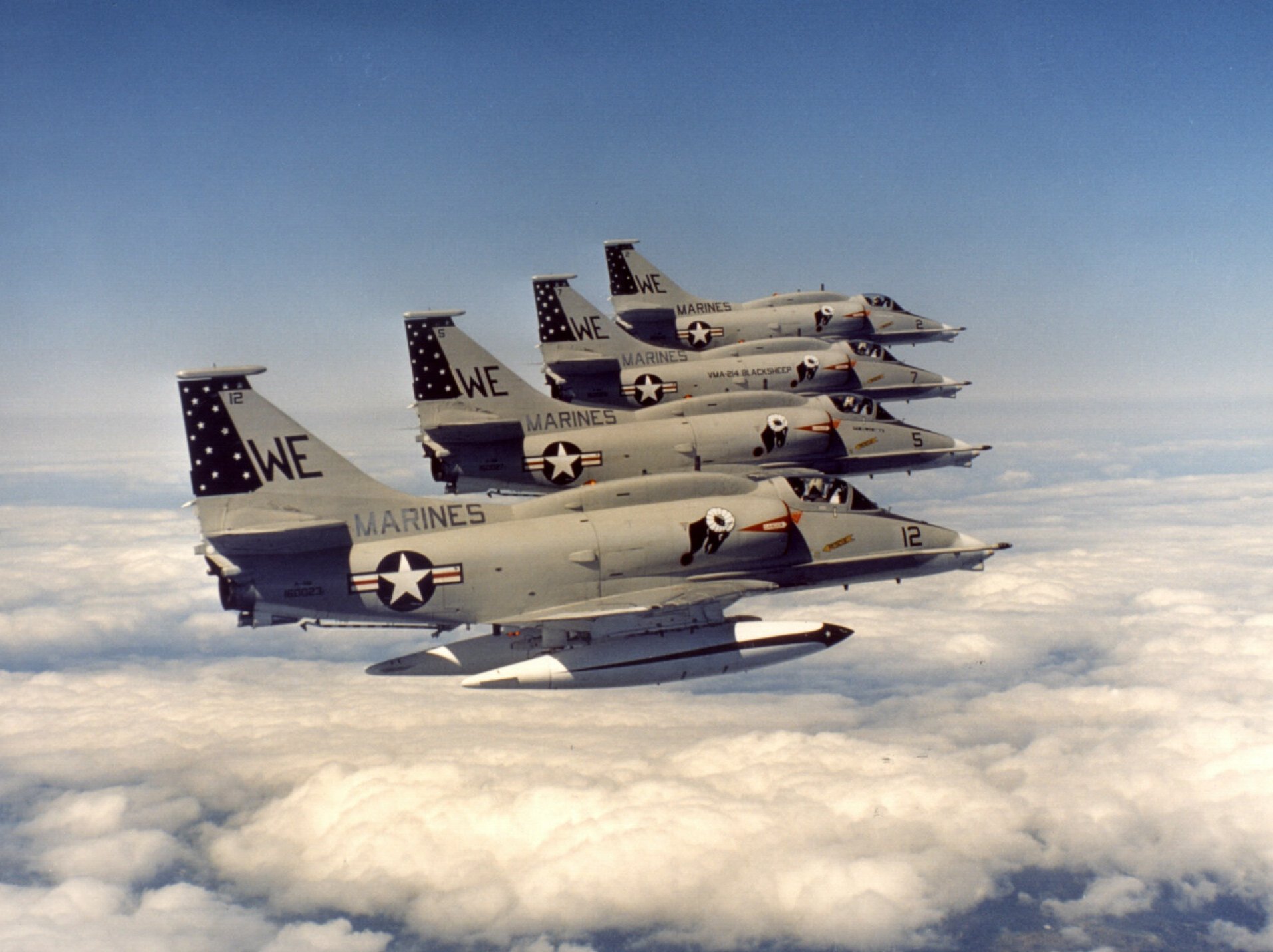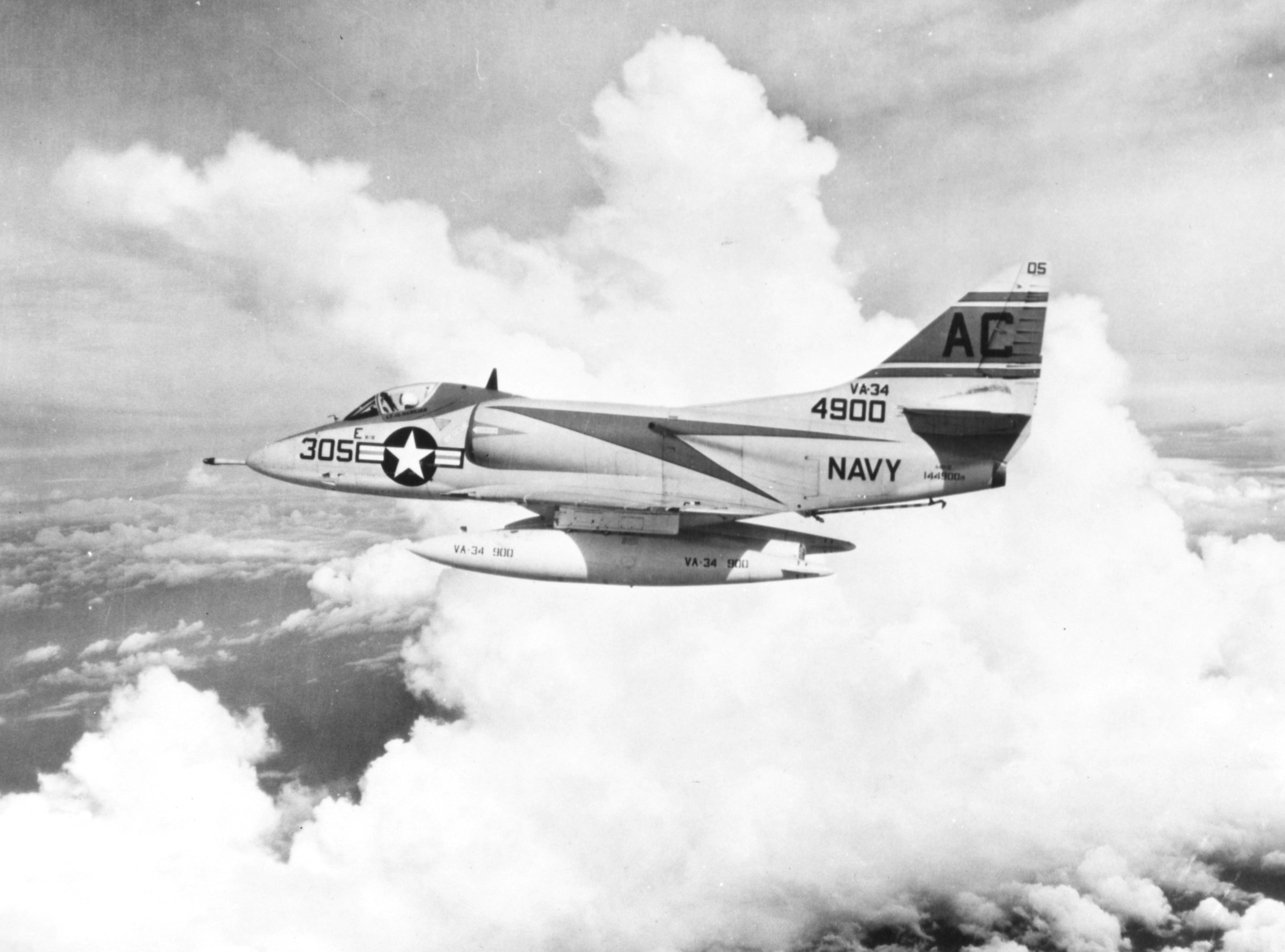
Douglas A-4A / A-4B / A-4C Skyhawk (A4D-1 / -2 / -2N)
Heinemann's lightweight carrier bomber — small enough that its wing never folds · First flight 1954 · In service 1956
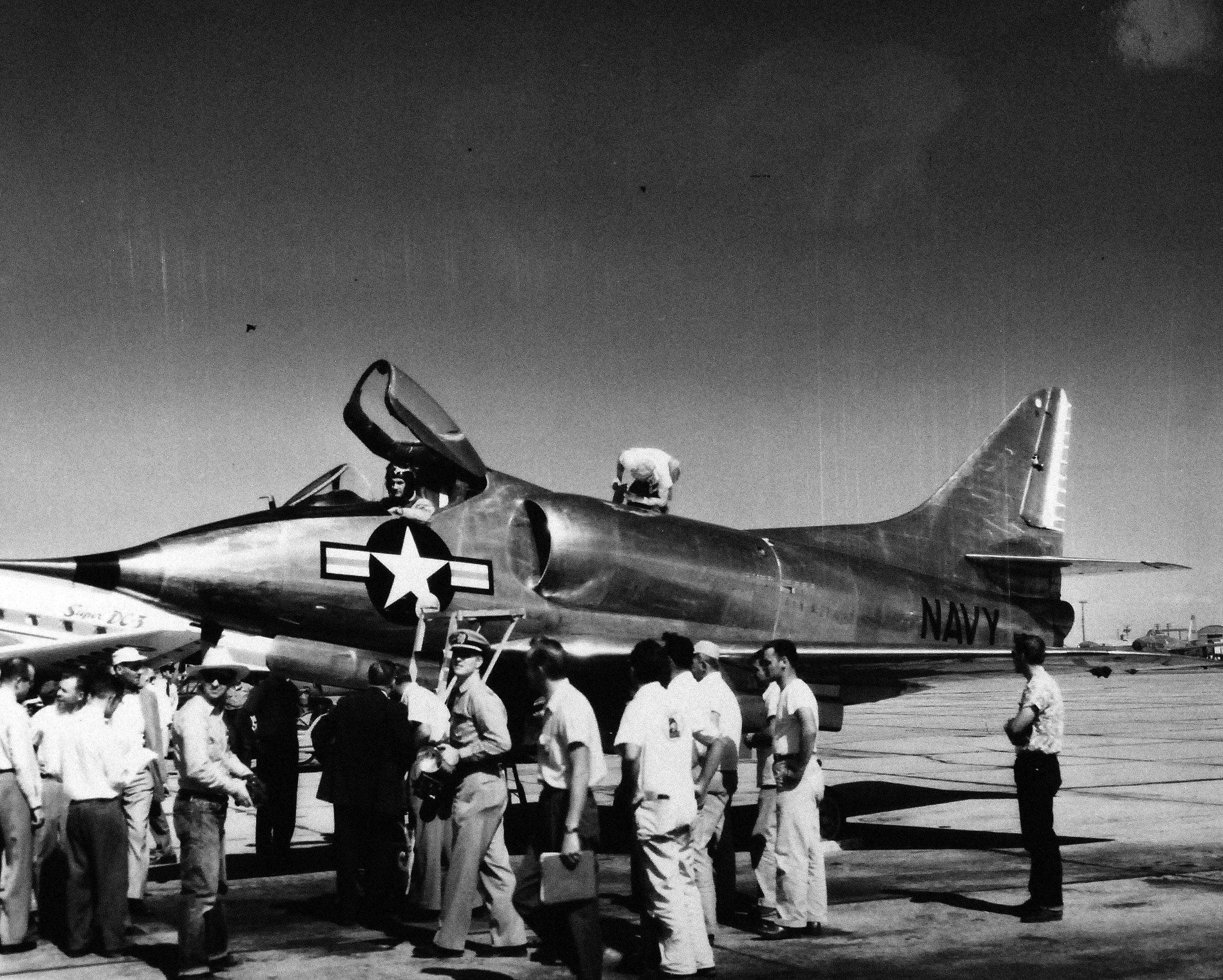
Ed Heinemann's team at Douglas designed the A4D as a light carrier attack jet at roughly half the weight the Navy had specified. The XA4D-1 prototype flew on 22 June 1954 at Edwards Air Force Base, and in 1955 Lt Gordon Gray set a 500 km closed-circuit speed record of 695.163 mph (1,118.8 km/h) in an A4D. Production A4D-1s reached VA-72 and VMA-224 in late 1956; 166 were built.
The A4D-2 (A-4B), first flown on 26 March 1956, added a strengthened airframe, air-to-air refuelling, improved navigation and flight controls, and the AGM-12 Bullpup missile; 542 were built. The A4D-2N (A-4C) followed on 21 August 1958 with an AN/APG-53A radar, autopilot and the LABS low-altitude bombing system for night and bad-weather attack — at 638 aircraft, the most-produced Skyhawk.
The 'A-4' designations replaced the A4D names in 1962. Rebuilt A-4Bs and A-4Cs later served Argentina as the A-4P and A-4Q, and Singapore as the A-4S and A-4S-1.