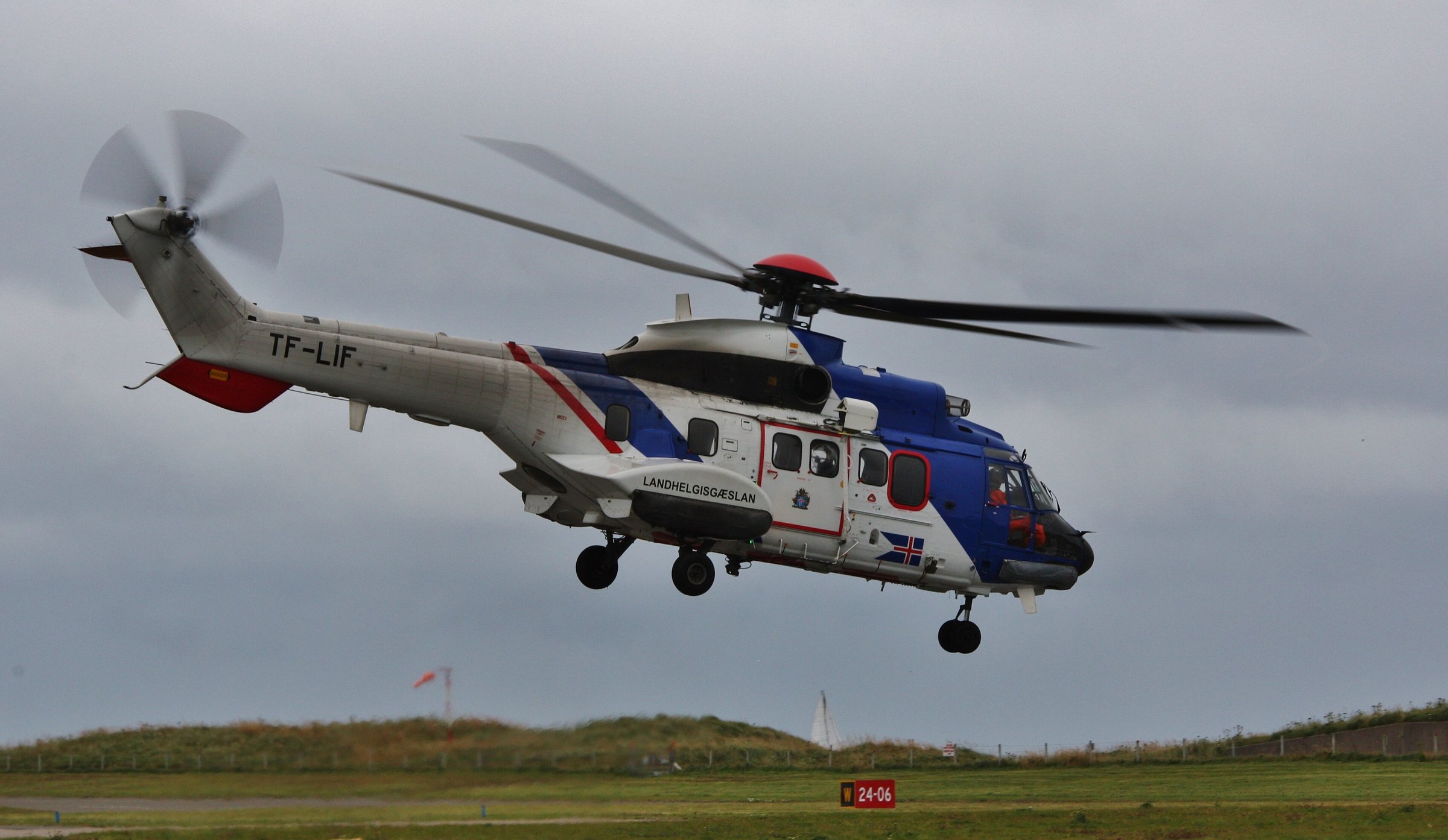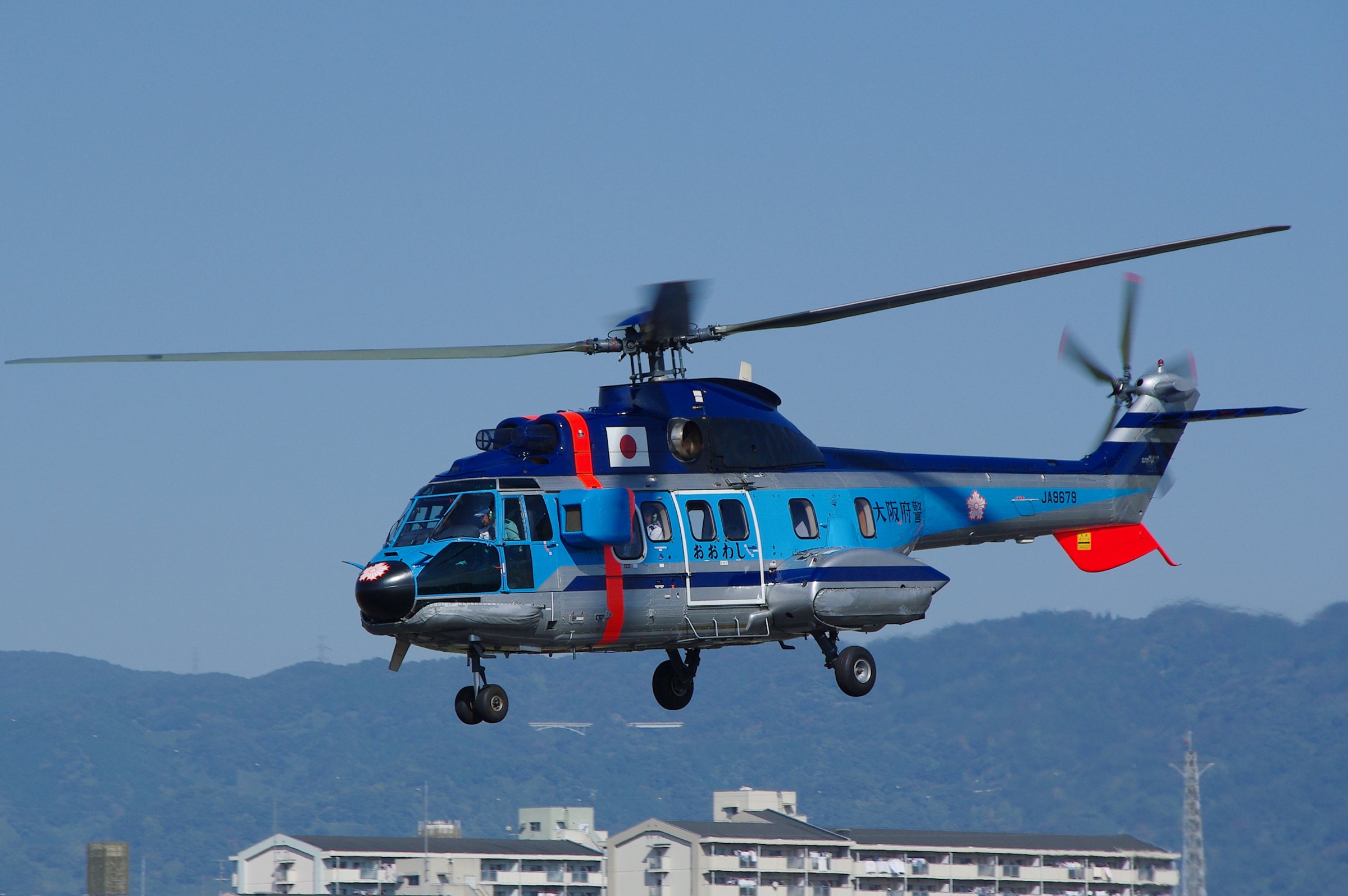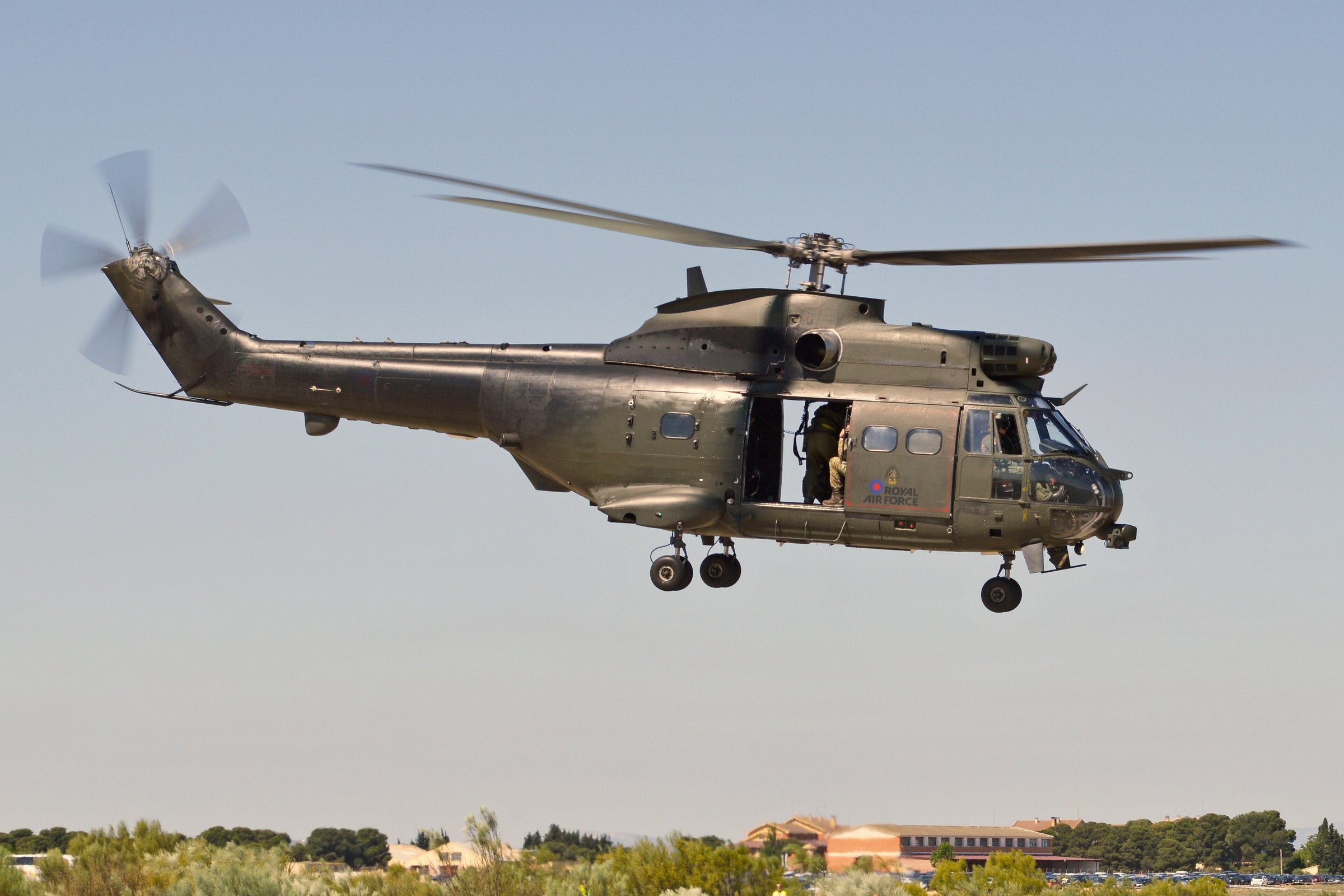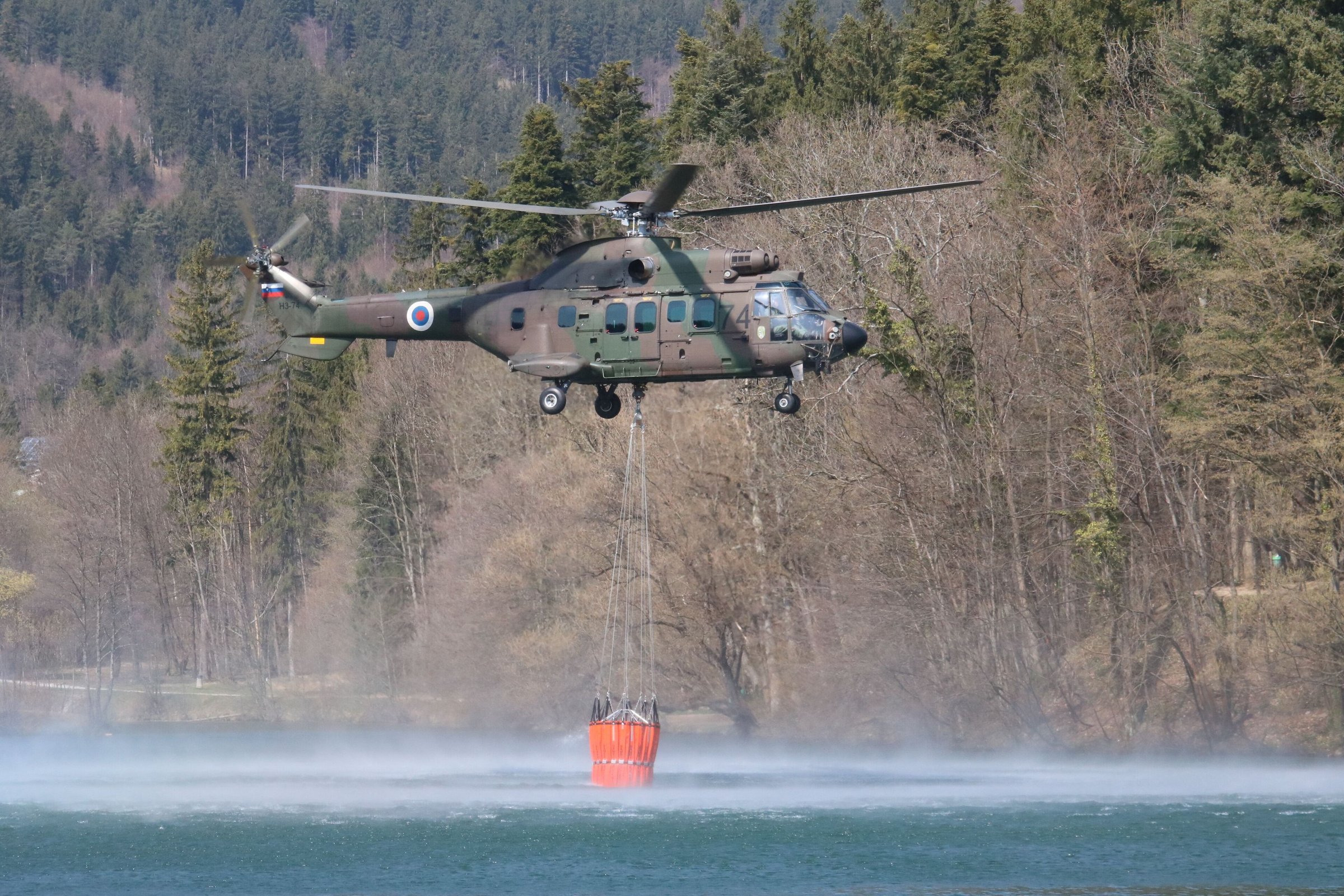
Aérospatiale AS332 L / L1 / L2 Super Puma
The civil long-fuselage Super Puma: Makila power, 24 seats and three decades as the North Sea's workhorse · First flight 1978 · Certified 1980
Aérospatiale began the Super Puma in 1974 as a growth version of the SA 330: two Turbomeca Makila turboshafts replaced the Turmos, the rotor gained composite blades, and the fuselage, undercarriage and fuel system were redesigned for crashworthiness, with a ventral fin and a more streamlined nose. A Makila-engined SA 331 test aircraft flew on 5 September 1977 and the first true AS332 on 13 September 1978. From the start it came in a short fuselage (C) and a stretched one (L); French certification of the AS332 L followed on 2 December 1980.
The L1 of 1985 added uprated Makila 1A1 engines and an 8,600 kg take-off weight, with up to 24 passenger seats. The Mk II AS332 L2, certified in June 1991, brought Makila 1A2 engines, the Spheriflex rotor head with longer blades, an EFIS cockpit and a 9,300 kg maximum weight; it became the basis of the EC225. Later L1s with upgraded avionics were sold as the L1e.
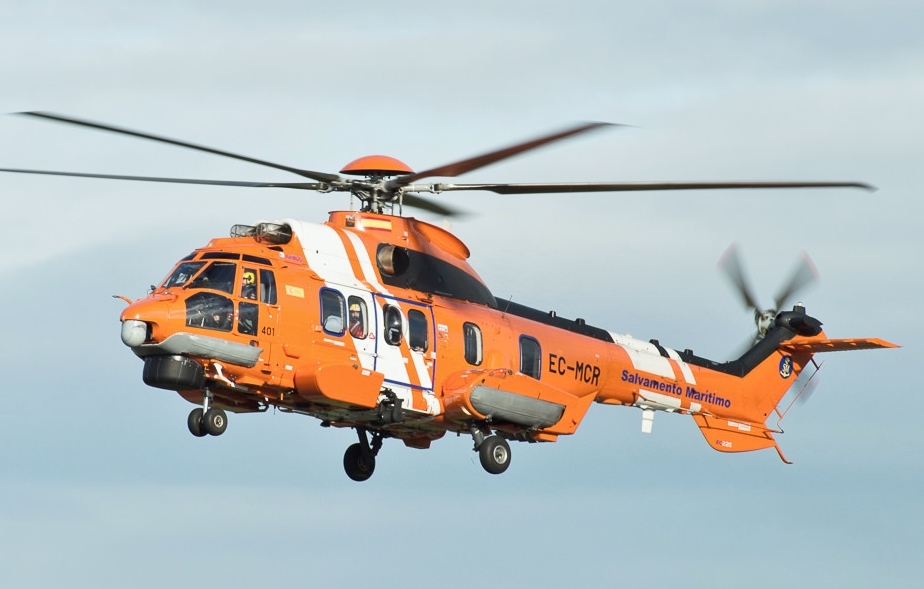
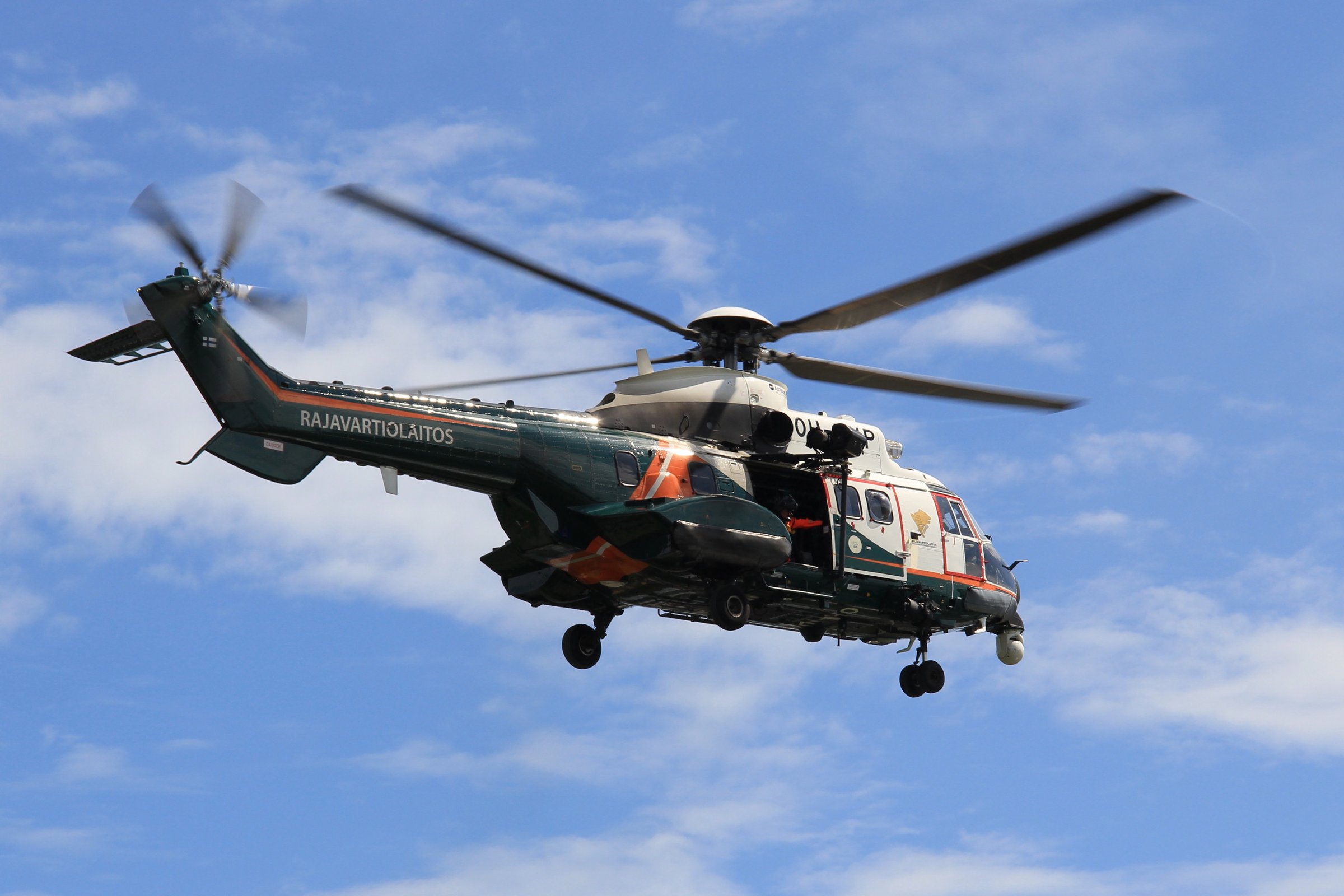
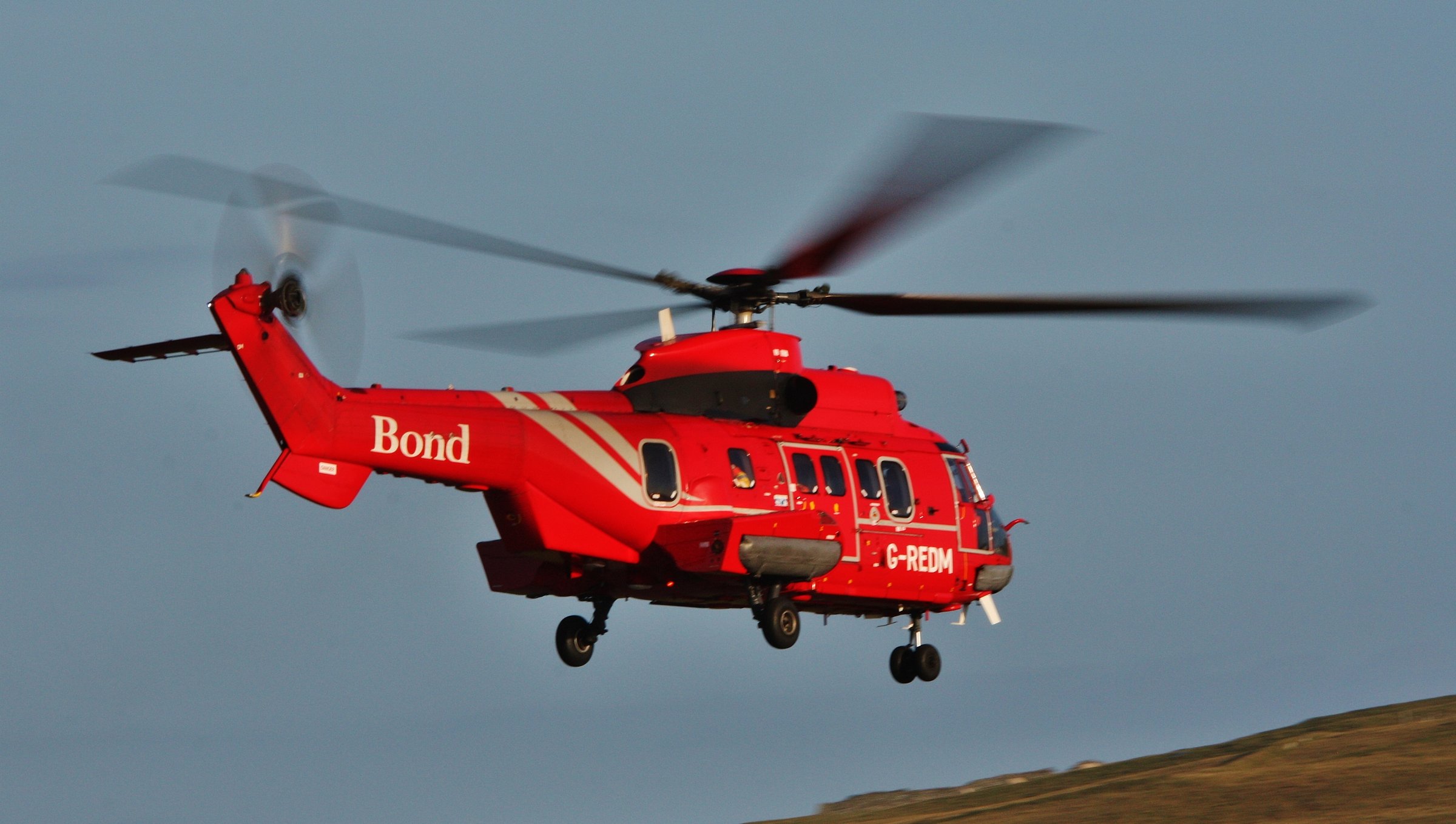
The long-fuselage Super Puma became a mainstay of North Sea offshore flying with Bristow, Bond and CHC, and serves with coast guards, police and fire services in Japan, Iceland, Hong Kong, Germany and elsewhere. Production rates averaged three aircraft a month between 1981 and 1987, and Indonesia's IPTN built it under licence as the NAS 332.