Rockwell B-1A
The Mach 2.2 original — four prototypes of a high-altitude, swing-wing penetrator · First flight 1974 · Cancelled 1977
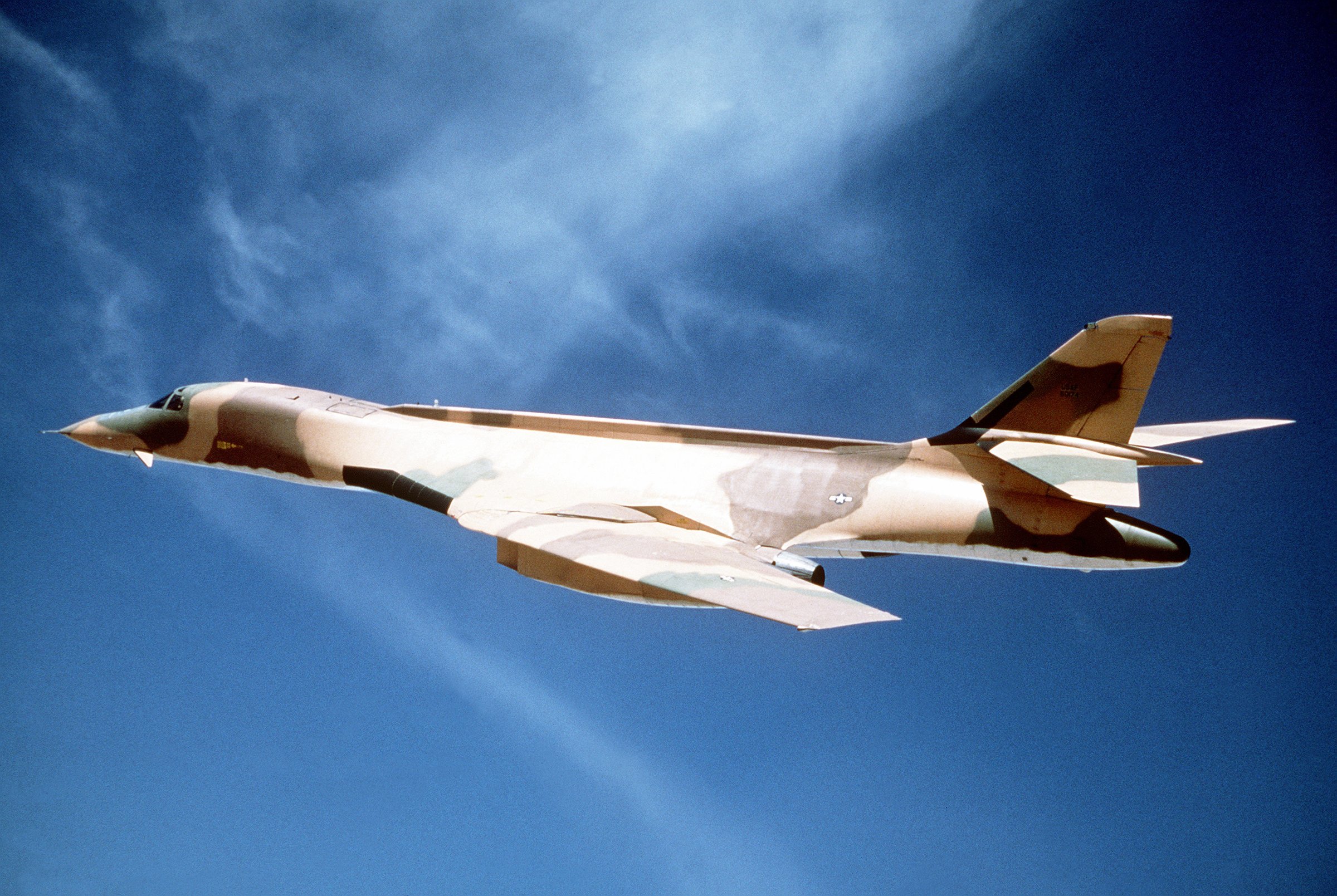
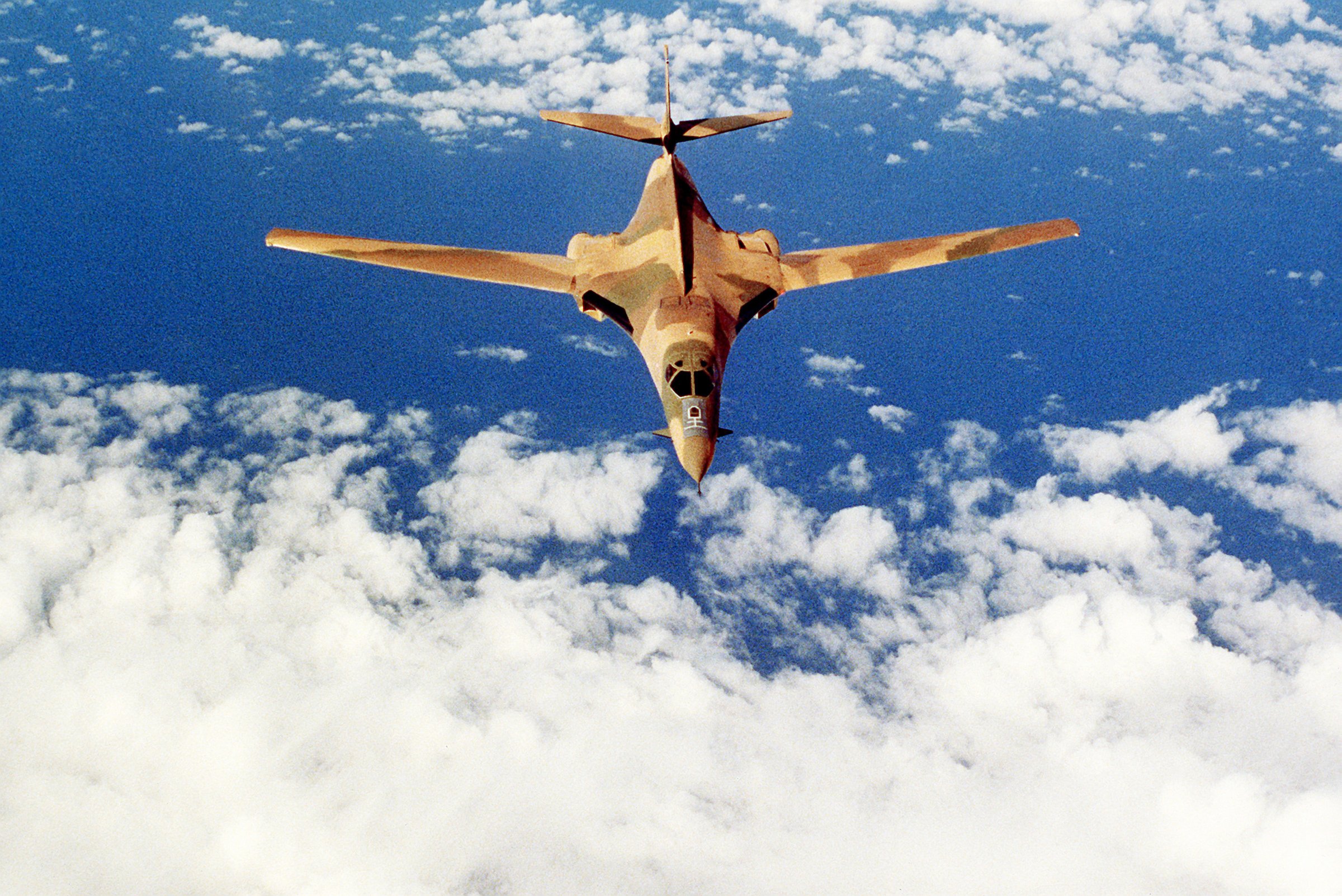
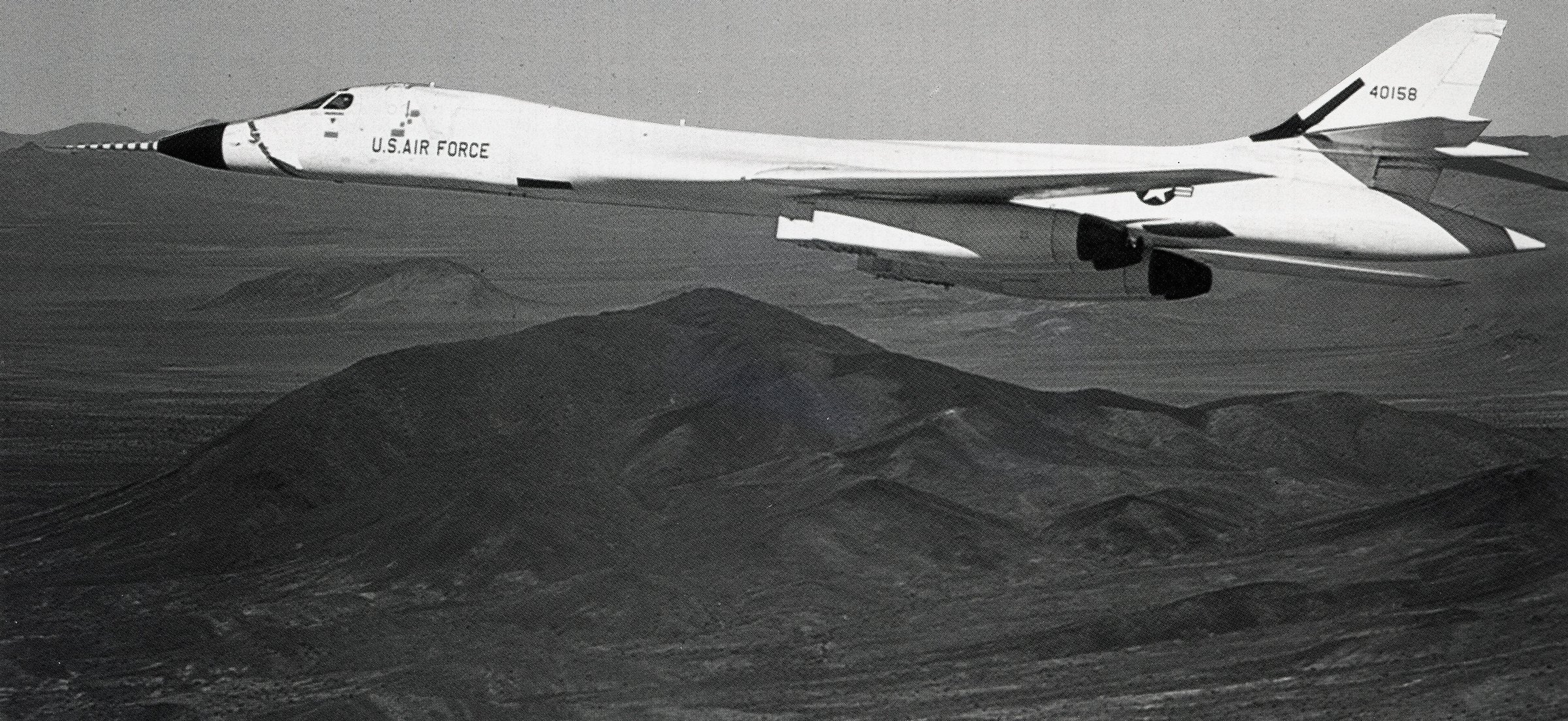
The B-1A was designed in the early 1970s as the B-52's successor: a variable-sweep bomber able to dash at Mach 2.2 at high altitude and run in fast and low beneath enemy radar. The first of four prototypes, 74-0158, flew on 23 December 1974. The first three had a jettisonable crew capsule that carried all four crew clear of the aircraft; the fourth, 76-0174, was built to production standard and used conventional ejection seats.
On 30 June 1977 President Jimmy Carter cancelled production in favour of cruise missiles and the then-secret stealth programmes. Flight testing nevertheless continued until 1981, and when President Ronald Reagan revived the programme on 2 October 1981 as the B-1B, prototypes No. 2 and No. 4 were modified to test B-1B systems. No. 4, in desert camouflage, appeared at the Farnborough Air Show in September 1982.
No. 2 (74-0159) was lost on 29 August 1984 when a fuel-transfer error moved its centre of gravity far aft over the Mojave Desert; two crew survived and Rockwell's chief test pilot was killed. No. 1 ended its days as a radar-test hulk at Griffiss AFB, while 74-0160 is preserved at the Wings Over the Rockies museum in Denver and 76-0174 at the Strategic Air Command & Aerospace Museum in Nebraska.