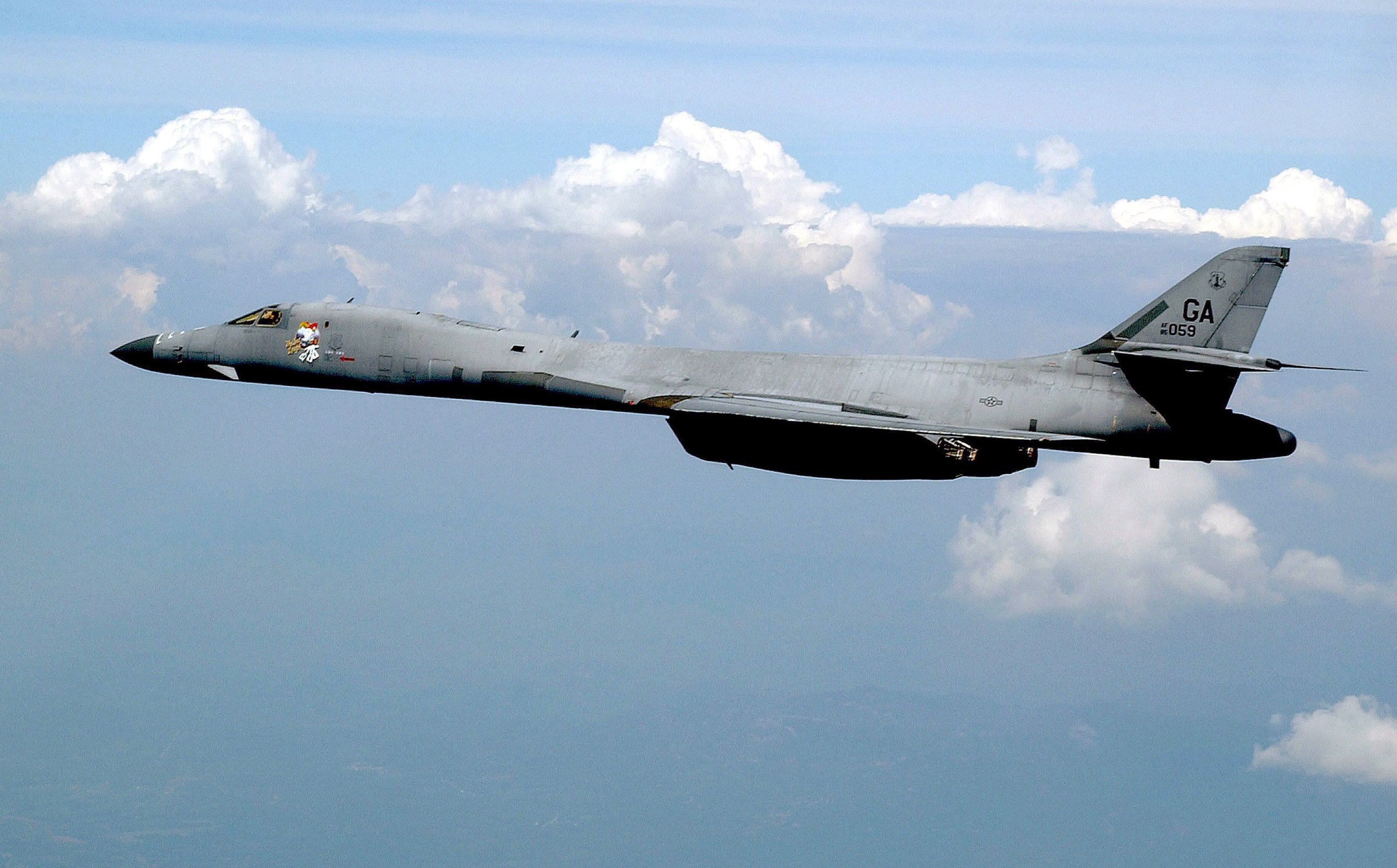
Rockwell B-1B Lancer
The reborn "Bone" — slower on paper, harder to see, and with the biggest bomb load in the US fleet · First flight 1984 · In service 1986
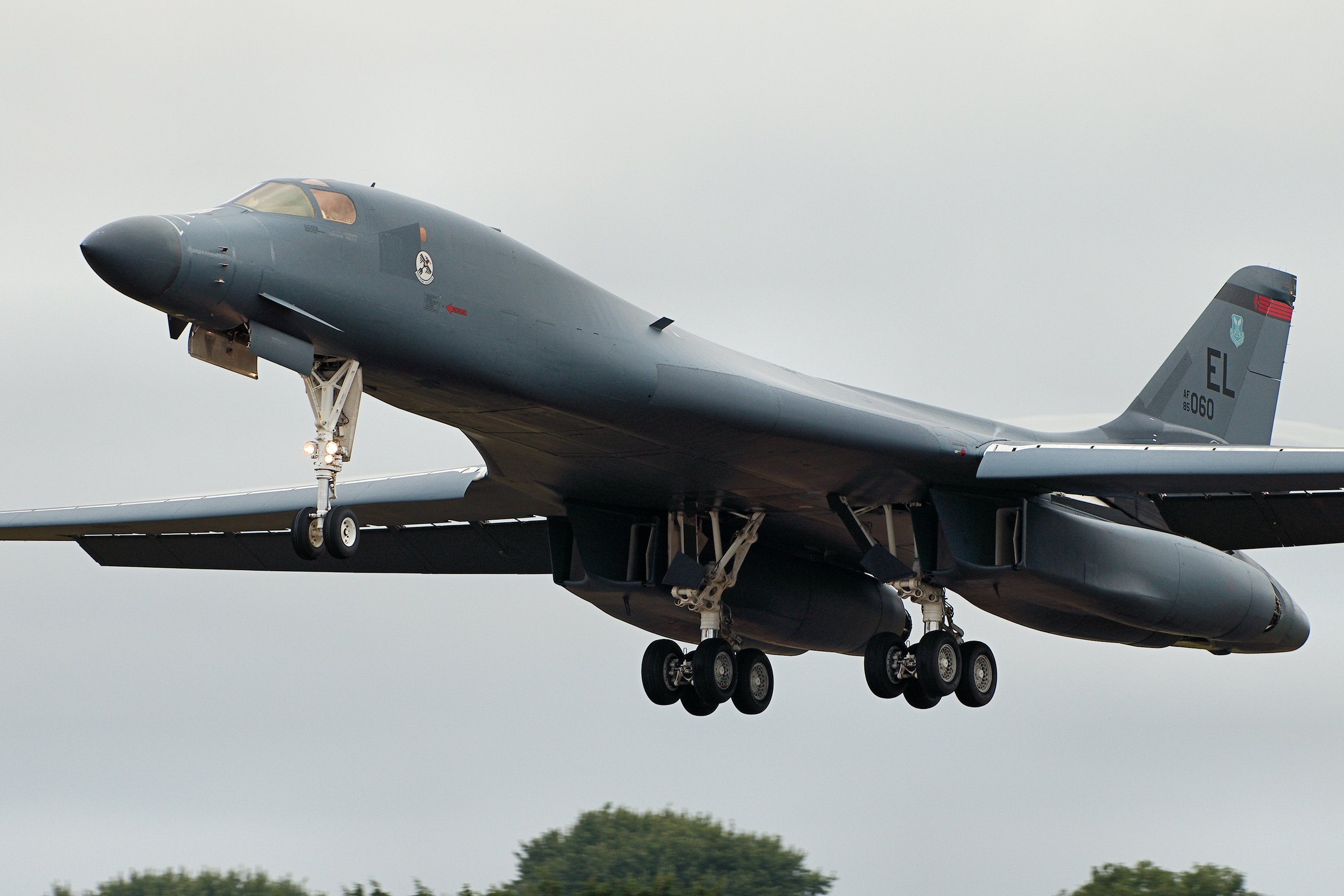
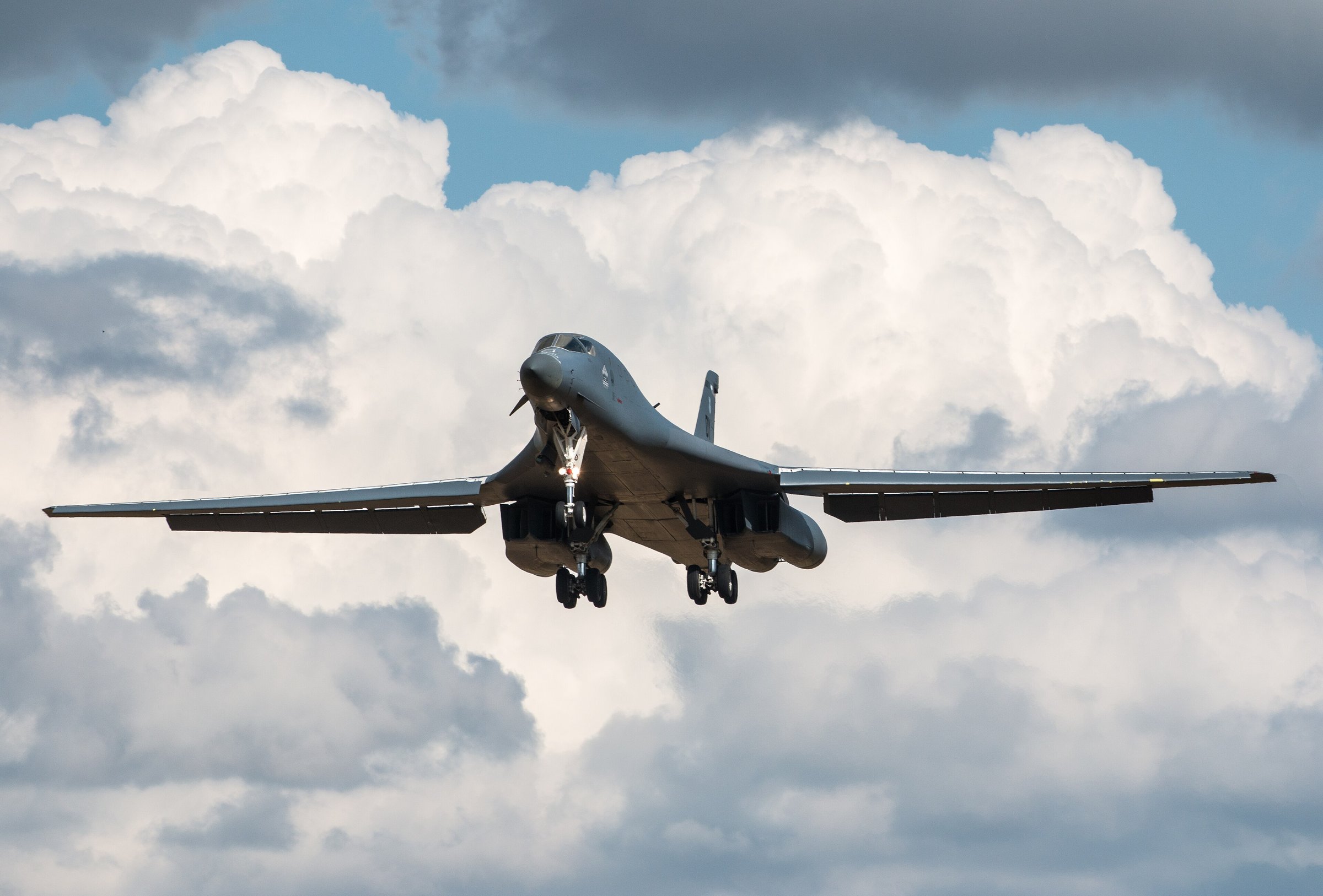
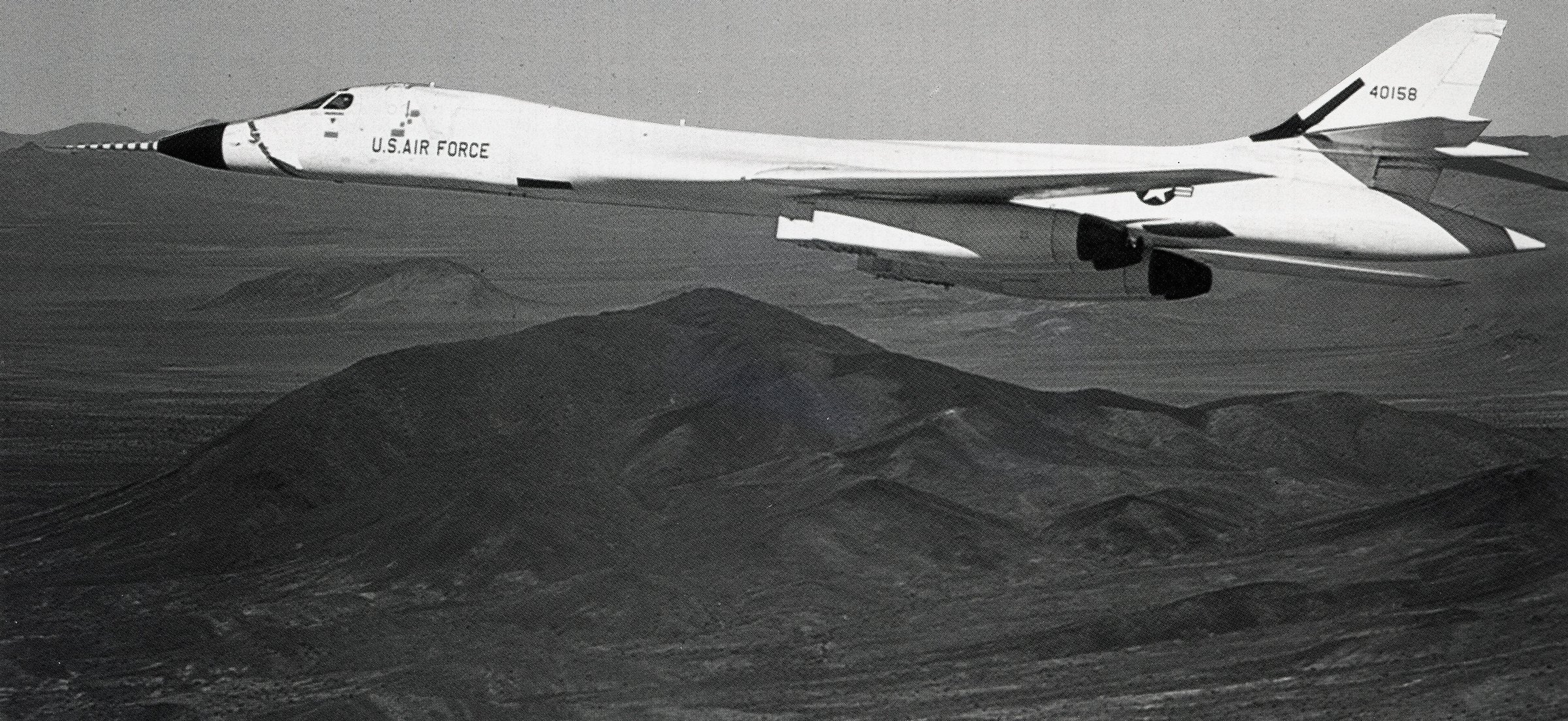
When the programme was revived in 1981, the requirement had changed from high-altitude speed to low-level penetration and a small radar signature. The B-1B replaced the B-1A's variable intakes with fixed ramps and serpentine ducts that hide the engine faces, cutting the radar cross-section to roughly 2.4 m² — about a fiftieth of a B-52's — at the cost of top speed, which fell from Mach 2.2 to Mach 1.25. Maximum take-off weight rose from about 179 to 216 tonnes, and low-level dash speed increased to Mach 0.92.
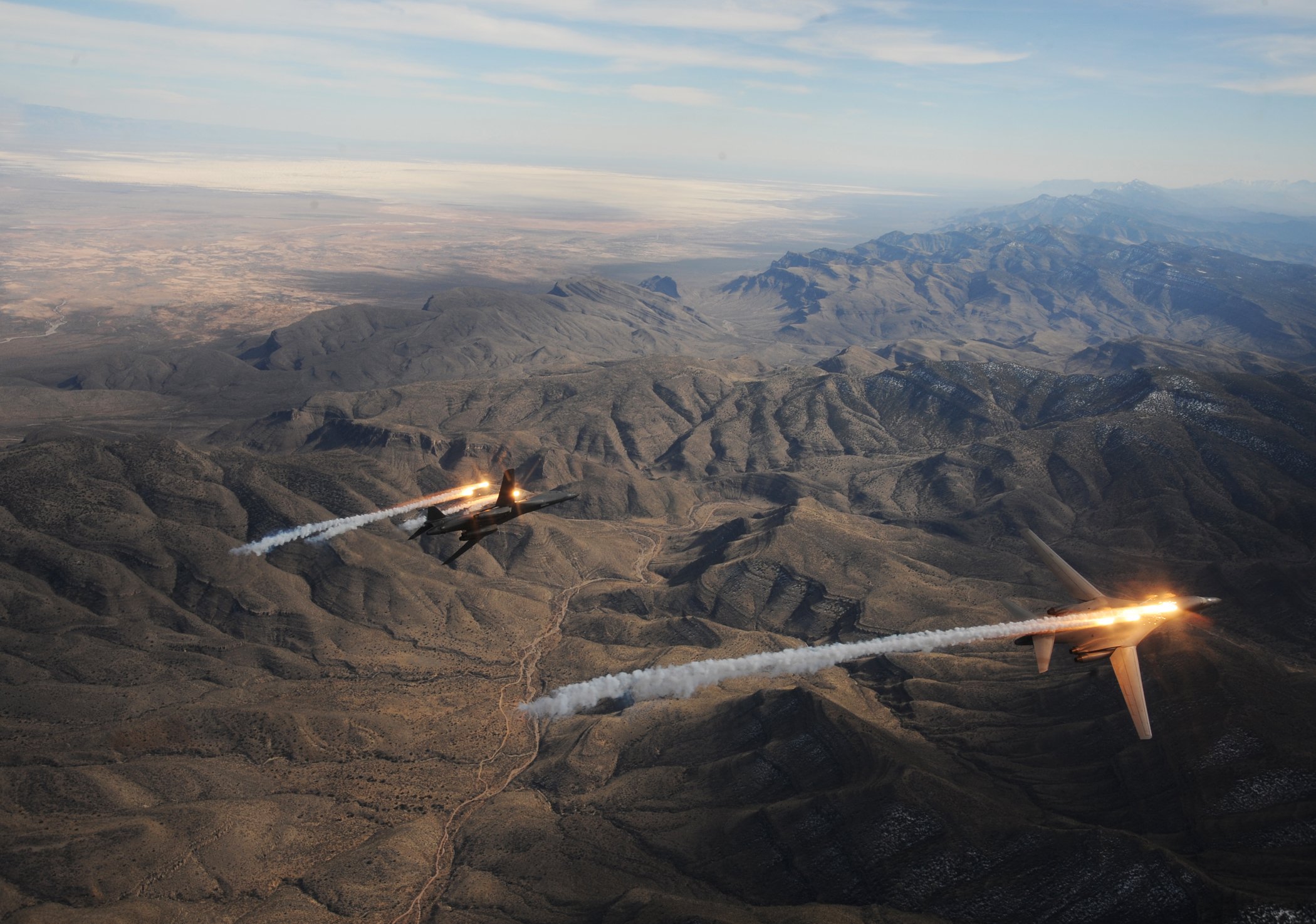
The first production B-1B flew on 18 October 1984, the first aircraft, "The Star of Abilene", reached Strategic Air Command at Dyess AFB in June 1985, and initial operational capability was declared on 1 October 1986. All 100 were delivered by 2 May 1988. Under START I the bomber's nuclear role was ended in the 1990s, and it became a purely conventional, long-range precision-strike aircraft; it first saw combat in December 1998 during Operation Desert Fox.
The B-1B holds 61 FAI world records for speed, payload and distance. The fleet has been drawn down to 45 aircraft flown by the 7th and 28th Bomb Wings and the 412th Test Wing, and the Air Force plans to replace it with the B-21 Raider.