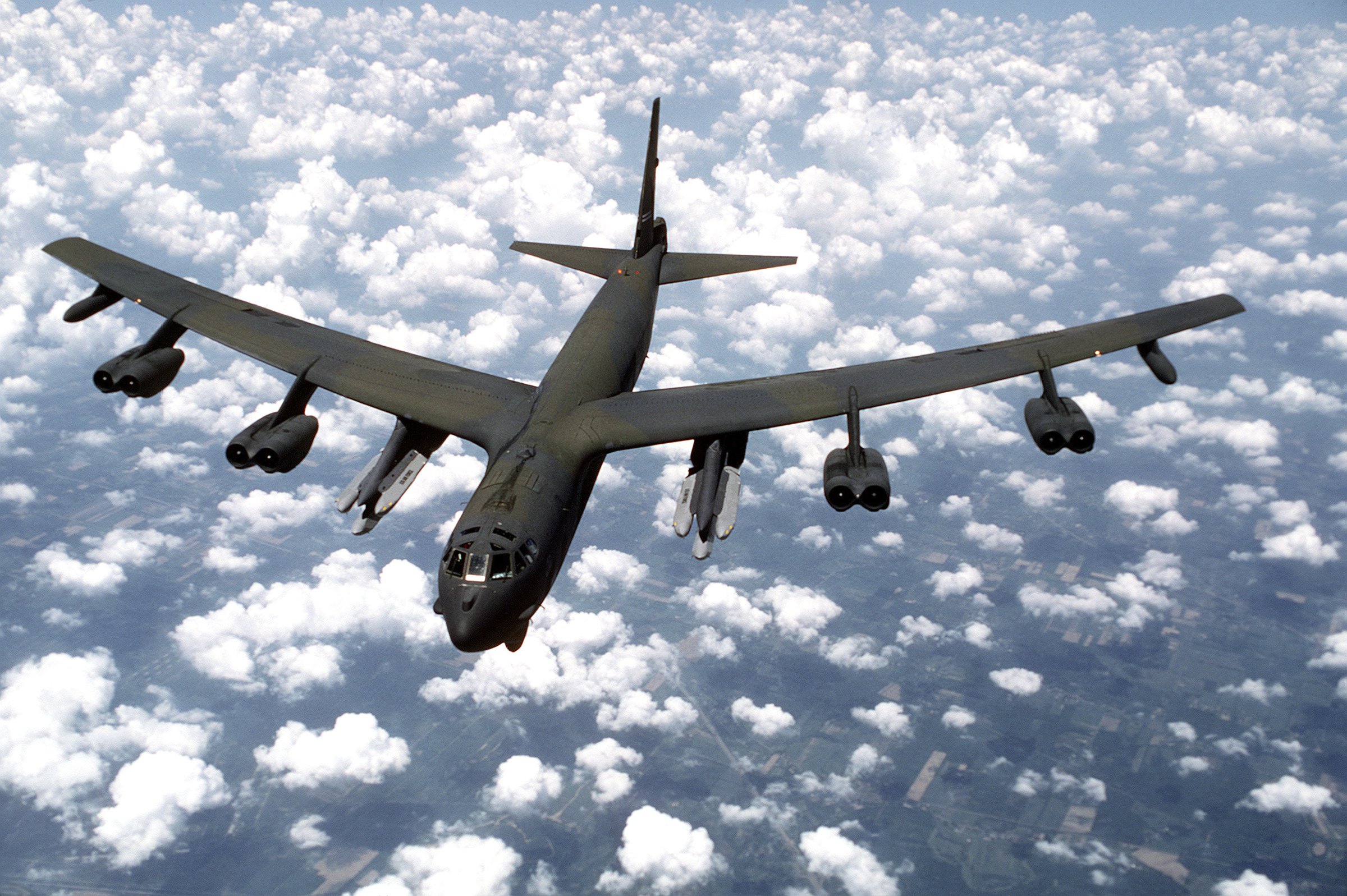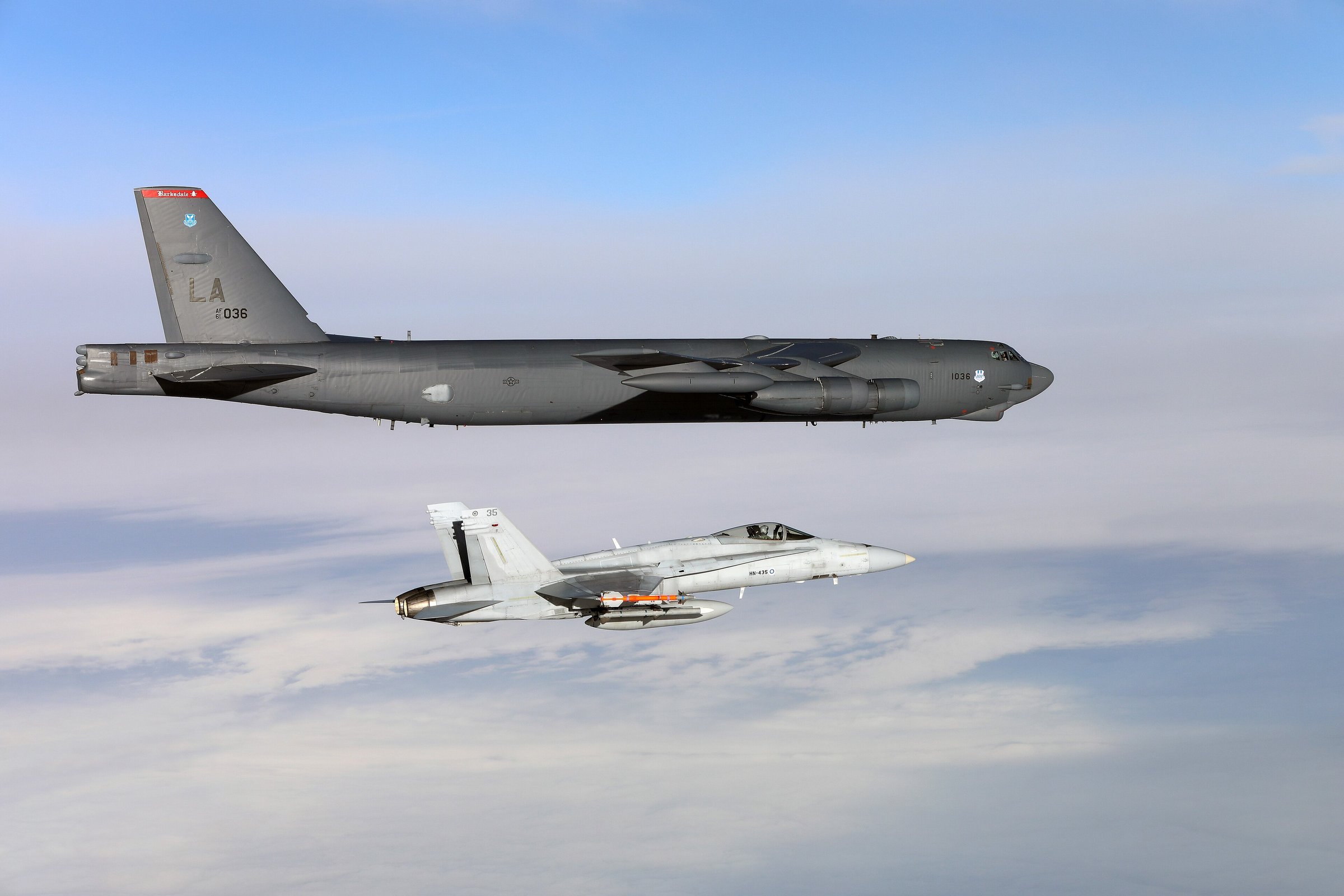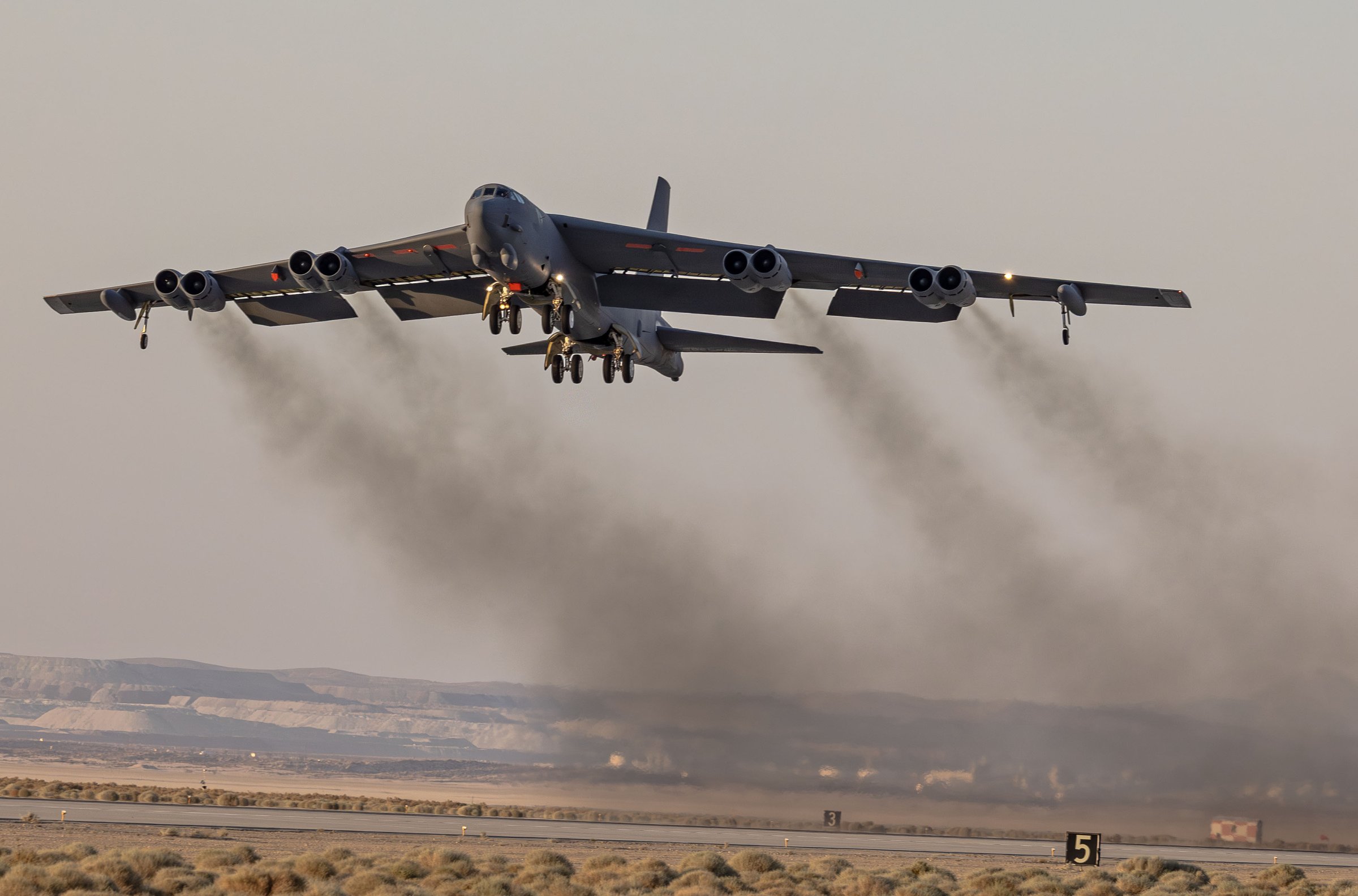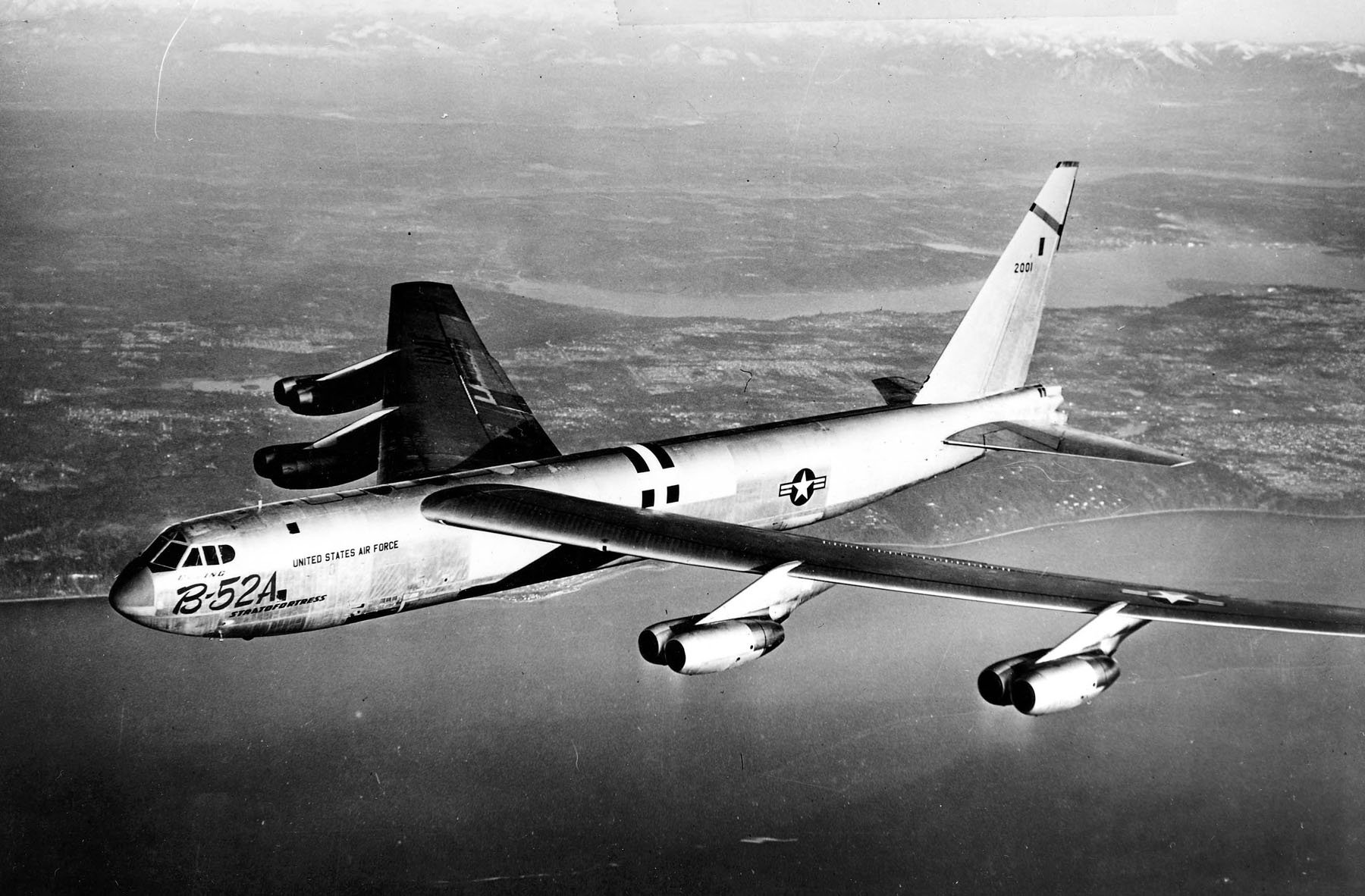
Boeing B-52A–F Stratofortress (early production)
The first-generation BUFFs — tall-tailed, J57 turbojets and the tail gunner sitting in the tail · First flight 1954 · In service 1955
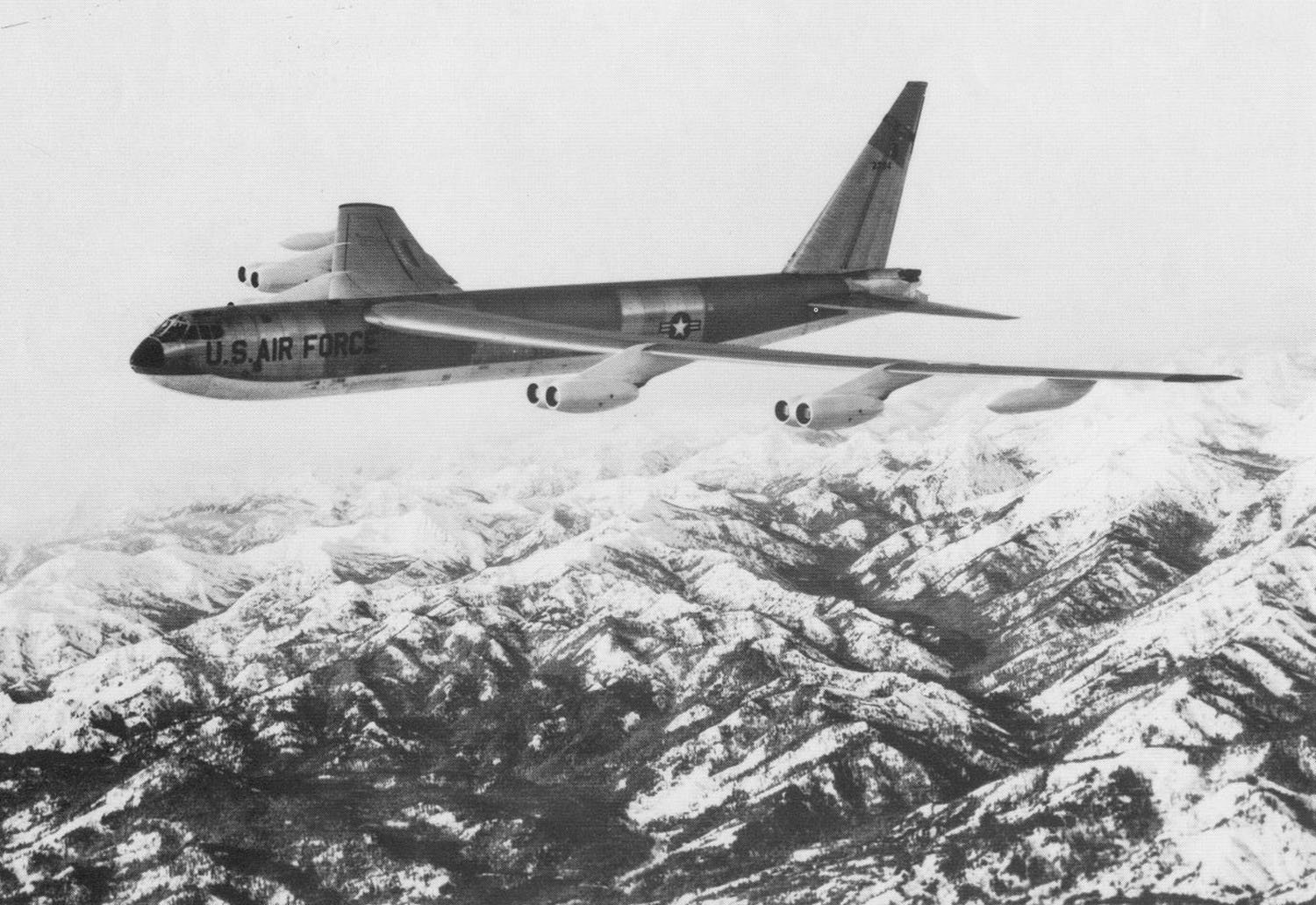
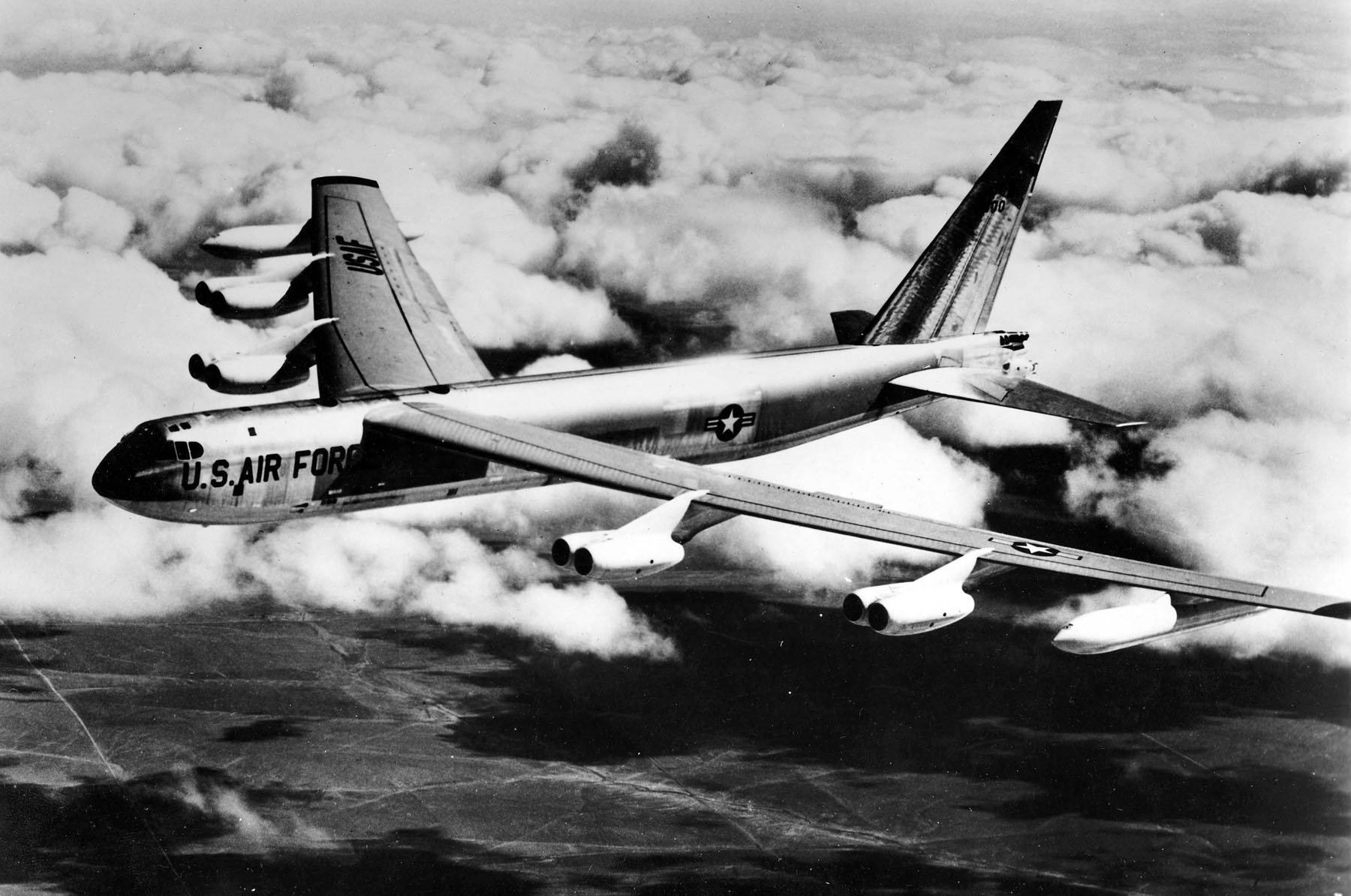
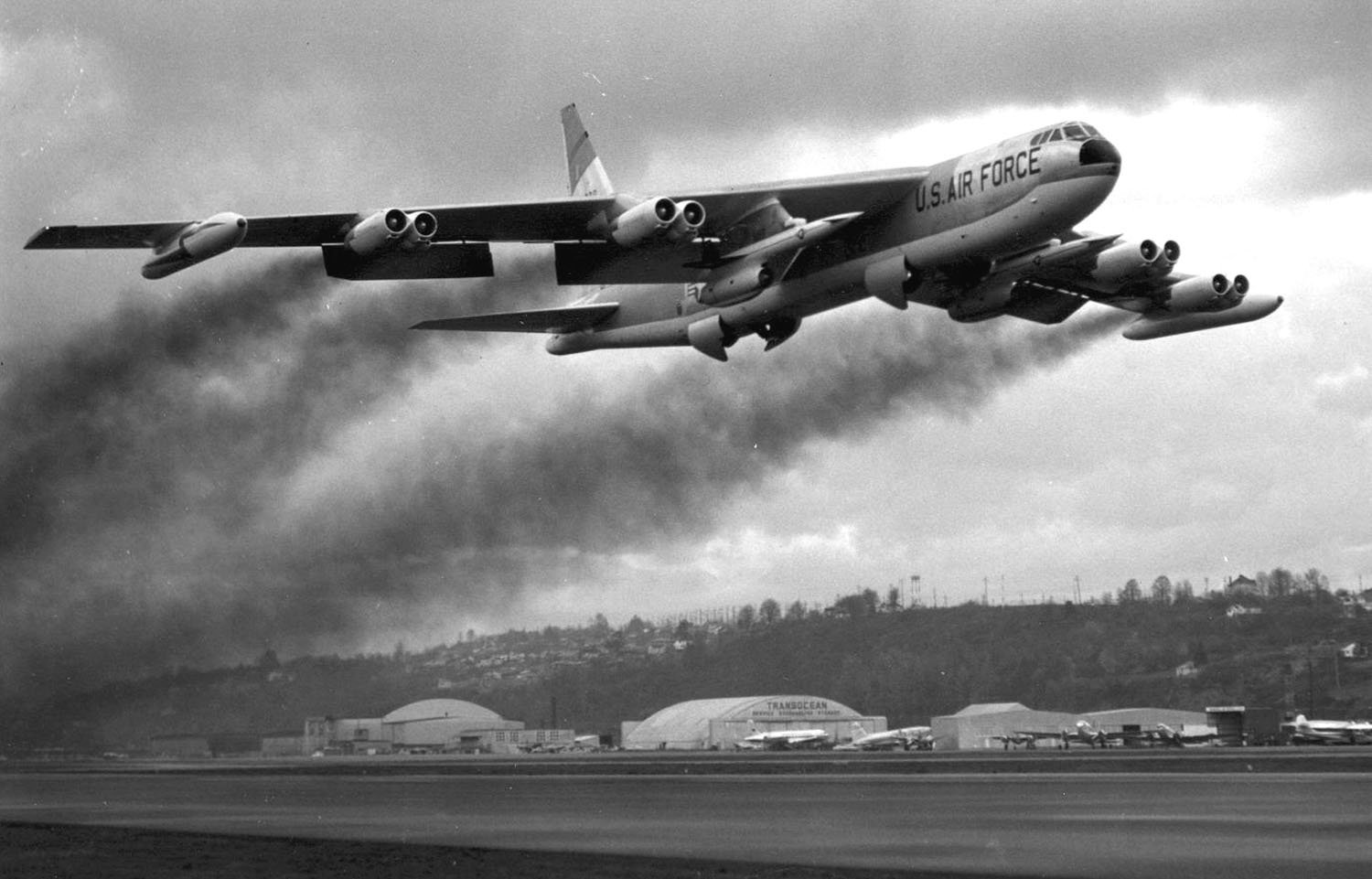
After the XB-52 and YB-52 prototypes (the YB-52 first flew on 15 April 1952), only three of the thirteen B-52As ordered were built, all used by Boeing for testing; the first flew from Boeing Field on 5 August 1954. Compared with the prototypes, the A introduced a side-by-side cockpit in place of the bubble canopy, a longer nose for more avionics and a sixth crew member, a four-gun tail turret, water injection for the J57 turbojets and underwing fuel tanks. The first operational version, the B-52B, entered service with the 93rd Bombardment Wing at Castle AFB, California, on 29 June 1955; 27 of the 50 built could carry a reconnaissance pod as RB-52Bs.
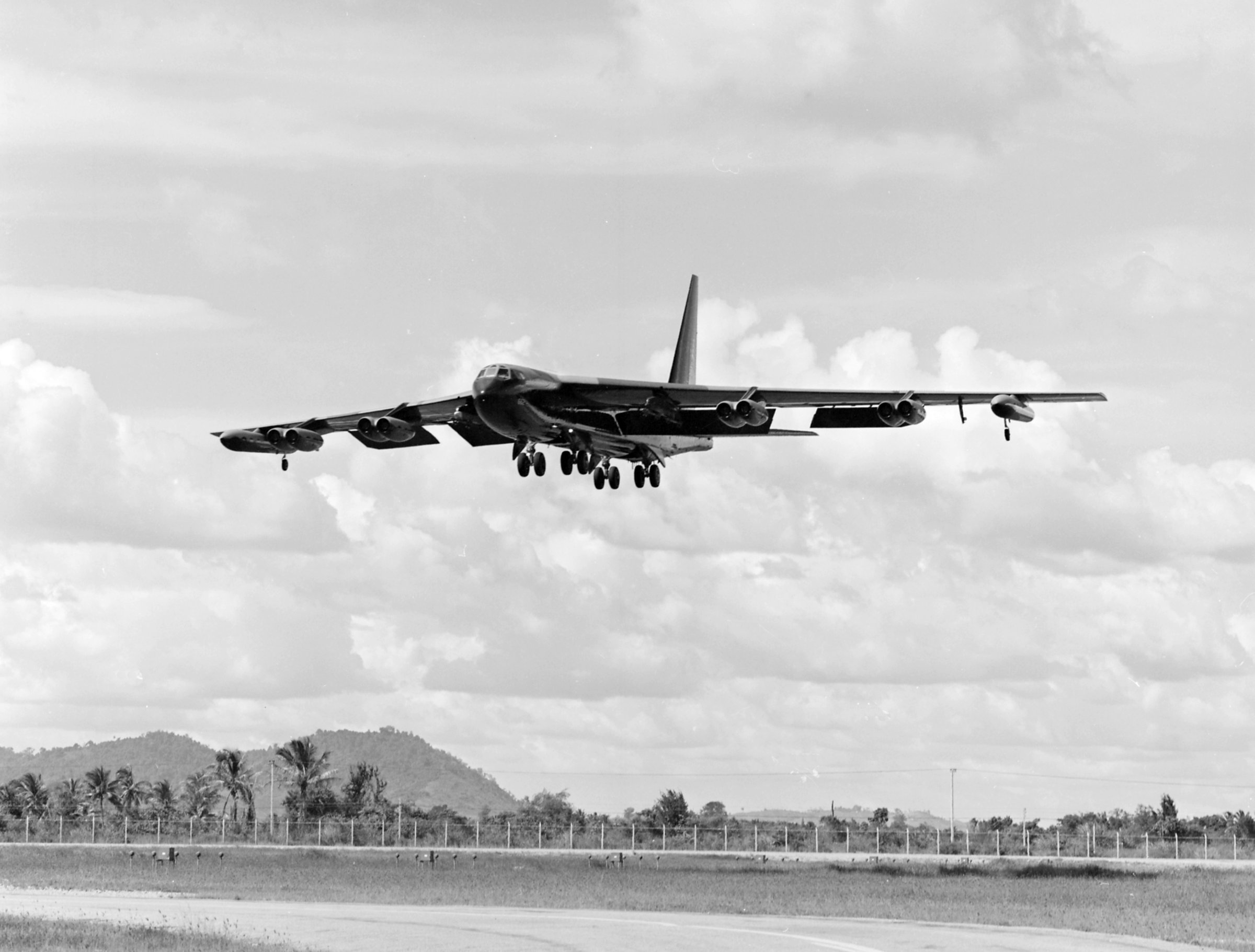
Each follow-on model refined the design. The B-52C added larger 3,000 US gallon underwing tanks, raising gross weight to 450,000 lb, and introduced anti-flash white paint on the underside. The D — covered separately — became the dedicated long-range bomber, the E brought updated avionics and bombing-navigation systems, and the F received more powerful J57-P-43W engines with a bigger water-injection system. B-52Fs flew the type's first combat mission, Operation Arc Light over South Vietnam, on 18 June 1965.
Two early airframes became famous research aircraft: the last B-52A was modified as the NB-52A to carry the X-15 rocket plane, and B-52B 52-008, known as "Balls 8", flew in support of NASA research until 17 December 2004. In service, the B-52Bs were retired by June 1966 and the last B-52Cs on 29 September 1971; most Es left in 1969–1970, and the last Fs, used as trainers, in late 1978.