Boeing B-52D Stratofortress
The Vietnam-era "Big Belly" — rebuilt to carry 108 conventional bombs · First flight 1956 · In service 1956
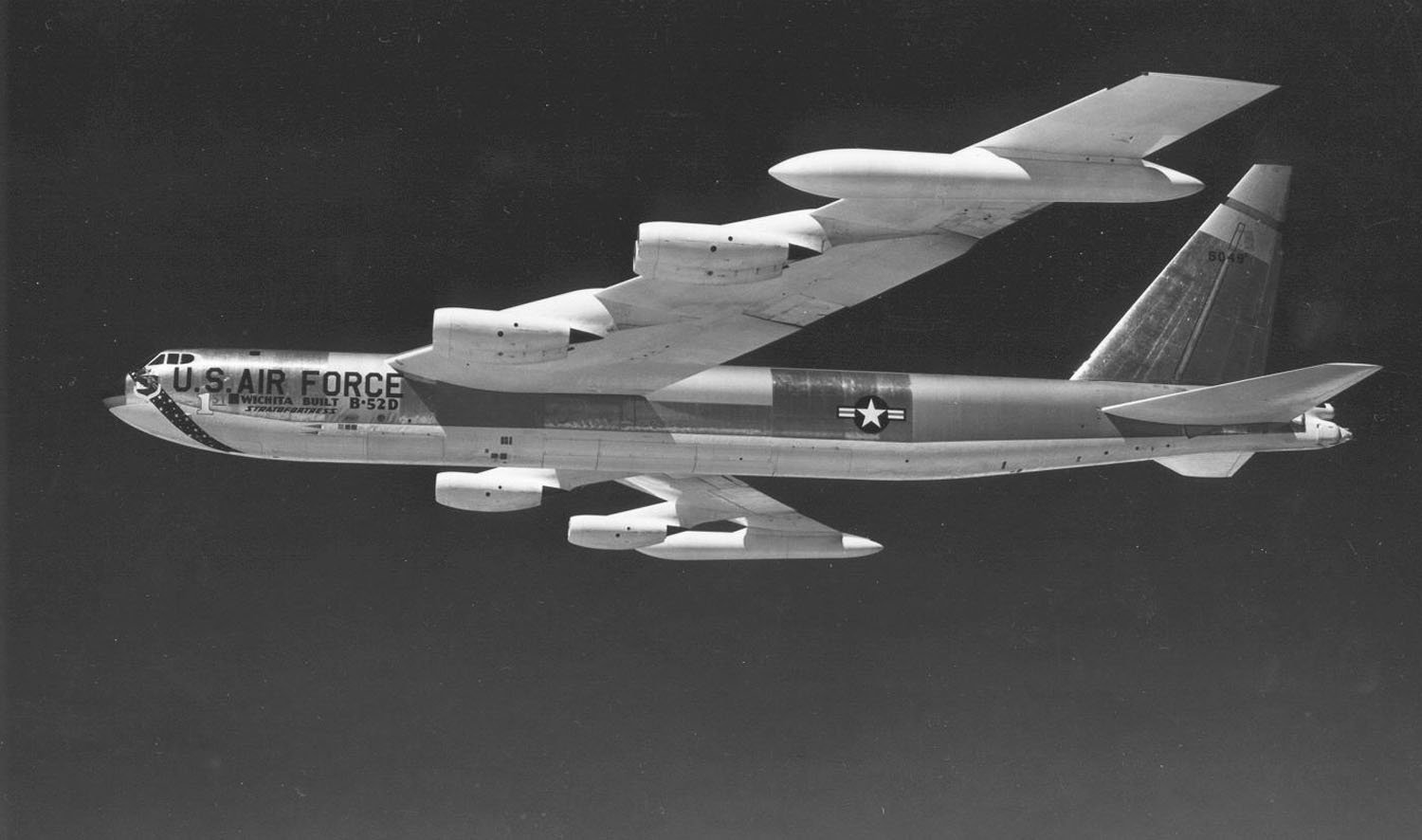
The B-52D was the first model built purely as a long-range bomber, with no reconnaissance option. With B-47 production ending, Boeing's Wichita plant joined Seattle on the line: Seattle built 101 D-models and Wichita 69, and the type entered service in December 1956. On 26 September 1958 two B-52Ds set world speed records without payload — 902.4 km/h over a 10,000 km closed circuit and 961.9 km/h over 5,000 km.
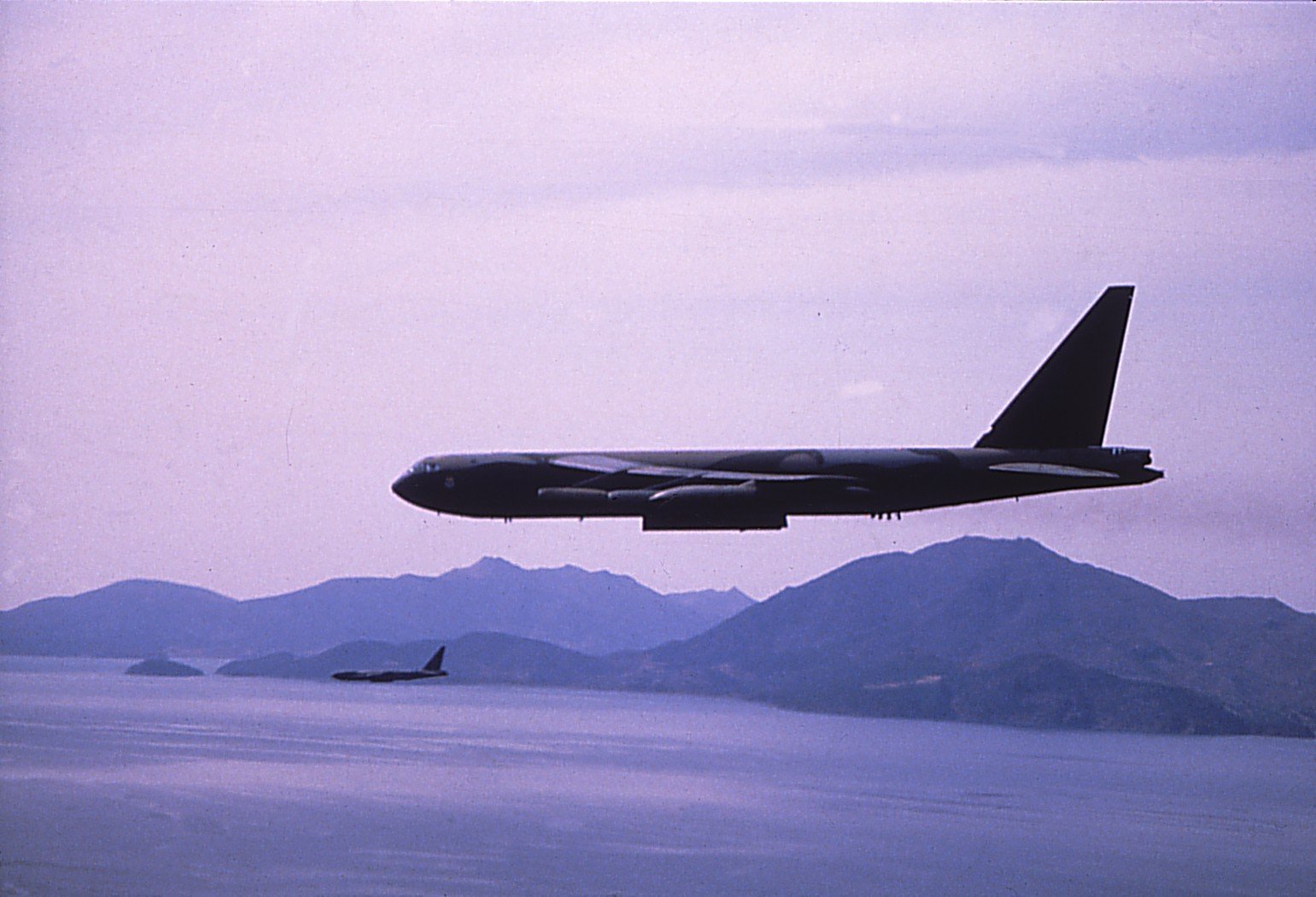
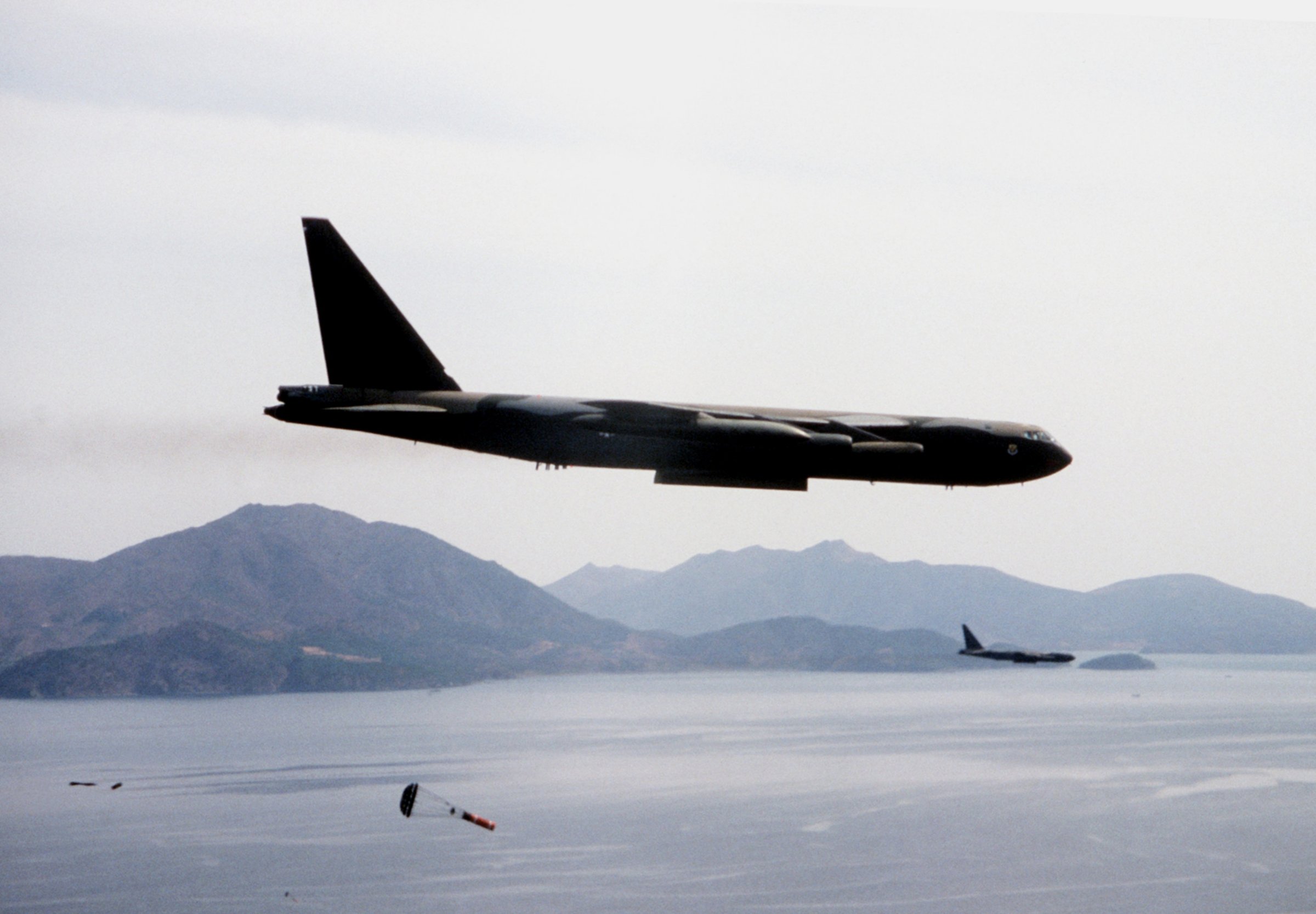
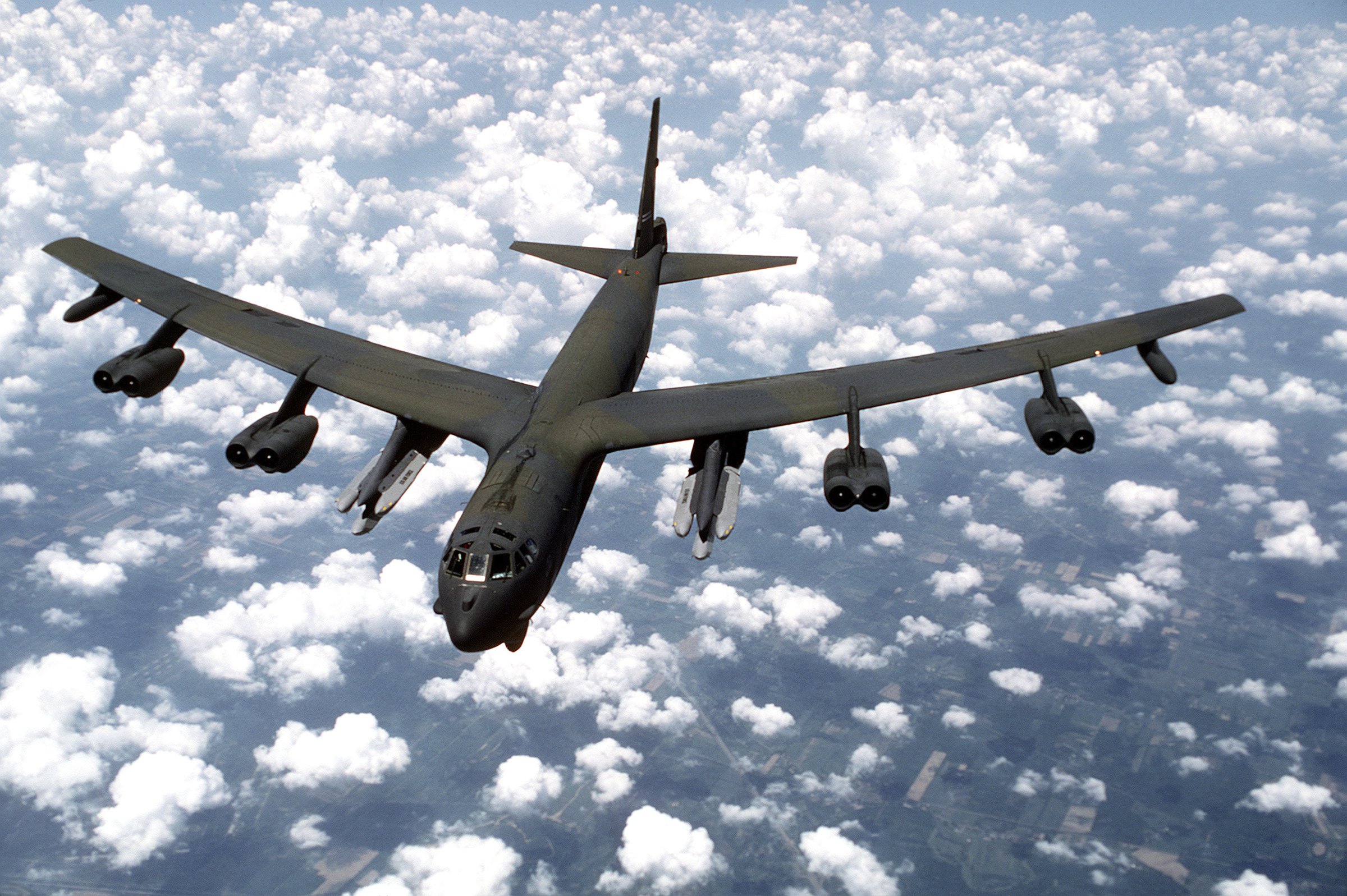
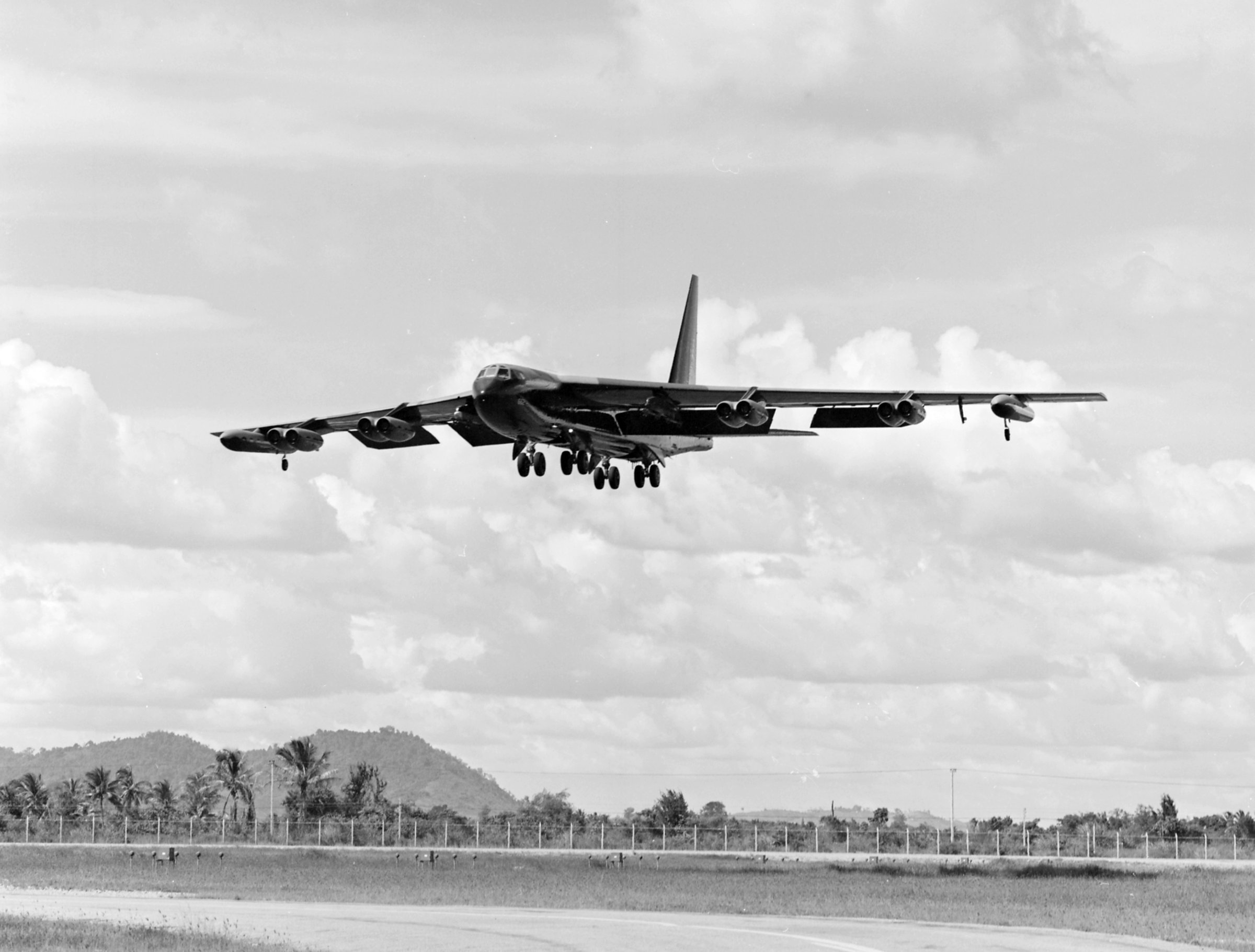
From late 1965 many Ds received the Big Belly modification. External carriage stayed at 24 bombs, but internal capacity rose from 27 to 84 bombs of 500 lb (or 42 of 750 lb), for a total of 108 bombs or about 60,000 lb (27 t) — some 22,000 lb more than a B-52F. Modified Ds began operations from Andersen AFB, Guam, in April 1966 and, from spring 1967, also from U-Tapao in Thailand. The Rivet Rambler (Phase V) countermeasures fit and a camouflage scheme with black undersides followed, and the D was used more extensively in Southeast Asia than any other model.
B-52Ds made up most of the force in Operation Linebacker II in December 1972, during which fifteen B-52s were lost. Tail gunners of two B-52Ds were credited with shooting down MiG-21s that month, although the Vietnamese side did not confirm these losses. After the war the Ds served as conventional bombers; 37 not already upgraded were retired in late 1978 and the rest in 1982–1983.