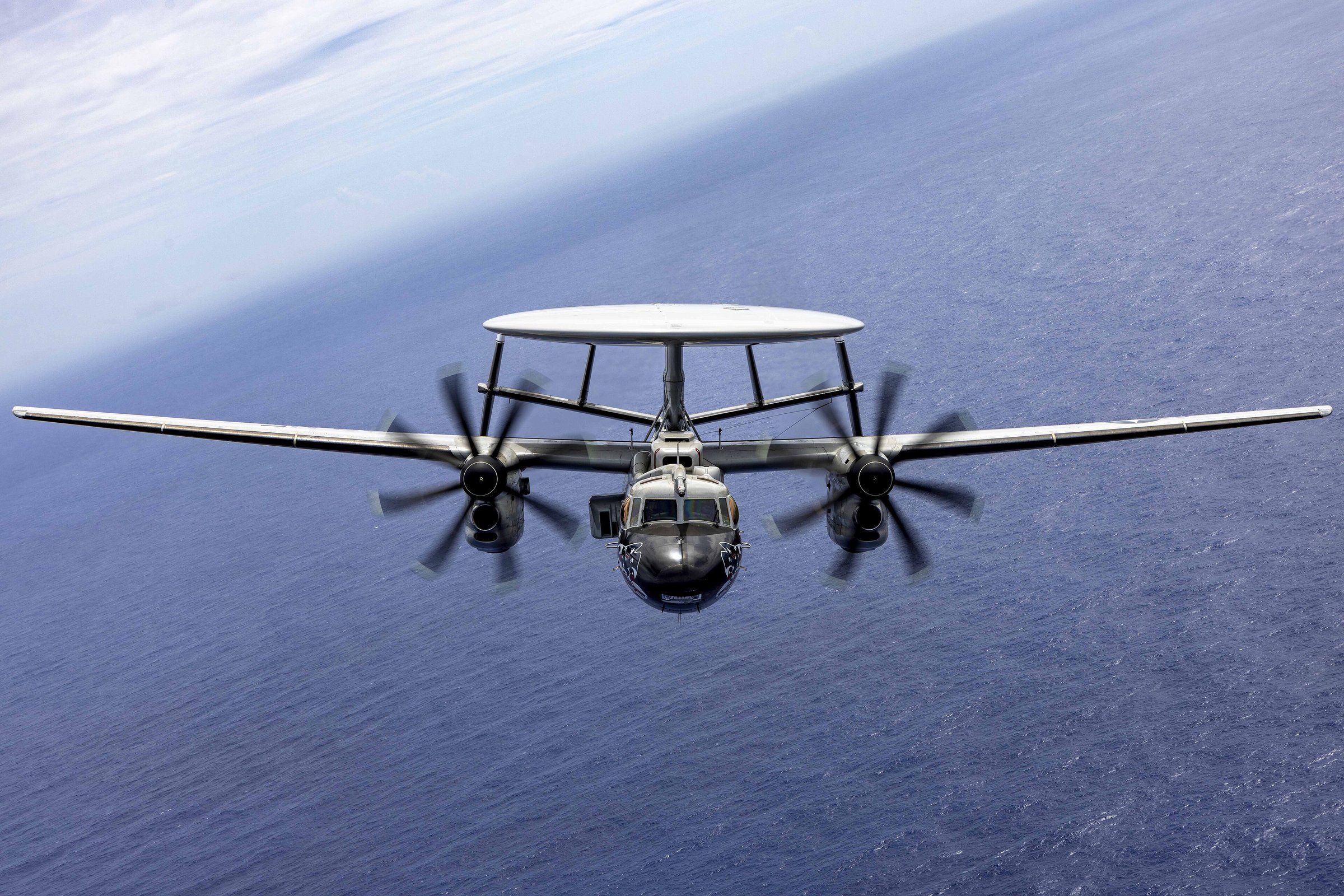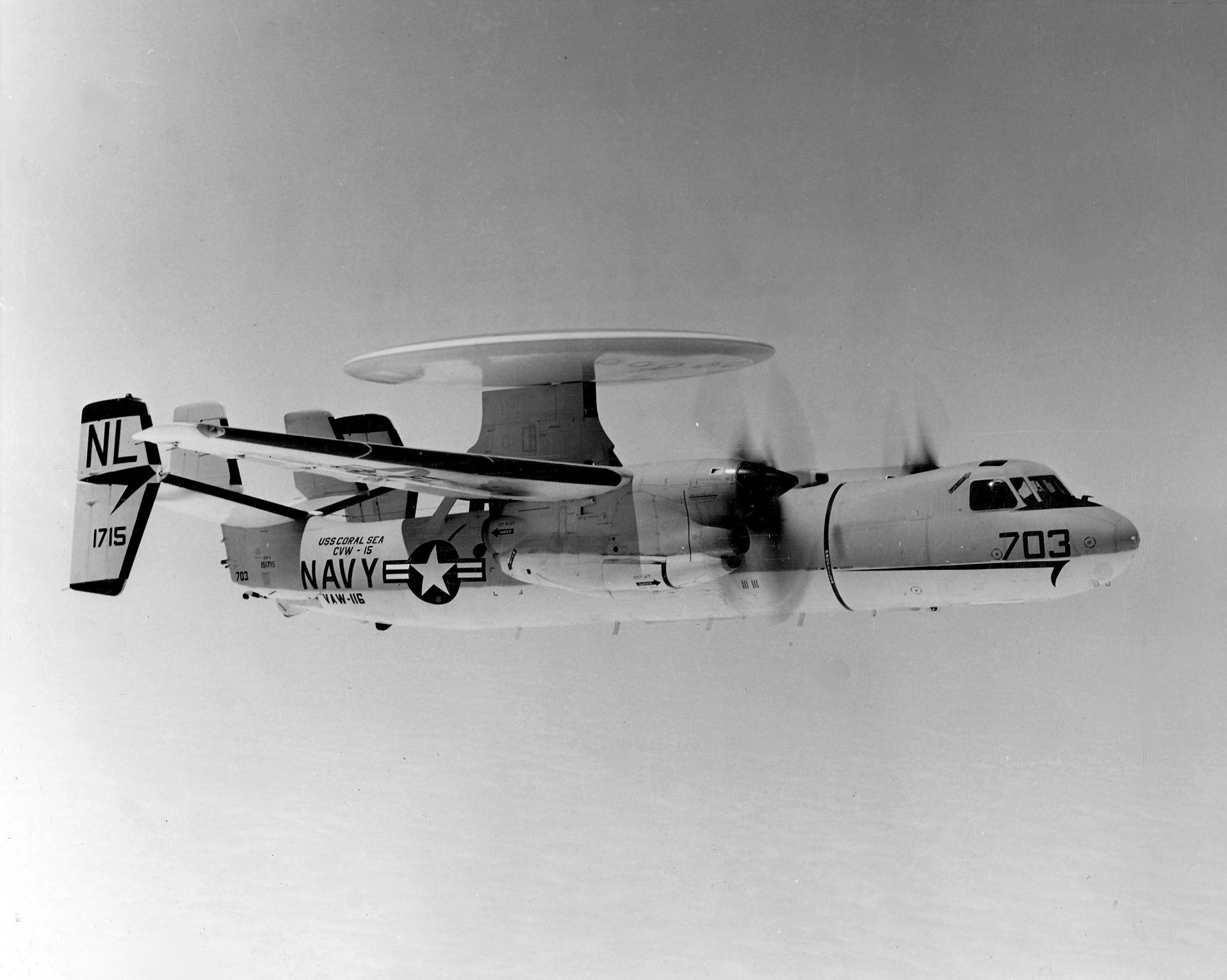
Grumman E-2A Hawkeye
The first purpose-built carrier early-warning aircraft — twin turboprops, a 7.3 m rotodome and four tail fins to fit the hangar deck · First flight 1960 · In service 1964
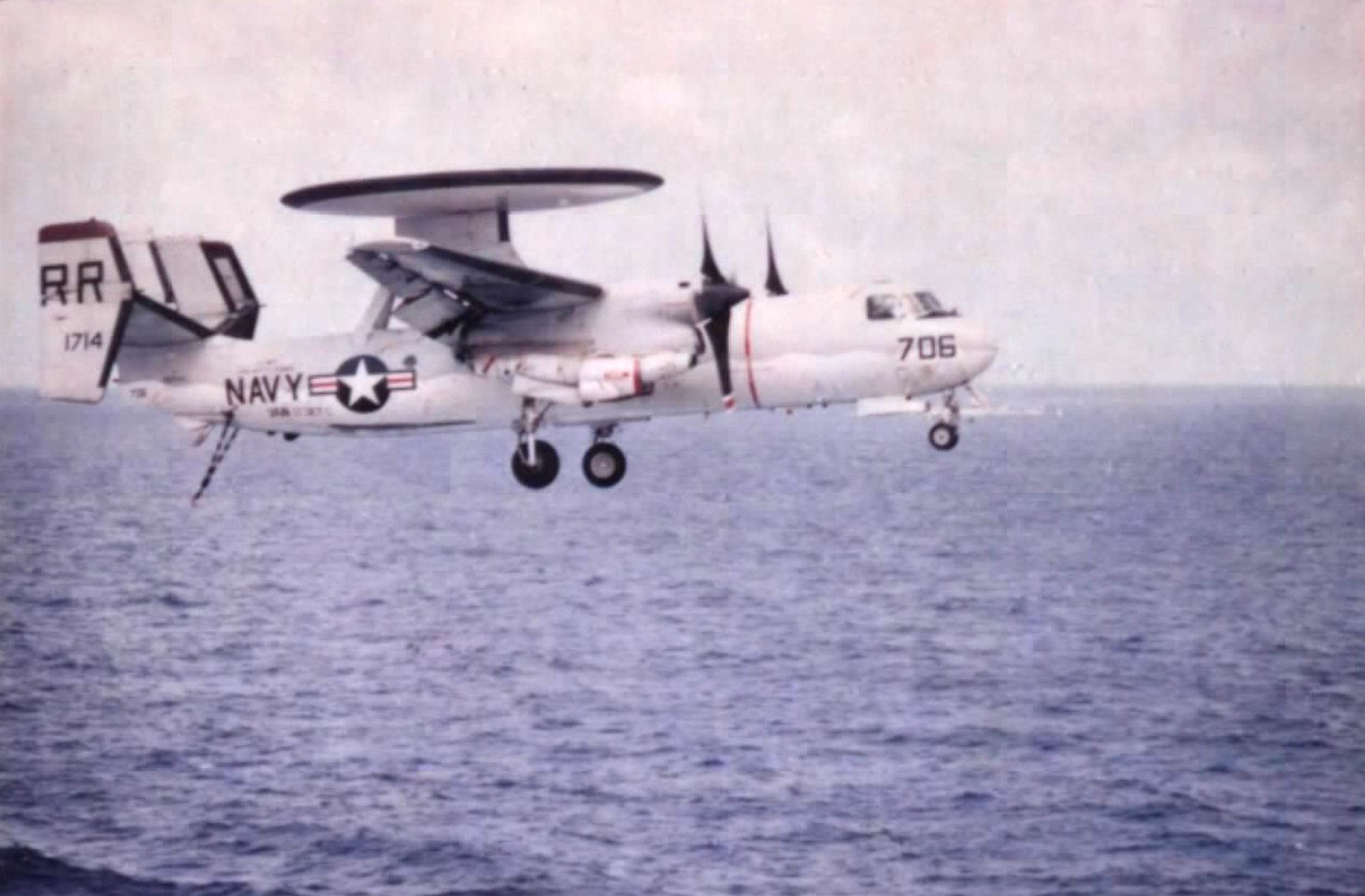
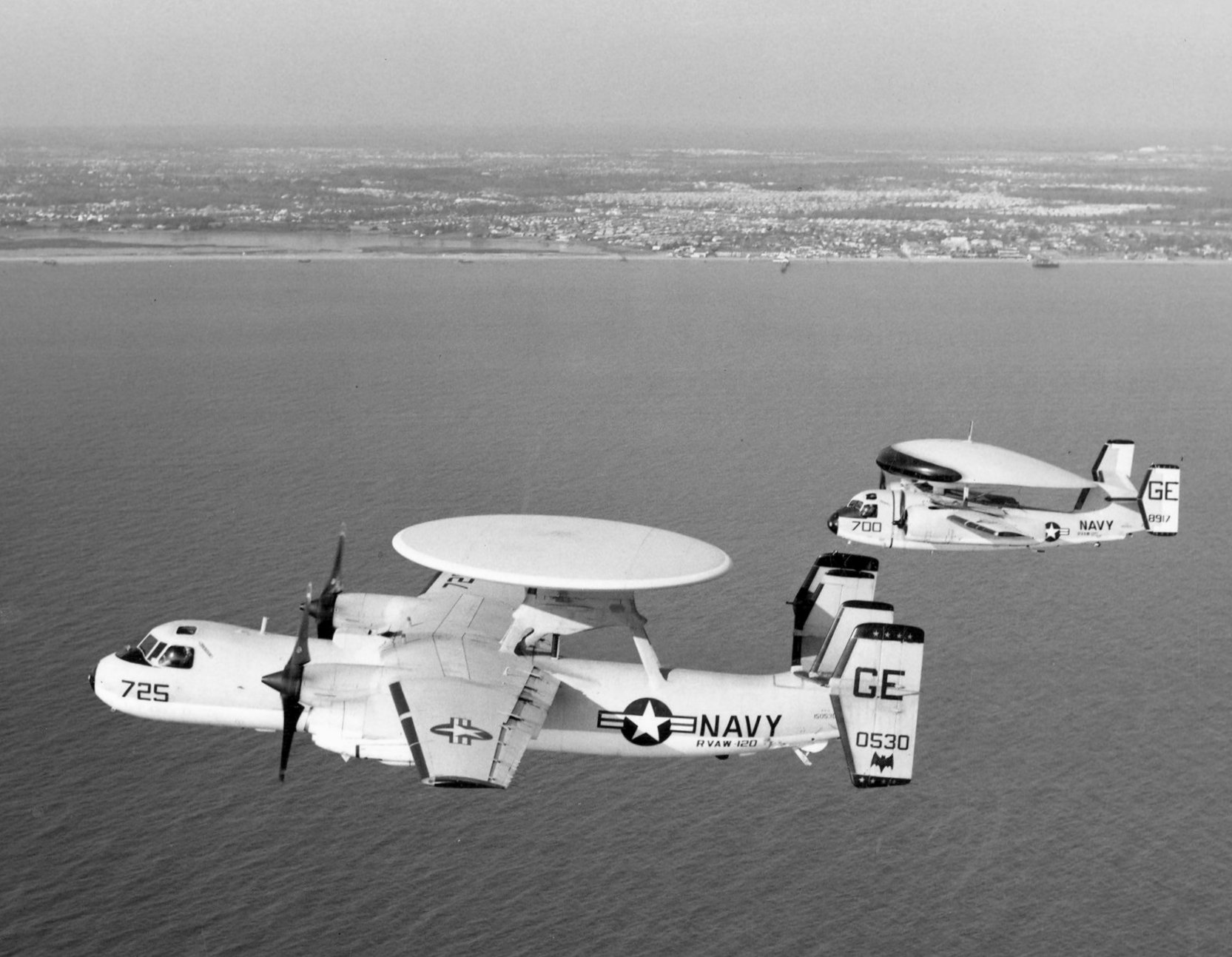
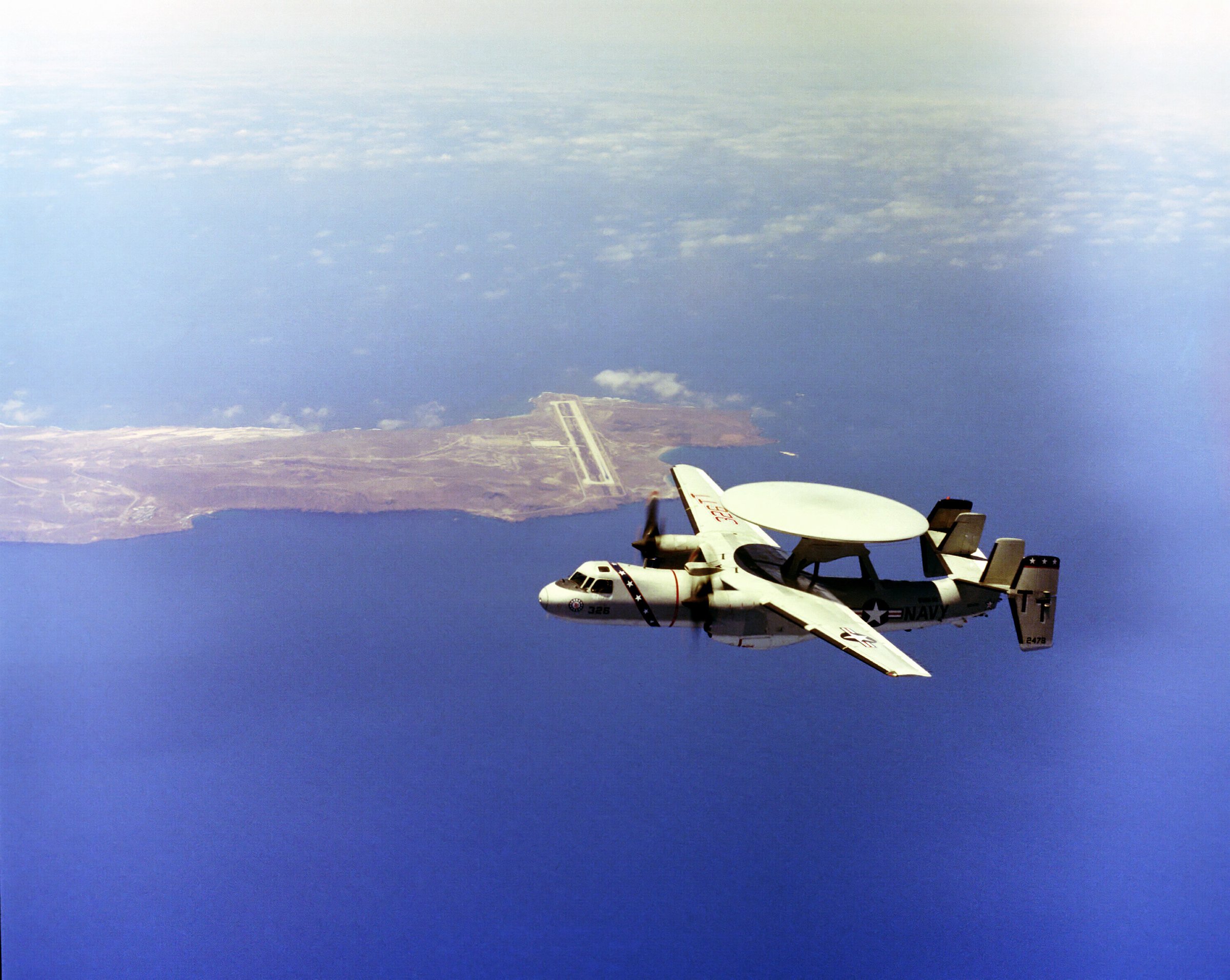
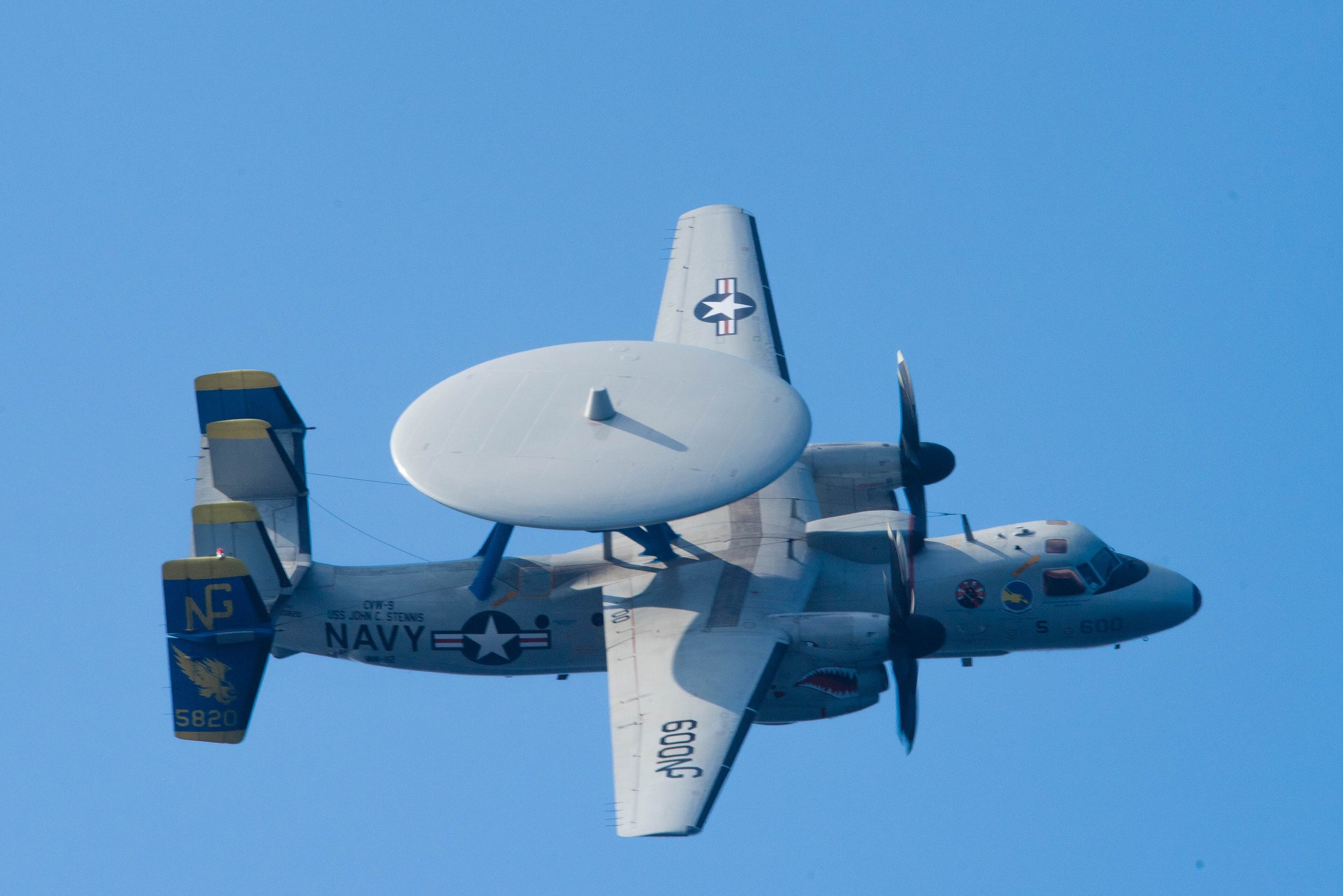
Grumman designed the Hawkeye in the late 1950s to replace the piston-engined E-1 Tracer, whose radar could no longer keep pace with jet-age threats. Ordered as the W2F-1, the aerodynamic prototype first flew on 21 October 1960 and the first aircraft with the full mission system on 19 April 1961; under the 1962 tri-service designation system it became the E-2A. To fit carrier hangar decks the wings fold back alongside the fuselage, and four short fins replace one tall tail.
The E-2A entered service with VAW-11 at NAS North Island in January 1964 and soon went to sea; by 1966 Hawkeyes were operating from carriers in the Gulf of Tonkin. Its AN/APS-96 radar sat in a 7.3 m rotating radome above the fuselage and was one of the first airborne early-warning radars to track targets automatically.
The early aircraft suffered from cooling and reliability problems, especially in the analogue drum computer that processed radar data. Production stopped at 59 aircraft in the mid-1960s, and most survivors were rebuilt as E-2Bs; some E-2As went on to serve with Naval Air Reserve squadrons.