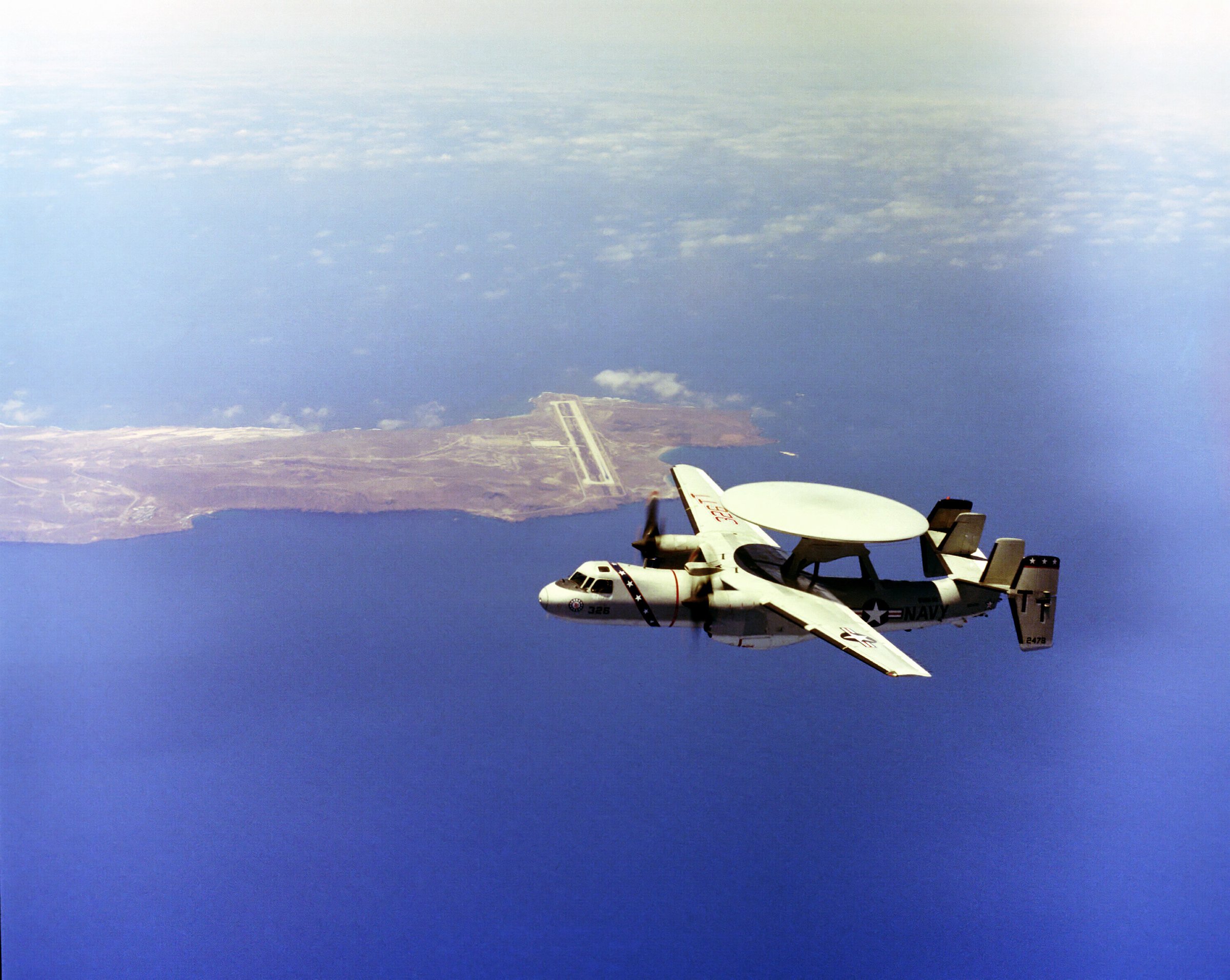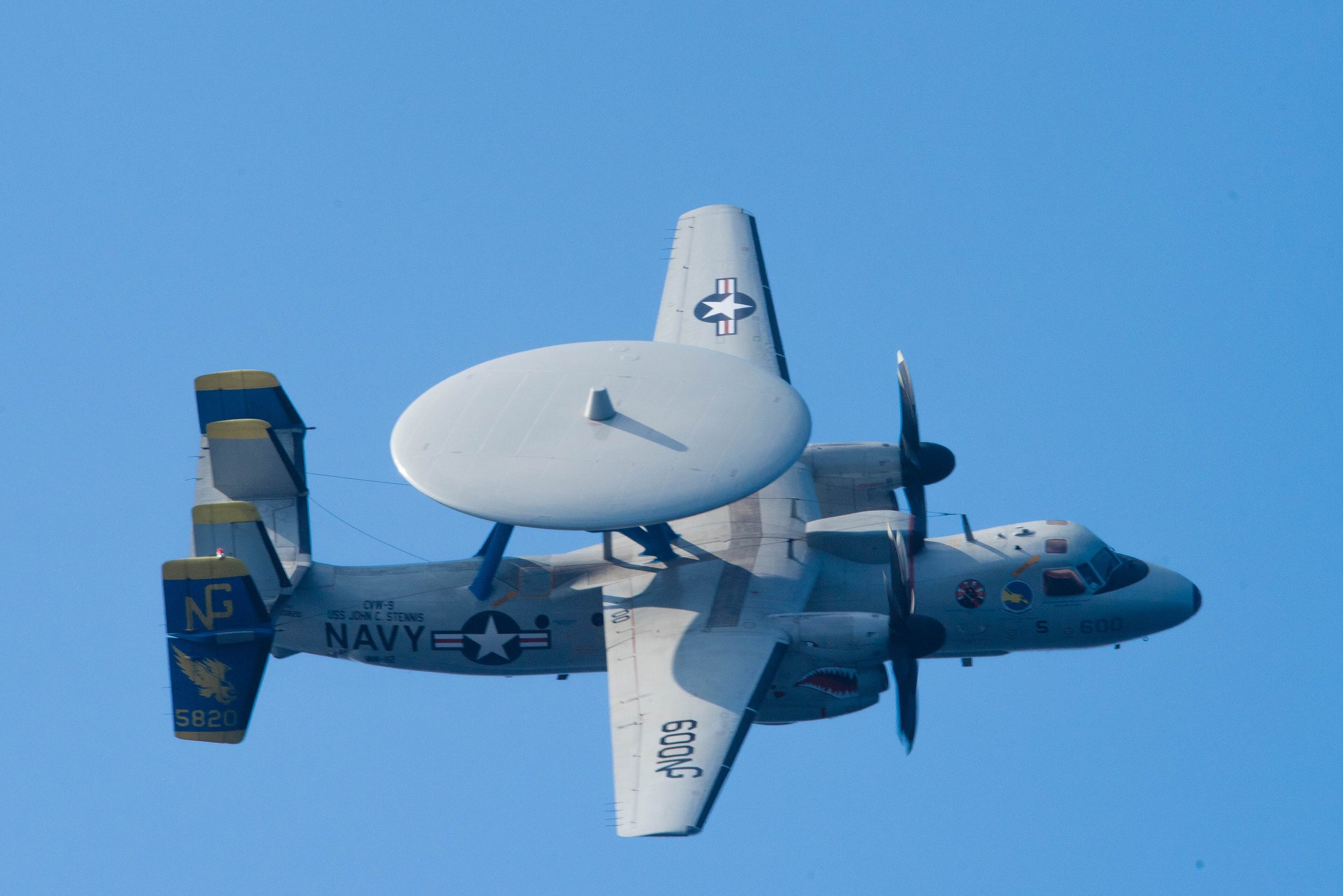
Grumman E-2C Hawkeye
The definitive Hawkeye — new radars and engines over four decades, up to the networked Hawkeye 2000 and an export success on four continents · First flight 1971 · In service 1973
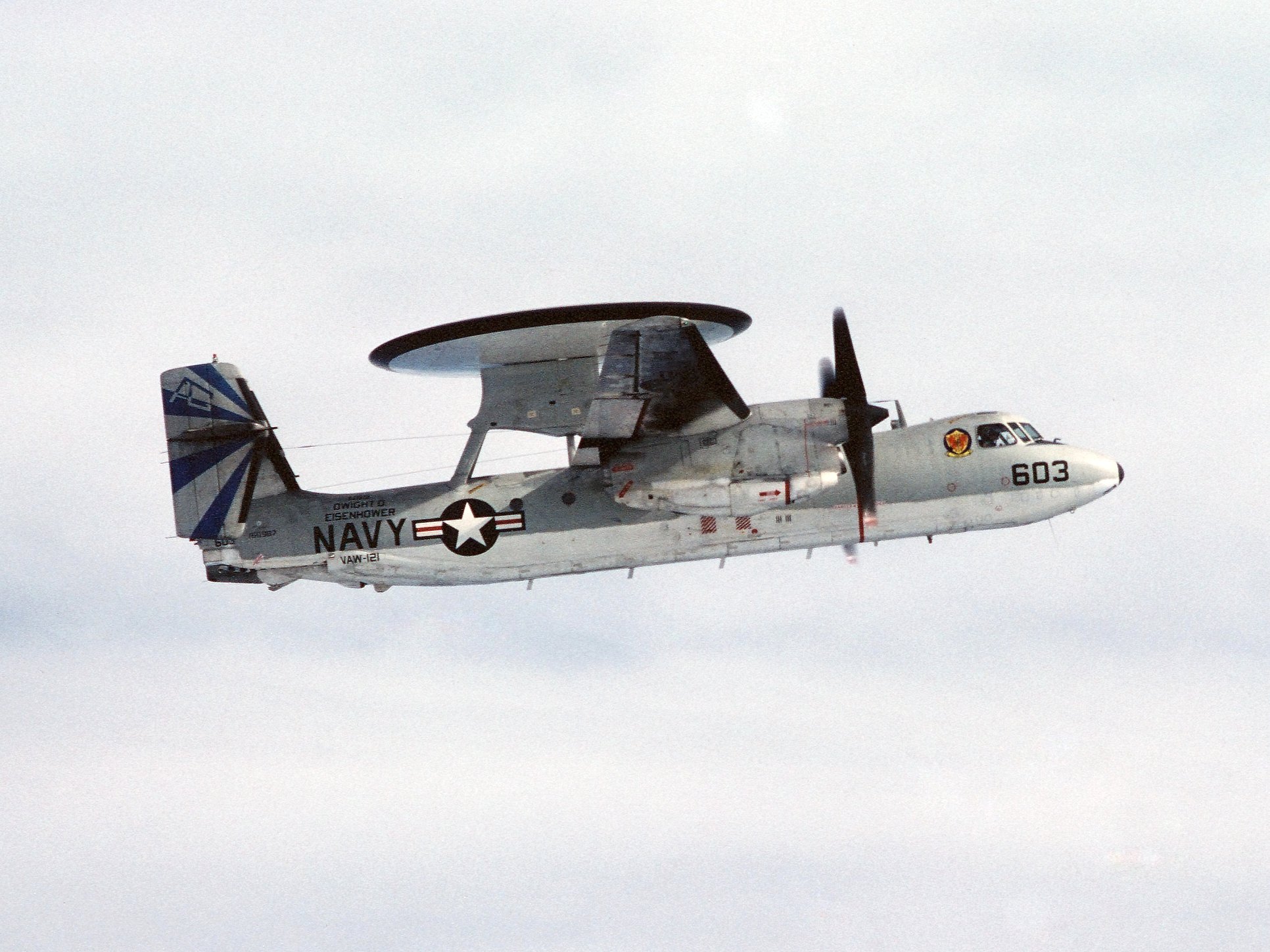
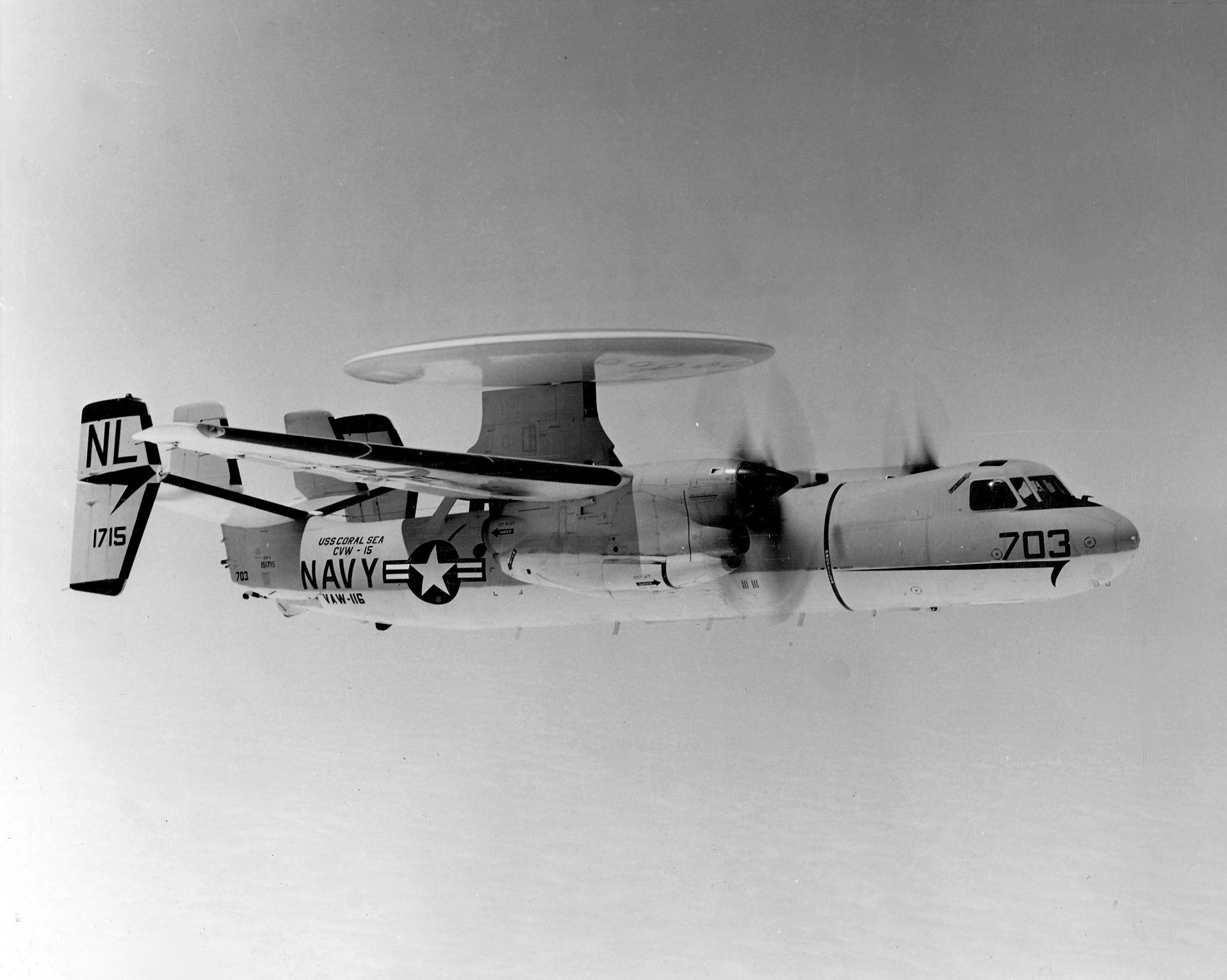
The E-2C kept the Hawkeye's airframe but replaced almost everything inside it. A converted E-2A prototype flew on 20 January 1971, the first production aircraft on 23 September 1972, and the type became operational in 1973. Its systems were progressively upgraded in blocks: Group 0 aircraft carried the APS-120 or APS-125 radar, Group I introduced the APS-139 and uprated engines, and Group II, in service from June 1992, the APS-145 with better performance over land.
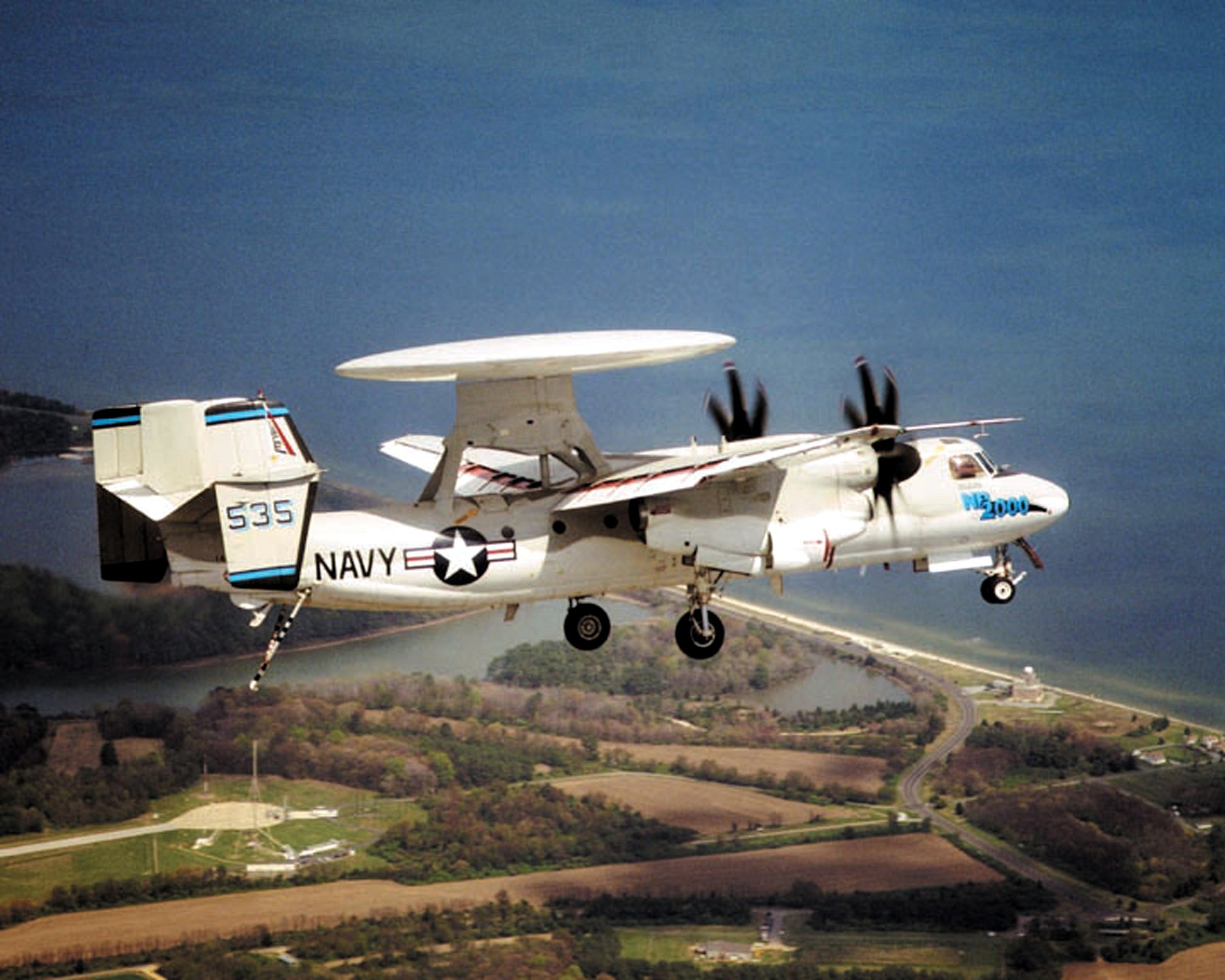
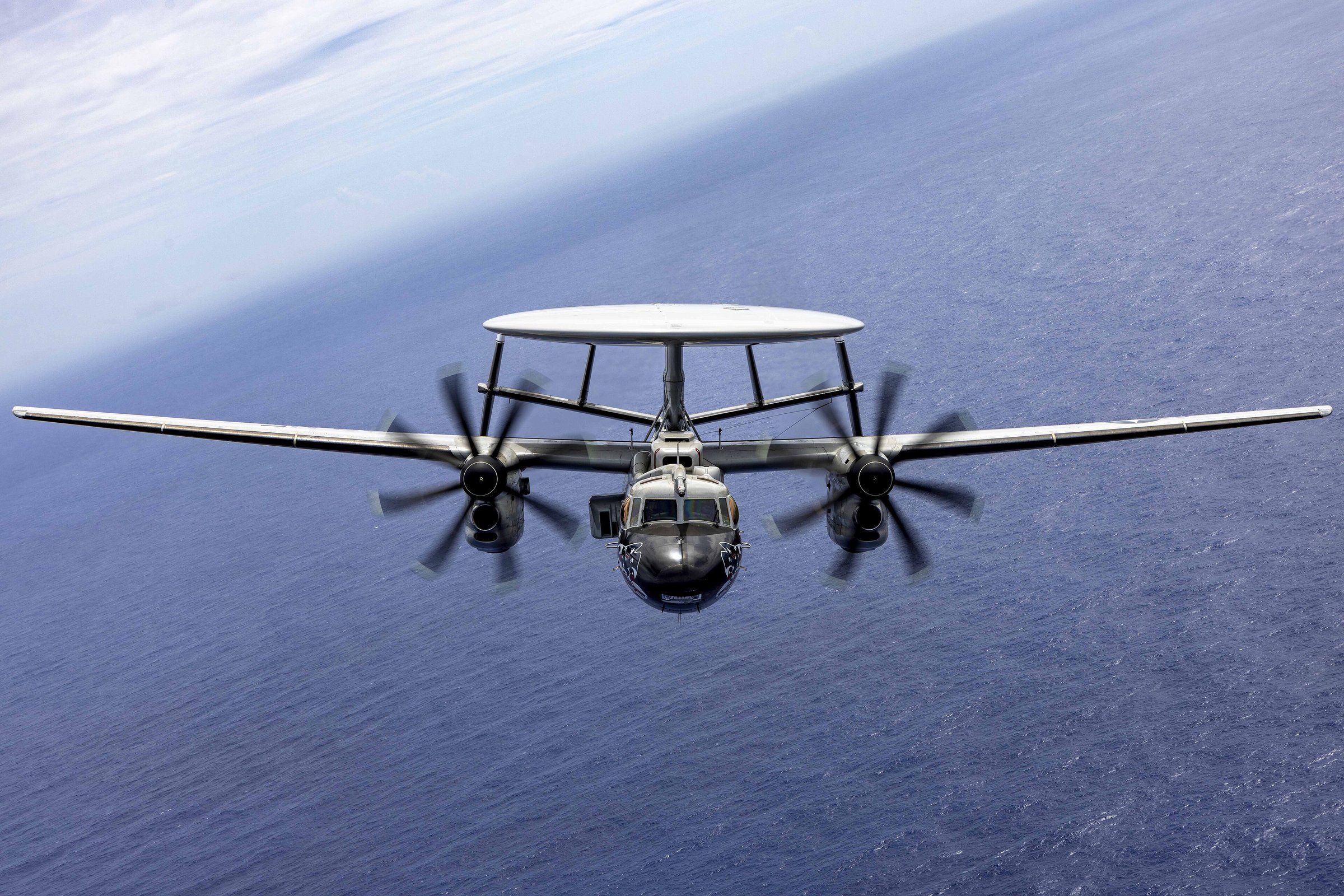
The Hawkeye 2000, first flown in April 1998, added a new mission computer and workstations, extra satellite communications and the Cooperative Engagement Capability (CEC) data link, which lets ships and aircraft share fire-control-quality tracks. From 2004 the fleet received eight-bladed NP2000 composite propellers, first flight-tested on an E-2C in 2001, in place of the original four-bladed units.
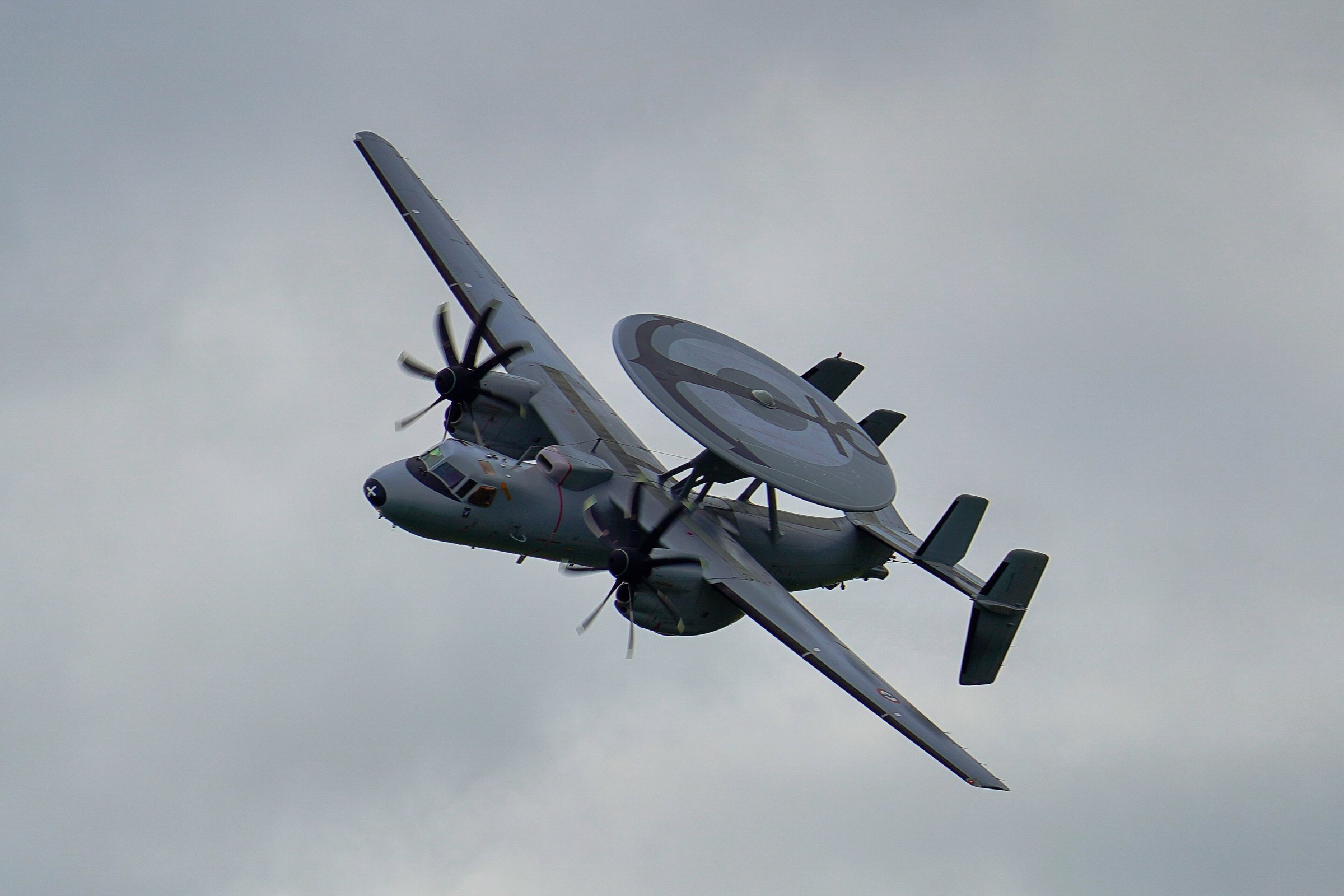
The E-2C became the Hawkeye's export success. Israel received four in 1981, three of which later went to Mexico; Japan bought 13 from 1987; Egypt and Singapore took delivery in 1987; Taiwan flew E-2T and E-2K versions; and France's Flottille 4F operates three E-2Cs from the carrier Charles de Gaulle.