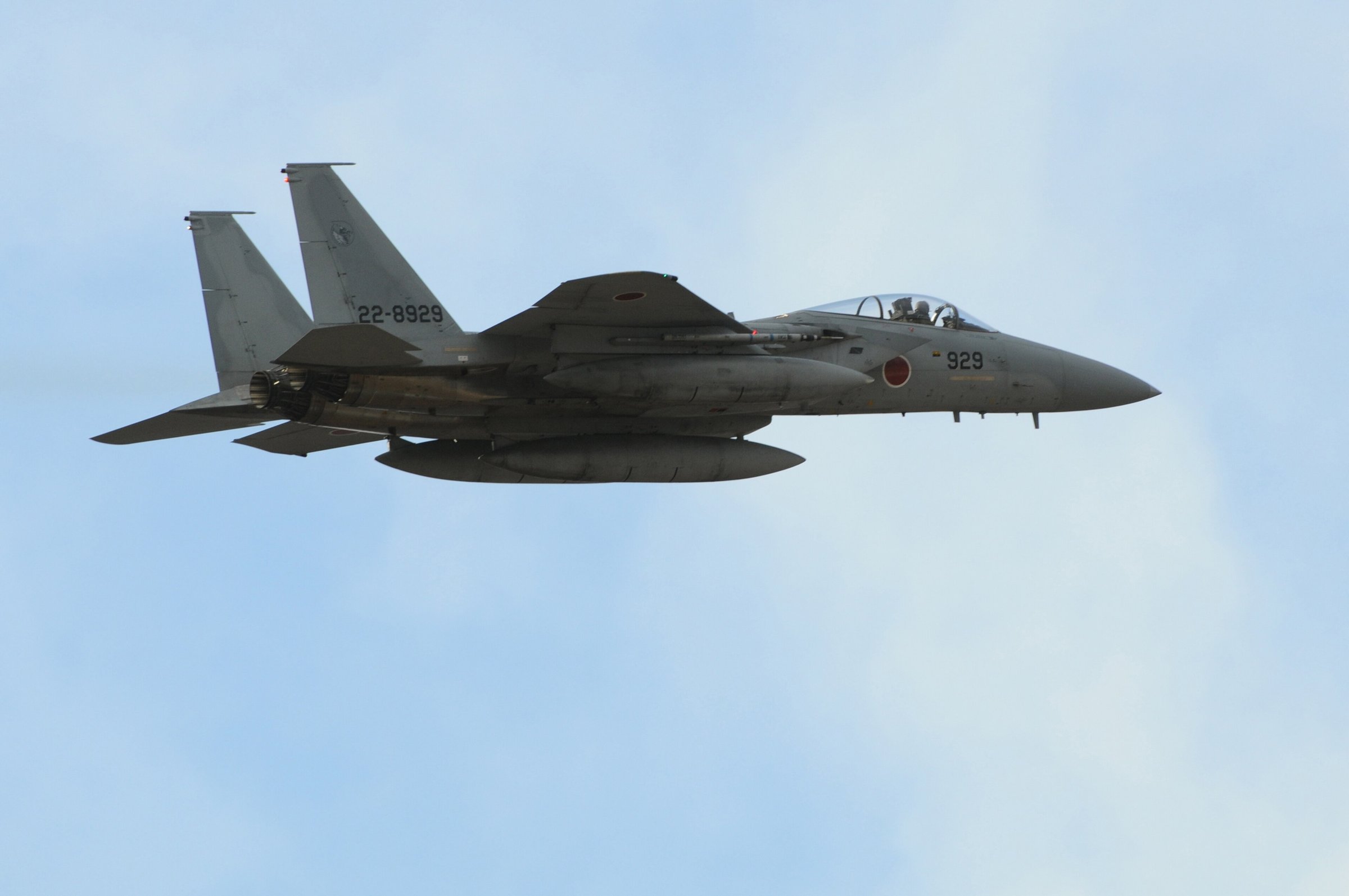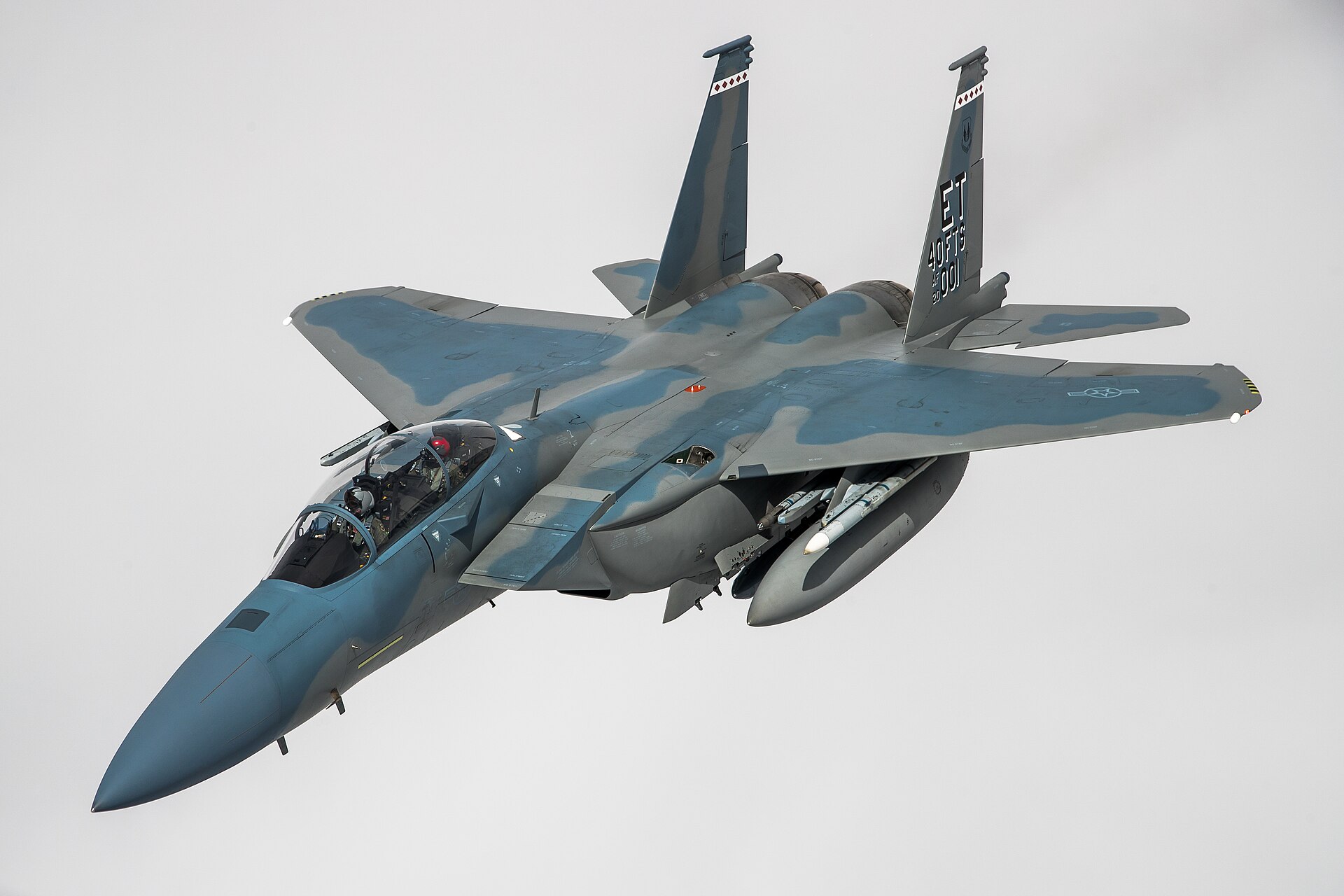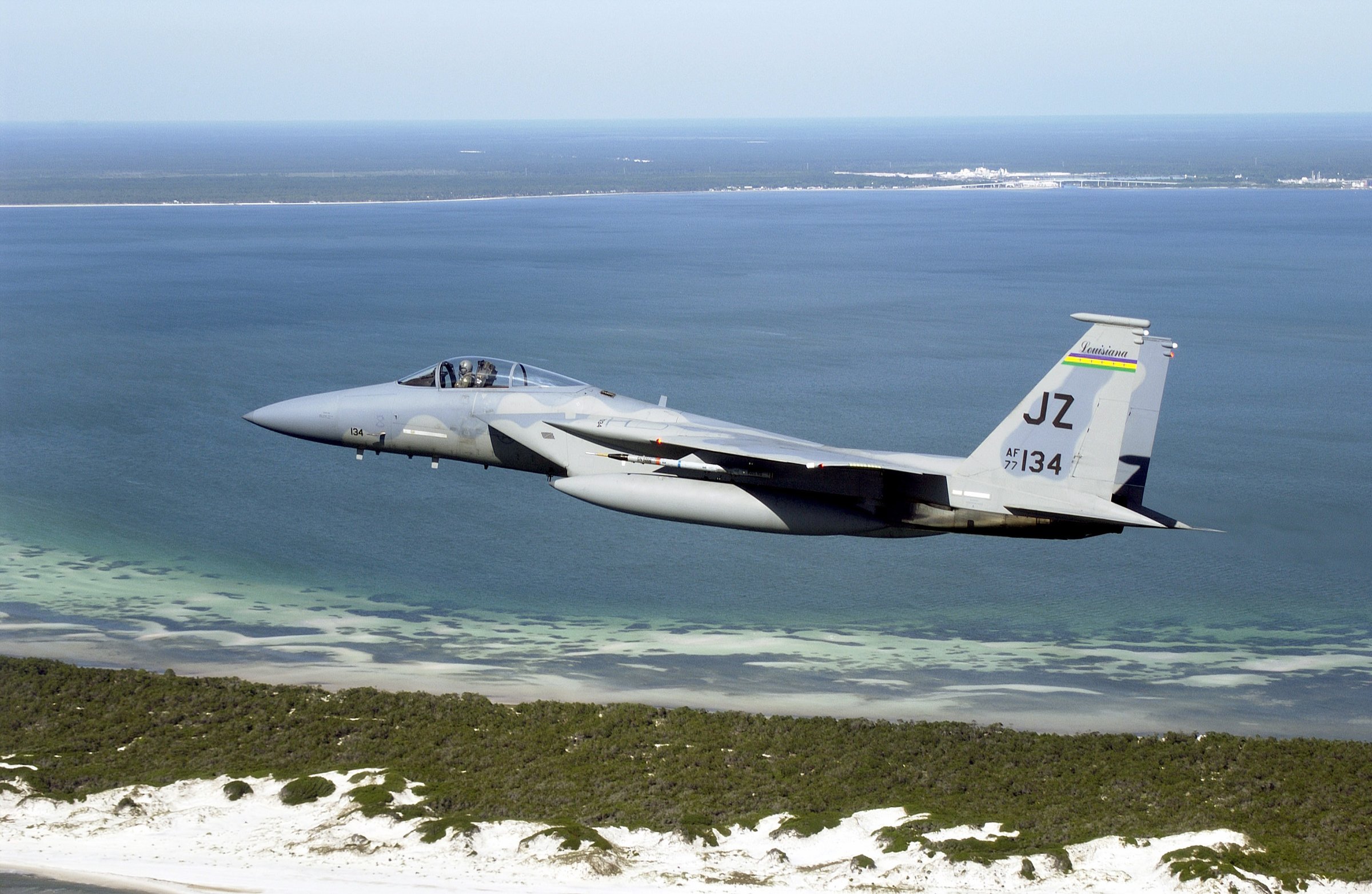
McDonnell Douglas F-15A/B Eagle
The original Eagle — the 1970s air-superiority fighter that set the template · First flight 1972 · In service 1976
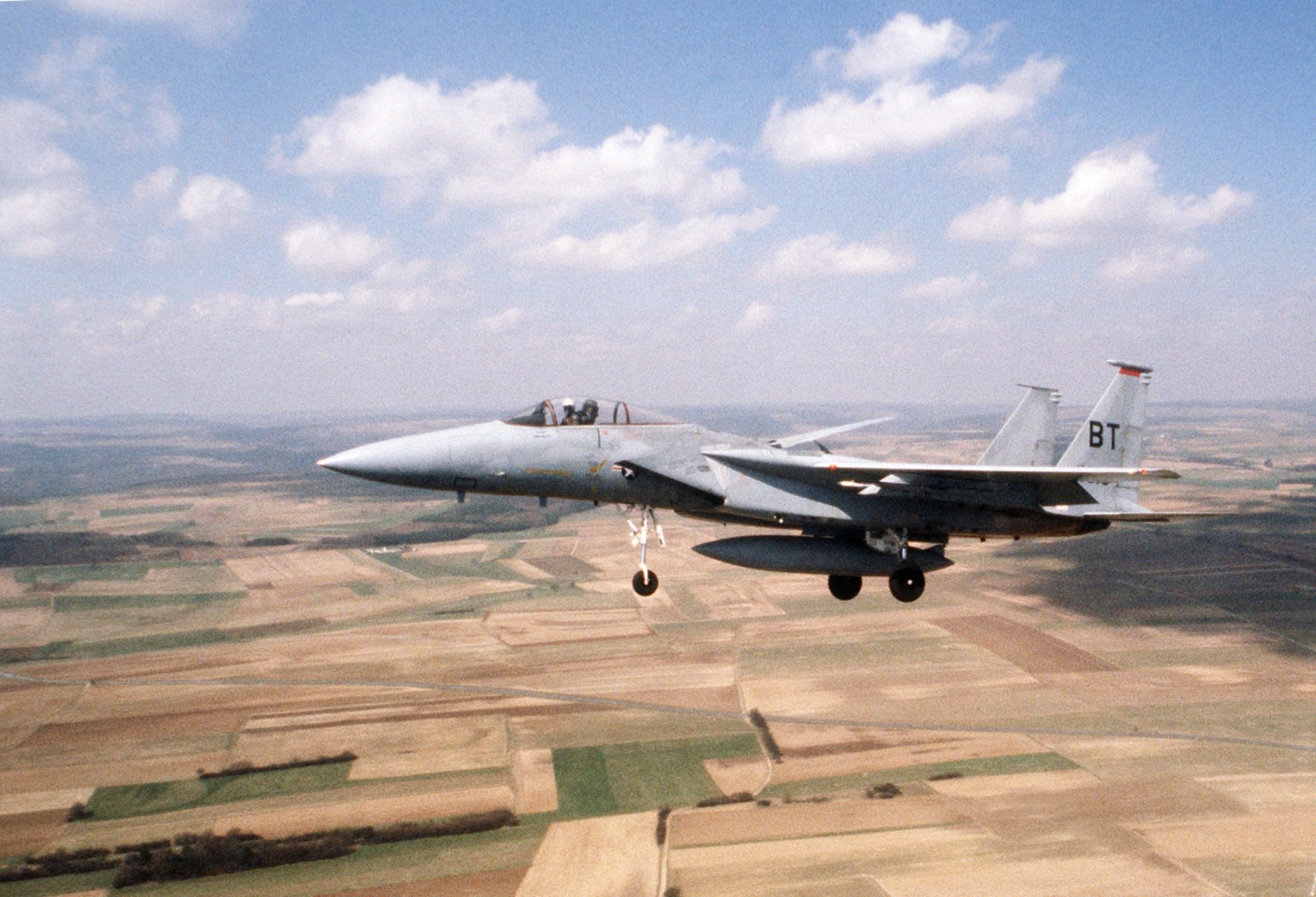
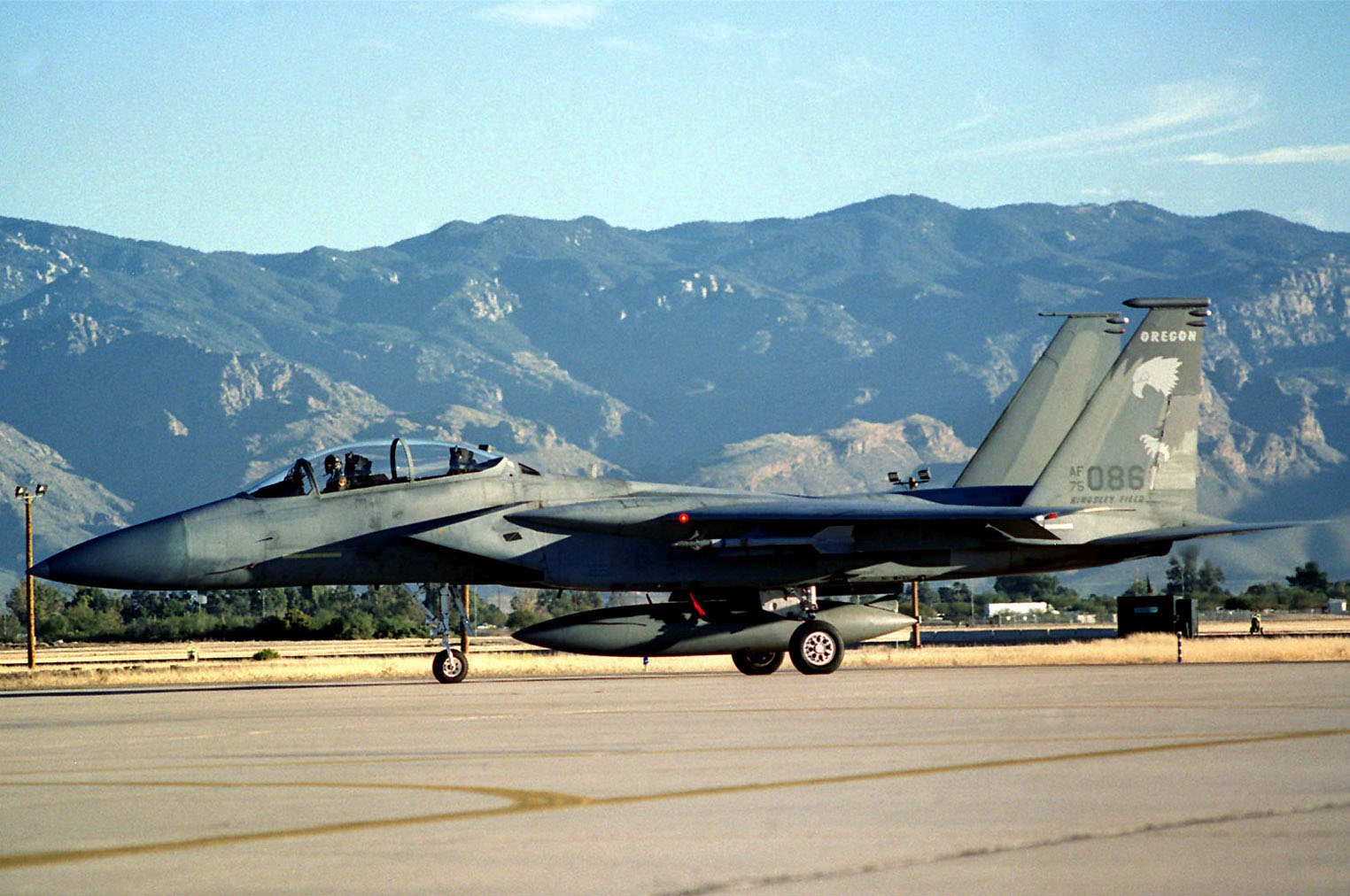
The F-15A was McDonnell Douglas's answer to the USAF's call for a pure air-superiority fighter after the Vietnam War. It first flew on 27 July 1972, and the two-seat trainer — originally designated TF-15A, later renamed F-15B — followed in July 1973. Pairing two Pratt & Whitney F100 engines with the Hughes APG-63 pulse-Doppler radar, it was built to out-climb, out-turn and out-see any opponent of its time. Between 1972 and 1979, 384 F-15As and 61 F-15Bs were built.
The first Eagle delivered to the USAF was an F-15B, handed over on 13 November 1974, and operational squadrons began receiving the type in January 1976. Before entering service, a stripped, unpainted F-15A nicknamed Streak Eagle (72-0119) set eight time-to-climb world records at Grand Forks AFB between 16 January and 1 February 1975; it is now at the National Museum of the US Air Force. In the 1980s two F-15As served as launch aircraft for the ASM-135 anti-satellite missile, which destroyed the P78-1 satellite in its third test.
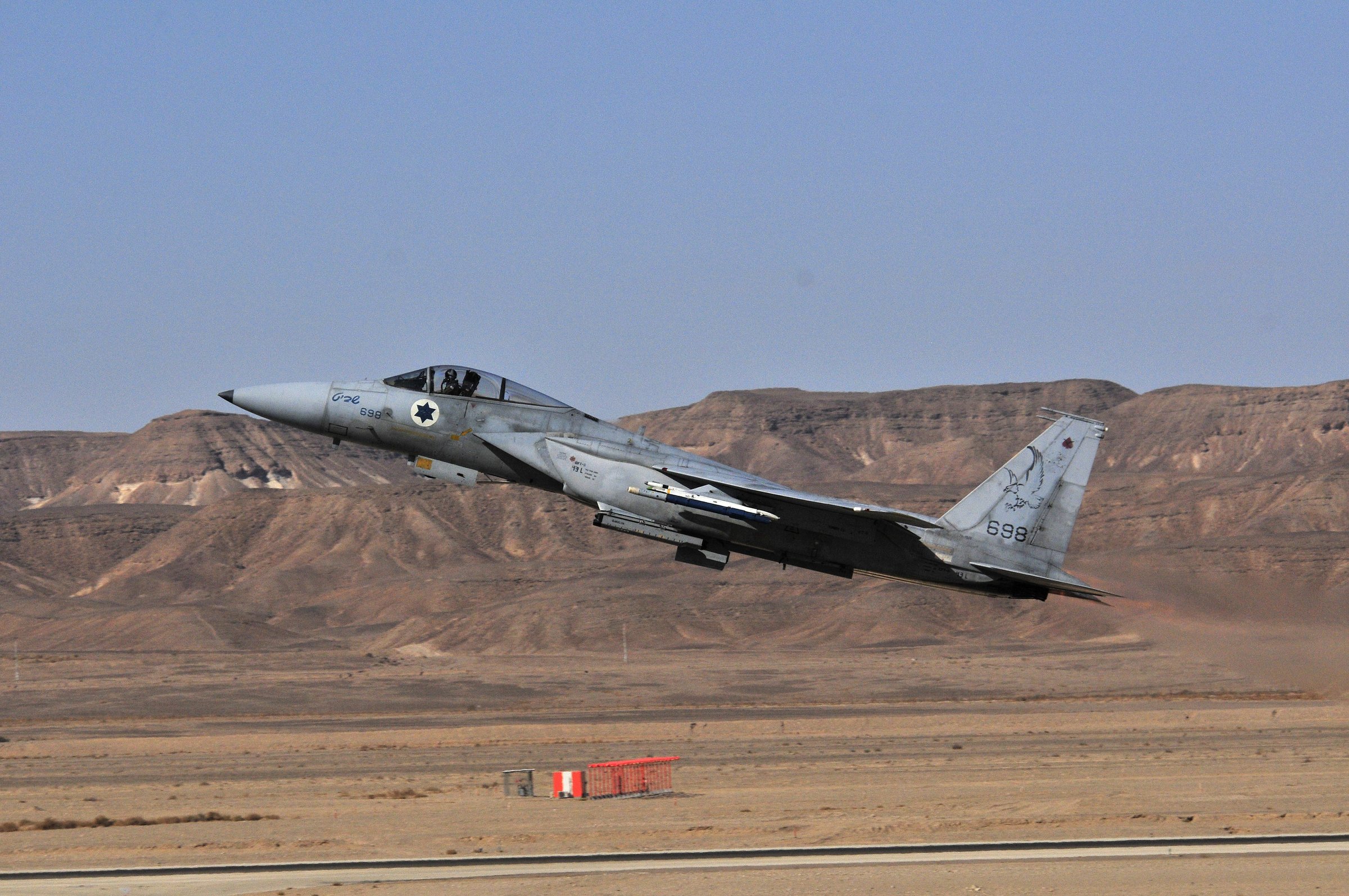
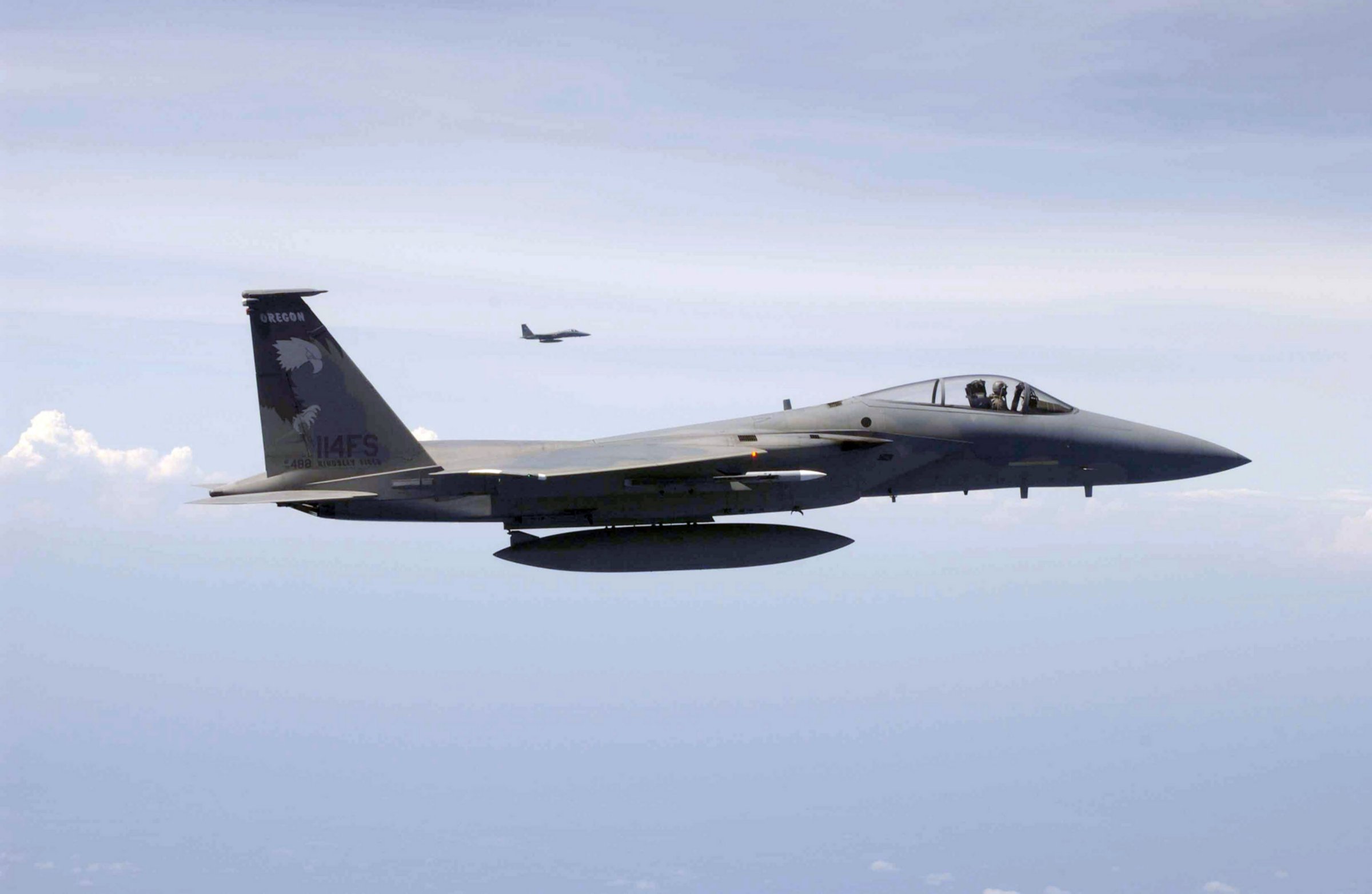
Israel received its first F-15s in December 1976 and calls the type Baz ("Falcon"). On 27 June 1979 Israeli F-15As scored the Eagle's first air-to-air victories over Lebanon, opening a combat record that made the type one of the most successful fighters of the jet age. Many USAF A/Bs later passed to Air National Guard units, and Israeli F-15As were still flying in the 2010s.