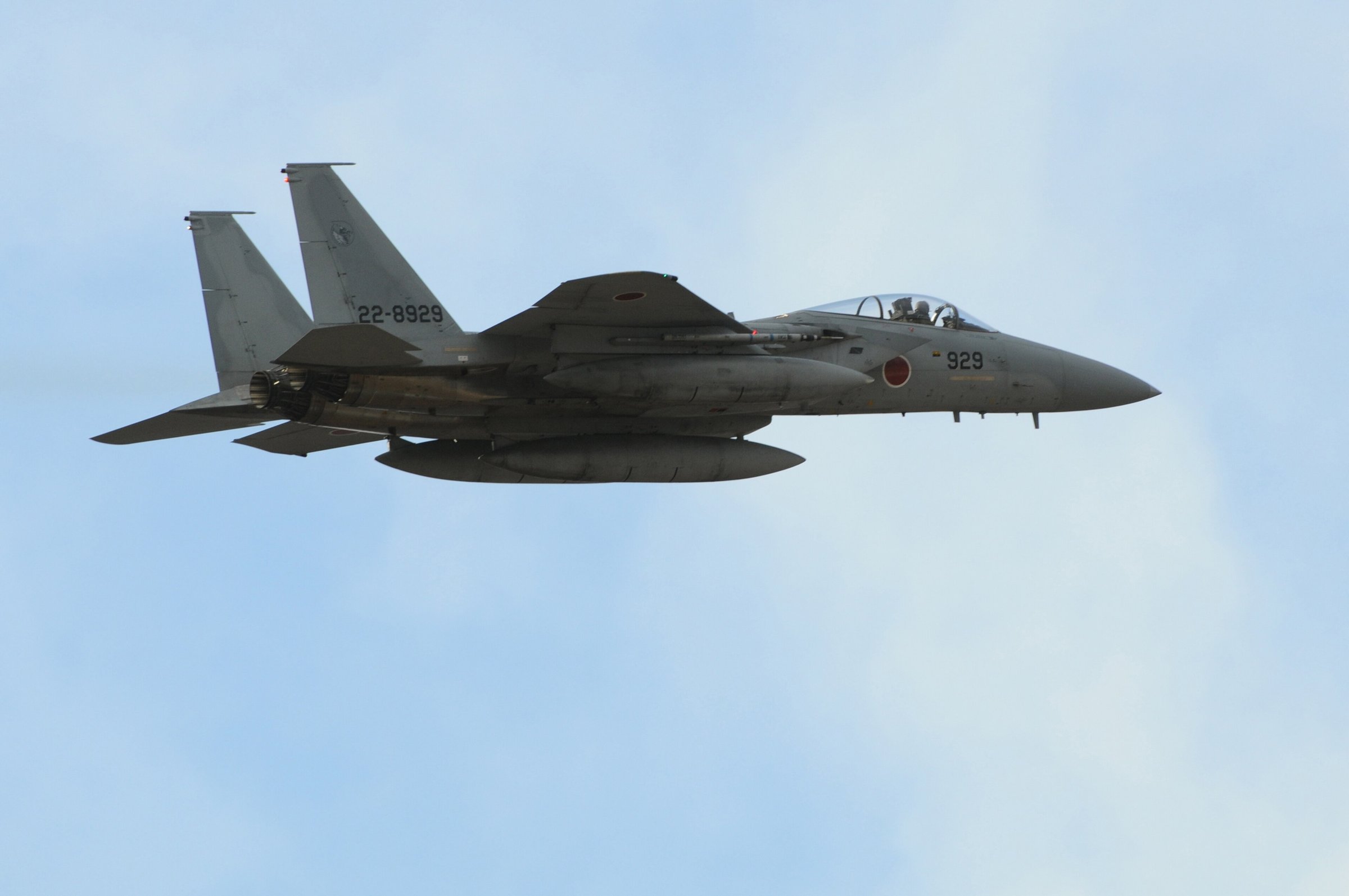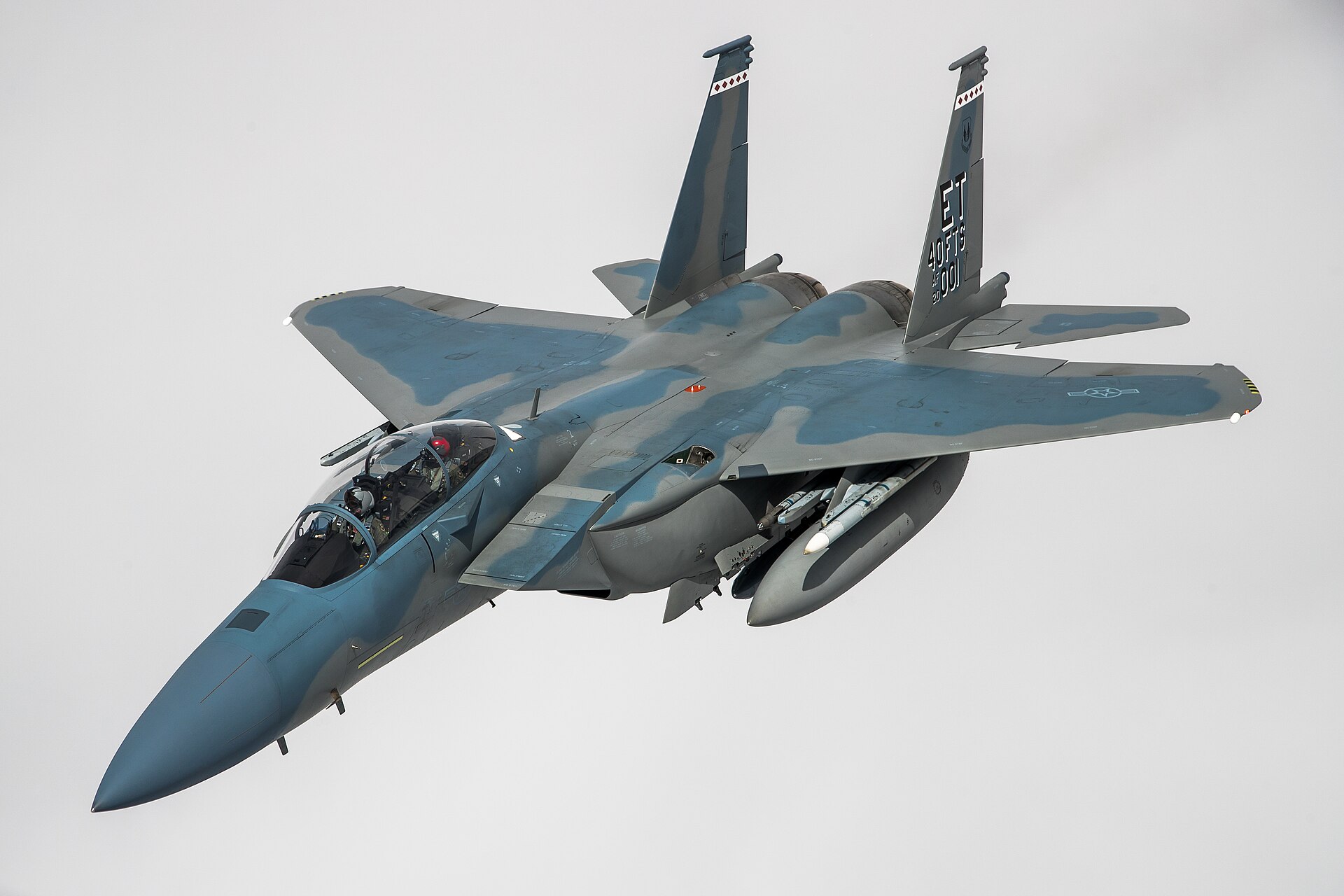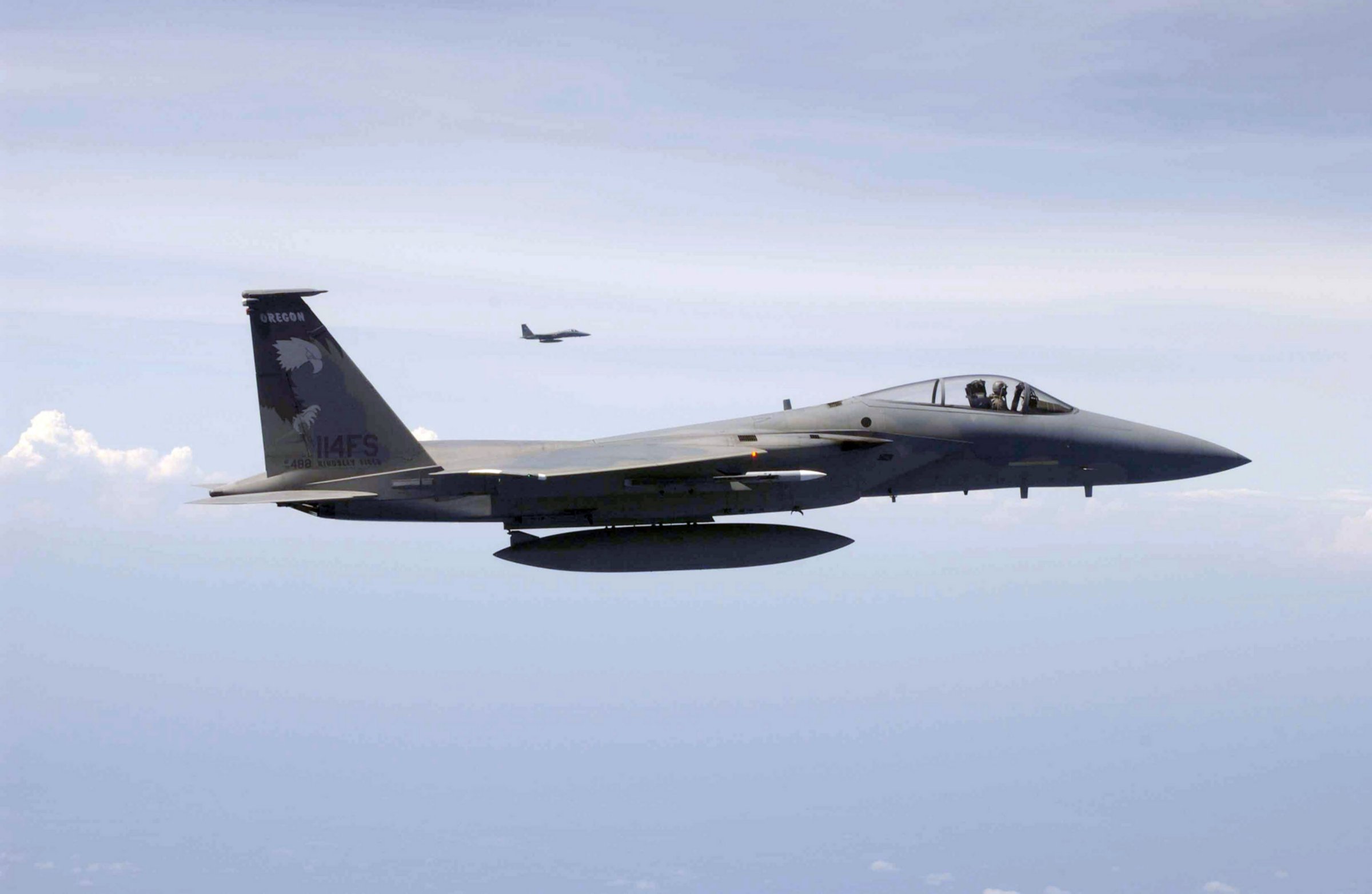
McDonnell Douglas F-15C/D Eagle
More fuel, more weight, better radar — the definitive air-superiority Eagle · First flight 1979 · In service 1979
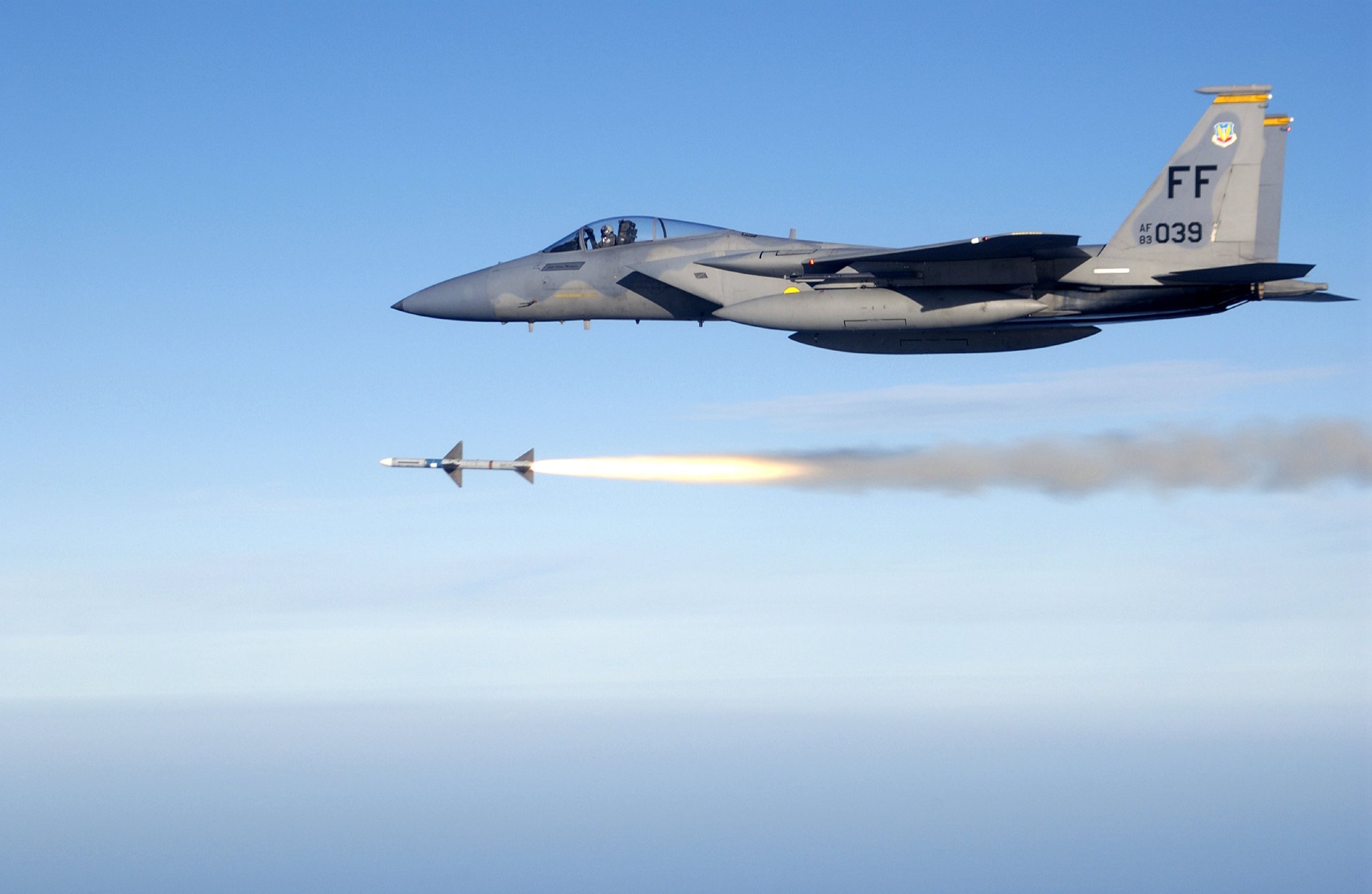
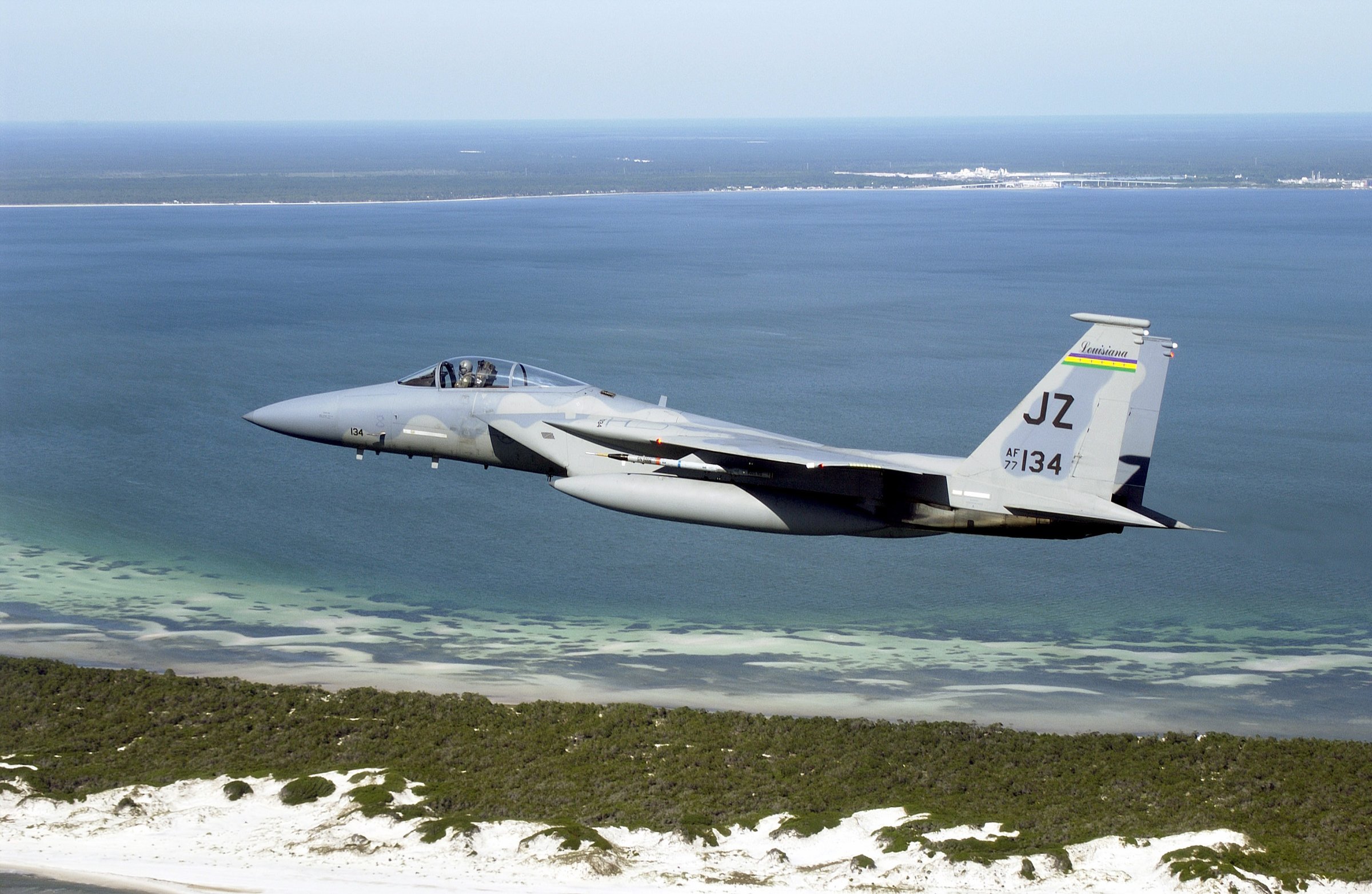
The F-15C and two-seat F-15D replaced the A/B on the St. Louis line from 1979. Outwardly almost identical, they introduced the Production Eagle Package (PEP 2000): about 910 kg more internal fuel, provisions for conformal fuel tanks (the former FAST packs, 750 US gallons each) and a maximum take-off weight raised to 68,000 lb (30.8 t). The F-15C first flew on 26 February 1979; 483 F-15Cs and 92 F-15Ds were built up to 1985. From the mid-1980s they received the more reliable F100-PW-220 engine.
Radar development continued through the production run: the last 43 F-15Cs were fitted with the APG-70, later aircraft received the APG-63(V)1, and in 2000 eighteen F-15Cs were given the APG-63(V)2 active electronically scanned array radar, followed by the APG-63(V)3. In the 1991 Gulf War, F-15Cs accounted for 34 of the 37 fixed-wing air-to-air victories credited to the US Air Force.
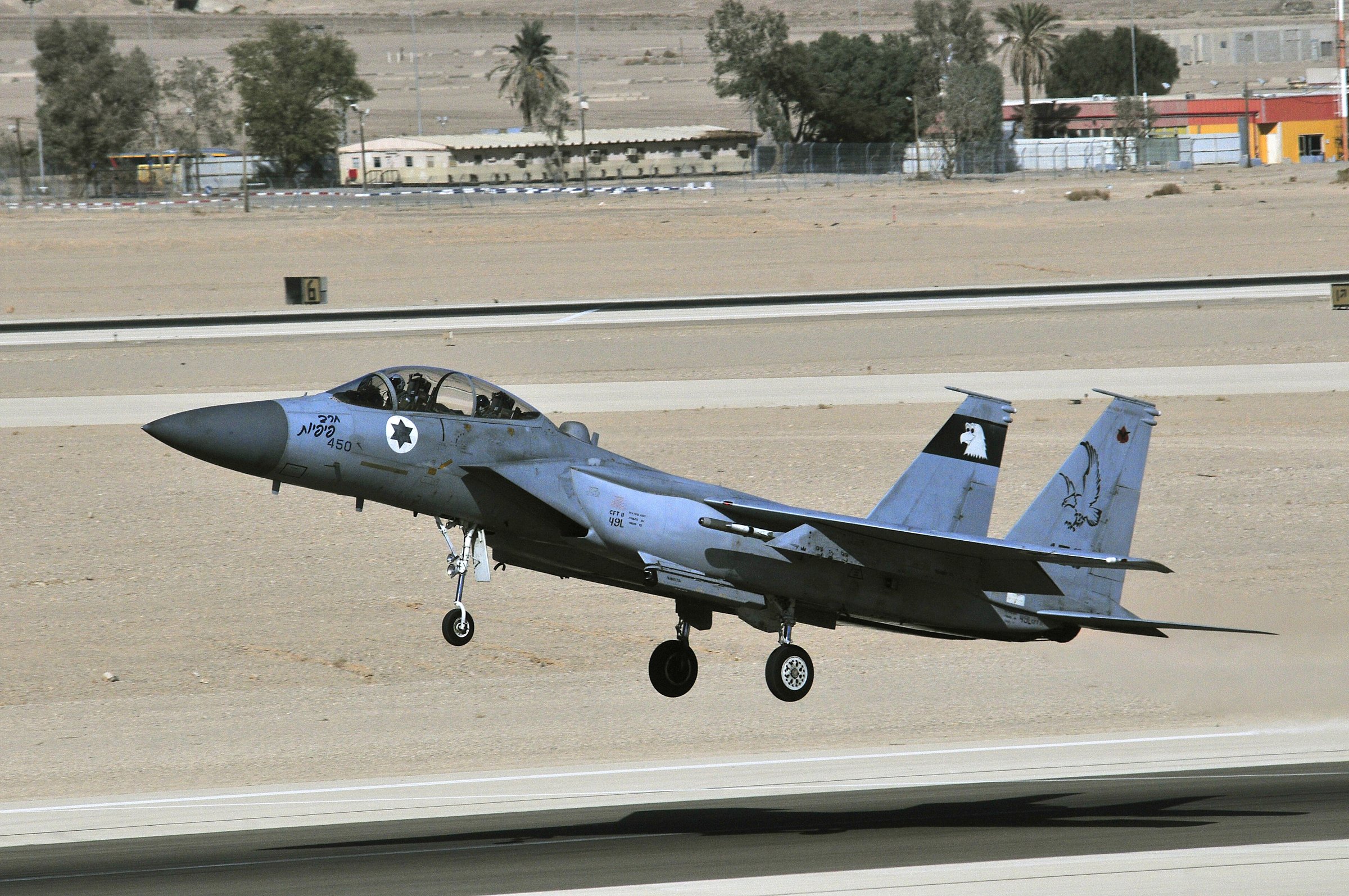
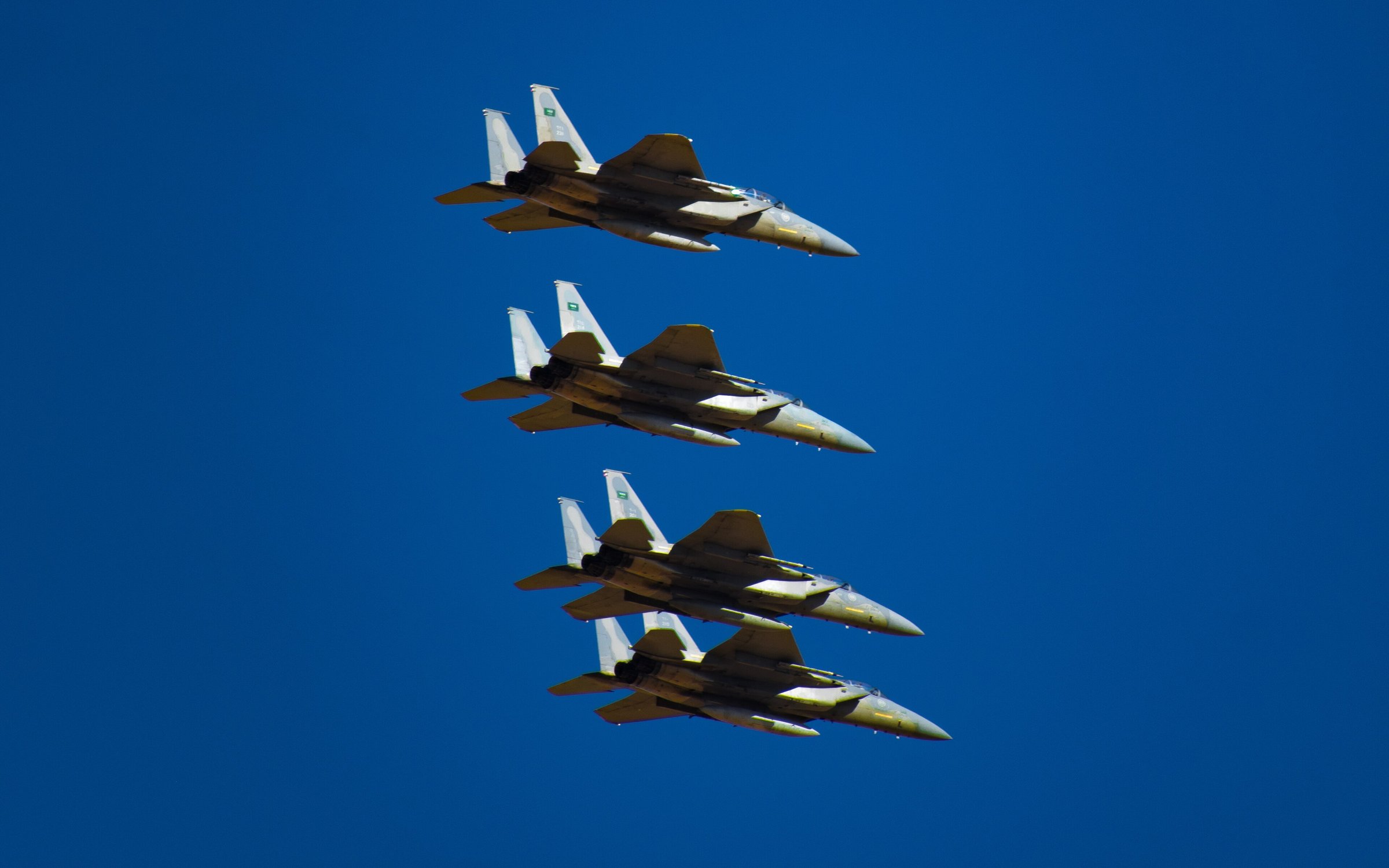
Saudi Arabia received 62 F-15C/Ds under the Peace Sun programme in the early 1980s, and on 5 June 1984 two Saudi F-15Cs shot down two Iranian F-4E Phantoms. Israel also flies C/Ds alongside its older A/Bs. The USAF retired the F-15C from its active-duty units by April 2025. The type's strike derivatives — the F-15E and its export cousins F-15I (Israel), F-15S/SA (Saudi Arabia), F-15K (South Korea), F-15SG (Singapore) and F-15QA (Qatar) — descend from the two-seat Eagle airframe.