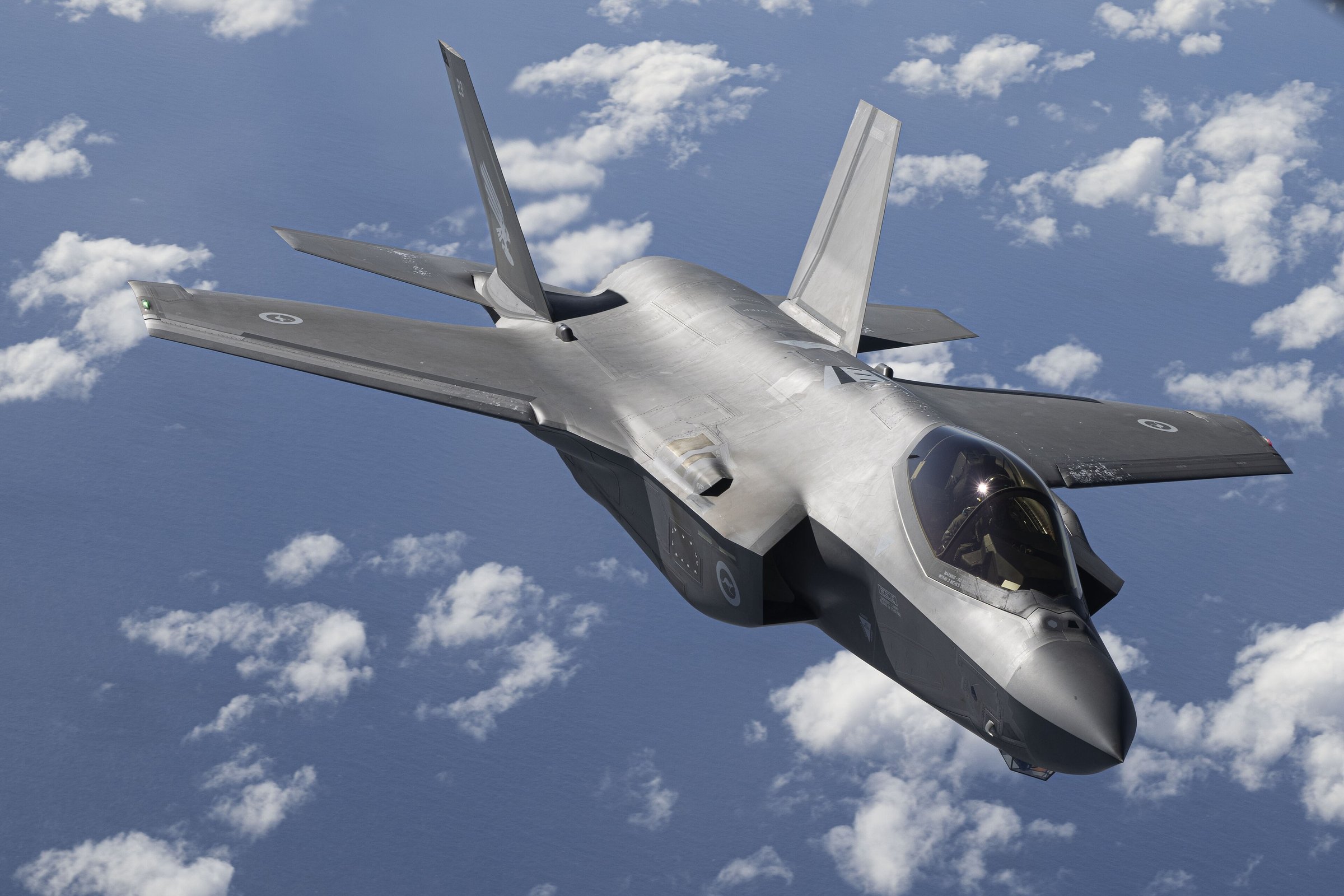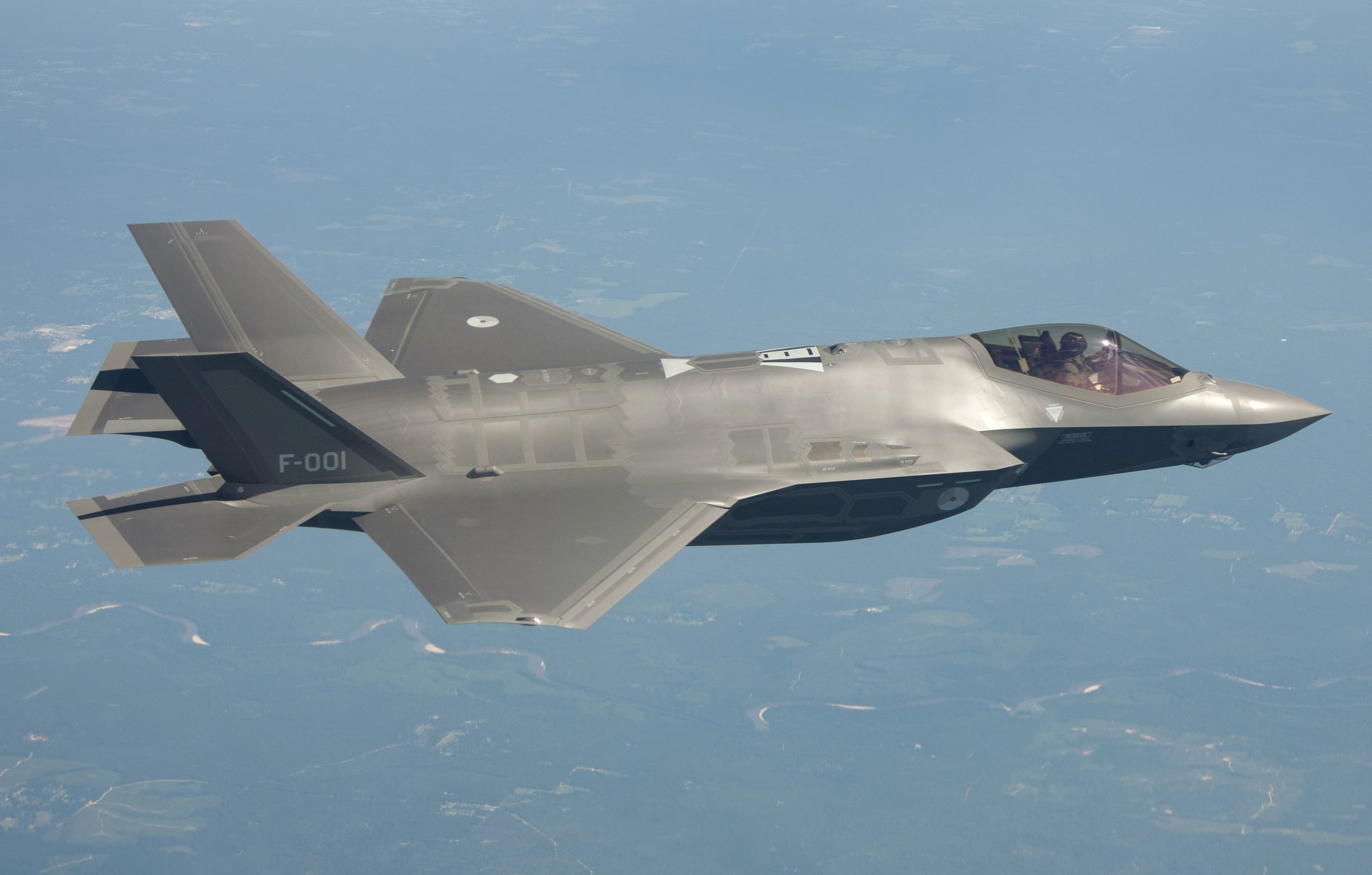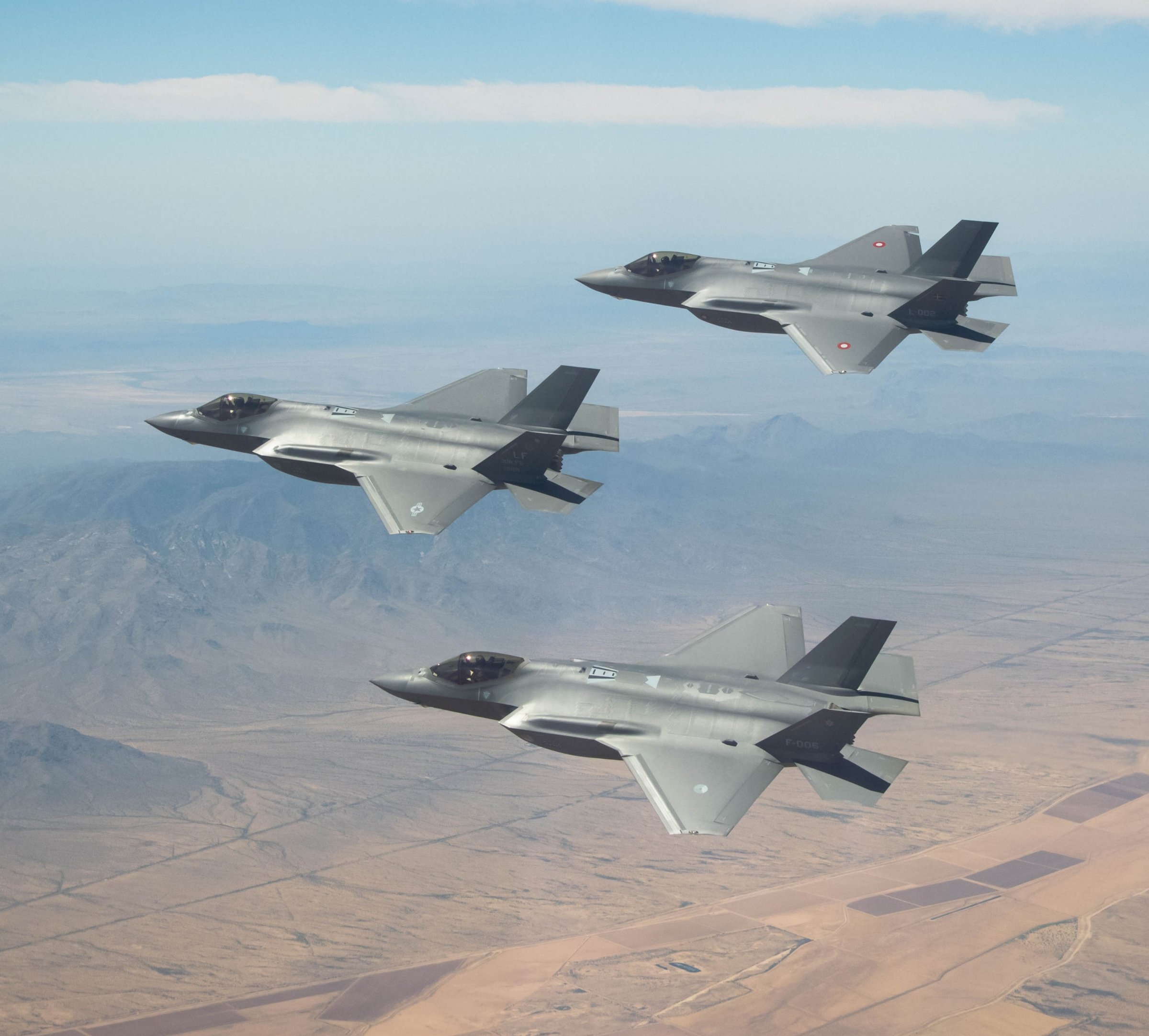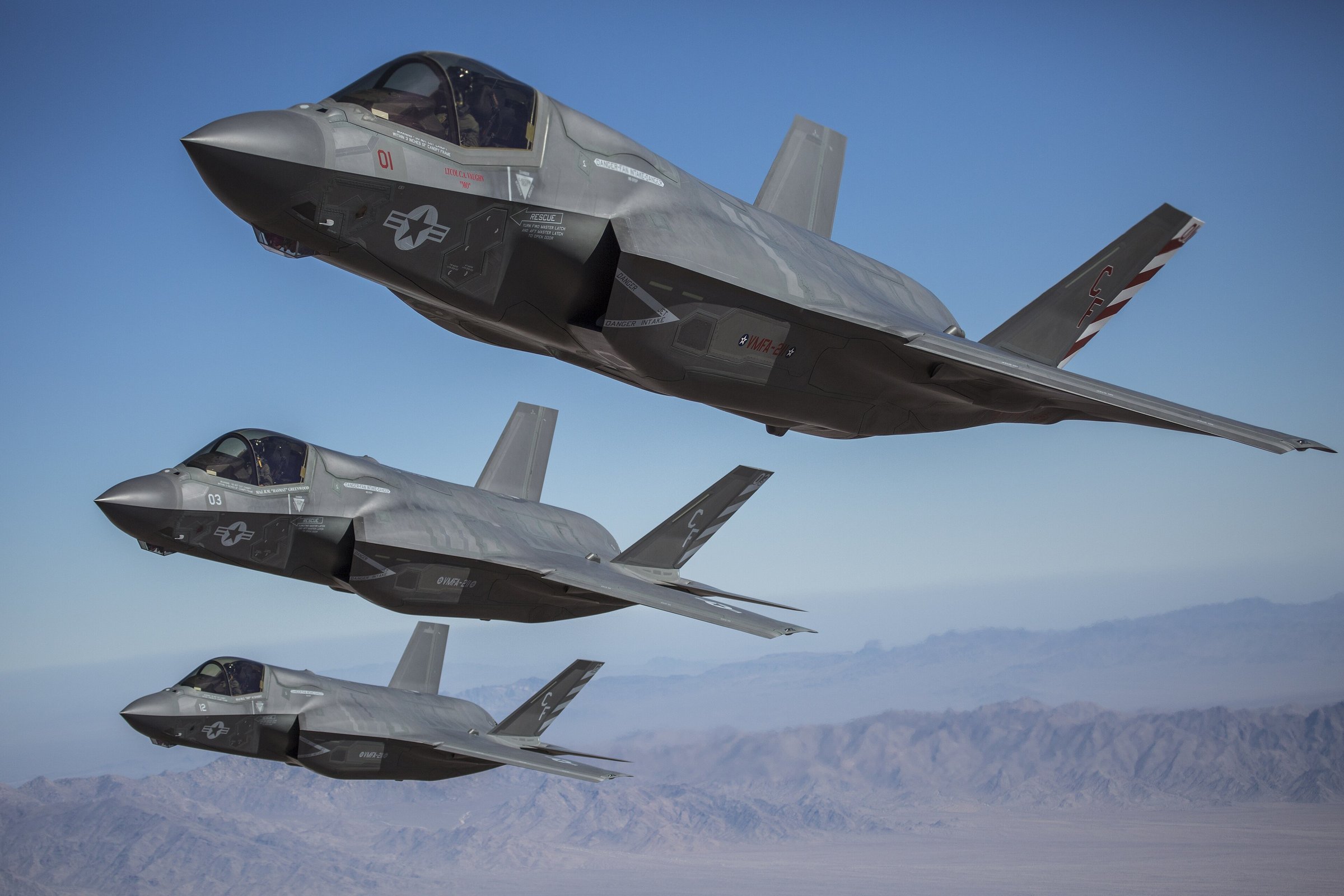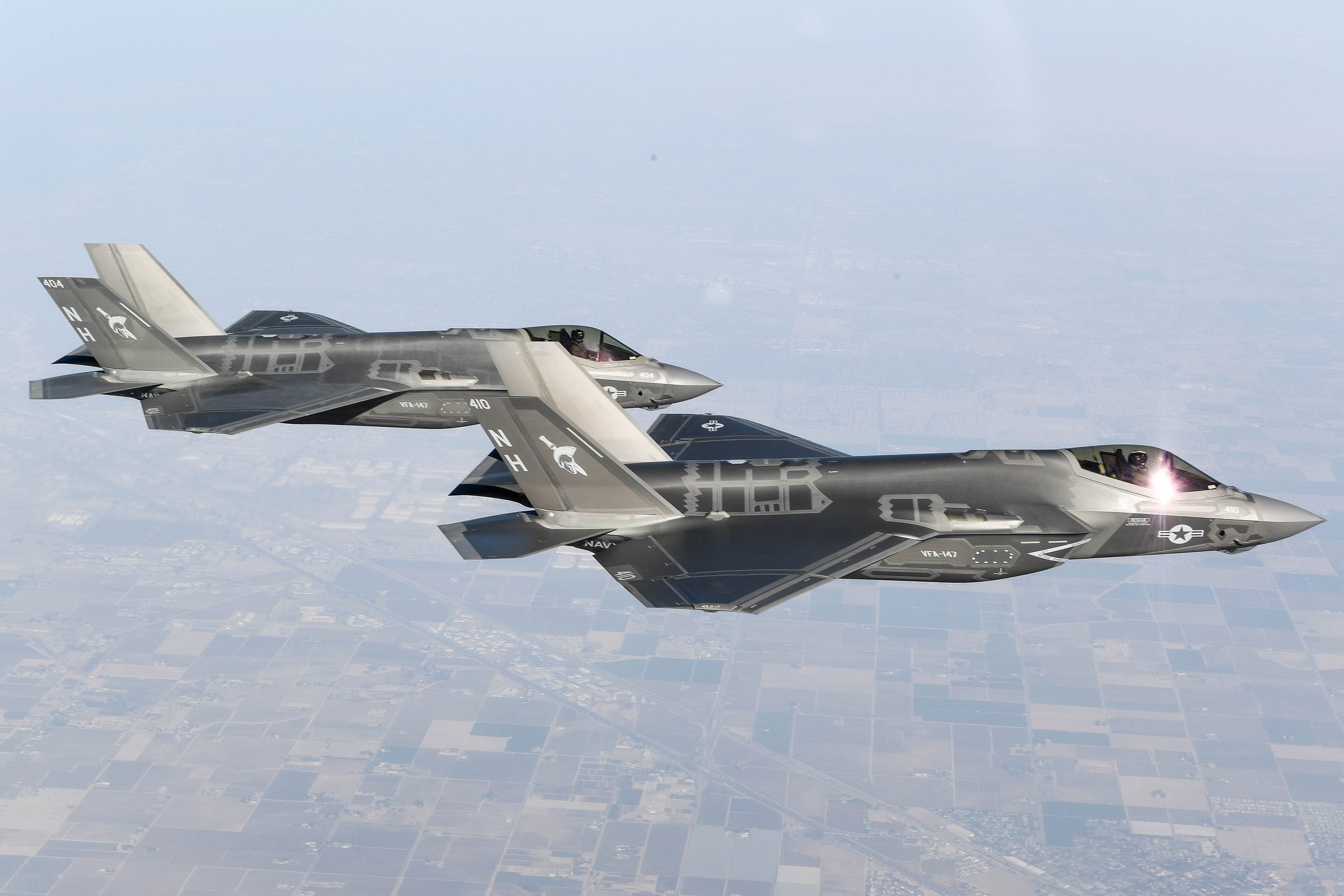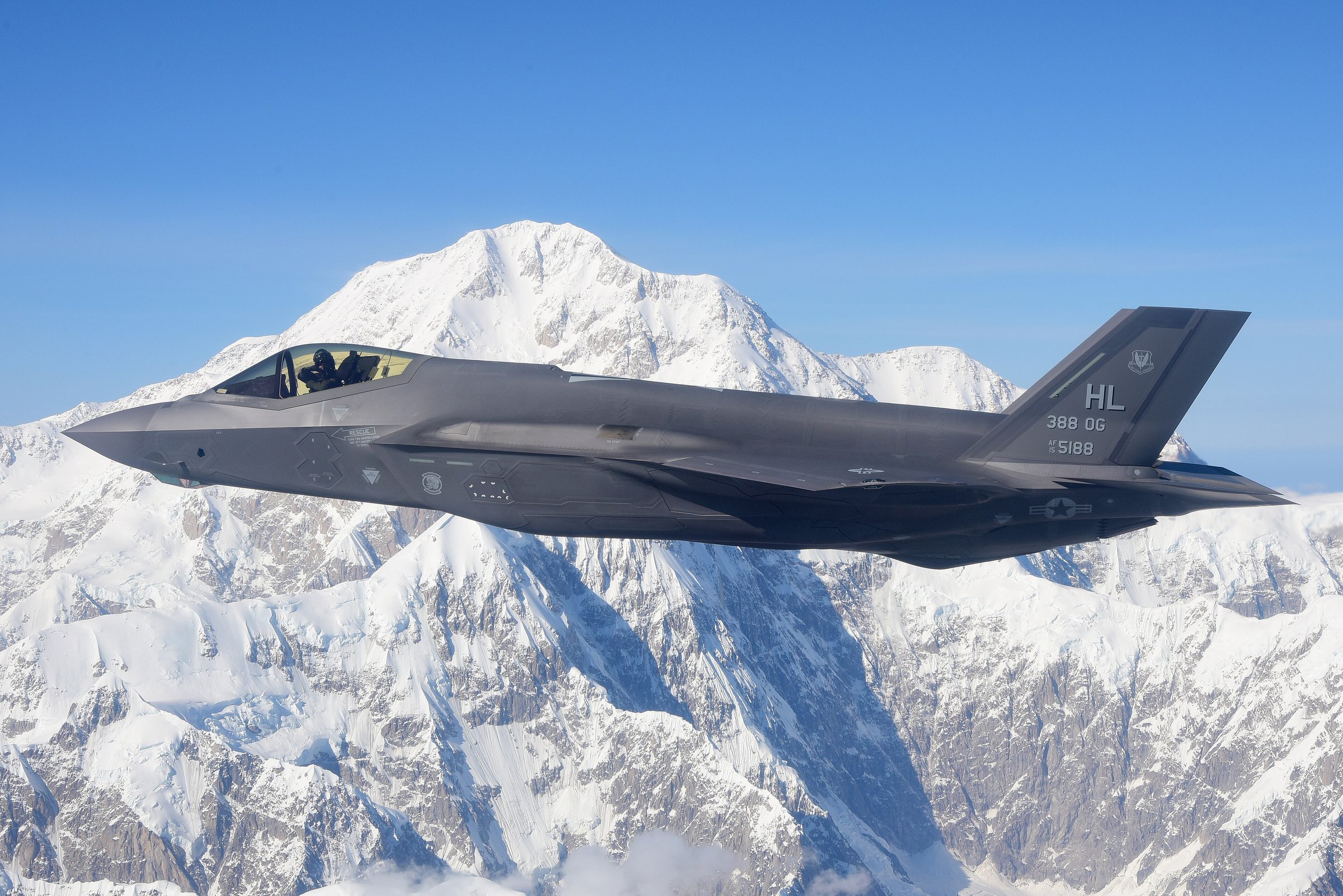
Lockheed Martin F-35A Lightning II
The conventional-runway Lightning — the most numerous version and the only one with an internal gun · First flight 2006 · In service 2016
The F-35A was the first Lightning II to fly: test aircraft AA-1, flown by Lockheed Martin chief test pilot Jon Beesley, took off from Fort Worth on 15 December 2006. Built for conventional runways, it is the lightest and simplest of the three versions — empty weight around 13.3 tonnes, 8.3 tonnes of internal fuel, a +9 g limit and the only internally mounted gun in the family, a four-barrel 25 mm GAU-22/A. The US Air Force declared initial operational capability on 2 August 2016 with the 34th Fighter Squadron of the 388th Fighter Wing at Hill AFB, Utah.
It is also the export workhorse. Australia has received all 72 of its F-35As, Norway and the Netherlands replaced their F-16s with it, Italy and Japan assemble jets at their own final-assembly lines at Cameri and Nagoya, and Denmark, Belgium, South Korea and Poland have followed. Israel flies the F-35I "Adir", an F-35A modified to take Israeli electronic-warfare systems and weapons; the Israeli Air Force declared it operational in December 2017 and in May 2018 became the first air force to use the F-35 in combat. In October 2023 the F-35A was certified to carry the B61-12 nuclear bomb.
Current-production jets are built to the Technology Refresh 3 (TR-3) standard — a new integrated core processor, panoramic cockpit display and memory unit — which is the foundation for the Block 4 upgrade of weapons, sensors and electronic warfare, including the AN/APG-85 radar. TR-3 software problems halted deliveries from July 2023 to July 2024, and in 2025 Block 4 was trimmed and stretched, with some capabilities pushed into the 2030s. To power it, the US Air Force chose an F135 Engine Core Upgrade in 2023 instead of a new adaptive-cycle engine.