Lockheed Martin F-35C Lightning II
The carrier Lightning — bigger folding wing, tailhook and catapult-strength landing gear · First flight 2010 · In service 2019
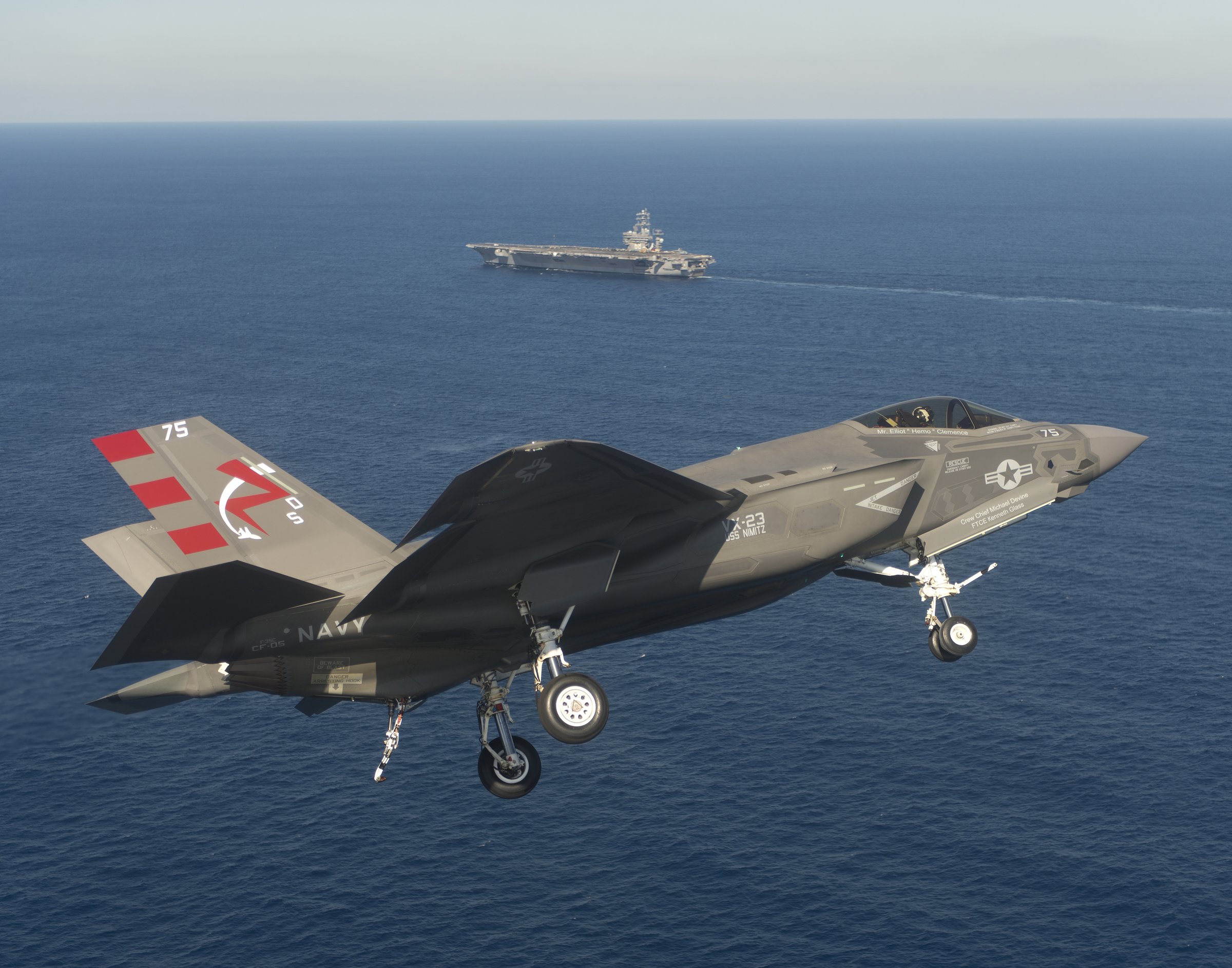
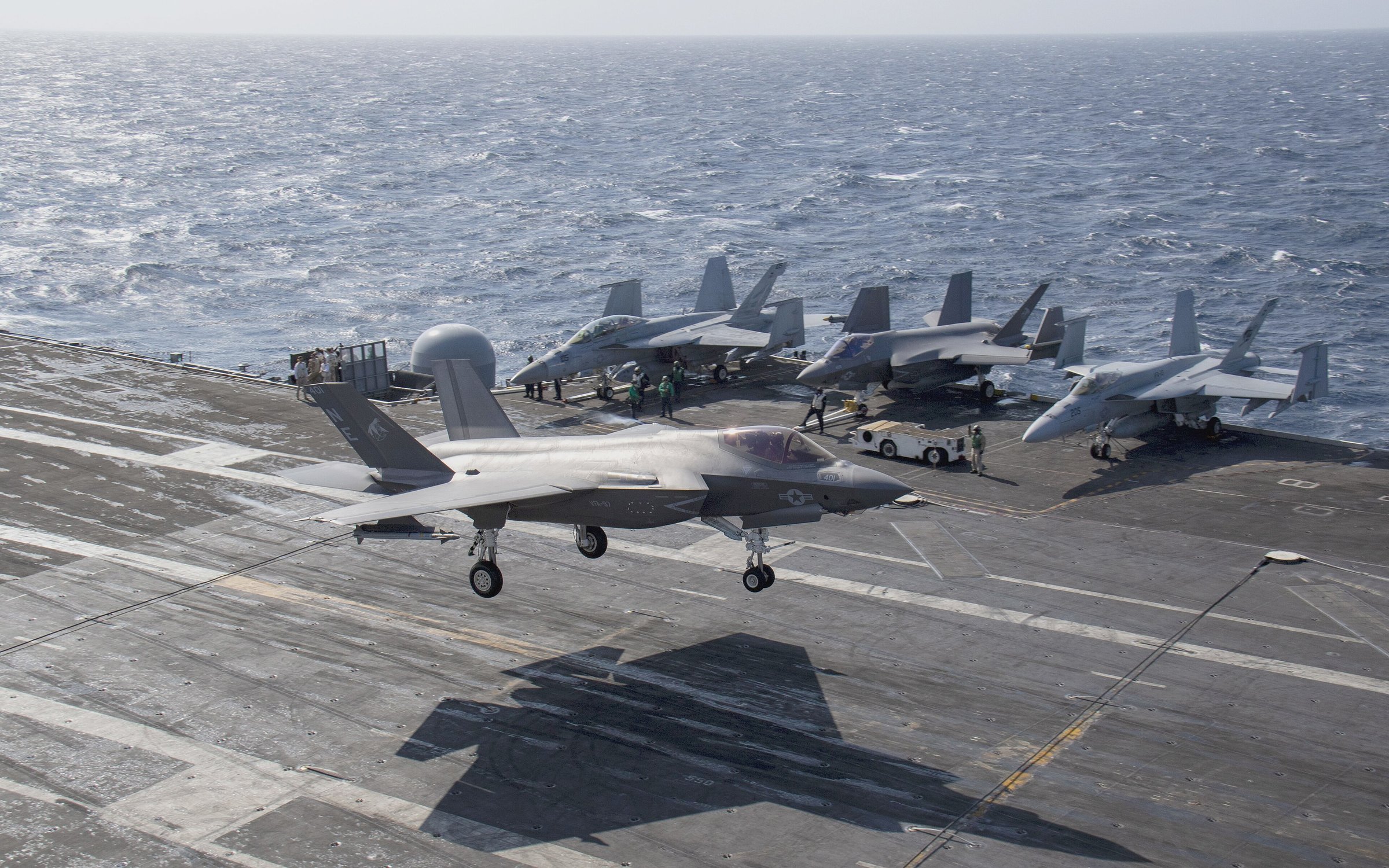
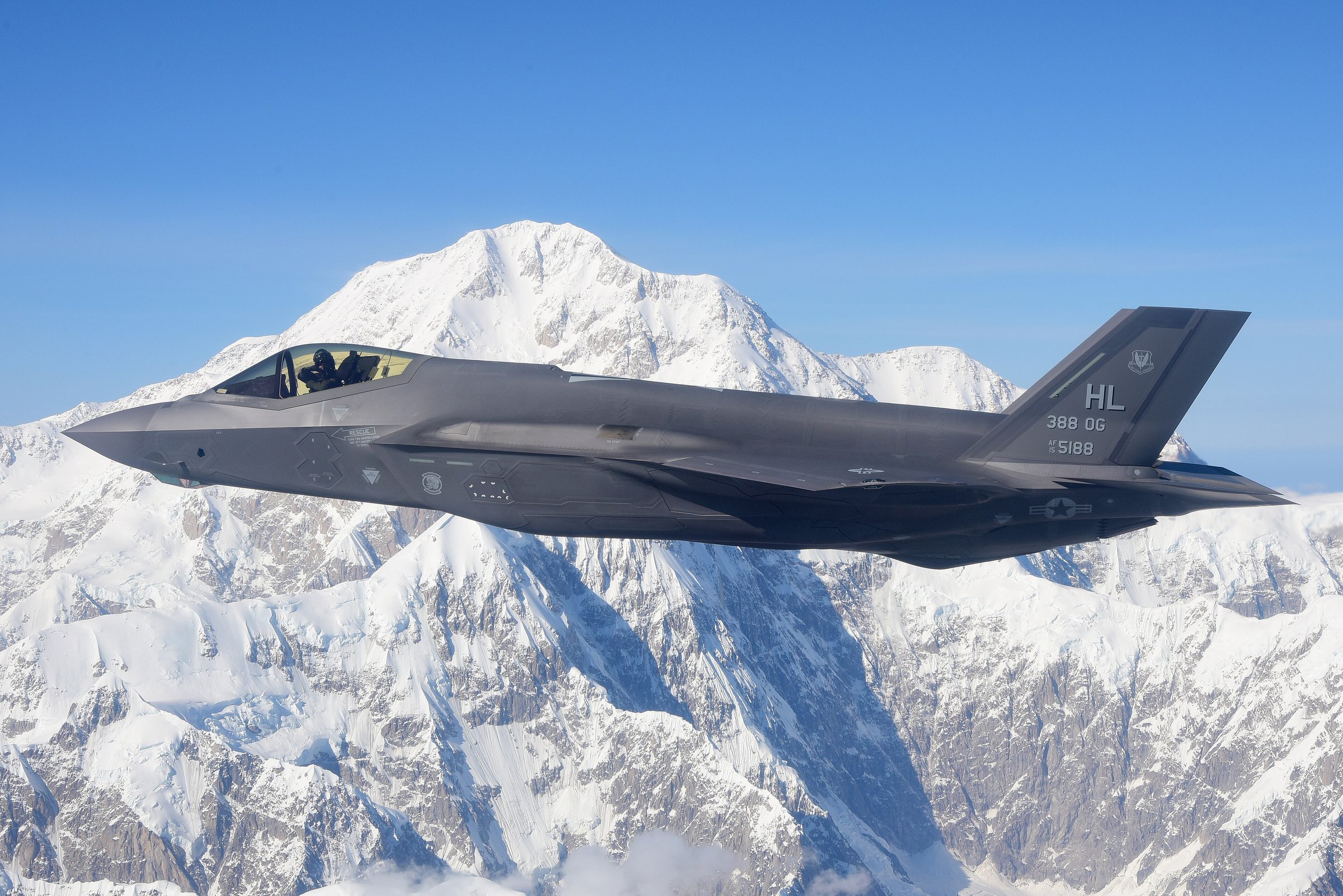
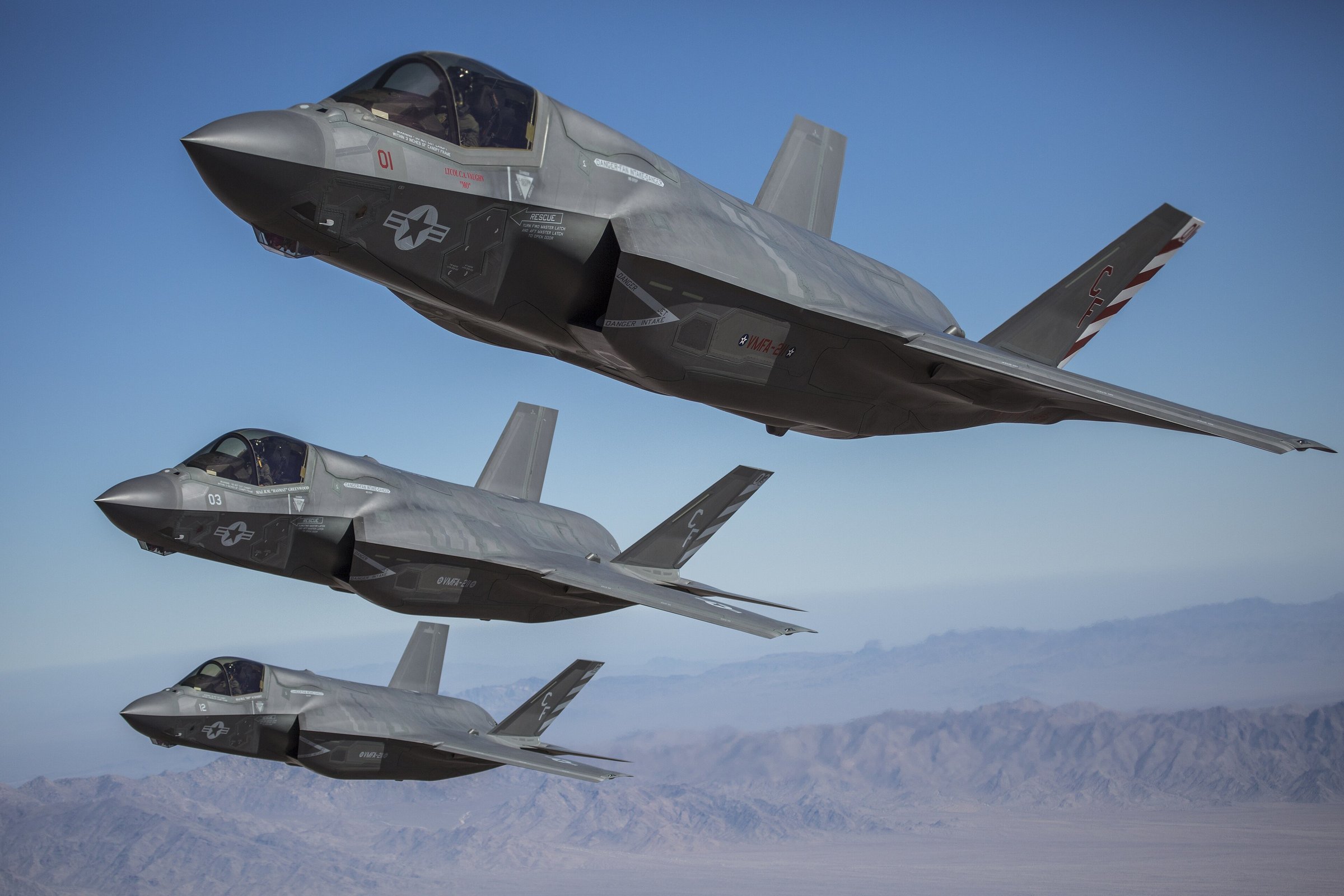
The F-35C is the version built for catapult-and-arrester carriers. Its wing is markedly larger — 13.1 m span and about 62 m² of area against 10.7 m and 43 m² on the A and B — with folding outer panels for deck parking, bigger control surfaces for slow, precise carrier approaches, a reinforced structure, a heavy-duty nose gear with catapult launch bar and a strengthened tailhook. It carries the most internal fuel of the three (almost 9 tonnes), giving a combat radius of about 1,240 km, but is limited to +7.5 g and, like the B, uses a gun pod rather than an internal cannon.
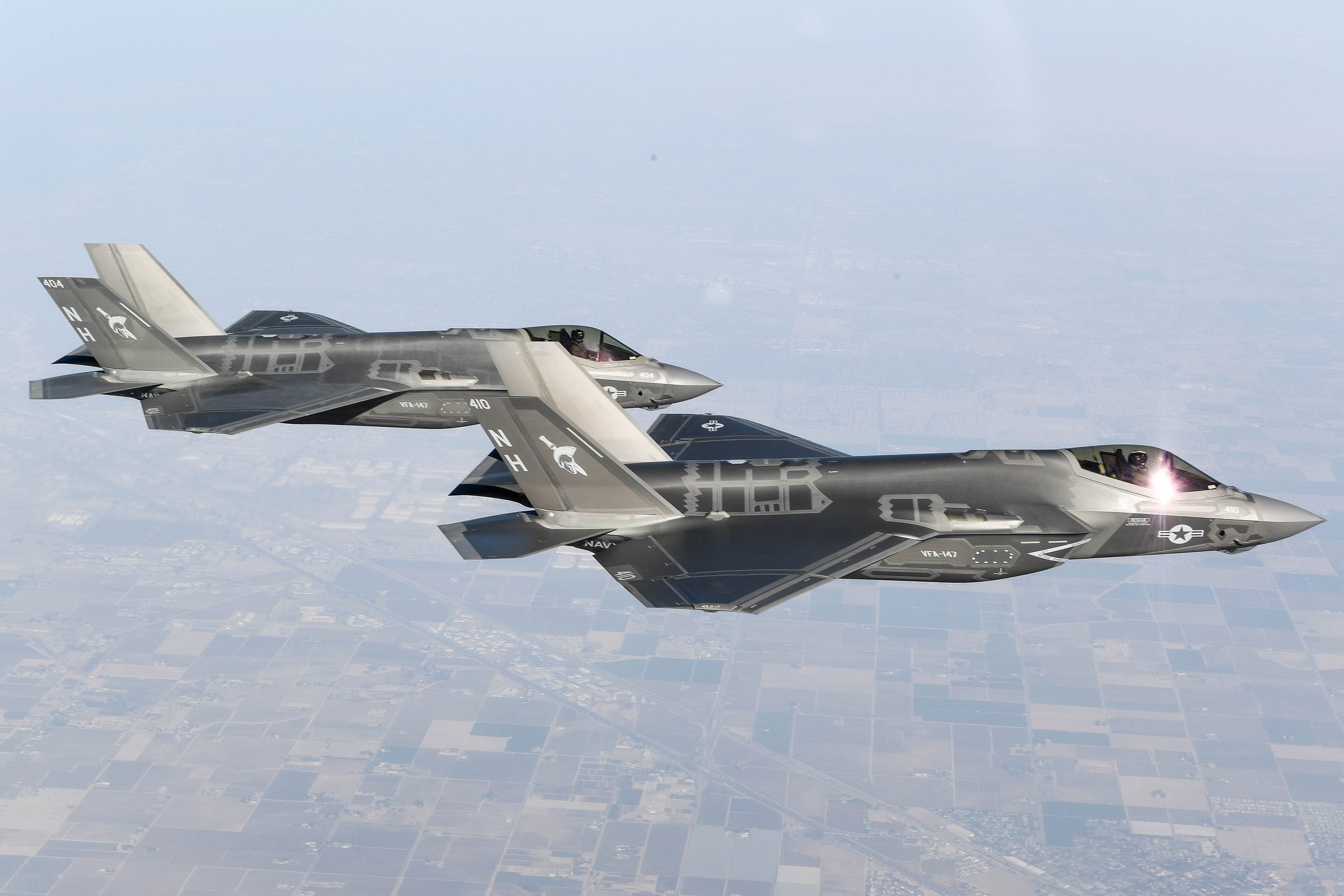
Test aircraft CF-1 first flew on 6 June 2010. After a redesign of the tailhook, the F-35C made its first arrested landing at sea aboard USS Nimitz on 3 November 2014. The US Navy declared initial operational capability on 28 February 2019 with VFA-147 "Argonauts", which made the type's maiden carrier deployment aboard USS Carl Vinson from August 2021; the F-35C flew its first combat missions in 2024 during US strikes in Yemen.
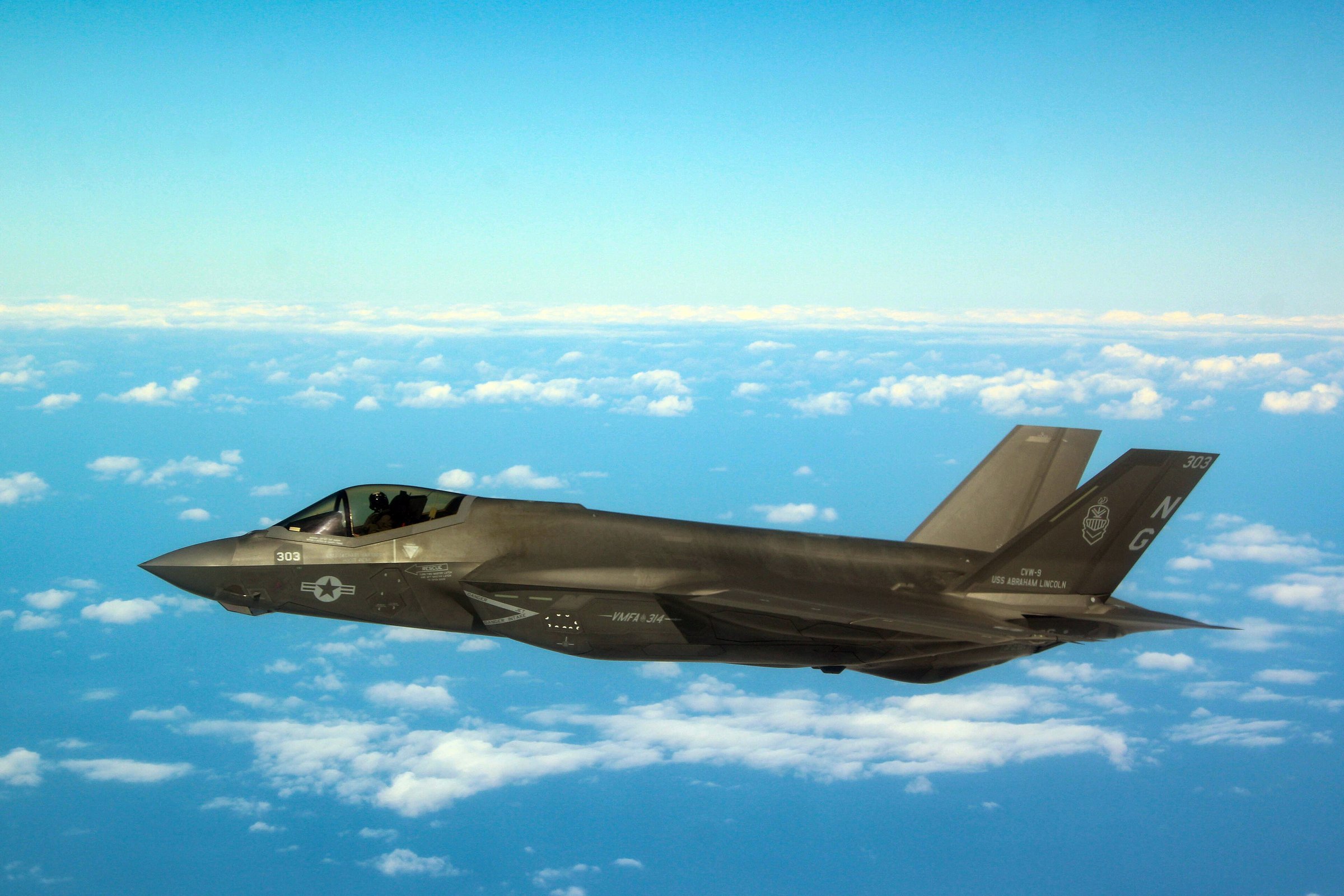
The Marine Corps also flies the carrier version to integrate with Navy air wings: VMFA-314 deployed aboard USS Abraham Lincoln with Carrier Air Wing 9 in 2021–22, and the Corps plans to field 67 F-35Cs. No export customer has ordered the F-35C; like the other versions, new-build jets are being delivered in the TR-3 configuration that underpins the Block 4 upgrade.