


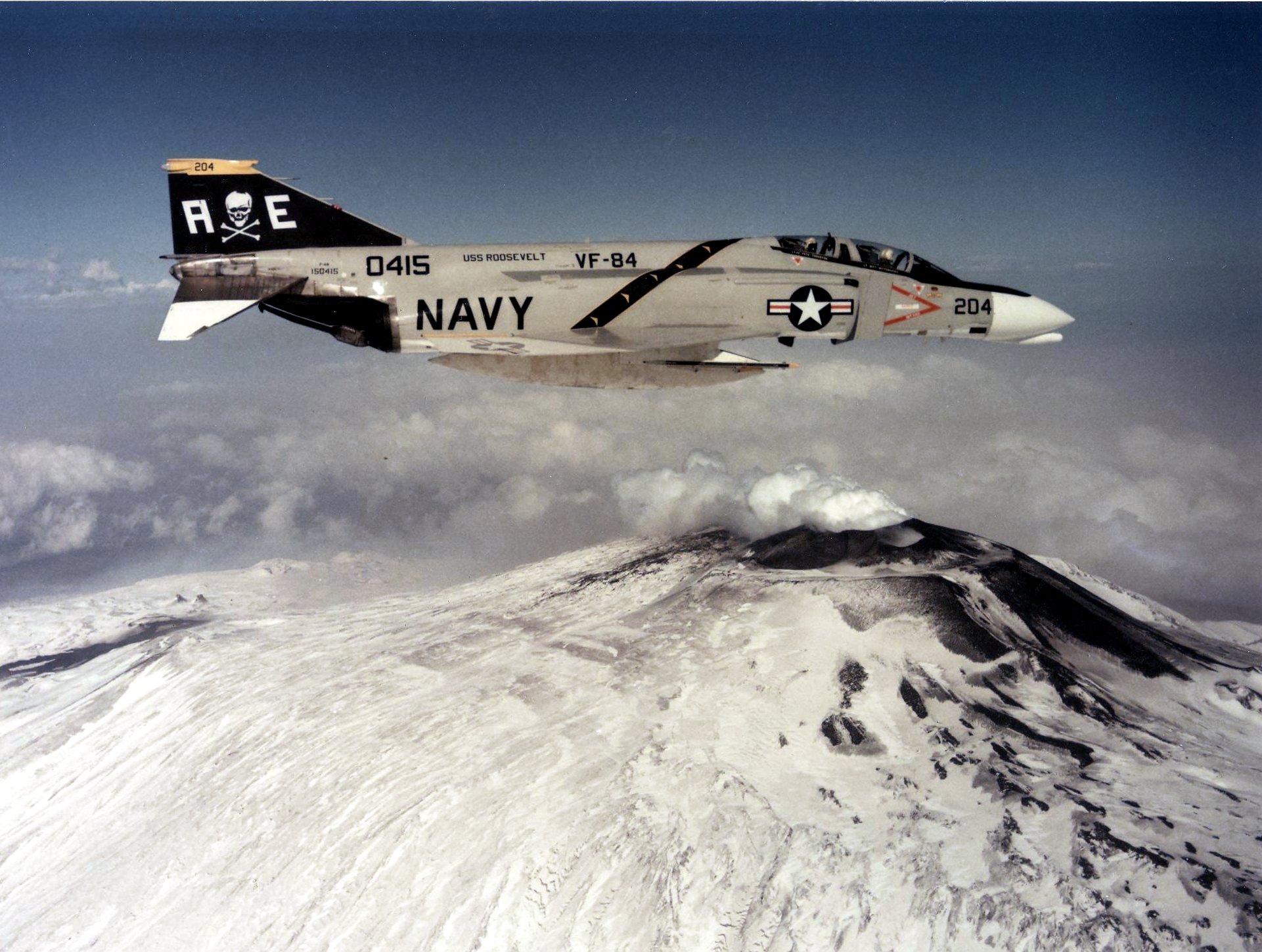
McDonnell F-4B / F-4N Phantom II
The first mass-produced Phantom — the US Navy and Marine Corps carrier fighter · First flight 1961 · In service 1961
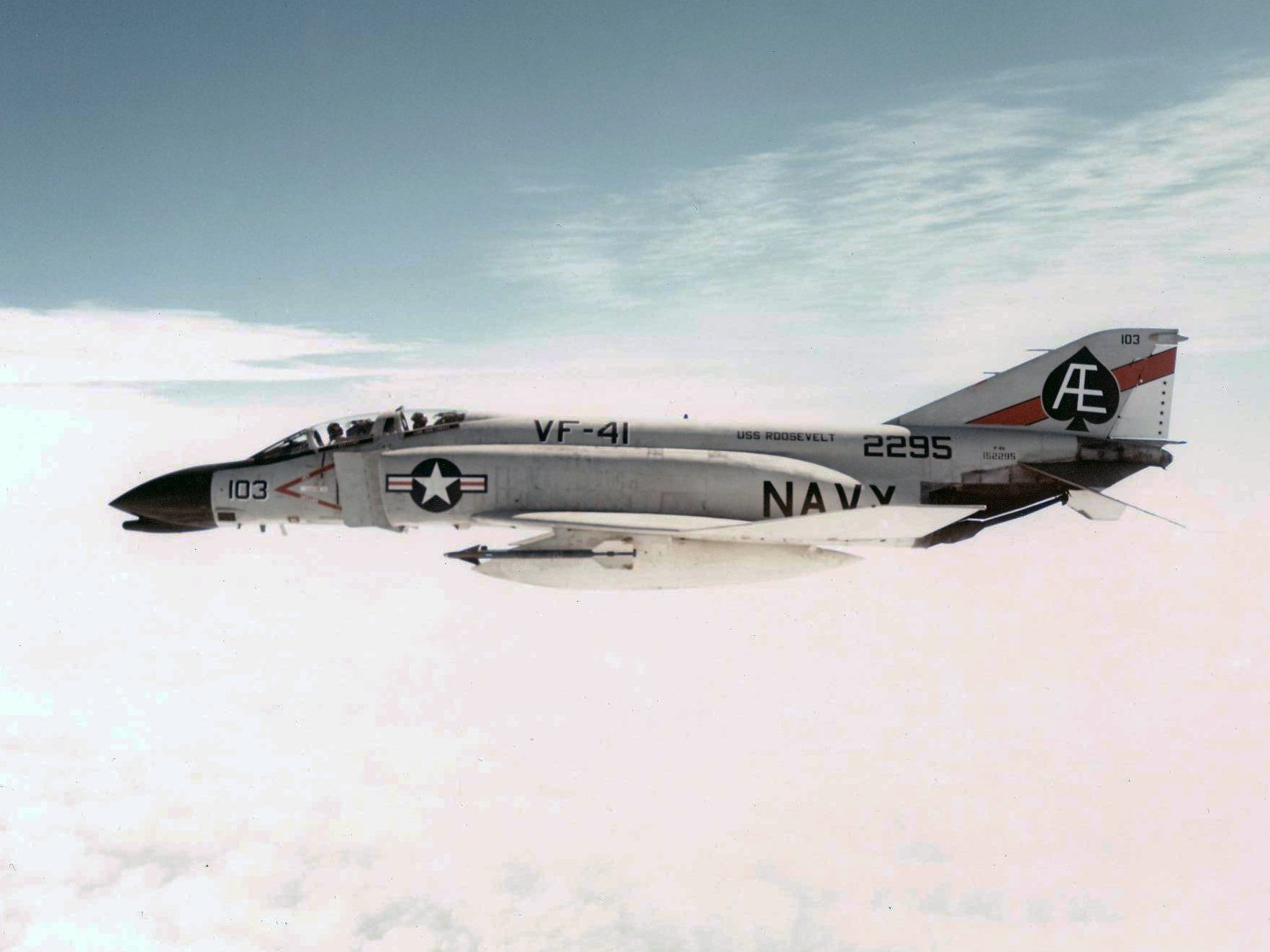
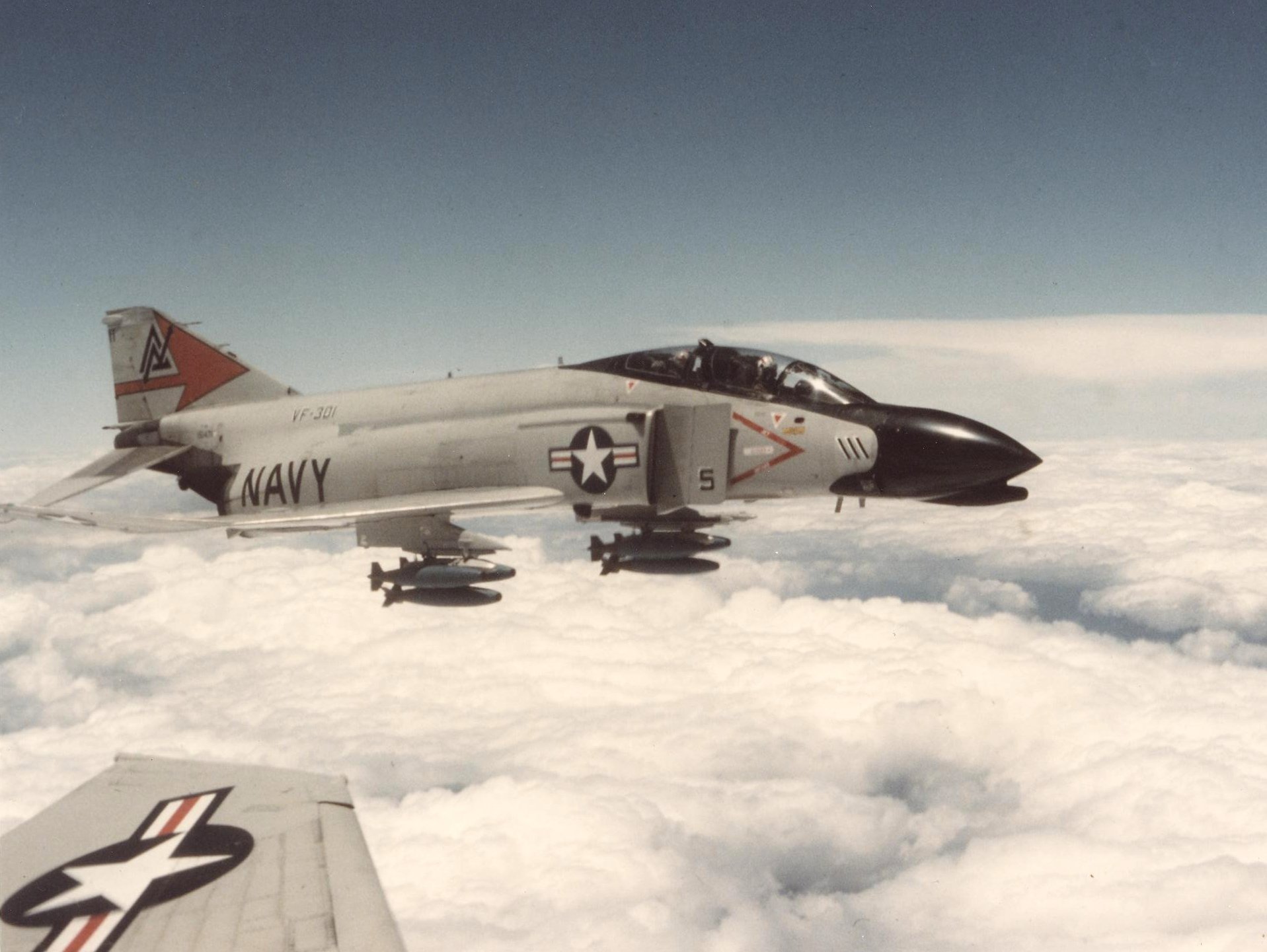
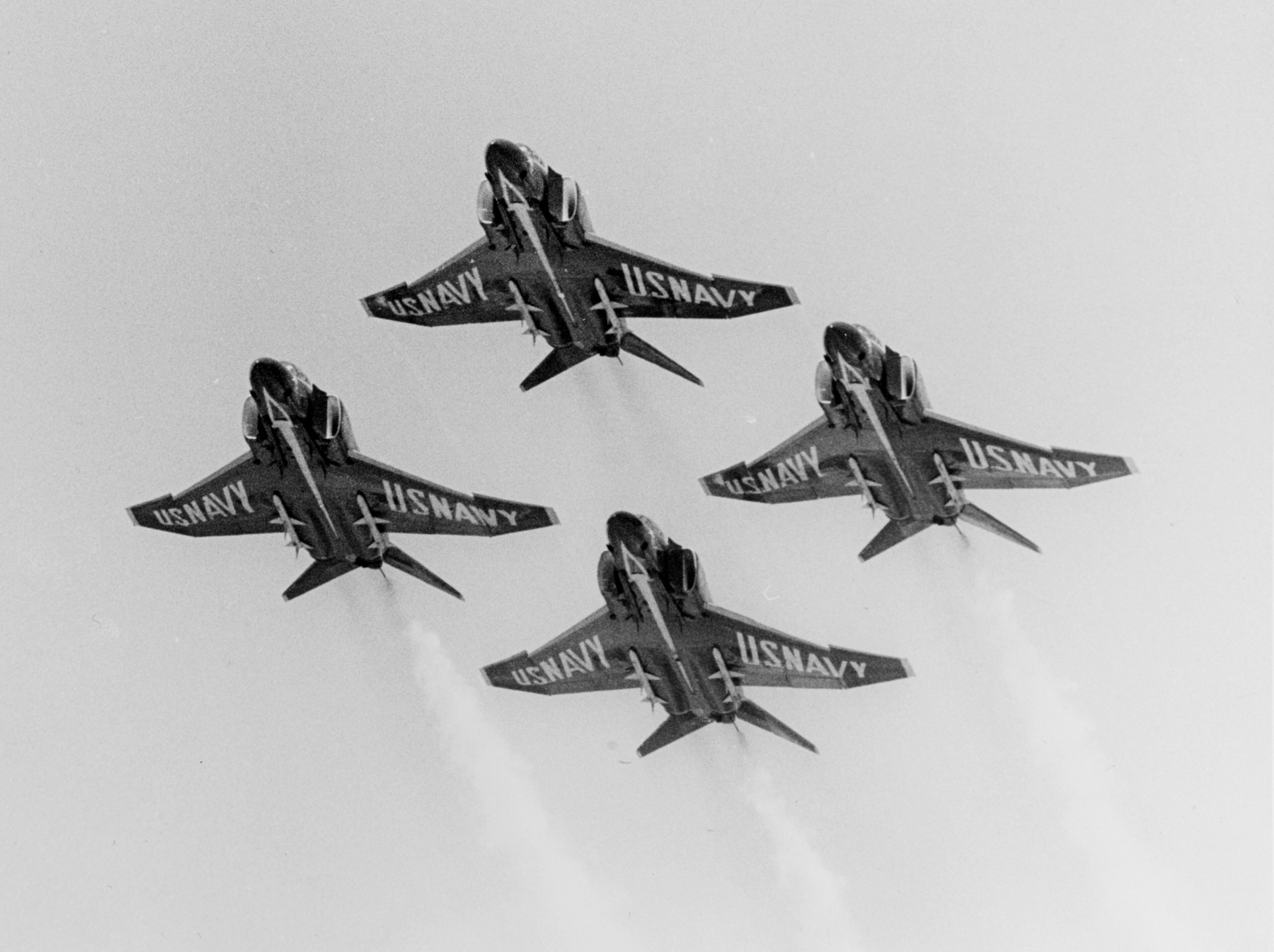
The F-4B was the first large-scale production Phantom, developed from the 45 early F4H-1/F-4A aircraft. It first flew on 25 March 1961 and became the standard carrier-based fighter of the US Navy and Marine Corps in the 1960s. It relied entirely on missiles — radar-guided AIM-7 Sparrows and heat-seeking AIM-9 Sidewinders — directed by the Westinghouse AN/APQ-72 radar, and had no internal gun.
649 F-4Bs were built. Early Navy Phantoms had already set a string of world records, including a zoom climb to 30,040 m by an XF4H-1 in December 1959 (Operation Top Flight) and a low-level speed record of 1,452.8 km/h in August 1961 (Operation Sageburner). The F-4B served on carriers in the Atlantic, the Mediterranean and the Pacific, and with Marine squadrons ashore.
From 1972, 228 F-4Bs were rebuilt under Project Bee Line as the F-4N, with smokeless engines and aerodynamic improvements adopted from the F-4J. The F-4N left front-line fleet squadrons in 1984 but continued with Navy Reserve units; the US Navy retired its last Phantoms in 1986.
Other F-4 Phantom II variants
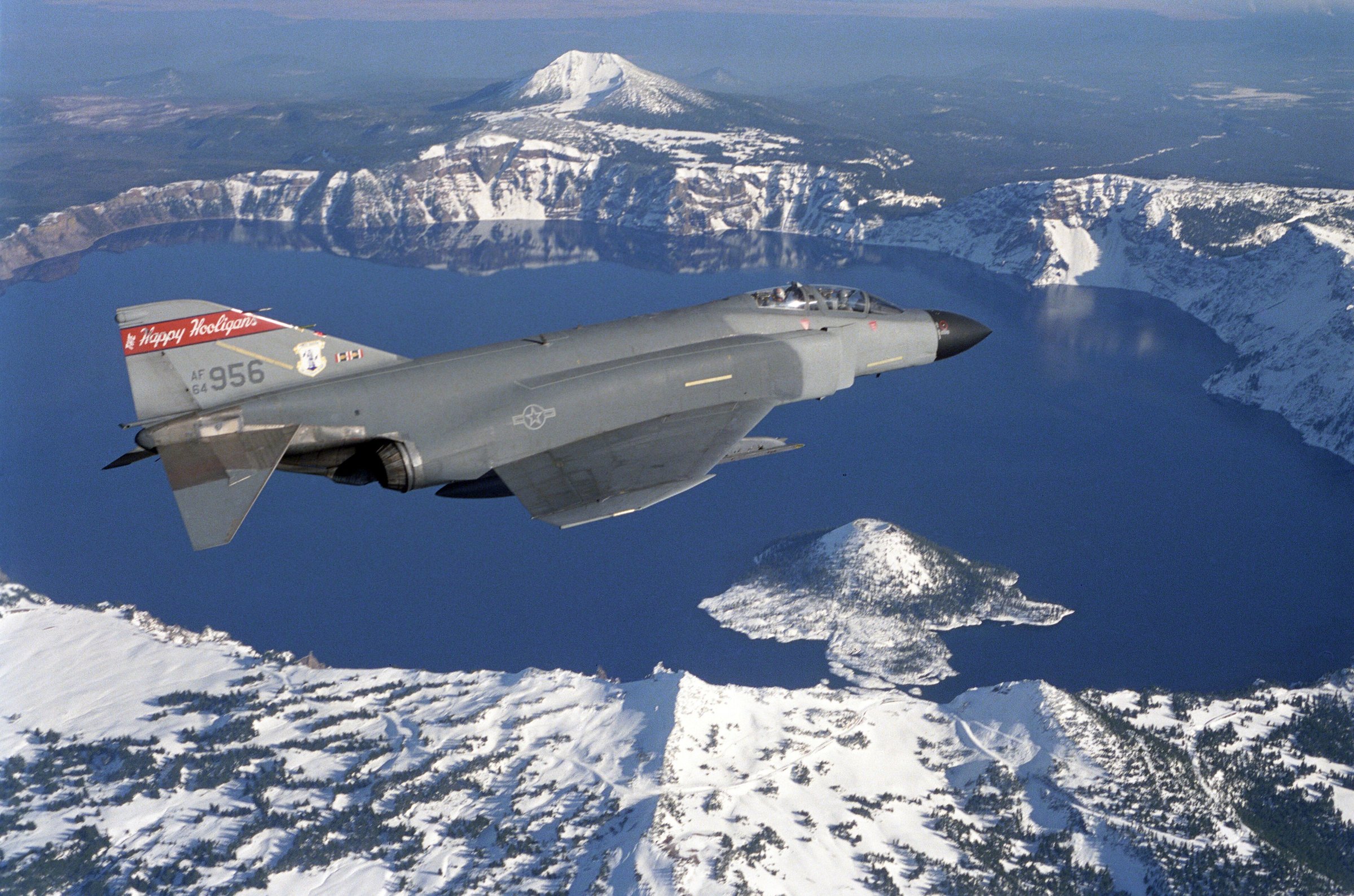 ◎ MCDONNELL
McDonnell F-4C / F-4D Phantom II
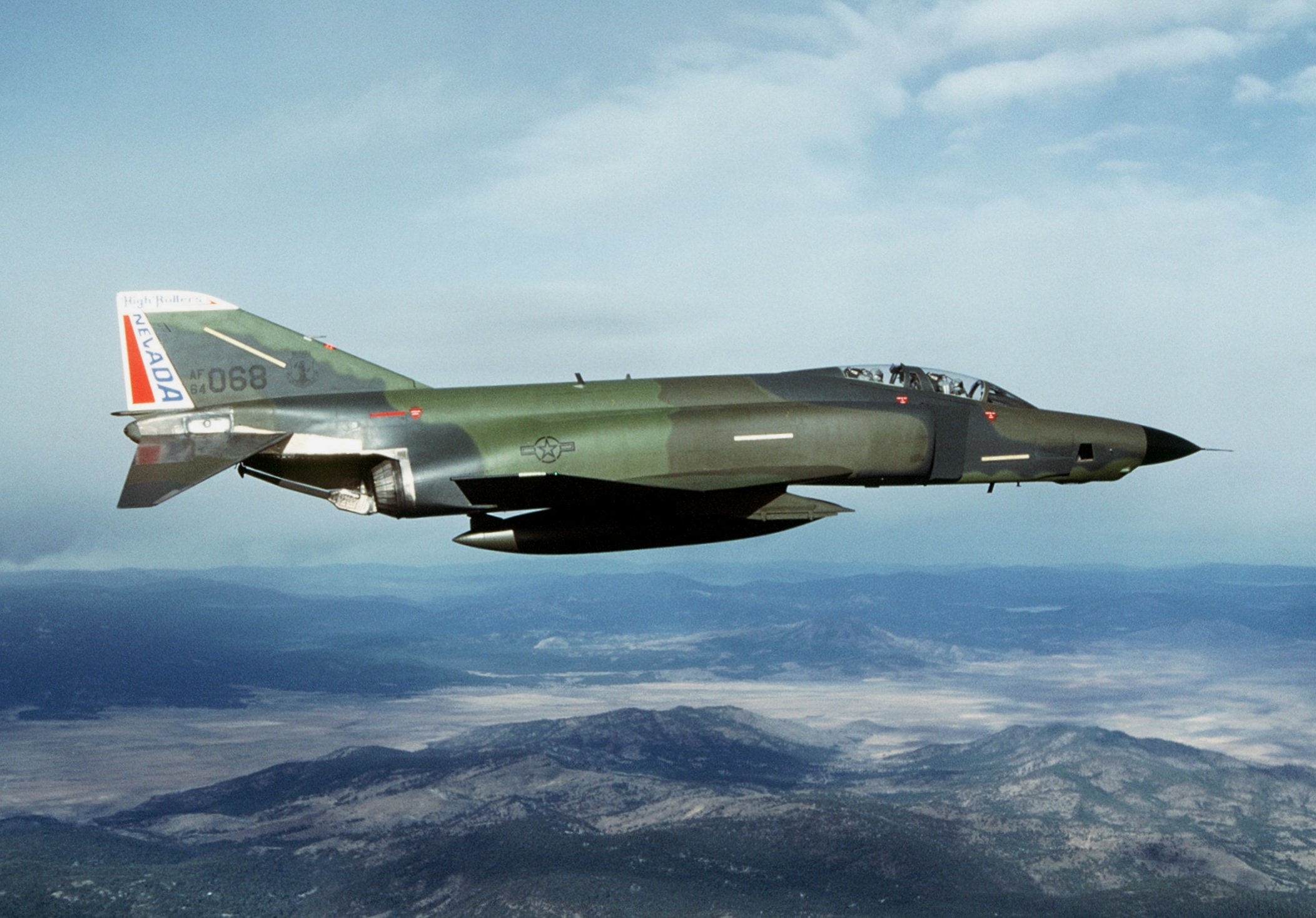 ◎ MCDONNELL
McDonnell RF-4B / RF-4C / RF-4E Phantom II
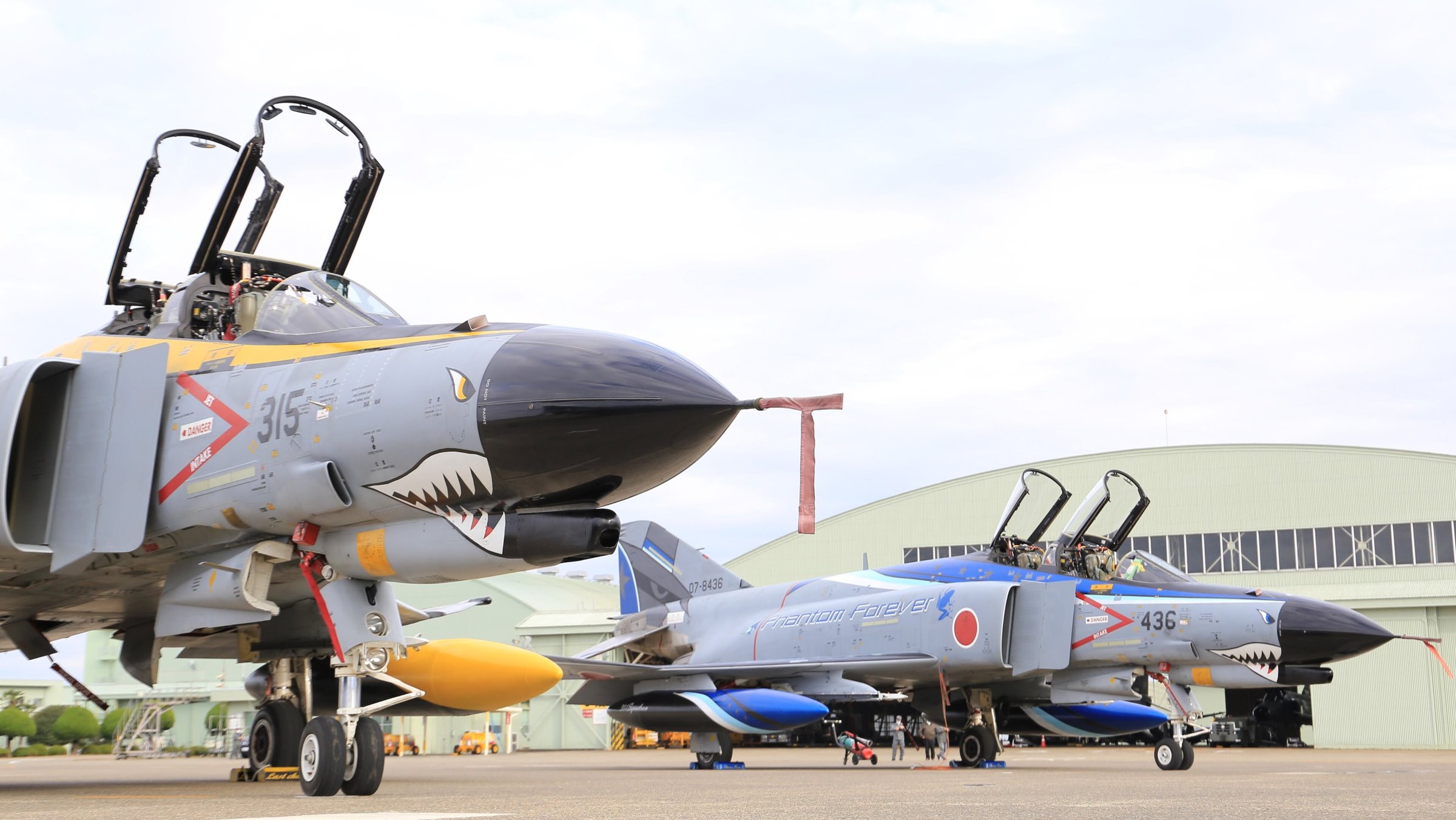 ◎ MCDONNELL
McDonnell Douglas F-4E Phantom II
 ◎ MCDONNELL
McDonnell F-4J / F-4S Phantom II
 ◎ MCDONNELL
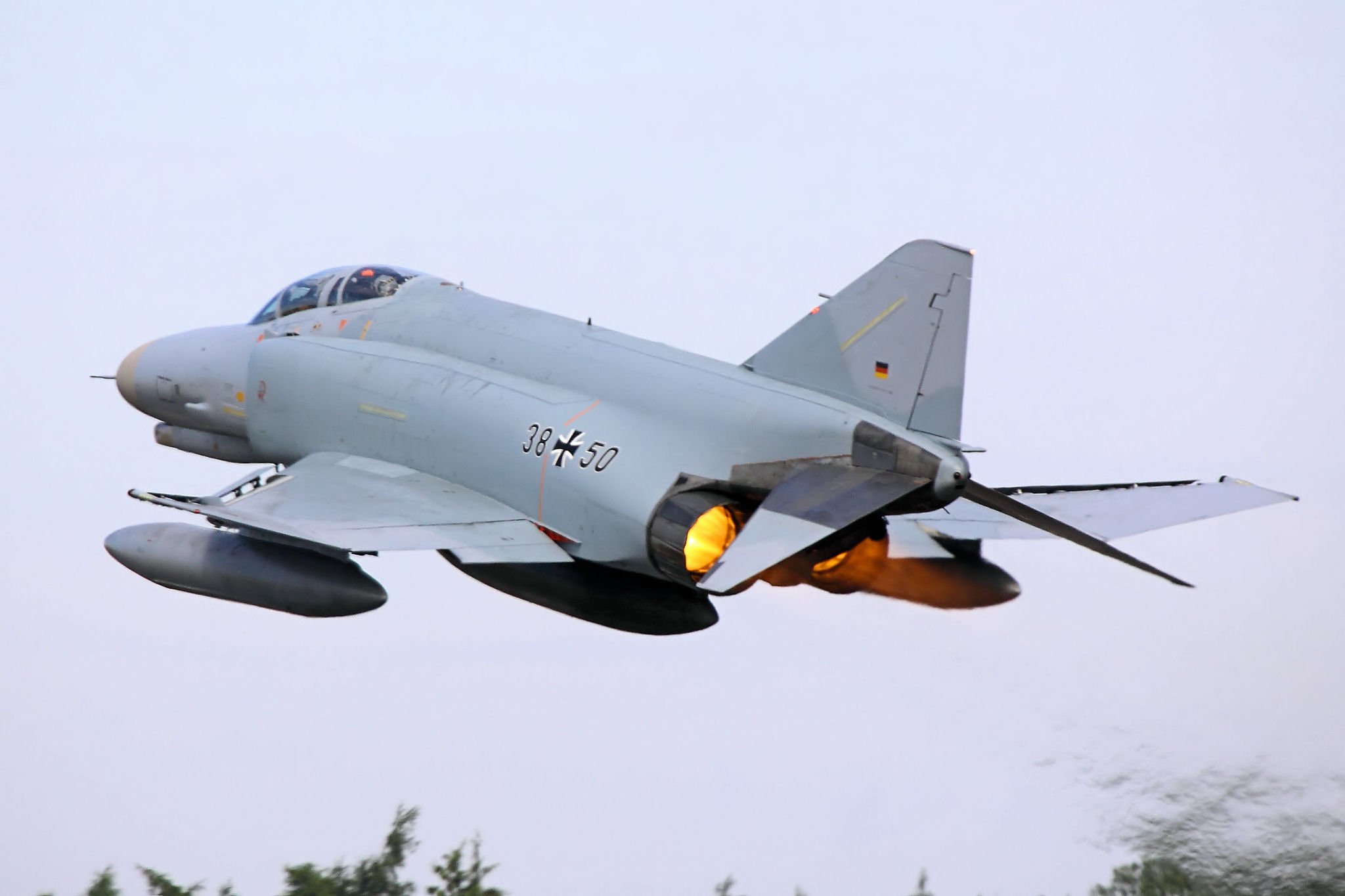
McDonnell Douglas F-4F Phantom II
 ◎ MCDONNELL