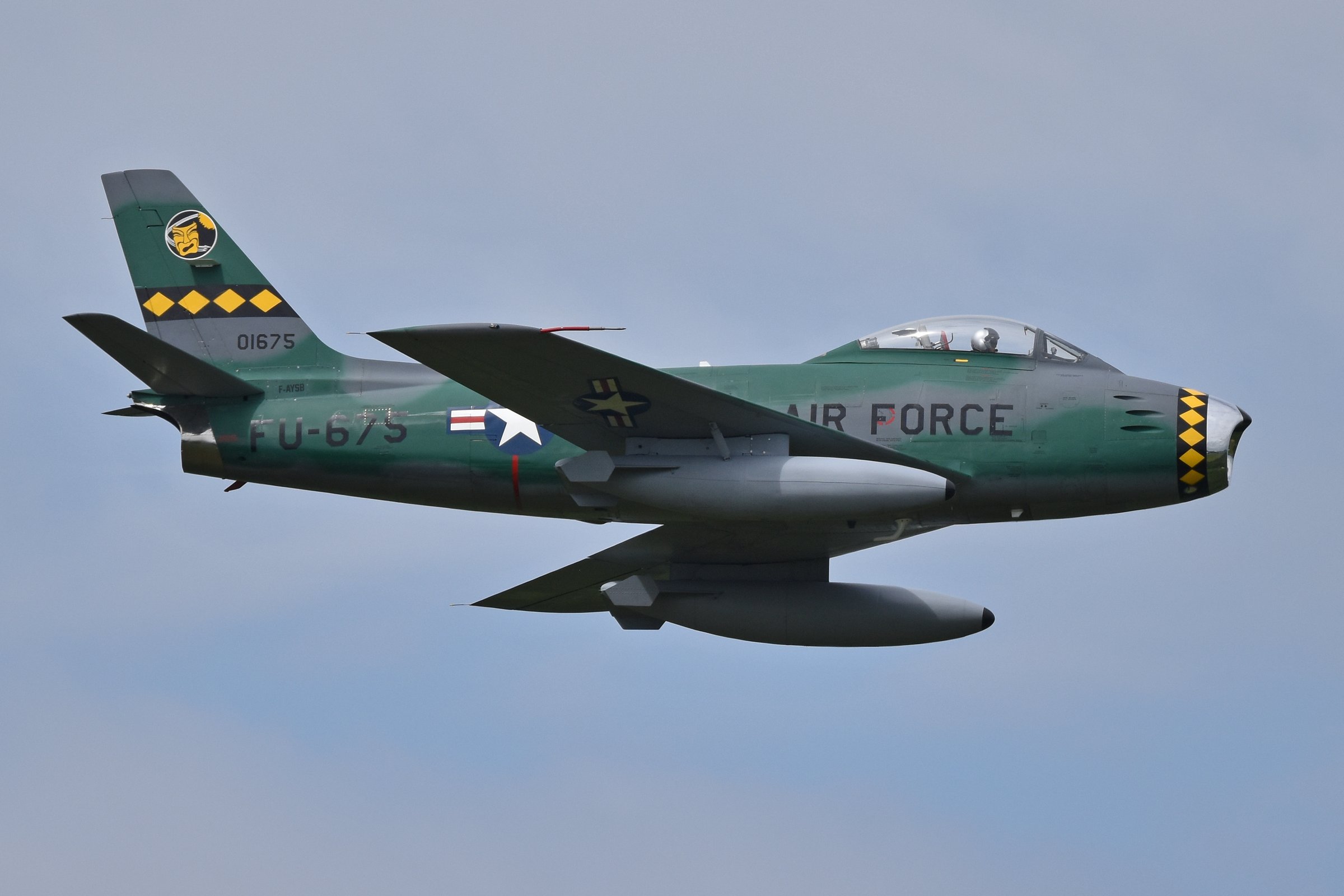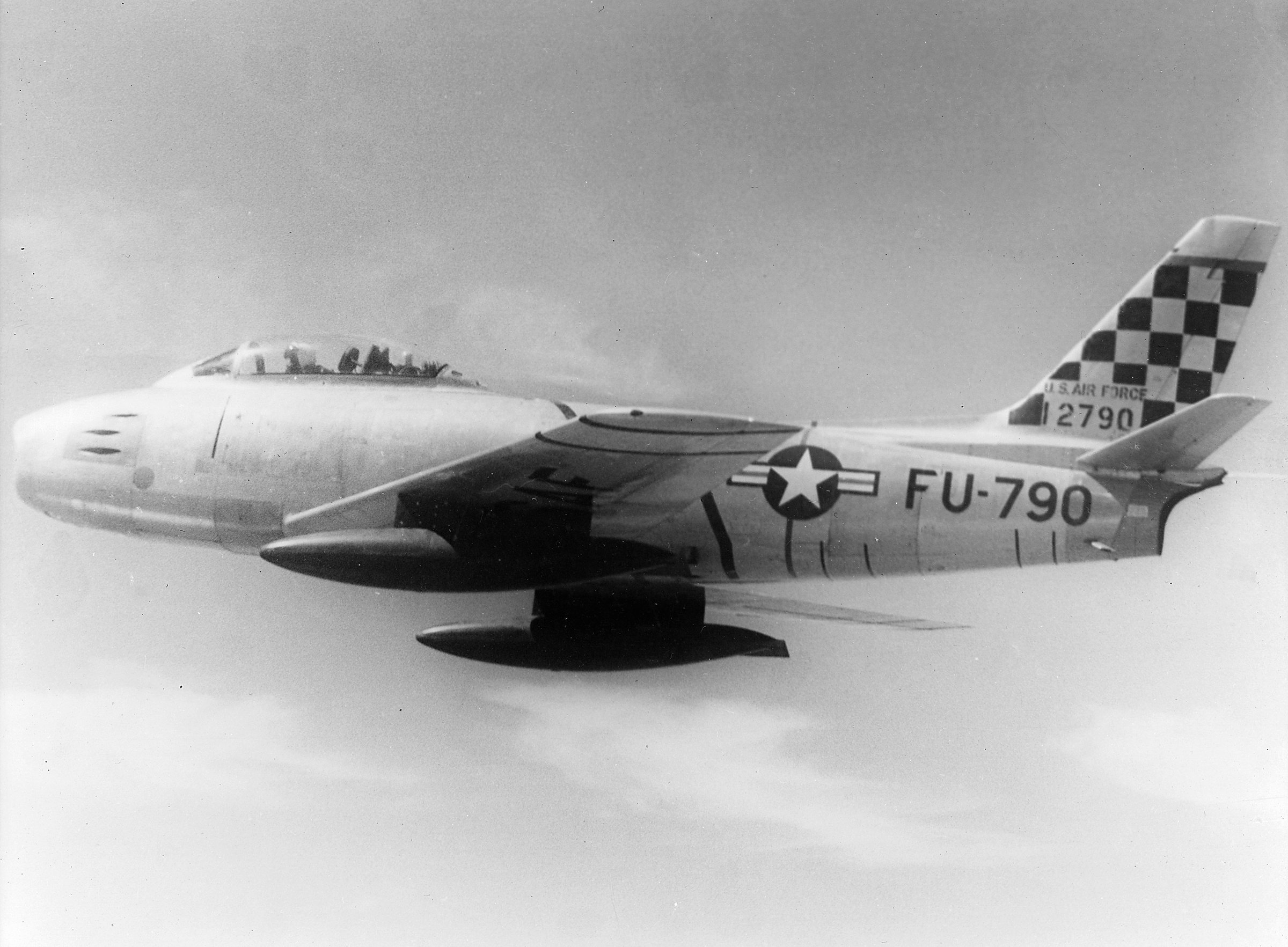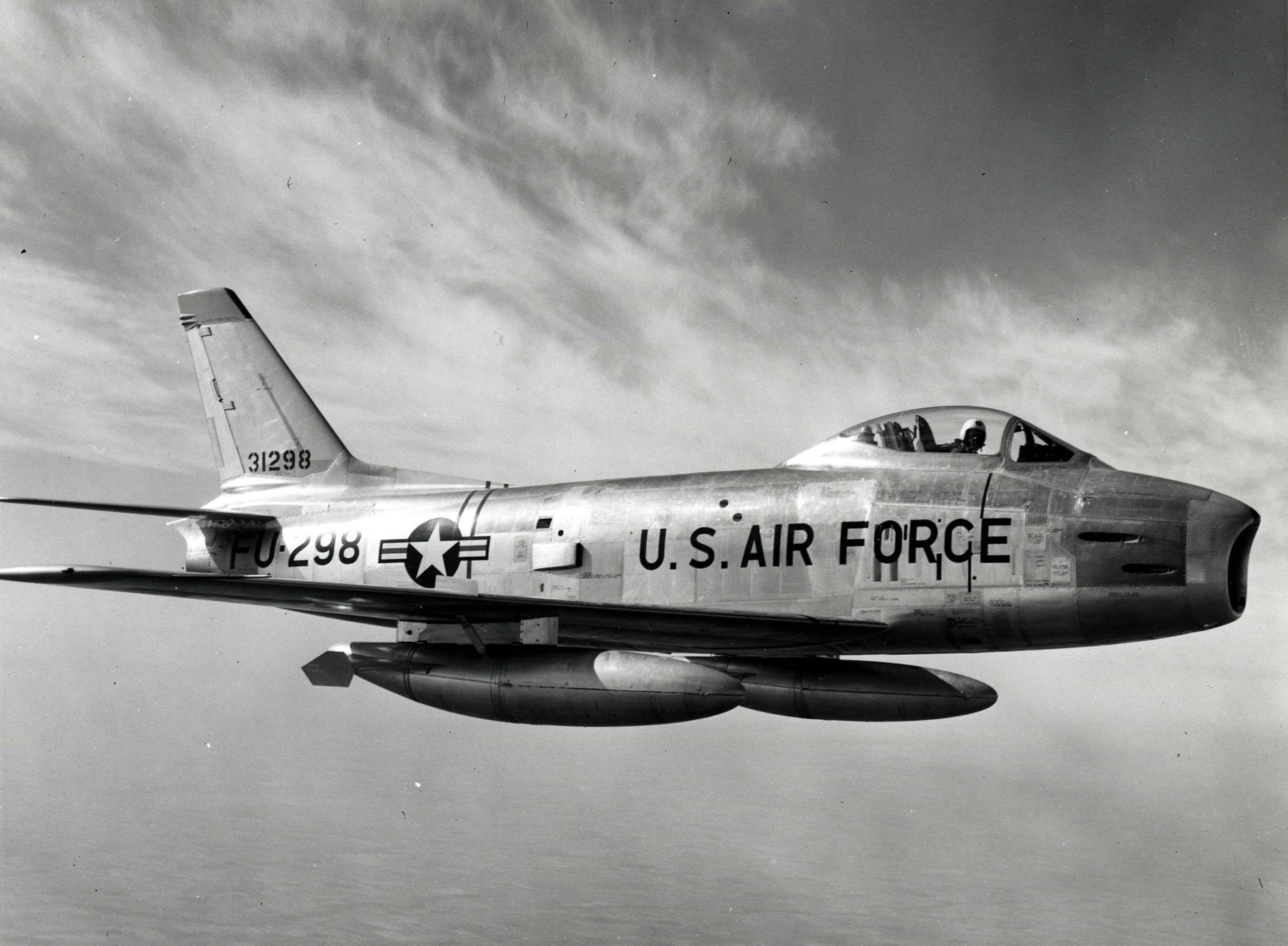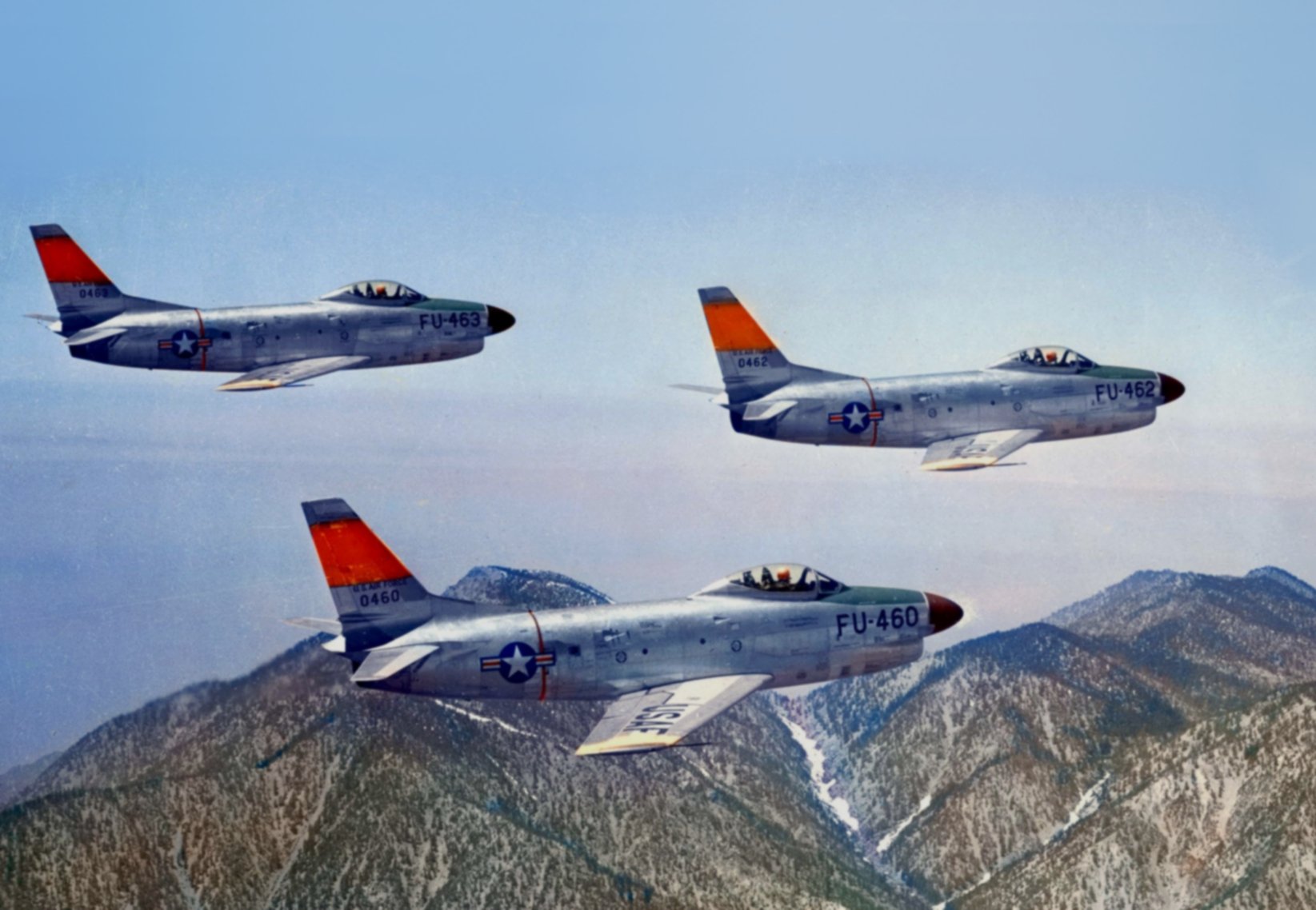
North American F-86D / F-86L Sabre ("Sabre Dog")
The all-weather interceptor — radar nose, afterburner and a belly tray of rockets instead of guns · First flight 1949 · In service 1951
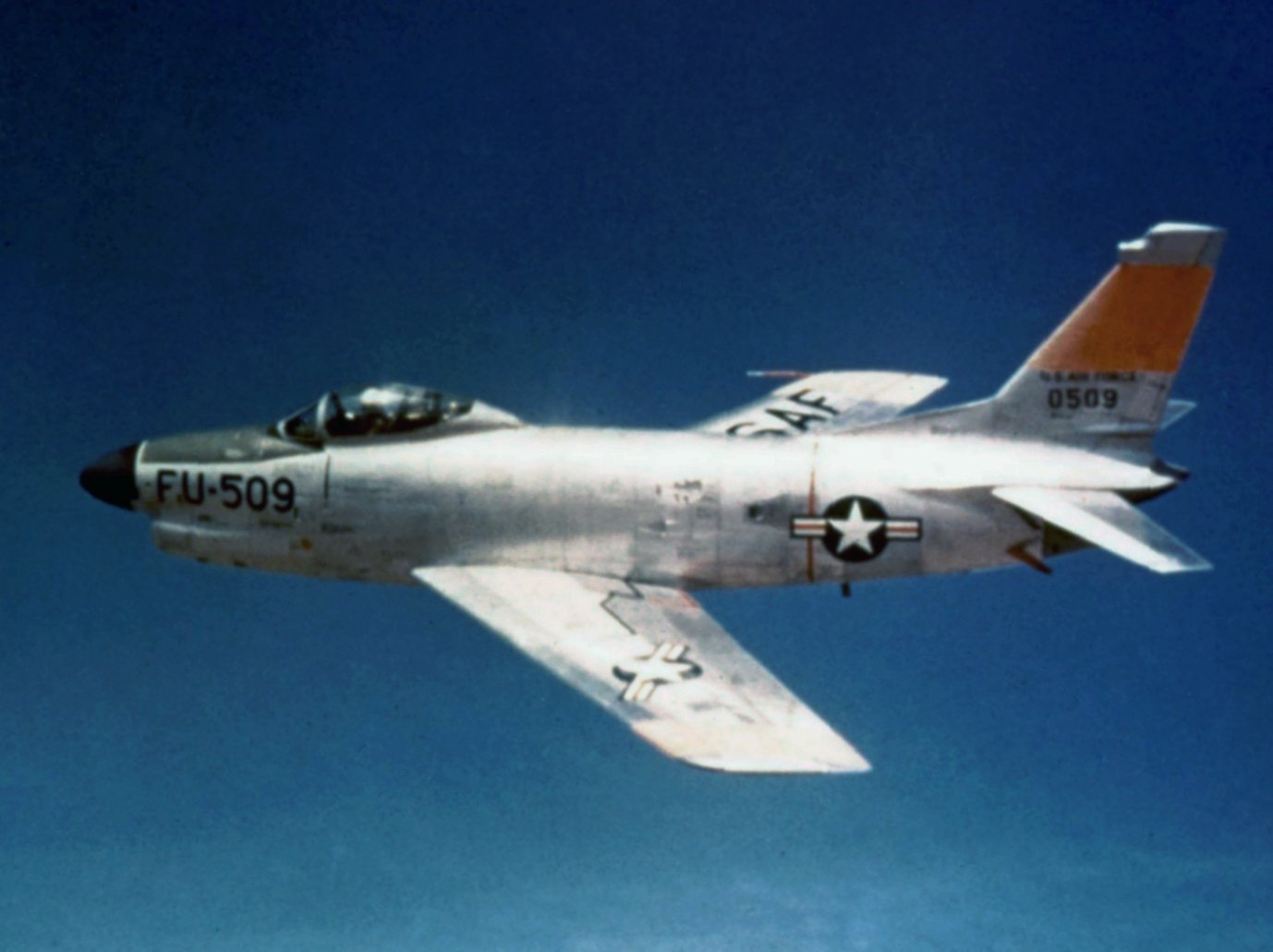
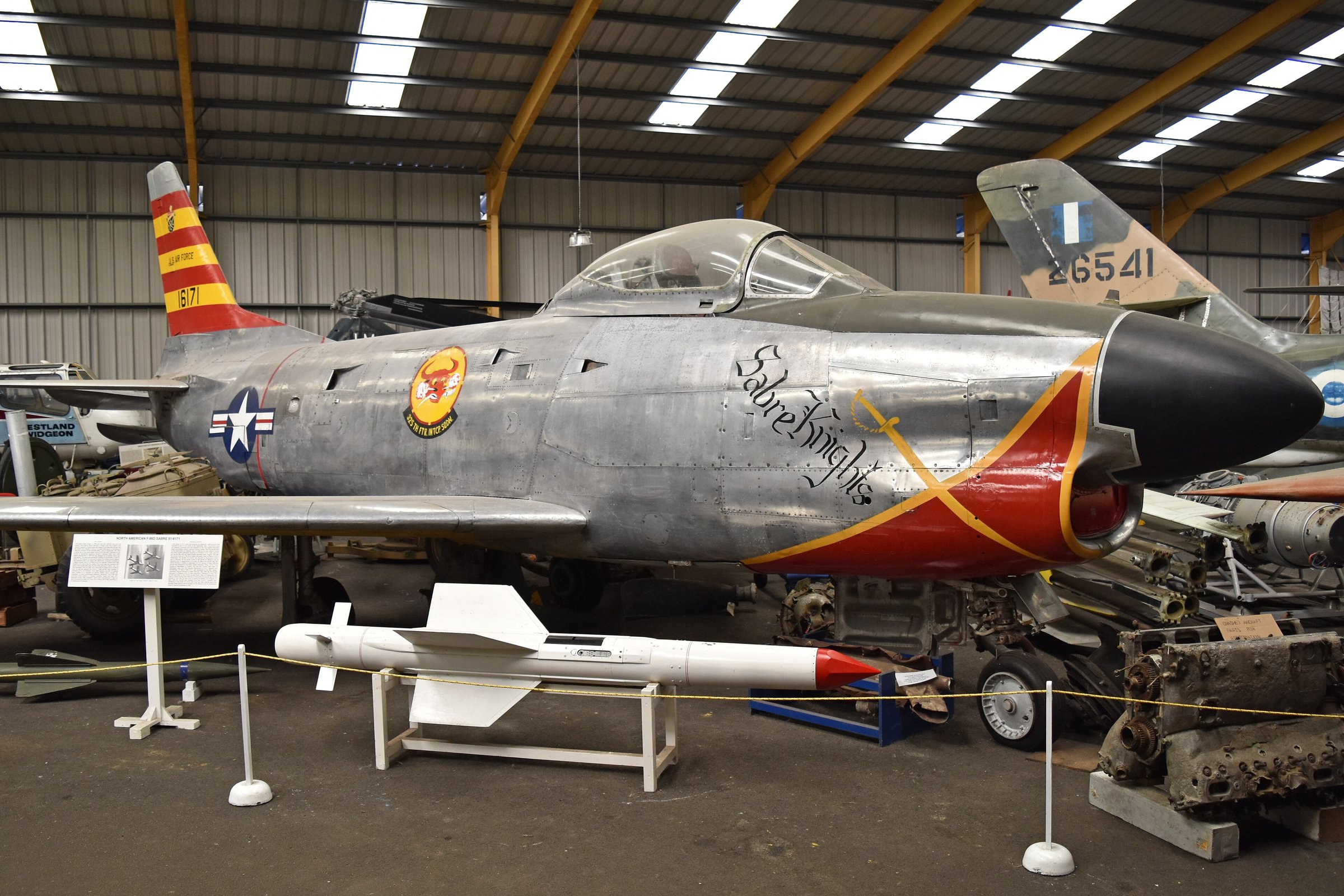
The F-86D began as the YF-95, first flown by George Welch on 22 December 1949 (prototype 50-577), and was redesignated YF-86D. It shared only about a quarter of its parts with the day-fighter Sabre: a radome above the intake housed the AN/APG-36 radar, the J47-GE-17 engine had an afterburner, and the guns were replaced by a retractable tray of 24 unguided 70 mm 'Mighty Mouse' rockets. 2,504 F-86Ds were built; the nickname 'Sabre Dog' was never official.
The type twice set the world air speed record over the 3 km course at the Salton Sea: Capt. J. Slade Nash flew 1,124.1 km/h on 18 November 1952, and Lt. Col. William F. Barns raised it to 1,151.8 km/h in F-86D 51-6145 on 16 July 1953. From the mid-1950s 981 F-86Ds were rebuilt as the F-86L with new electronics, extended wingtips and leading edges, a revised cockpit and an uprated engine. A related gun-armed export model, the F-86K, was built by North American and assembled by Fiat in Italy.
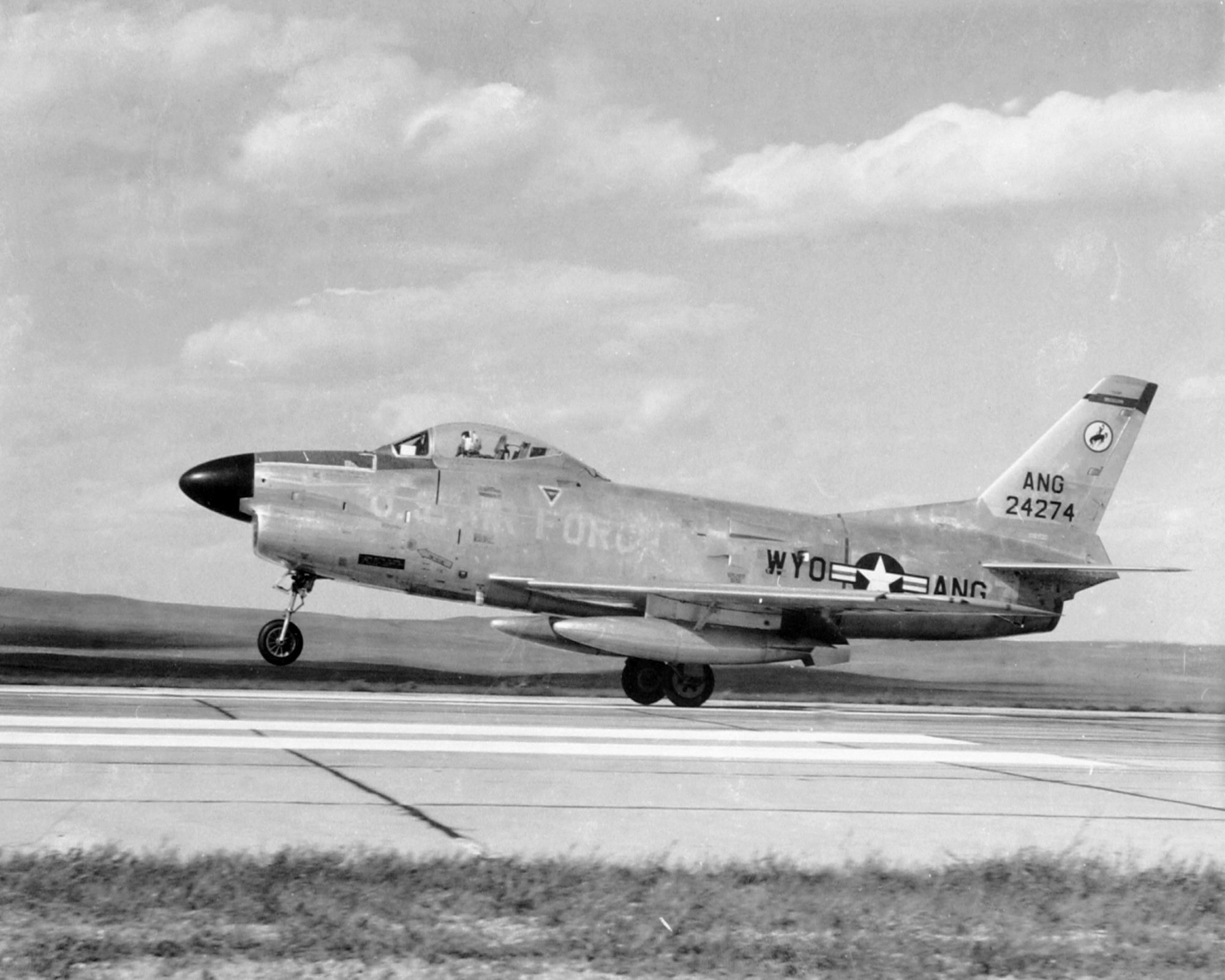
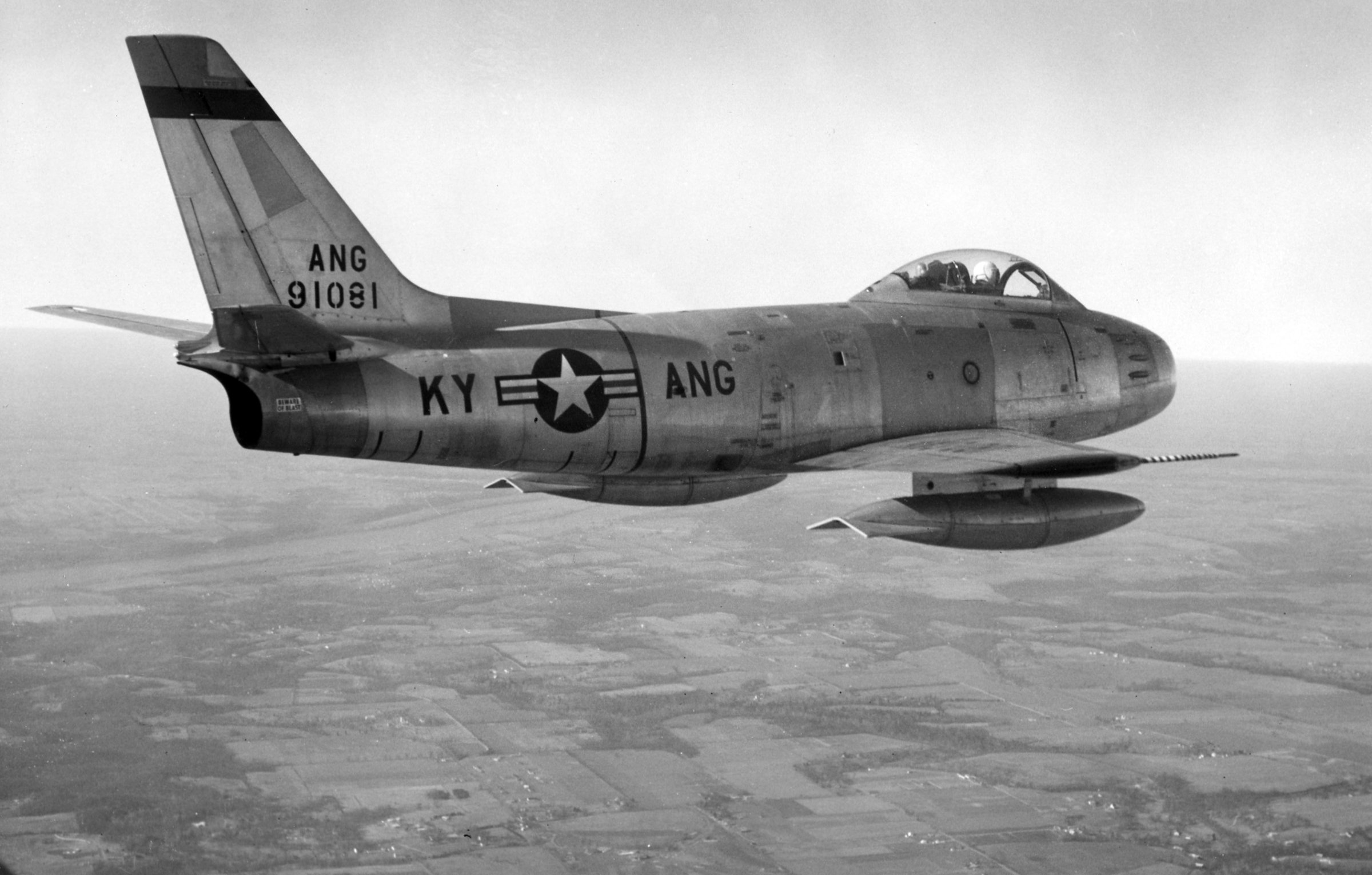
Air National Guard squadrons flew the D and L until 1965. Abroad, Japan received 122 F-86Ds, Yugoslavia 130 (flown from 1961 to 1974, 32 of them converted for reconnaissance), Denmark 59, South Korea 40, Greece 35 and the Philippines 20, while Thailand operated 20 F-86Ls.