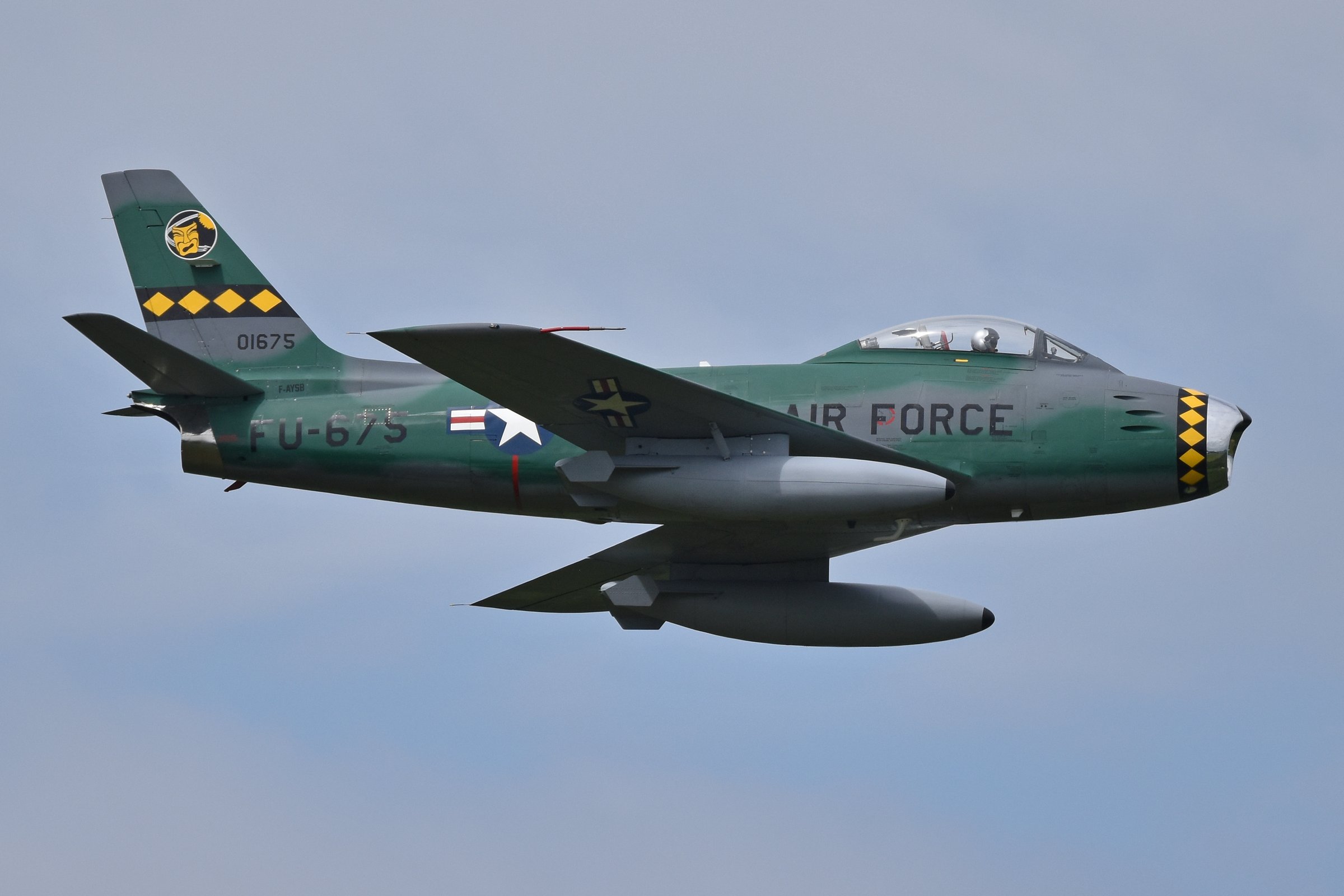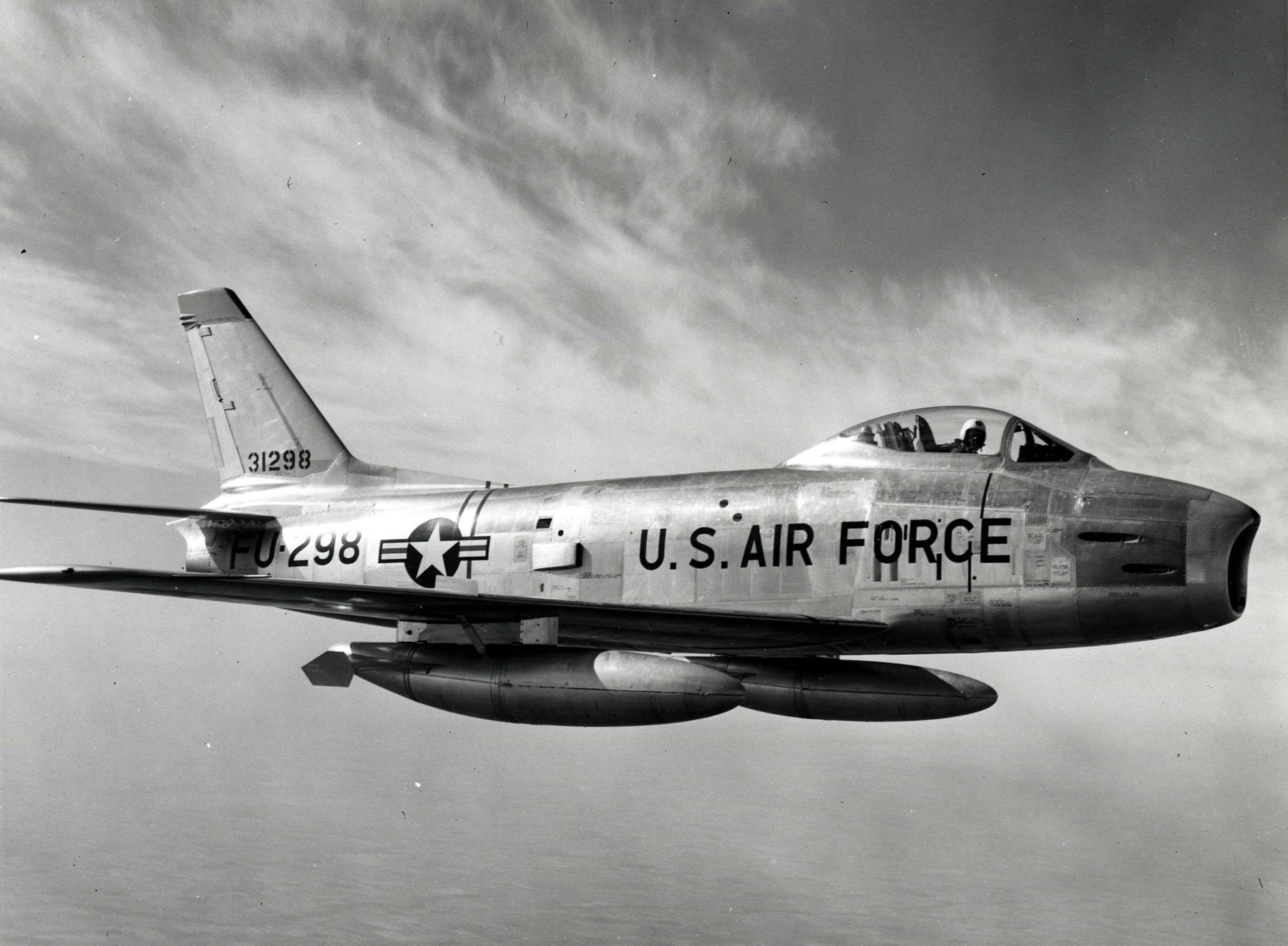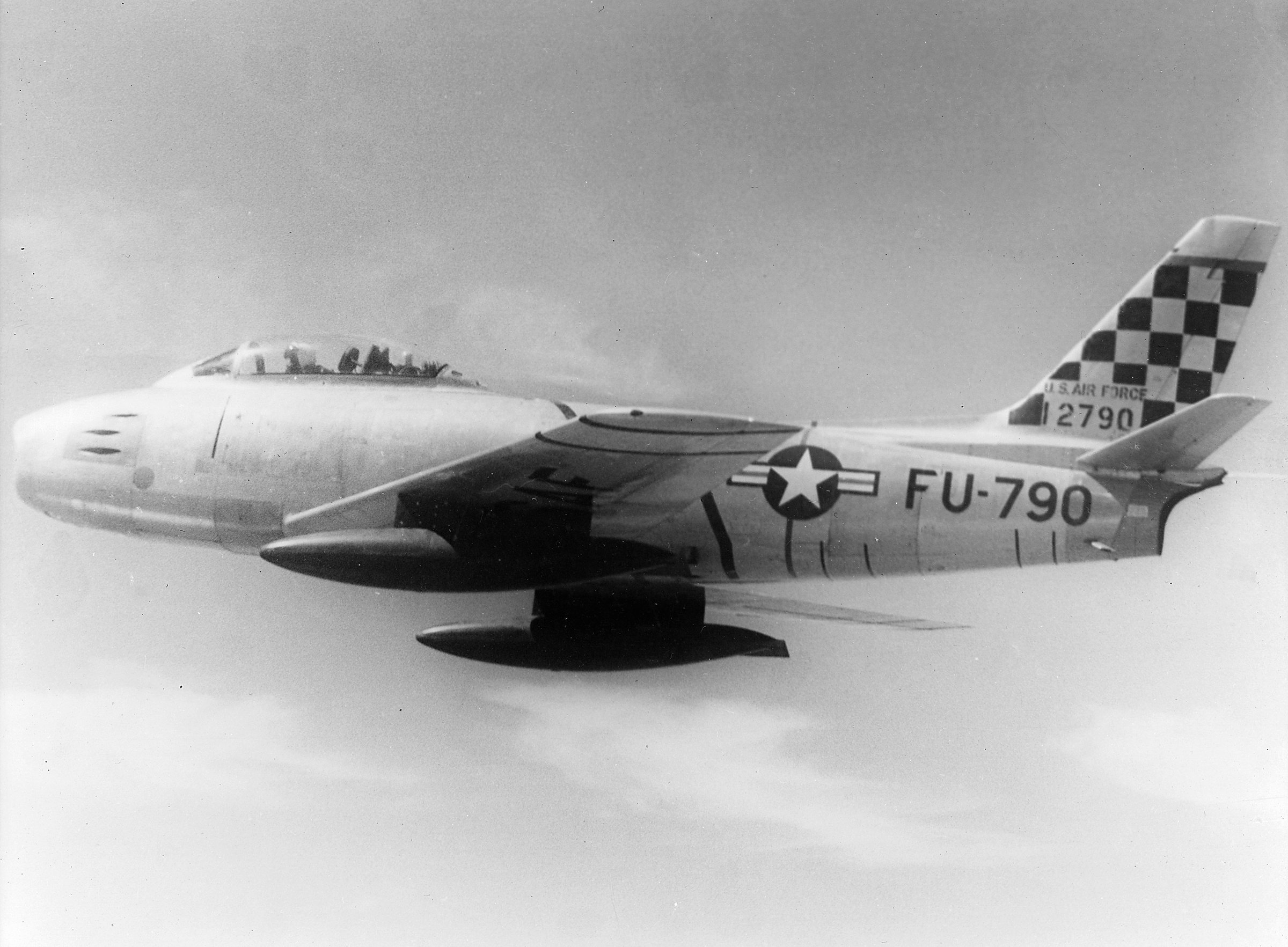
North American F-86E / F-86F Sabre
The definitive Korean War Sabres — all-flying tail on the E, more power and the '6–3' wing on the F · F-86F first flight 1952 · Korean War 1951–1953
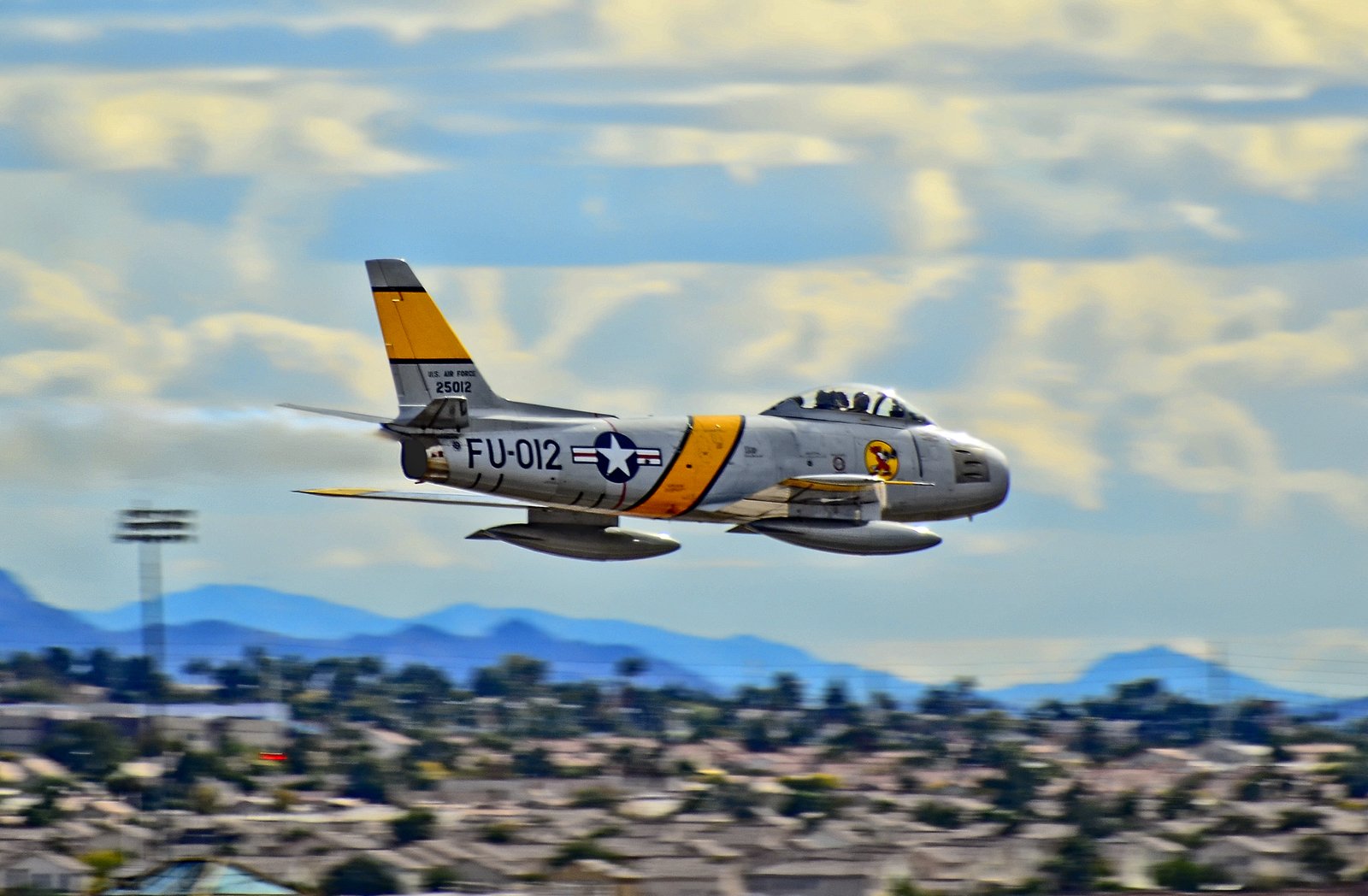
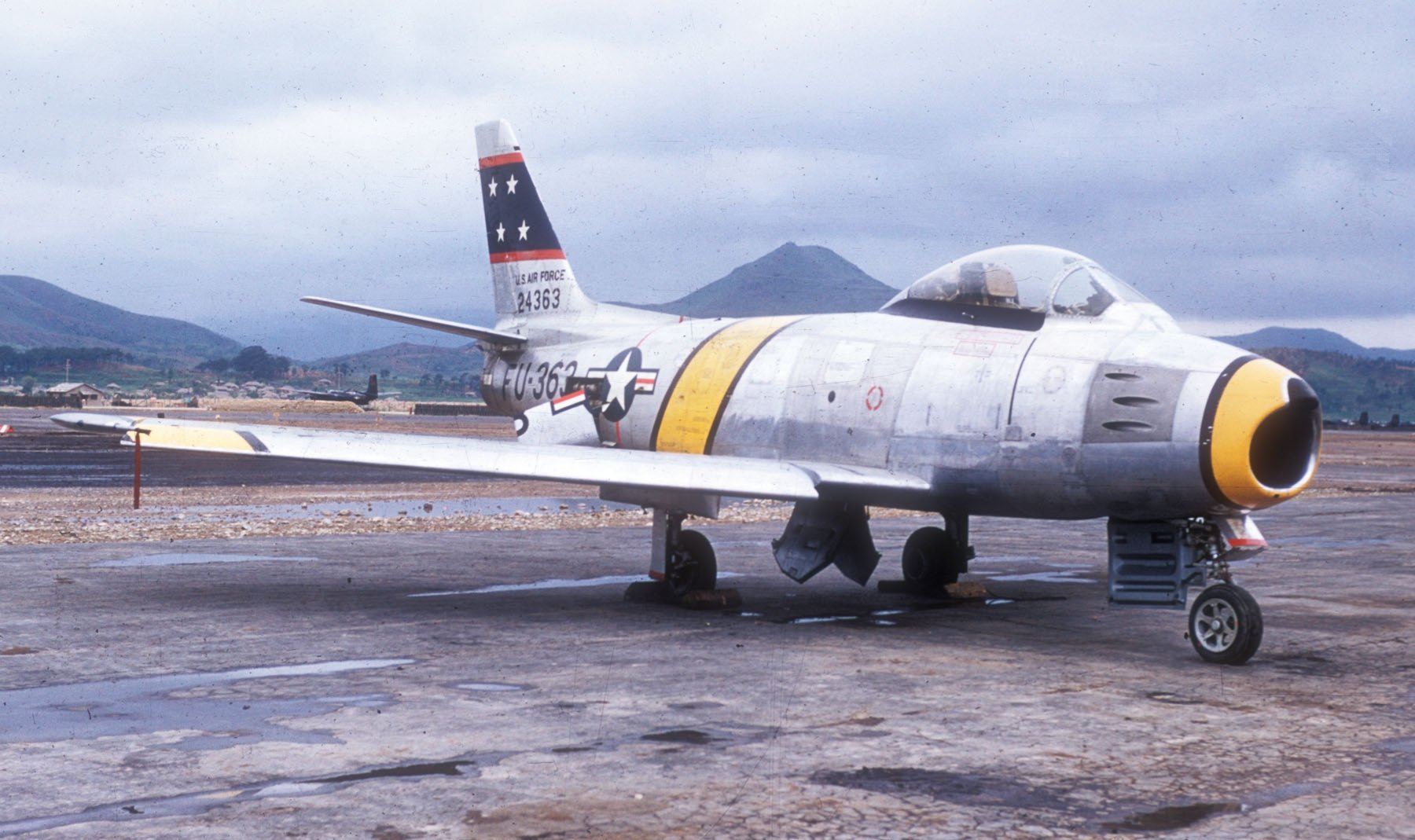
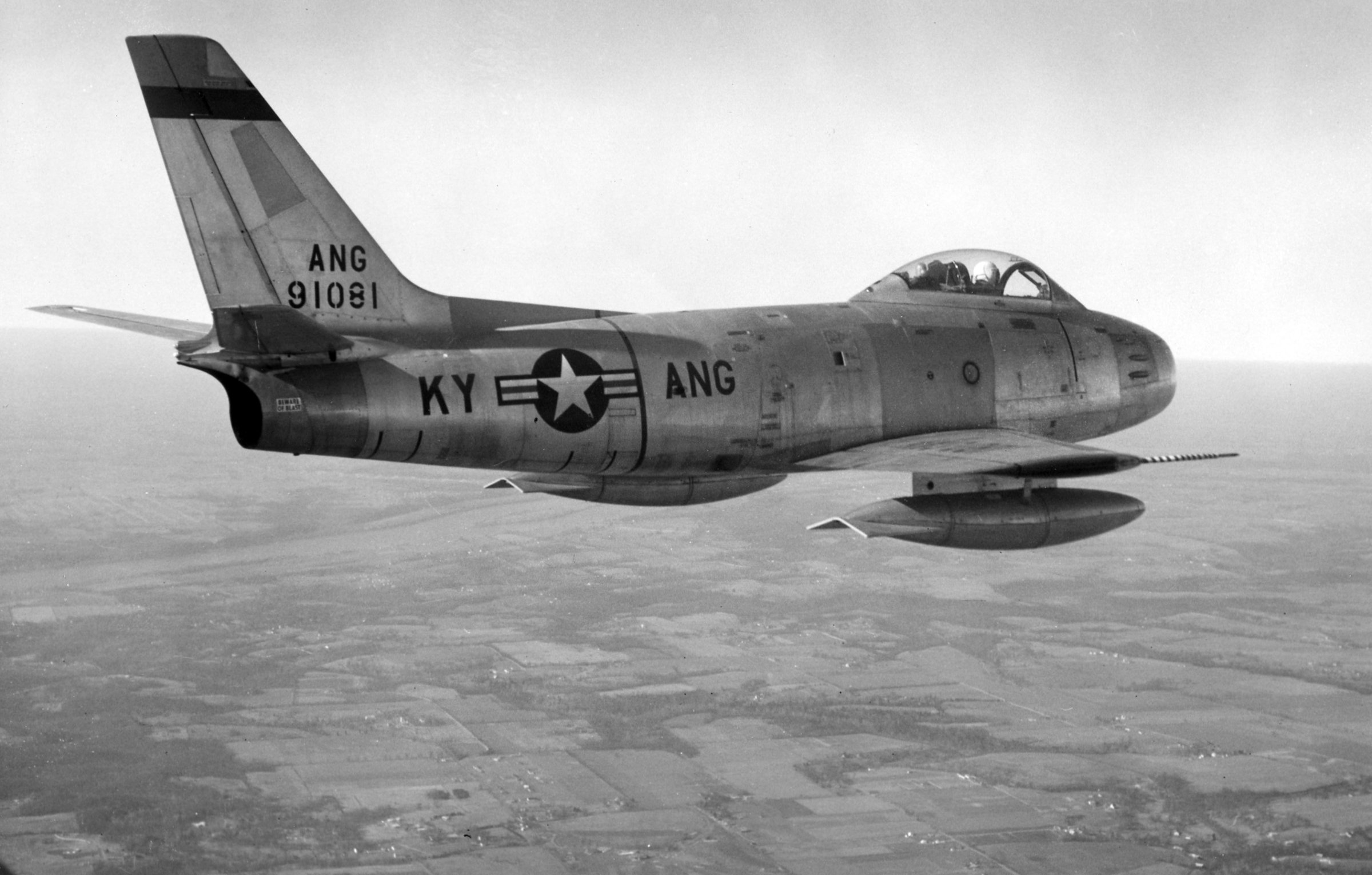
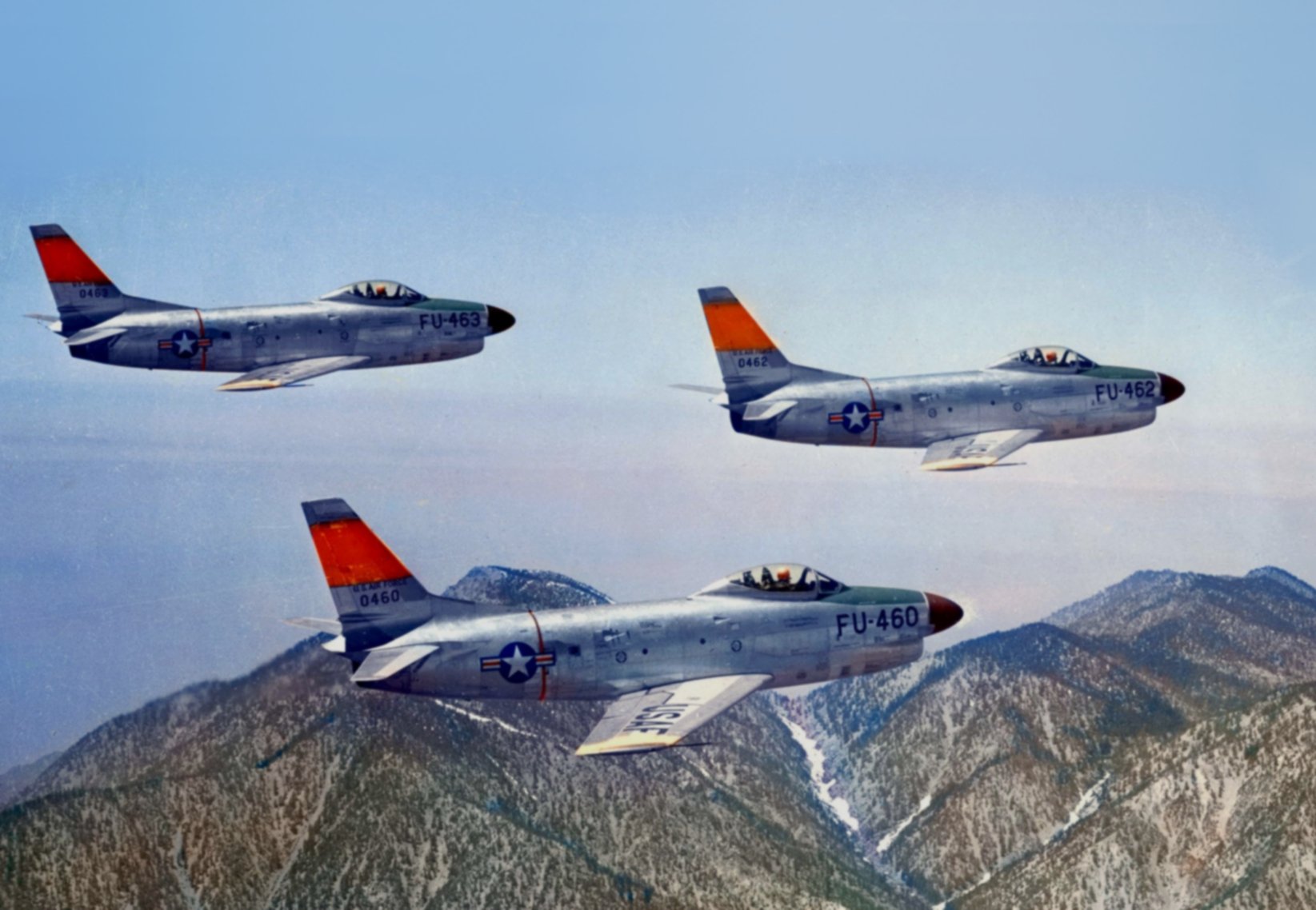
The F-86E introduced an 'all-flying tail' — the whole horizontal stabiliser moved — which greatly improved control at high Mach numbers; 456 were built by North American and 60 more by Canadair for the USAF. The F-86F followed with the uprated J47-GE-27 engine; the first F-86F-1 (51-2850) flew on 19 March 1952. Combat experience led to the '6–3' wing, with the leading edge extended 6 inches at the root and 3 inches at the tip and no slats, which was retrofitted to many Sabres; the later F-86F-40 returned to an improved slatted wing that cut landing speed to 200 km/h.
E and F models flew most of the Sabre's war in Korea. American pilots were initially credited with 792 MiG-15s for 78 Sabres lost in air combat; the USAF later roughly halved that ratio, and a RAND study put the overall kill-to-loss figure at 1.8:1. F-86F fighter-bombers also attacked ground targets late in the war.
After Korea the F-86F became a mainstay of US allies. Japan received 180 American-built aircraft and Mitsubishi assembled 300 more; Spain took 270 (as the C.5), South Korea 112 plus 10 RF-86F reconnaissance aircraft, Pakistan 120 and Norway 115. One F-86F-30 fitted with a rocket booster reached Mach 1.22 at about 18,300 m.