


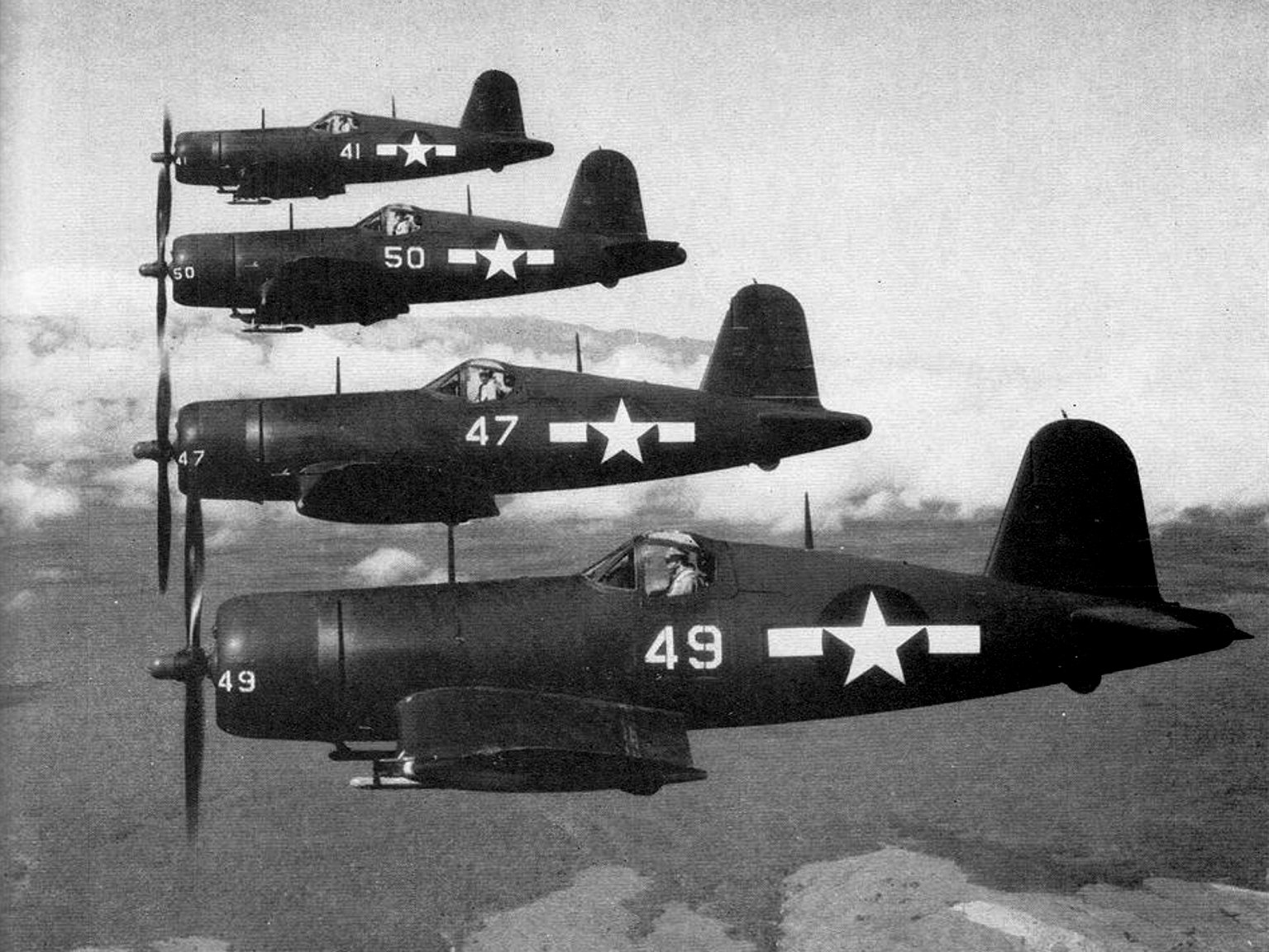
Vought F4U-1D / Goodyear FG-1D Corsair (and cannon-armed F4U-1C)
The fighter-bomber Corsair — water injection, pylons and rockets for the 1944–45 Pacific campaign · Introduced 1944 · In combat 1944–1945
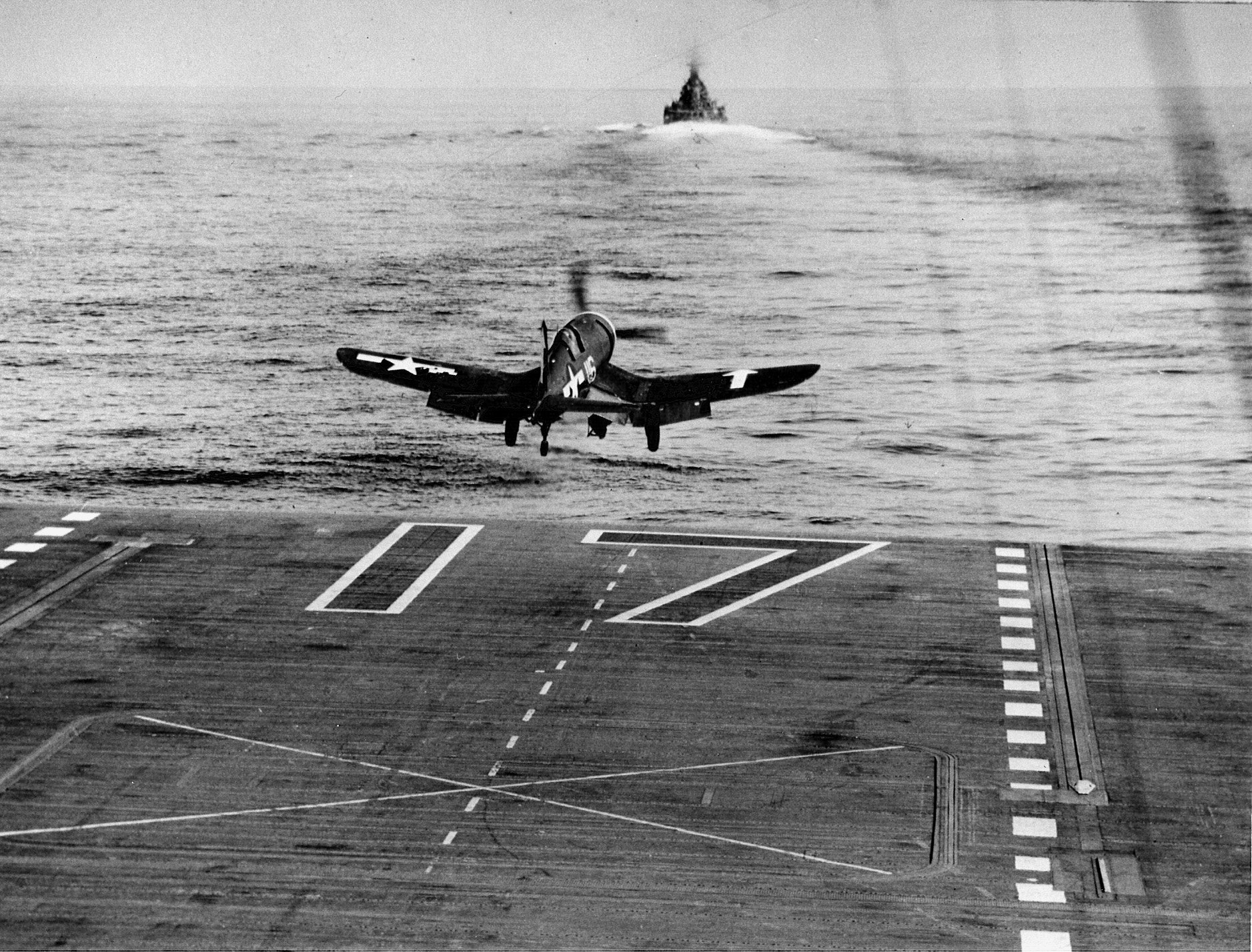
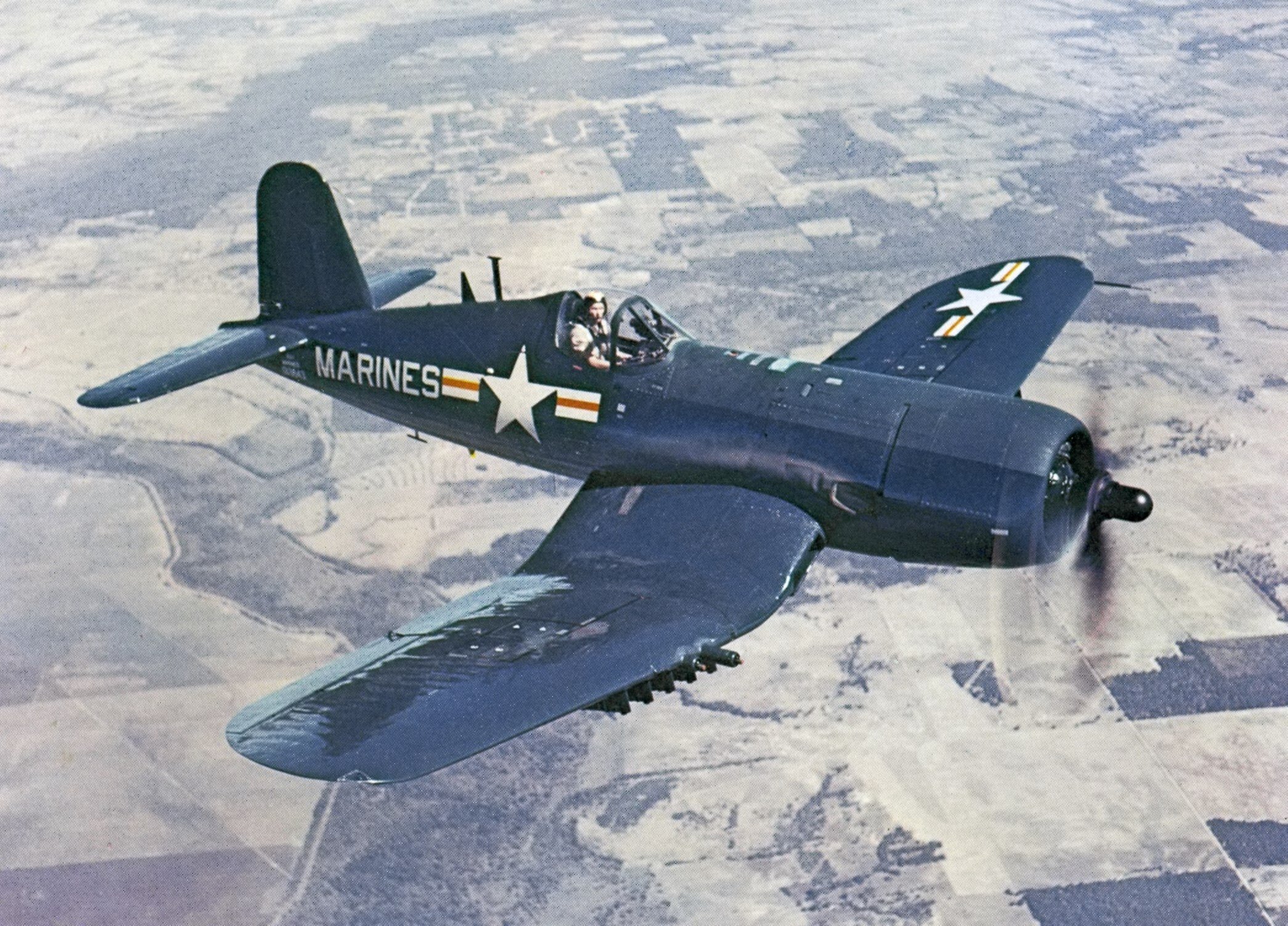
Introduced in April 1944, the F4U-1D added water injection to the R-2800-8W, worth up to 250 hp for short periods and lifting top speed from 671 to 684 km/h. Pylons for bombs and drop tanks and twice the rocket load of the F4U-1A turned the Corsair into a true fighter-bomber, just as US carriers needed more fighters to counter kamikaze attacks and to support landings. Vought built 1,675 F4U-1Ds and Goodyear 2,303 near-identical FG-1Ds.
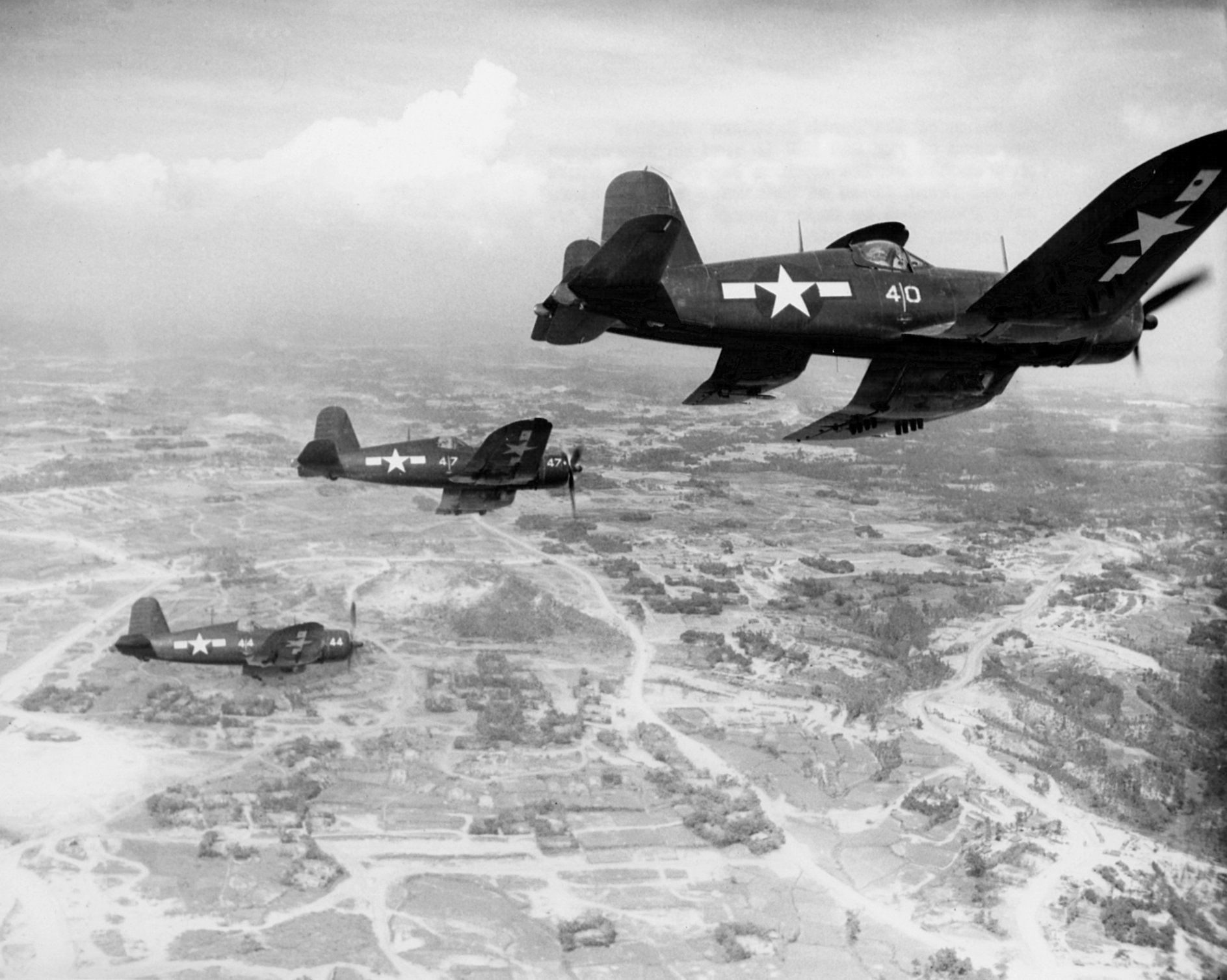
F4U-1Ds and FG-1Ds flew from fleet carriers and escort carriers through Iwo Jima, Okinawa and the strikes on Japan in 1945, and Marine squadrons used them ashore for close air support with bombs and rockets. A parallel batch of 200 F4U-1Cs swapped the six machine guns for four 20 mm cannon and saw service in 1945, notably at Okinawa.
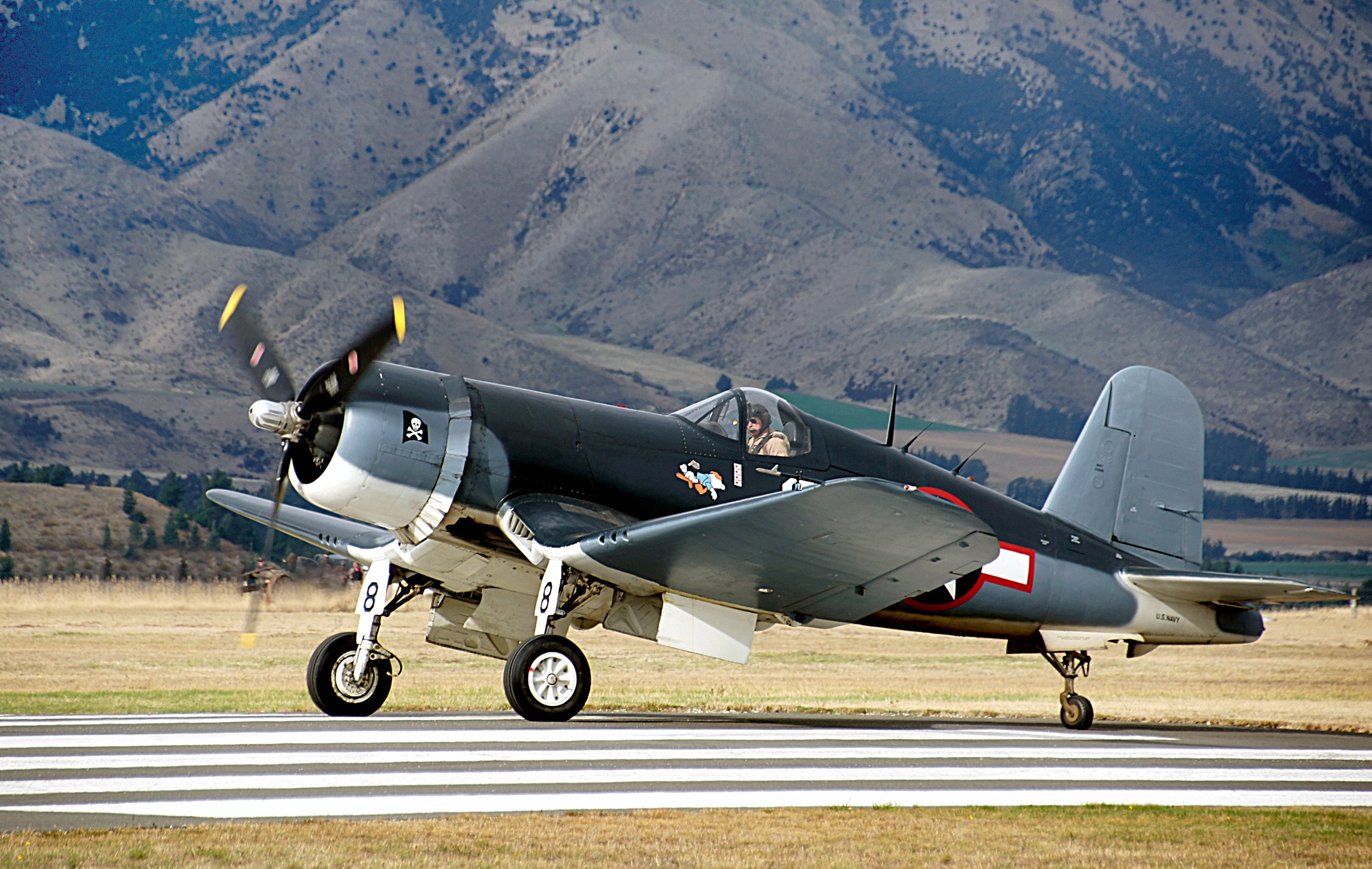
The late Royal Navy Corsair IIs and Goodyear-built Corsair IVs were to the same standard, and the Royal New Zealand Air Force received F4U-1Ds and, late in the war, 60 FG-1Ds. Many of today's flying Corsairs are FG-1Ds, a survivor of the type's huge production run.
Other F4U Corsair variants
 ◎ VOUGHT
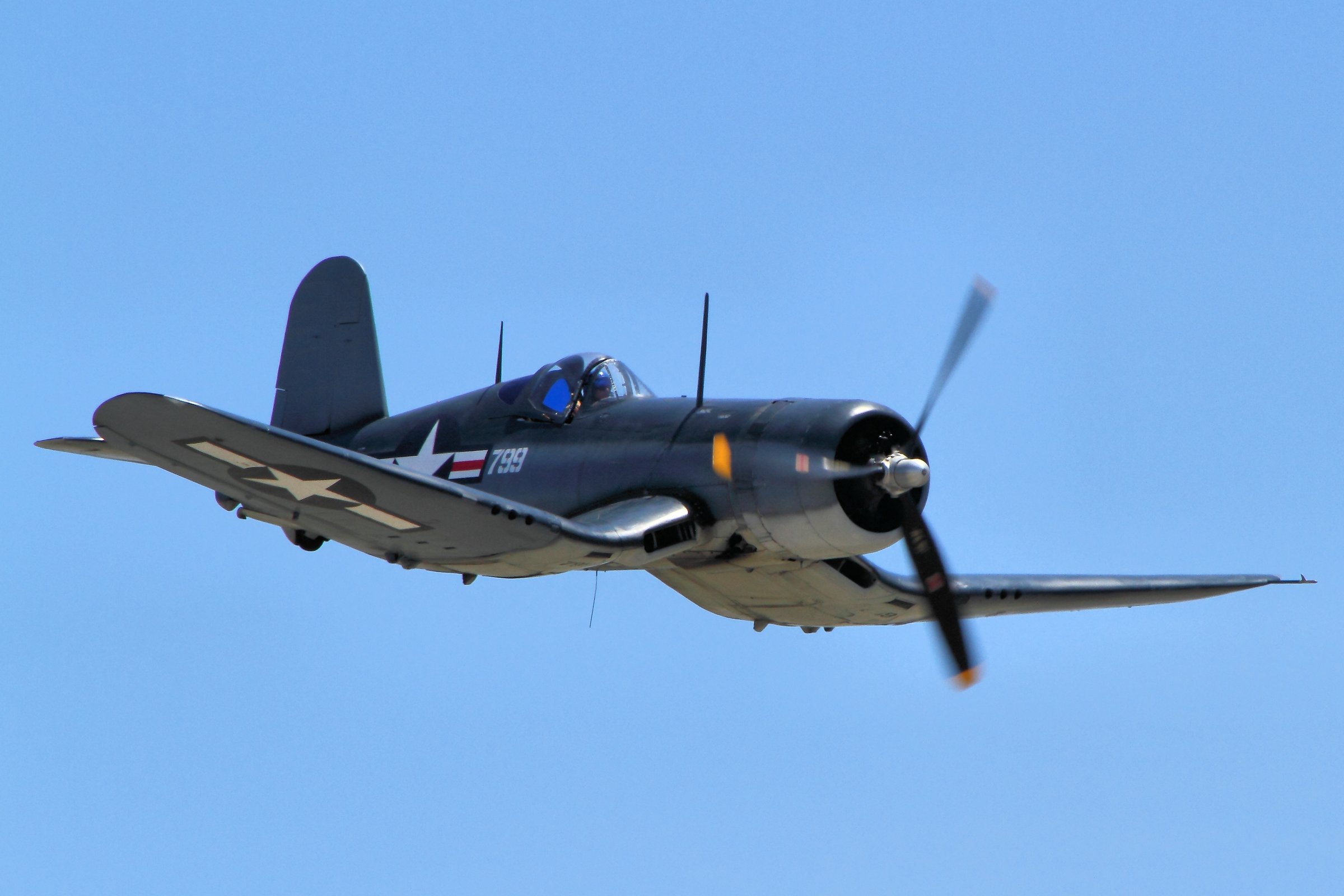
Vought F4U-1 / F4U-1A Corsair (incl. Goodyear FG-1 and Brewster F3A-1)
 ◎ VOUGHT
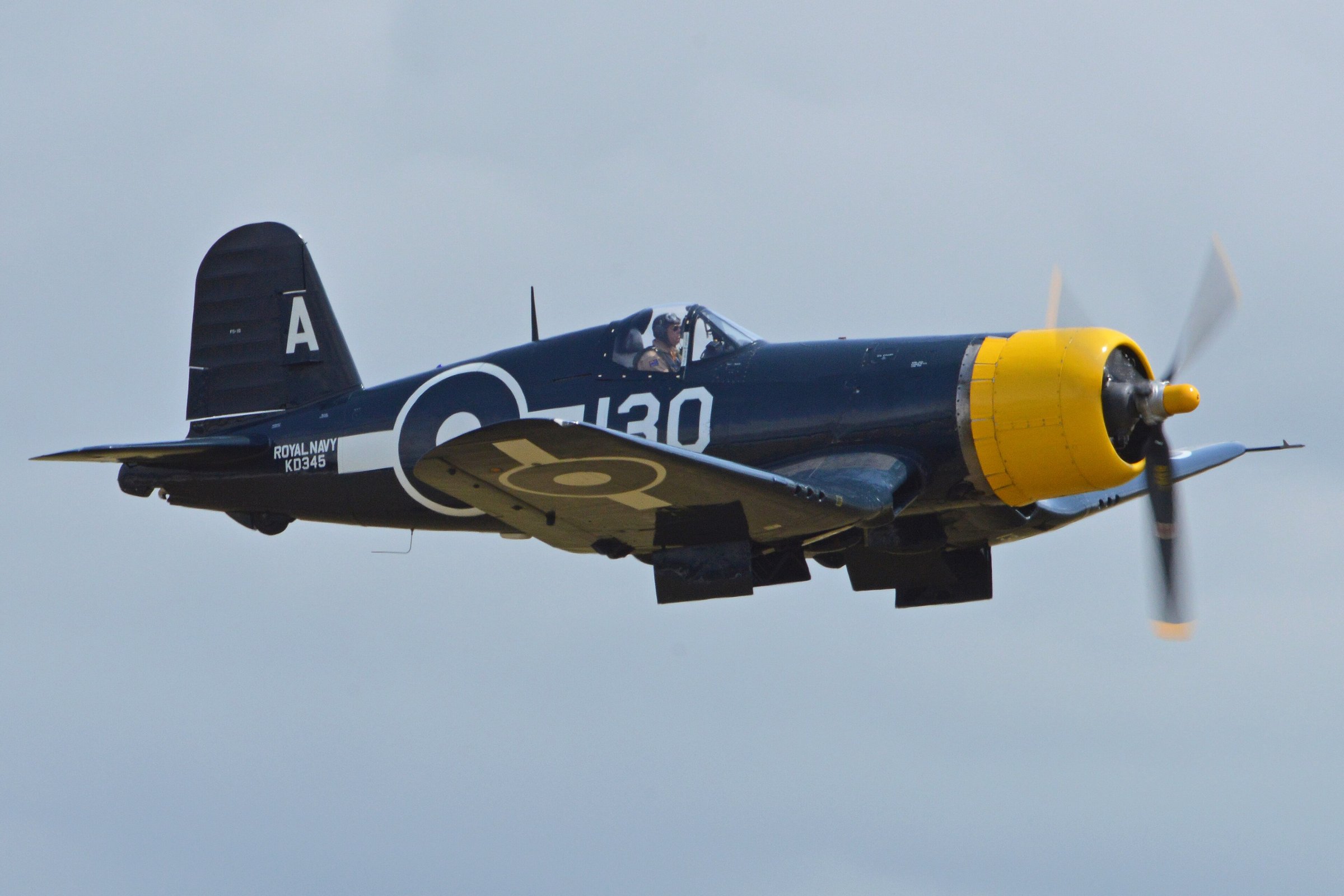
Vought Corsair I–IV (Royal Navy Fleet Air Arm)
 ◎ VOUGHT
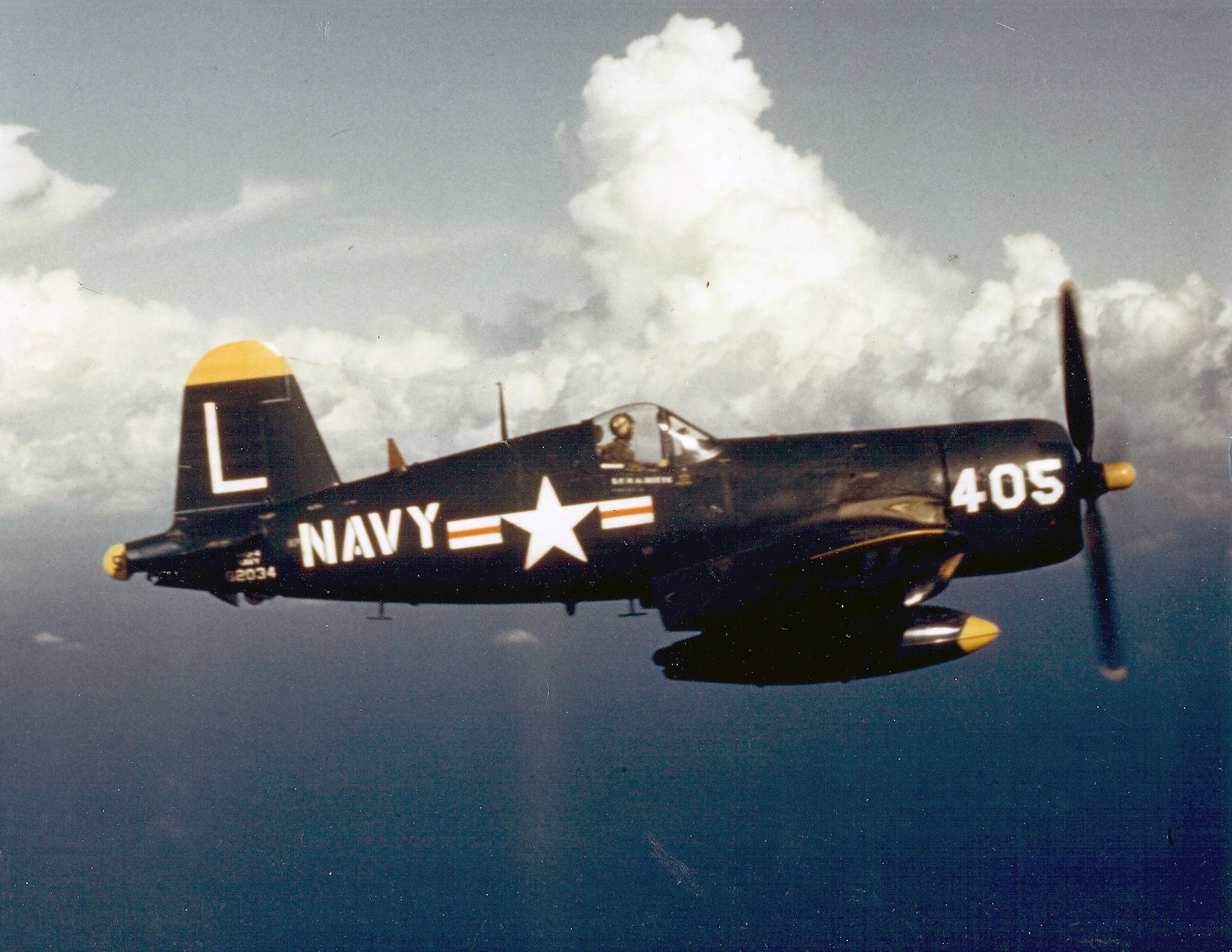
Vought F4U-4 Corsair
 ◎ VOUGHT
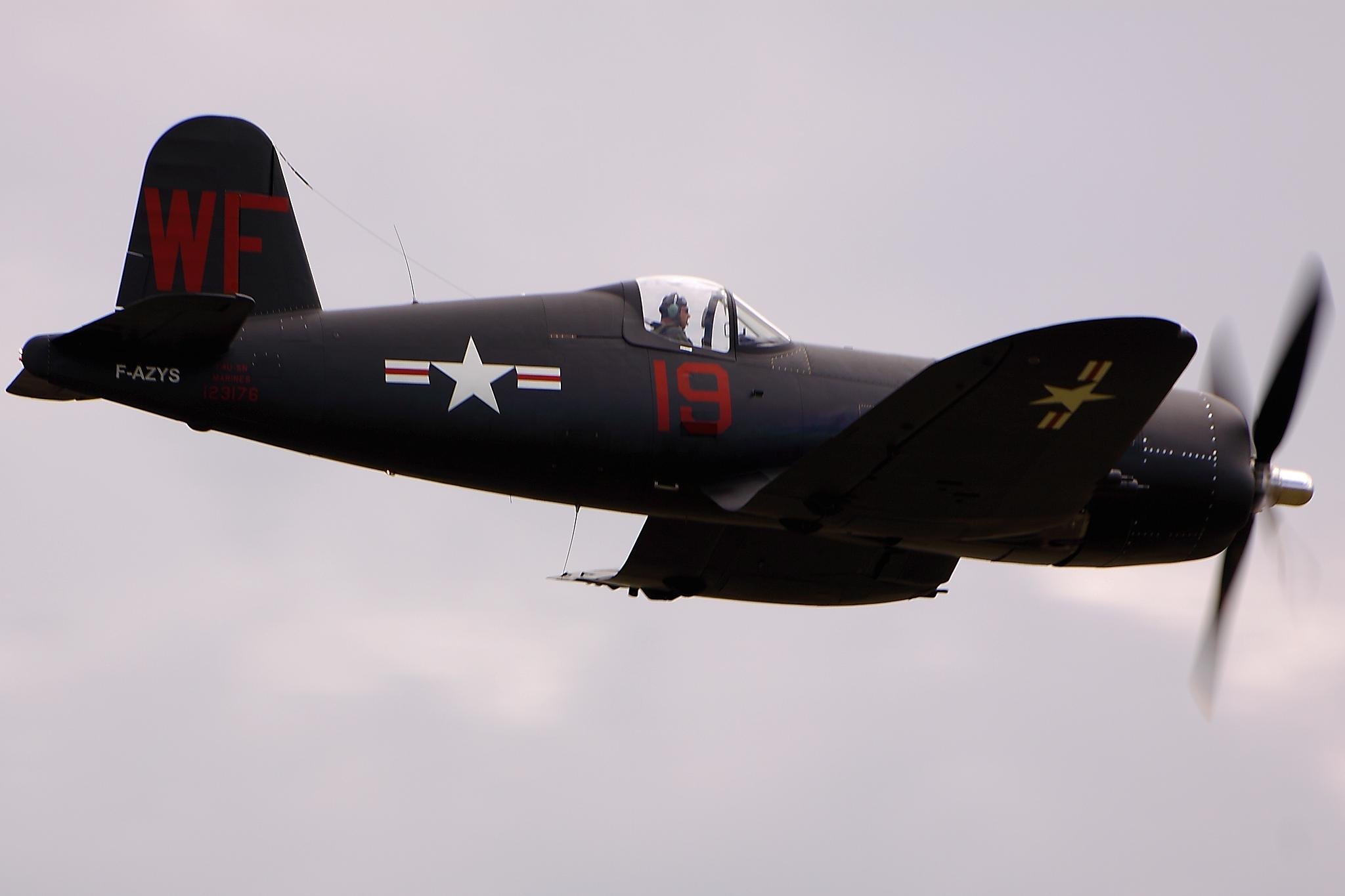
Vought F4U-5 / F4U-5N / F4U-5NL Corsair
 ◎ VOUGHT
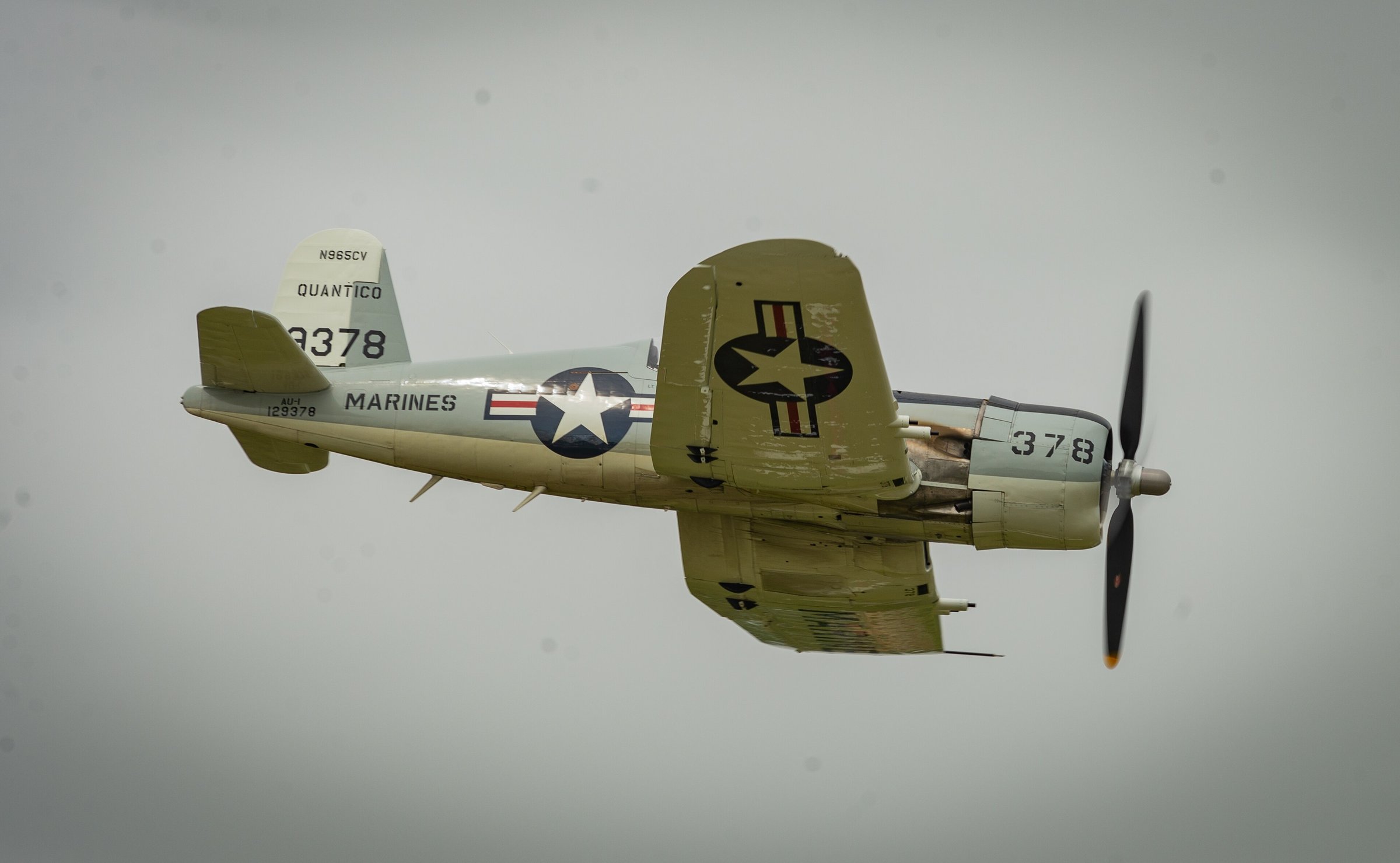
Vought AU-1 Corsair (XF4U-6)
 ◎ VOUGHT