


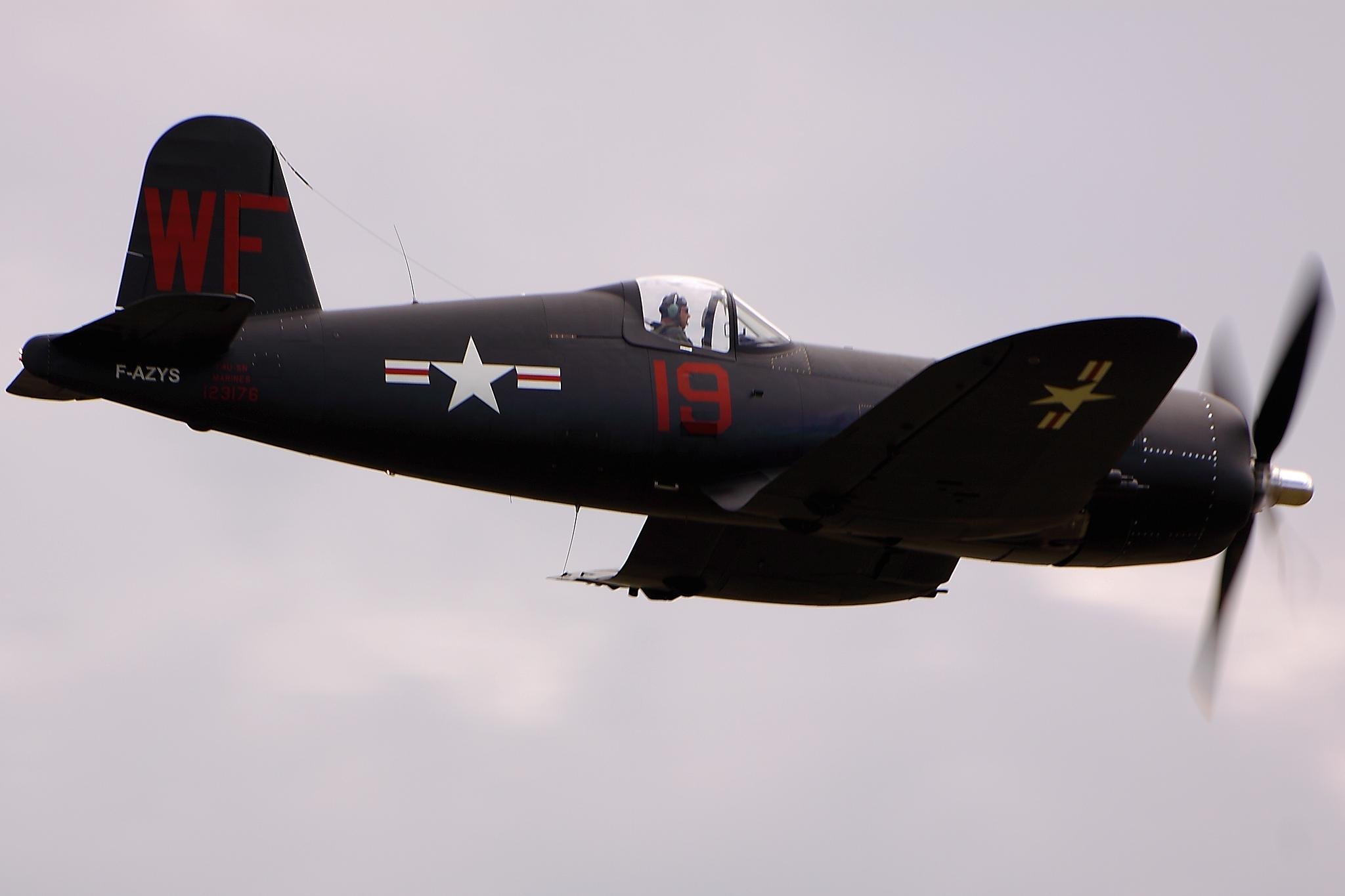
Vought F4U-5 / F4U-5N / F4U-5NL Corsair
The post-war Corsair — more power, four cannon, and a radar night fighter that produced the Navy's only Korean War ace · First flight 1945 · In combat 1950–1953
The XF4U-5 first flew on 21 December 1945. It combined the R-2800-32W, with more power held to a higher altitude, with four 20 mm cannon and a revised cowling; top speed reached 755 km/h at 8,170 m. Production began with an order for 223 aircraft, followed by 214 F4U-5N night fighters with AN/APS-19 radar in a starboard wing pod, 72 winterised F4U-5NLs with de-icing boots for Korean winters, and 30 F4U-5P reconnaissance aircraft.
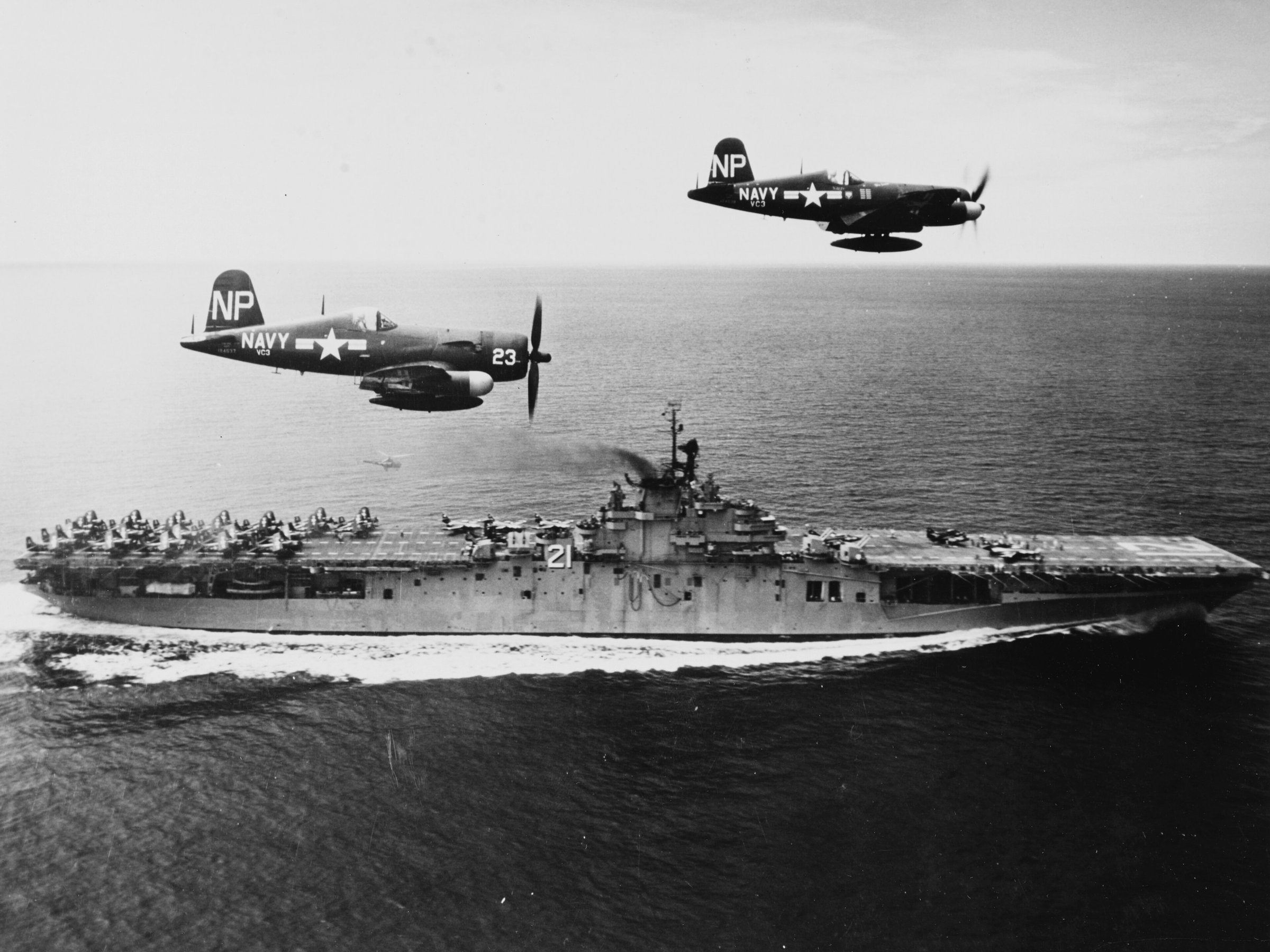
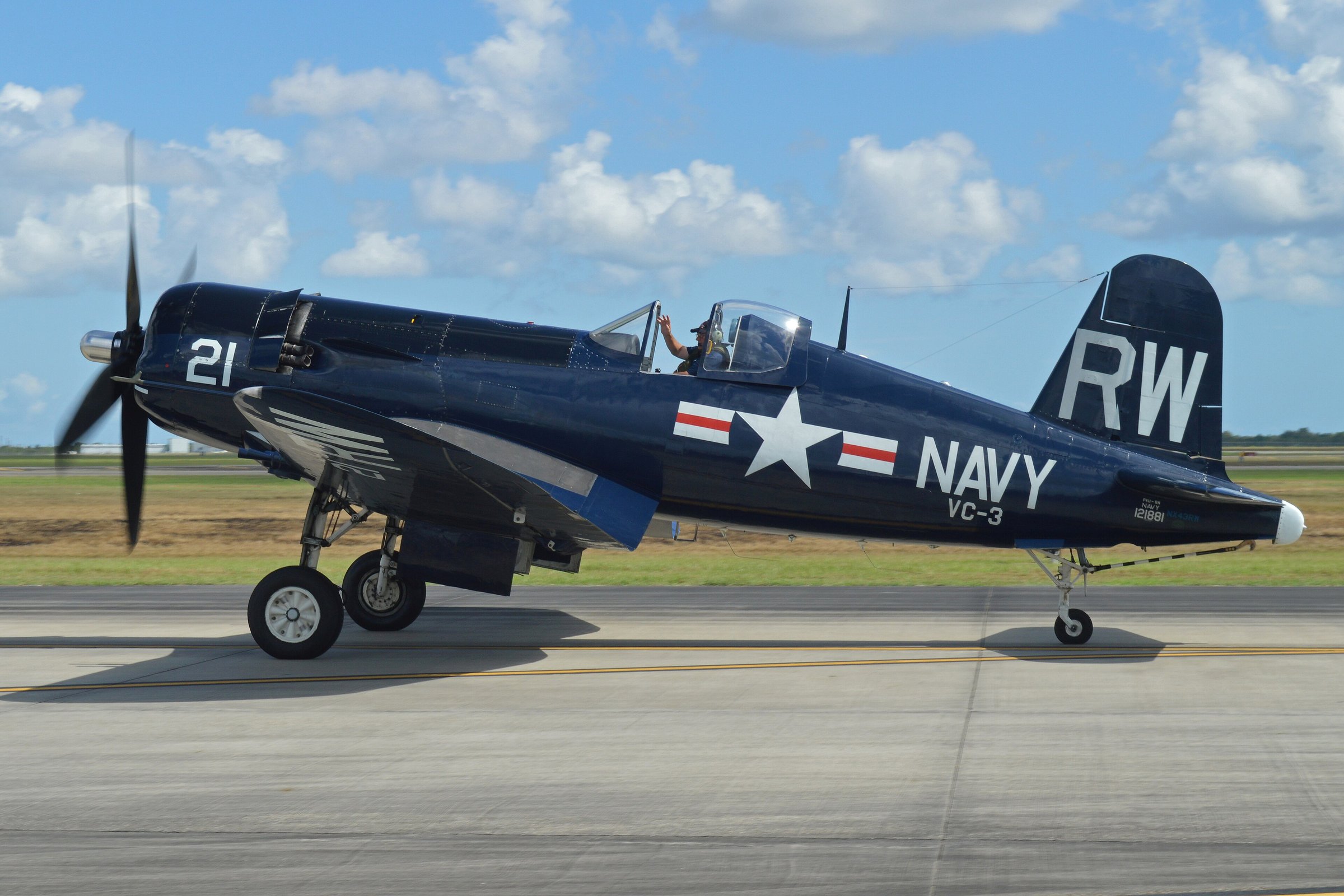
In Korea the night-fighter versions saw more use than the day fighter, attacking supply routes after dark and intercepting the slow Po-2 and Yak-18 night raiders that harassed UN bases. Lieutenant Guy Bordelon of VC-3, flying F4U-5N 'Annie Mo' from land bases in mid-1953, scored five night victories — the only US Navy ace of the Korean War and the only one in a piston-engined aircraft. The F4U-5 left US service in 1956.
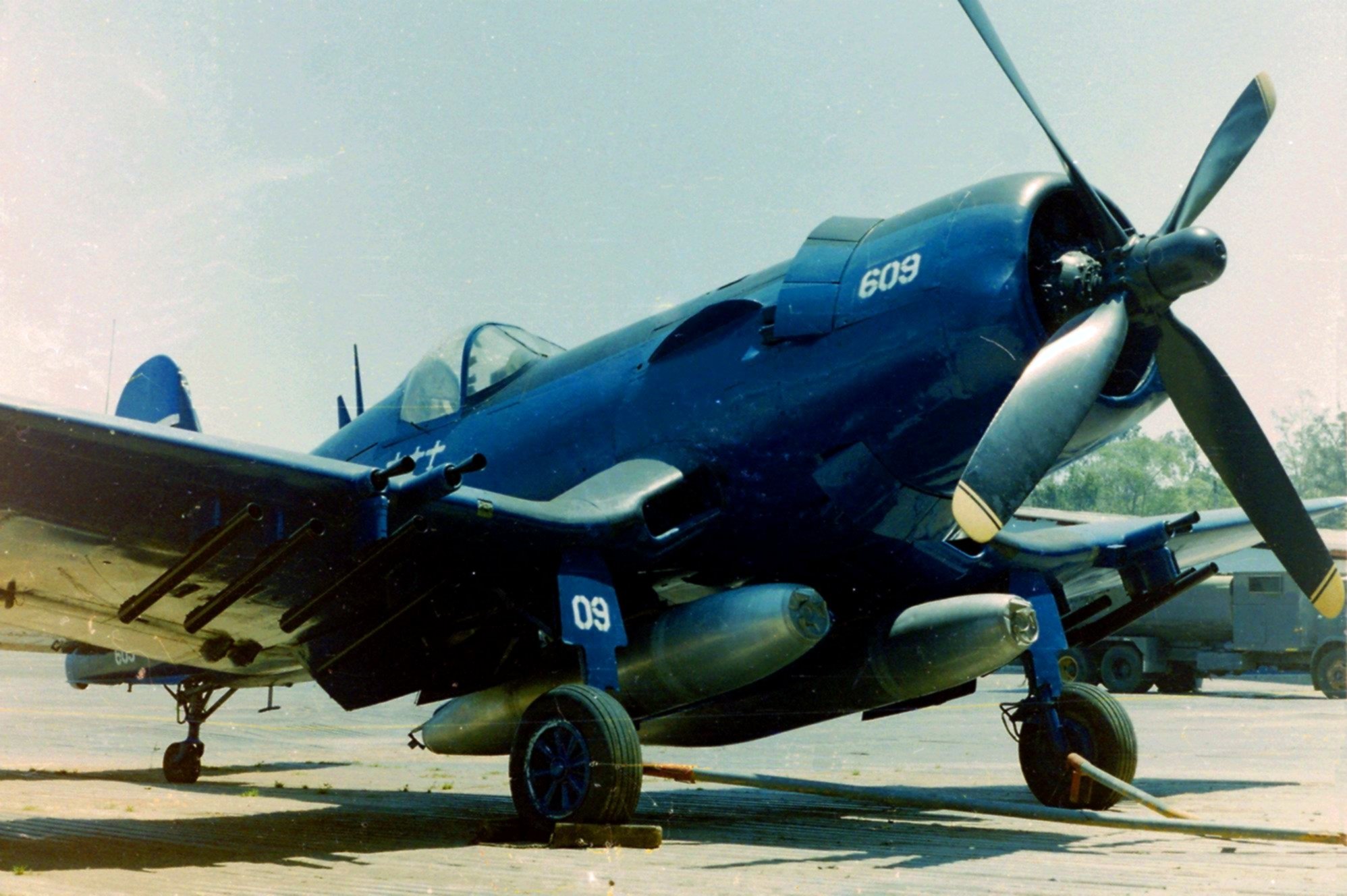
Surplus F4U-5s went to Argentina and Honduras. On 17 July 1969, in the war between Honduras and El Salvador, Honduran Captain Fernando Soto shot down a Cavalier Mustang and two FG-1 Corsairs flying F4U-5N FAH-609 — the last combats between piston-engined fighters. Honduras flew its Corsairs until 1979.
Other F4U Corsair variants
 ◎ VOUGHT
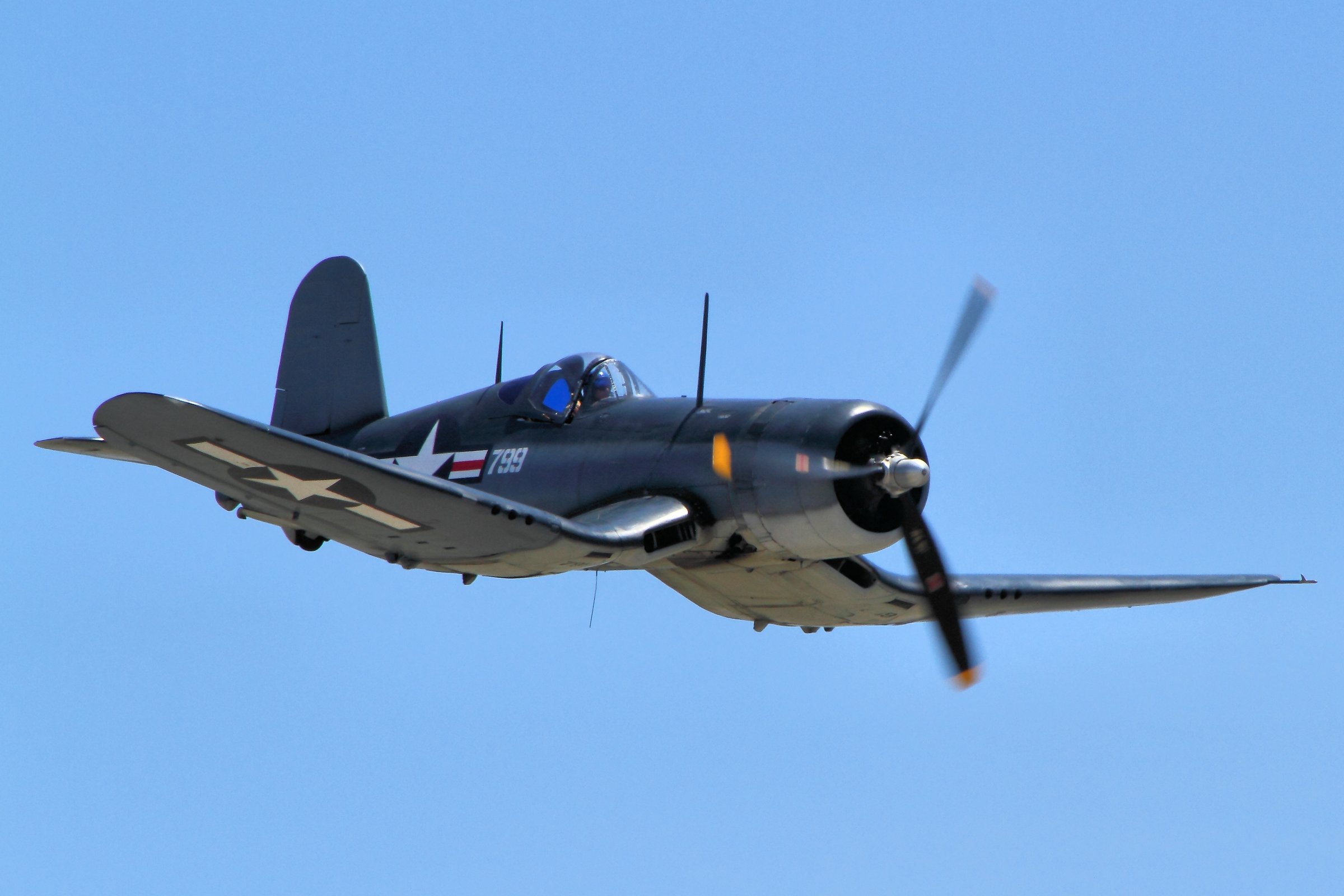
Vought F4U-1 / F4U-1A Corsair (incl. Goodyear FG-1 and Brewster F3A-1)
 ◎ VOUGHT
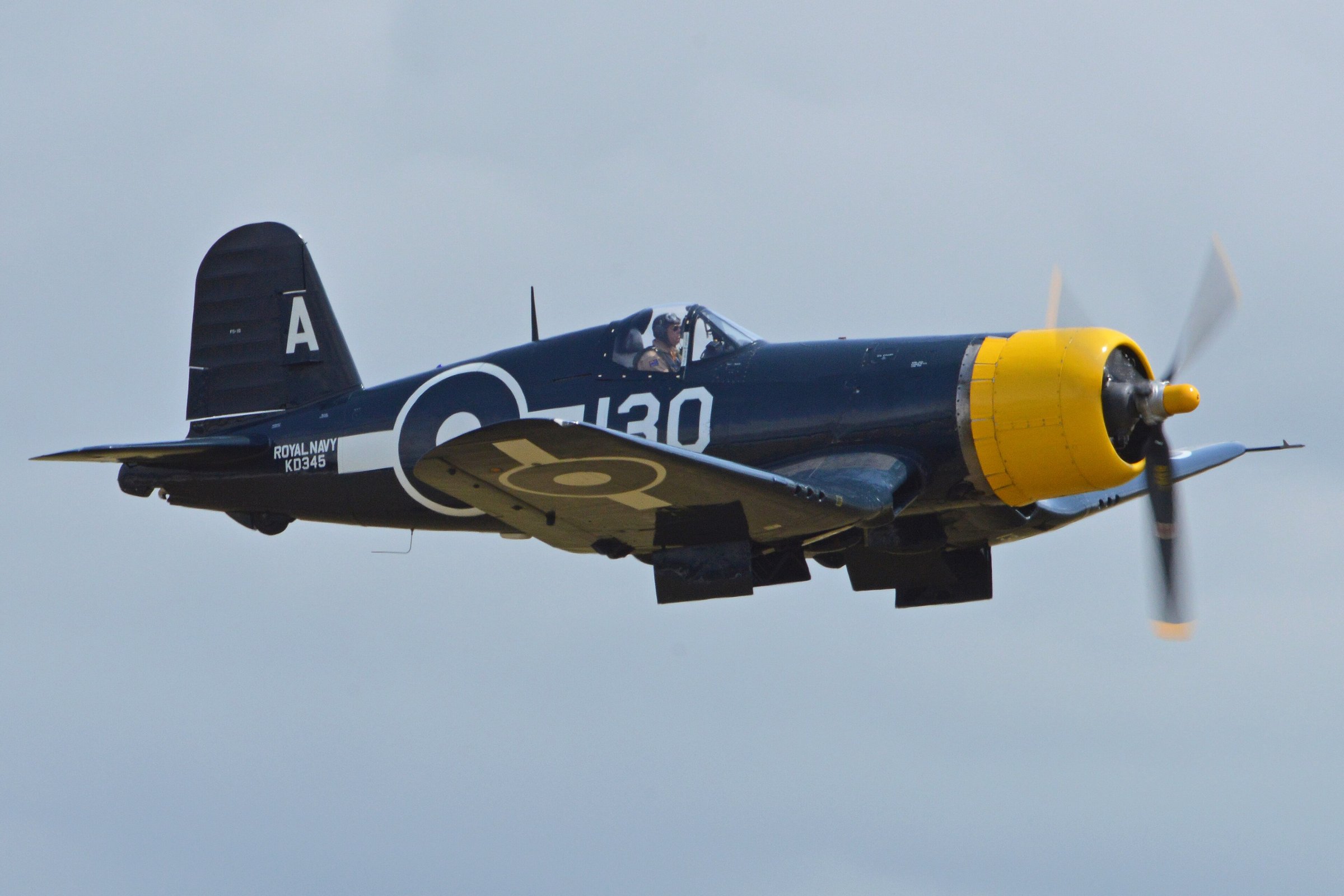
Vought Corsair I–IV (Royal Navy Fleet Air Arm)
 ◎ VOUGHT
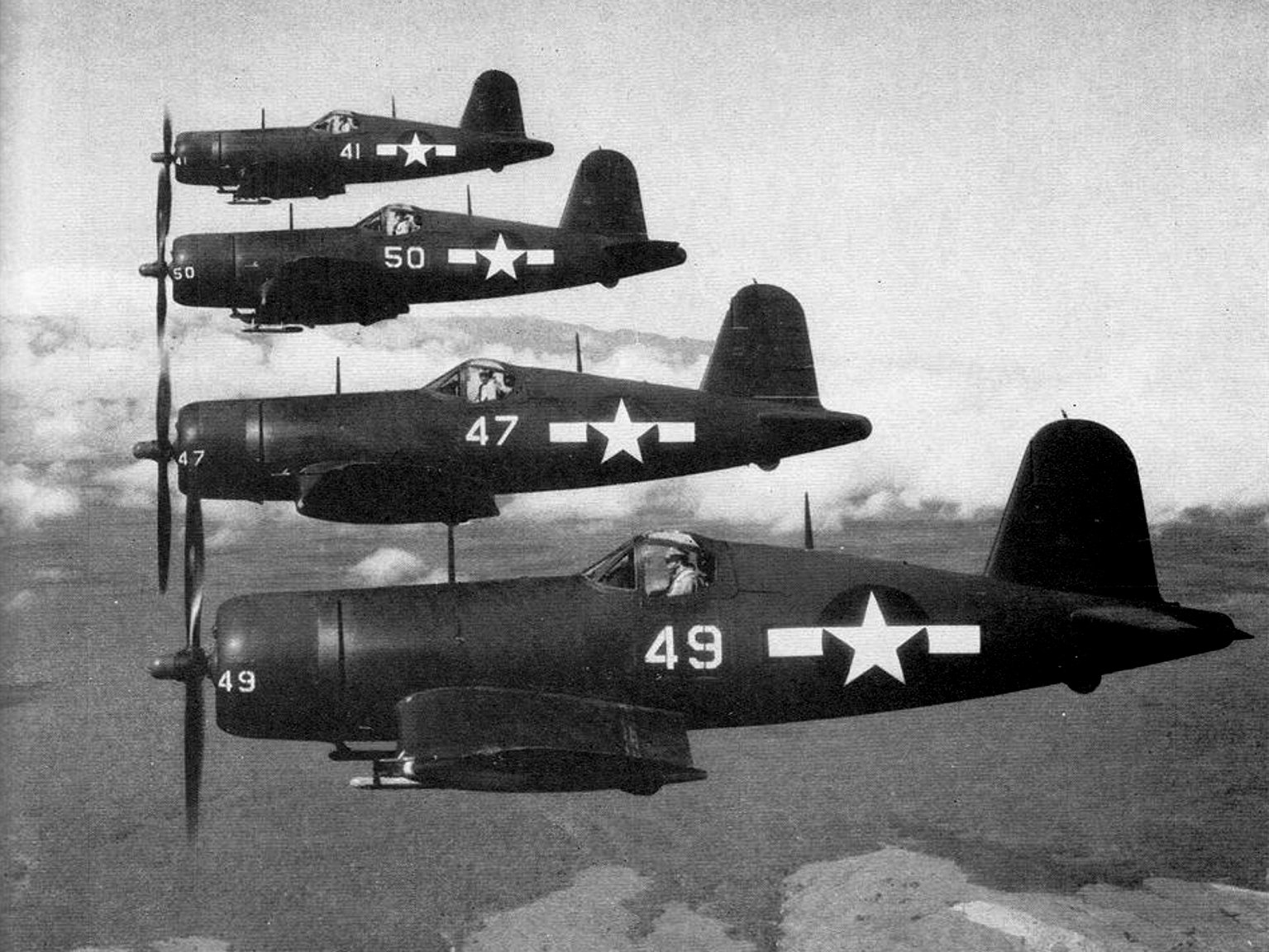
Vought F4U-1D / Goodyear FG-1D Corsair (and cannon-armed F4U-1C)
 ◎ VOUGHT
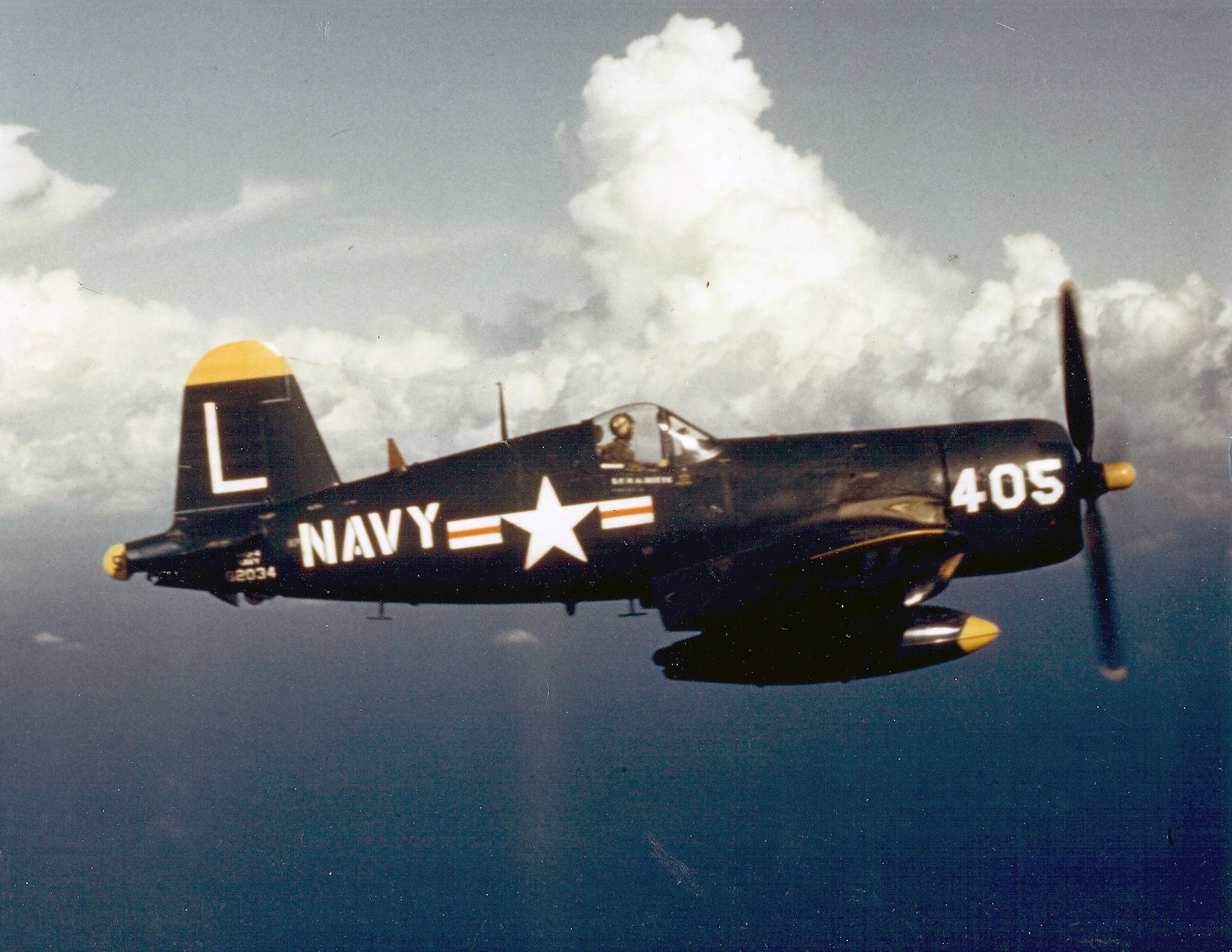
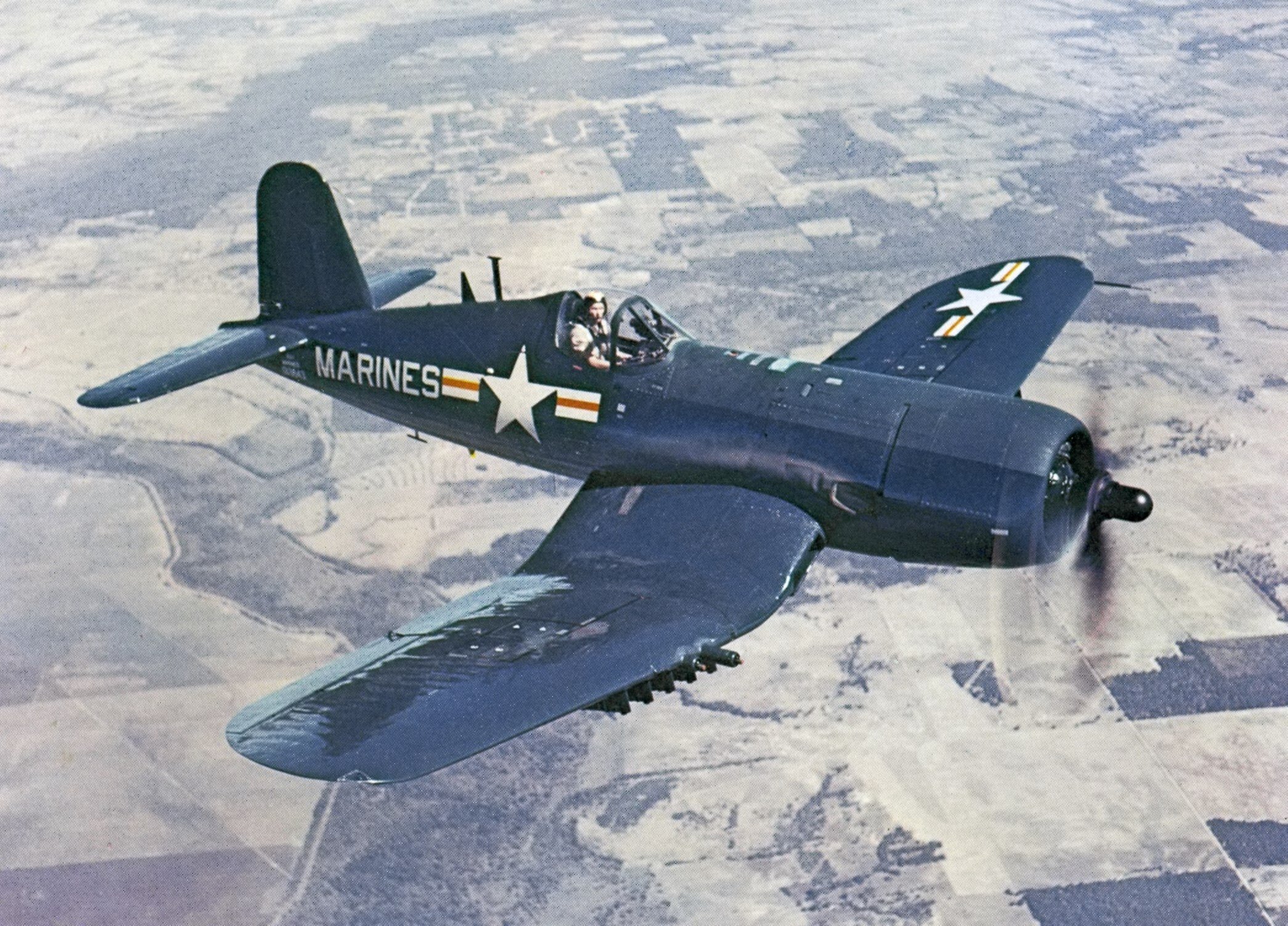
Vought F4U-4 Corsair
 ◎ VOUGHT
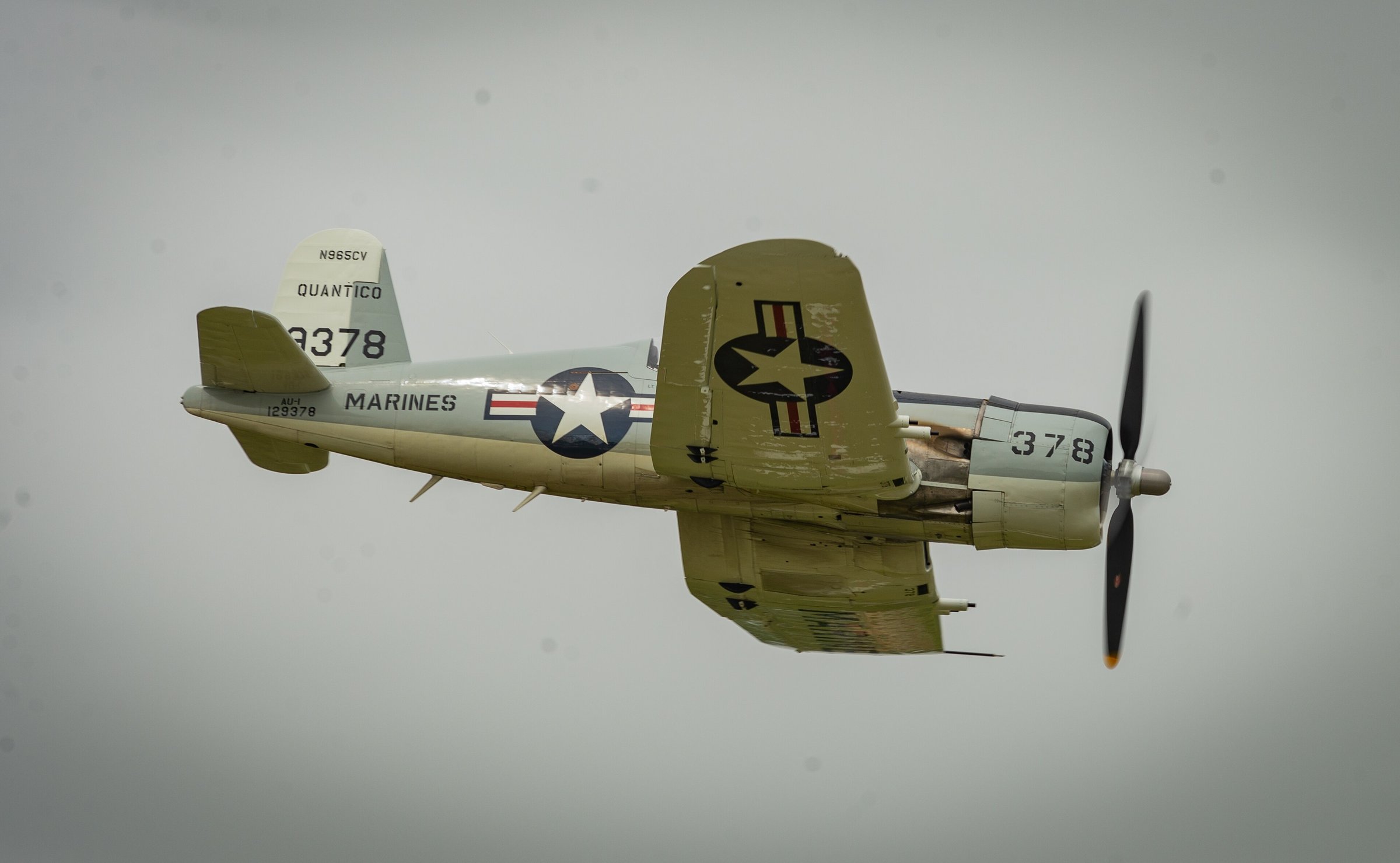
Vought AU-1 Corsair (XF4U-6)
 ◎ VOUGHT