


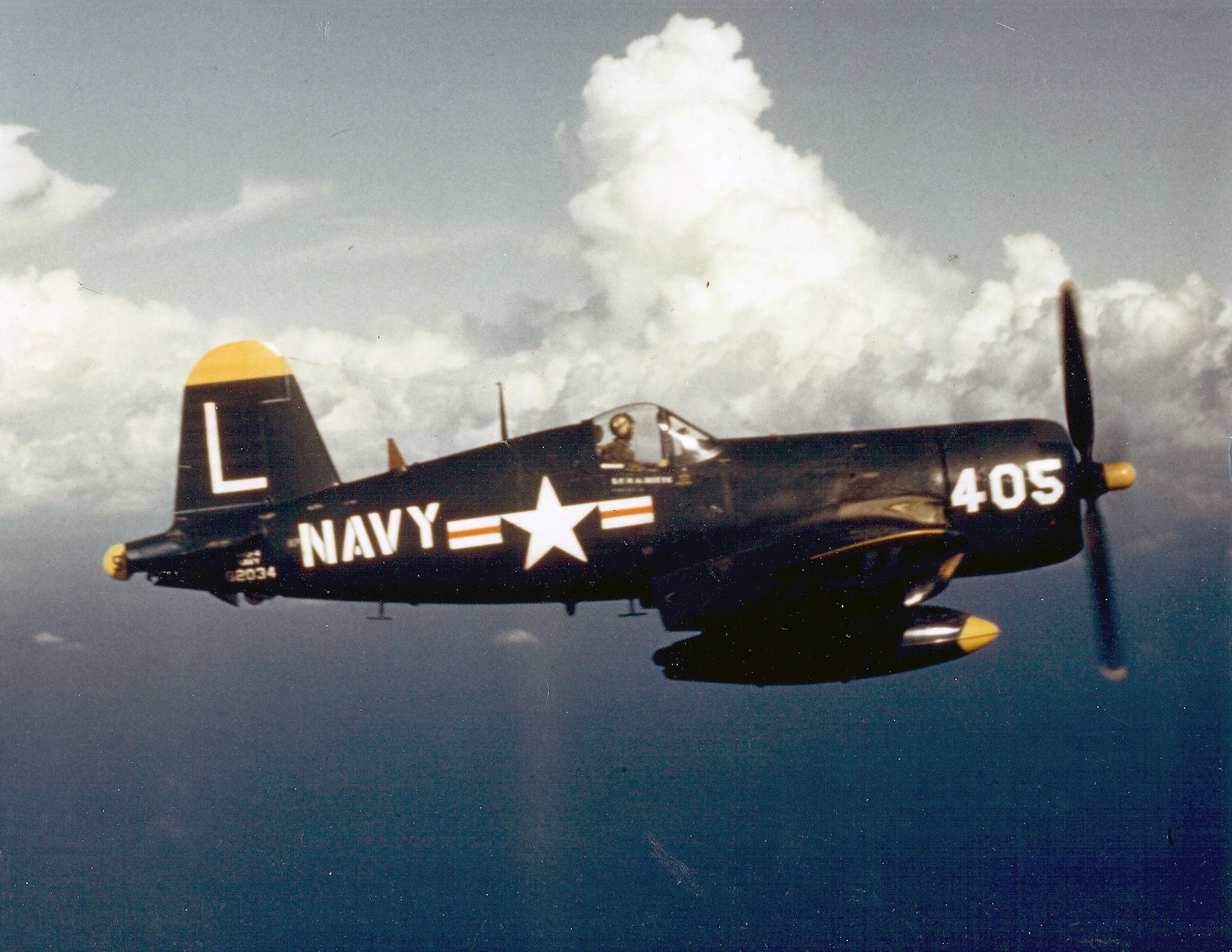
Vought F4U-4 Corsair
The last wartime Corsair — four-blade propeller, 2,100 hp, and the workhorse of the Korean War · First flight 1944 · In service 1945
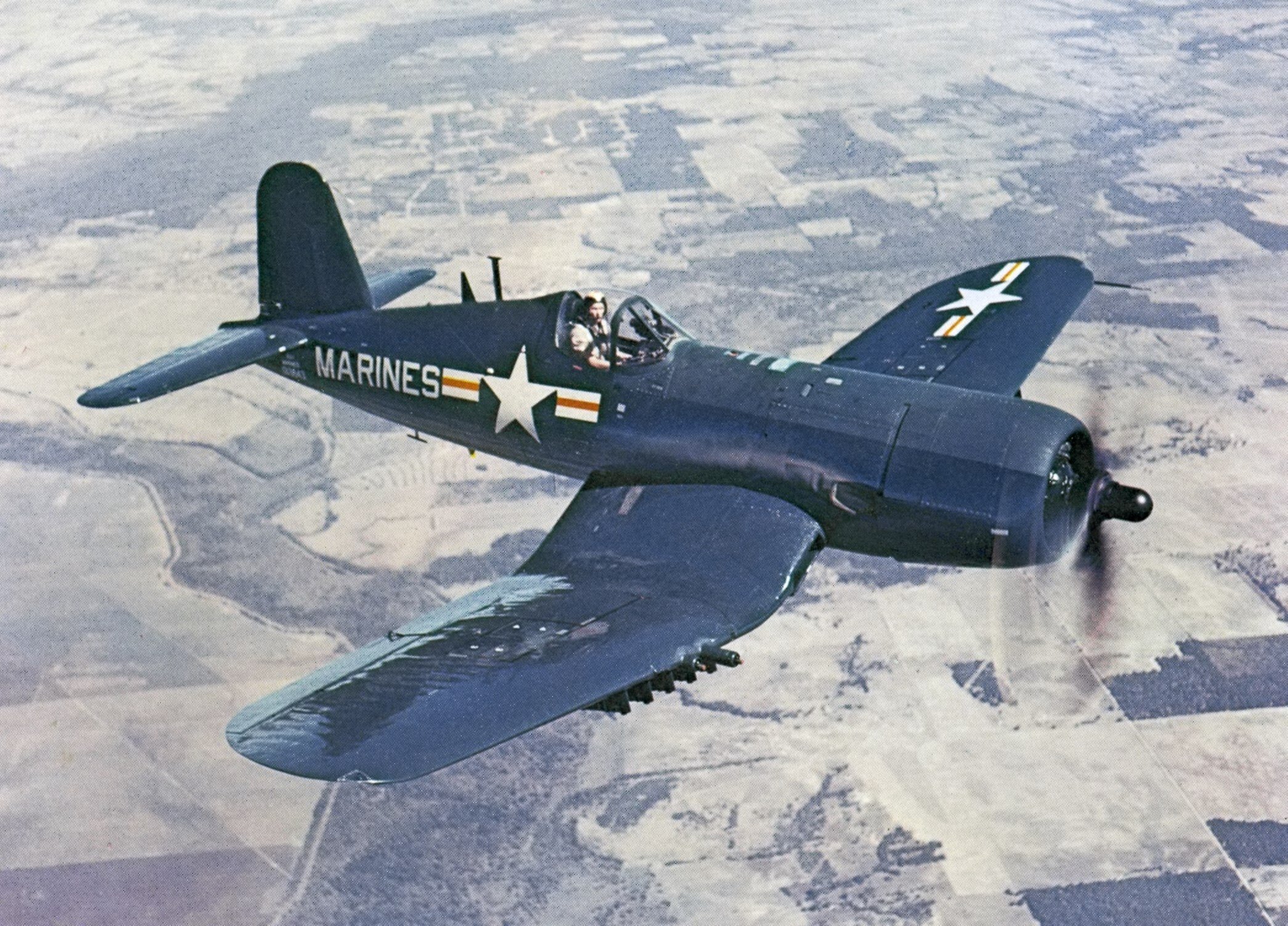
The XF4U-4 flew on 19 April 1944 with the R-2800-18W — 2,100 hp, rising to about 2,450 hp with water injection — driving a four-blade Hamilton Standard propeller through a two-stage supercharger, with a new chin intake under the cowling. Top speed rose to 718 km/h. Deliveries began early in 1945, and the F4U-4 was the last Corsair variant to see action in the Second World War, off Okinawa and Japan.
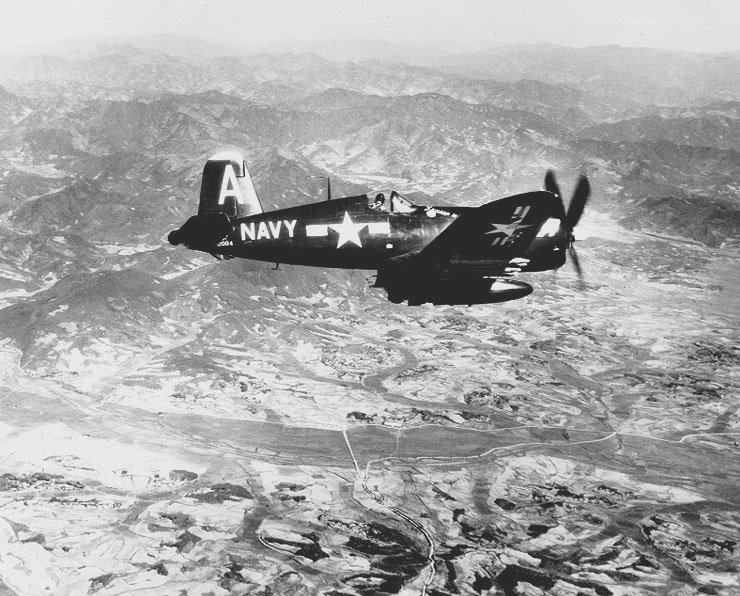
With 2,351 built, the F4U-4 became the standard post-war Corsair, and when the Korean War began in June 1950 Navy and Marine F4U-4s and cannon-armed F4U-4Bs flew from fleet and escort carriers and from Korean airfields on close air support missions. Ensign Jesse L. Brown of VF-32, the first African-American trained by the US Navy as a naval aviator, was shot down in an F4U-4 near the Chosin Reservoir on 4 December 1950; squadron mate Thomas Hudner crash-landed beside him to try to save him and received the Medal of Honor.
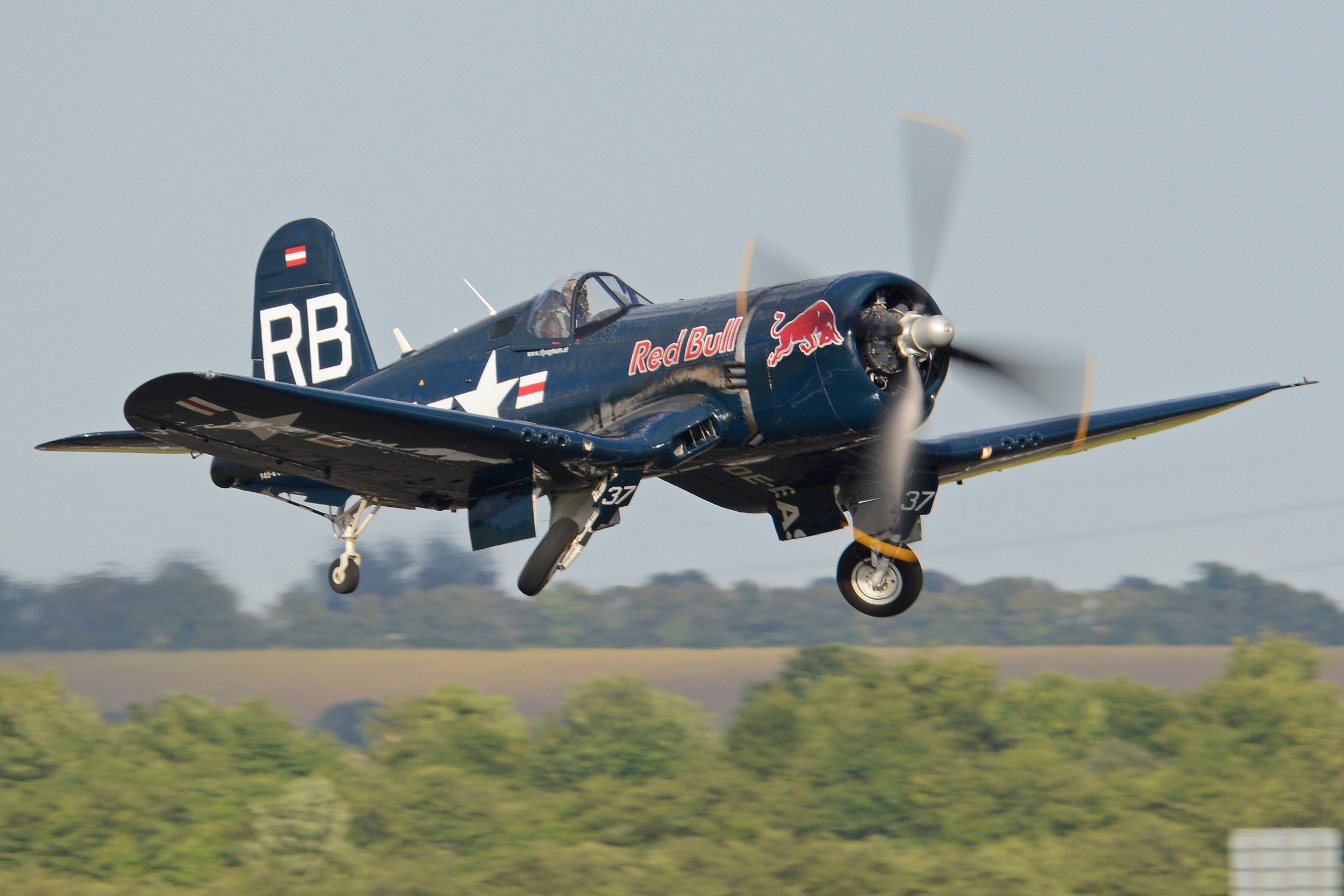
In September 1952 Marine Captain Jesse Folmar of VMA-312, flying an F4U-4B from USS Sicily, shot down a MiG-15 jet fighter with his cannon before being shot down himself and rescued. Ex-US Navy F4U-4s later served with Honduras; one of them, BuNo 96995 (ex-FAH-614), flies today with the Flying Bulls in Salzburg, Austria.
Other F4U Corsair variants
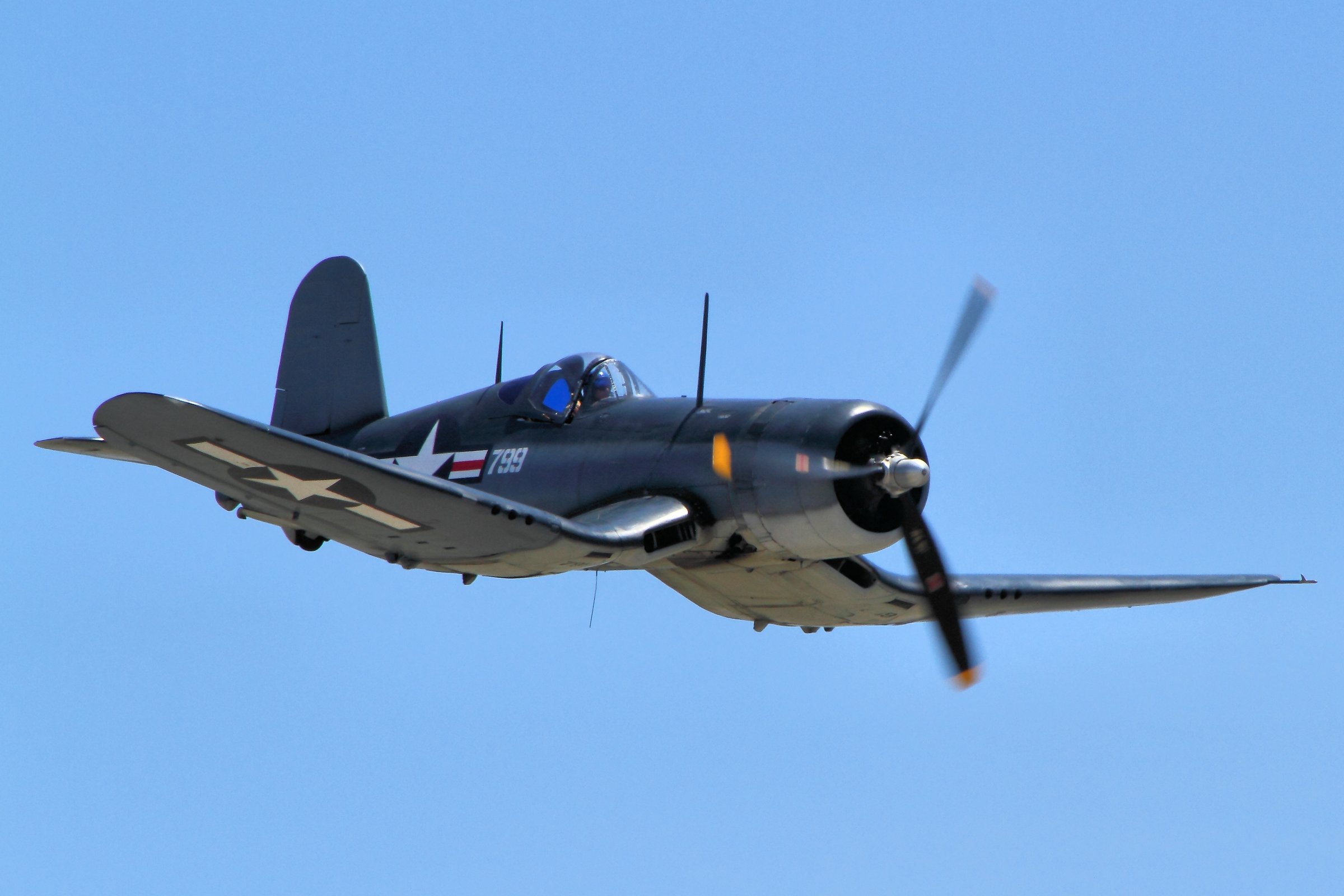 ◎ VOUGHT
Vought F4U-1 / F4U-1A Corsair (incl. Goodyear FG-1 and Brewster F3A-1)
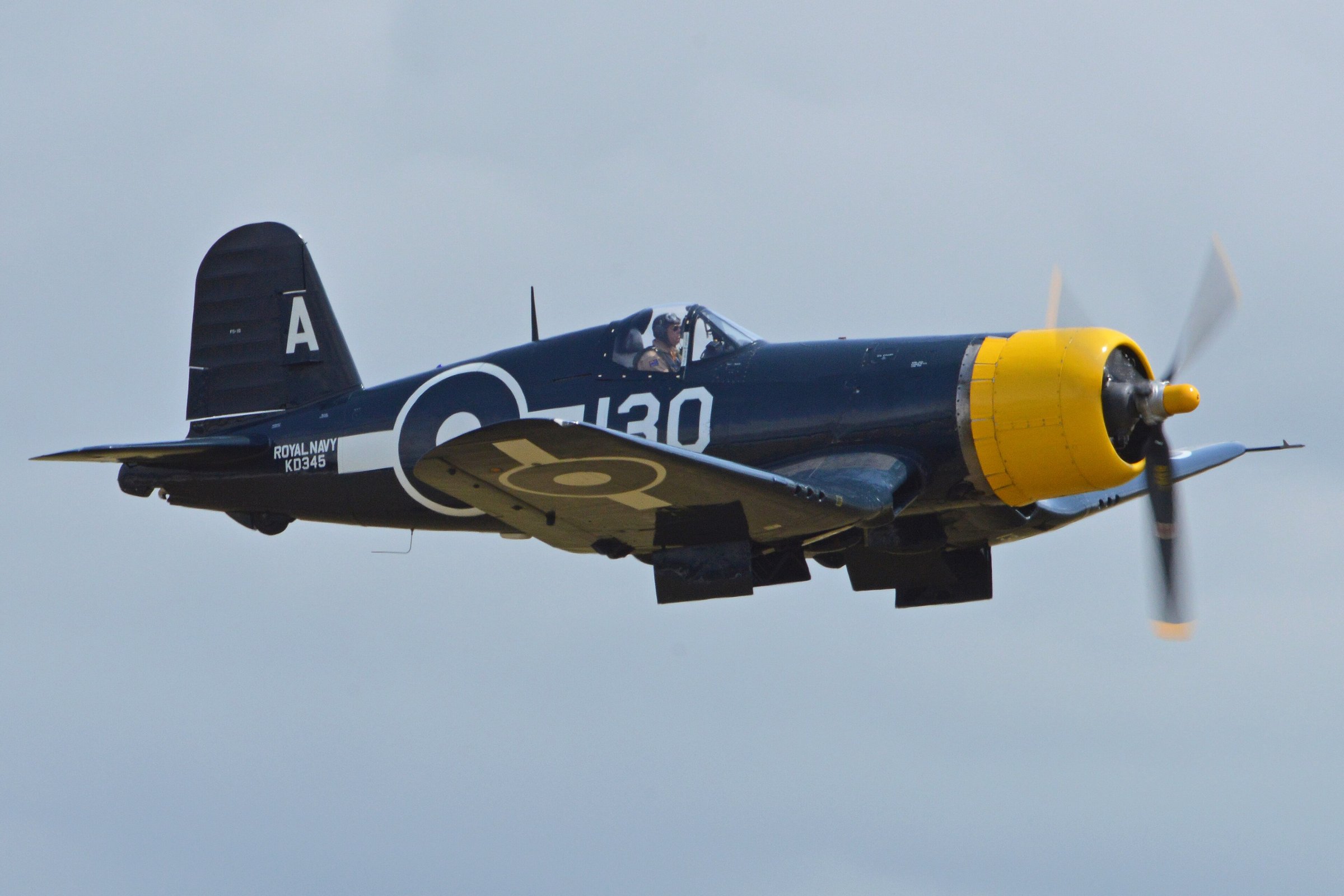 ◎ VOUGHT
Vought Corsair I–IV (Royal Navy Fleet Air Arm)
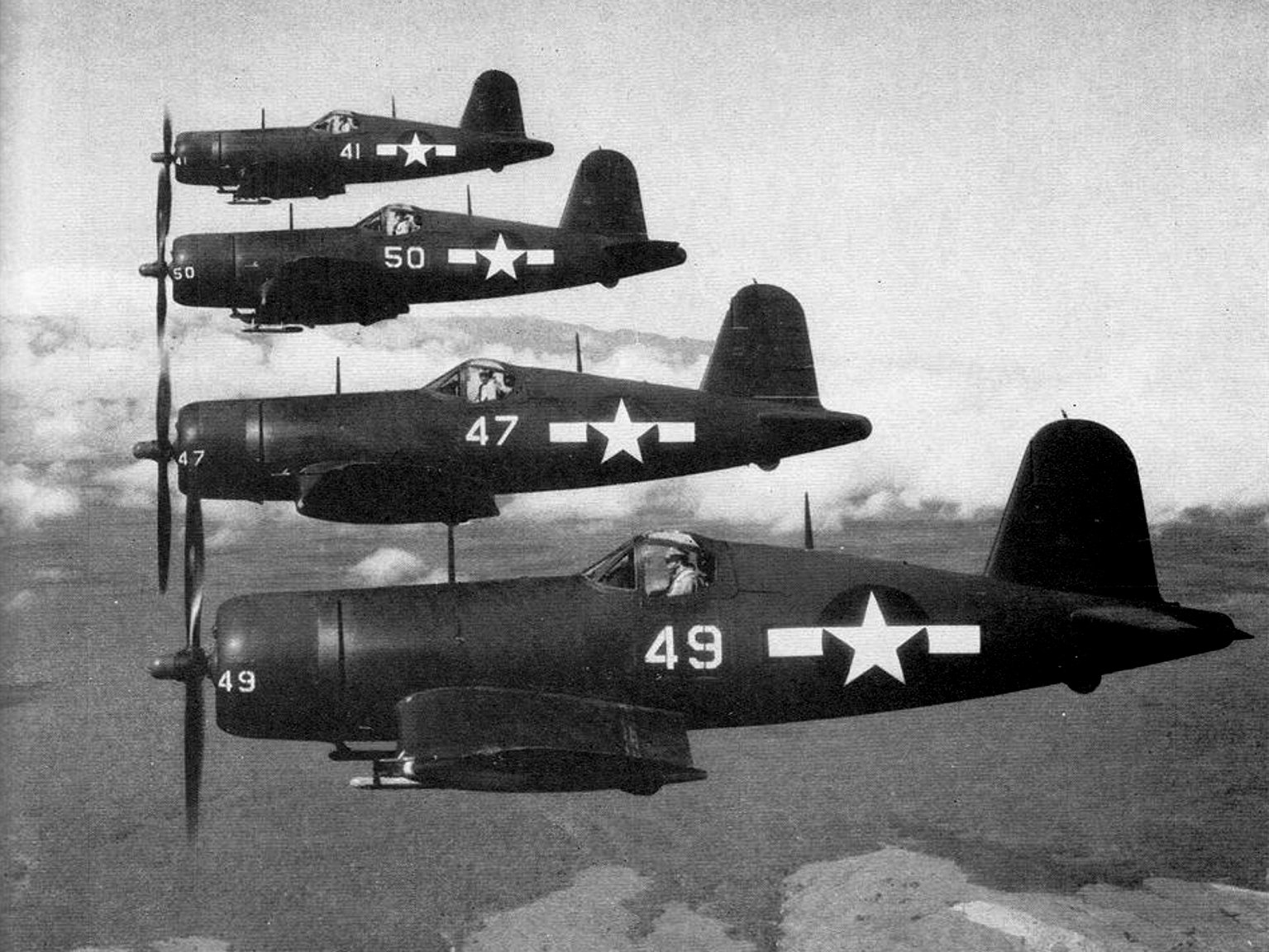 ◎ VOUGHT
Vought F4U-1D / Goodyear FG-1D Corsair (and cannon-armed F4U-1C)
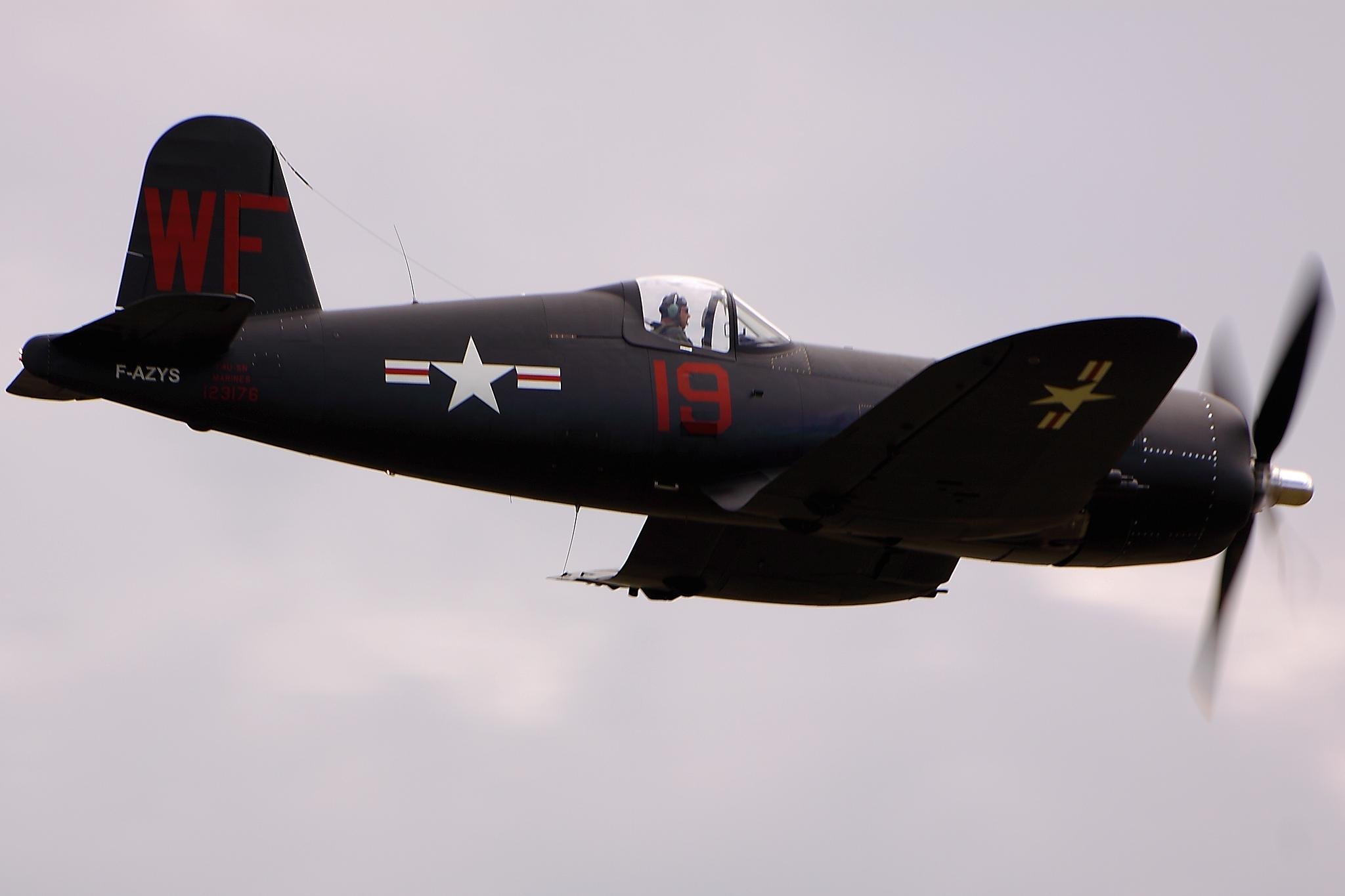 ◎ VOUGHT
Vought F4U-5 / F4U-5N / F4U-5NL Corsair
 ◎ VOUGHT
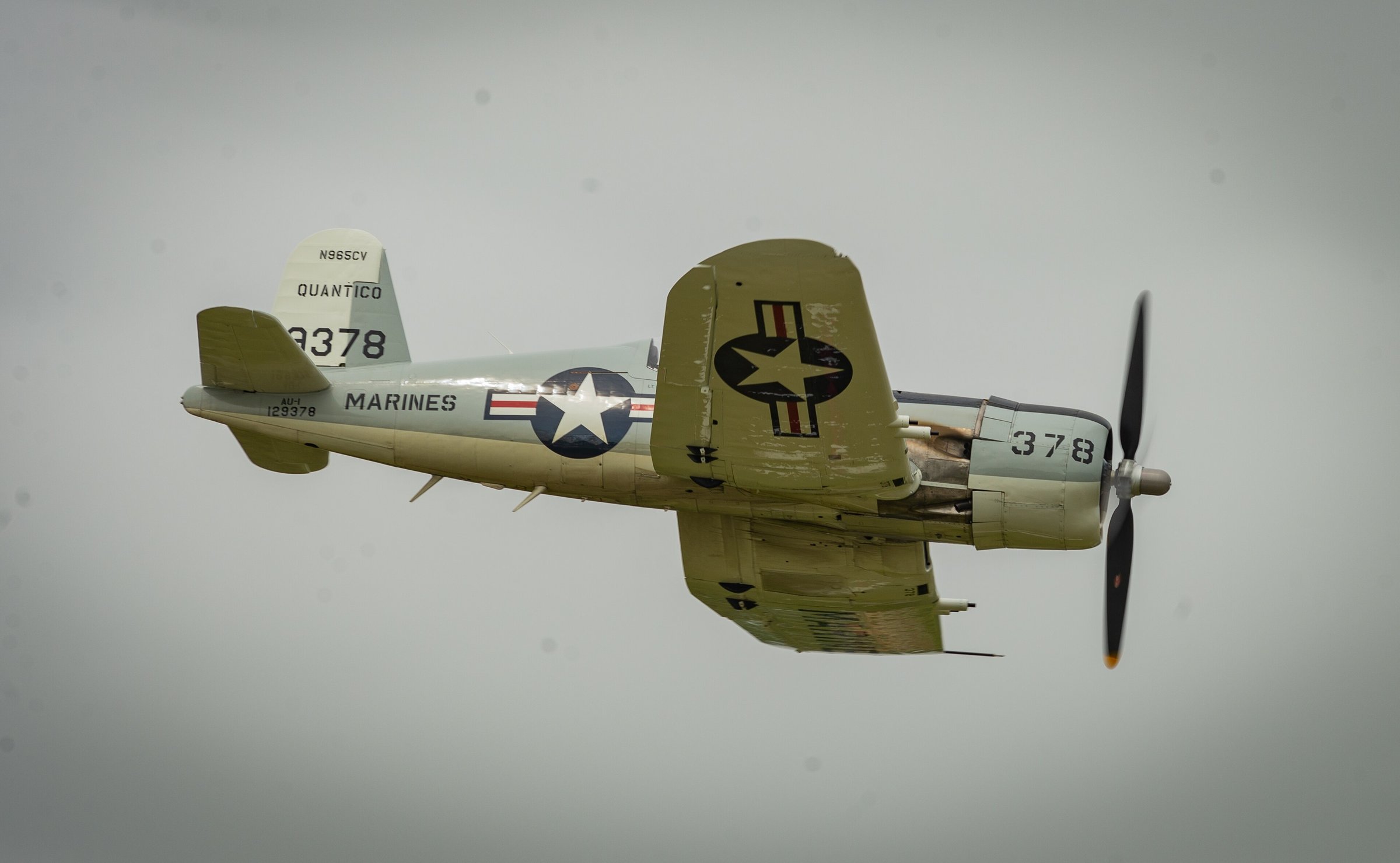
Vought AU-1 Corsair (XF4U-6)
 ◎ VOUGHT