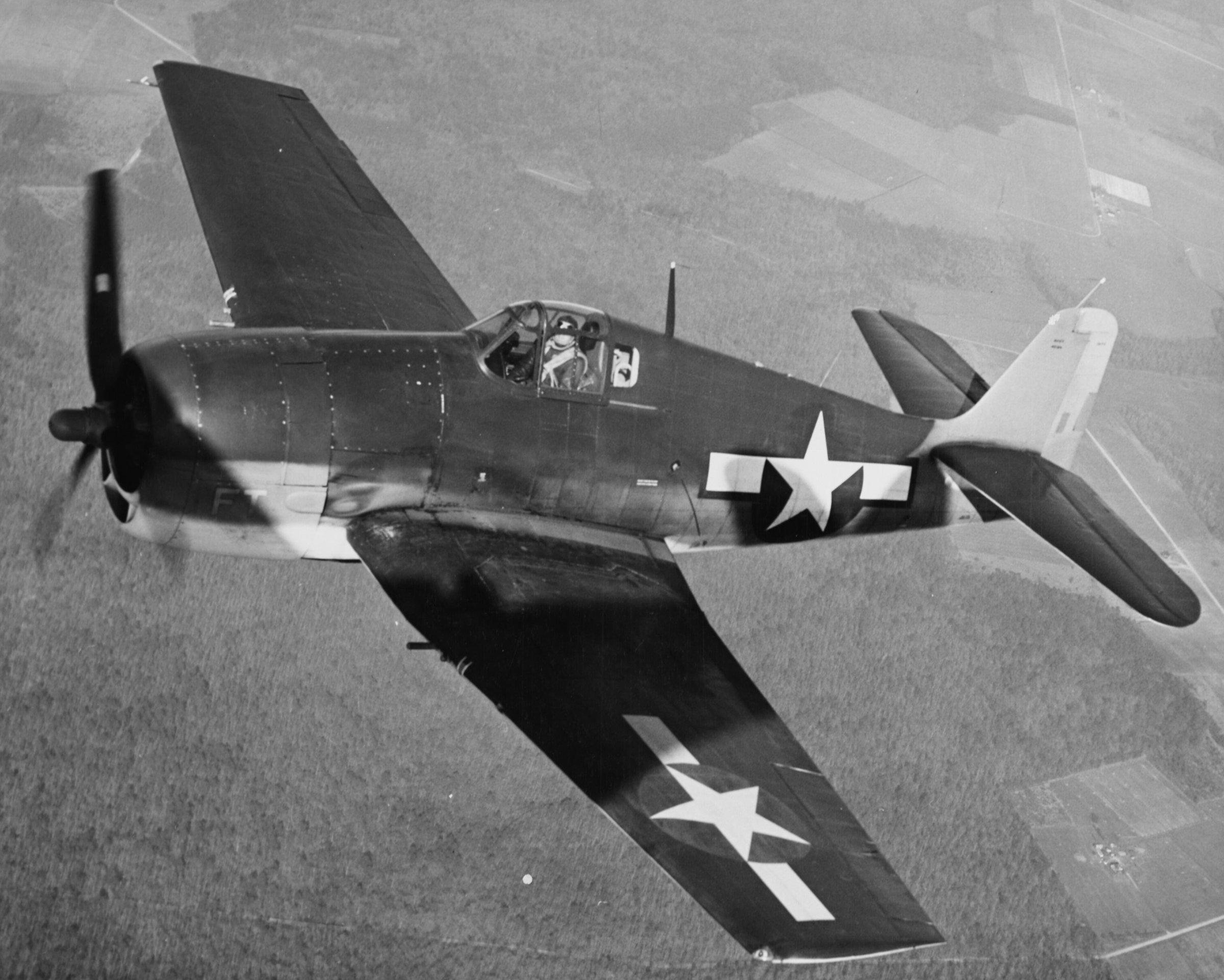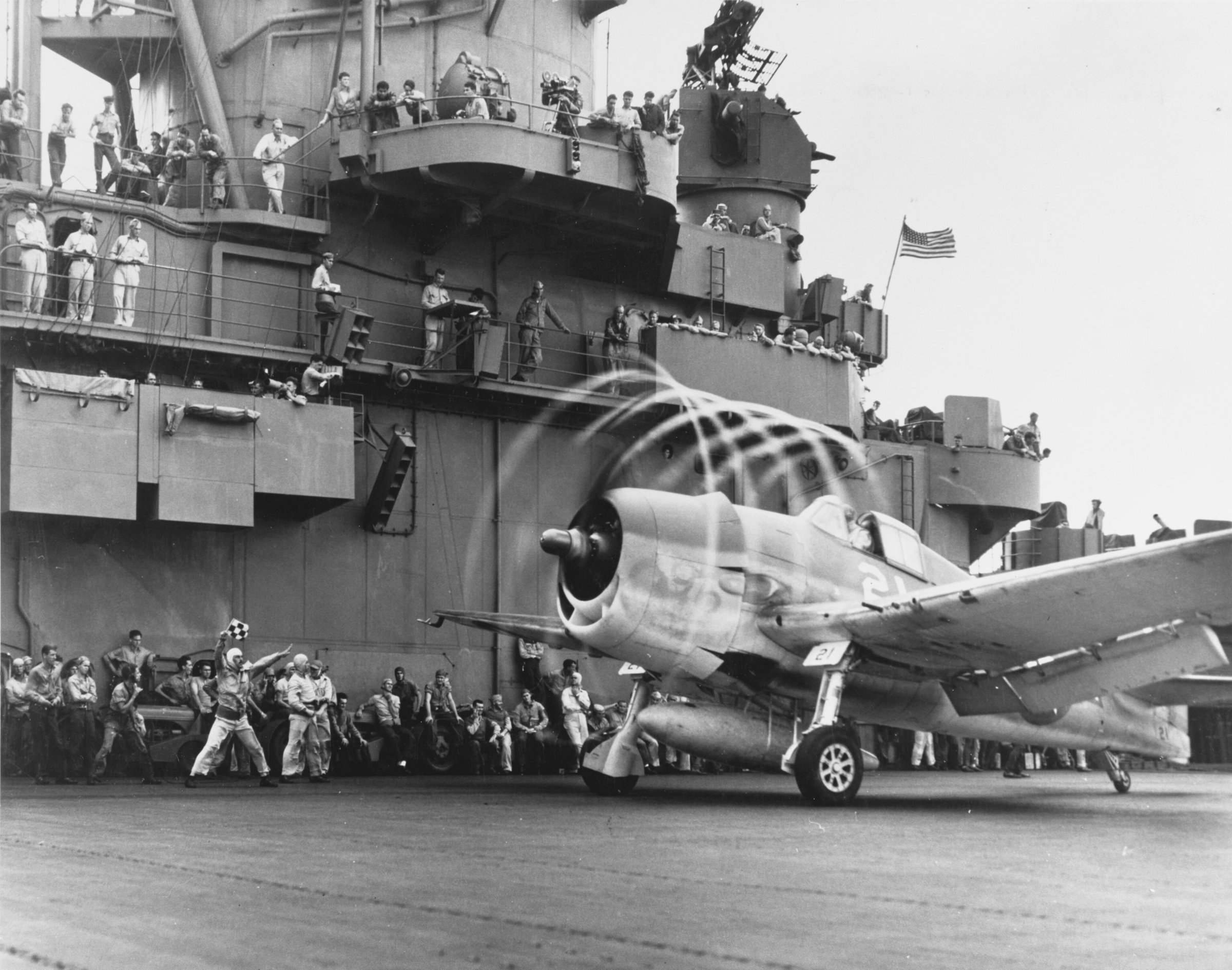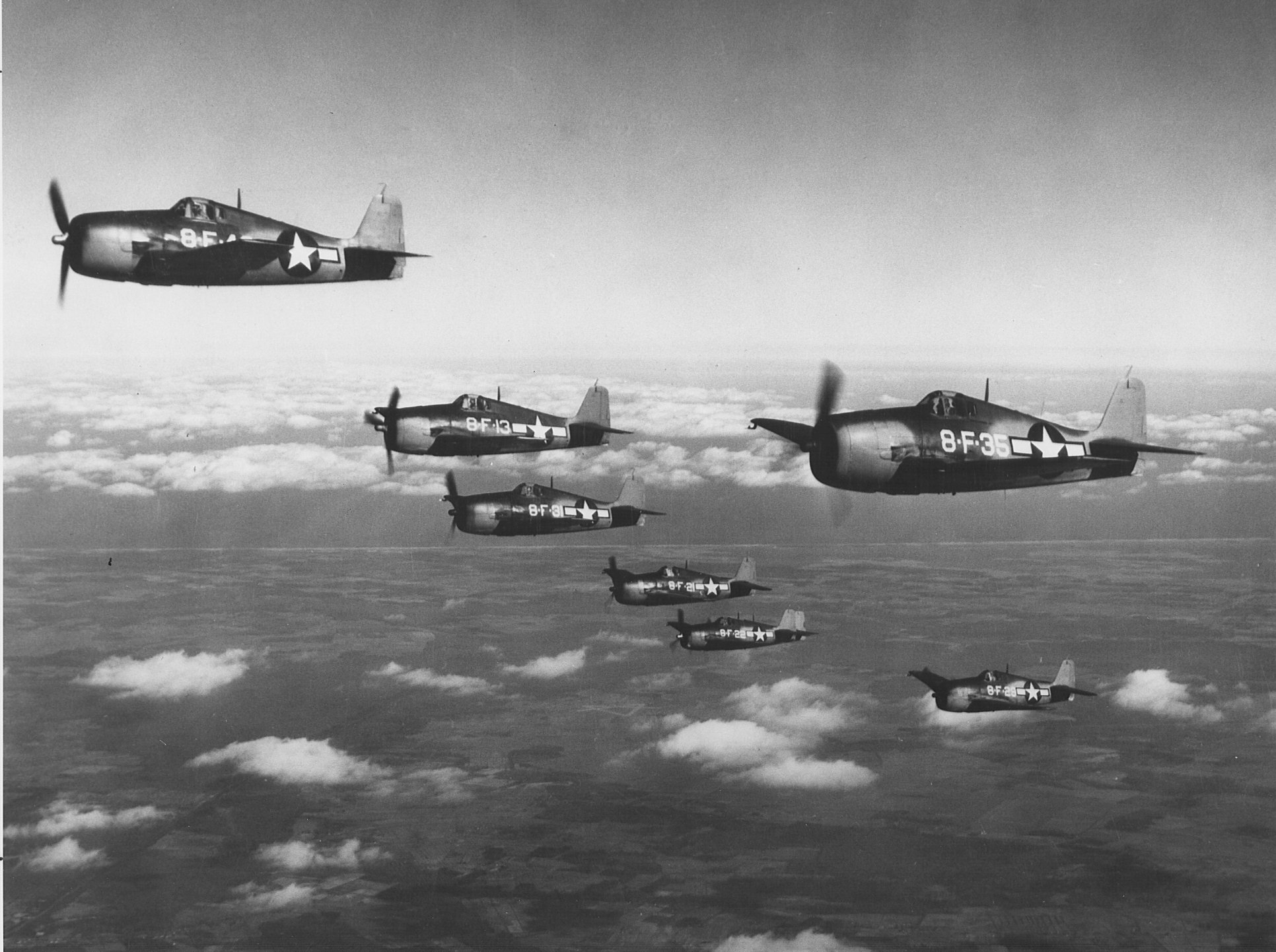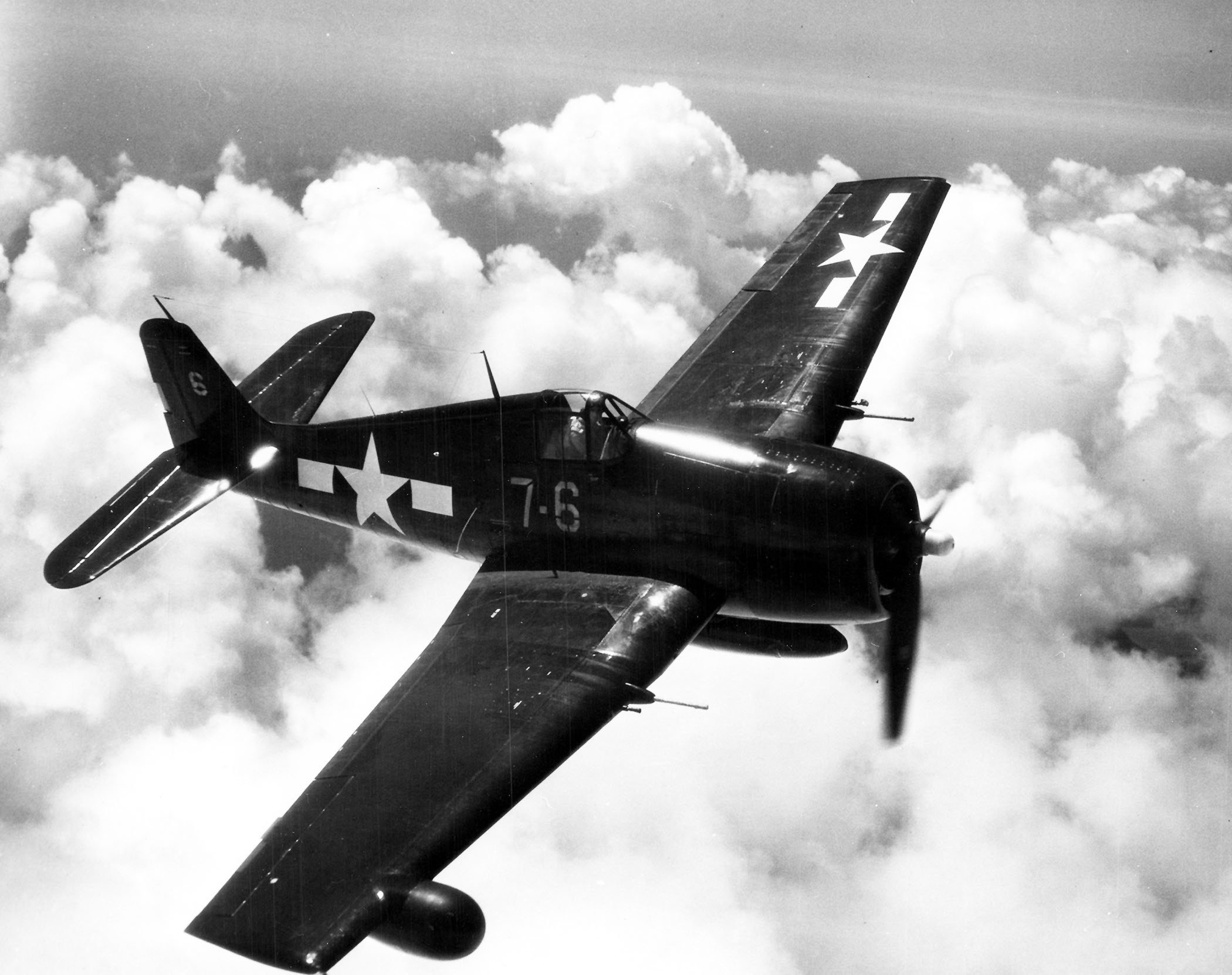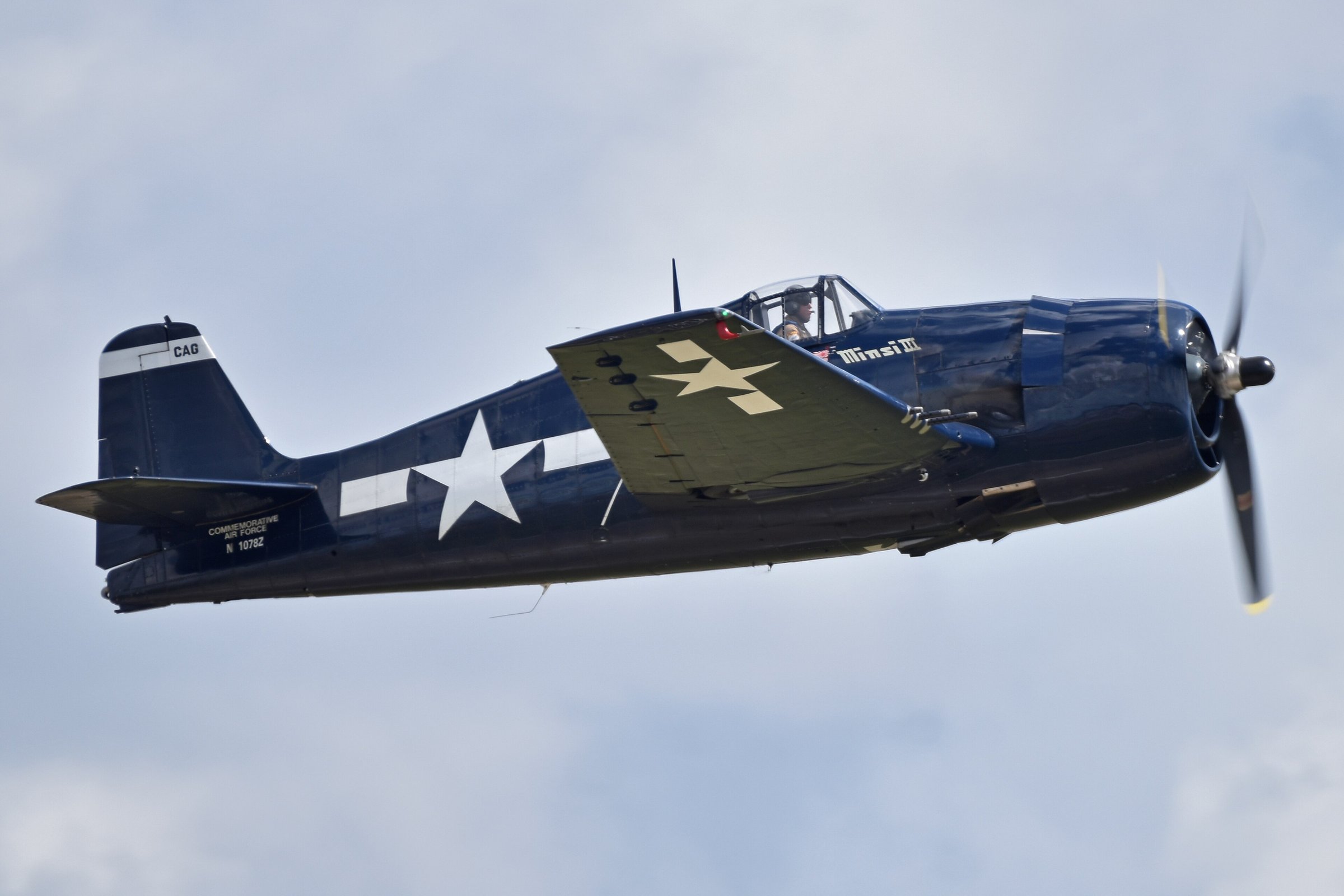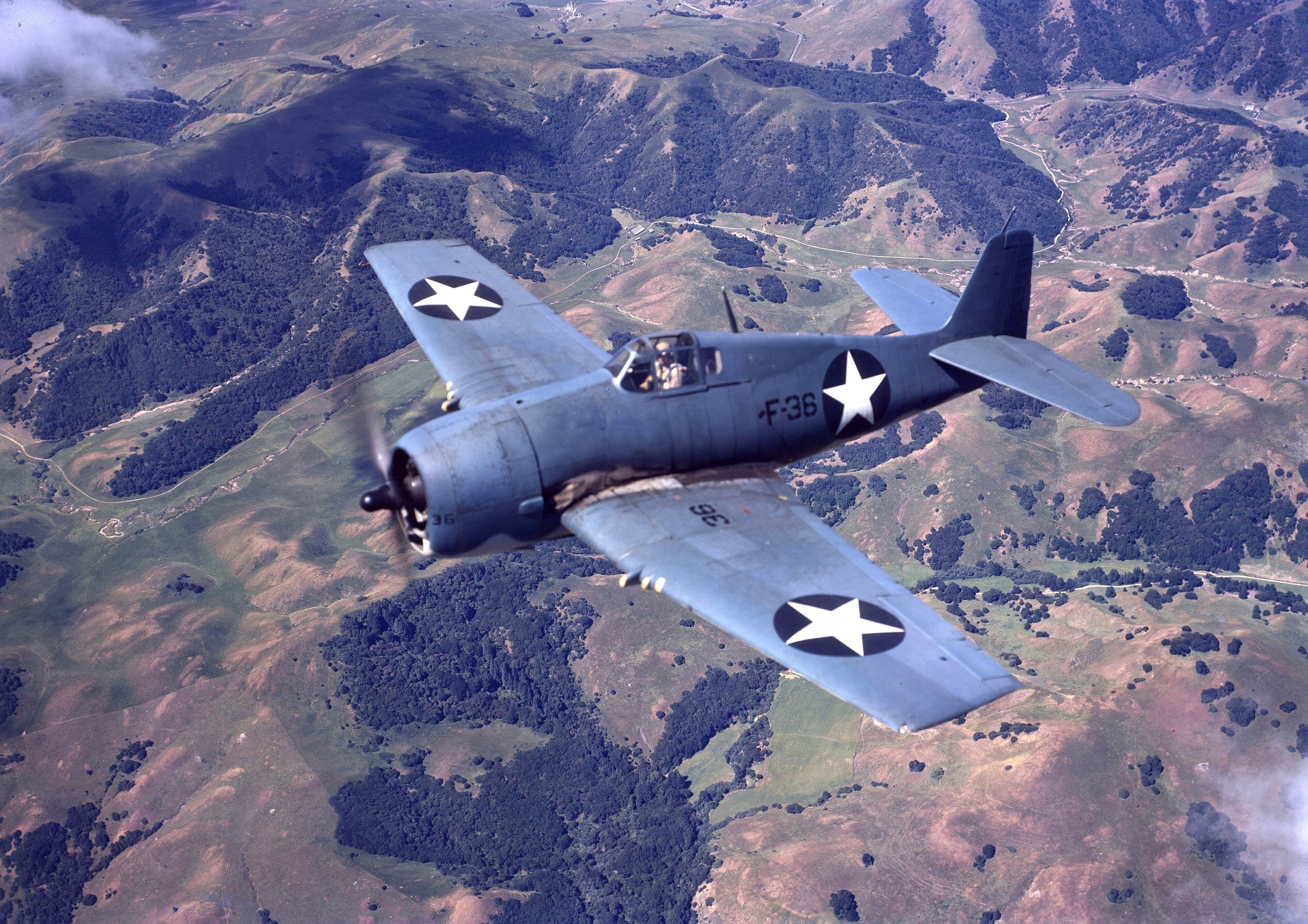
Grumman F6F-3 Hellcat (Royal Navy Hellcat I)
The first production Hellcat — designed, built and in combat within about a year · First flight 1942 · In combat 1943
Grumman's XF6F-1 flew on 26 June 1942 with a Wright R-2600; the second prototype, the XF6F-3, followed on 30 July with the 2,000 hp Pratt & Whitney R-2800-10 that became standard. The first production F6F-3 flew on 3 October 1942 and deliveries began in January 1943. It carried six 12.7 mm guns with 400 rounds each, 96 kg of cockpit armour and a self-sealing main fuel tank.
VF-9 on USS Essex reached operational readiness in February 1943, and the type's combat debut came in the raids on Marcus Island at the end of August 1943; on 1 September fighters from USS Independence shot down a Kawanishi H8K flying boat. F6F-3s then fought through the Gilberts, Marshalls and Truk and formed most of the US fighter force at the Battle of the Philippine Sea in June 1944. 4,402 were built before production switched to the F6F-5 in spring 1944.
The Royal Navy received 252 F6F-3s, first named Gannet I and renamed Hellcat I in January 1944. Fleet Air Arm squadrons flew them off Norway — including cover for the Tirpitz strikes in 1944 — and later in the Far East. Night-fighter conversions of the F6F-3 are covered under the F6F-3N/-5N.