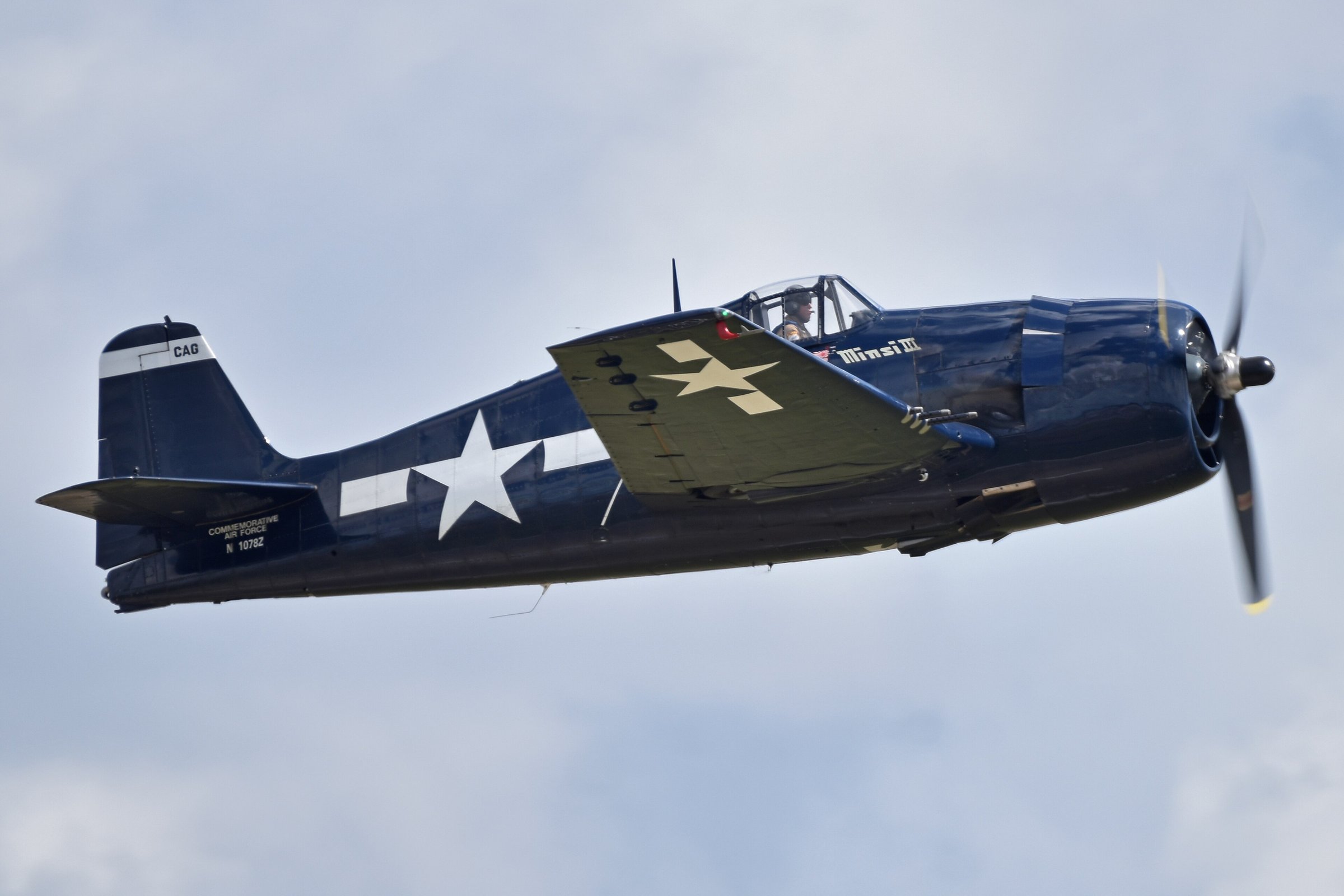
Grumman F6F-5 Hellcat (Royal Navy Hellcat II)
The definitive Hellcat — the most-built version, and the fighter that won the air war over the Pacific · In production 1944 · In service until 1961 (Uruguay)
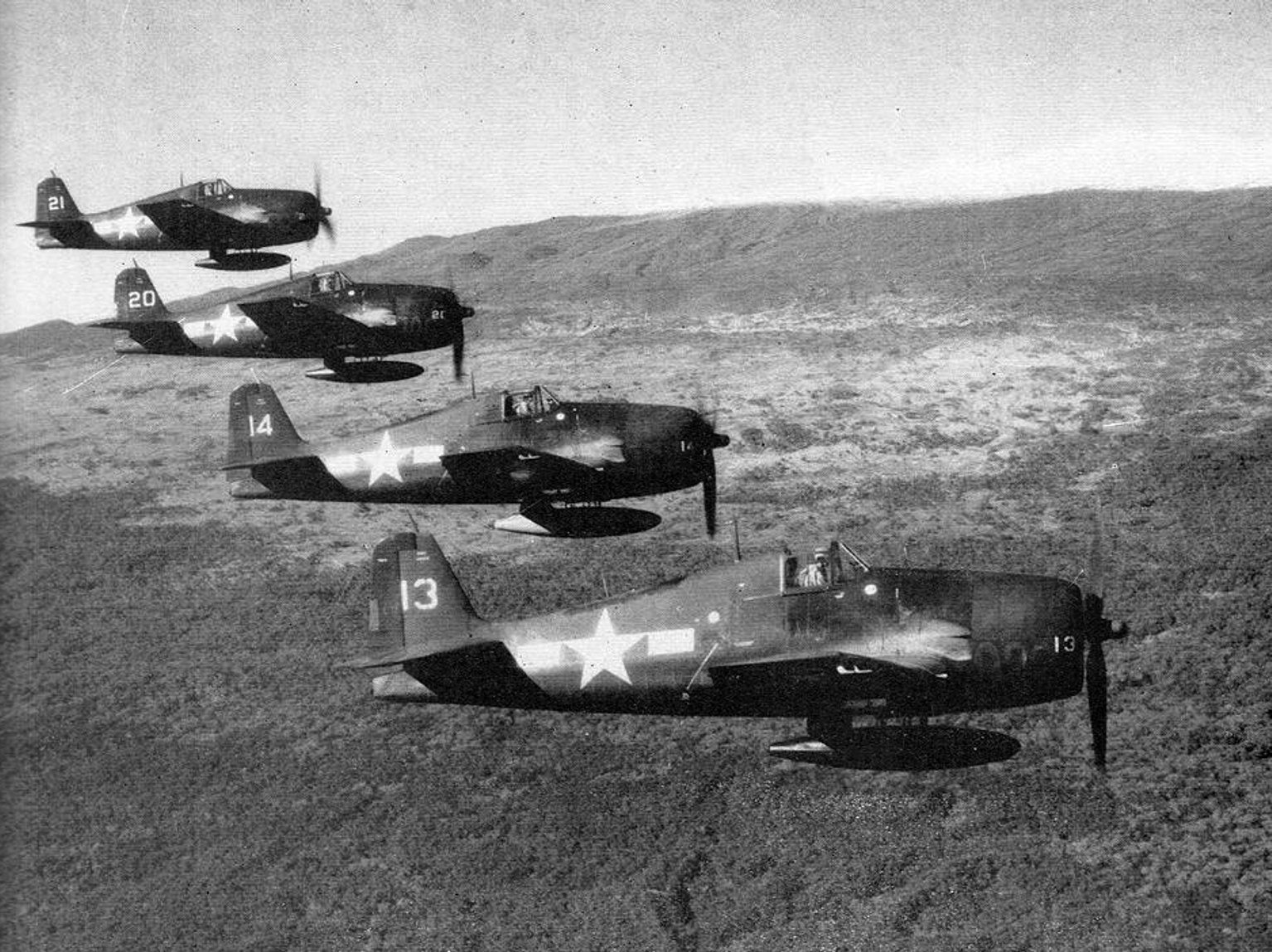
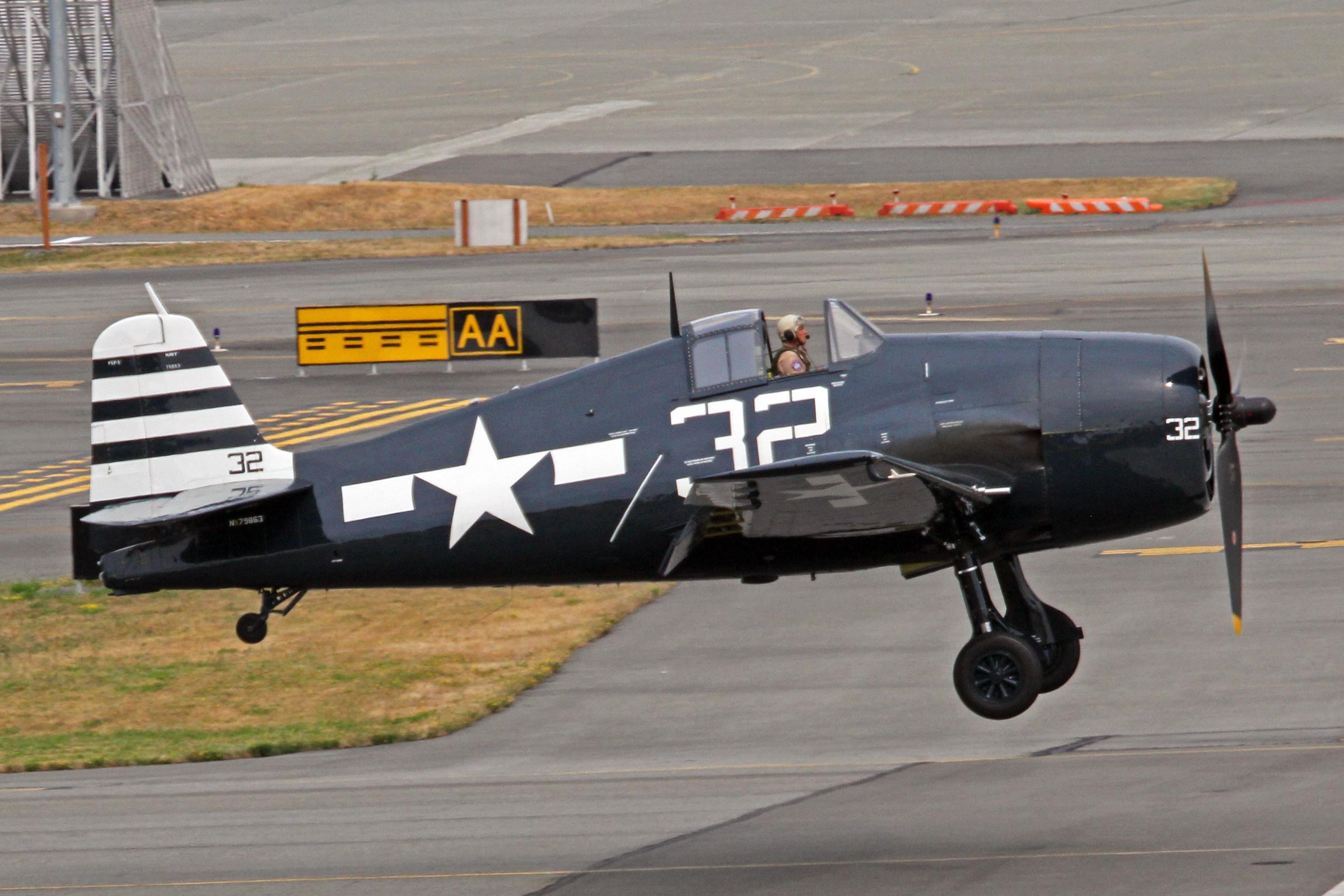
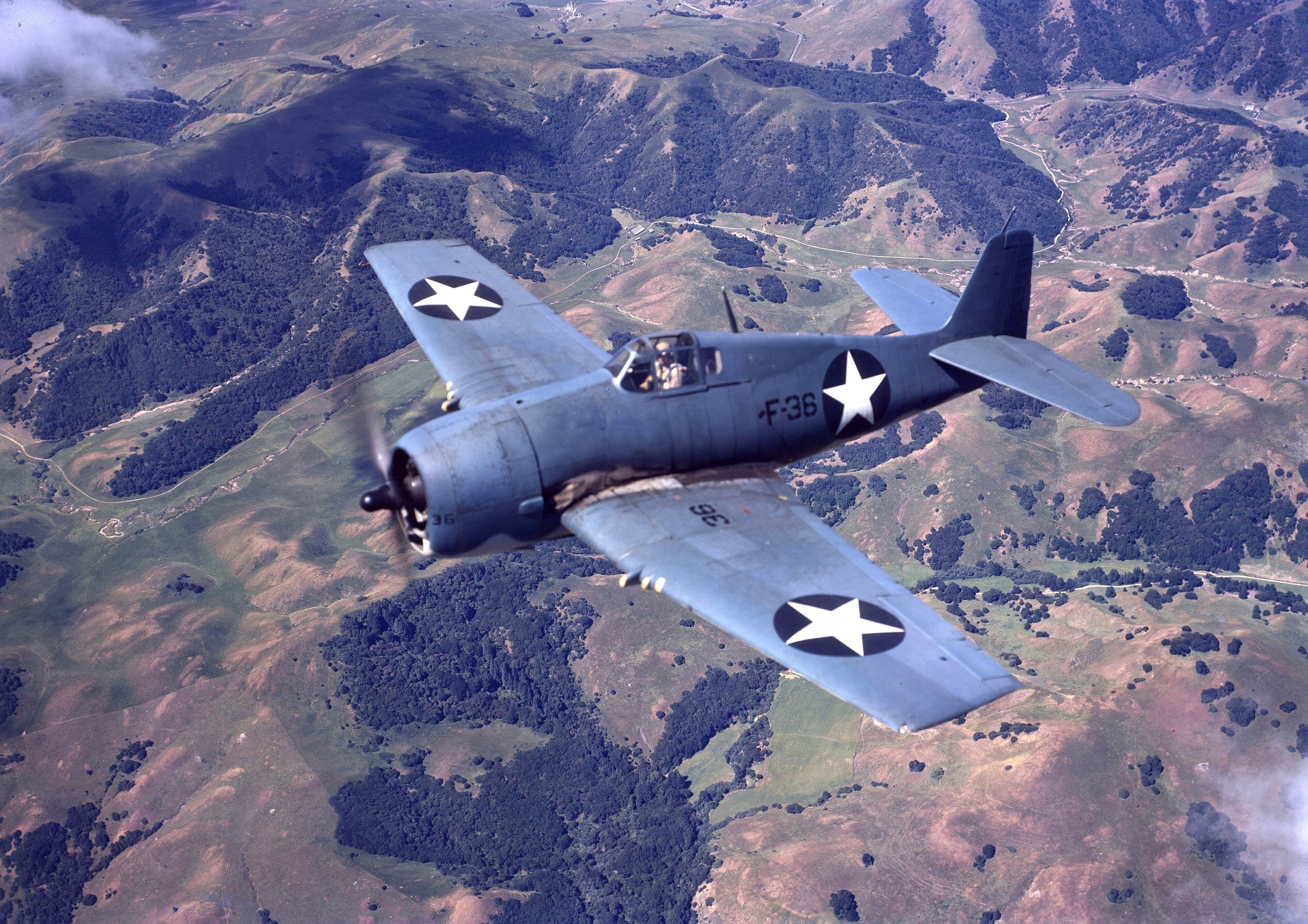
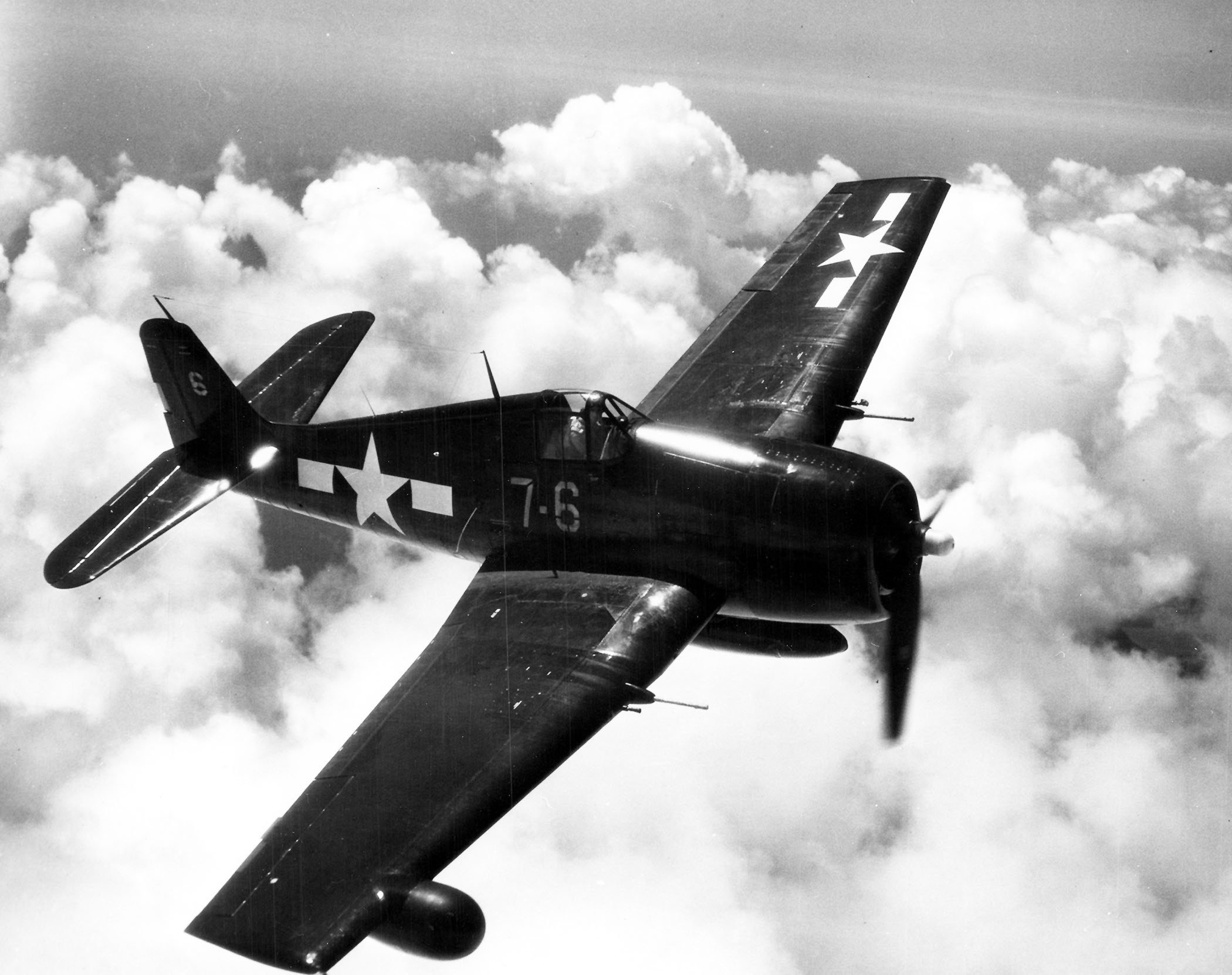
The F6F-5 replaced the F6F-3 on the Bethpage lines in spring 1944. It kept the airframe but added a redesigned cowling, spring-tab ailerons, a flat armoured-glass windscreen, a strengthened tail and the water-injected R-2800-10W of 2,200 hp; the first 1,500 or so kept the small windows behind the cockpit, and most were finished in overall gloss sea blue. It could carry rockets — including the 298 mm Tiny Tim — and bombs, and an alternative wing replaced the inner guns with 20 mm cannon. With 7,870 built it was the most numerous Hellcat, and Grumman delivered its 10,000th Hellcat in May 1945.
Hellcats of all versions flew 66,530 combat sorties for the US Navy and Marines and were credited with 5,163 victories in the Pacific for 270 losses in air combat, about three-quarters of the Navy's aerial victories in that theatre; 305 pilots became aces on the type. Commander David McCampbell, the Navy's top ace, scored all 34 of his victories in Hellcats. The Royal Navy received 930 F6F-5s as the Hellcat II, and Hellcats of all marks claimed 52 victories with the Fleet Air Arm.
After the war the F6F-5 equipped reserve squadrons and was the first aircraft of the Blue Angels display team in 1946. France flew F6F-5s in Indochina from the carriers Arromanches and La Fayette, and Uruguay used them until the early 1960s. In late 1952 radio-controlled F6F-5K drones, each carrying a 910 kg bomb, were flown from USS Boxer against bridges in Korea.