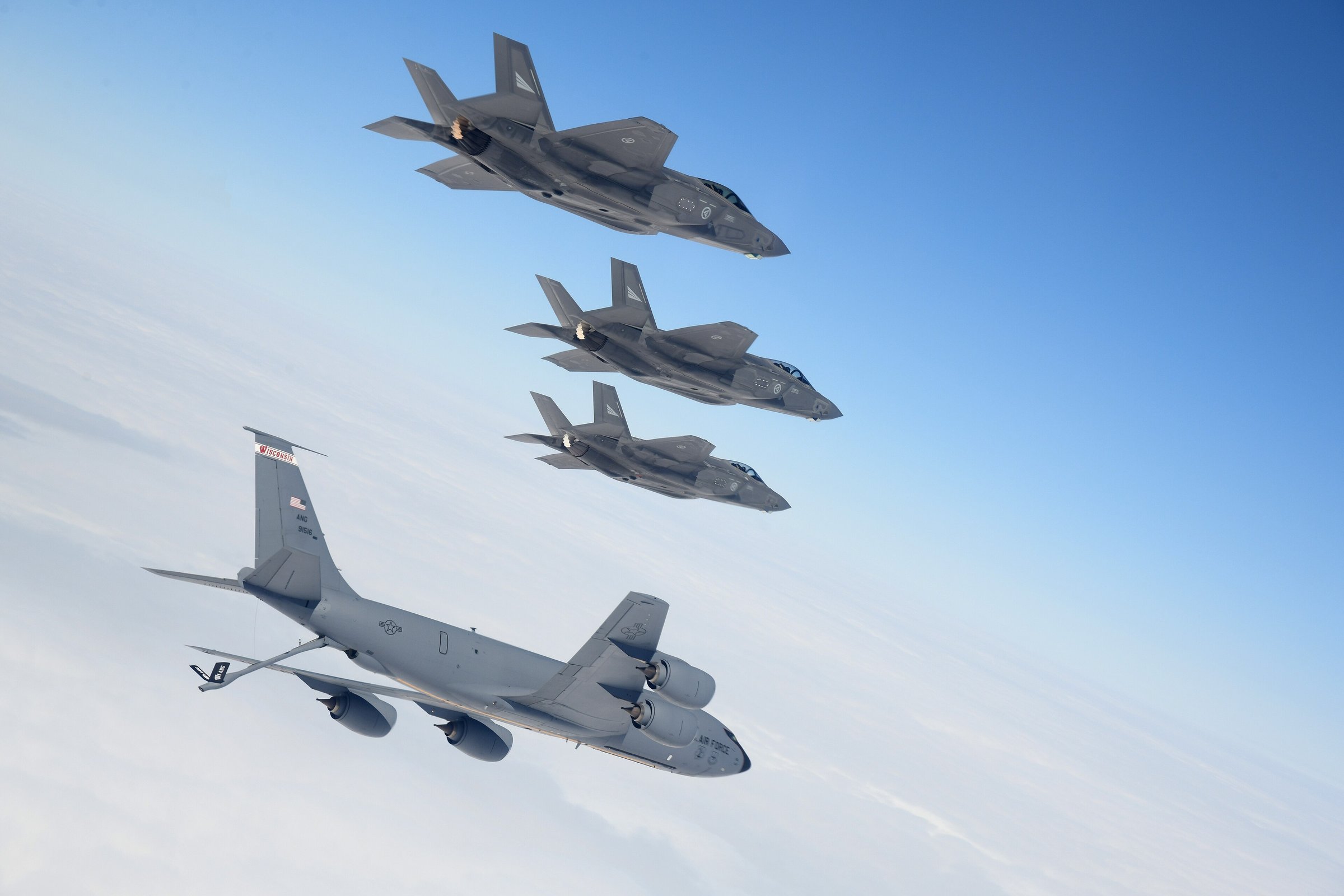
Boeing KC-135A Stratotanker
The original jet tanker — four water-injected J57 turbojets and a flying boom · First flight 1956 · In service 1957
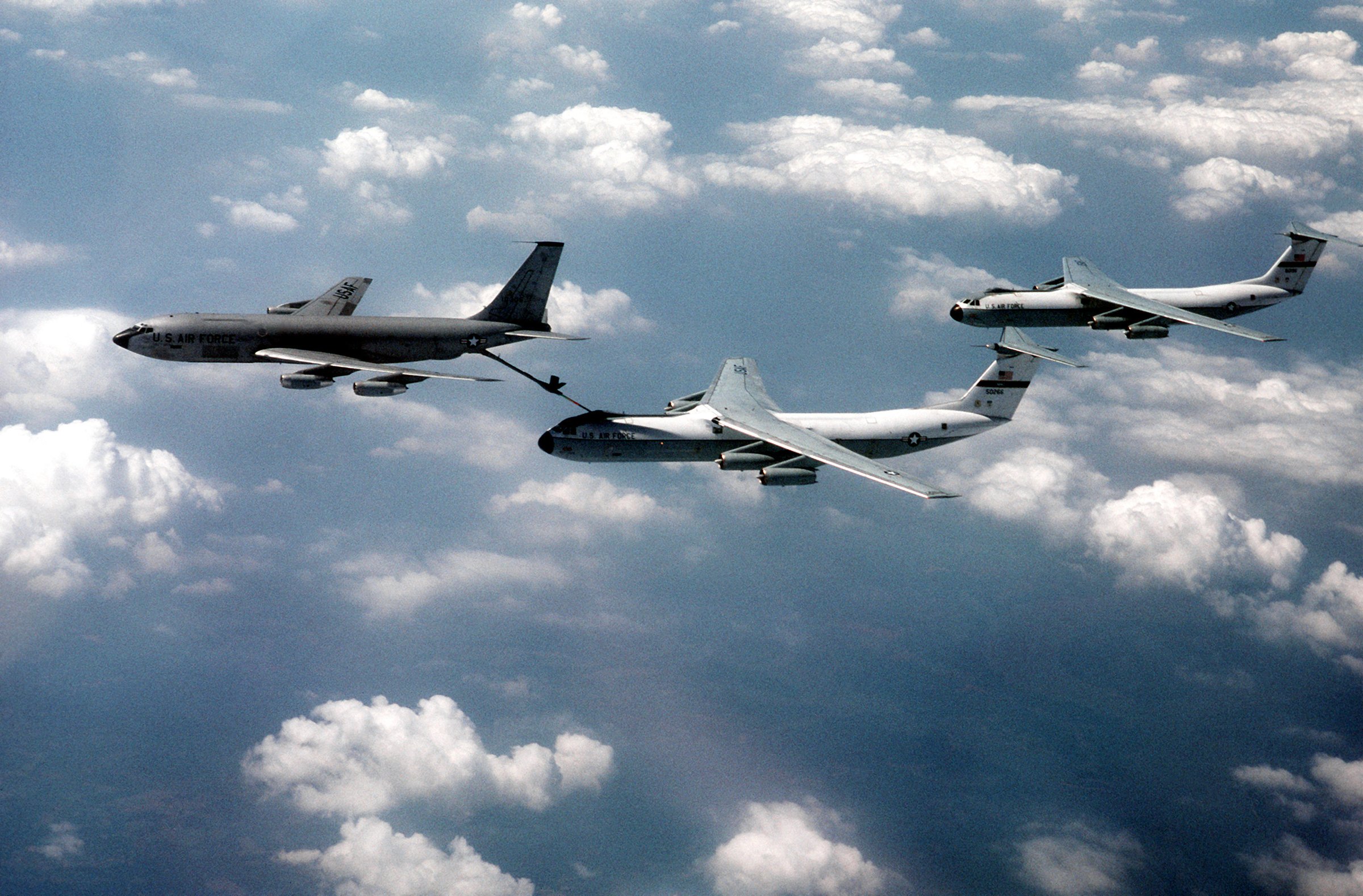
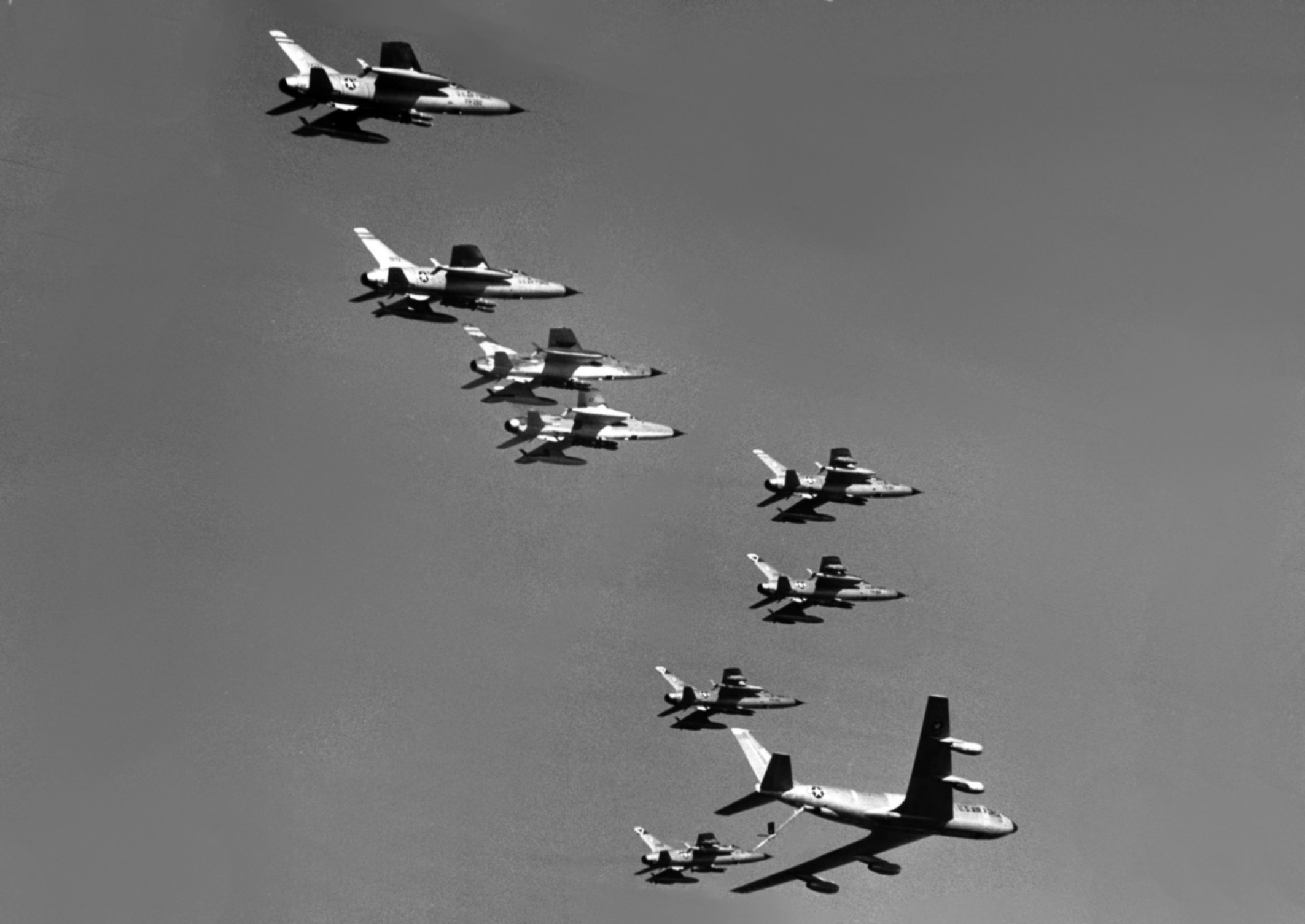
The KC-135A was the original production Stratotanker, derived like the 707 airliner from Boeing's 367-80 'Dash 80' demonstrator but with a narrower, shorter fuselage. It replaced the piston-engined KC-97, whose slow cruise forced jet bombers and fighters to throttle back to refuel. The USAF ordered an initial 29 in 1954; the first flew on 31 August 1956, the first aircraft reached Castle AFB, California, in June 1957, and 732 KC-135As were built before production ended in 1965.
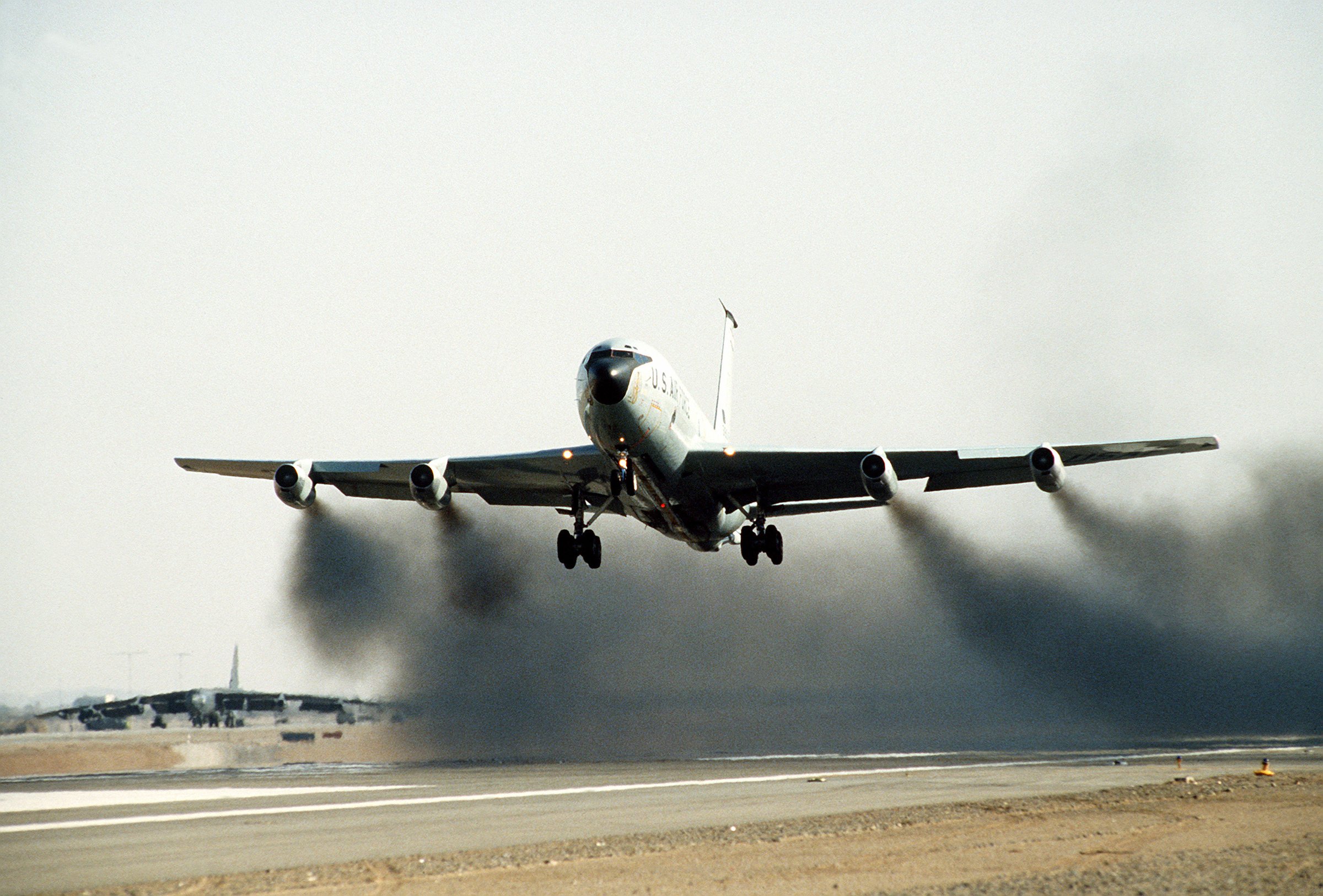
All were powered by four Pratt & Whitney J57-P-59W turbojets of about 44.5 kN. For take-off, 2,500 L of water was injected into the engines over roughly three minutes to raise thrust to about 58 kN — producing the type's trademark plumes of black smoke. Fuel passed to receivers through Boeing's flying boom; a short hose-and-drogue adapter could be fitted to the boom for Navy and allied probe-equipped aircraft.
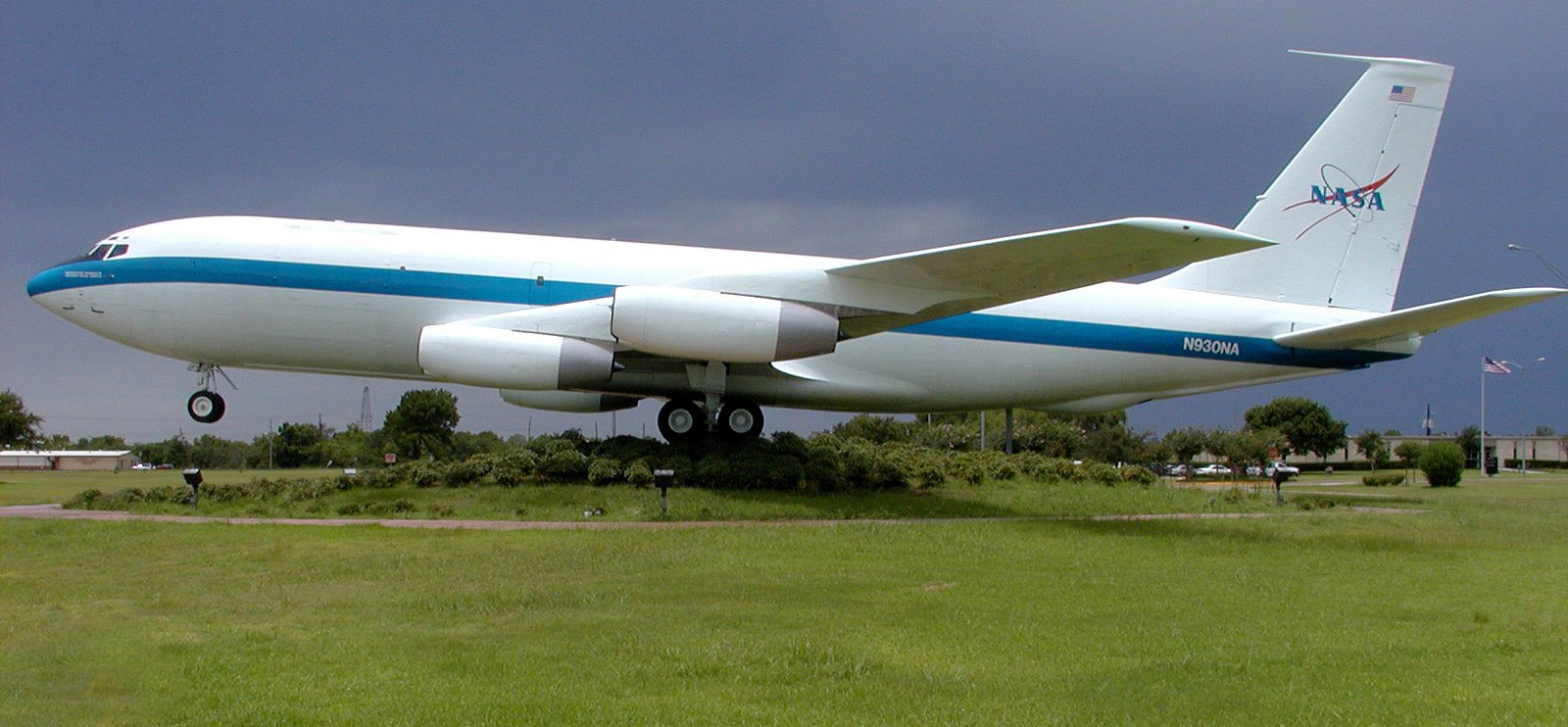
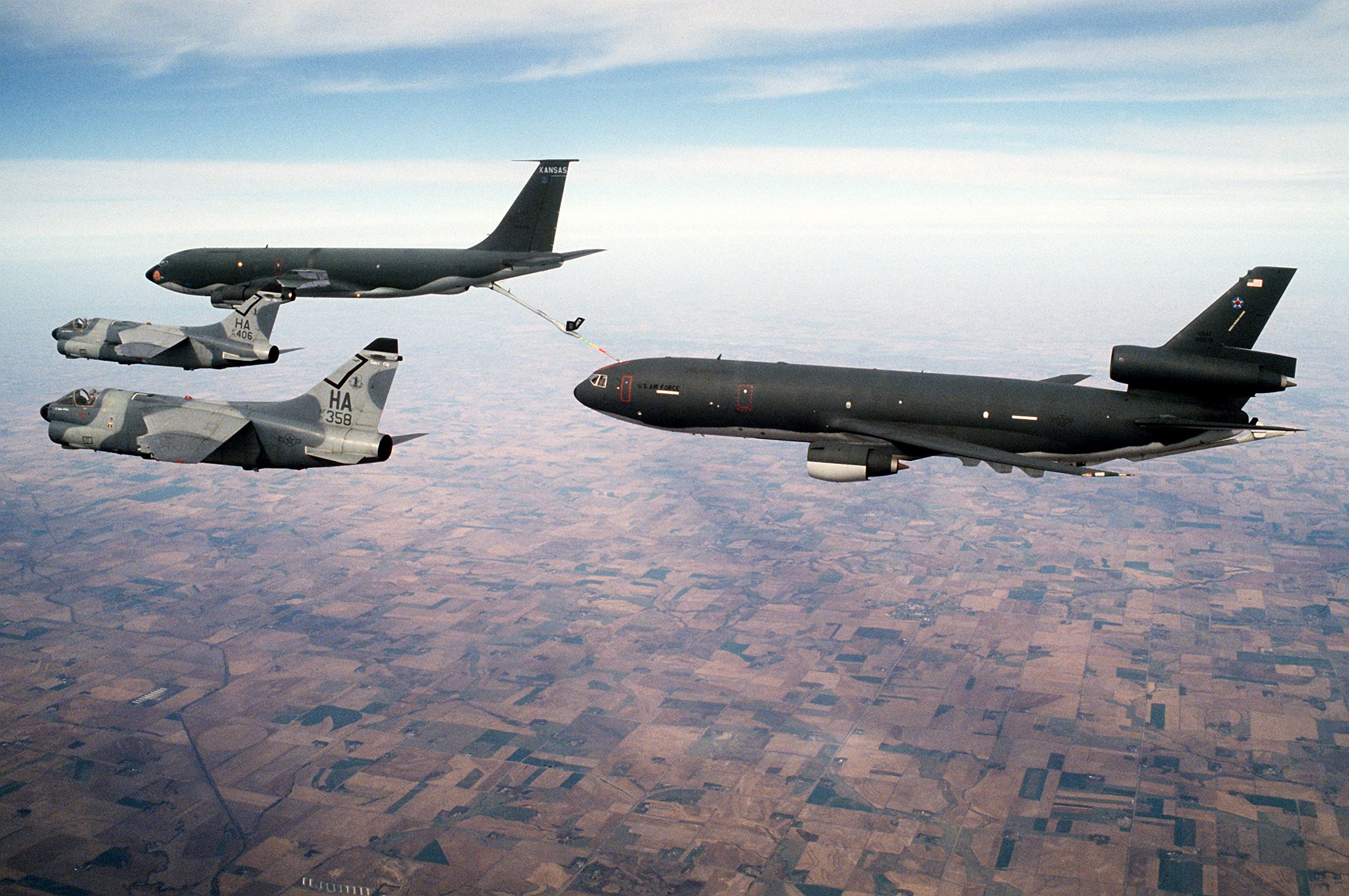
From the 1980s the A-model was re-engined into the KC-135E and KC-135R, and the J57 version left USAF service. Test-configured NKC-135As flew research programmes such as NASA's 1979–1980 winglet trials, and NASA used KC-135A 59-1481 (N930NA) from 1973 to 1995 as its 'Vomit Comet' reduced-gravity aircraft, flying more than 58,000 parabolas with around 25 seconds of weightlessness each.