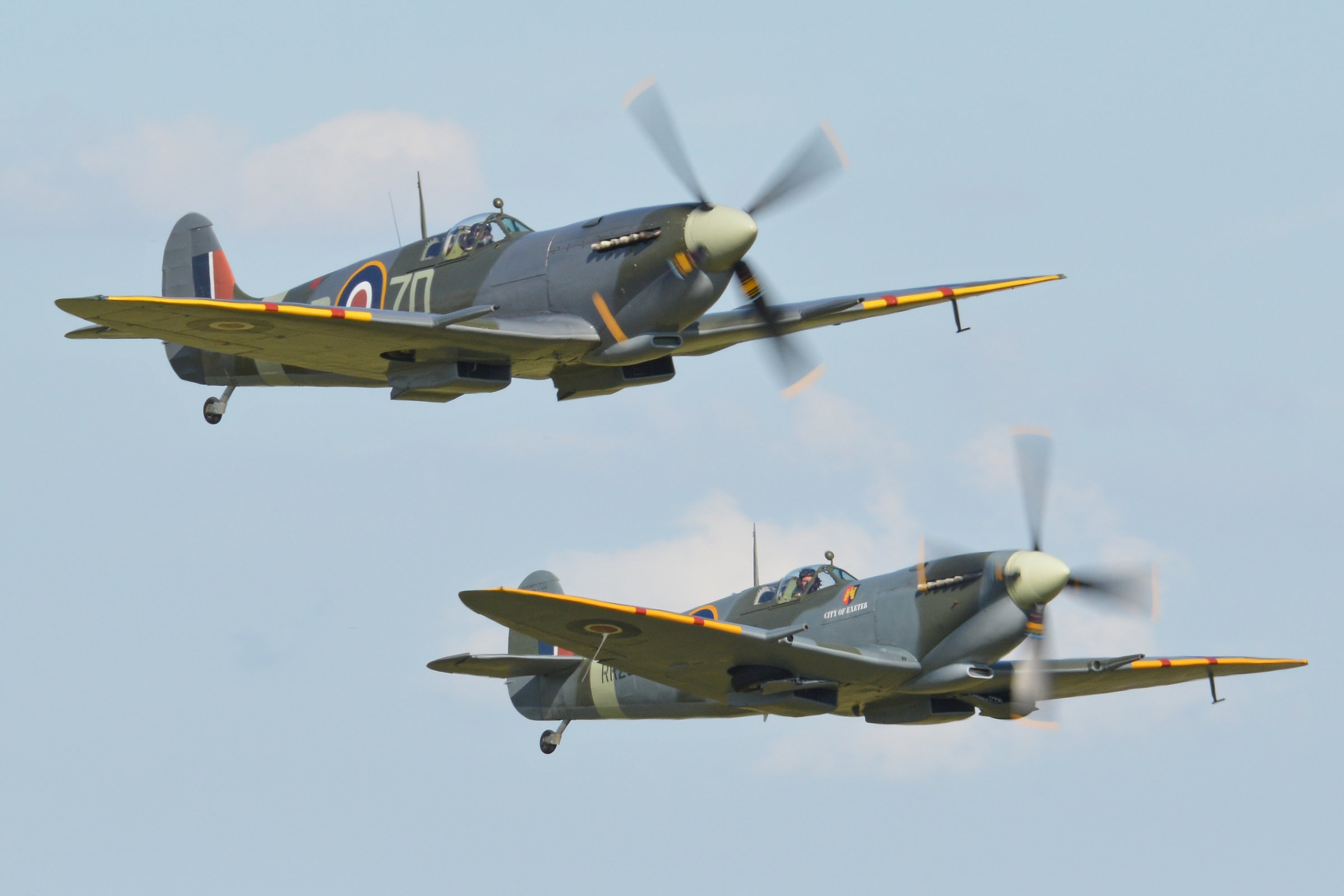
Supermarine Spitfire Mk IX
Two-stage Merlin 60-series in a Mk V airframe — the answer to the Fw 190 · First flight 1942 · In service 1942
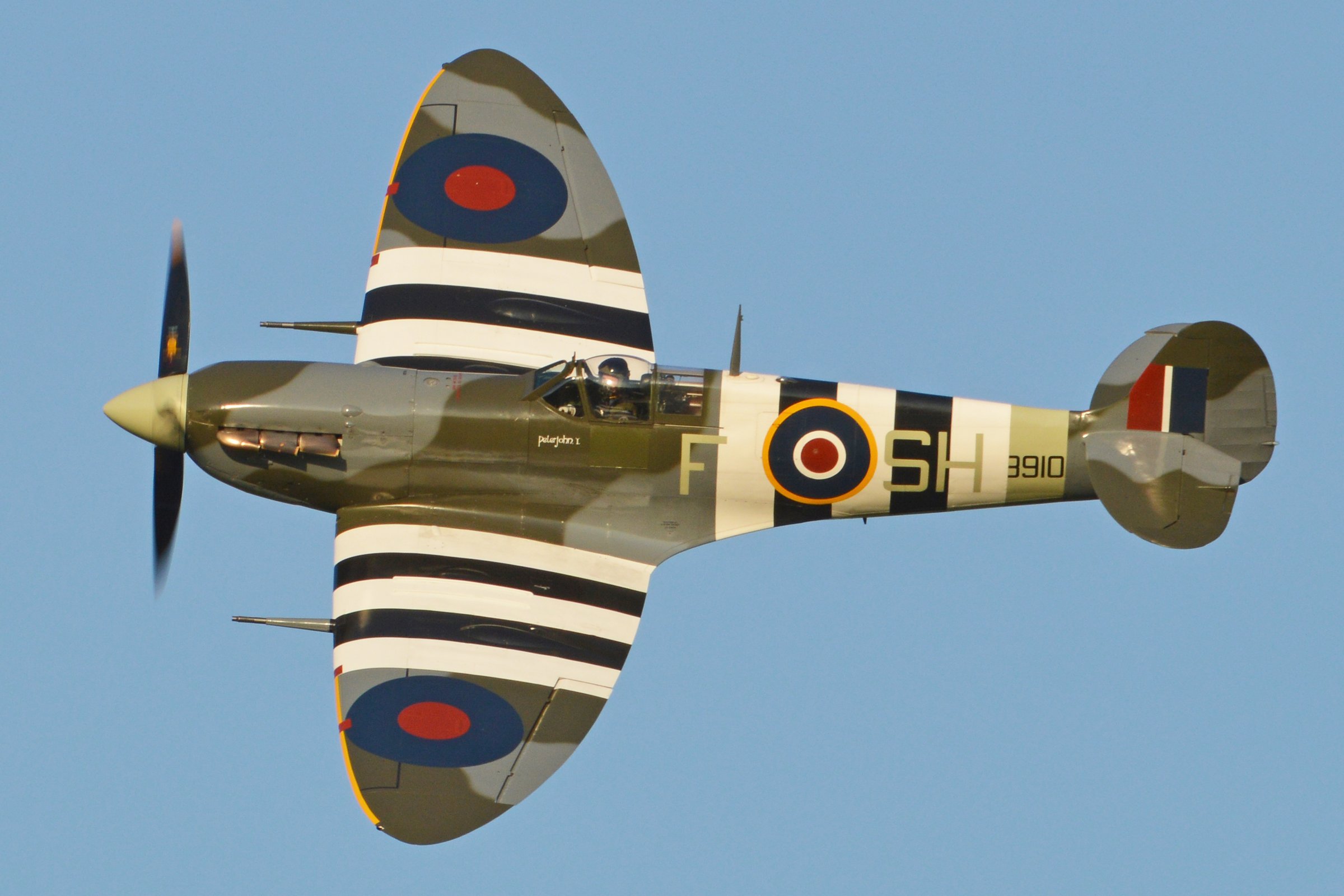
The arrival of the Focke-Wulf Fw 190 over France in 1941 left the Spitfire V outclassed, and a counter was urgently needed. The answer was to install the two-stage, two-speed supercharged Merlin 61 in a Mk VC airframe, creating the Mk IX; the first conversion, AB505, was tested by the Air Fighting Development Unit in April 1942, and the type entered service in mid-1942. It let the RAF fight the Fw 190 on equal terms.
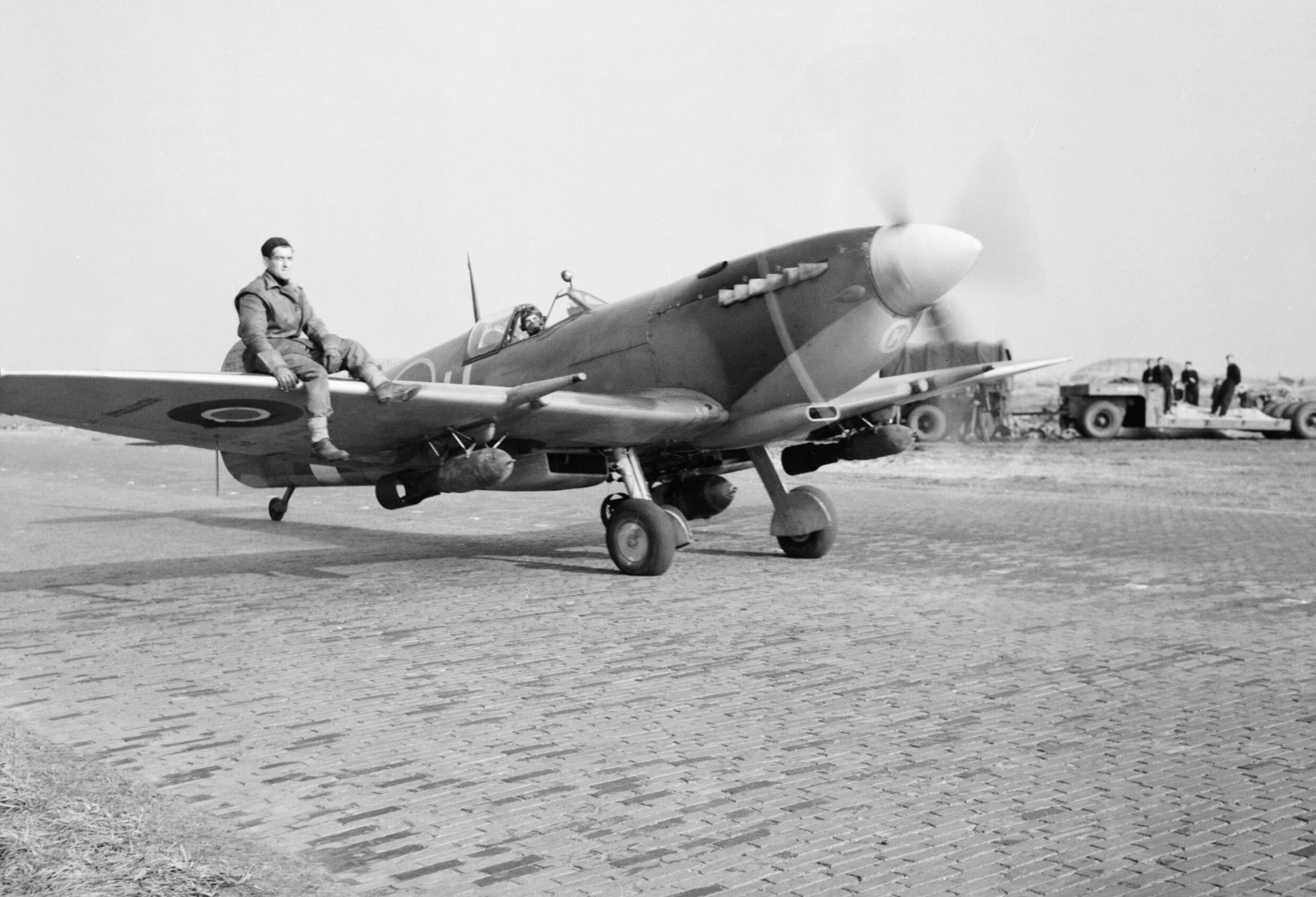
Intended as an interim type, the Mk IX stayed in production until the end of the war: 5,656 were built, 5,095 of them at Castle Bromwich. Variants were optimised for low (LF, Merlin 66), medium (F) and high altitude (HF, Merlin 70), and later aircraft had the E wing with .50 in machine guns. From 1944 Mk IXs were used increasingly as fighter-bombers in Normandy and the Low Countries.
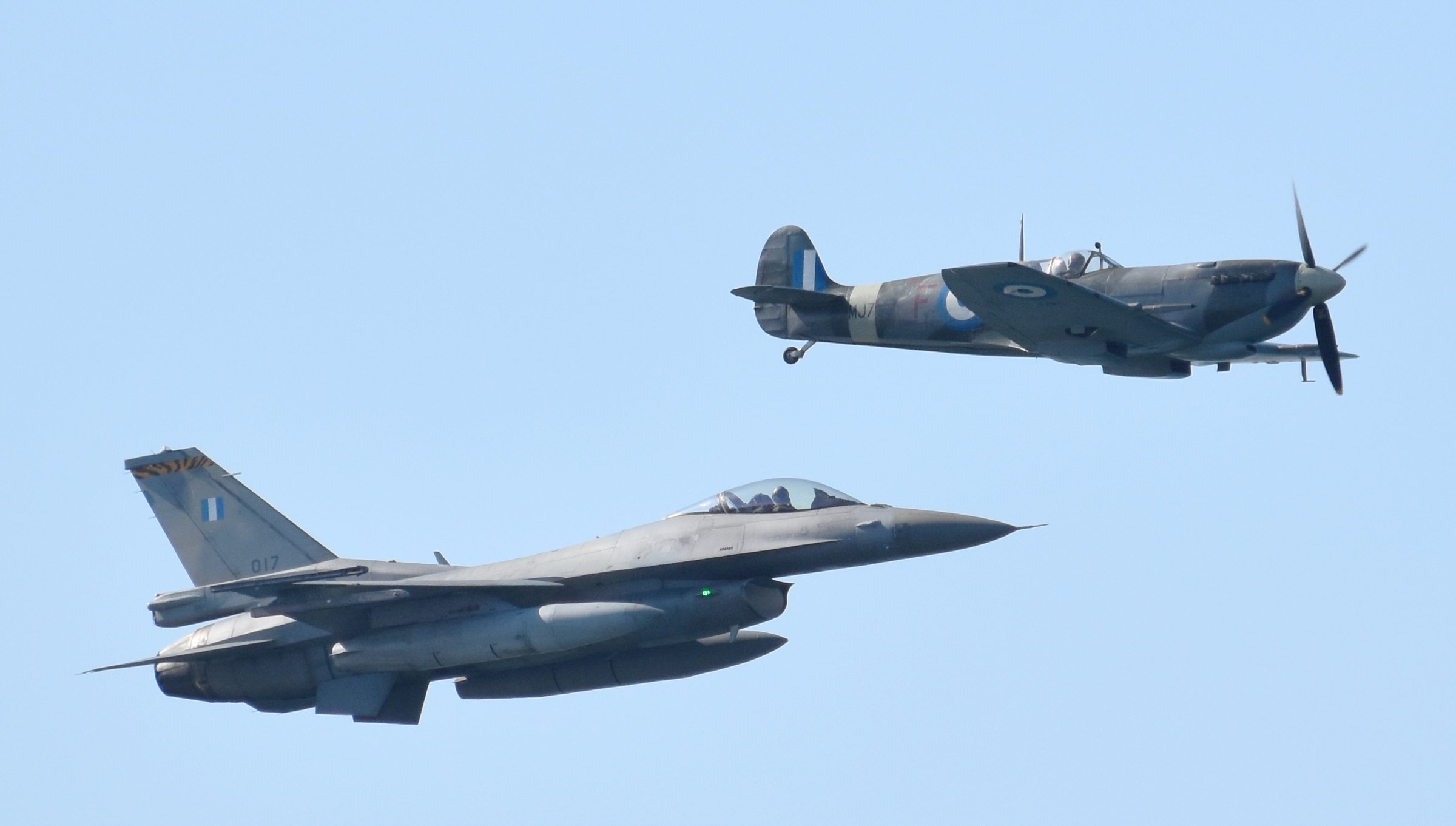
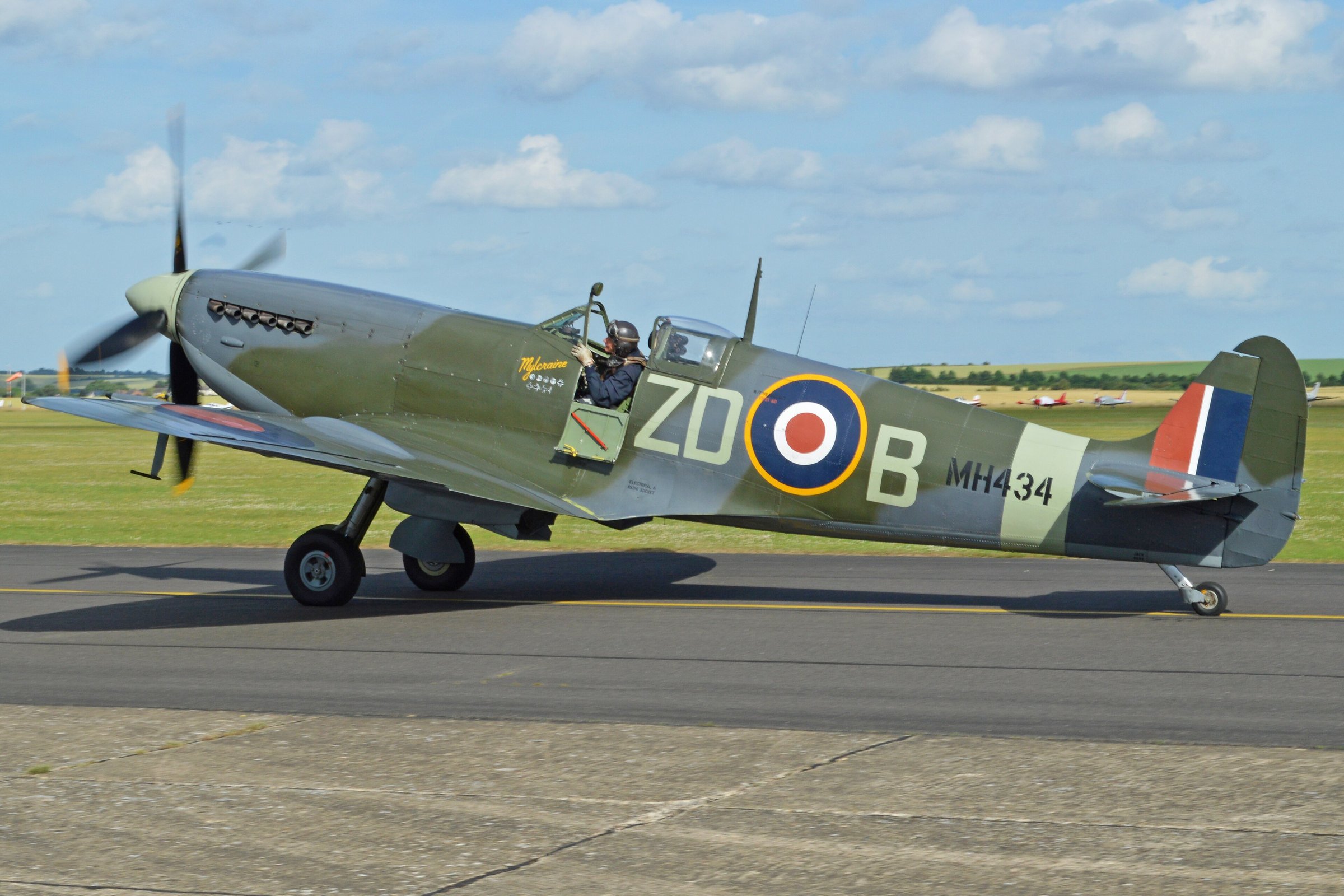
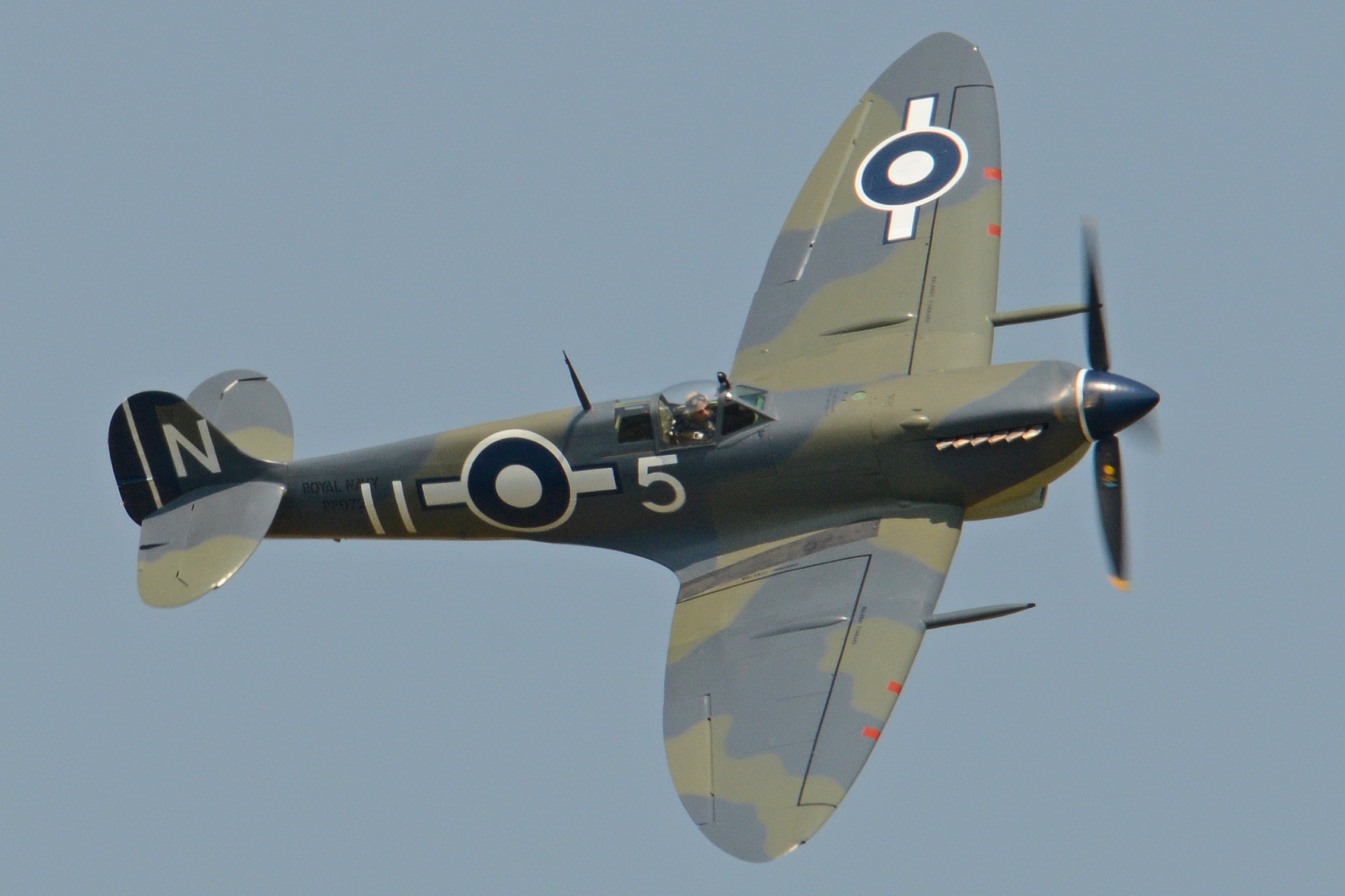
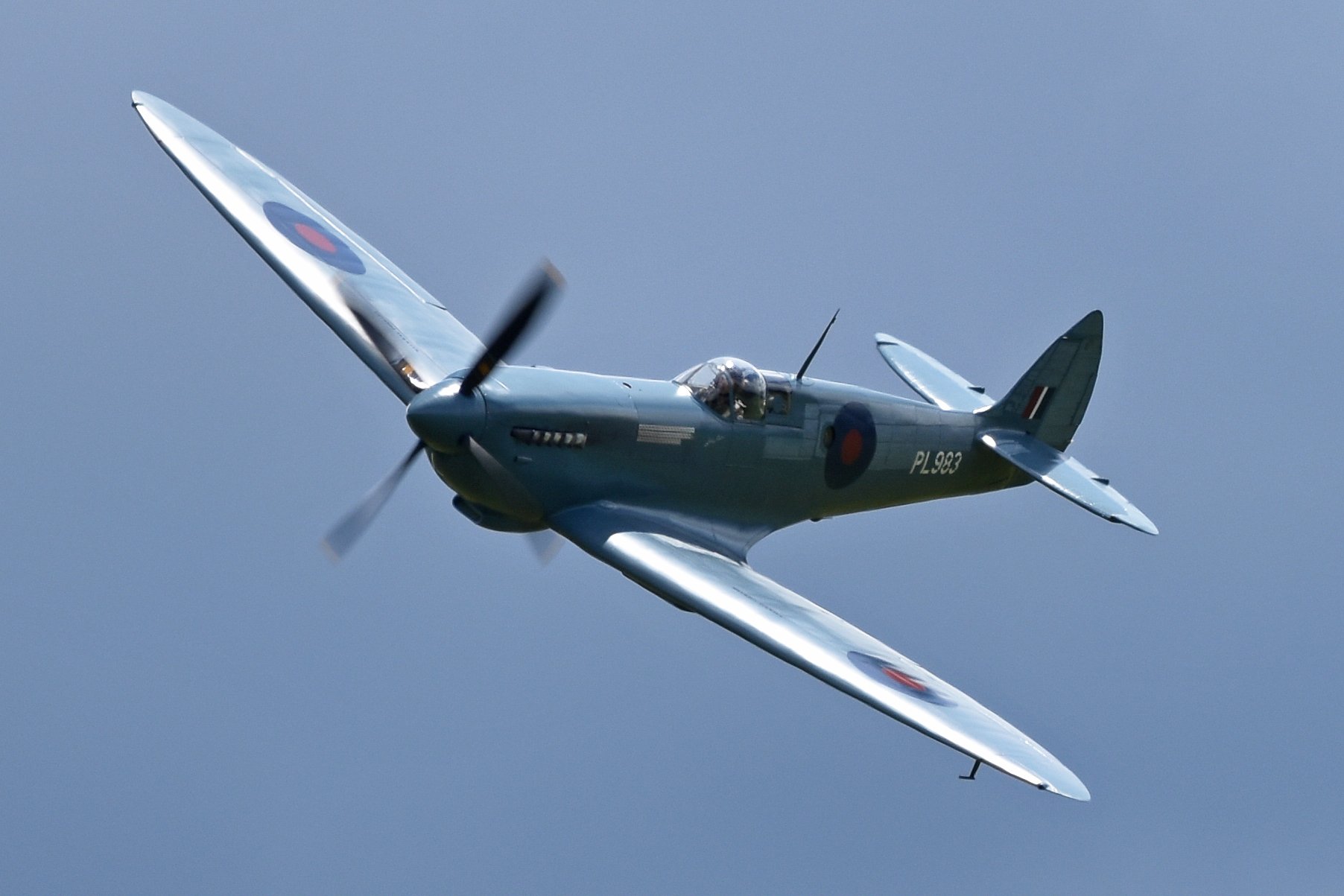
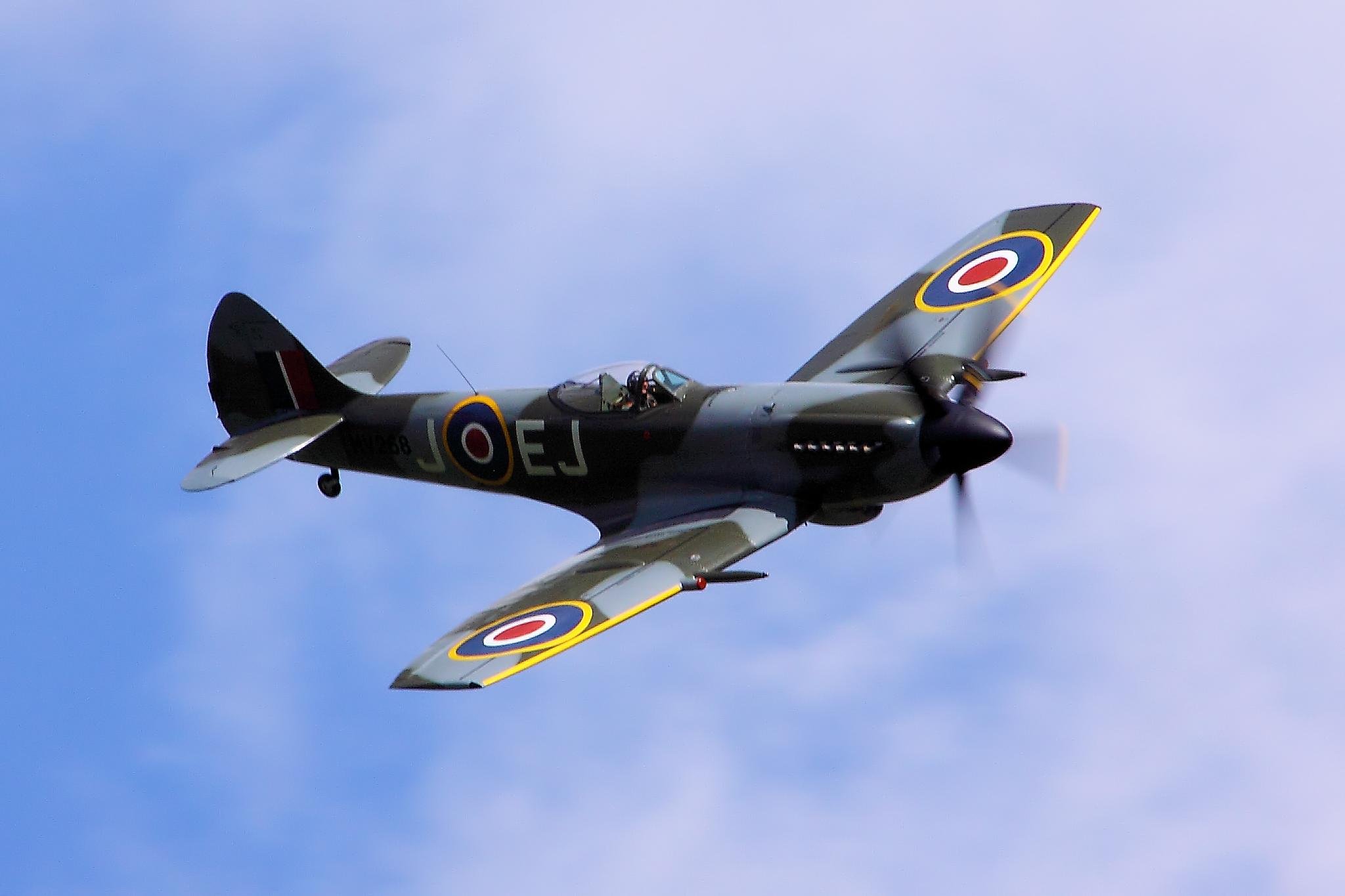
After the war Mk IXs served with several air forces, including No. 322 Squadron of the Netherlands in the Dutch East Indies and the South African Air Force; the Irish Air Corps flew two-seat T Mk IX trainers. Many survivors fly today, among them MH434 at Duxford.