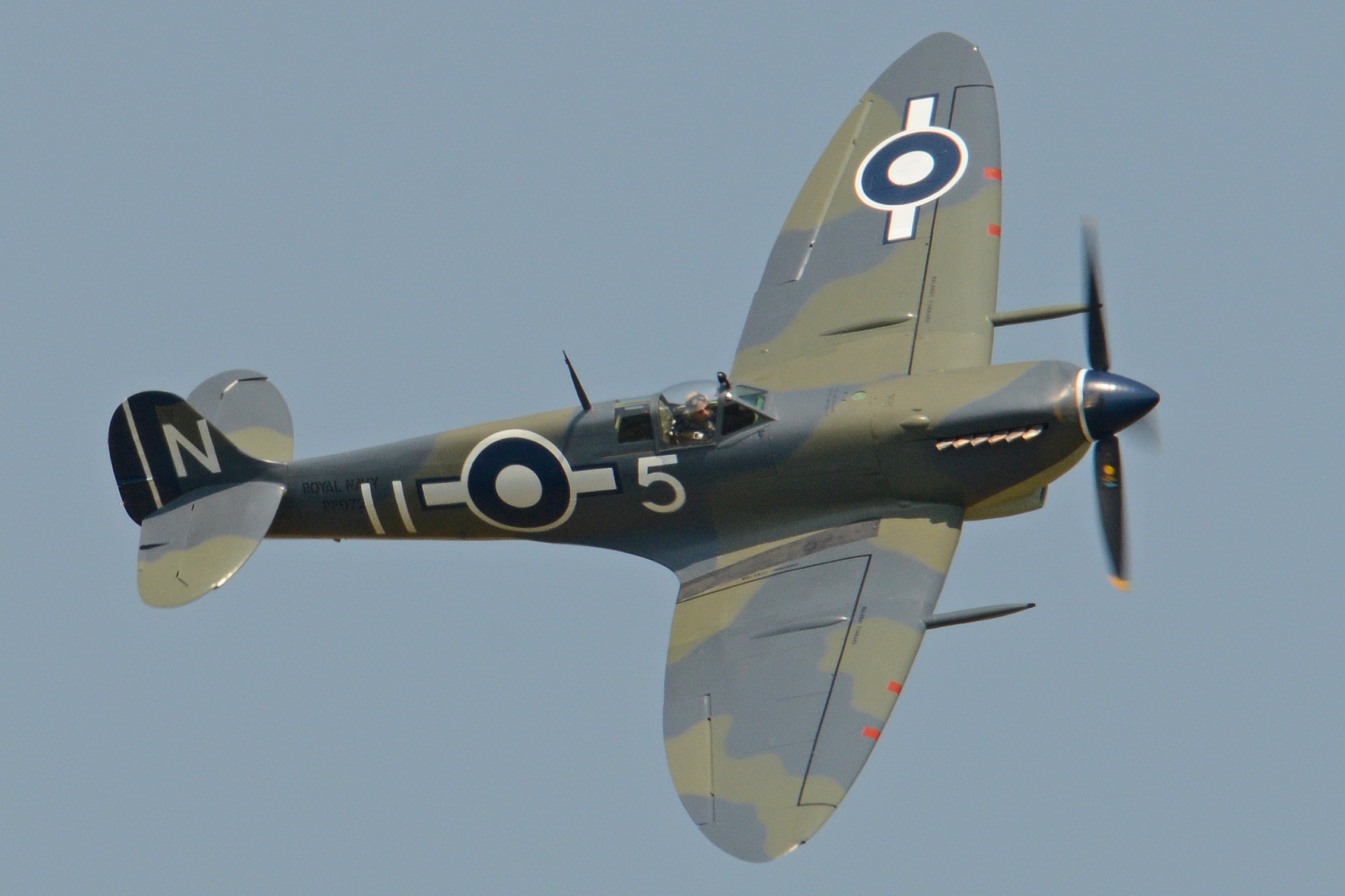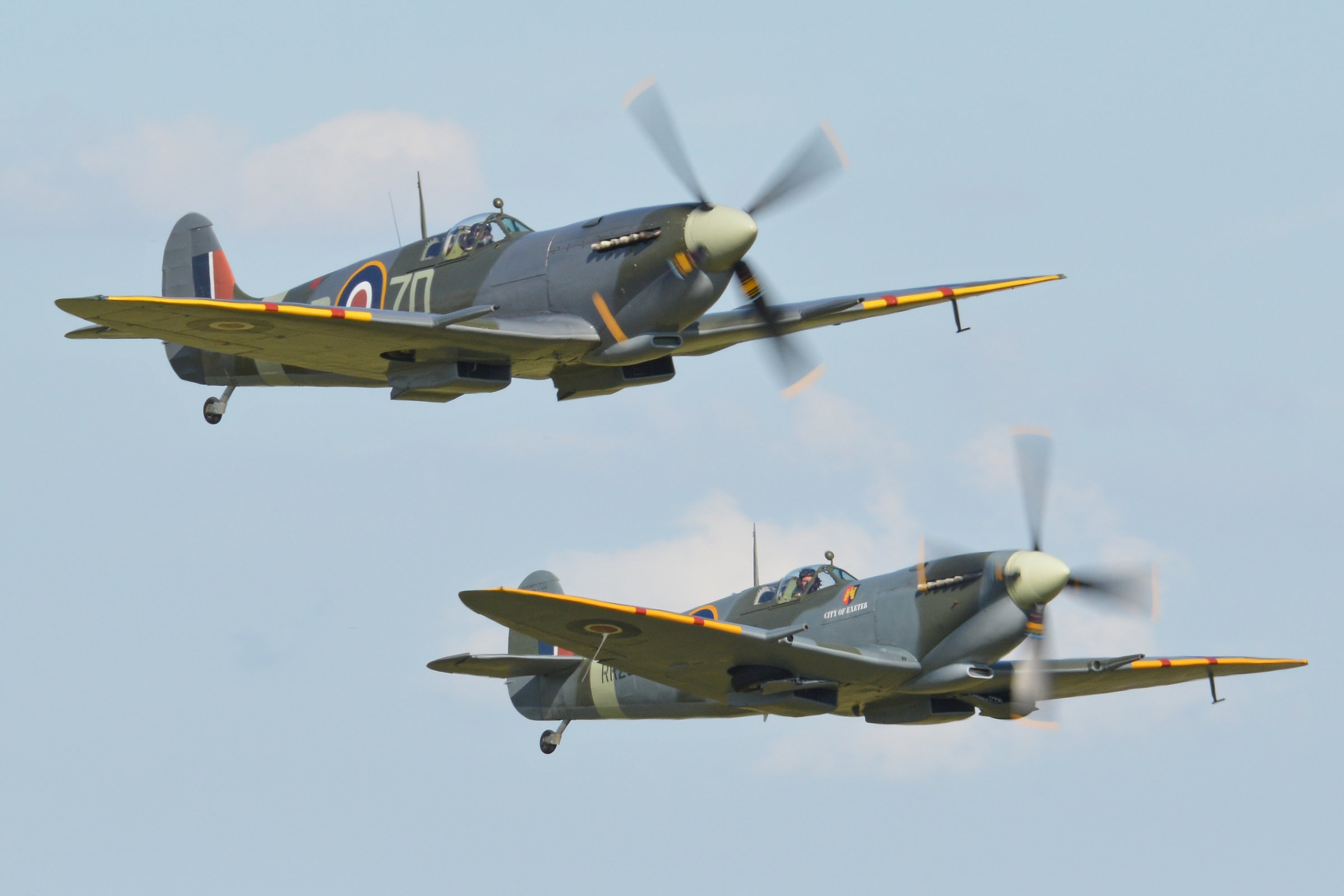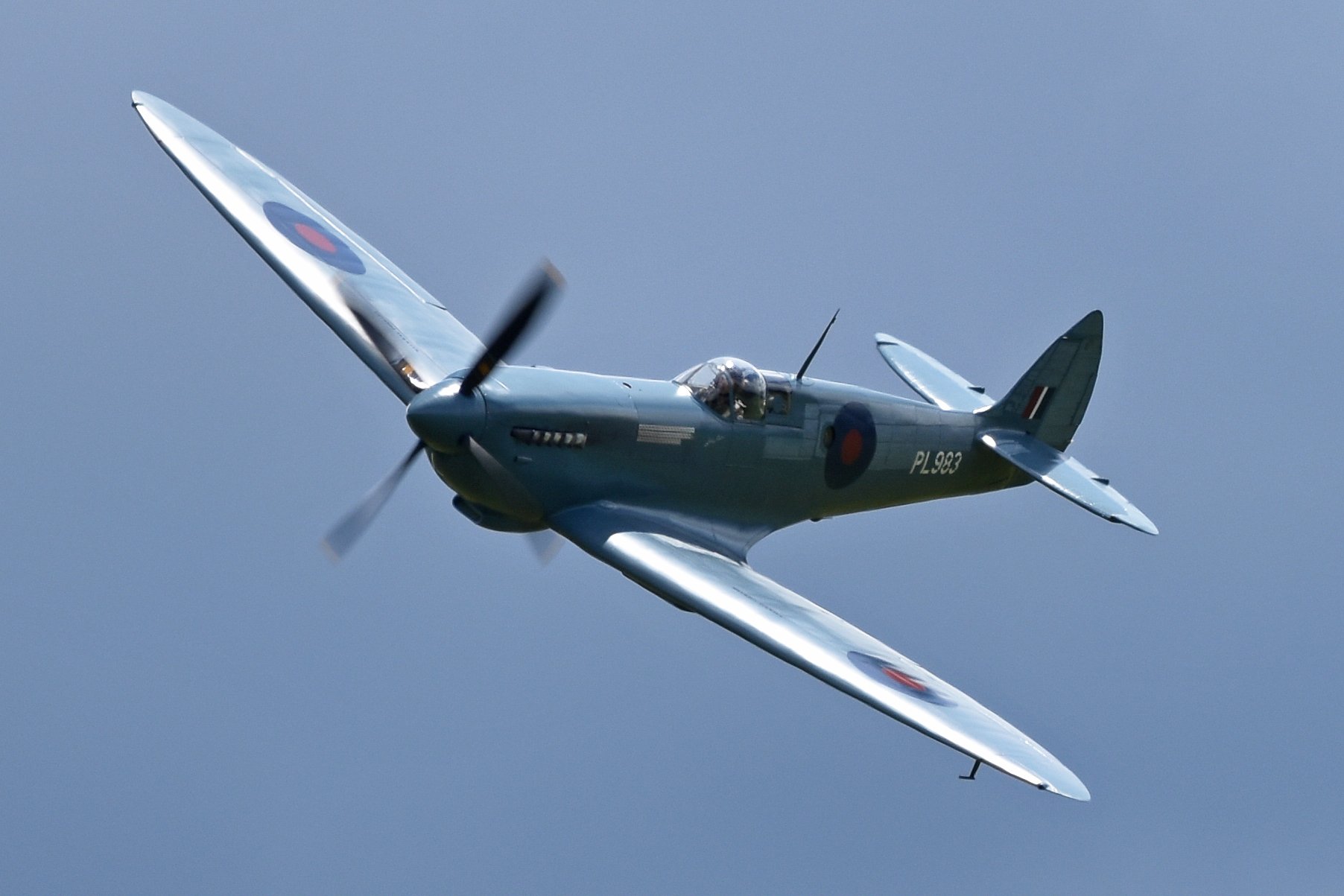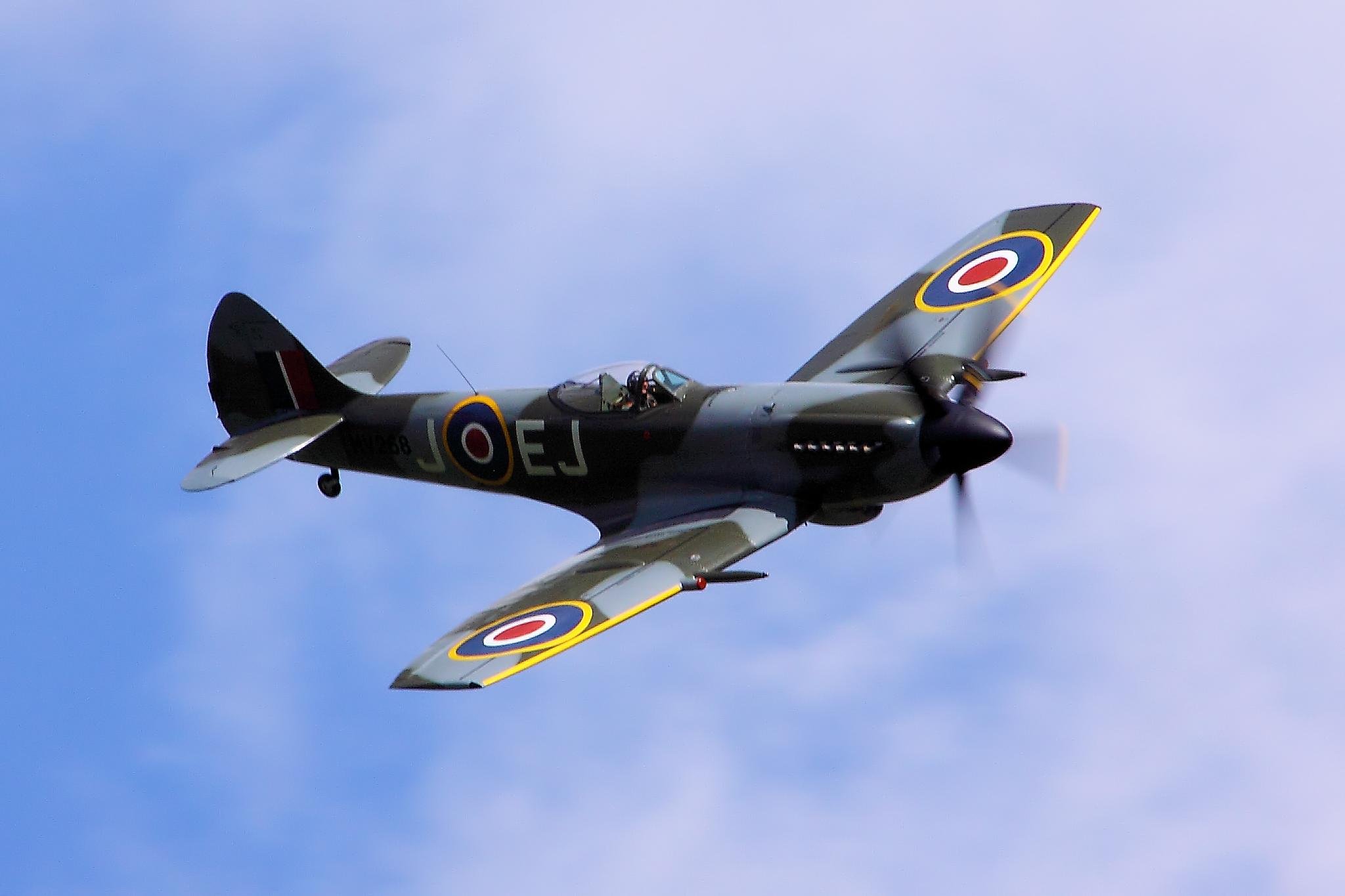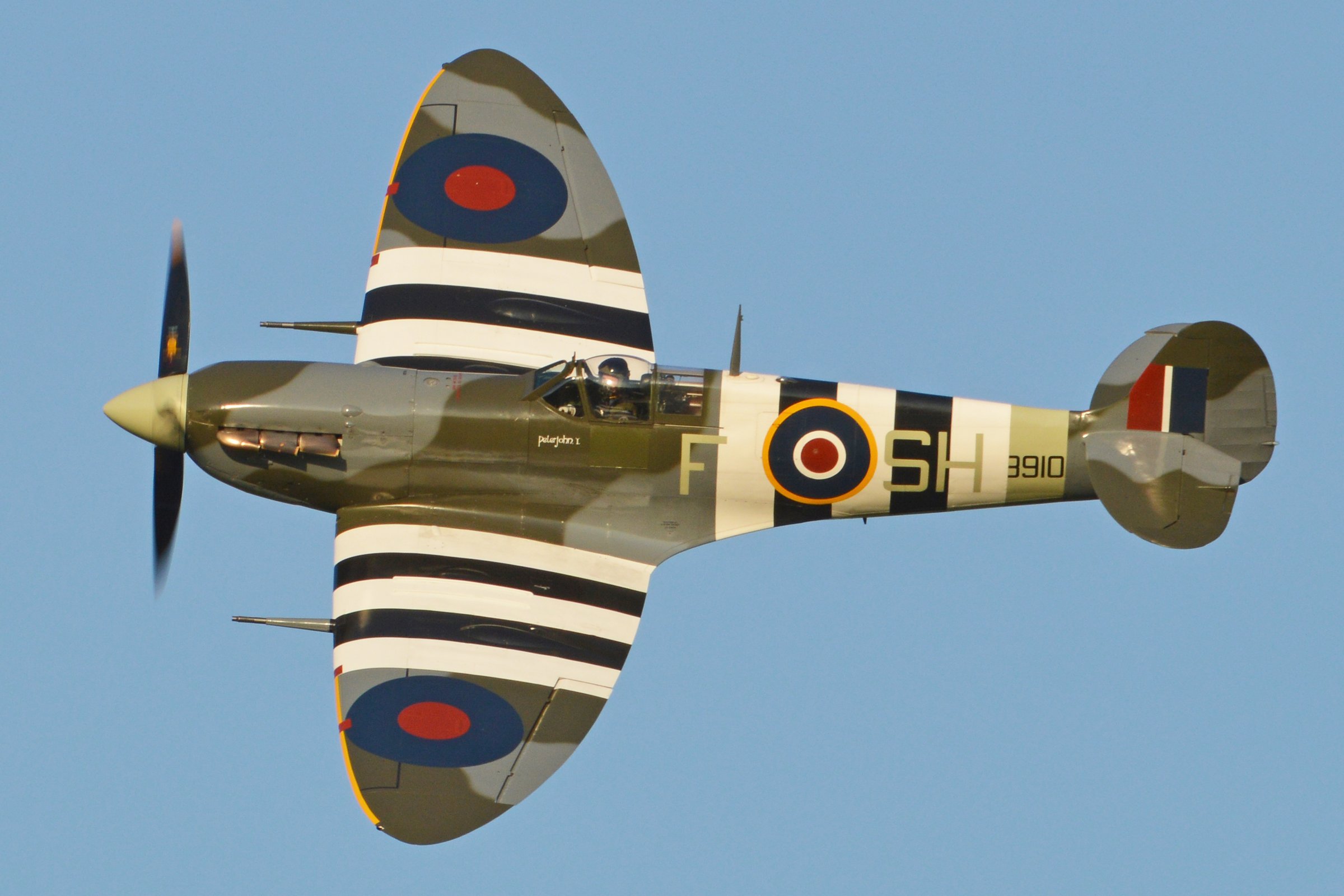
Supermarine Spitfire Mk V
The most-produced Spitfire — the 1941–43 workhorse from Malta to the Soviet Union · In service 1941
The Mk V was conceived as a stopgap: the new Merlin 45 could be fitted to existing Mk I and Mk II airframes and those already on the production line with few changes, while a pressurised high-altitude Spitfire was being developed. Converted aircraft began equipping fighter squadrons in early 1941, and the type soon became the RAF's standard fighter. The cannon-armed Mk VB and the Mk VC with its 'universal' wing made up almost all of the 6,479 built — more than any other Spitfire mark.
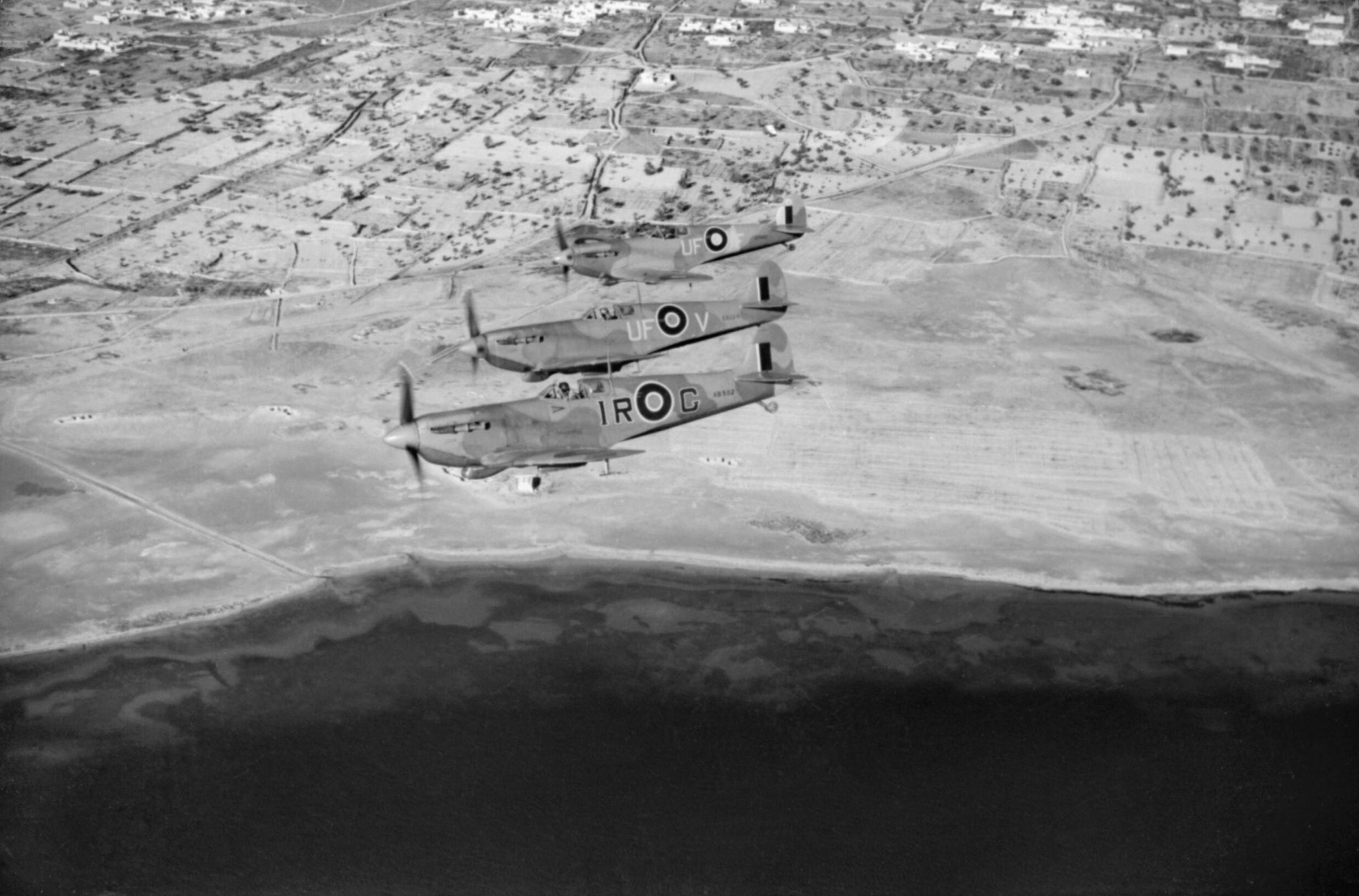
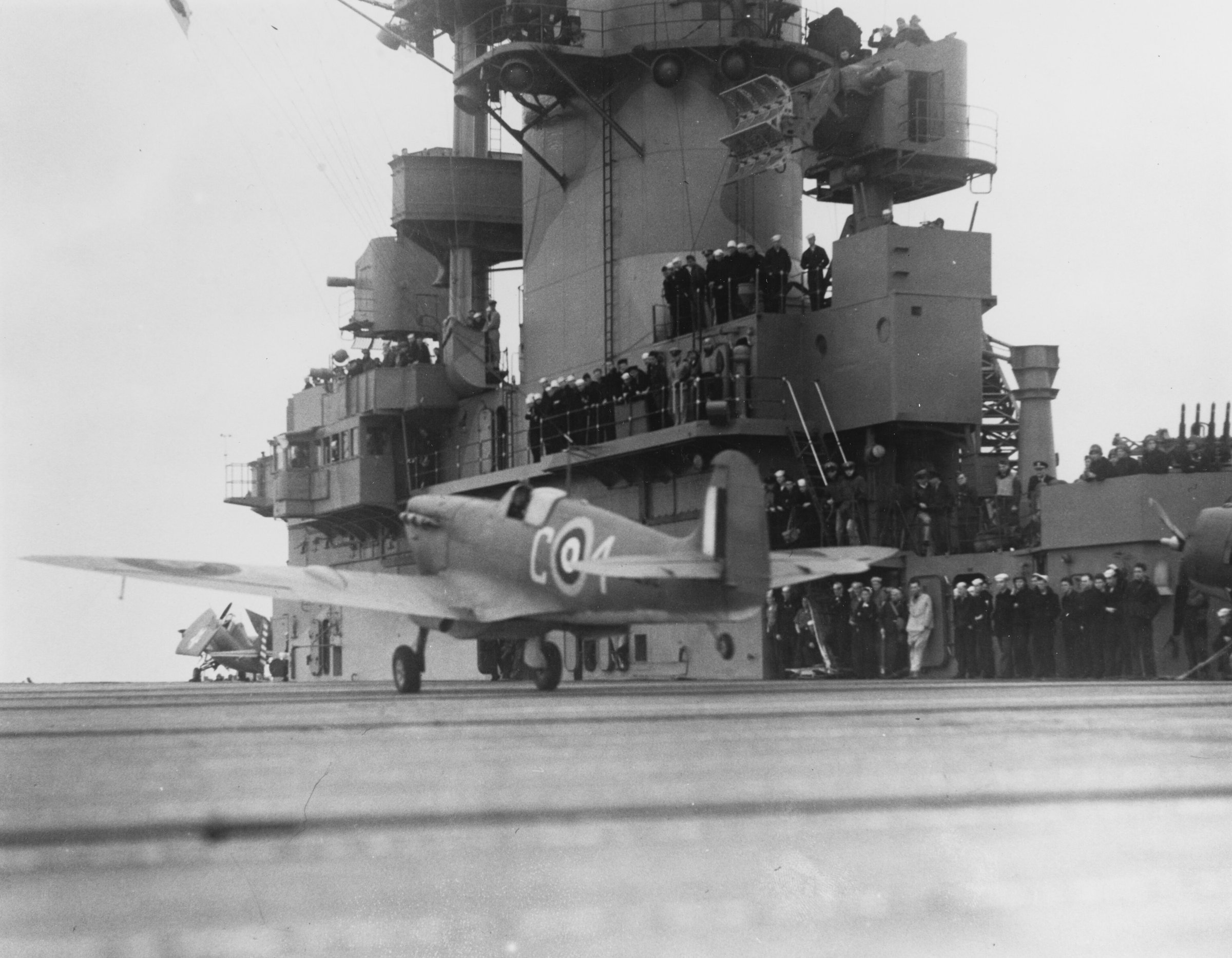
Tropicalised Mk Vs with a large dust filter under the nose served in North Africa, and in 1942 Spitfires were flown off the US carrier USS Wasp to reinforce Malta. 300 Mk VC (trop) went to the Royal Australian Air Force and 143 Mk VBs were supplied to the Soviet Union. Low-altitude LF Mk Vs often had clipped wingtips for a faster roll rate.
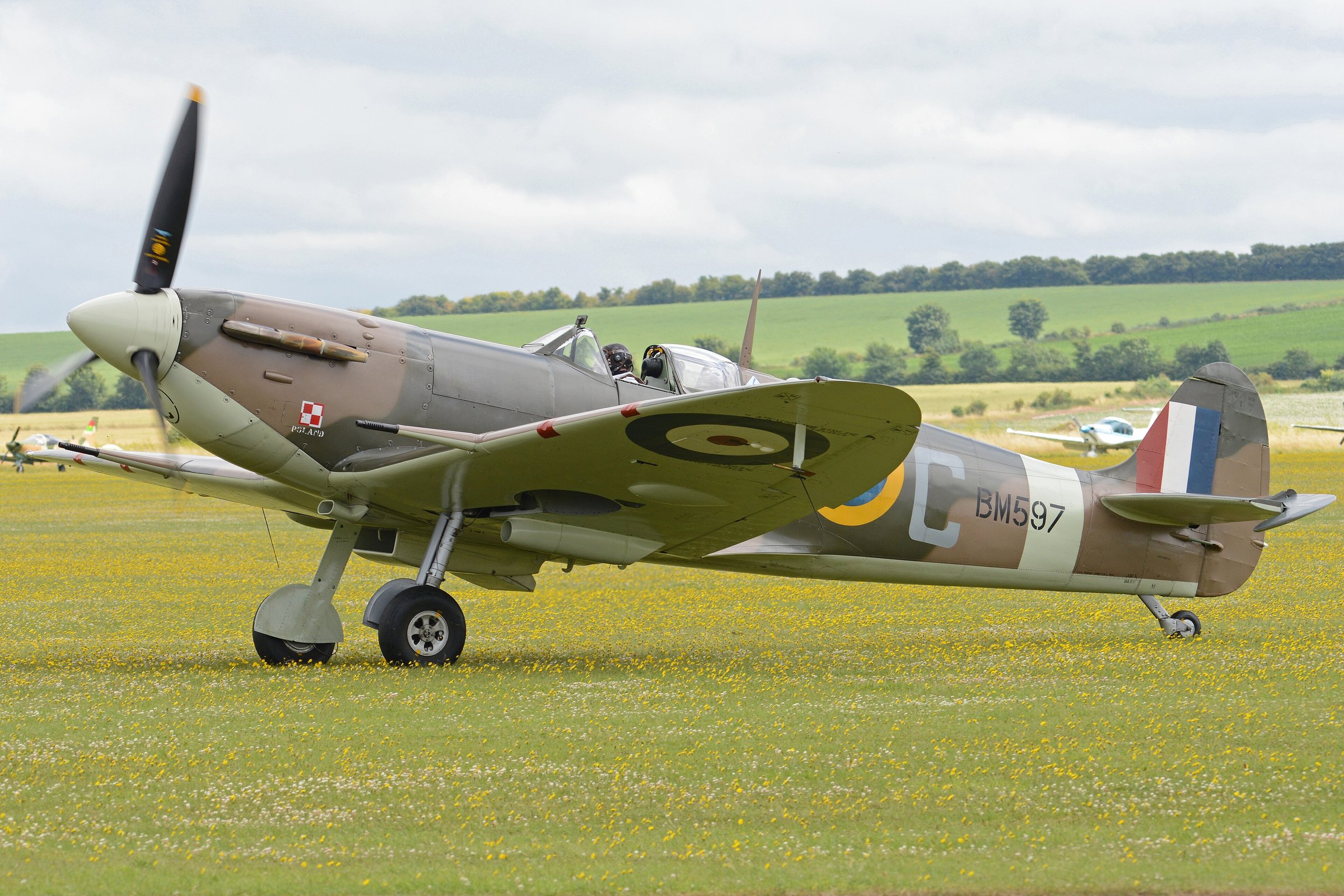
By 1942 the Mk V was outclassed by the Focke-Wulf Fw 190, which led directly to the Mk IX. Airworthy examples today include the Battle of Britain Memorial Flight's Mk VB AB910 and BM597 of the Historic Aircraft Collection at Duxford.