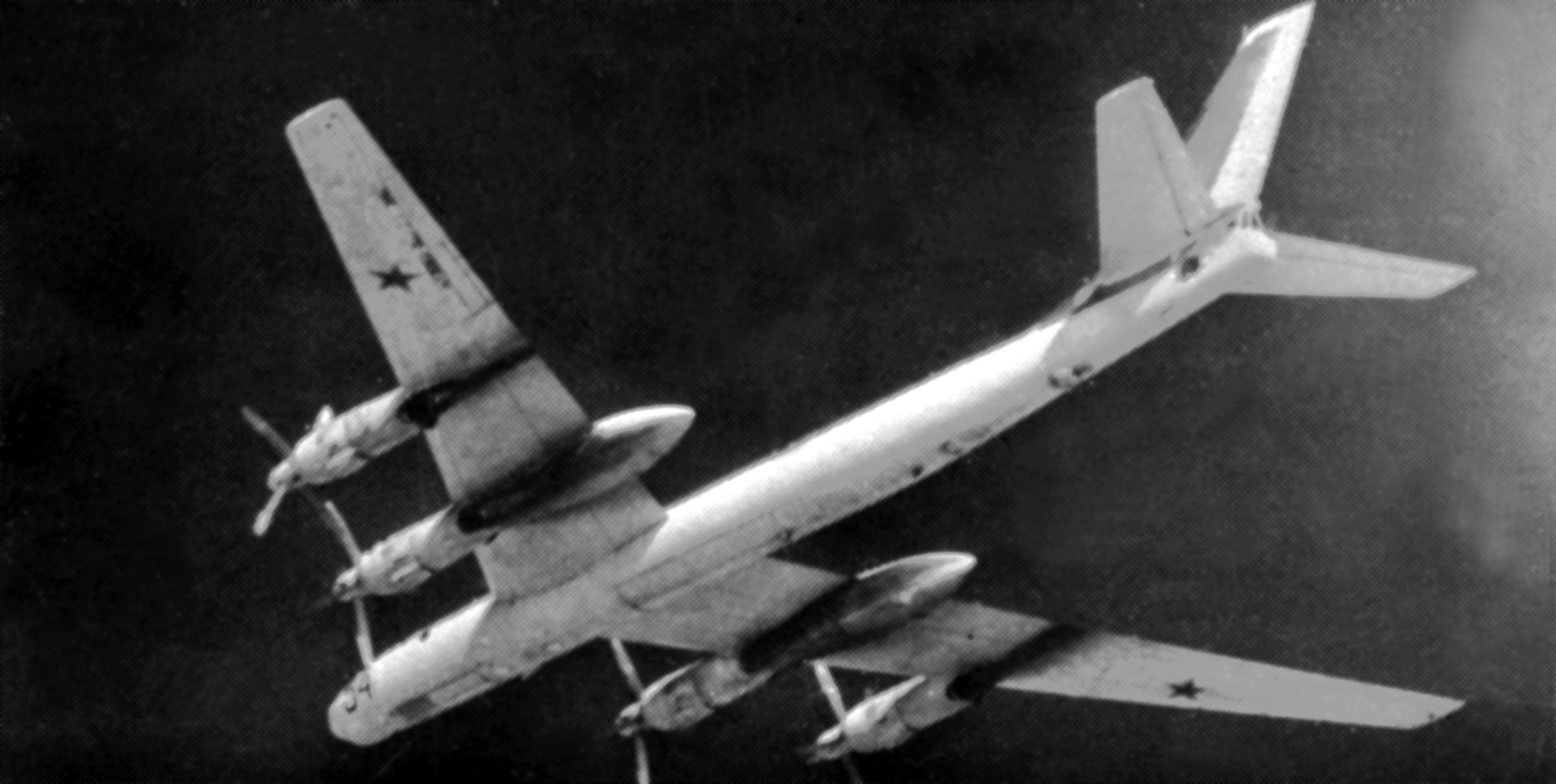
Tupolev Tu-95 (Bear-A)
The original turboprop strategic bomber — glazed nose, free-fall bombs, no refuelling probe · First flight 1952 · In service 1956
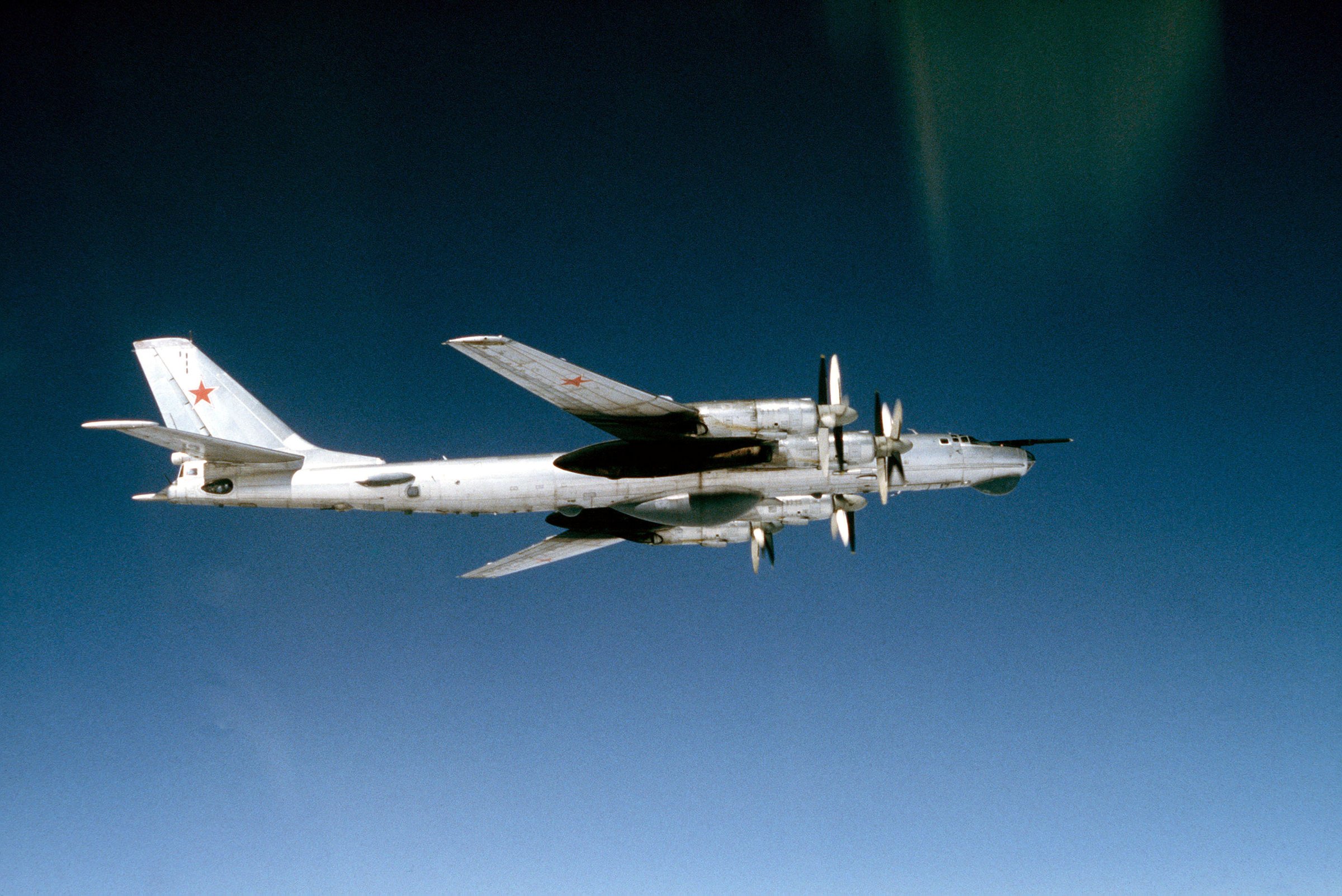
The Tu-95 was designed as an intercontinental bomber at a time when jet engines were still too thirsty for the job. Tupolev paired a swept wing with four huge turboprops driving contra-rotating propellers. The first prototype, Tu-95/1, flew on 12 November 1952 with test pilot Alexey Perelet, but it was lost about six months later after a propeller-gearbox failure, killing Perelet. The second prototype flew with the more reliable Kuznetsov NK-12, which every later Bear has used.
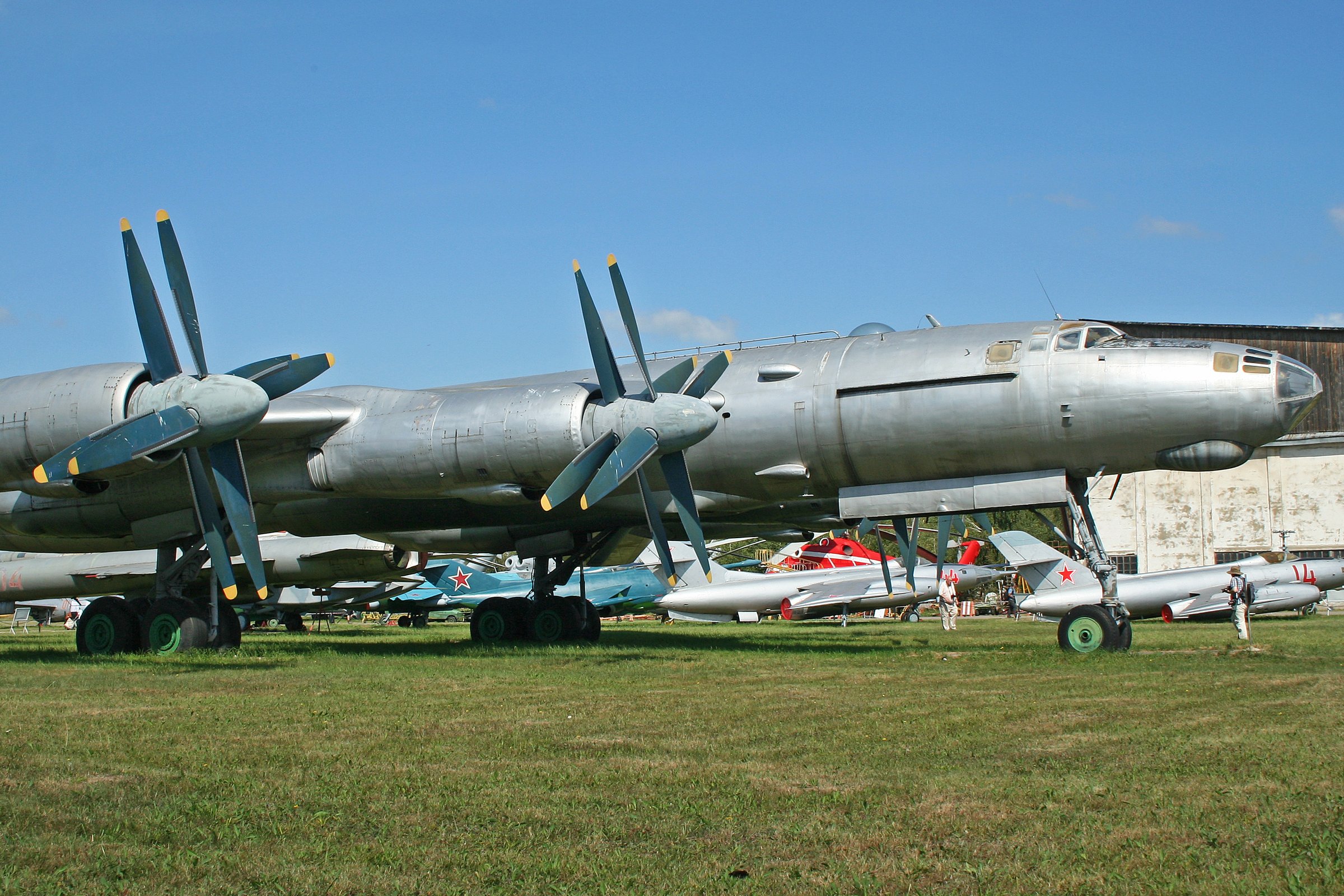
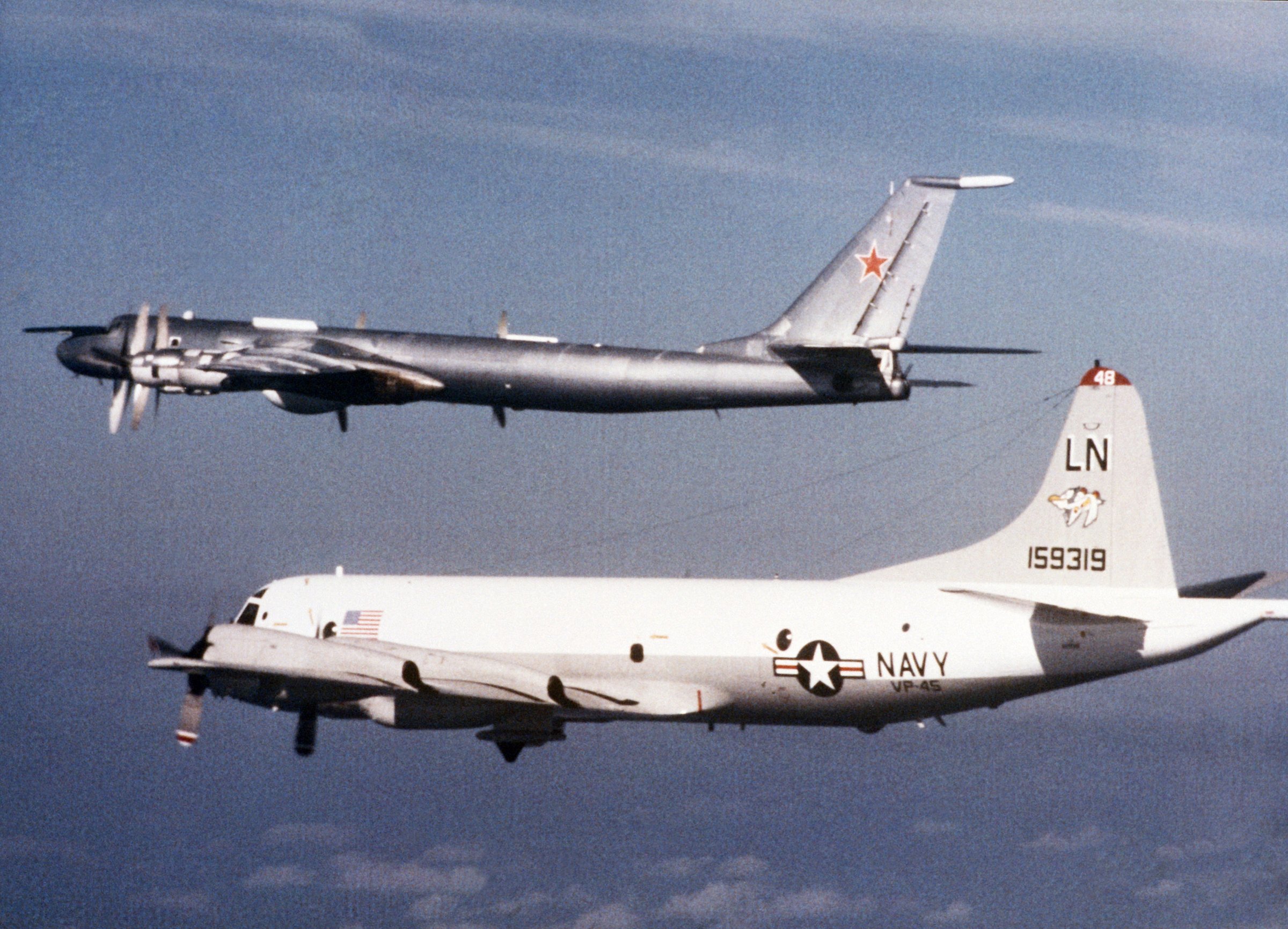
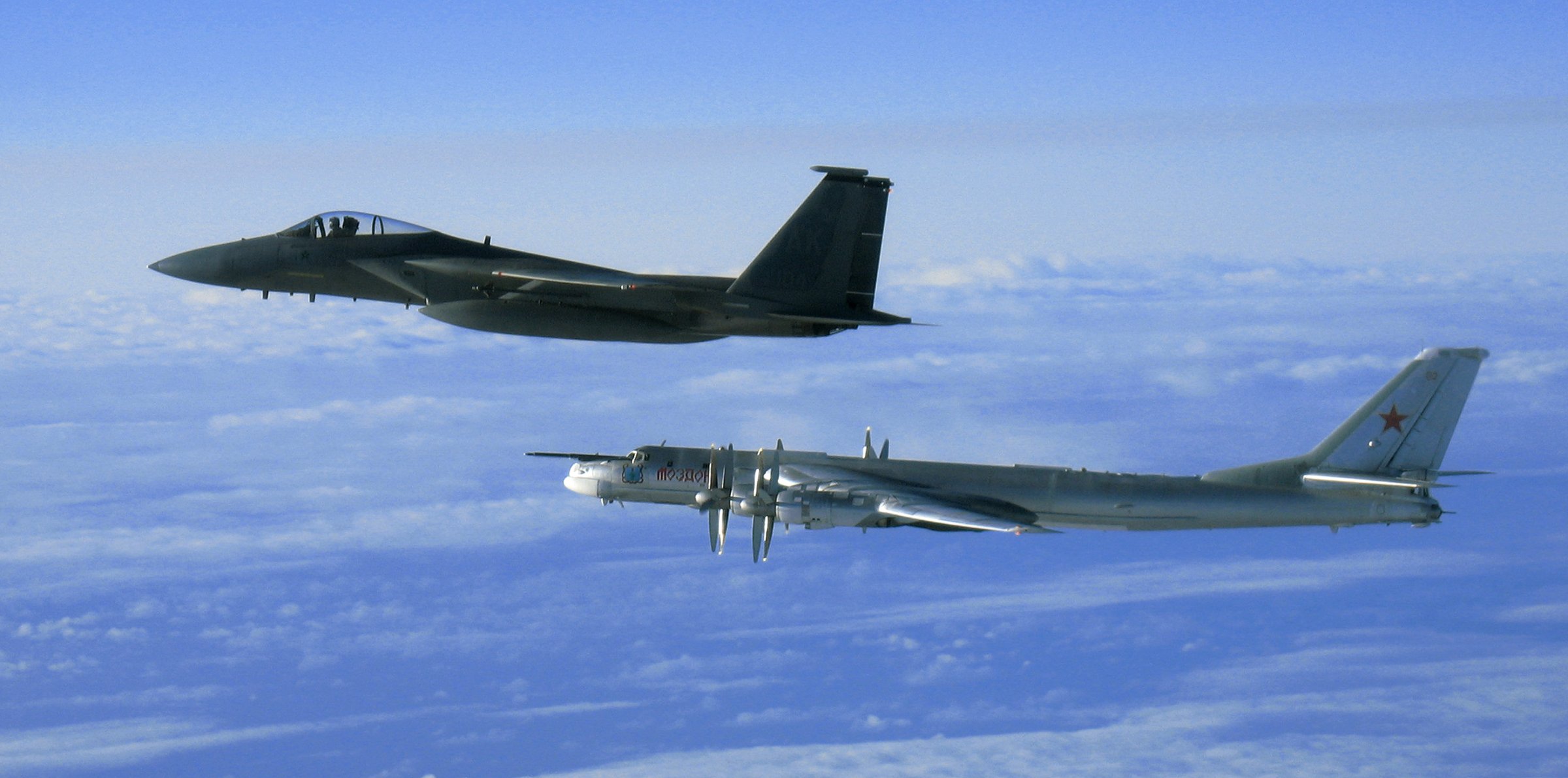
Series production began in January 1956, and the basic bomber — called Bear-A by NATO — entered service with Soviet Long-Range Aviation the same year. It had a glazed navigator's nose, defensive cannon turrets and an internal bay for free-fall nuclear bombs. It was the only Bear never fitted with an in-flight refuelling probe. The Tu-95M added the uprated NK-12M engine, and 19 were built.
Several one-off aircraft came from this family. On 30 October 1961 the specially modified Tu-95V dropped the Tsar Bomba, the most powerful thermonuclear device ever tested. The Tu-95N, a 1955 airframe converted to carry the projected Tsybin RS ramjet bomber, later served as a test-bed and is now preserved at the Central Air Force Museum at Monino.