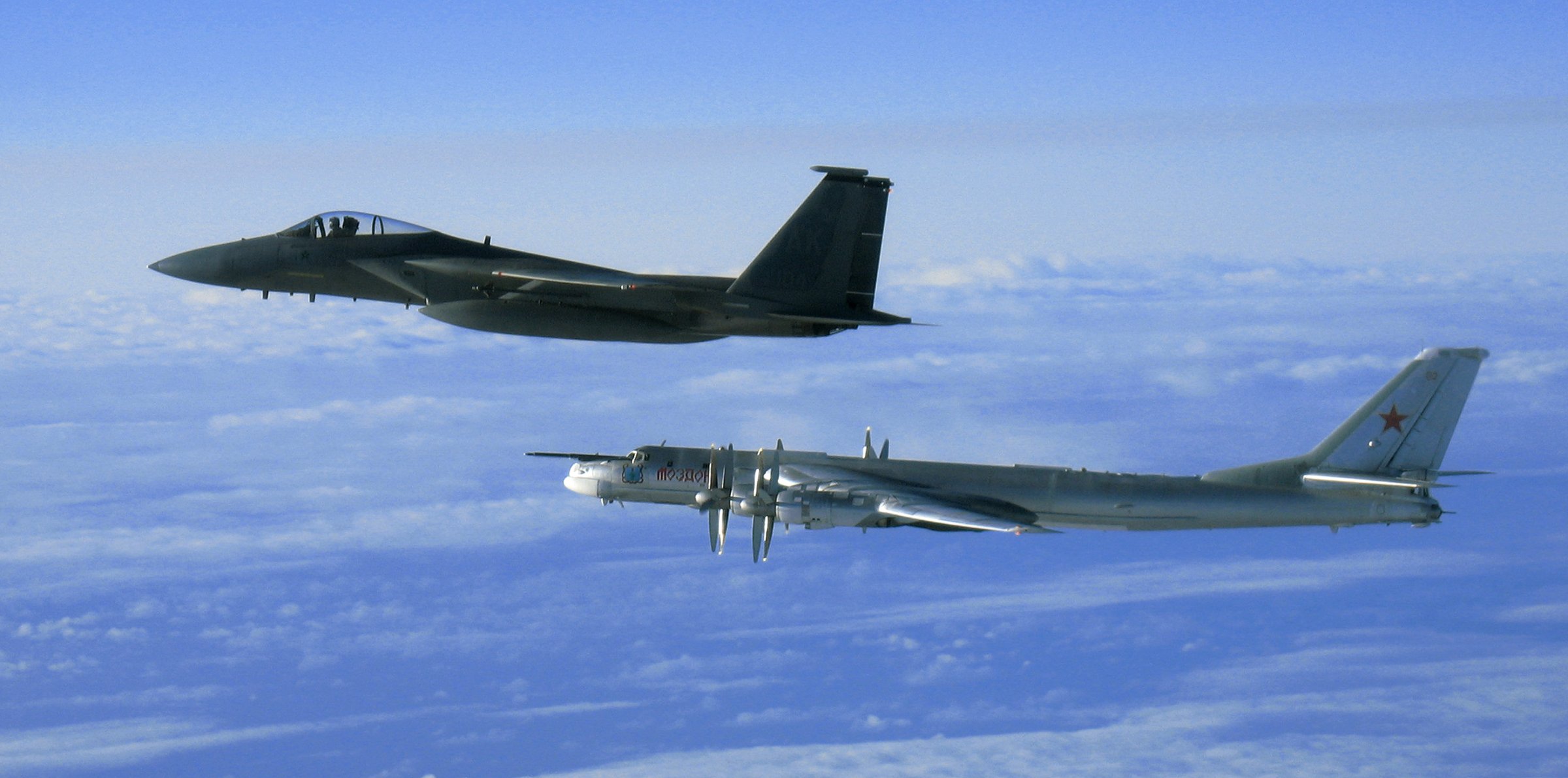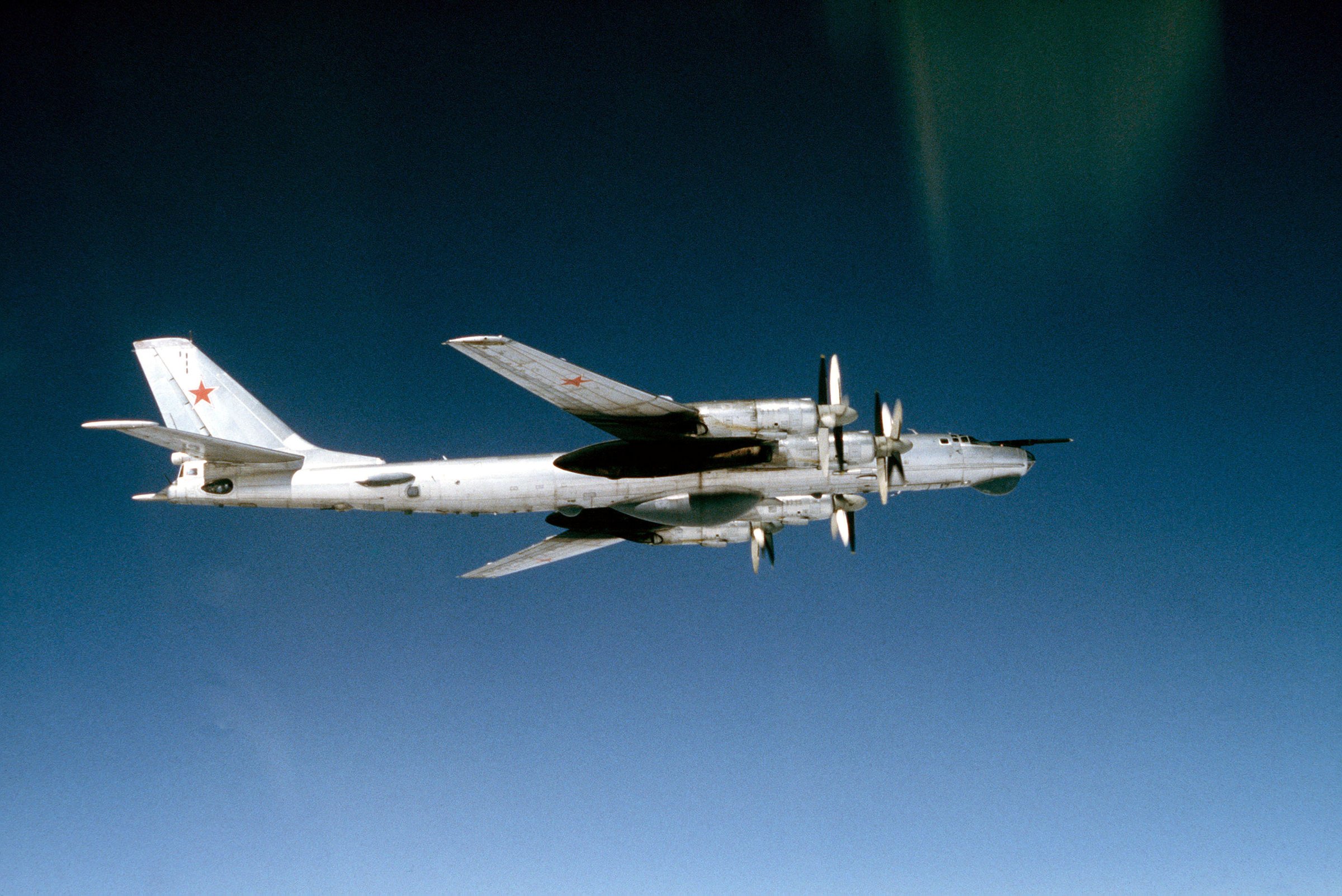
Tupolev Tu-95RTs (Bear-D)
The Navy's long-range eyes — a Bear with a huge belly radome for over-the-horizon missile targeting · First flight 1962 · In service 1966
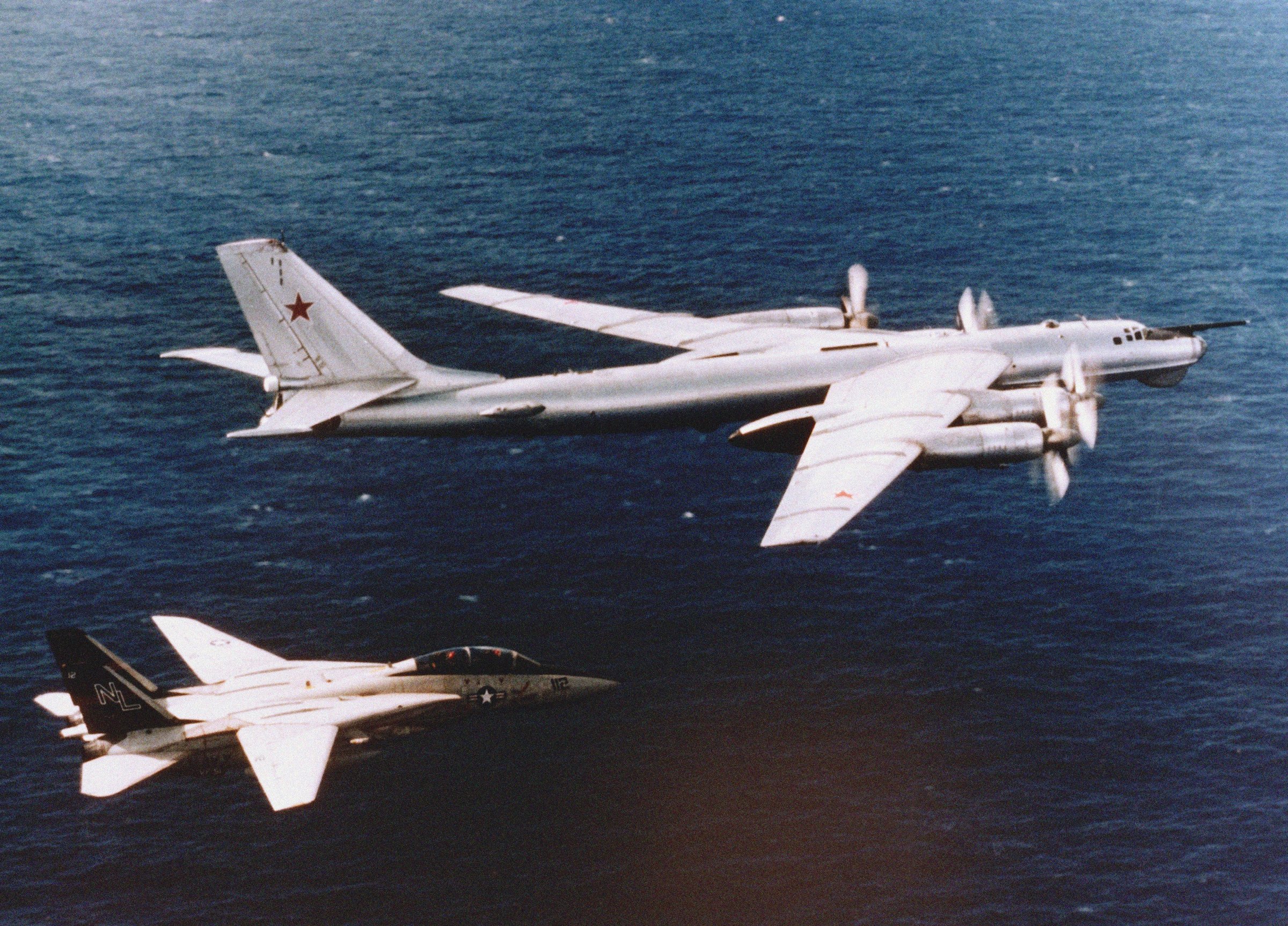
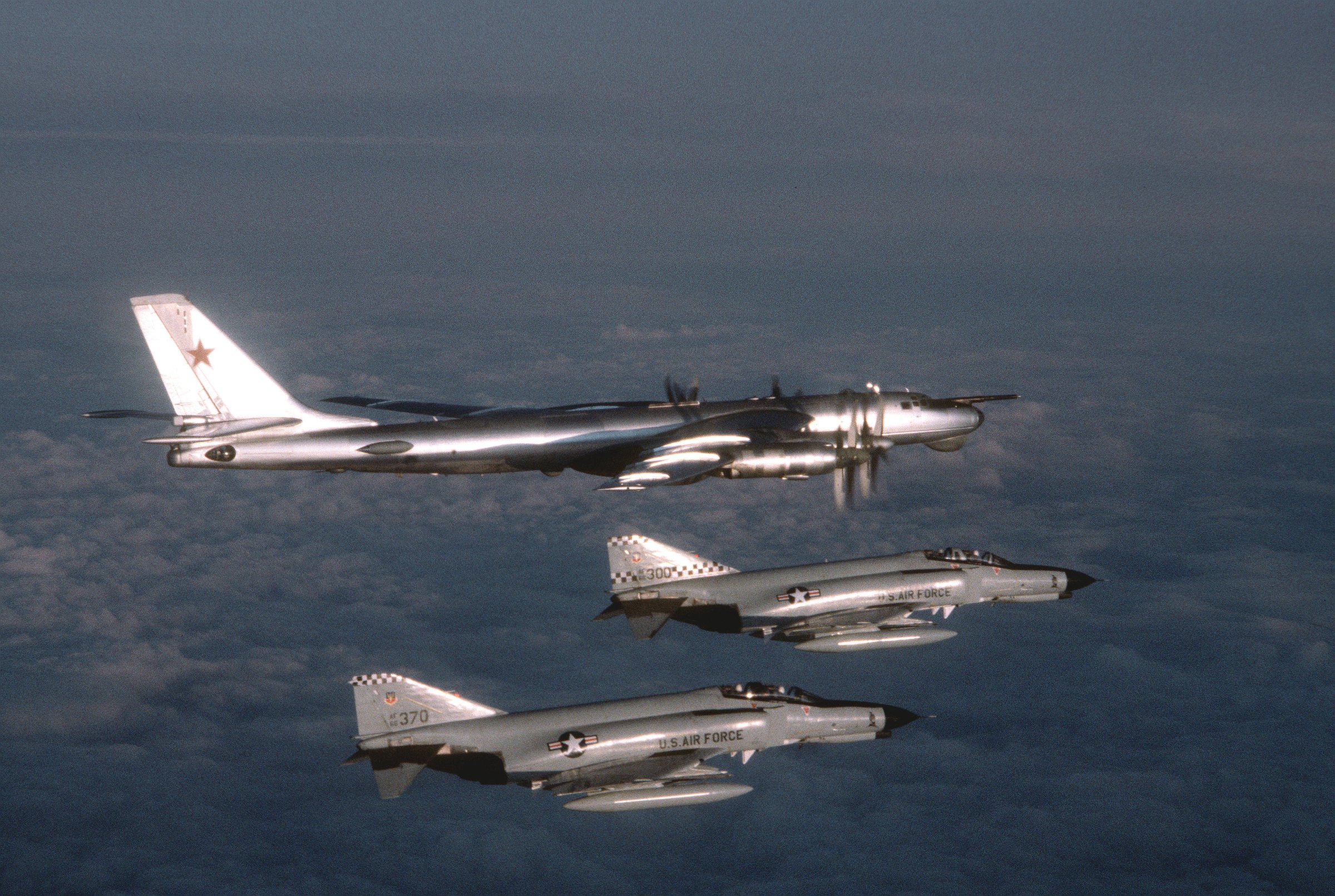
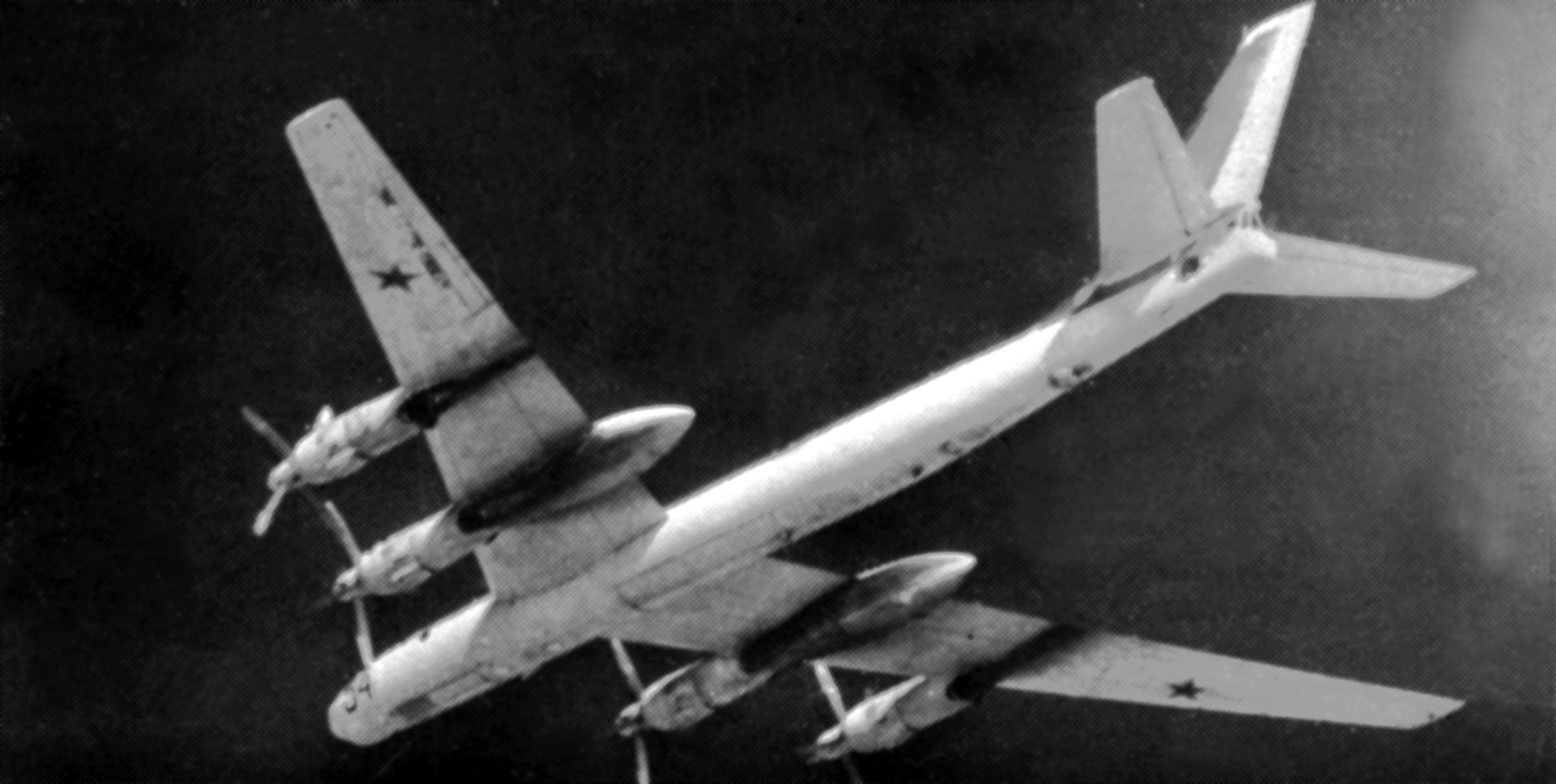
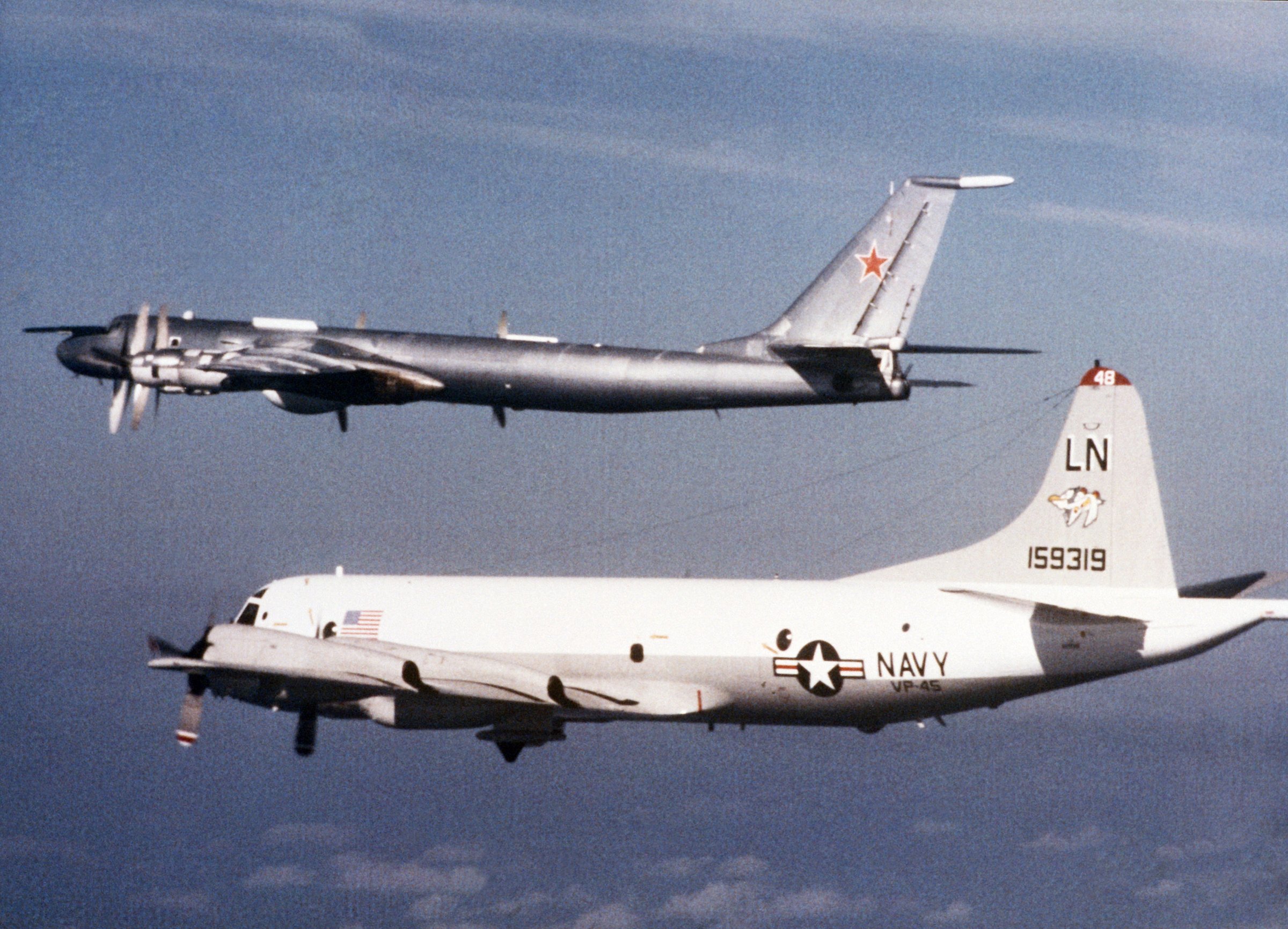
The Tu-95RTs was developed for the Soviet Navy, which needed a way to find targets far beyond the horizon for its long-range P-6 anti-ship missiles. The bomber's weapons were removed and a large search radar was fitted under the centre fuselage, with a data link that passed target information to submarines and surface ships. The type first flew on 21 September 1962 and entered service in May 1966. NATO called it Bear-D.
Forty were built. Flying long patrols over the Atlantic and Pacific, the Bear-D became one of the most familiar sights of the Cold War at sea. US Navy carrier fighters, US Air Force interceptors from Iceland and Air National Guard units routinely met and escorted them, which is why so many photographs of the type were taken by Western crews.
The Tu-95RTs was withdrawn in 1993–94, after the Soviet Union's collapse. Its maritime role passed to the Tu-142, a heavily redesigned Bear built for anti-submarine warfare.