


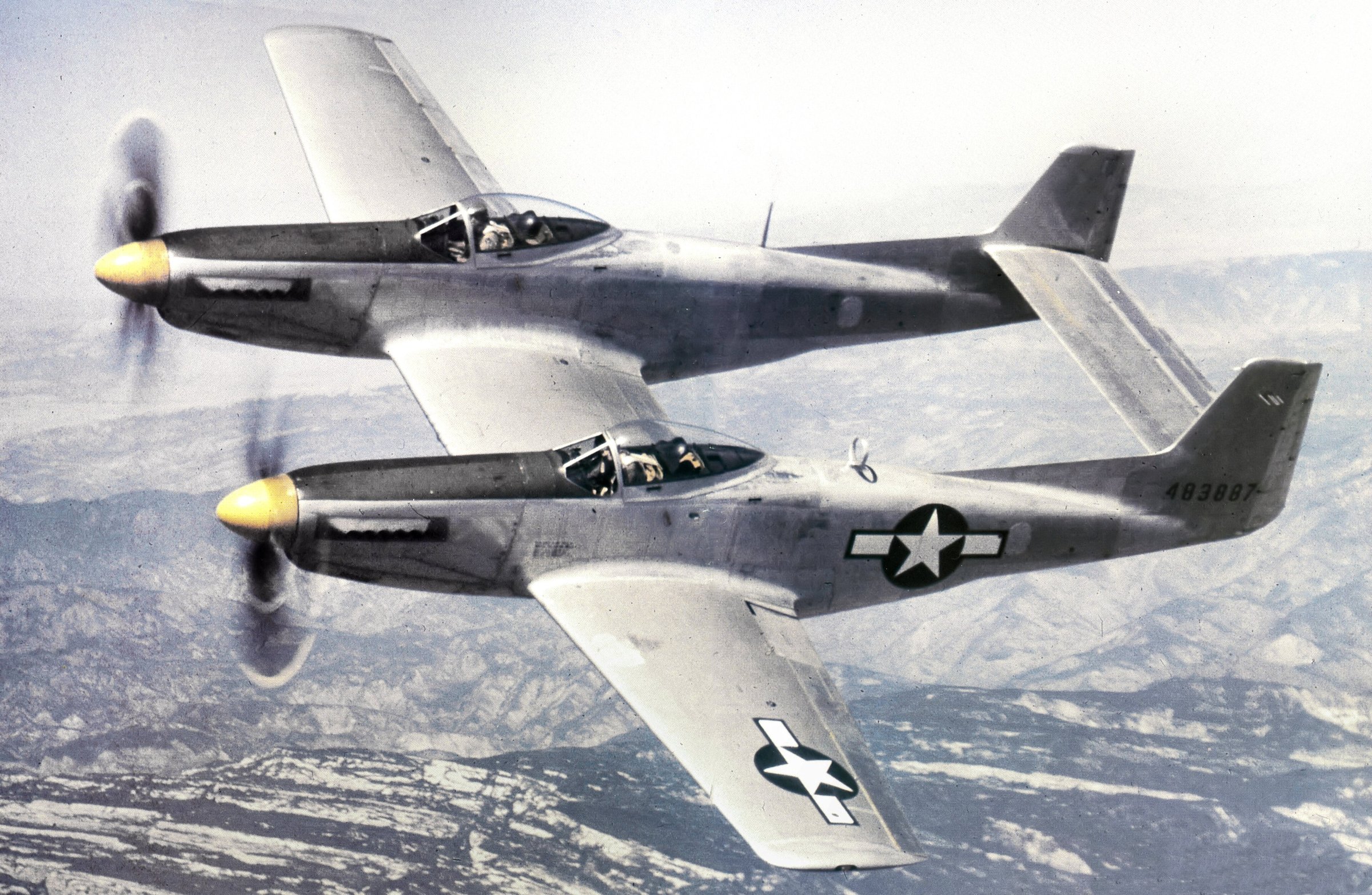
North American F-82 Twin Mustang
Two Mustang fuselages on one wing — a very-long-range escort that became a radar night fighter · First flight 1945 · Retired 1953
The Twin Mustang was designed in 1944 as a very-long-range escort for B-29 raids on Japan, where a second pilot could relieve the first on missions lasting many hours. North American joined two lengthened P-51H-style fuselages with a new centre wing section carrying six 12.7 mm guns. The XP-82 first flew in June 1945 (sources give both 15 and 26 June), too late for the war.
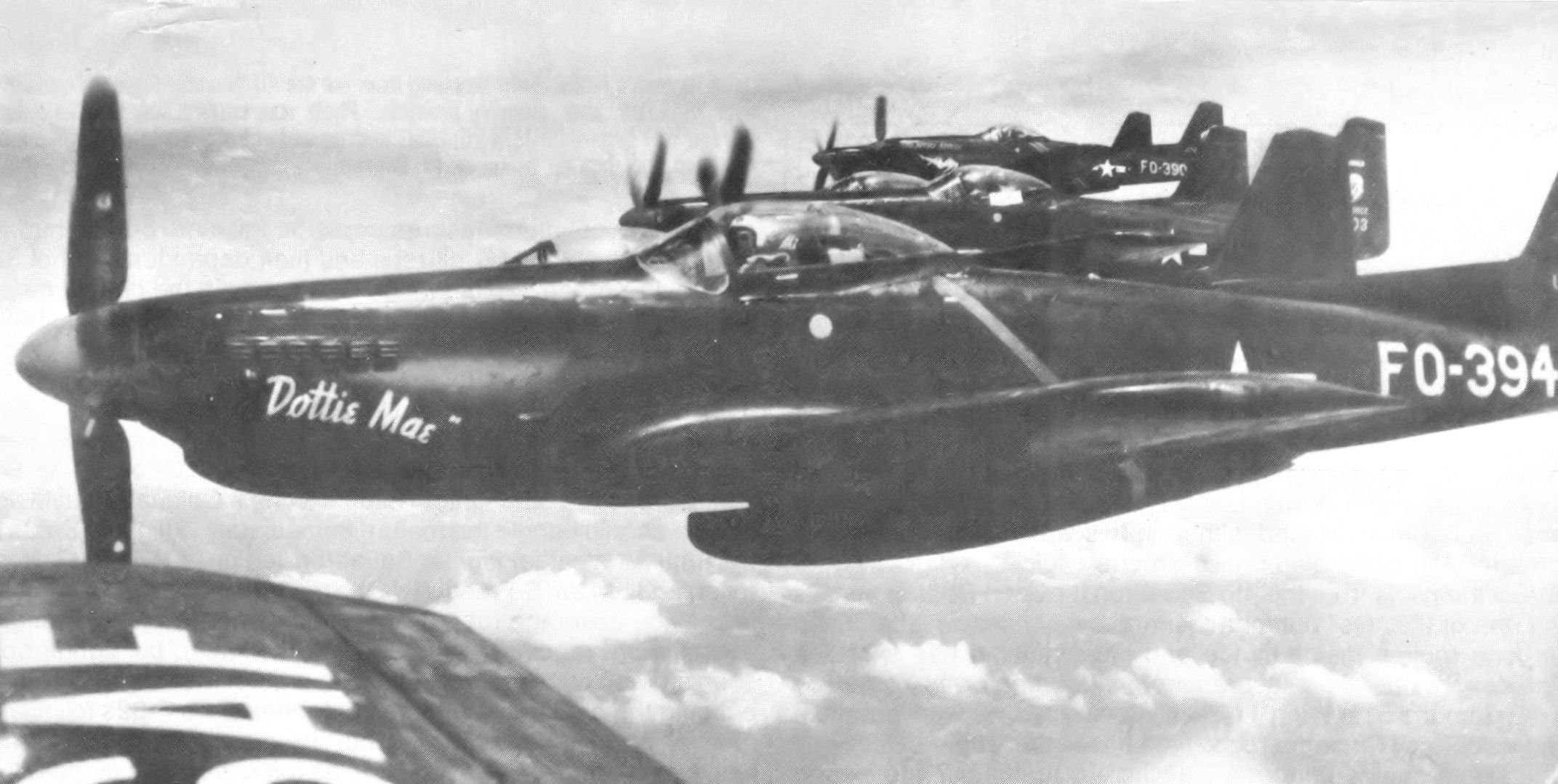
Postwar, on 27 February 1947 the P-82B 'Betty Jo', flown by Col Robert E. Thacker, flew non-stop and unrefuelled from Hawaii to New York, 8,129 km in 14 hours 32 minutes. Production F-82E, F and G models switched from Merlins to Allison V-1710s; the F and G became radar-equipped night and all-weather fighters with the radar operator in the right-hand cockpit, replacing the P-61 Black Widow.
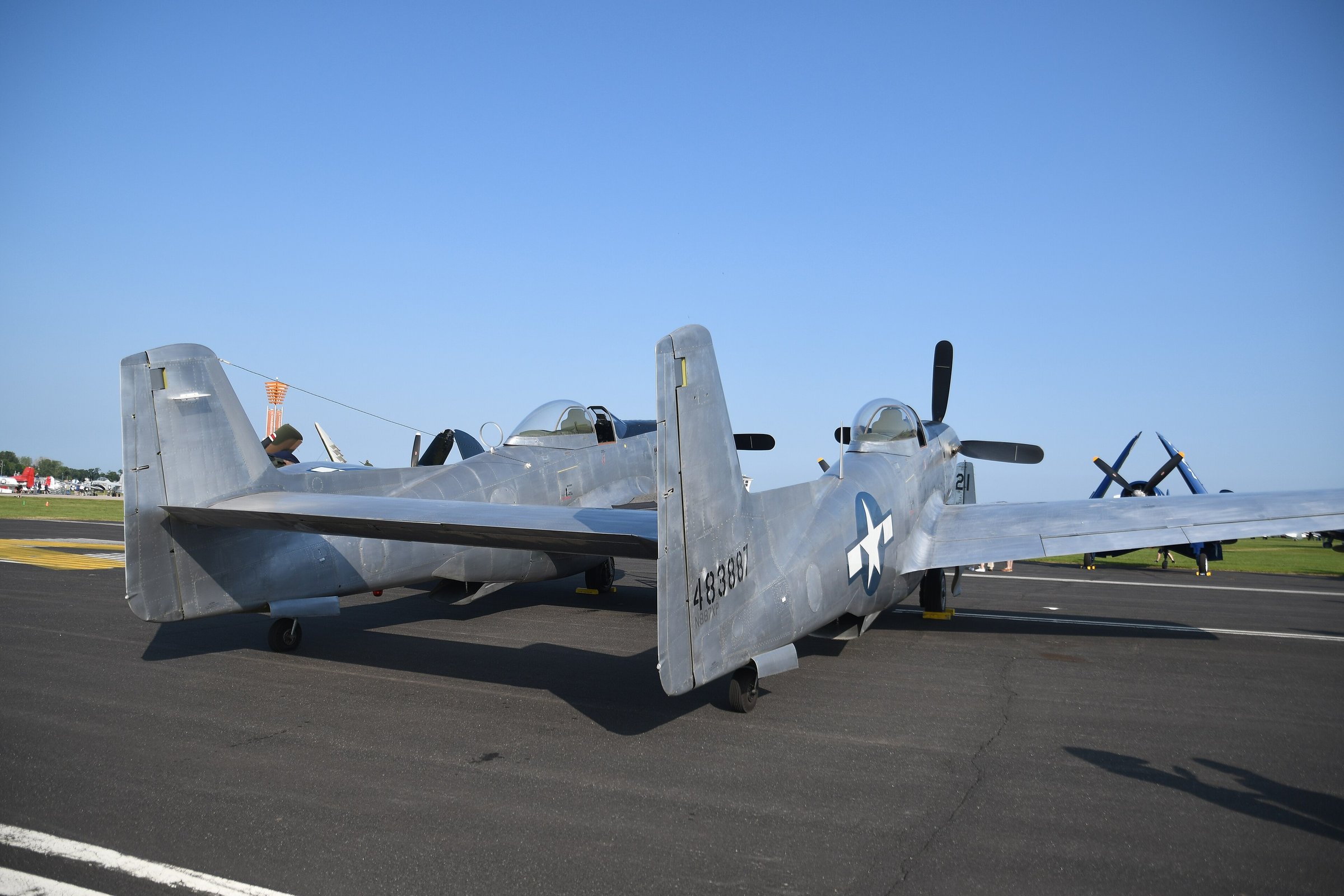
On 27 June 1950 an F-82G of the 68th Fighter (All Weather) Squadron, flown by Lt William G. Hudson with radar operator Lt Carl Fraiser, shot down a Yak-11 near Kimpo — the first US air-to-air victory of the Korean War. The last Twin Mustang was retired at Elmendorf AFB, Alaska, on 12 November 1953. Prototype XP-82 44-83887 was restored to flying condition by Tom Reilly in Douglas, Georgia, and flew again on 31 December 2018.
Other P-51 Mustang variants
 ◎ NORTH
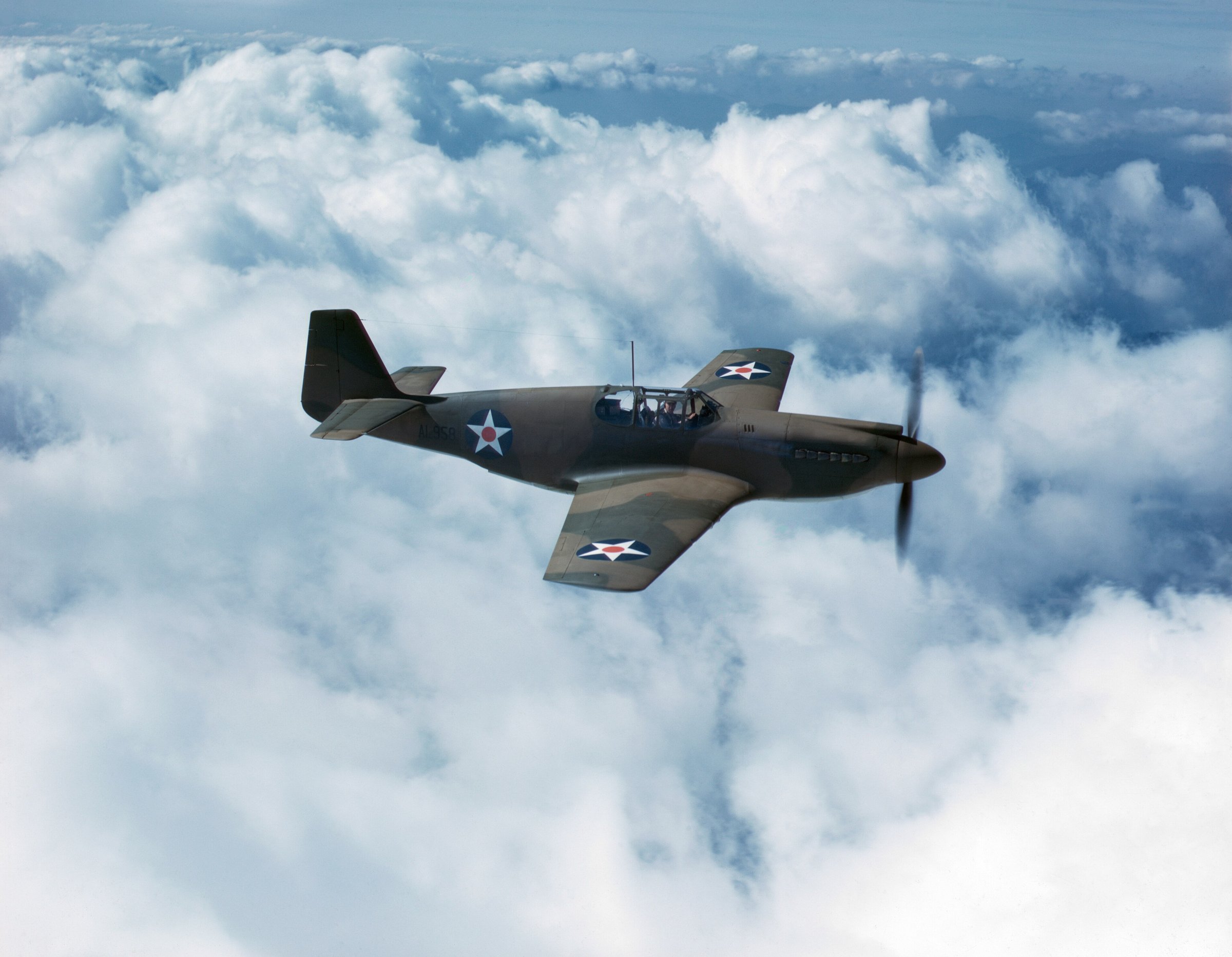
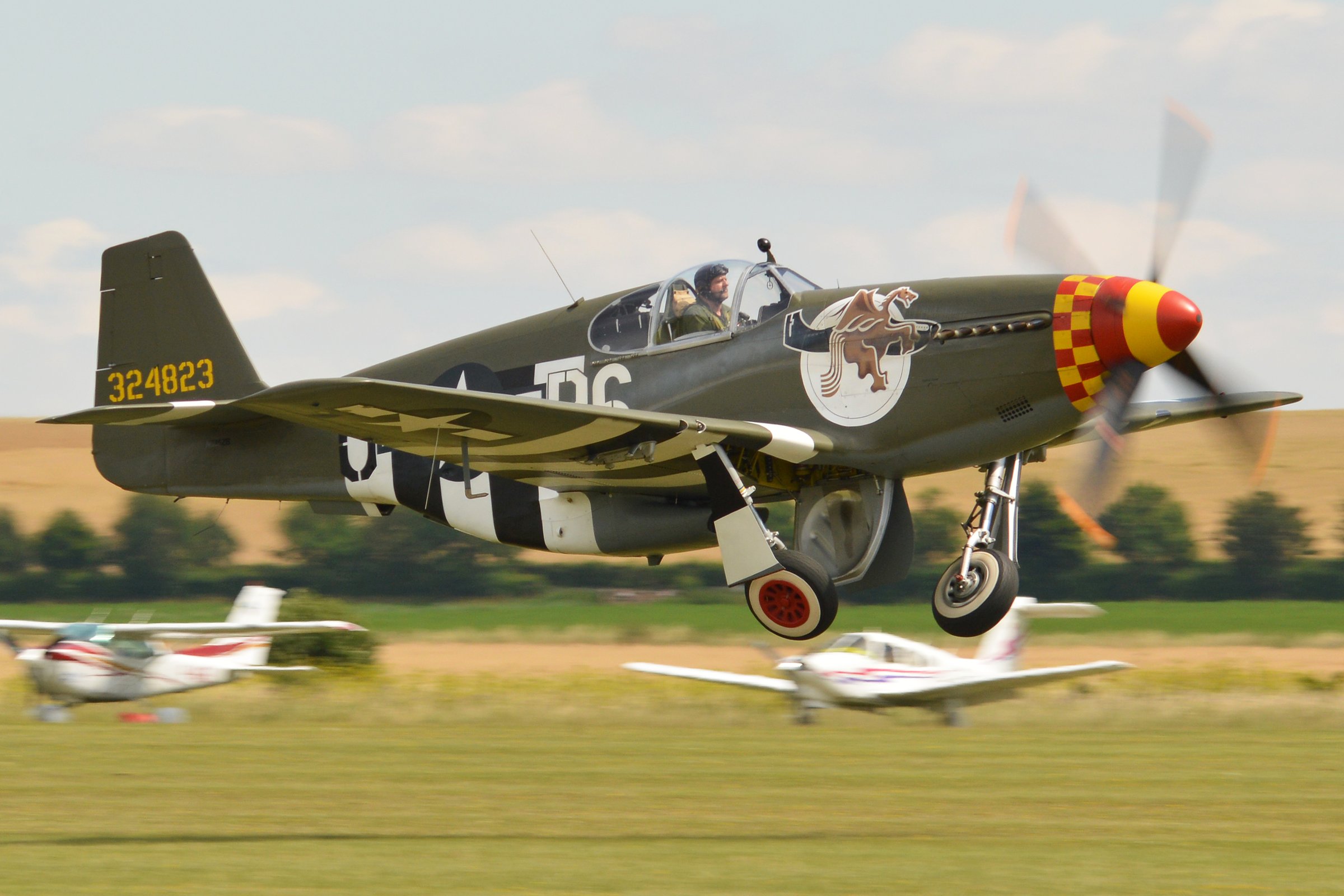
North American Mustang I / P-51A / A-36 (Allison-engined)
 ◎ NORTH
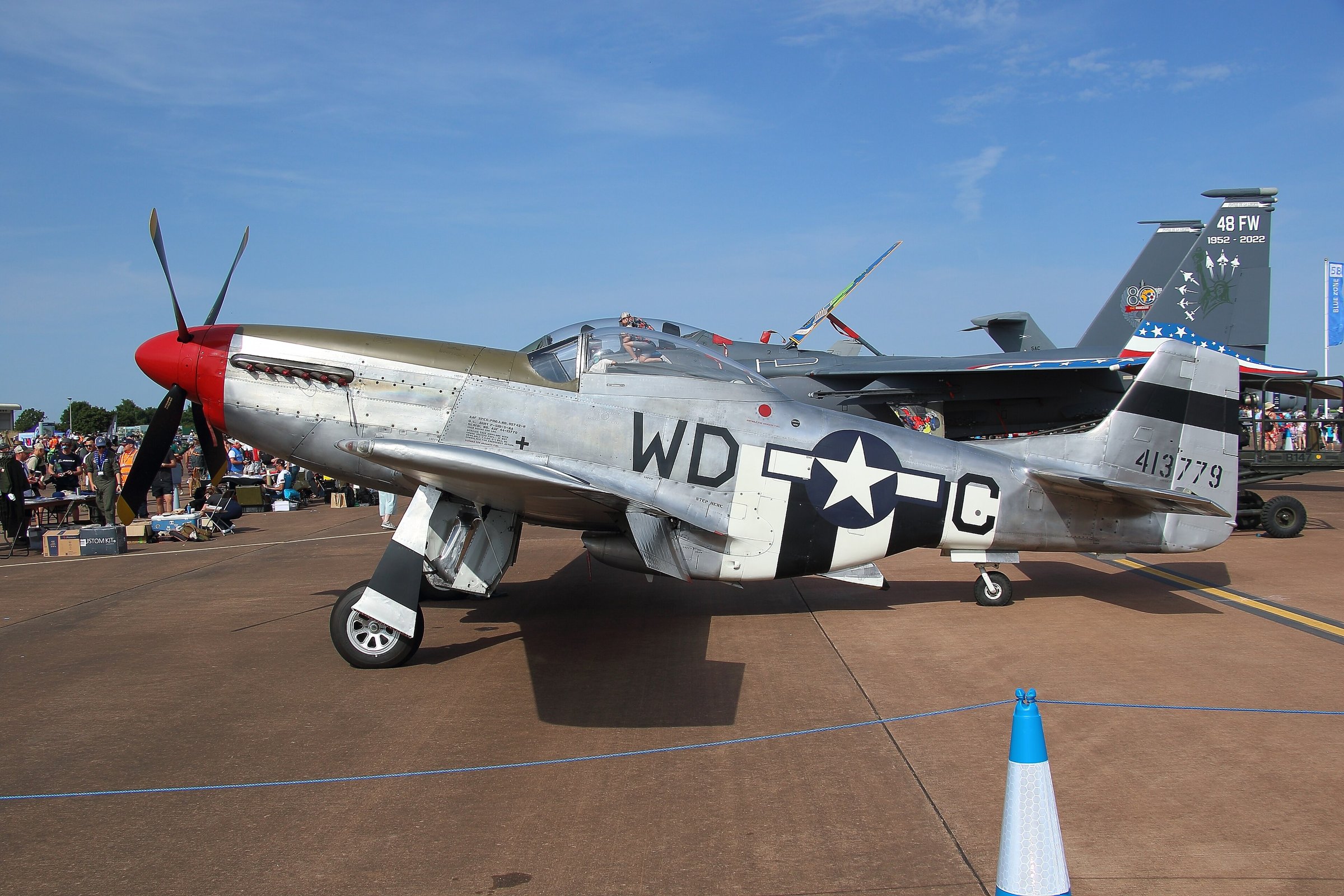
North American P-51B / P-51C Mustang (Mustang III)
 ◎ NORTH
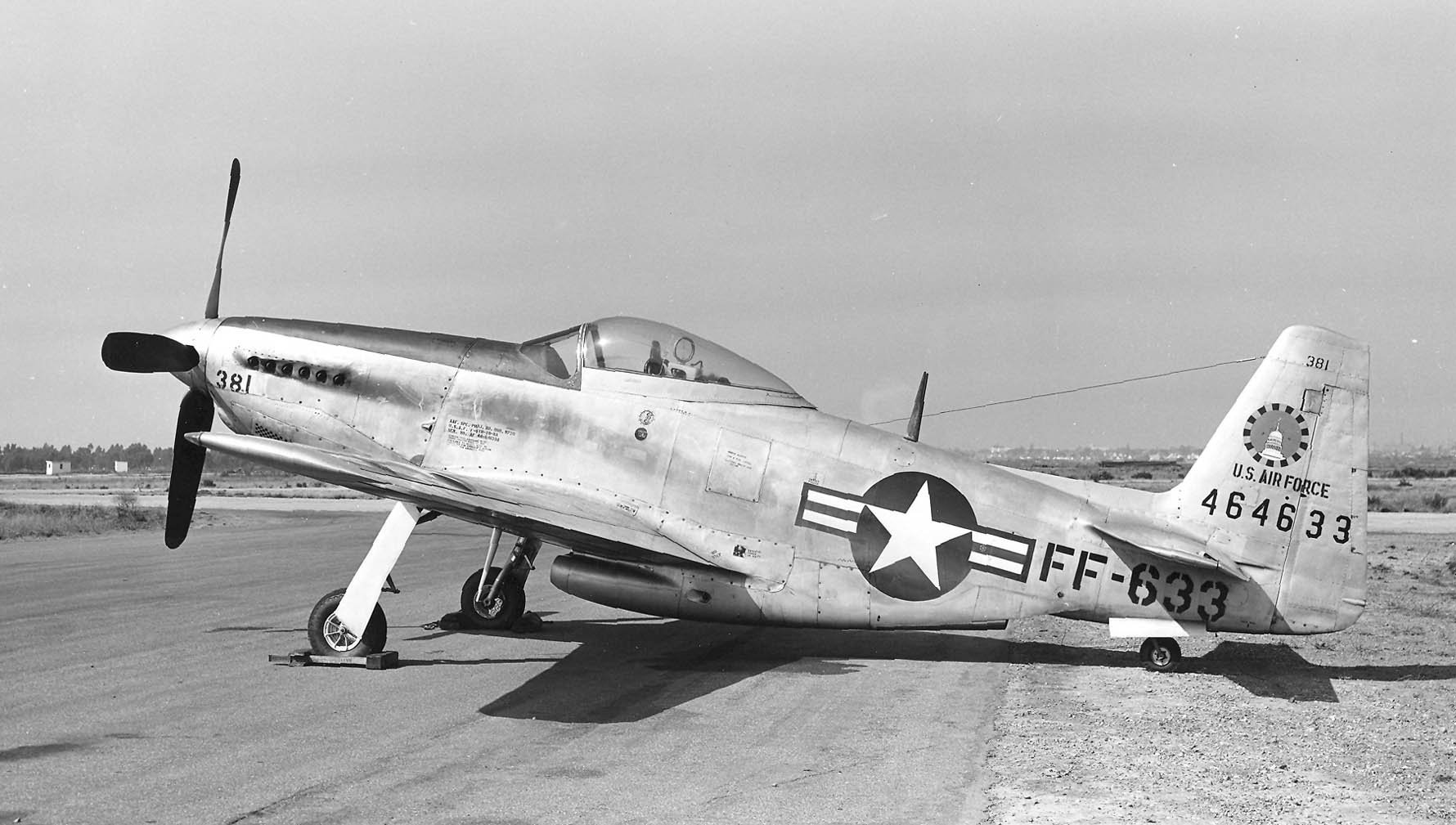
North American P-51D / P-51K Mustang
 ◎ NORTH