North American P-51B / P-51C Mustang (Mustang III)
The Merlin Mustang — the high-altitude escort fighter that could reach Berlin and back · First flight 1942 · In service 1943
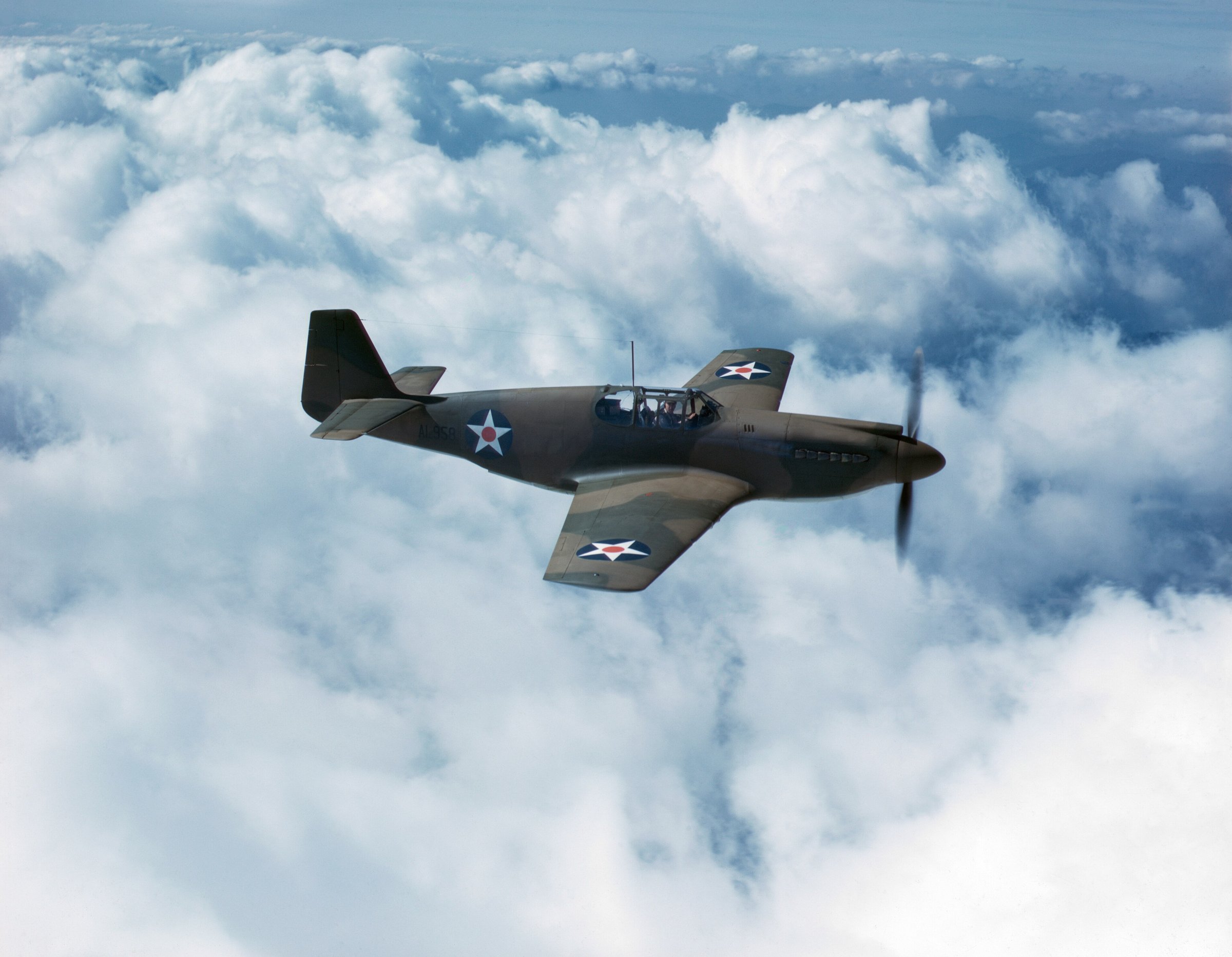
Rolls-Royce and North American both experimented with putting the Merlin 60-series engine, with its two-stage, two-speed supercharger, into the Mustang airframe. The American XP-51B first flew on 30 November 1942, and production aircraft used the Packard-built V-1650-3. The result transformed the aircraft: top speed rose to 710 km/h at 9,100 m, and with an extra 85 US gallon fuselage tank added from the P-51B-5 onwards, it could escort heavy bombers to targets across Germany. The 354th Fighter Group took the P-51B into combat from England in December 1943.
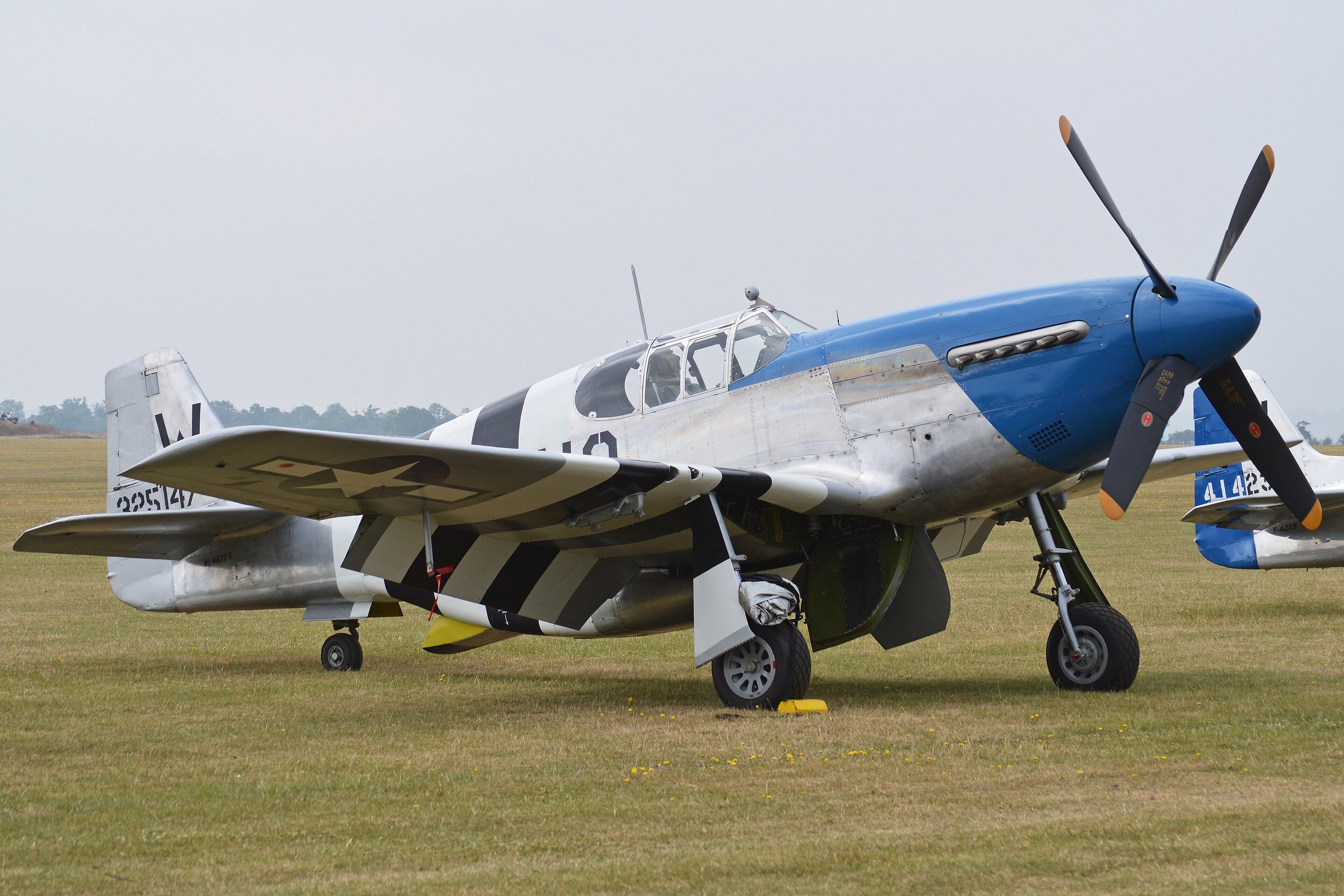
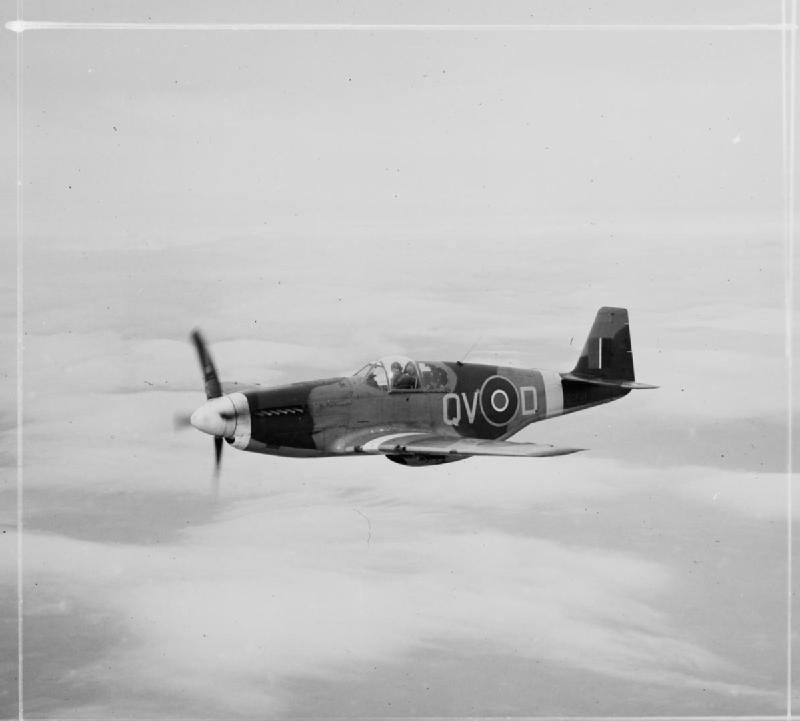
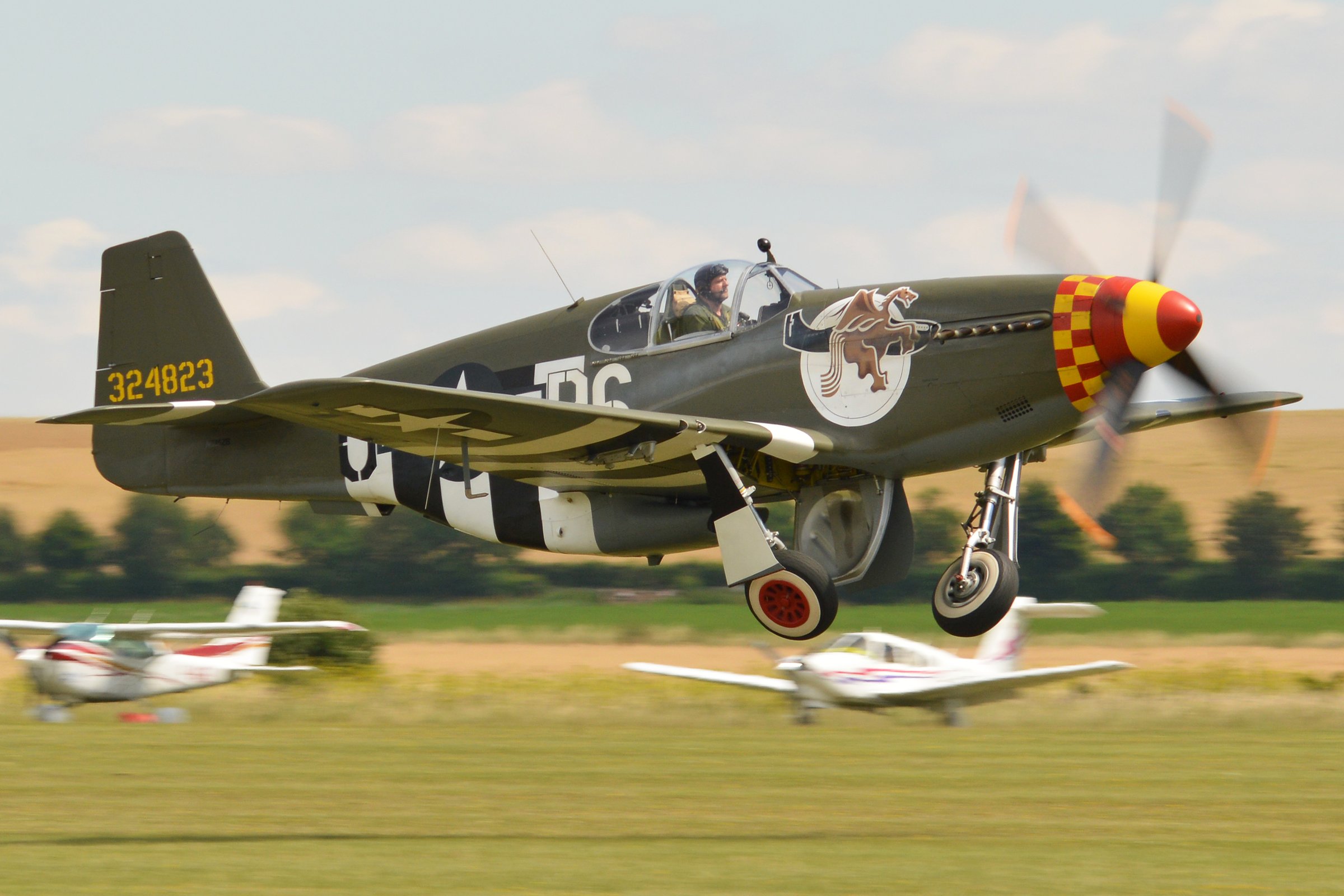
The P-51B was built at Inglewood, California, and the otherwise similar P-51C at a new North American plant in Dallas, Texas — the first Mustangs with the '-NT' suffix. Both kept the framed canopy and four 12.7 mm guns, whose canted mounting caused jamming in hard manoeuvres. Rear visibility was poor, so the RAF developed the bulged sliding Malcolm hood, fitted to its Mustang IIIs and to many American aircraft; dorsal fin fillets were also offered as a retrofit to improve directional stability.
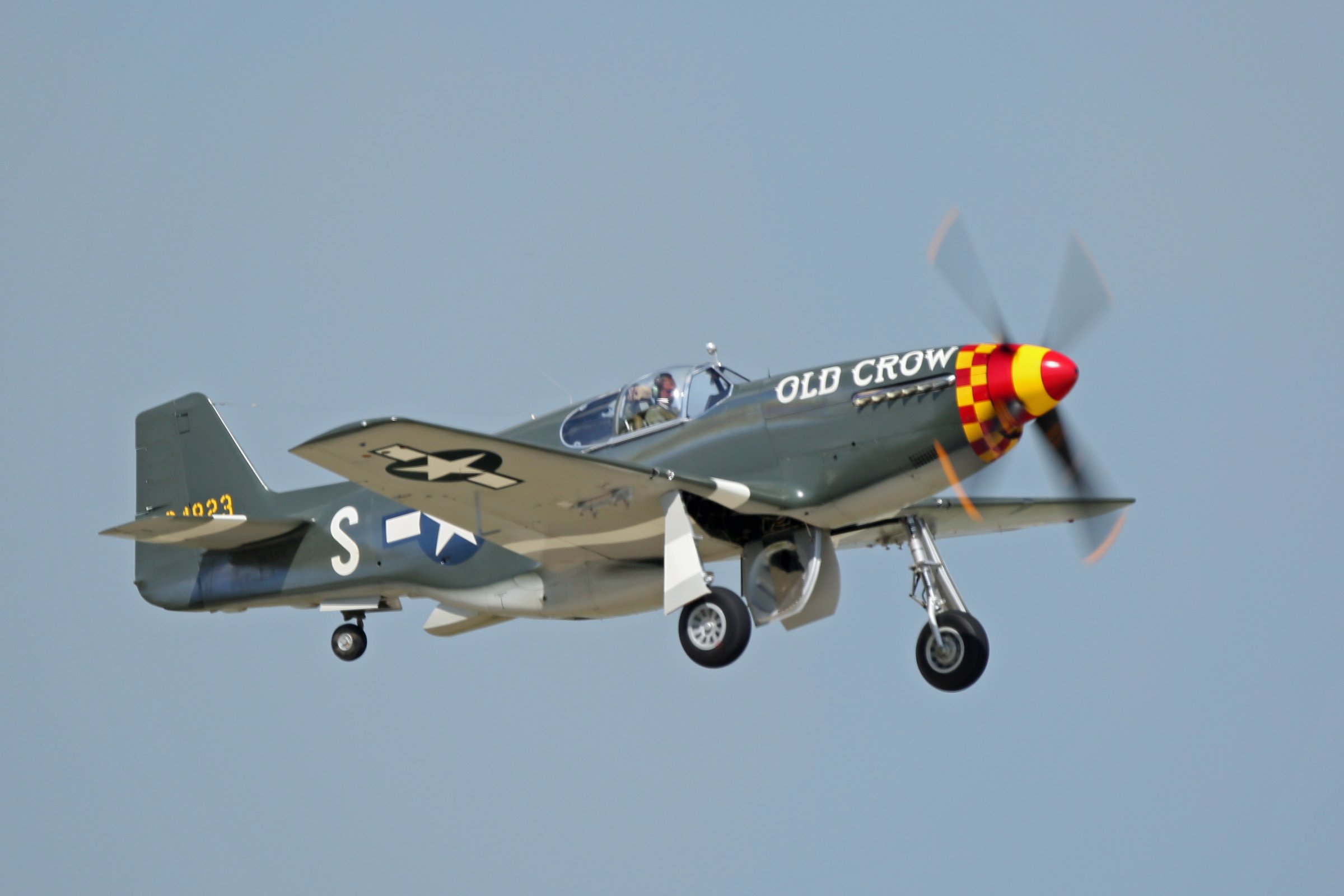
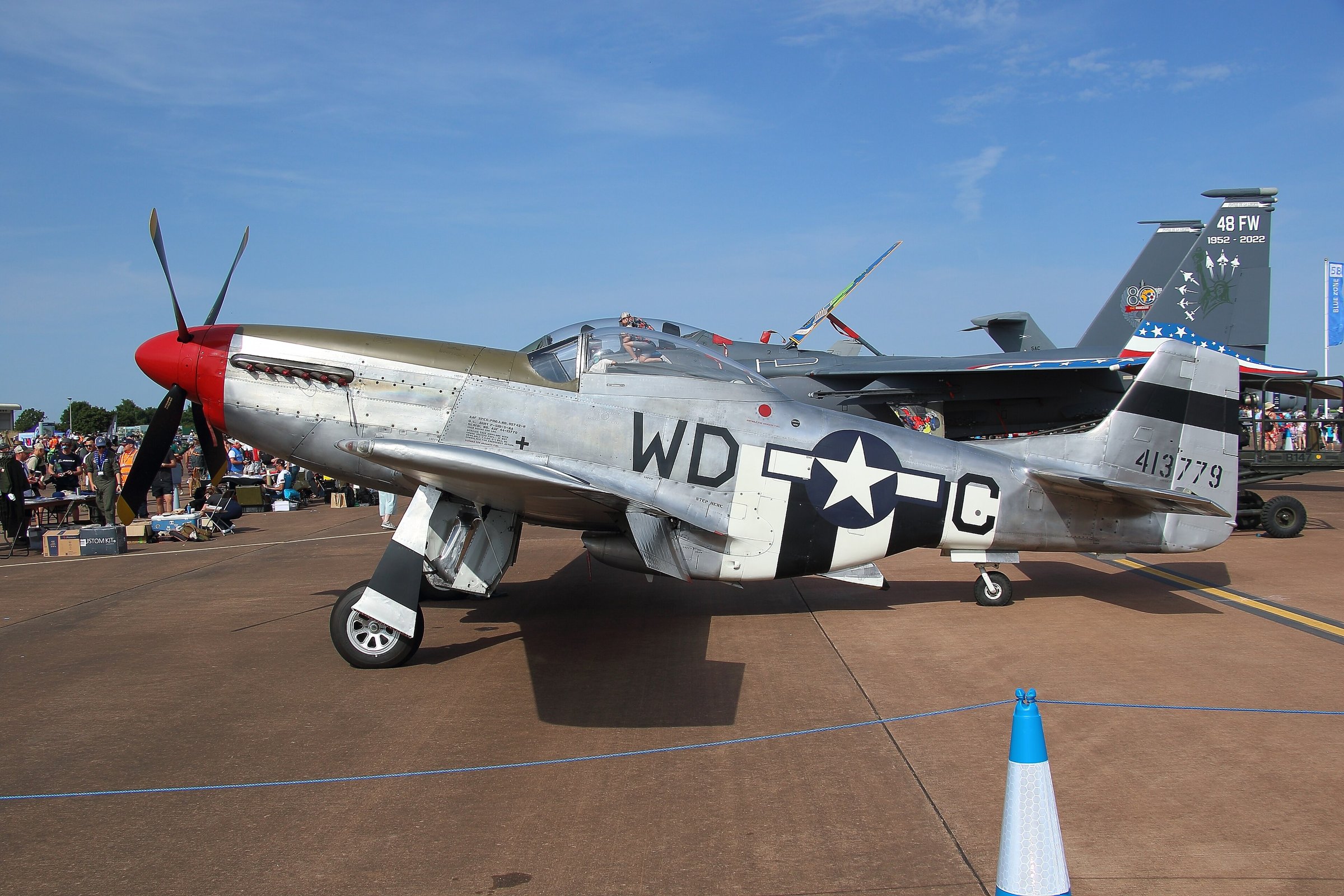
P-51B/Cs equipped fighter groups of the 8th and 15th Air Forces, including the Tuskegee Airmen of the 332nd Fighter Group in Italy, and fought in the China-Burma-India theatre. Several restored examples still fly, among them P-51B 'Berlin Express' (rebuilt around salvaged parts and flown again in 2014), the P-51B painted as 'Old Crow', and P-51C 'Princess Elizabeth'.