North American P-51D / P-51K Mustang
The definitive Mustang — bubble canopy, six guns and the most-produced version by far · First flight 1943 · In service 1944
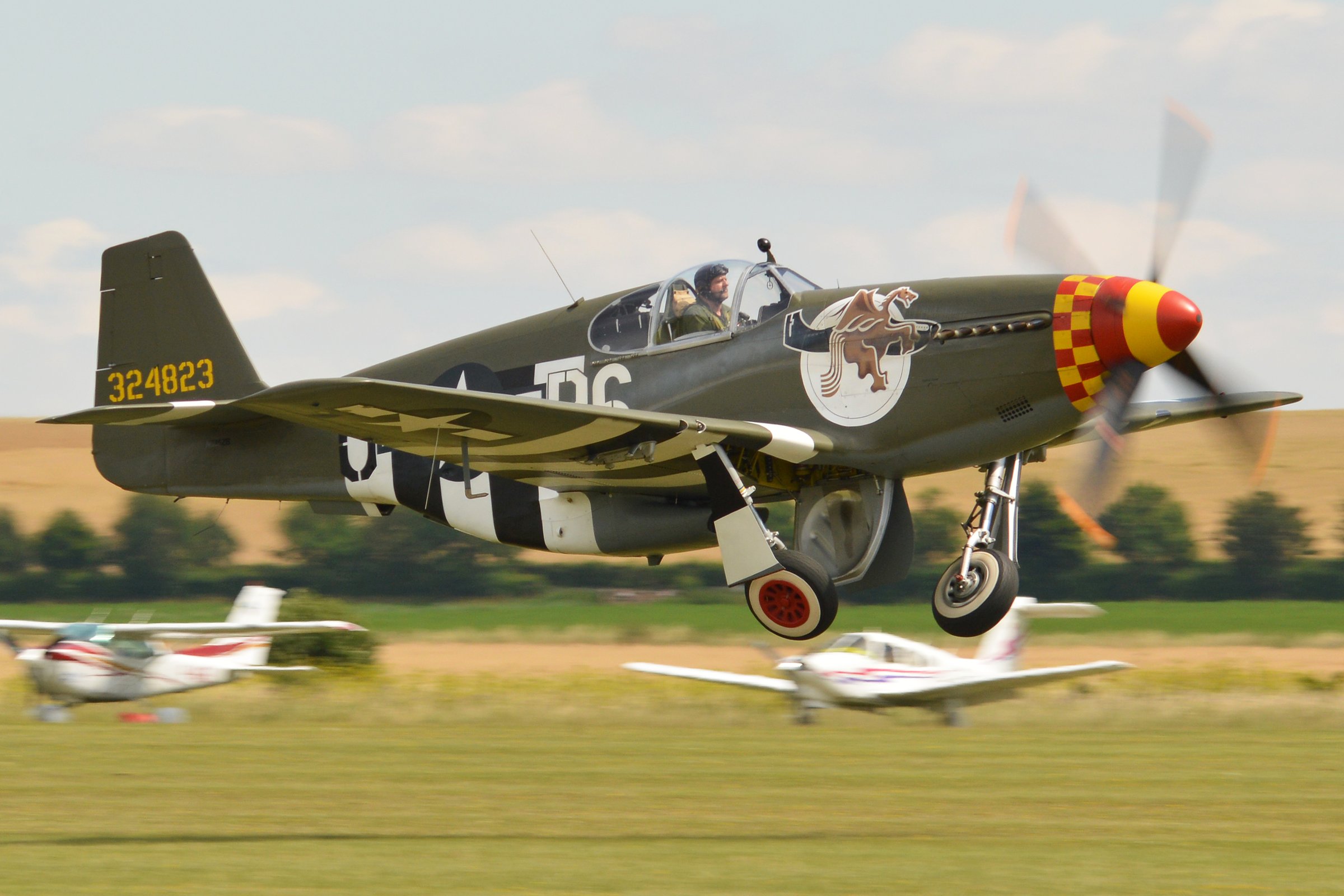
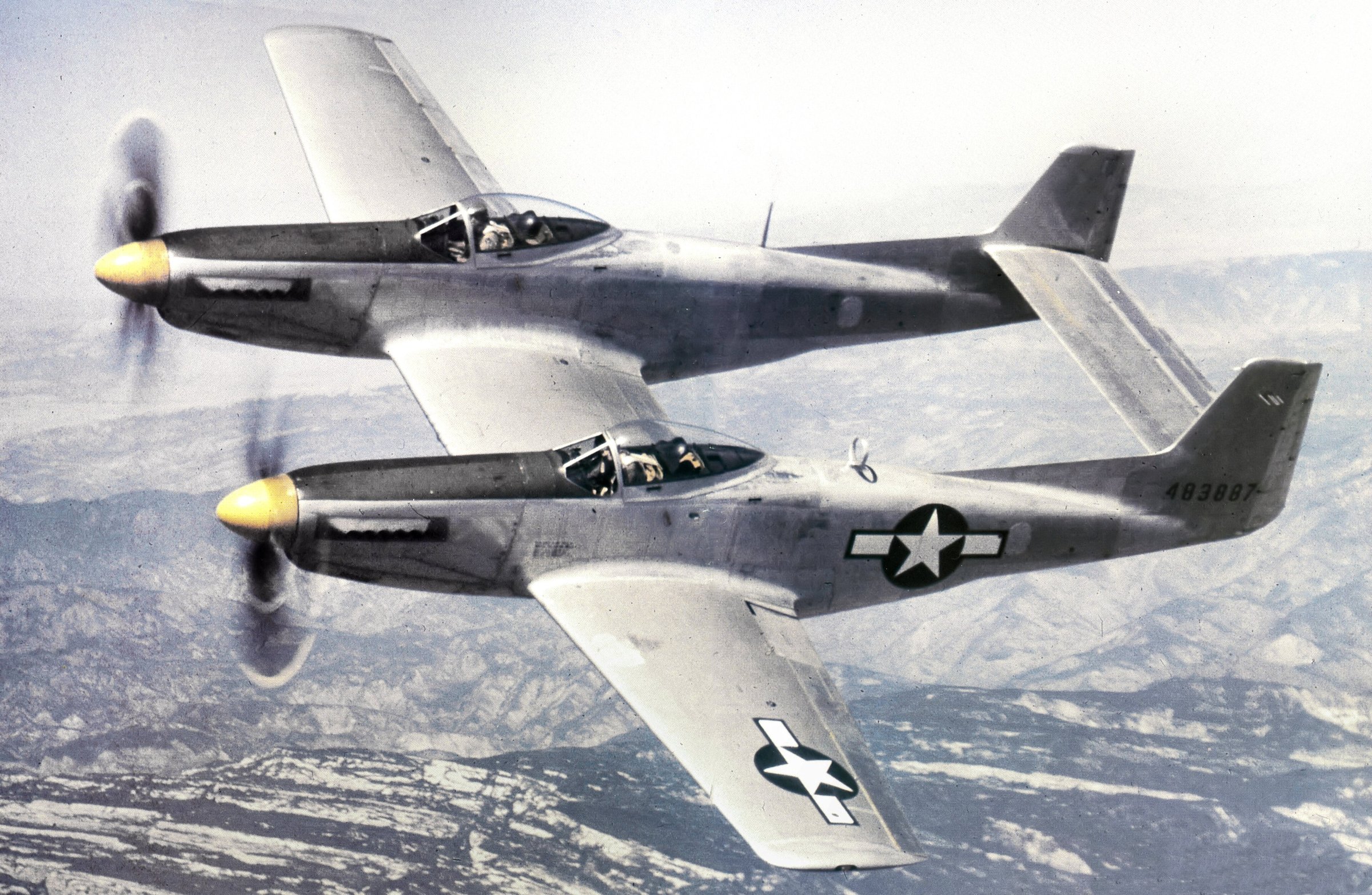
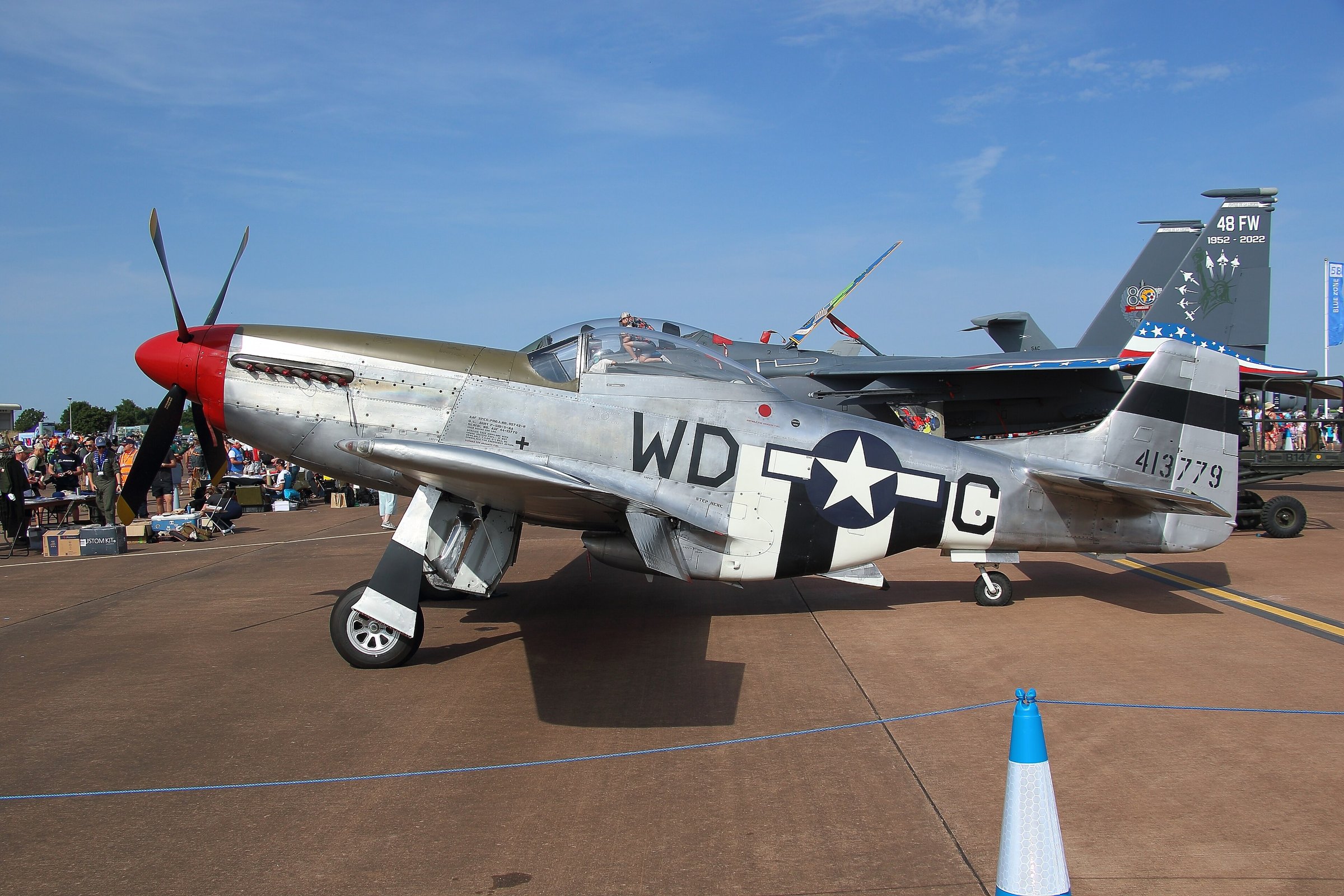
The P-51D was developed from the tenth production P-51B, 43-12102, rebuilt with a cut-down rear fuselage and a one-piece 'bubble' canopy that gave the pilot all-round vision. The wing was revised to take six 12.7 mm guns in an upright mounting that cured the jamming of the B/C, and later blocks added a dorsal fin fillet (from the D-10), the K-14 computing gunsight (D-20) and underwing rocket racks (D-25). With the Packard V-1650-7 it reached about 710 km/h. The P-51K, built only at Dallas, differed mainly in its Aeroproducts propeller.
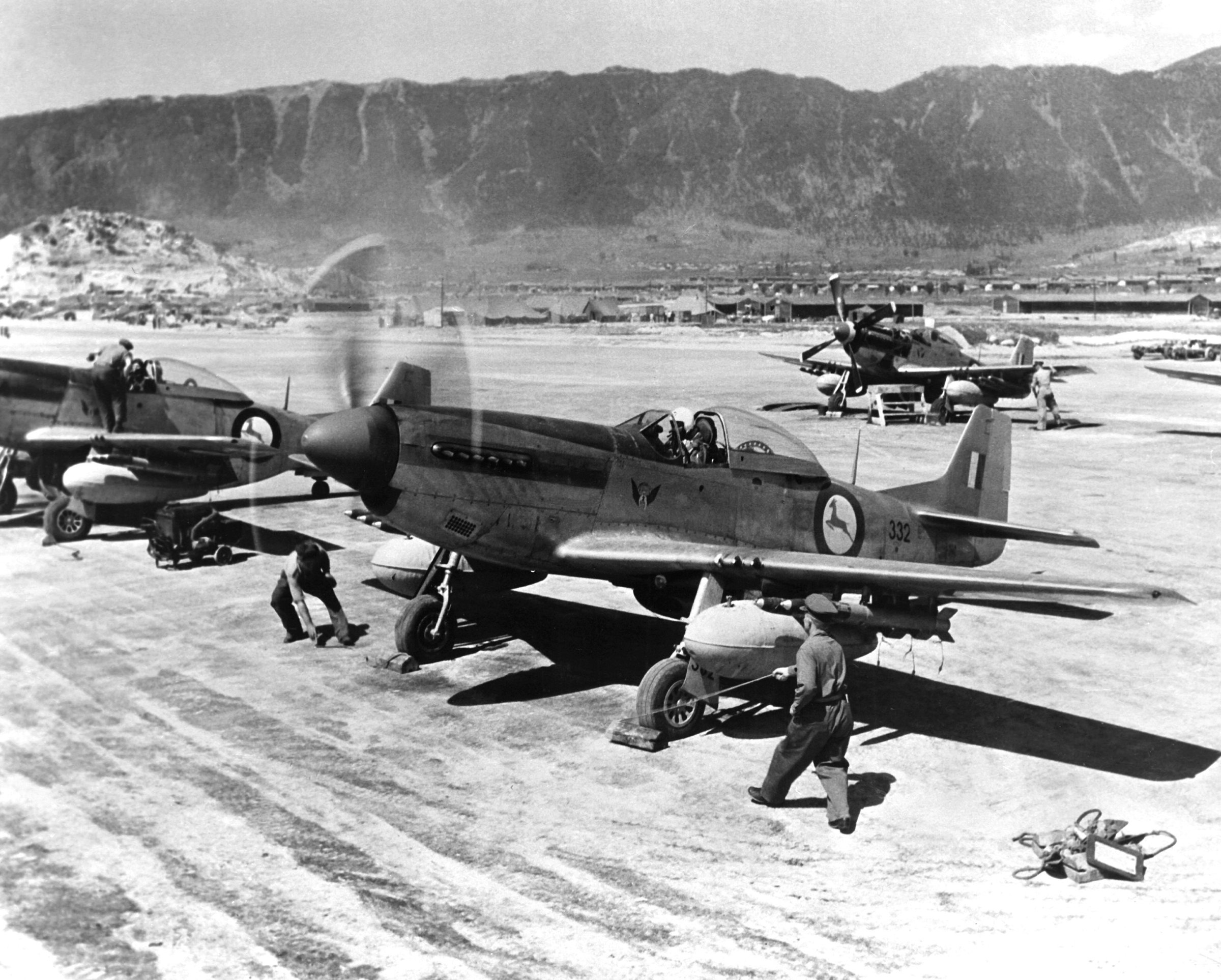
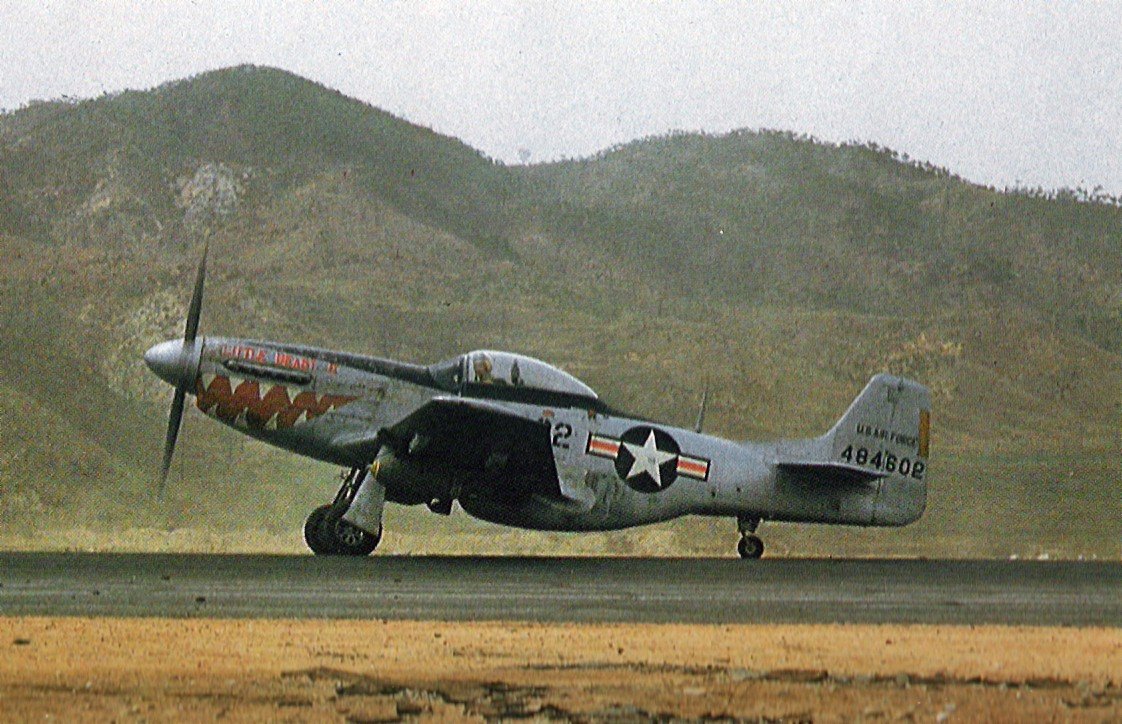
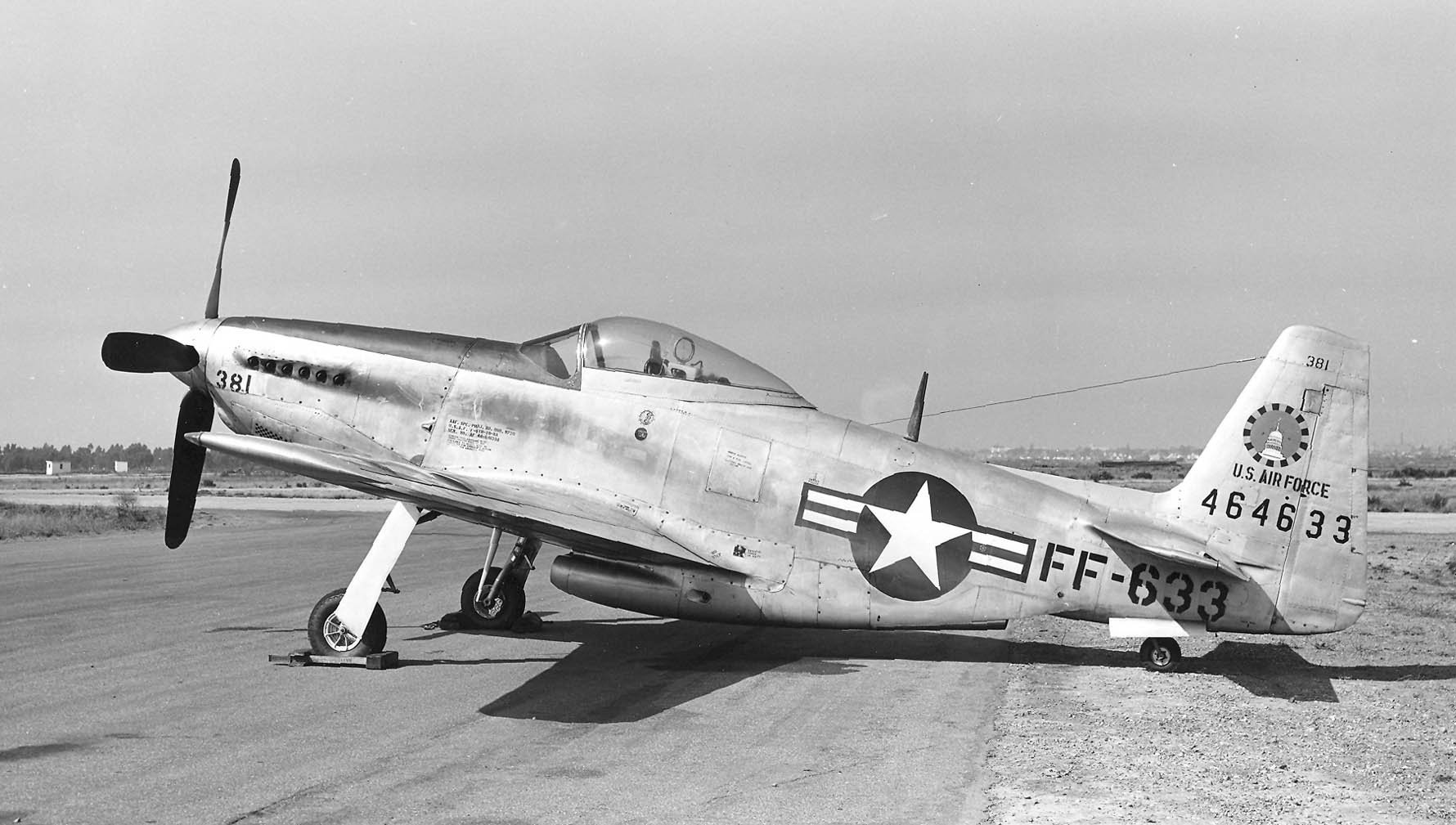
P-51Ds reached the 8th Air Force in mid-1944 and became the standard long-range escort over Germany; Mustang groups in Europe claimed about 4,950 enemy aircraft. In the Pacific they escorted B-29s from Iwo Jima to Japan. After the war the type, redesignated F-51D in 1948, served in the Korean War as a ground-attack aircraft with the USAF, the South African Air Force's No. 2 Squadron, the RAAF's No. 77 Squadron and the Republic of Korea Air Force, largely replaced by jets by 1953.
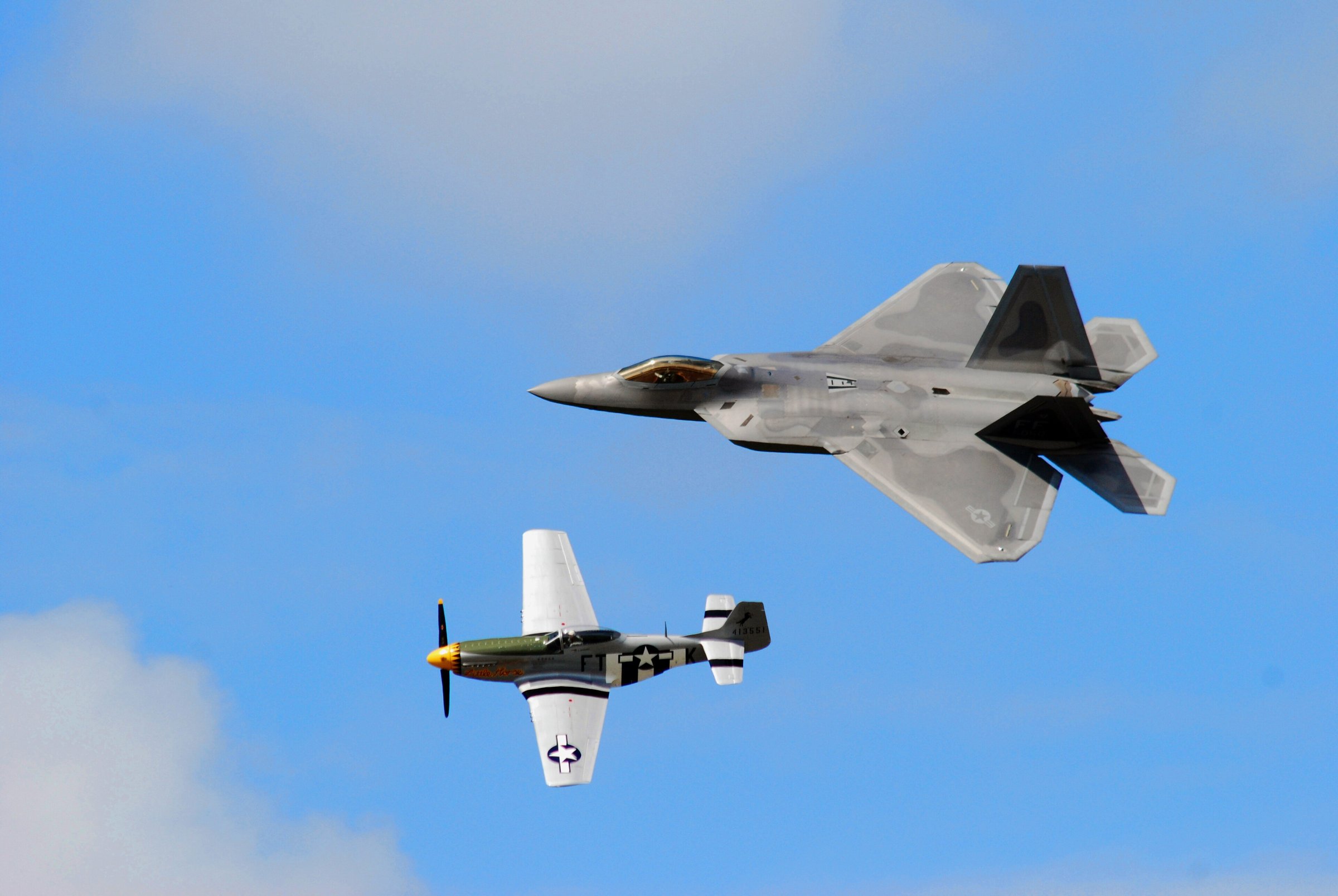
It was the most-produced Mustang and was exported or licence-built widely: Sweden flew 161 as the J 26, and Commonwealth Aircraft Corporation in Australia built 200. The Dominican Air Force retired the last military Mustangs in 1984. Today most of the world's airworthy Mustangs are P-51Ds, and the type regularly flies with the USAF Heritage Flight alongside modern jets.