North American Mustang I / P-51A / A-36 (Allison-engined)
The original low-level Mustang — built for the RAF, powered by the Allison V-1710 · First flight 1940 · In service 1942
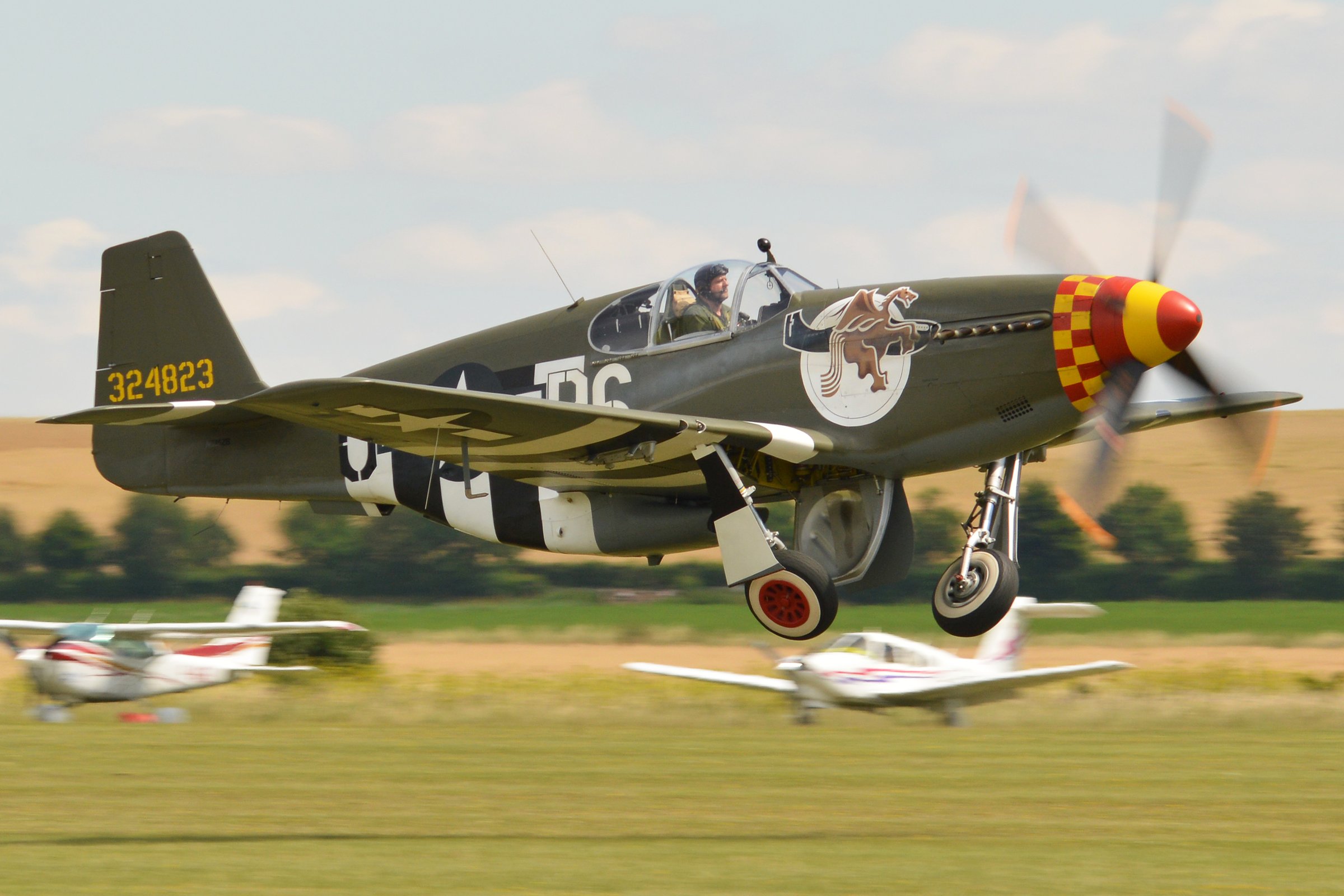
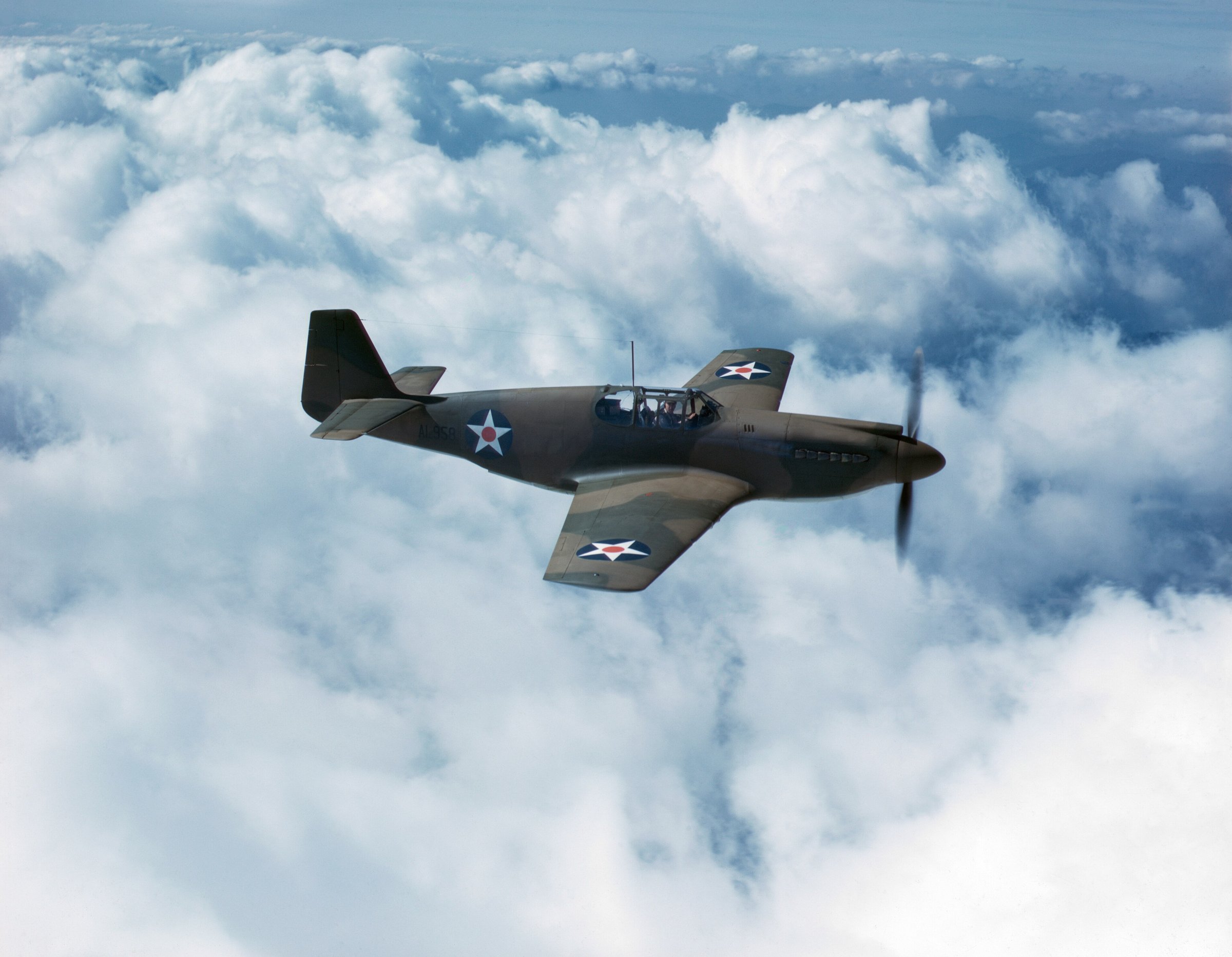
North American designed the NA-73 for a British purchasing commission and flew the NA-73X prototype on 26 October 1940. The RAF named it Mustang; with its single-stage Allison V-1710 it was fast at low level but lost power at height, so the RAF used it for army co-operation and tactical reconnaissance rather than as a high-altitude fighter. No. 26 Squadron was the first unit to receive it in January 1942, and RAF Mustangs flew their first operation over France on 10 May 1942.
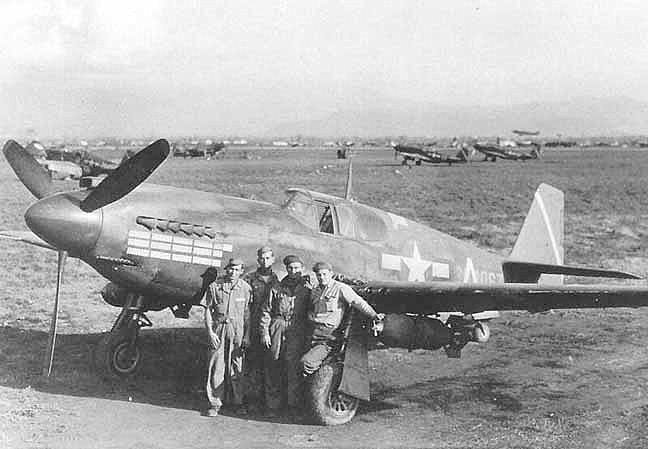
The US Army Air Forces first bought the type as the A-36A, a dive-bomber with six 12.7 mm guns, hydraulic dive brakes and racks for two 500 lb bombs; 500 were ordered in April 1942. The 27th and 86th Fighter-Bomber Groups flew their first A-36A missions against Pantelleria on 6 June 1943 and then supported the landings in Sicily and Italy. The P-51A that followed dropped the dive brakes, carried four 12.7 mm guns and drop tanks, and reached 658 km/h; 310 went to the USAAF and 50 to the RAF as the Mustang II.
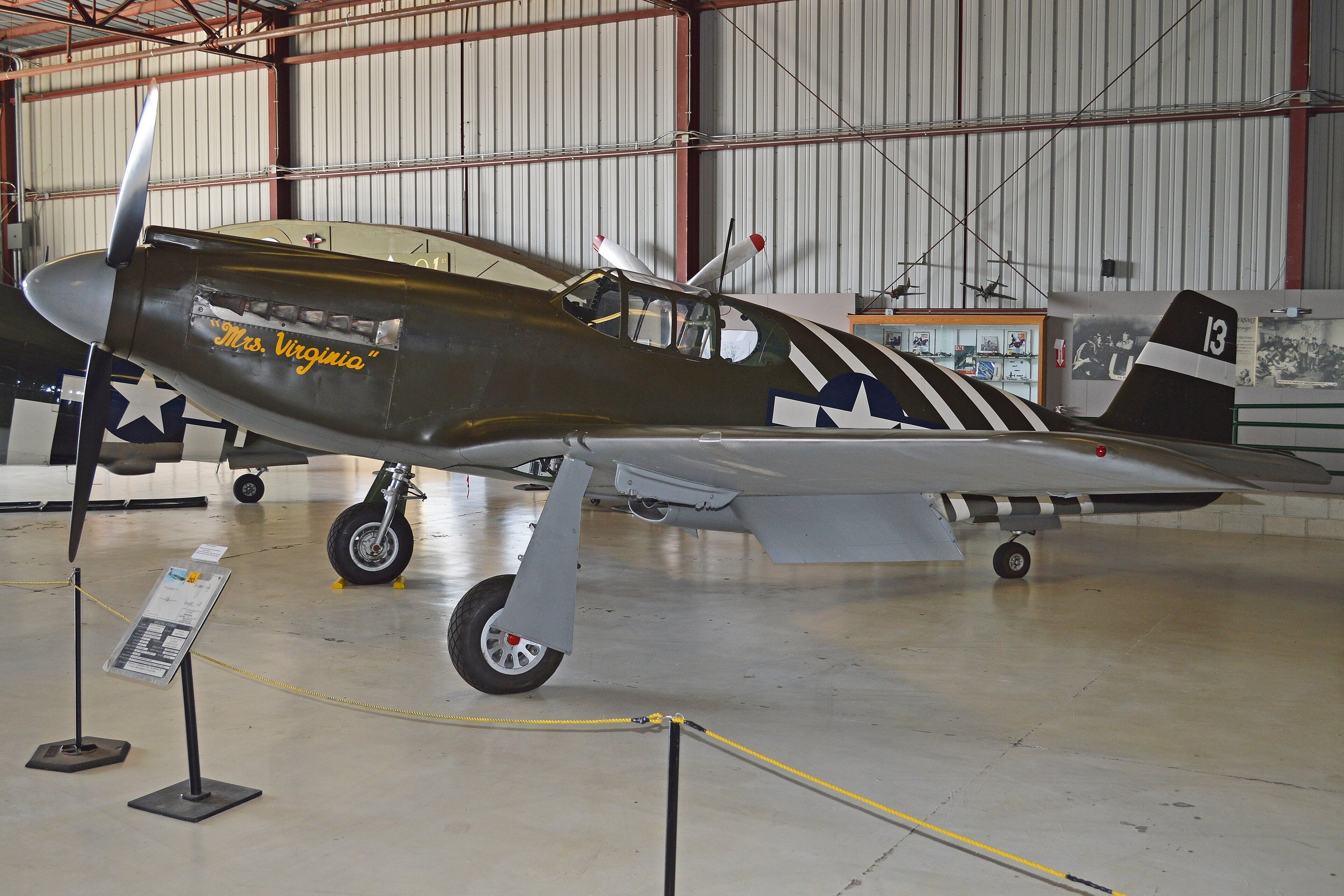
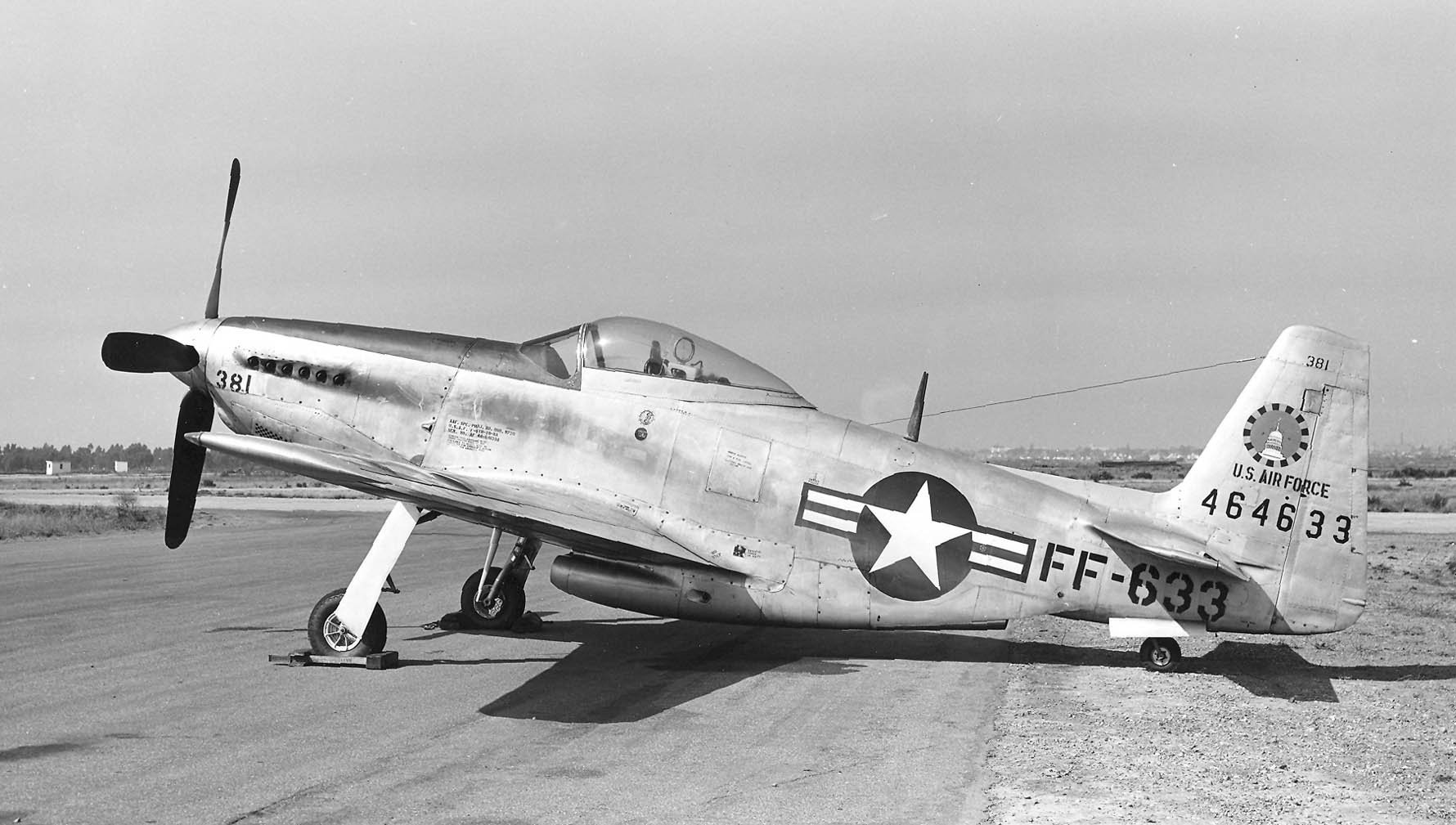
Allison Mustangs also became the F-6A photo-reconnaissance aircraft (55 converted from the cannon-armed NA-91 batch), and two NA-91 airframes were set aside for the experiment that changed the type's history: fitting a Rolls-Royce Merlin, which produced the XP-51B. Restored P-51A 43-6251 'Mrs. Virginia' at the Planes of Fame museum in Chino, California is one of very few Allison Mustangs still in existence.