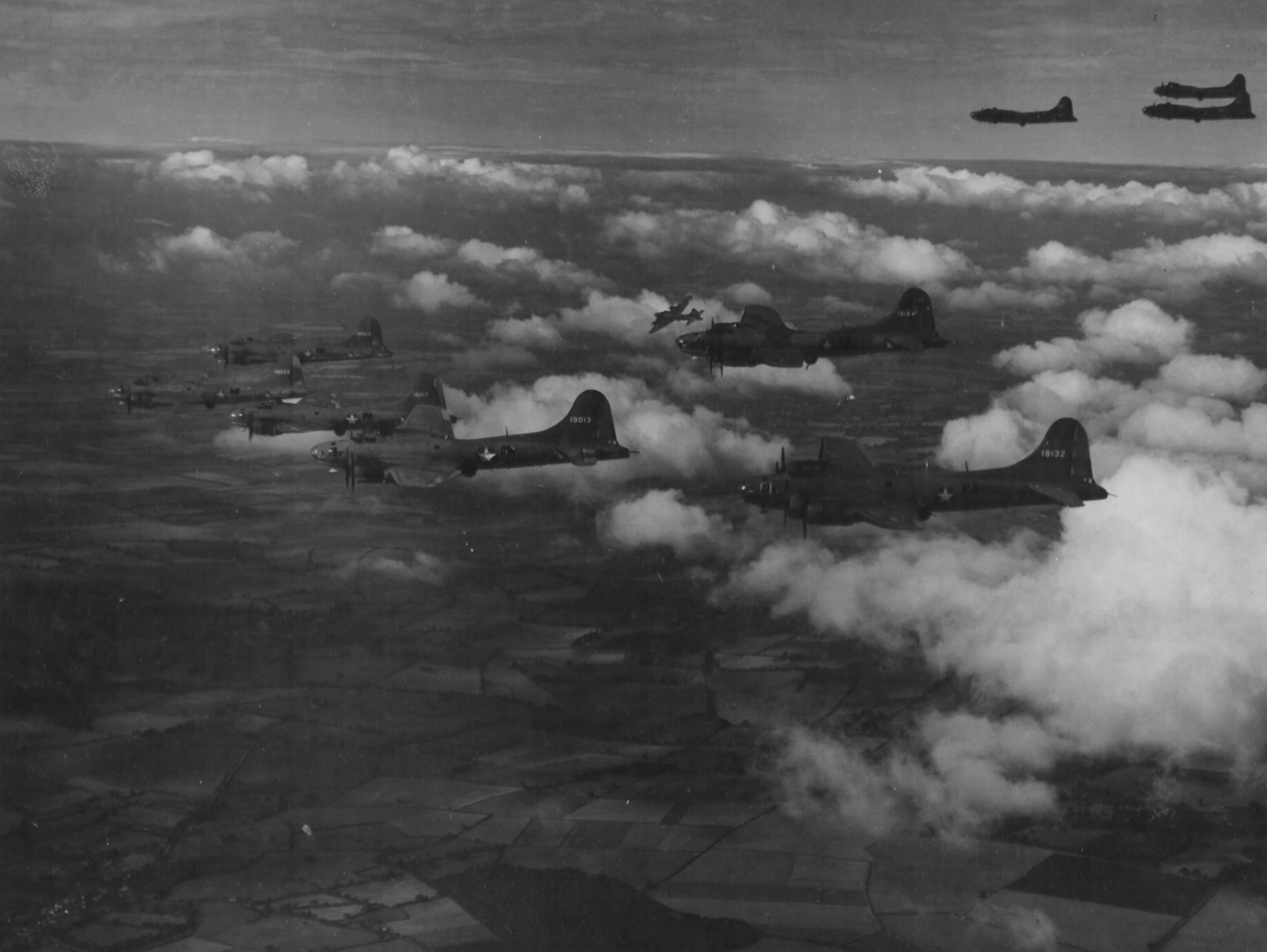
Boeing B-17E Flying Fortress
The big-tail redesign — first Fortress with a tail gunner and powered turrets · First flight 1941 · In service 1941
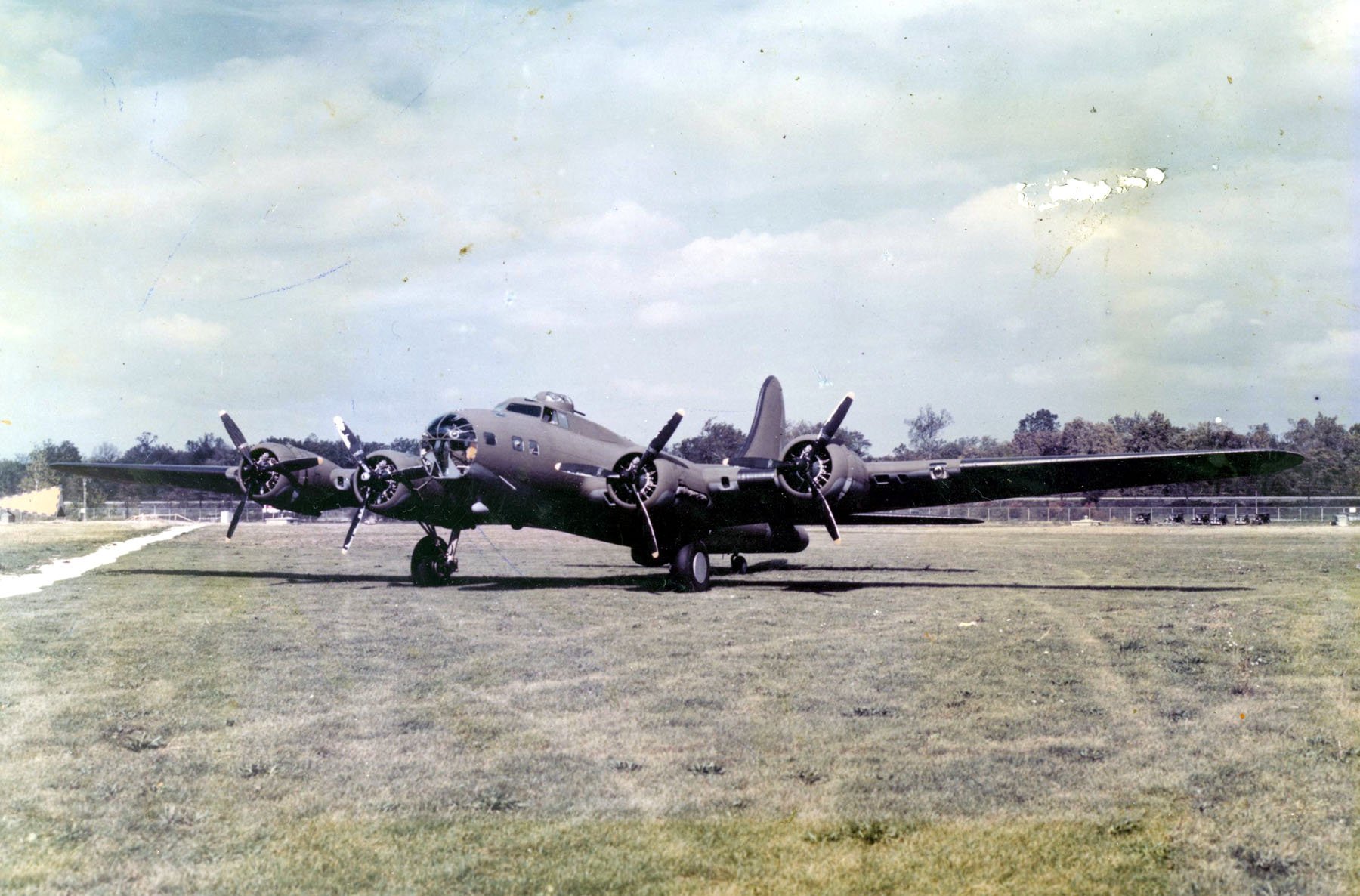
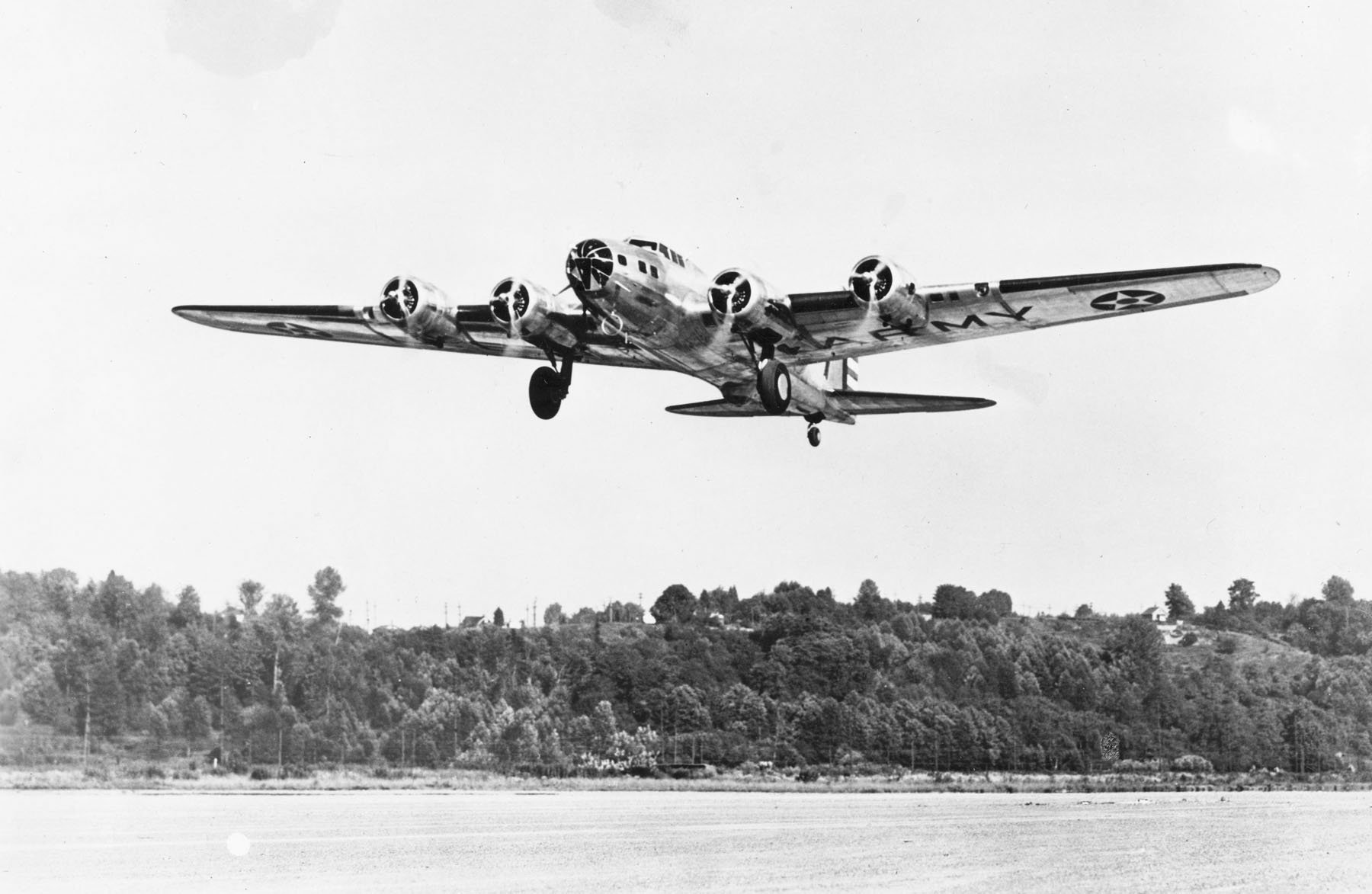
The early B-17s had no defence against attack from directly behind. The B-17E, which first flew on 5 September 1941, was a major redesign with a lengthened rear fuselage, a much larger new fin and tailplane, and a manned tail position with twin 12.7 mm guns. A powered dorsal turret was added behind the cockpit, the waist positions became rectangular windows, and the remotely sighted Bendix belly turret of early aircraft gave way to the manned Sperry ball turret.
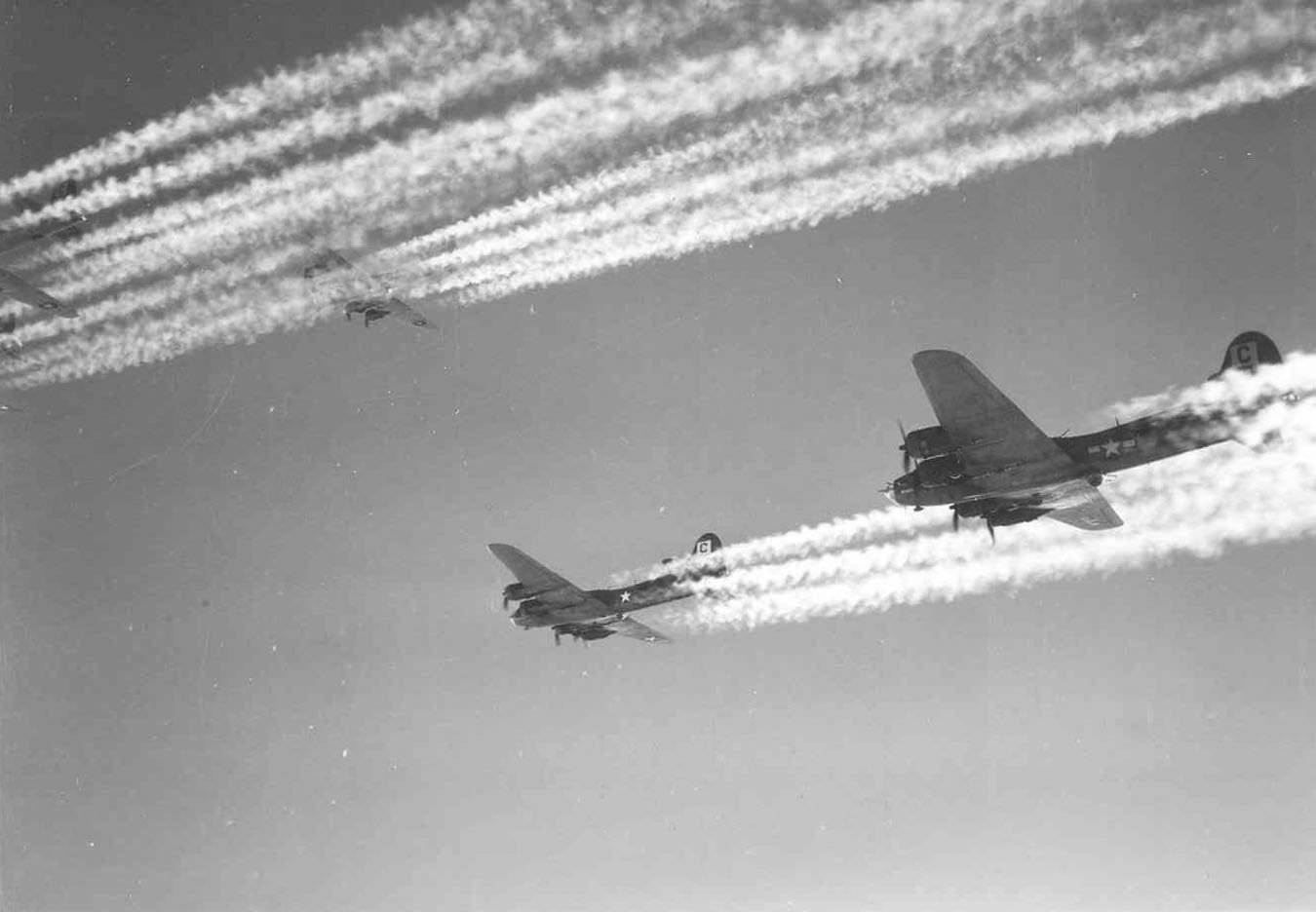
B-17Es were in action in the Pacific within months of Pearl Harbor, flying from Australia, Java and Midway. In Europe, twelve B-17Es of the 97th Bomb Group flew the 8th Air Force's first heavy-bomber raid on 17 August 1942, against the Rouen-Sotteville marshalling yards in France, escorted by RAF Spitfires.
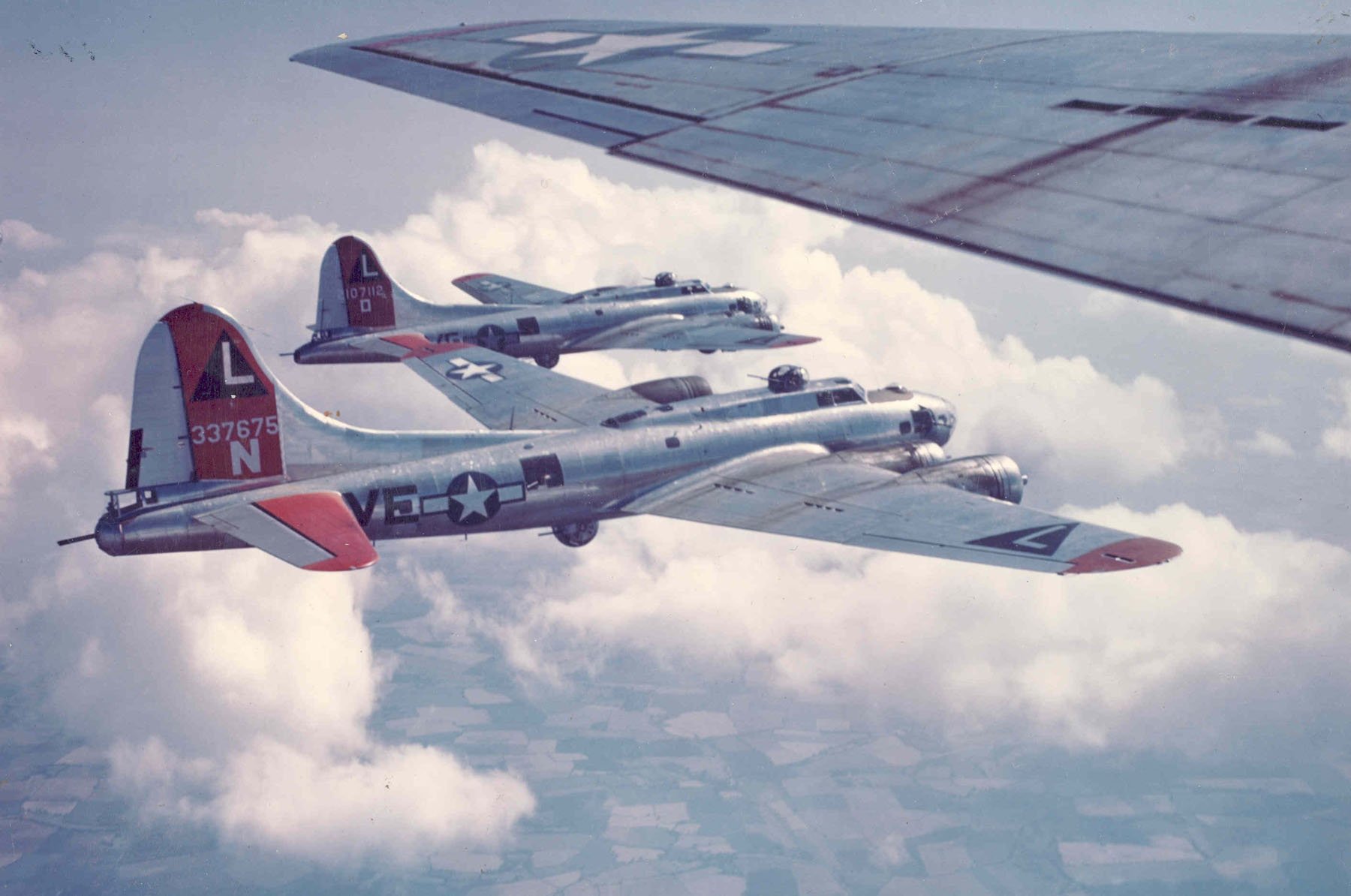
Boeing built 512 B-17Es. Some served with RAF Coastal Command as the Fortress IIA on anti-submarine patrols over the Atlantic, and many others ended their careers as trainers in the United States once the B-17F and G arrived.