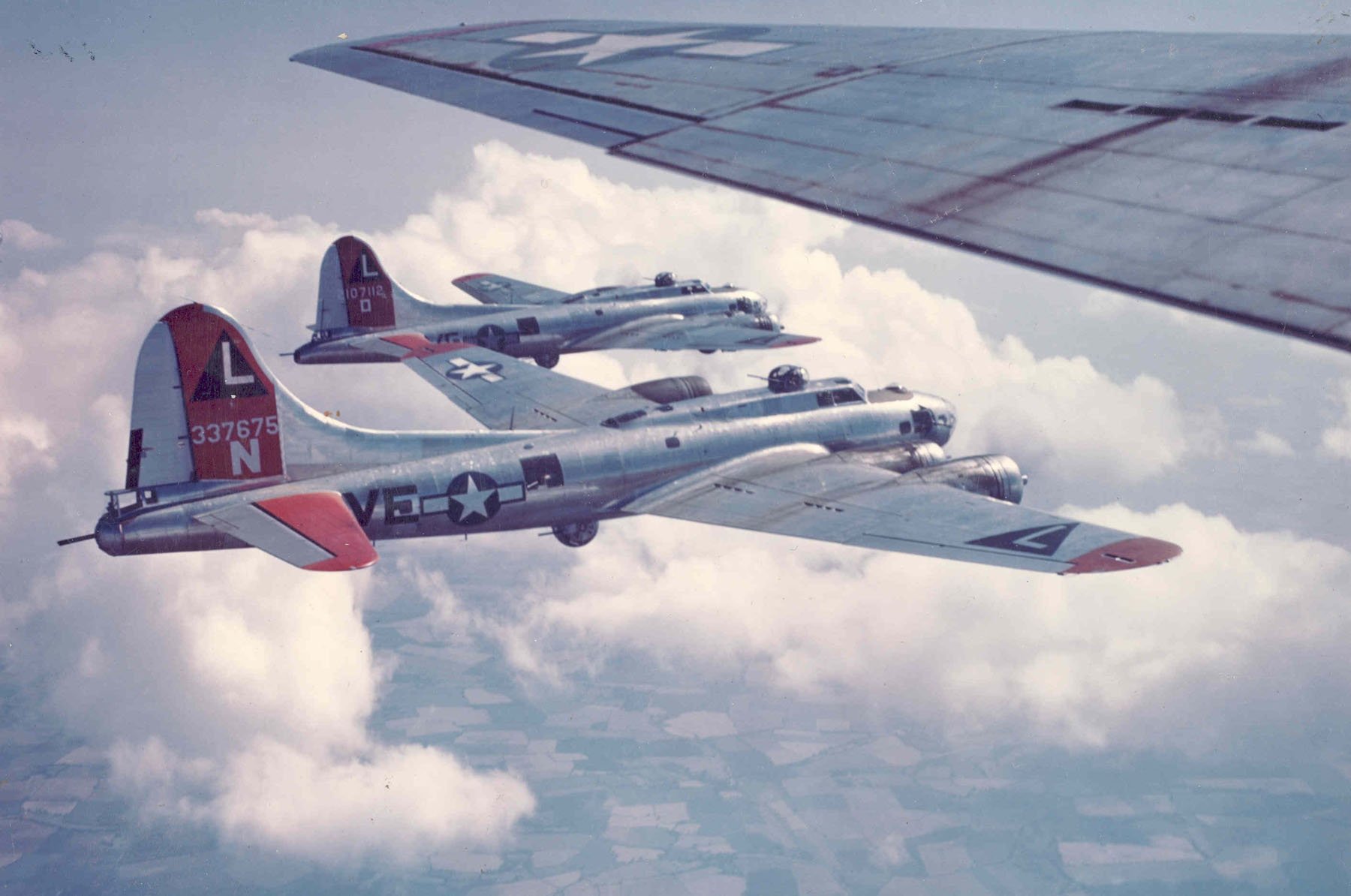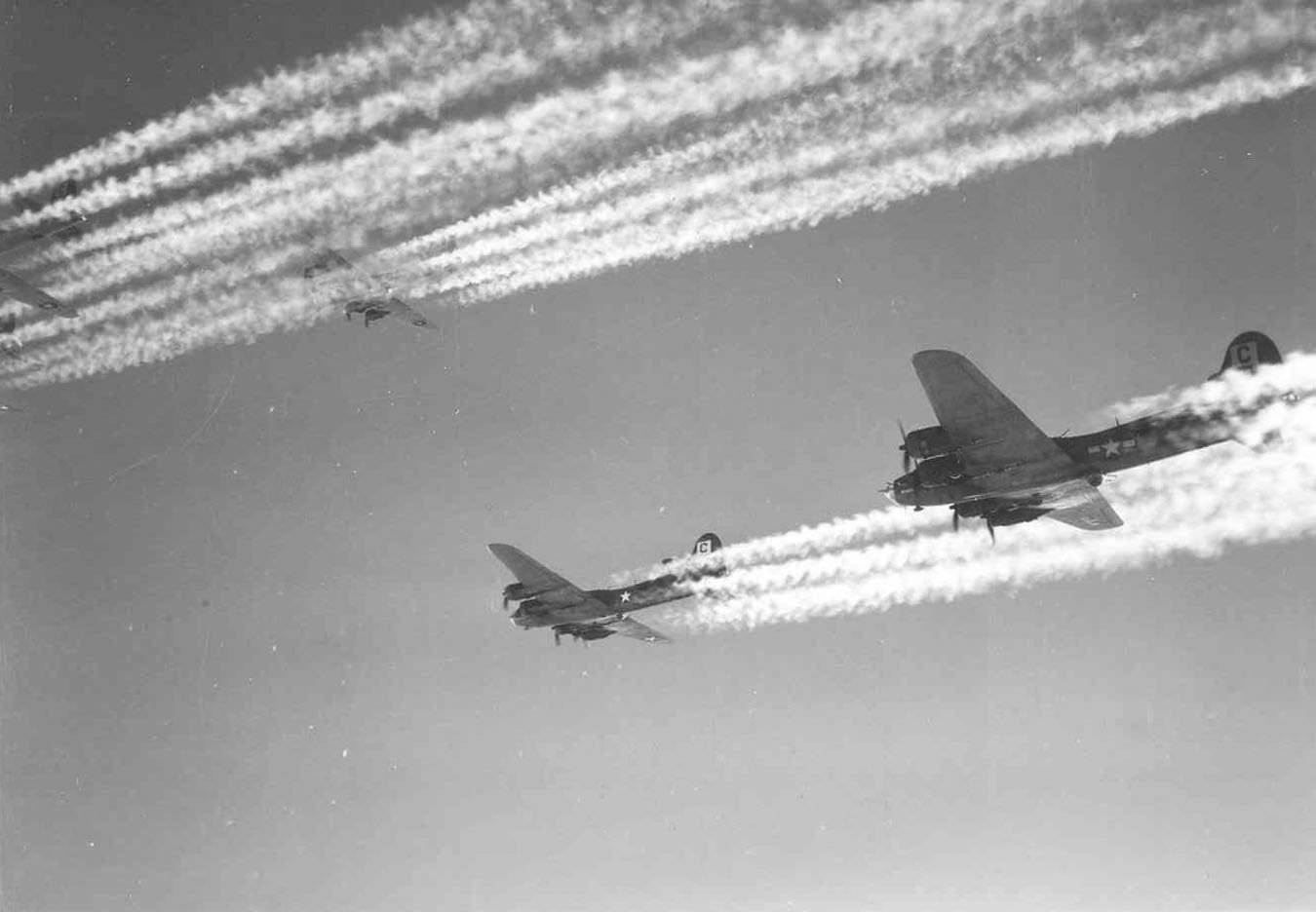
Boeing B-17F Flying Fortress
The frameless-nose Fortress built by three factories — the backbone of the 1943 daylight offensive · First flight 1942 · In service 1942
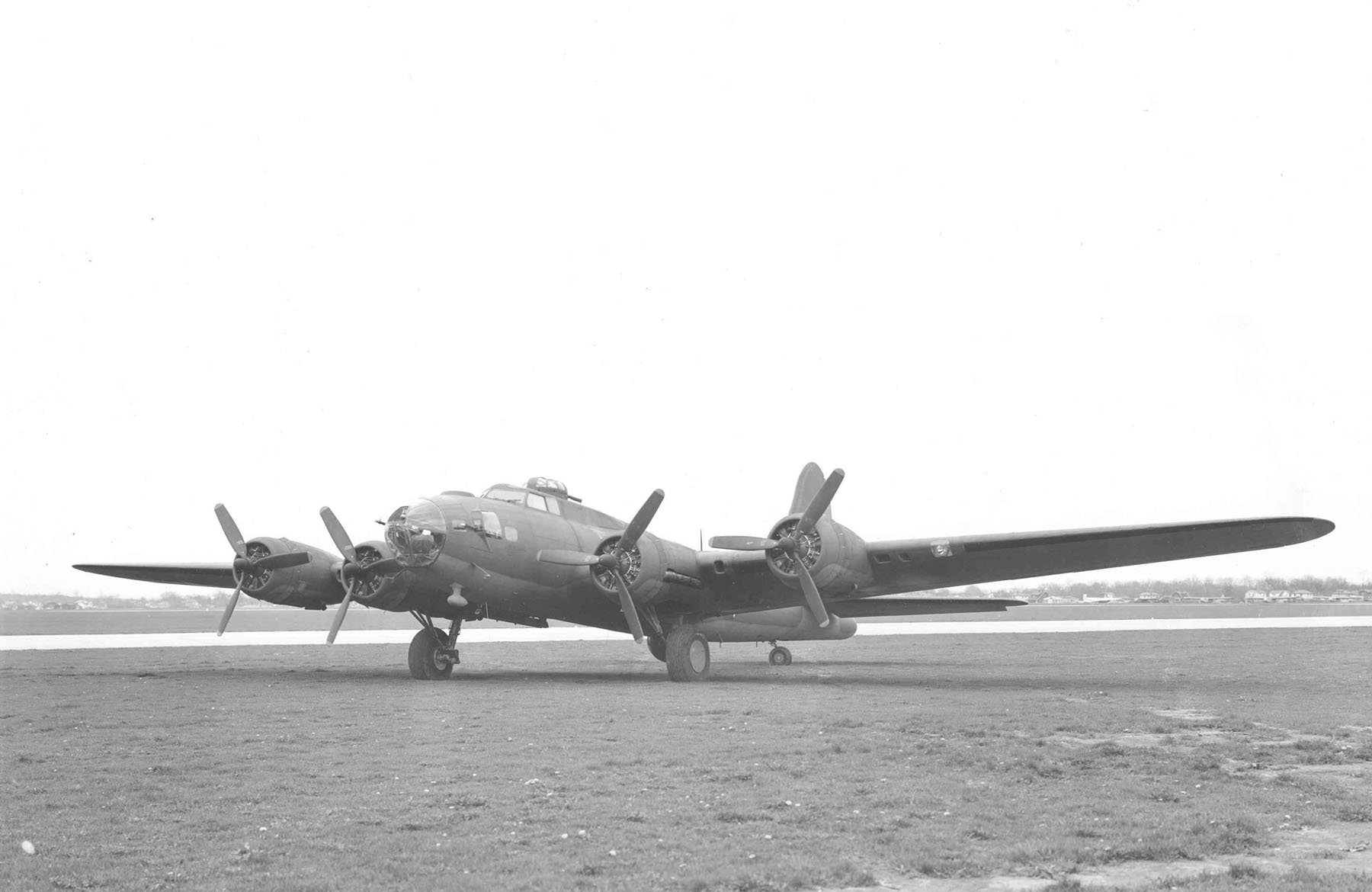
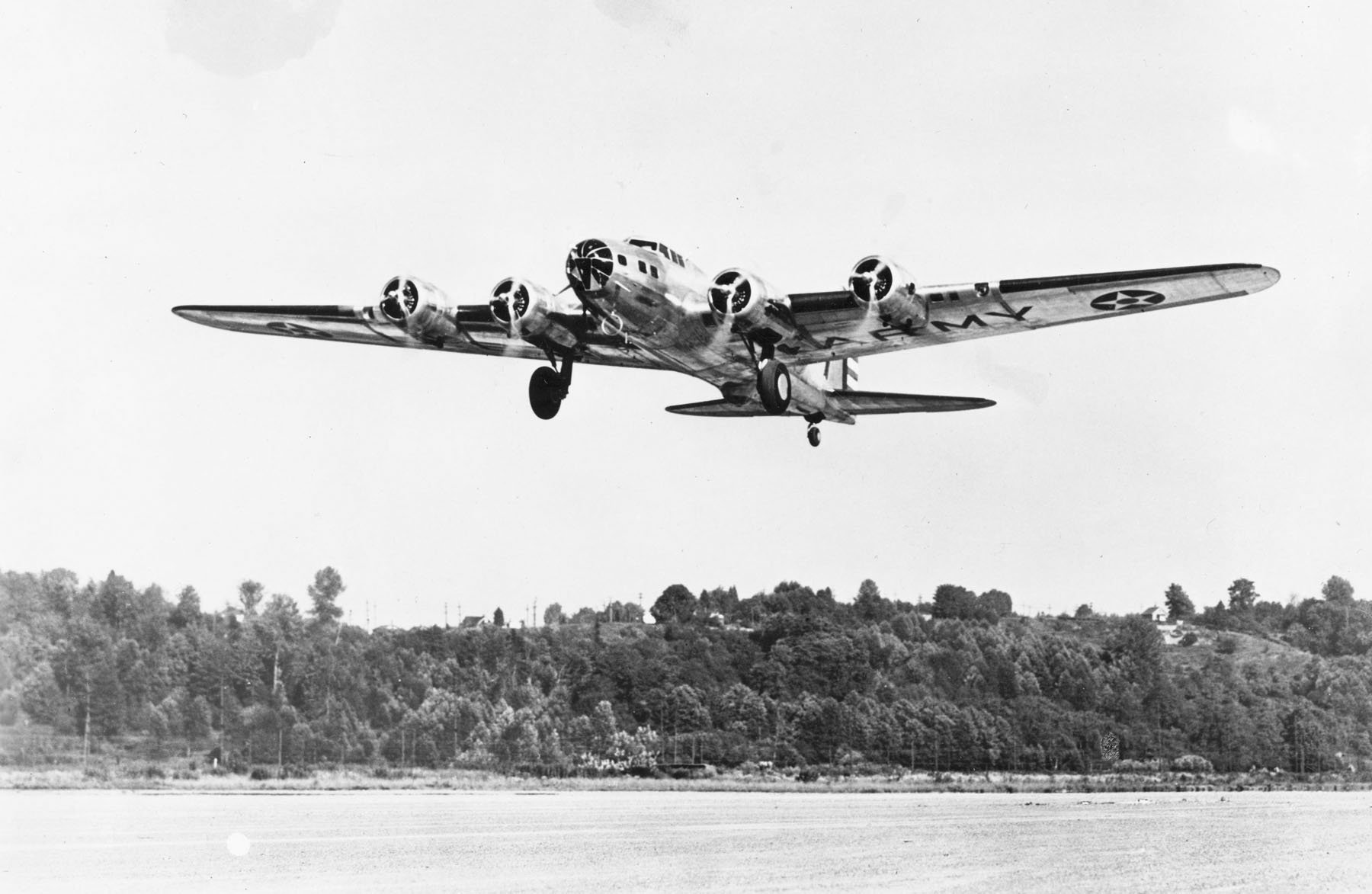
The B-17F, first flown on 30 May 1942, looked much like the E but introduced a moulded, frameless Plexiglas nose, fully feathering paddle-blade propellers and a long list of internal changes. Maximum bomb load roughly doubled, from 1,900 kg to 3,600 kg, and later aircraft received 'Tokyo tanks' in the outer wings that added about 1,450 km of range.
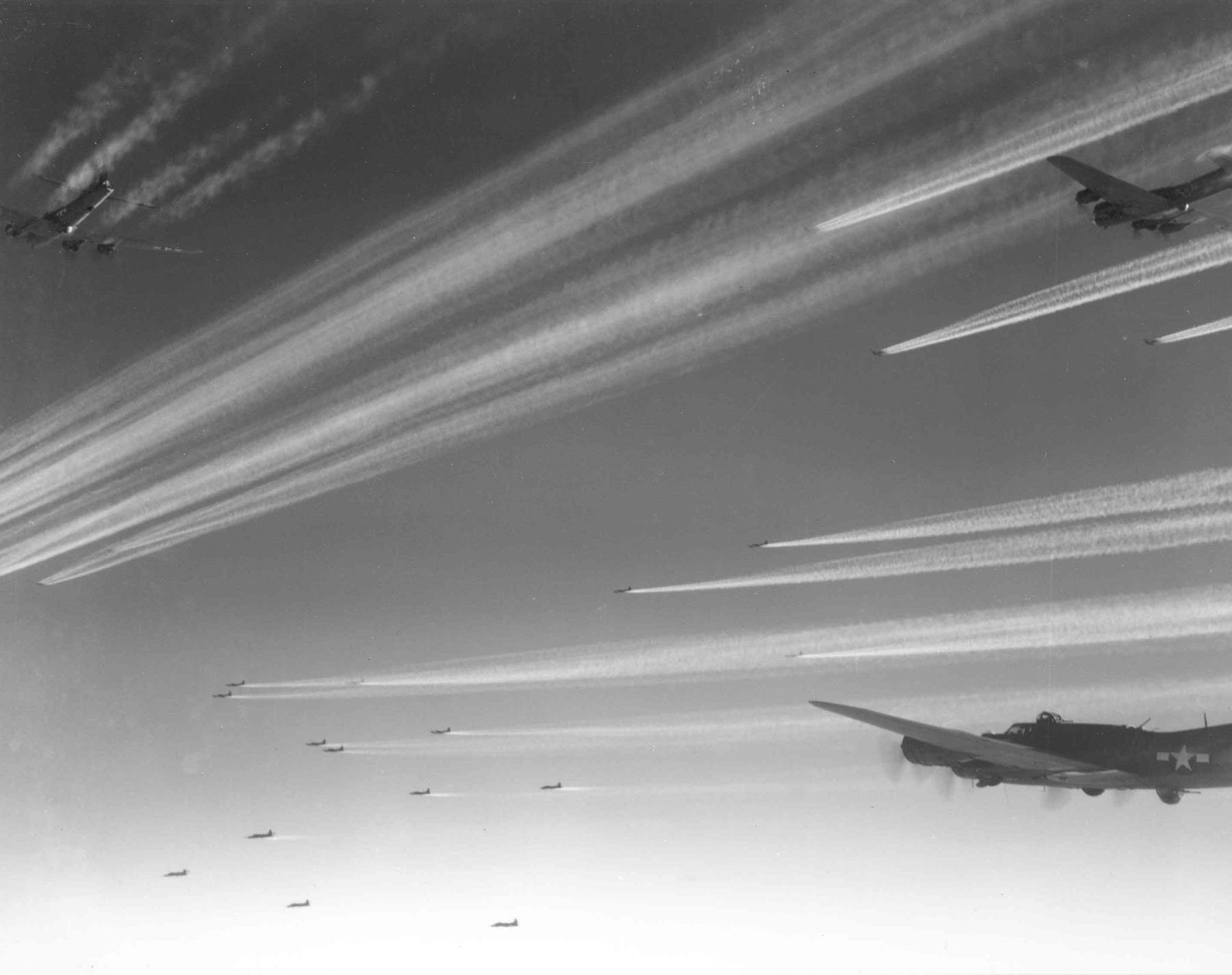
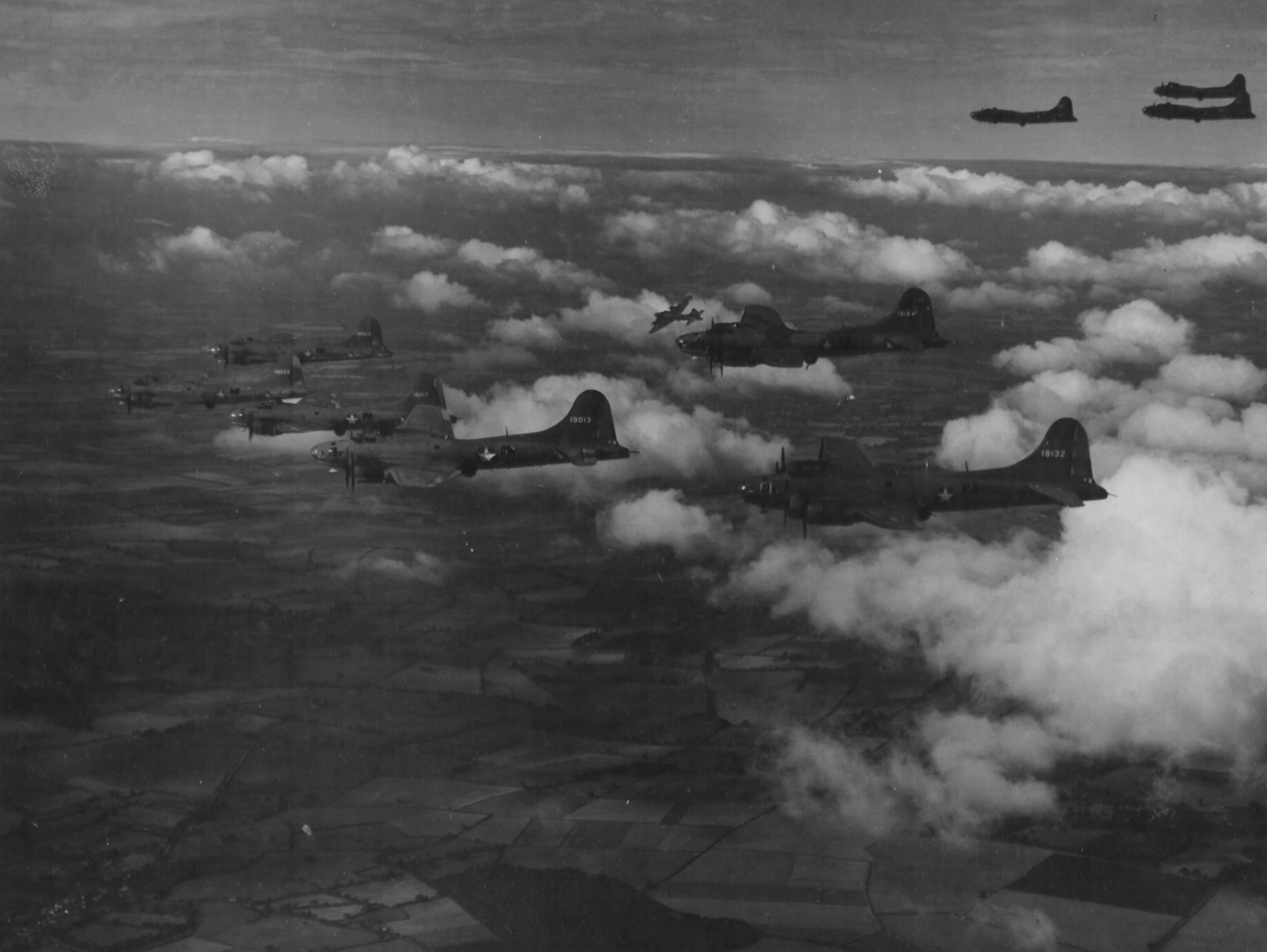
To meet demand, production was shared under the BVD (Boeing-Vega-Douglas) pool: Boeing built 2,300 in Seattle, Douglas 605 at Long Beach and Lockheed's Vega subsidiary 500 at Burbank. The B-17F equipped most 8th Air Force bomb groups through 1943, when unescorted raids such as the 17 August 1943 Schweinfurt-Regensburg mission brought heavy losses and exposed the weak frontal defence. Late Douglas-built blocks introduced the remotely controlled chin turret that became standard on the B-17G.
The best-known B-17F is 41-24485 'Memphis Belle', one of the first 8th Air Force bombers to complete a 25-mission tour; under Robert K. Morgan it returned home in 1943 for a war-bond tour, and since 17 May 2018 it has been displayed at the National Museum of the US Air Force in Dayton, Ohio.